Understanding subtraction Worksheets for 4-Year-Olds
5 filtered results
-
From - To
Discover engaging Understanding Subtraction Worksheets tailored for 4-year-olds, designed to introduce young learners to the concept of subtraction through fun and interactive activities. These worksheets use colorful visuals and relatable scenarios, making math enjoyable and accessible. With a variety of exercises, children will practice basic subtraction skills by counting objects or completing simple problems. Each worksheet encourages critical thinking and lays a solid foundation for future math learning. Perfect for both home and classroom use, these resources will help to foster a love for math while developing essential problem-solving skills. Empower your child's early learning journey today!
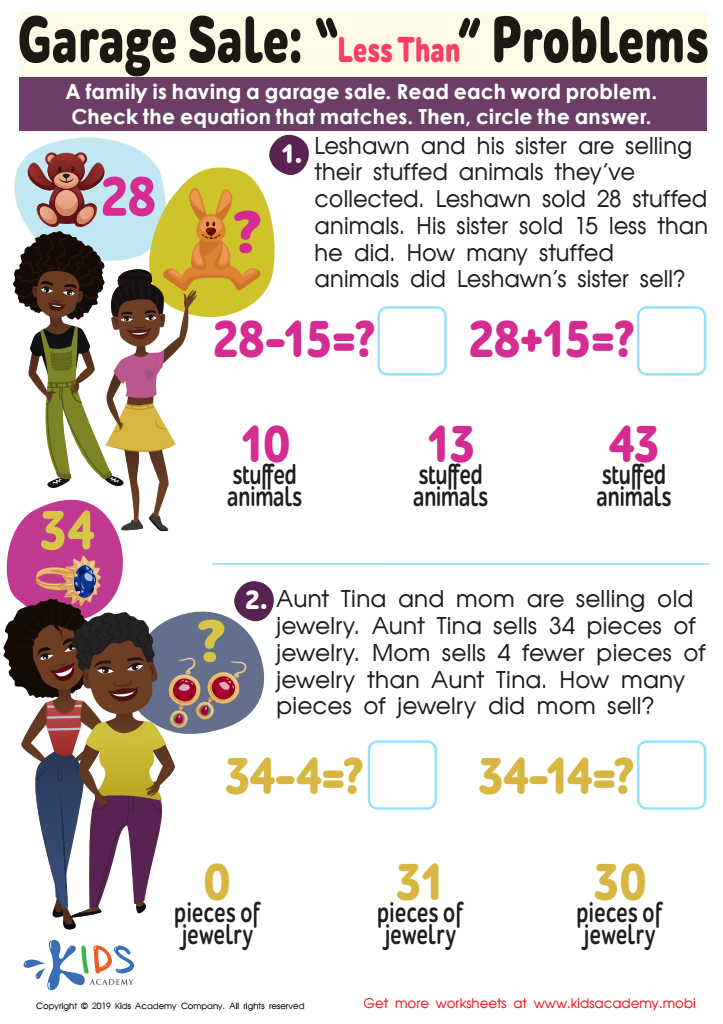
Garage Sale Less Than Worksheet
 Assign to My Students
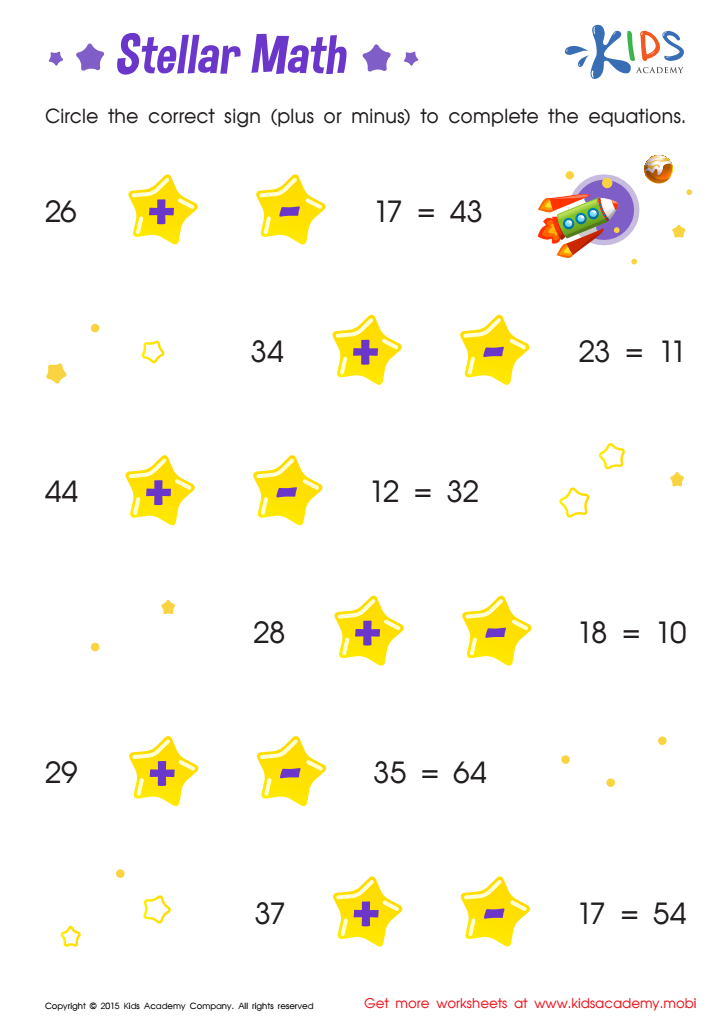
Stellar Math Substraction Worksheet
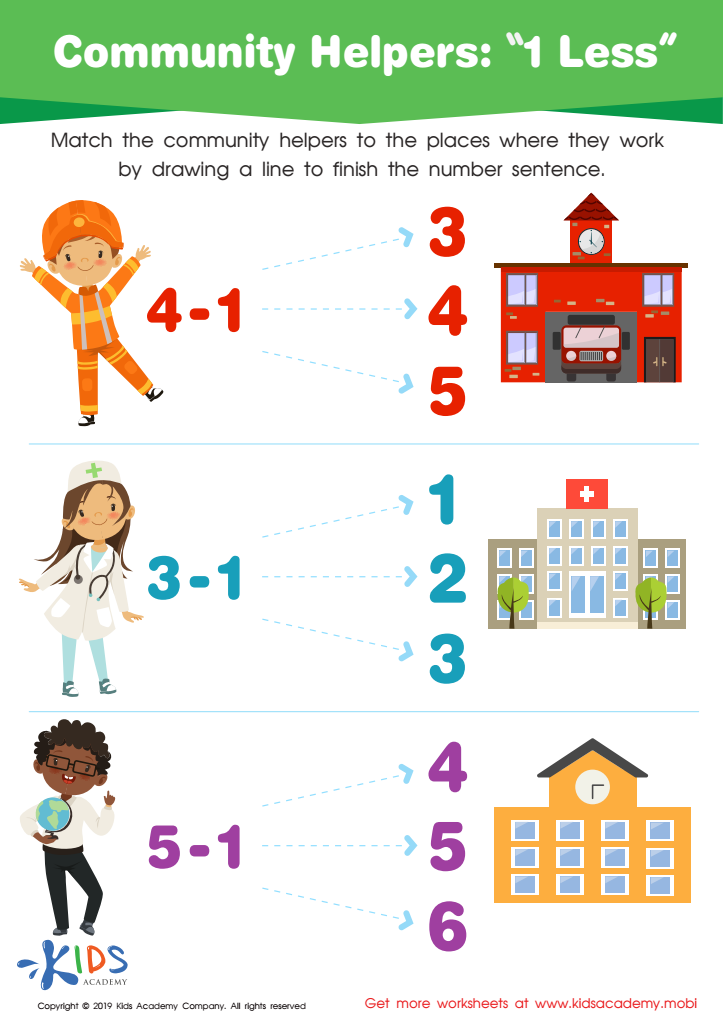
Community Helpers: 1 less Worksheet
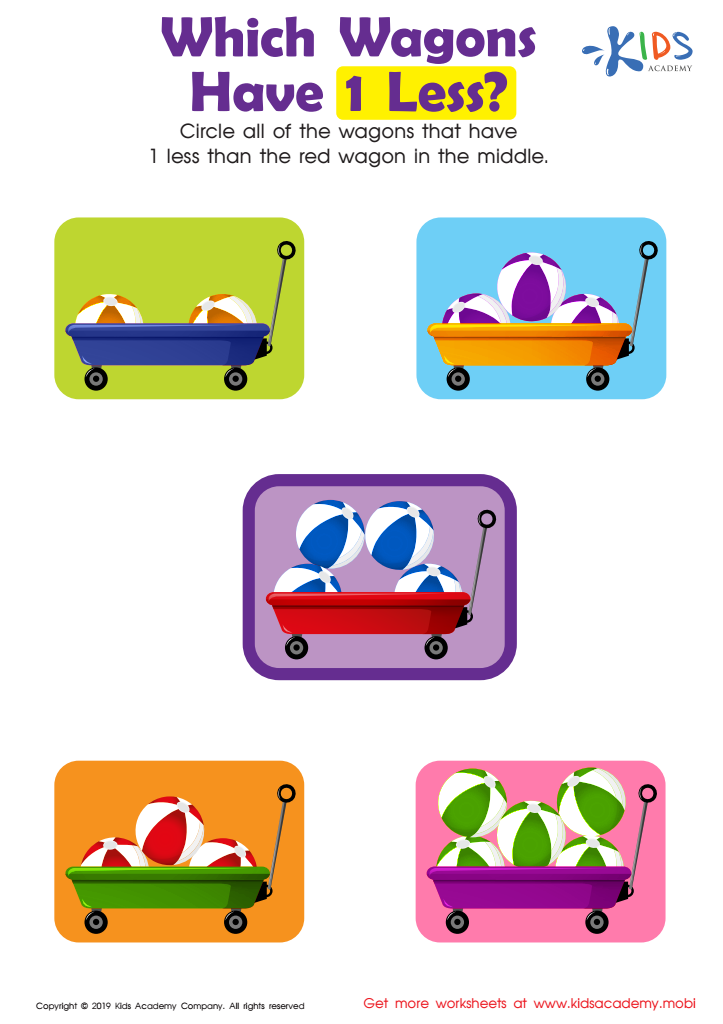
Which Wagons Have 1 Less? Worksheet








Understanding subtraction at the age of four is crucial for children’s cognitive and social development. Early mathematics skills build the foundation for future academic success, making it essential for parents and teachers to foster a grasp of basic subtraction concepts. At this age, children are naturally curious and eager to learn, often exploring mathematical ideas through play. Engaging them in simple subtraction activities—such as using toys or snack items—can help strengthen their understanding of the concept as they learn to recognize the relationship between taking away and quantity.
Moreover, mastering subtraction helps in enhancing children's problem-solving skills. It encourages logical thinking and understanding of parts and wholes, essential concepts in mathematics. Subtraction also promotes critical thinking, as children begin to anticipate results based on their actions, which improves their decision-making skills and confidence.
Finally, understanding subtraction can aid in emotional and social interactions, as children learn to manage sharing and fairness within groups by recognizing the idea of loss. As active participants in their learning journey, supportive adults can make subtraction an enjoyable and enriching experience, laying the groundwork for a lifelong appreciation of math and fostering a healthy learning environment.








