Visualization skills Worksheets for 4-Year-Olds
3 filtered results
-
From - To
Unlock your child's creativity with our Visualization Skills Worksheets designed specifically for 4-year-olds! These engaging activities encourage young minds to visualize concepts through fun and interactive exercises. Our worksheets incorporate colorful illustrations and simple instructions to make learning enjoyable. By enhancing visualization skills, children improve their ability to understand and express ideas, laying a strong foundation for future learning. Parents and educators can easily download and print these resources, helping to create a stimulating environment at home or in the classroom. Dive into the world of imagination and bolster your child’s cognitive development with our specially crafted worksheets today!
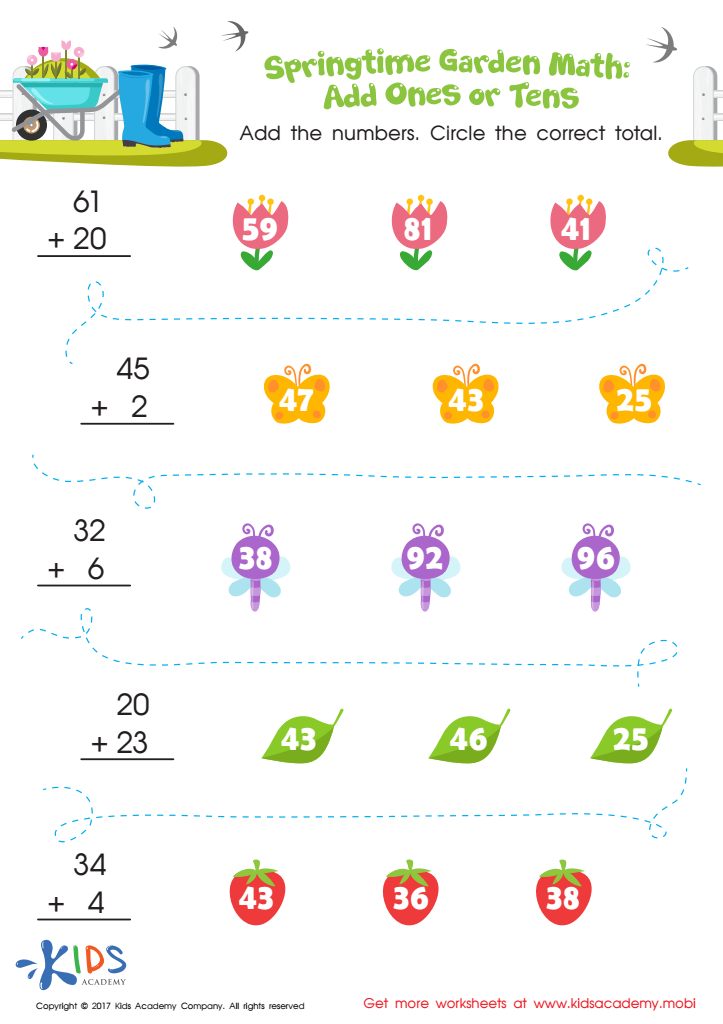
Springtime Garden Math Worksheet
 Assign to My Students






Visualization skills are crucial for 4-year-olds as they lay the foundation for cognitive development, problem-solving, and creativity. At this age, children are rapidly developing their ability to imagine and understand the world around them. These skills enhance their capacity to think in images, facilitating learning and retention. When children can visualize concepts, they better grasp subjects like math, reading, and science, helping them follow complex narratives and empathize with characters in stories.
Encouraging visualization teaches children how to plan and organize thoughts, making them more effective learners. It supports their creativity by allowing them to conjure new ideas and solutions in a safe mental space. Activities like drawing, storytelling, and engaging with imaginative play have a profound impact on nurturing these abilities.
For parents and teachers, fostering visualization skills is essential for building a child's confidence and critical thinking. By guiding them to connect ideas through imagery, adults help children navigate their emotions and experiences more effectively. Ultimately, prioritizing these skills not only enhances academic preparedness but also equips young learners with vital strategies to face future challenges, contributing to their overall development and success.








