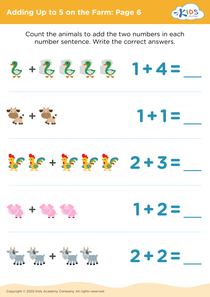
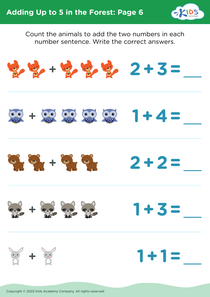
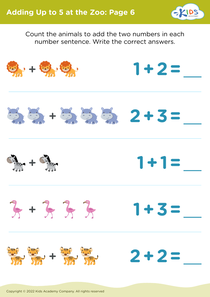
Visual Learning Adding in the Sea Worksheets for 4-Year-Olds
18 filtered results
-
From - To
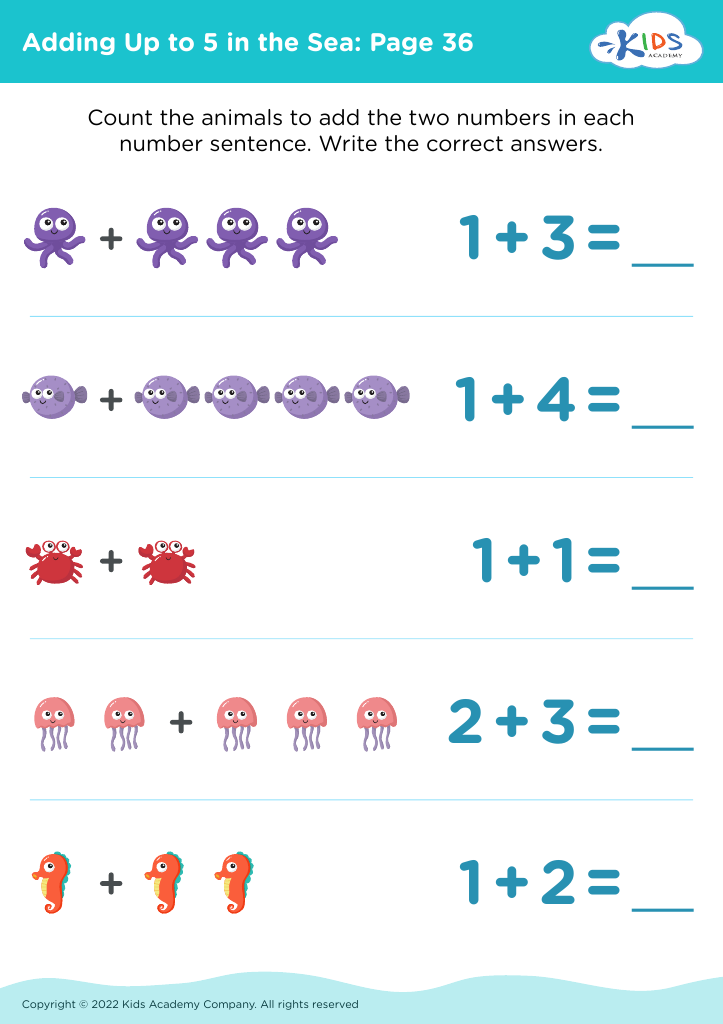
Explore our engaging "Visual Learning Adding in the Sea Worksheets" designed specifically for 4-year-olds! These worksheets provide a captivating way to introduce basic addition through vibrant underwater themes and playful sea creatures. Children will enhance their visual recognition and counting skills as they add up colorful fish, dolphins, and starfish in interactive exercises. Perfect for preschool settings or at-home learning, these resources foster early math skills while igniting curiosity about the ocean. Encourage your child's cognitive development and love for learning with our easy-to-use, printable worksheets—transforming the world of addition into an exciting aquatic adventure! Dive in today!
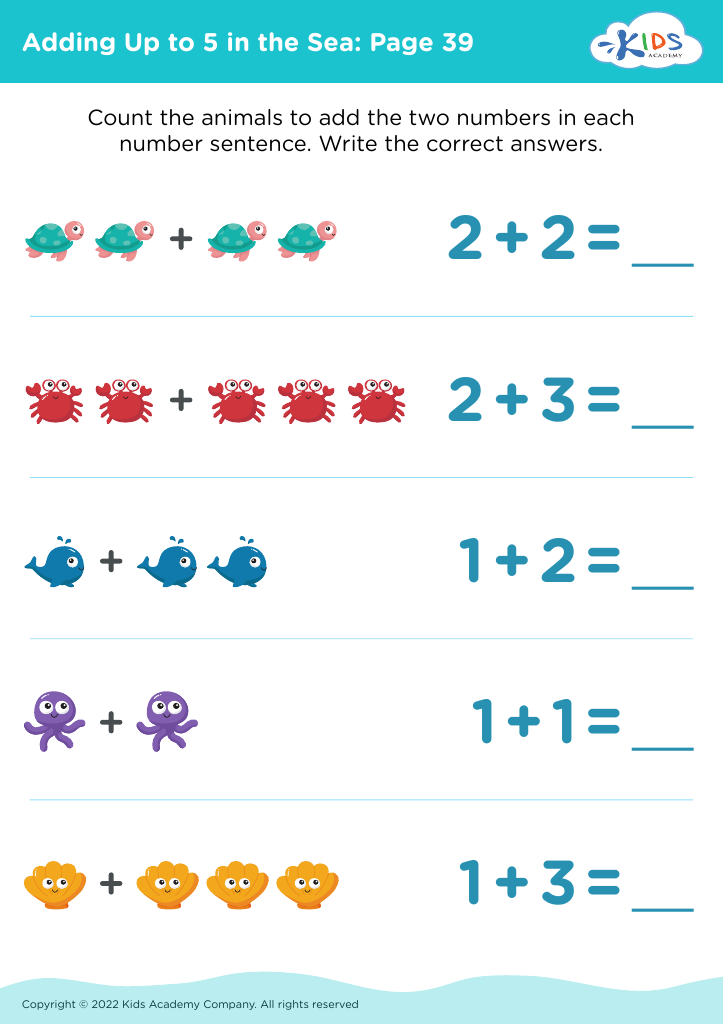
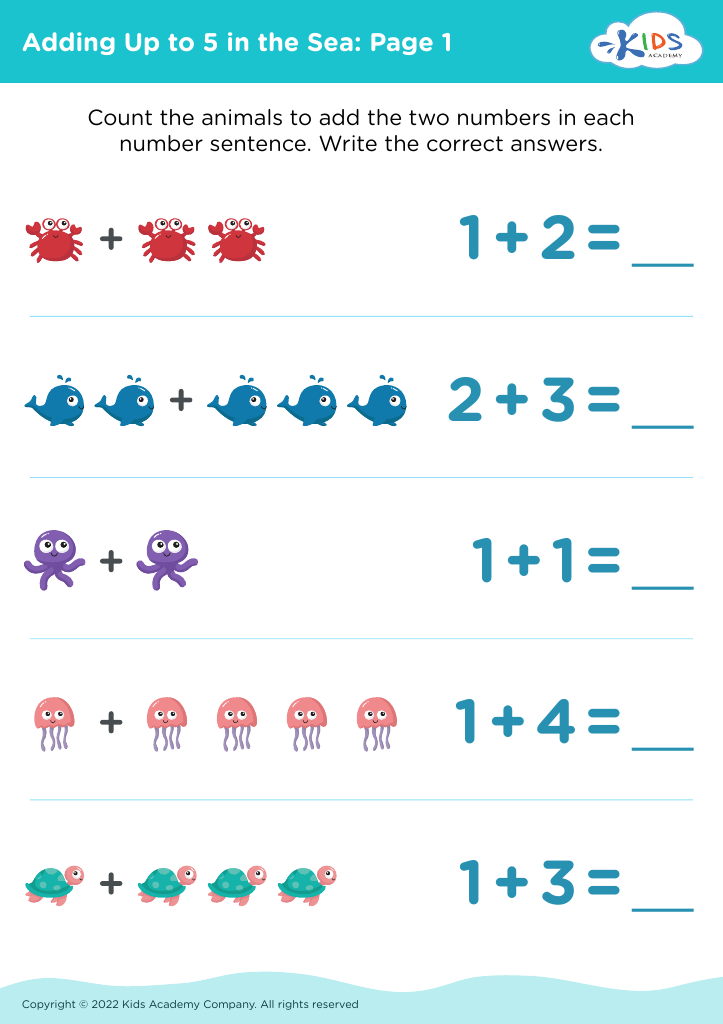
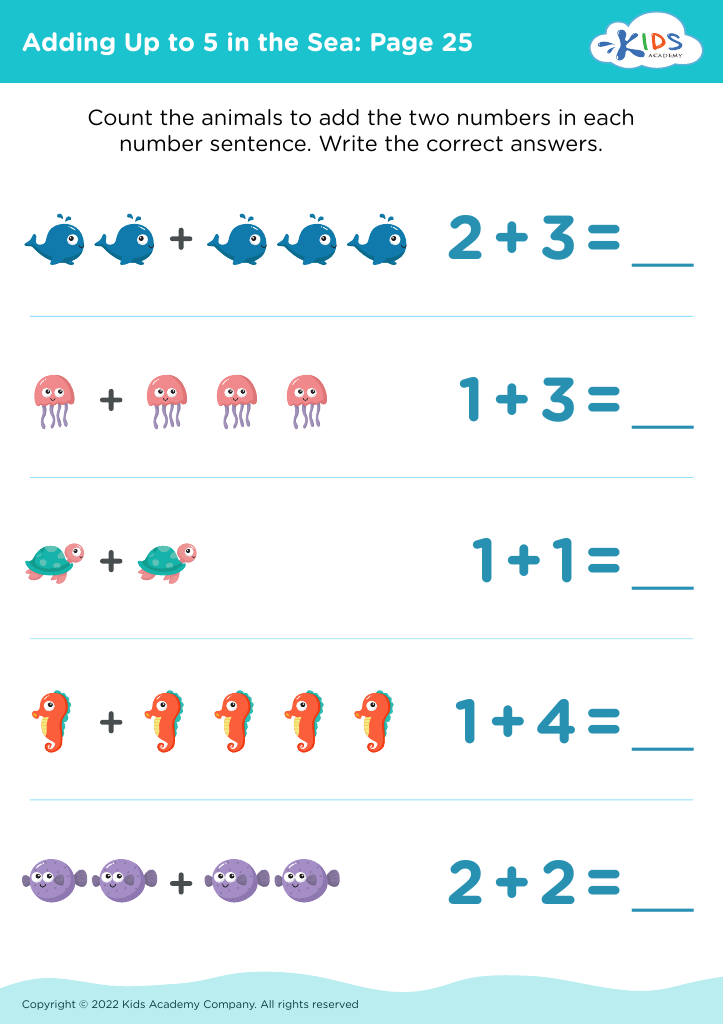
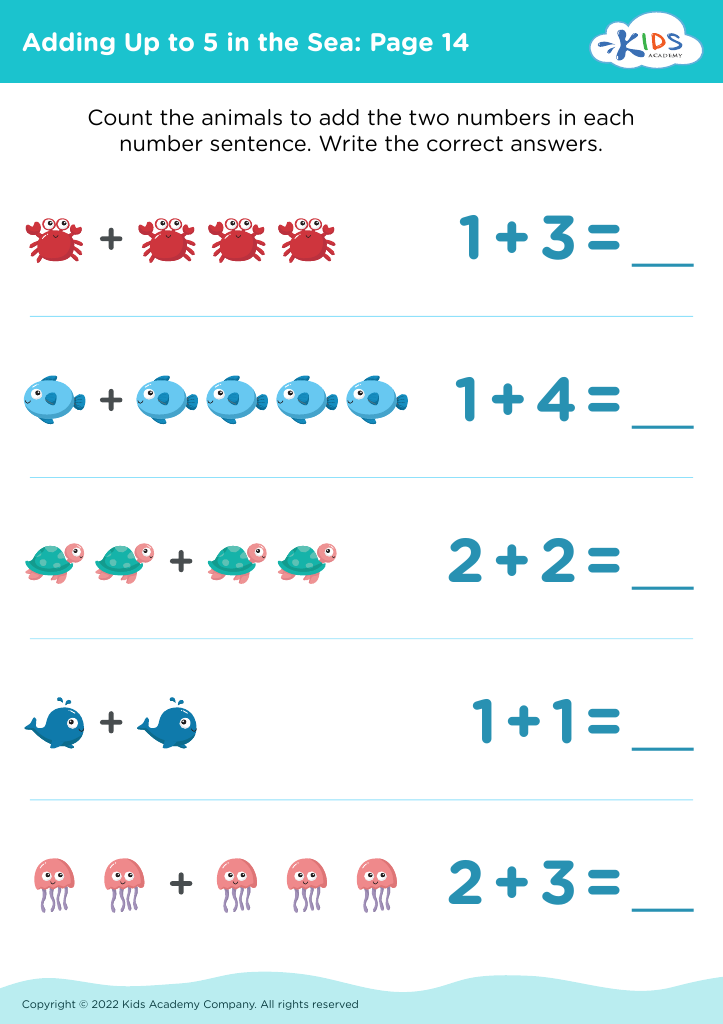
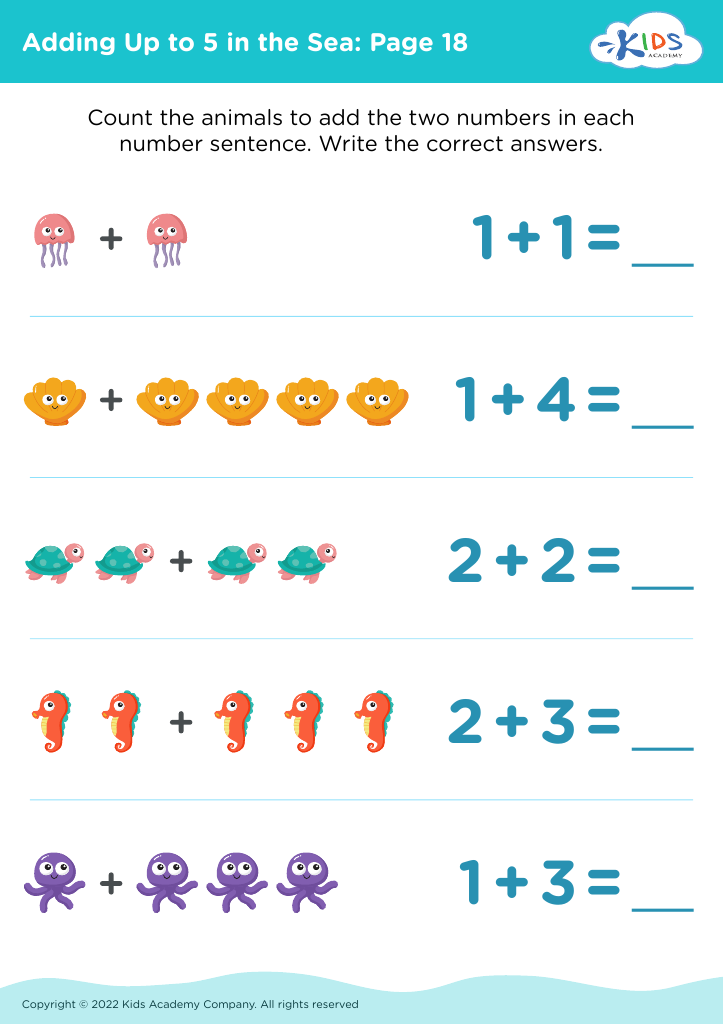
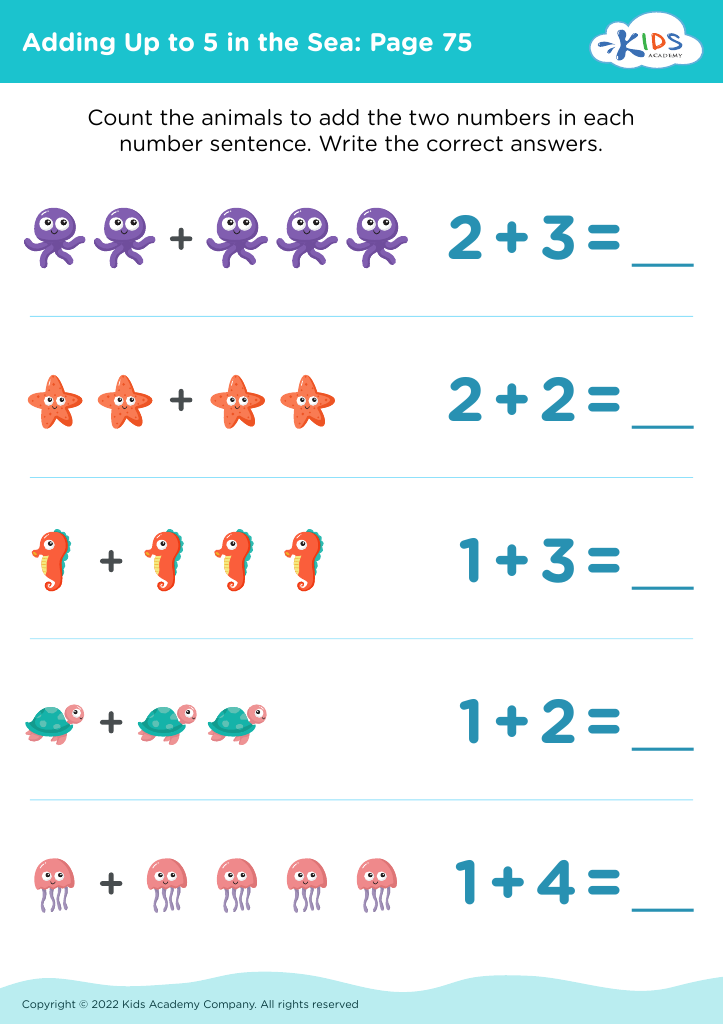
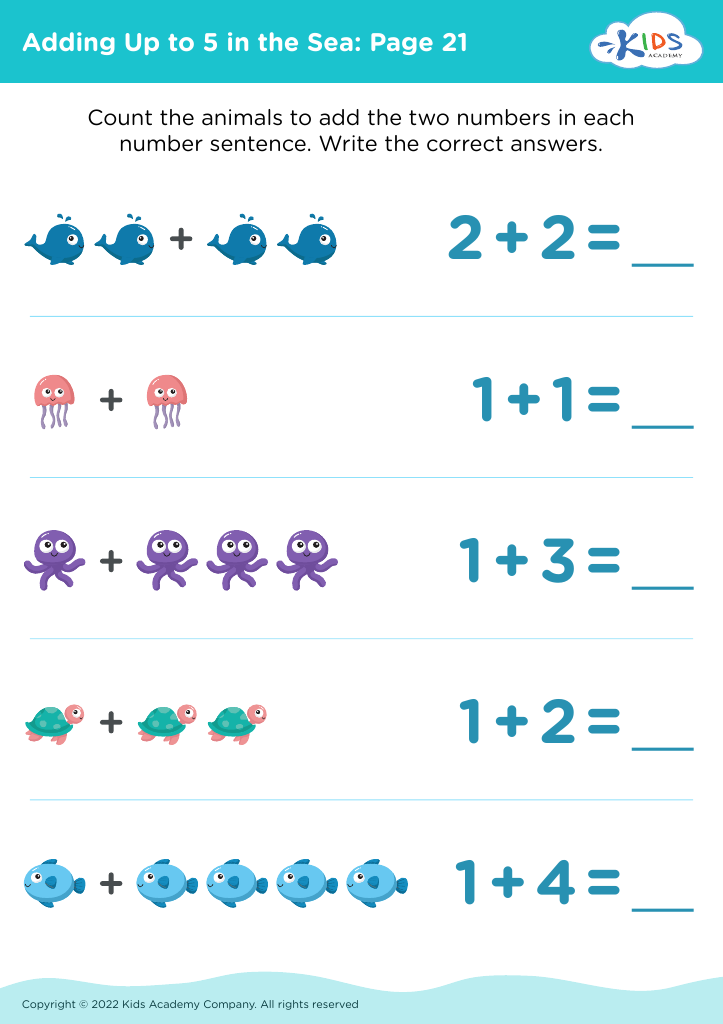
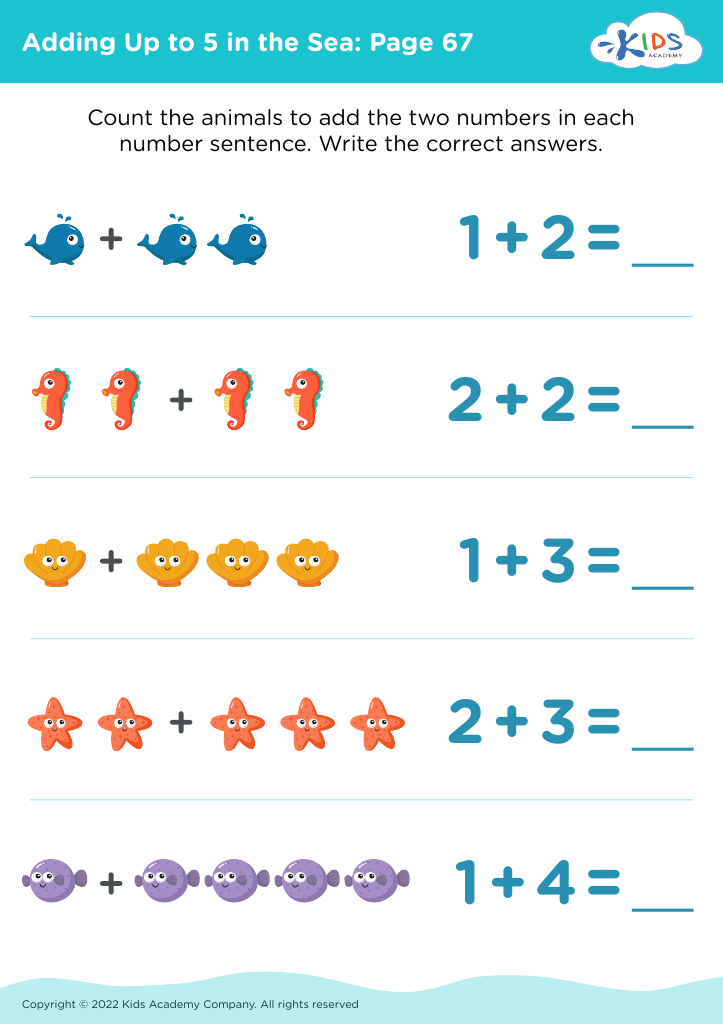
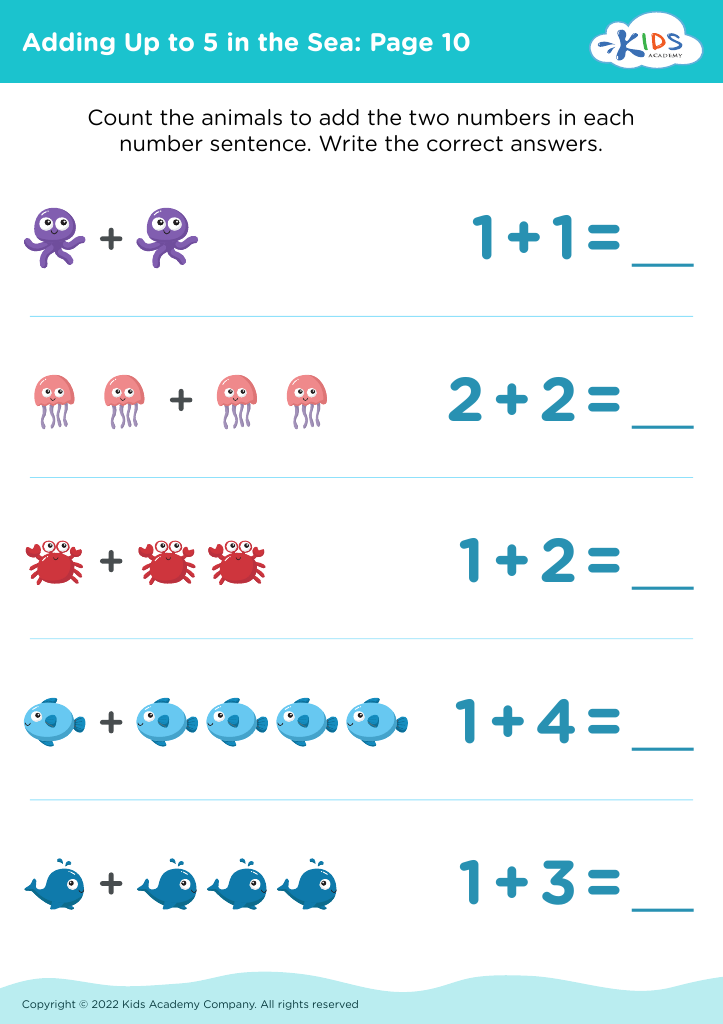
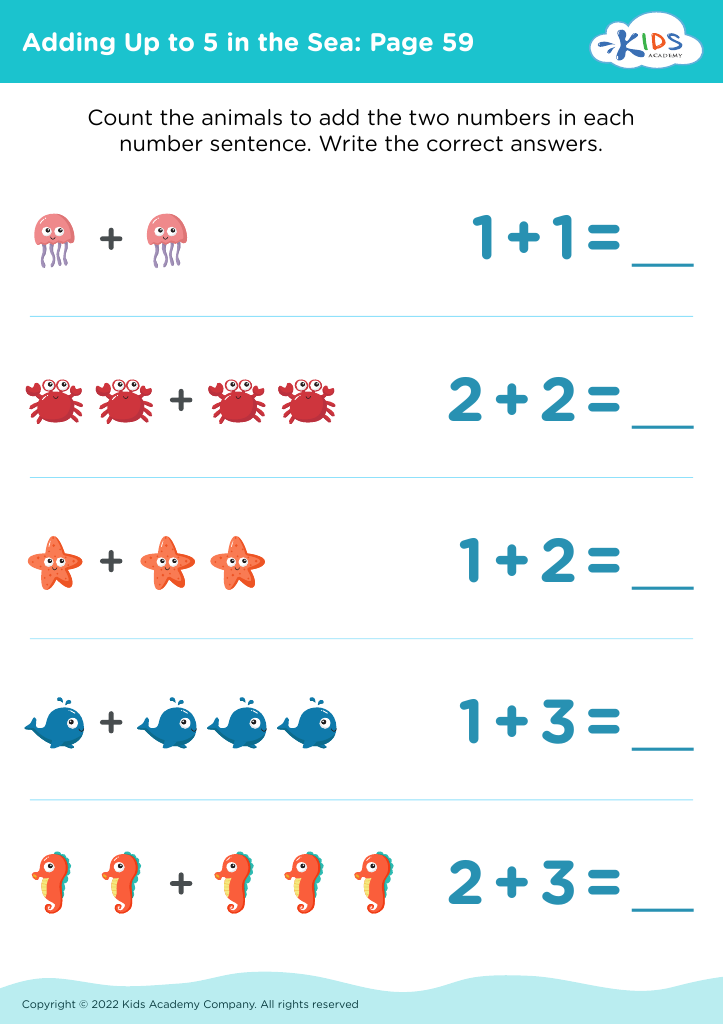
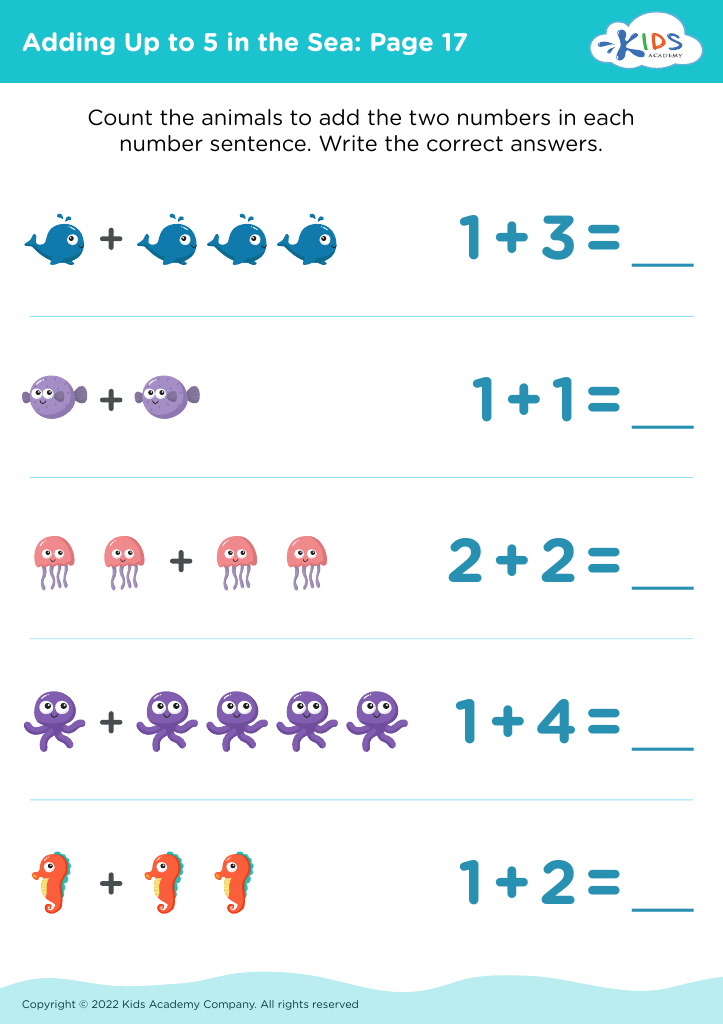
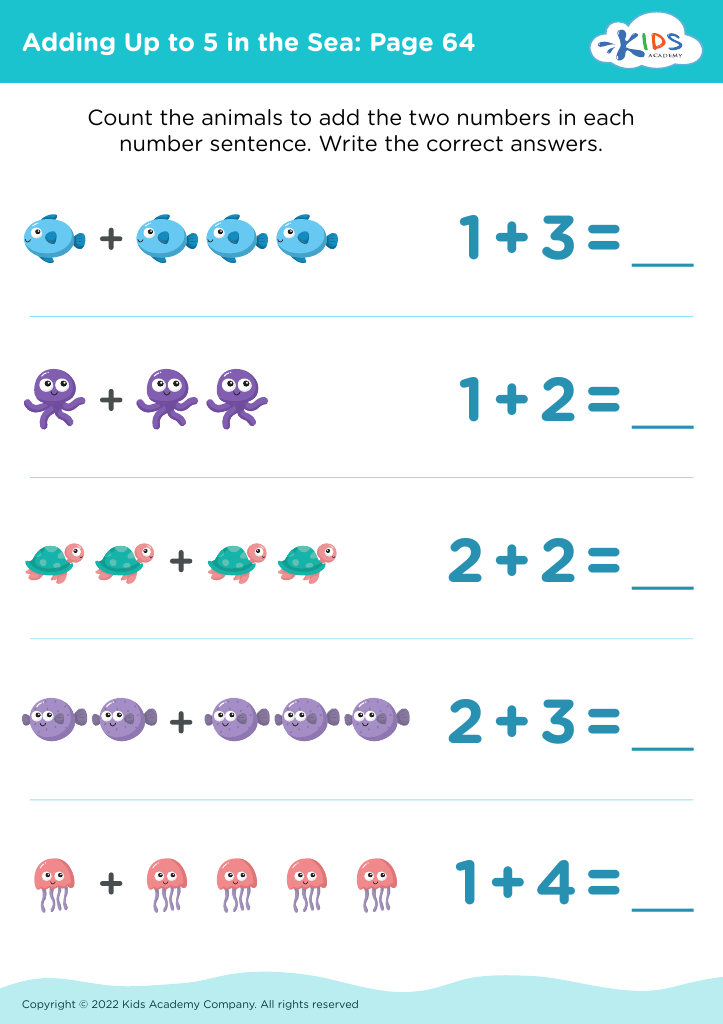
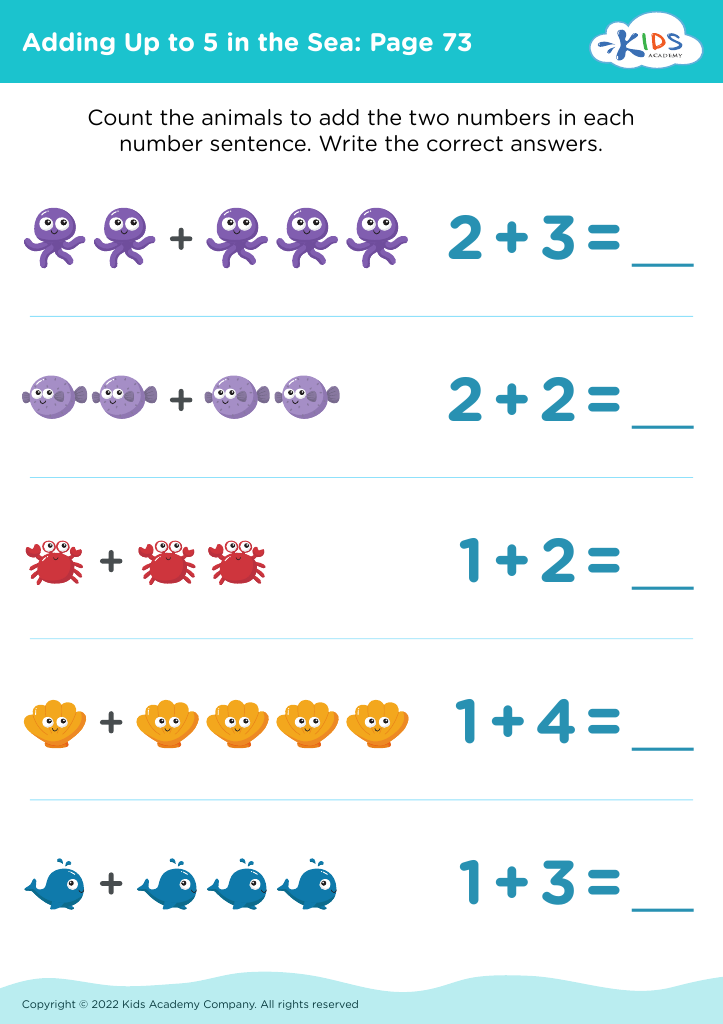
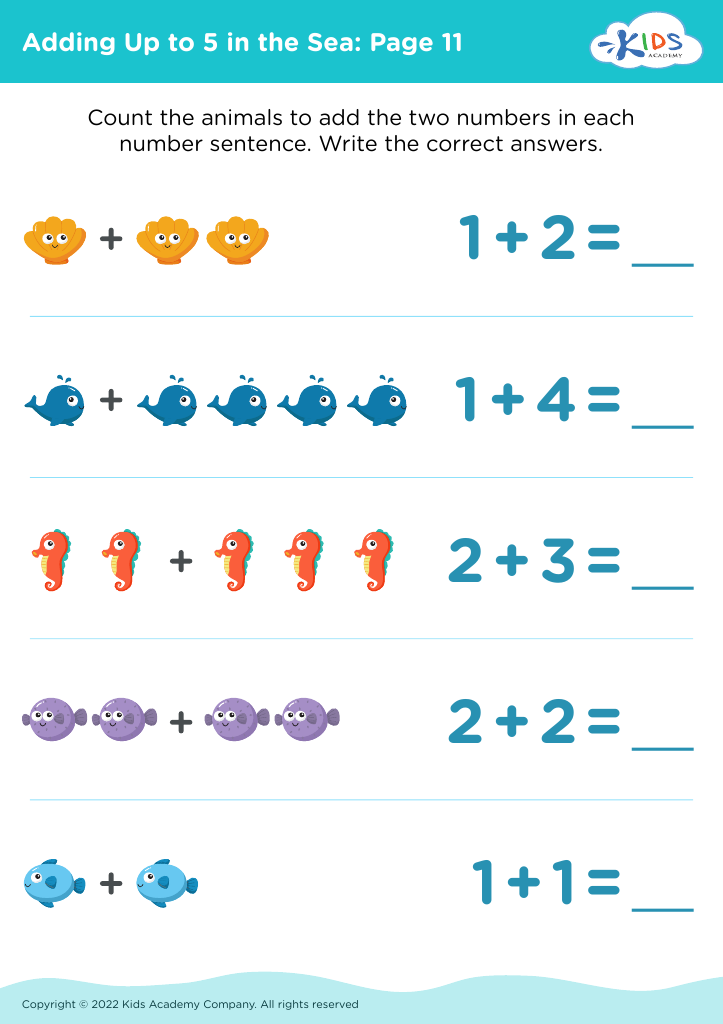
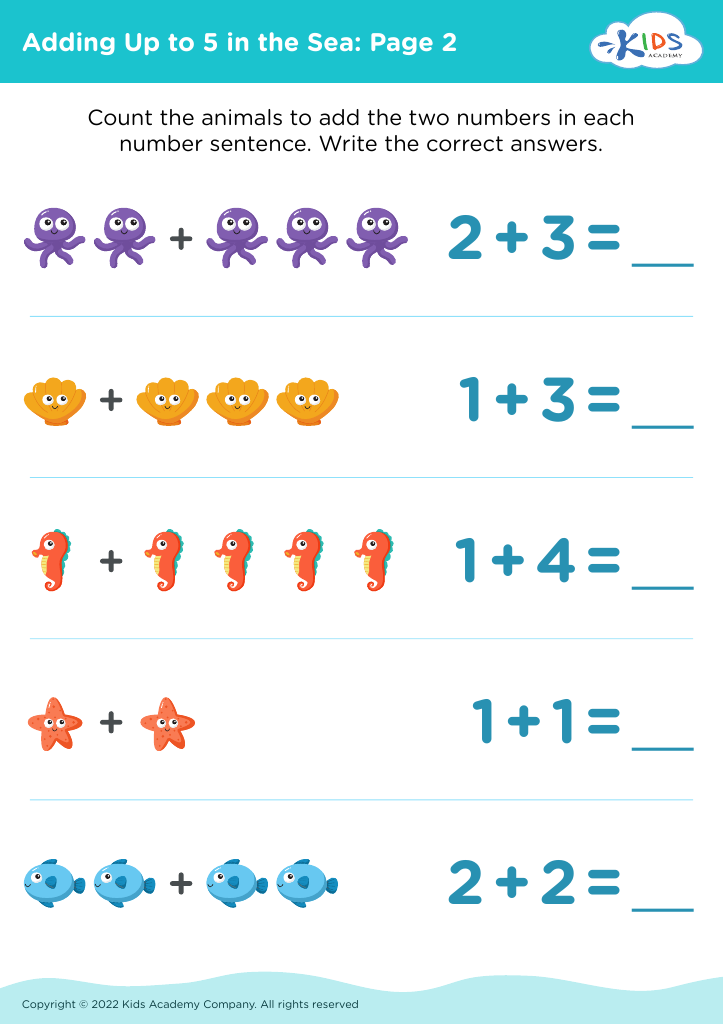
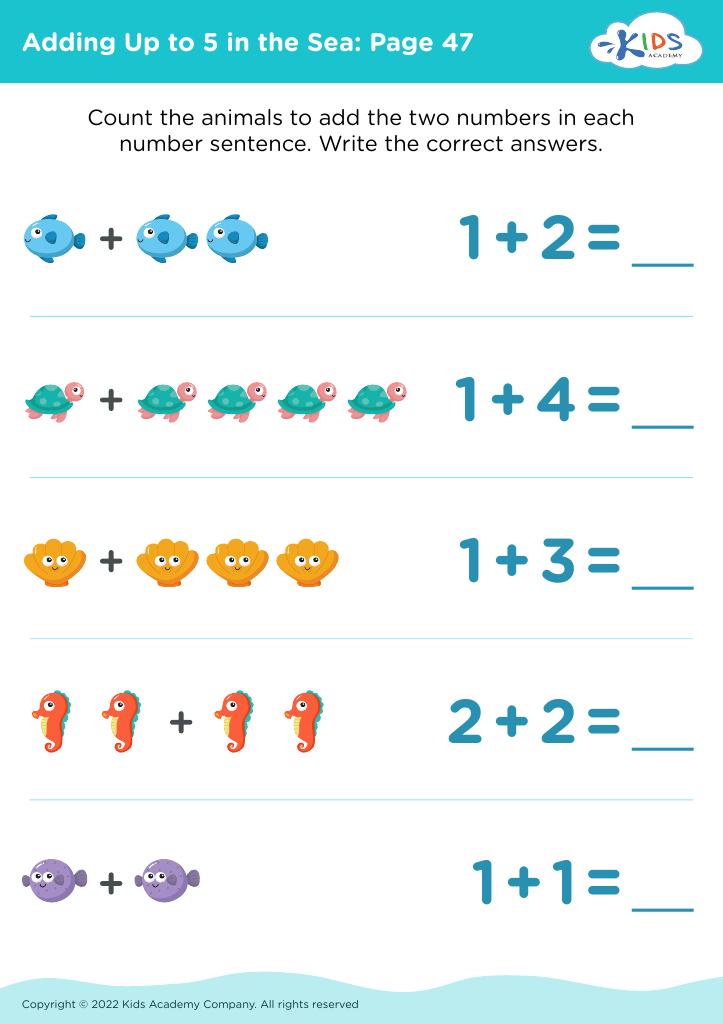
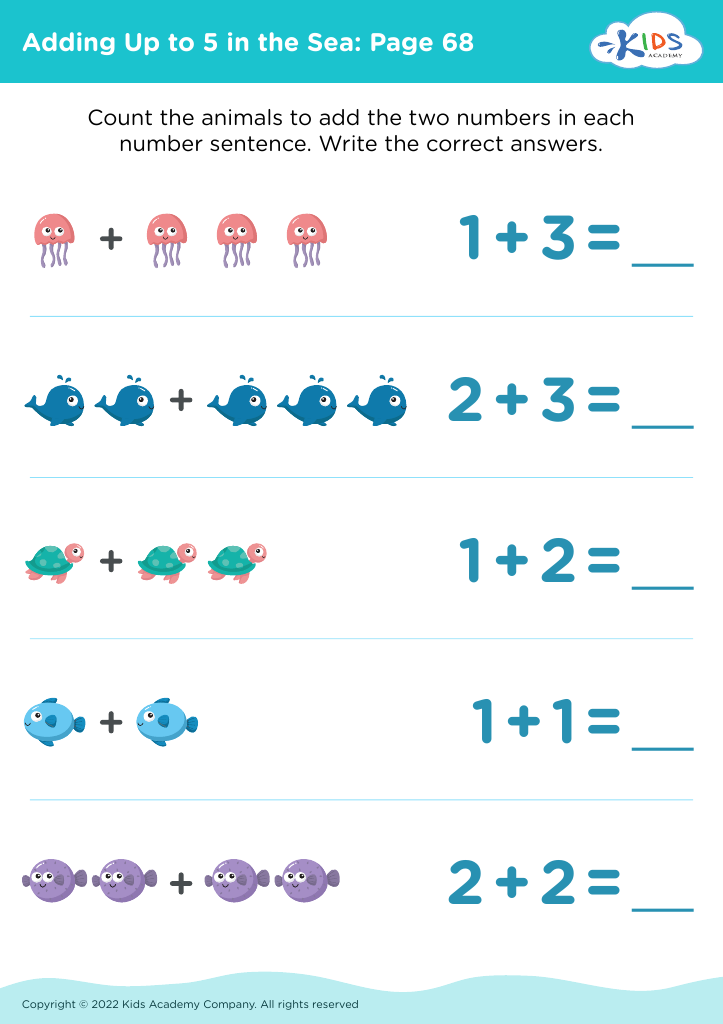



Visual learning is an essential approach for young children, particularly for 4-year-olds who are still developing foundational skills. At this age, children absorb information primarily through visuals, making it crucial for parents and teachers to prioritize this learning style.
Incorporating visual learning through themes like "Adding in the Sea" can make math concepts engaging and memorable. For instance, using colorful underwater images, counting fish, or arranging seashells can help children understand addition in a playful context. This approach not only captures their attention but also employs tangible elements that make abstract concepts more concrete.
Moreover, visual learning enhances cognitive development by improving memory retention and fostering creativity. Children who engage with visuals are more likely to express thoughts and ideas, strengthening their communication skills. The ocean theme can also encourage curiosity about nature, building a richer vocabulary as they learn new words related to marine life and contextual math concepts.
Parents and teachers who embrace visual learning tools and themes cultivate a supportive learning environment. This foundation sets the stage for lifelong learning, equipping children with problem-solving skills and instilling a positive attitude toward education from an early age. Ultimately, investing in visual learning proves to be invaluable for both development and academic success.