
Animal recognition Addition & Subtraction Worksheets for 4-Year-Olds
97 filtered results
Difficulty Level
Grade
Age
-
From - To
Subject
Activity
Standards
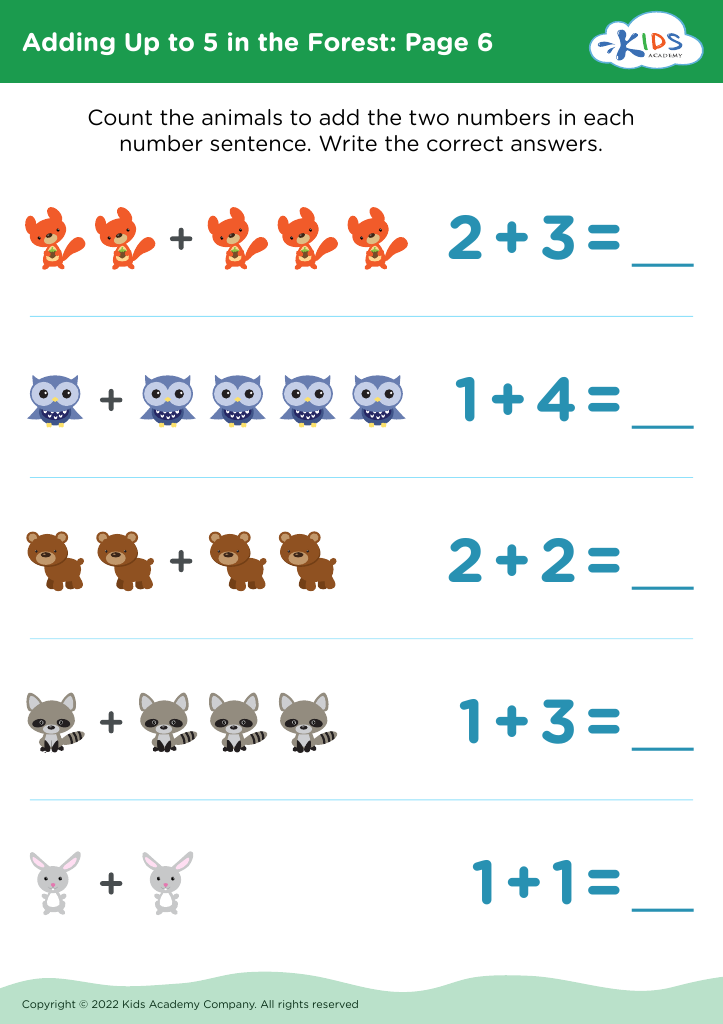
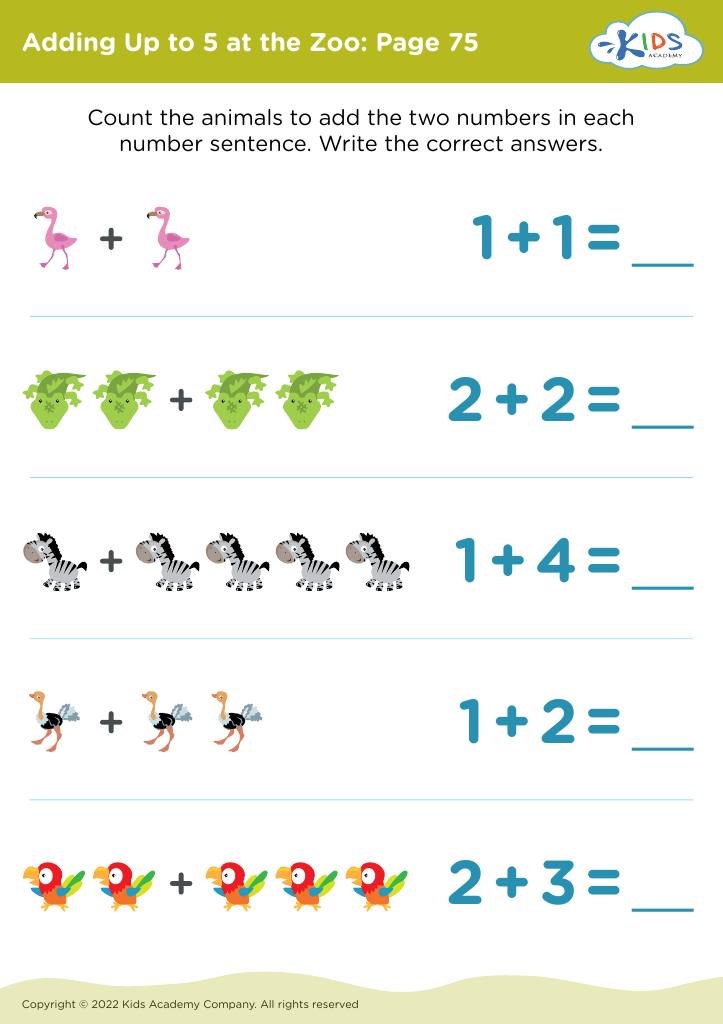
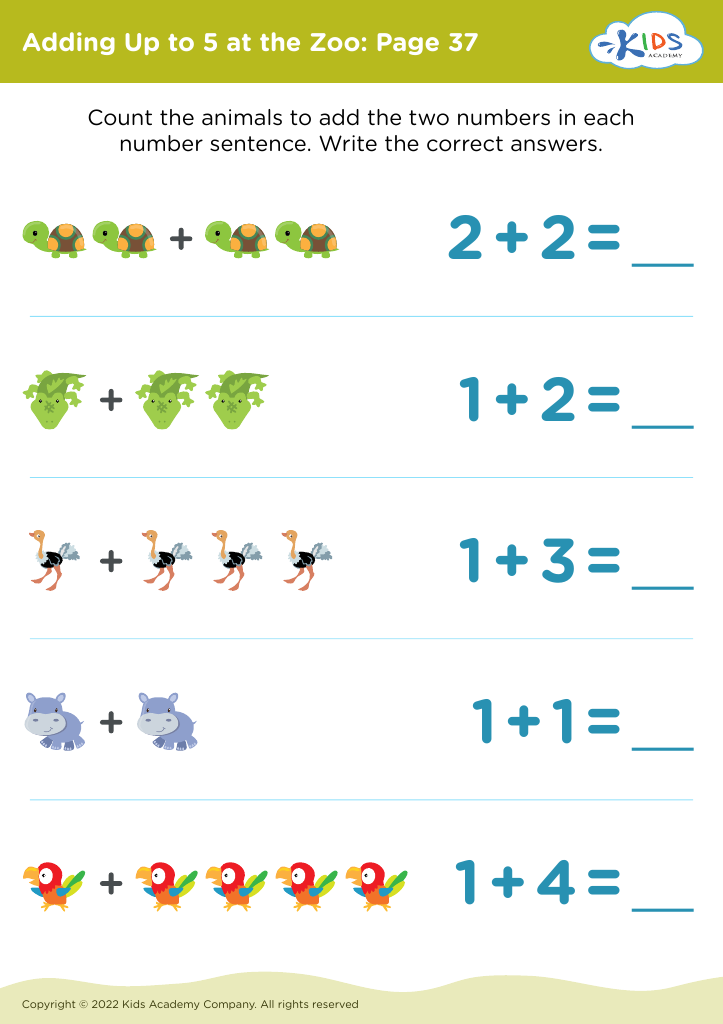
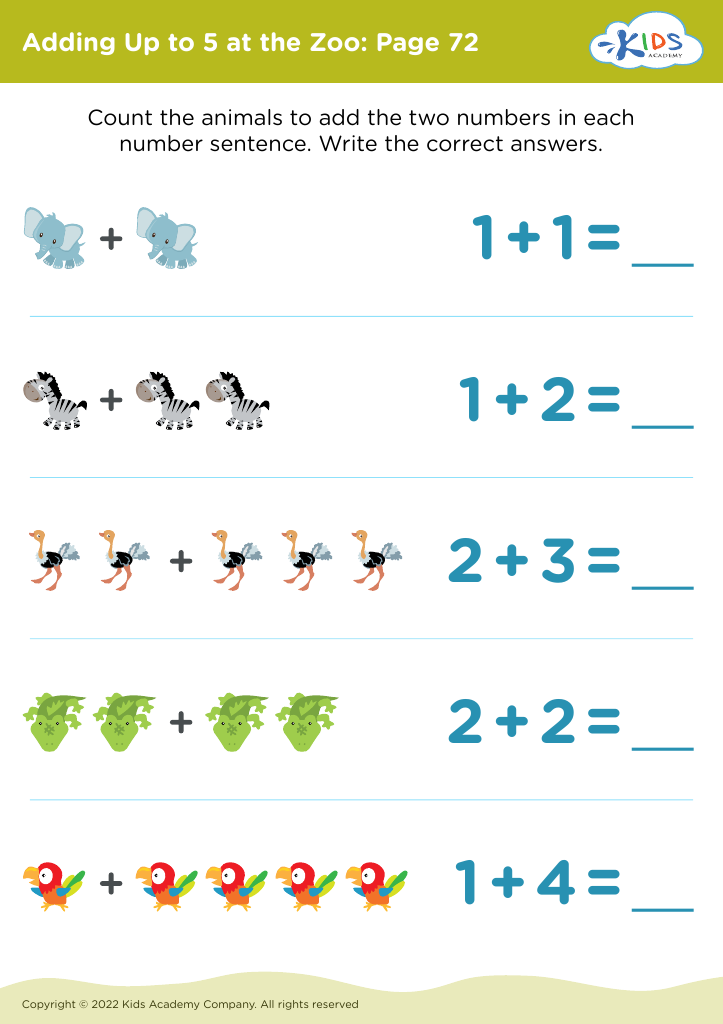
Looking for fun and educational activities for your little one? Our "Animal Recognition Addition & Subtraction Worksheets for 4-Year-Olds" are perfect for both teachers and parents. These engaging resources combine math practice with adorable animal illustrations to build addition and subtraction skills in young learners. Easy to print and filled with colorful images, these worksheets not only enhance numerical understanding but also boost cognitive skills through animal recognition. Designed specifically for 4-year-olds, they offer a playful and interactive approach to learning basic math, making education an enjoyable adventure! Download today and watch your child’s skills flourish.
Favorites
With answer key
Interactive
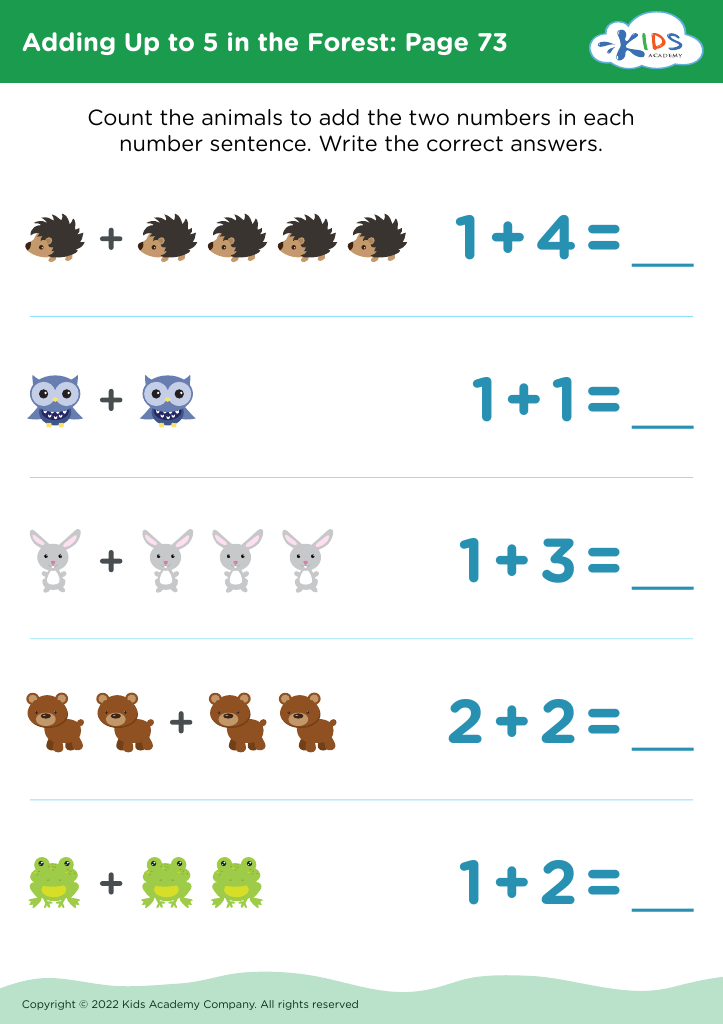
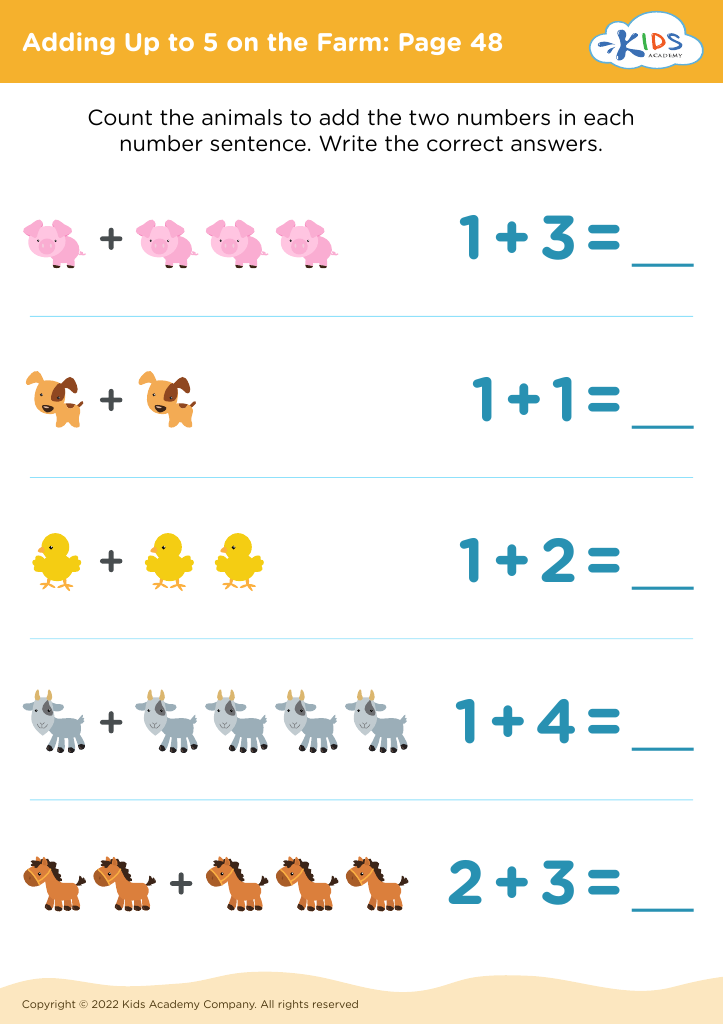
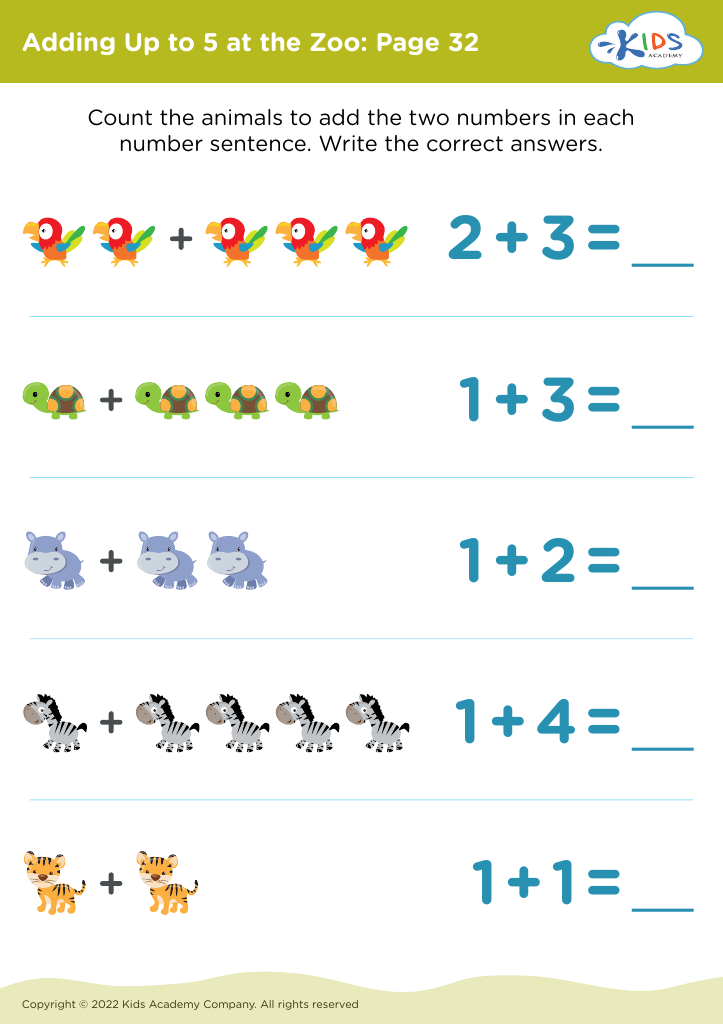
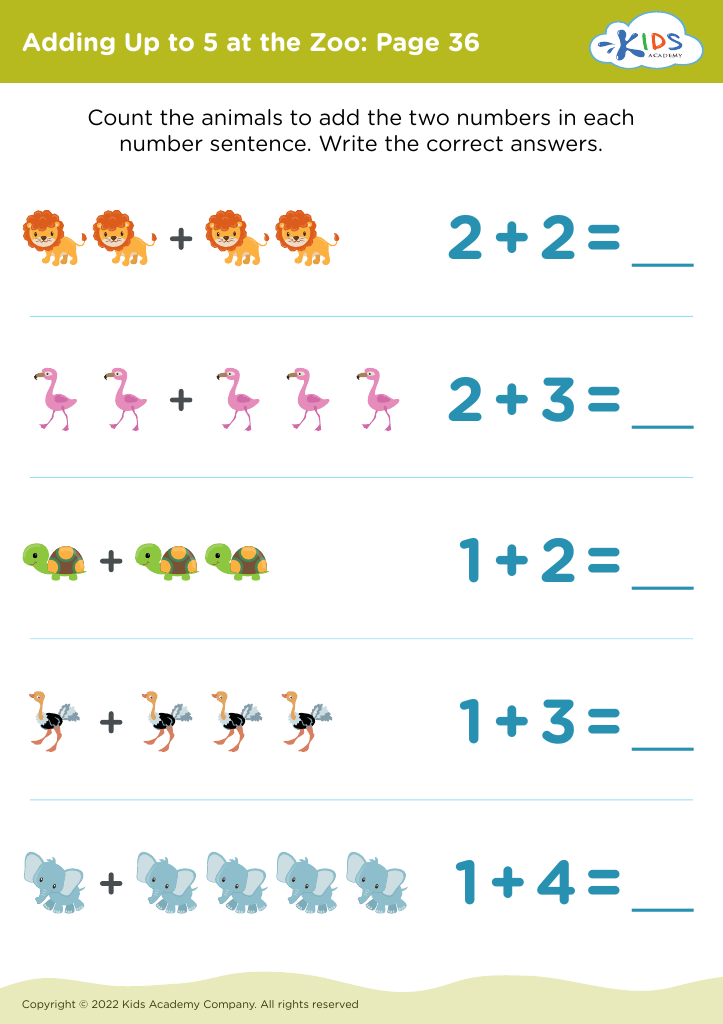
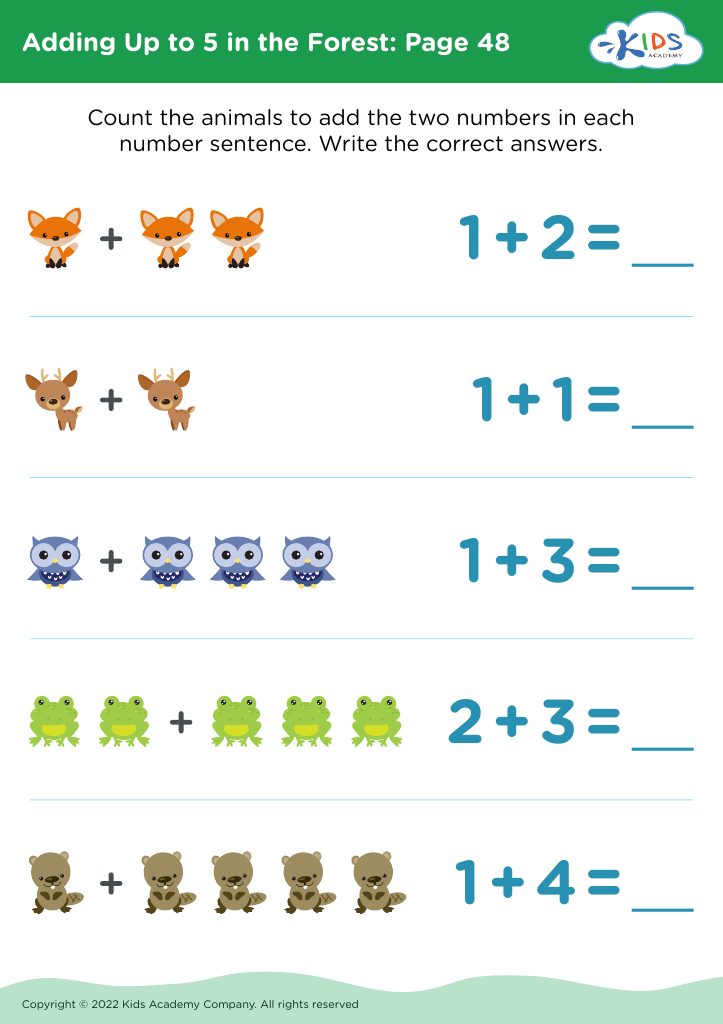
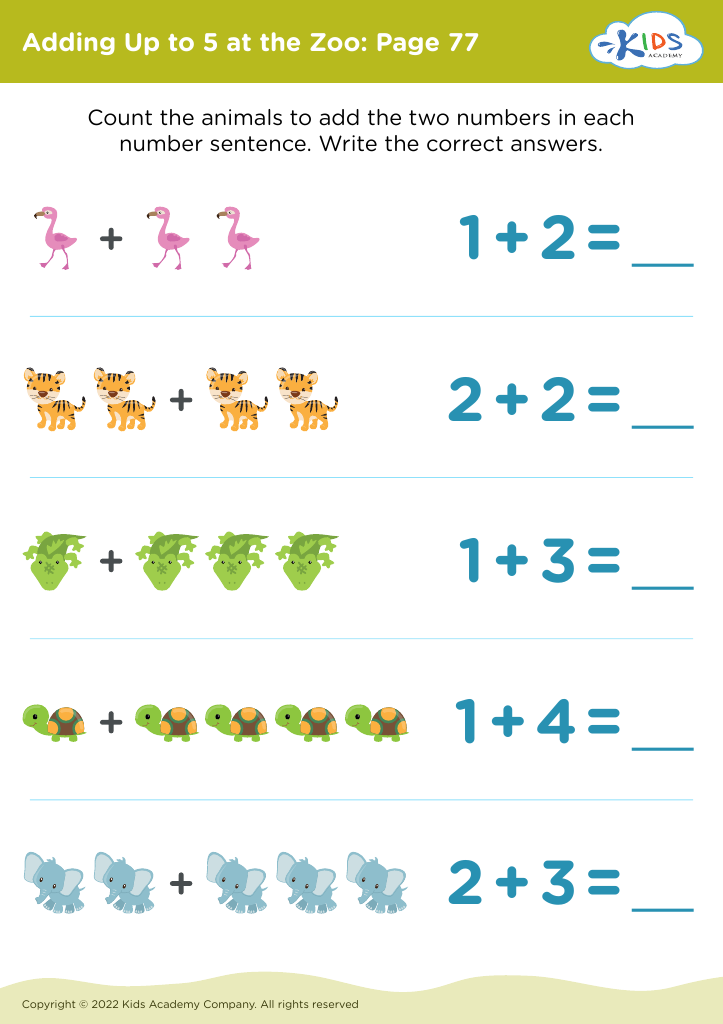
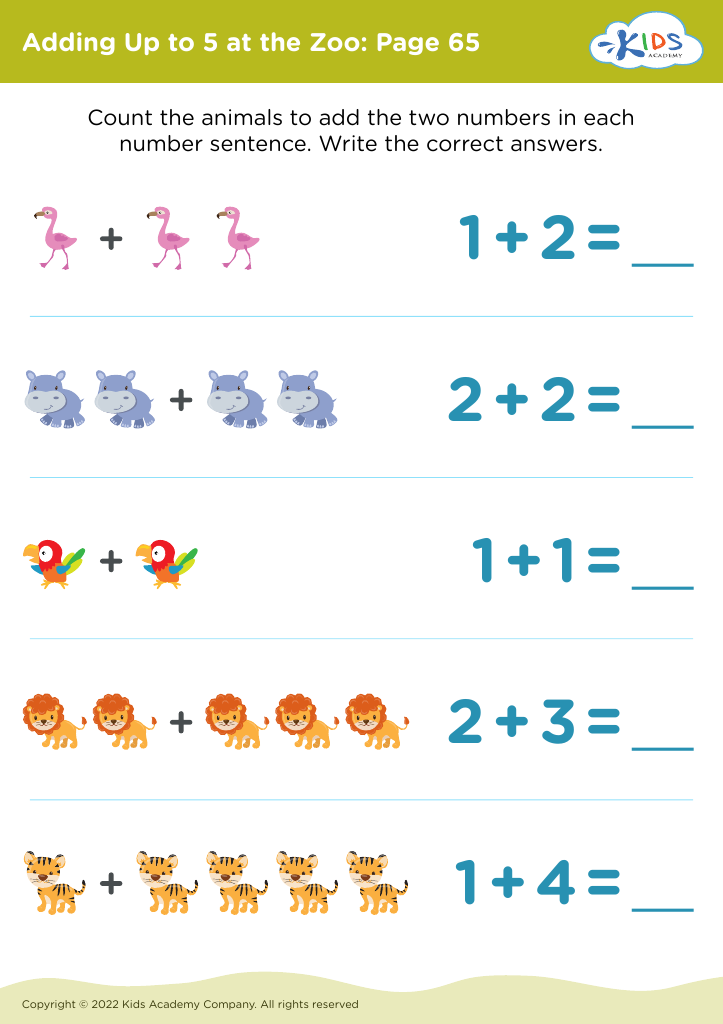
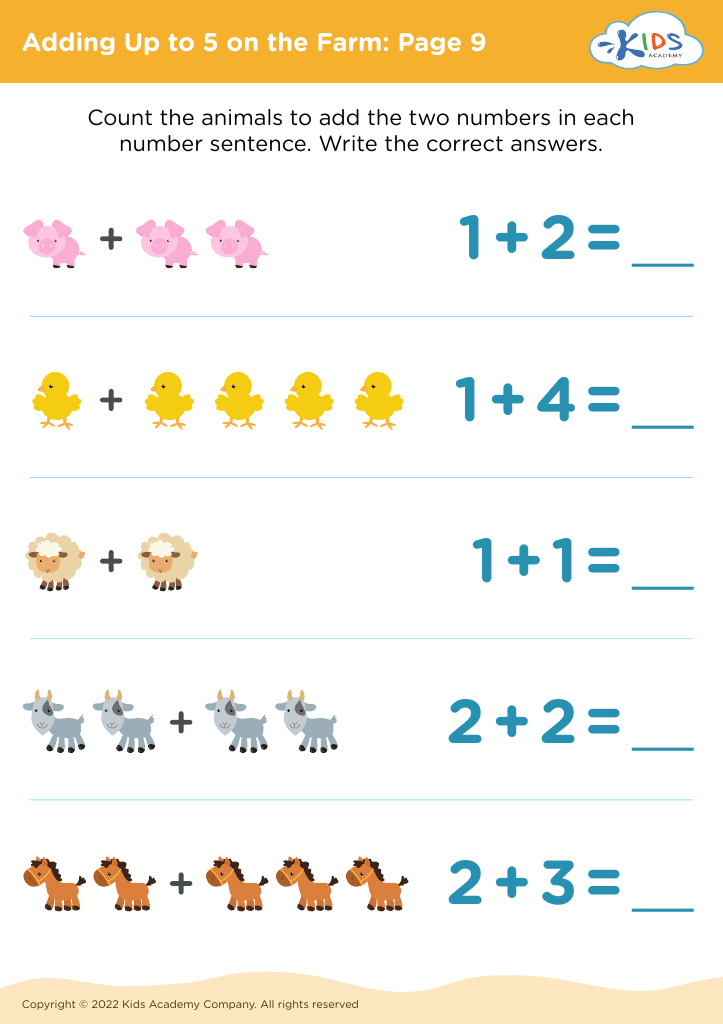
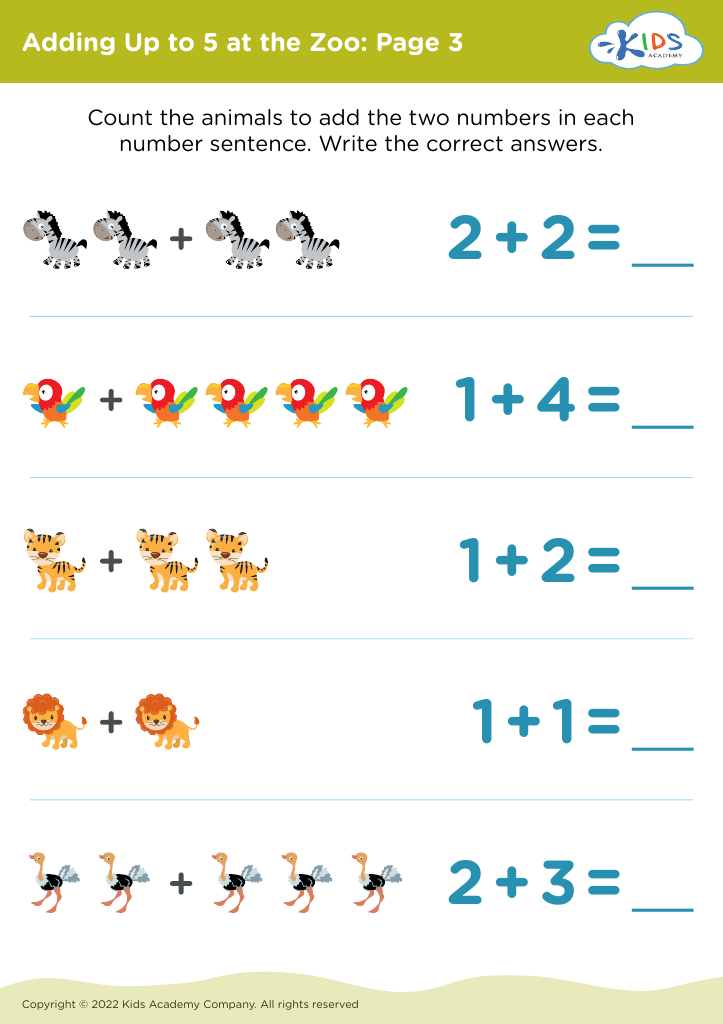
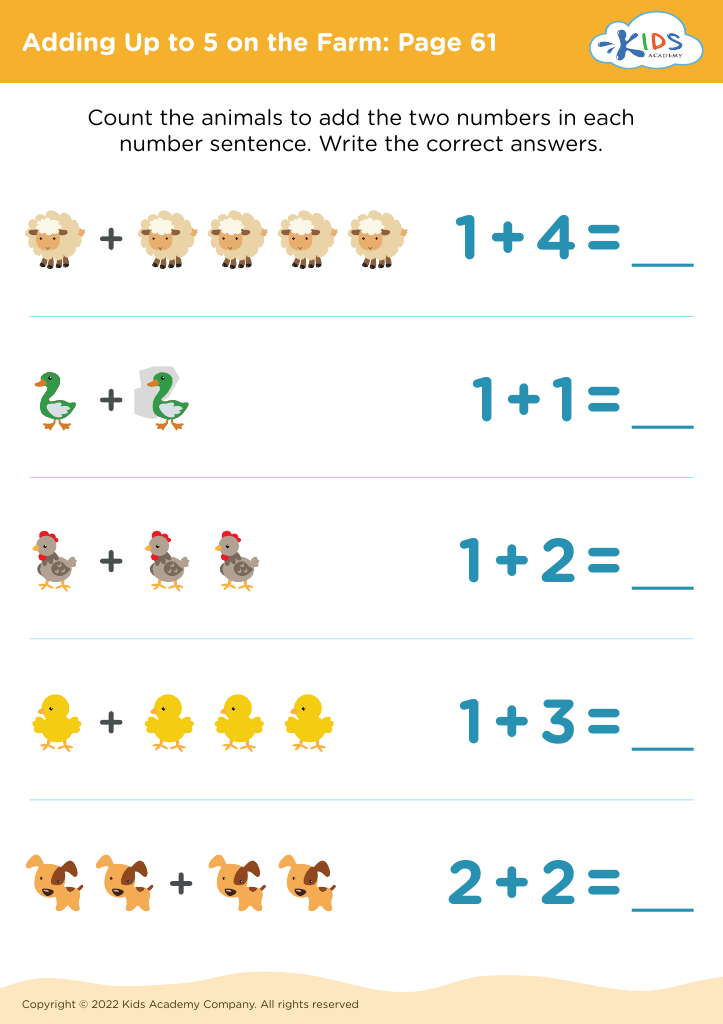
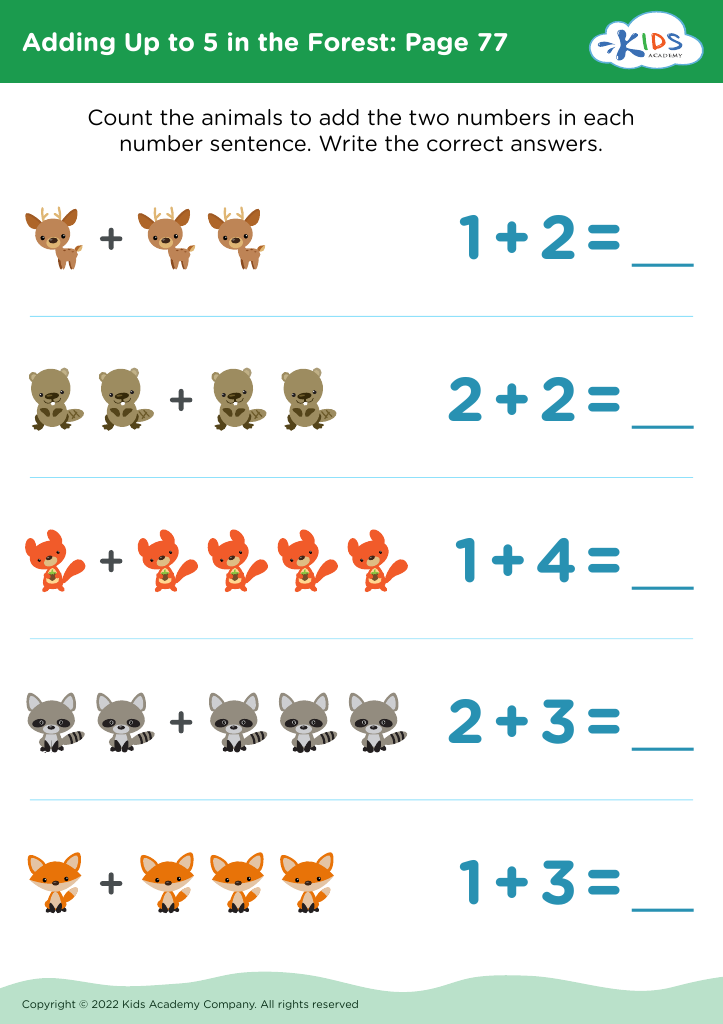
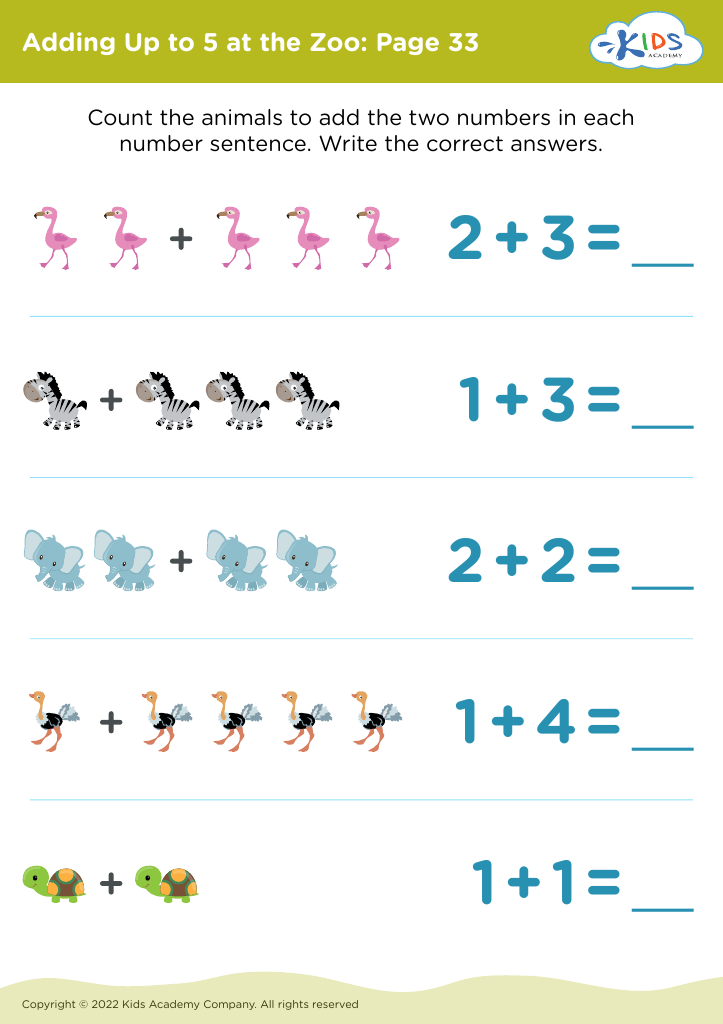
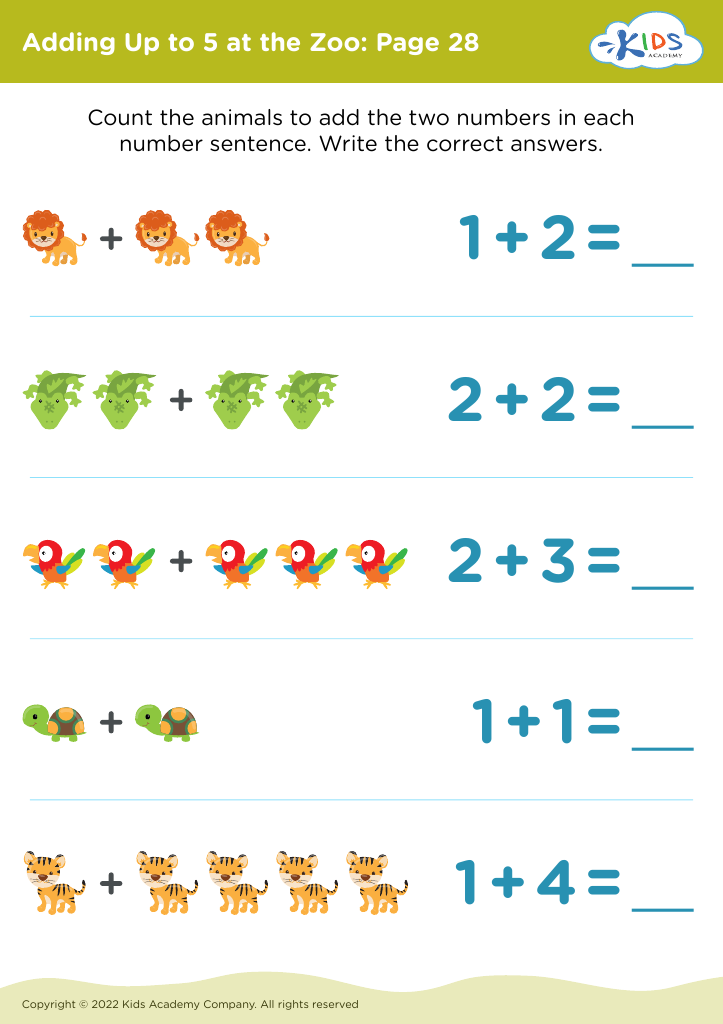
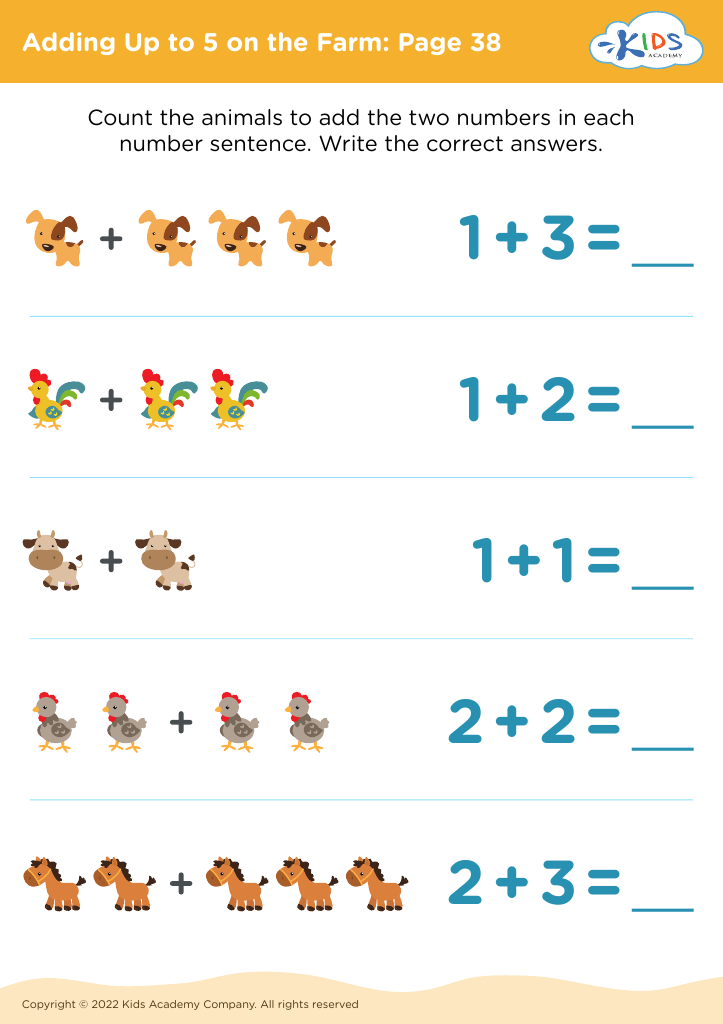
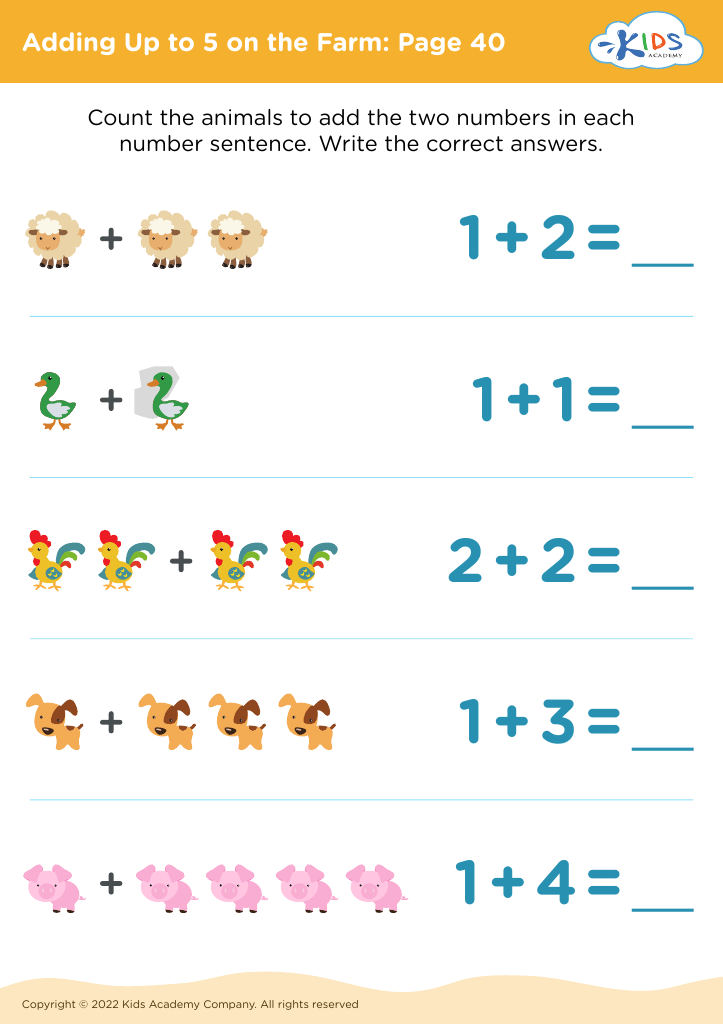
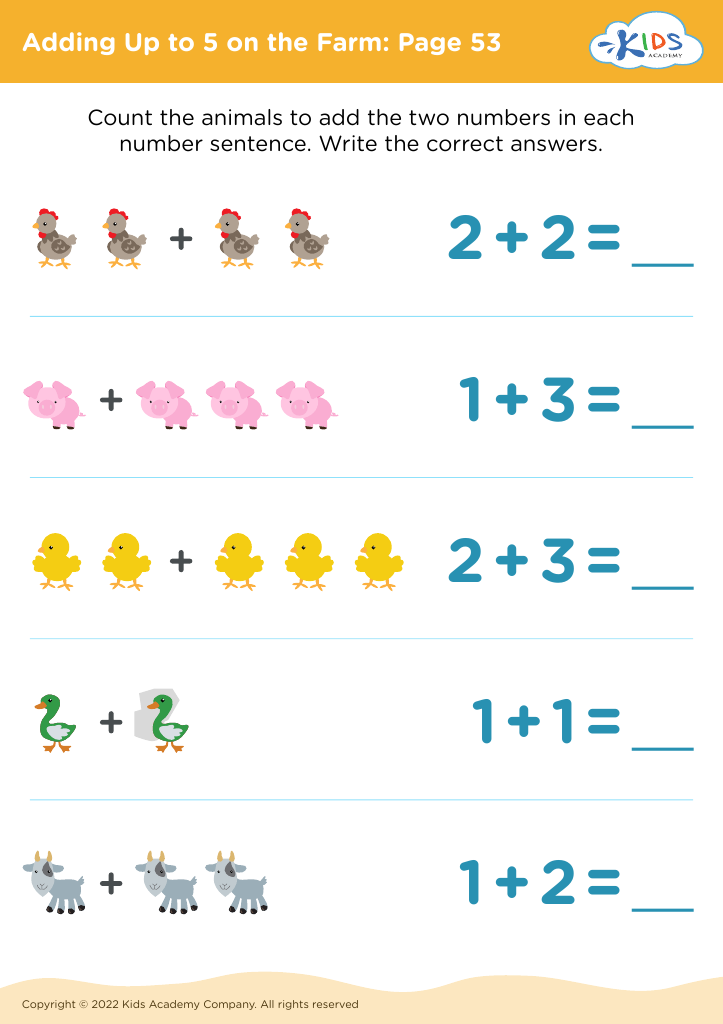
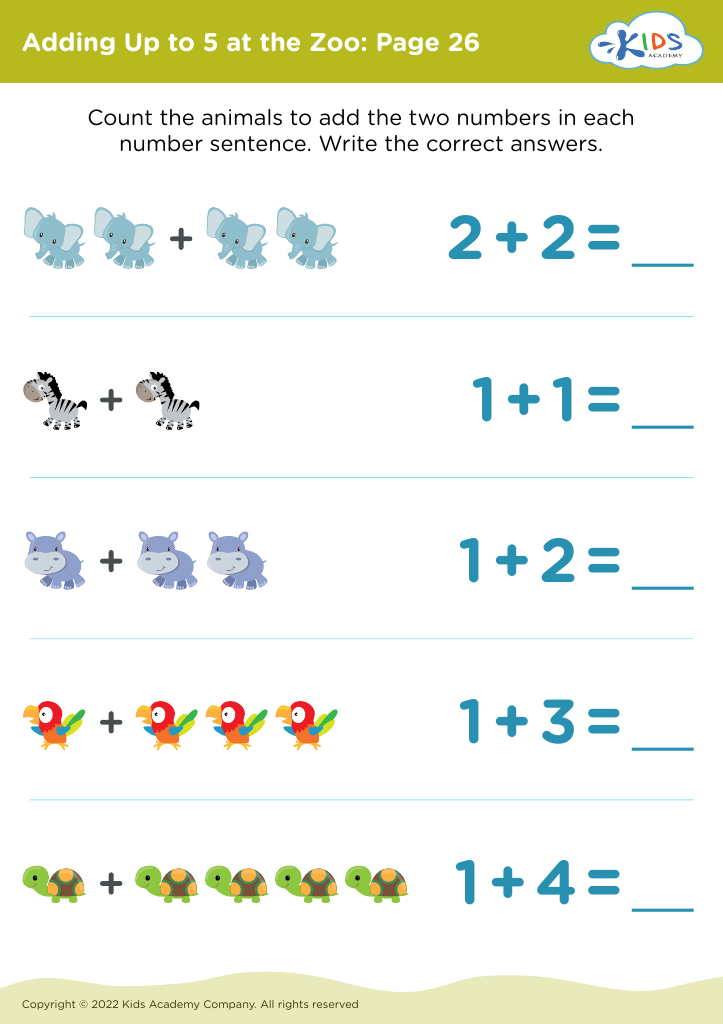
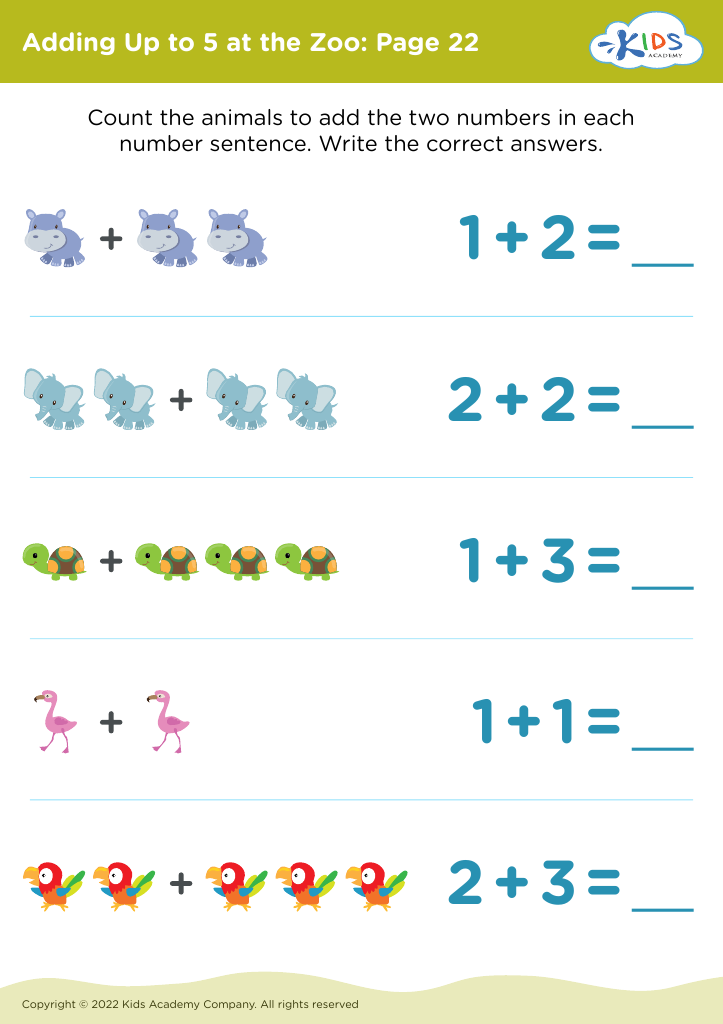
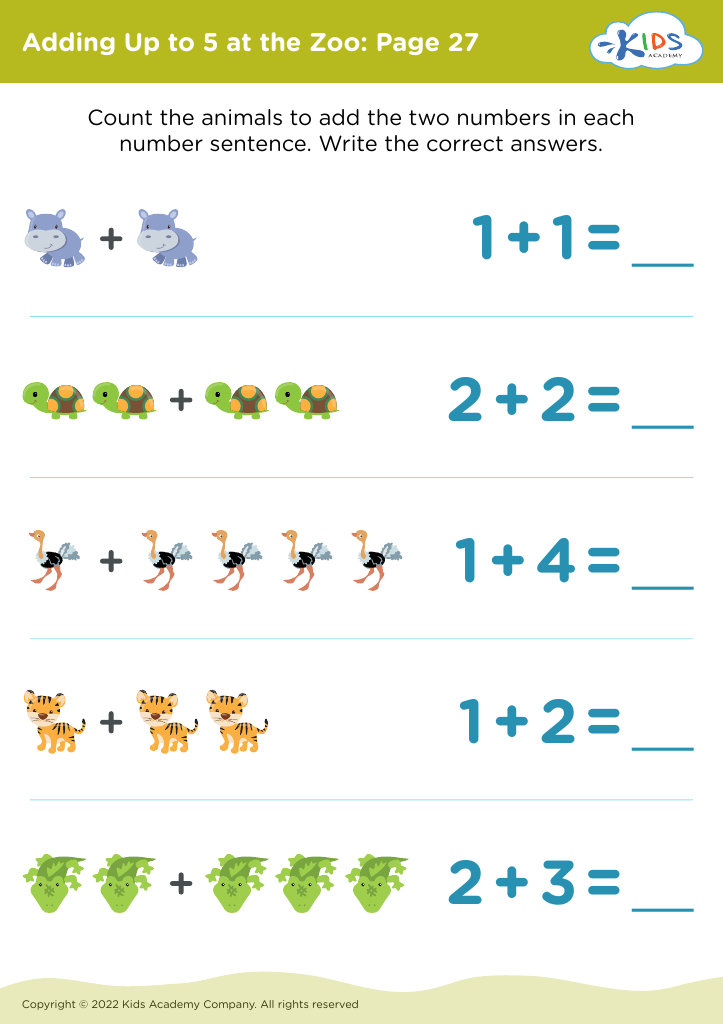
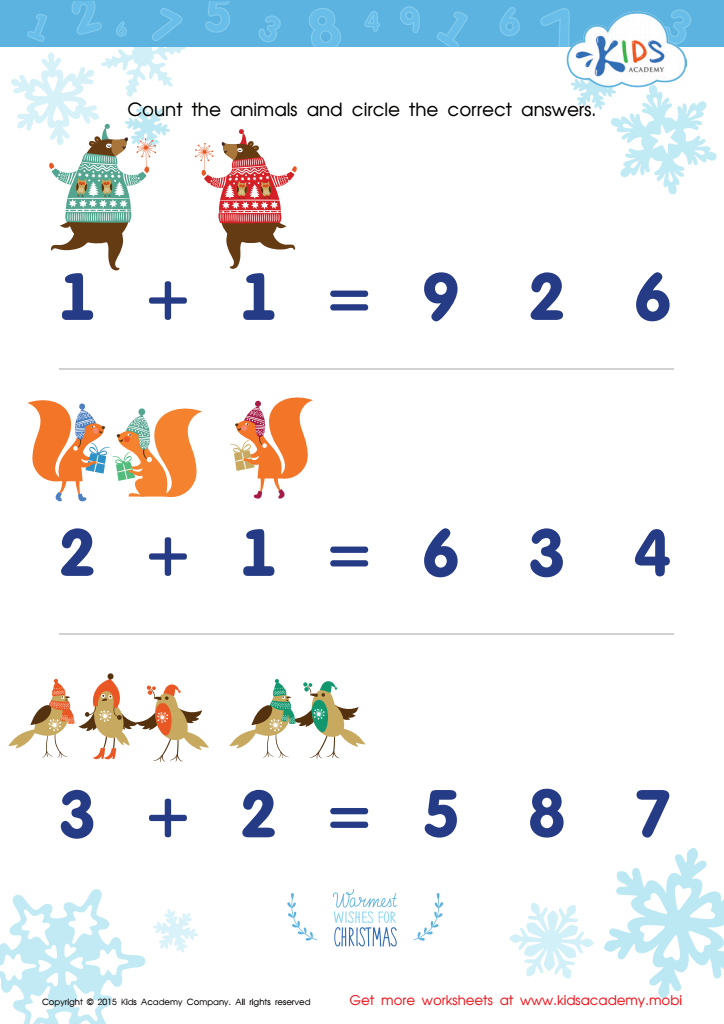
Count Funny Animals Worksheet
Get your kid in the Christmas spirit with this festive addition worksheet! They'll have fun counting the colorful animals and writing in the numbers. Our graphic layout makes it easy for them to visualize and solve the task. Print it out and help your kid keep their math skills sharp this winter with Kids Academy!
 Assign to My Students
Count Funny Animals Worksheet
Worksheet
Join Kids Academy for Free
Who is primarily going to use this learning content?








Parents and teachers should prioritize animal recognition addition and subtraction for 4-year-olds because these early math activities serve a dual purpose of cognitive development and engagement. At this age, children are naturally curious about the world around them, particularly about animals. Integrating animals into math exercises makes learning more relatable and enjoyable, fostering a positive attitude toward mathematics from an early age.
First, incorporating animals into addition and subtraction skills strengthens basic arithmetic foundations. It enables children to understand fundamental math concepts through visual and tangible examples, making abstract ideas more concrete. For instance, counting animal figures or pictures helps solidify the concept of quantity and numerical relationships.
Second, engaging children with animal-themed math activities can expand their vocabulary and general knowledge. Learning to count with animals not only teaches math but also educates them about different species, fostering an early interest in science and nature.
Moreover, these activities support the development of problem-solving skills. When children solve simple addition and subtraction problems with animals, they learn to think critically and develop strategies for arriving at correct answers.
Investing in such educational practices can lead to a more rounded intellectual growth, preparing young mind to tackle various learning challenges ahead with enthusiasm and confidence.








