Filters

248 filtered results

Clear all filters
Favorites
With answer key
Interactive

248 filtered results

Difficulty Level

Grade


Check out this FREE Trial Lesson on Addition & Subtraction for age 4!

H

Favorites
With answer key
Interactive
  • 4
  • Counting practice
  • Addition & Subtraction
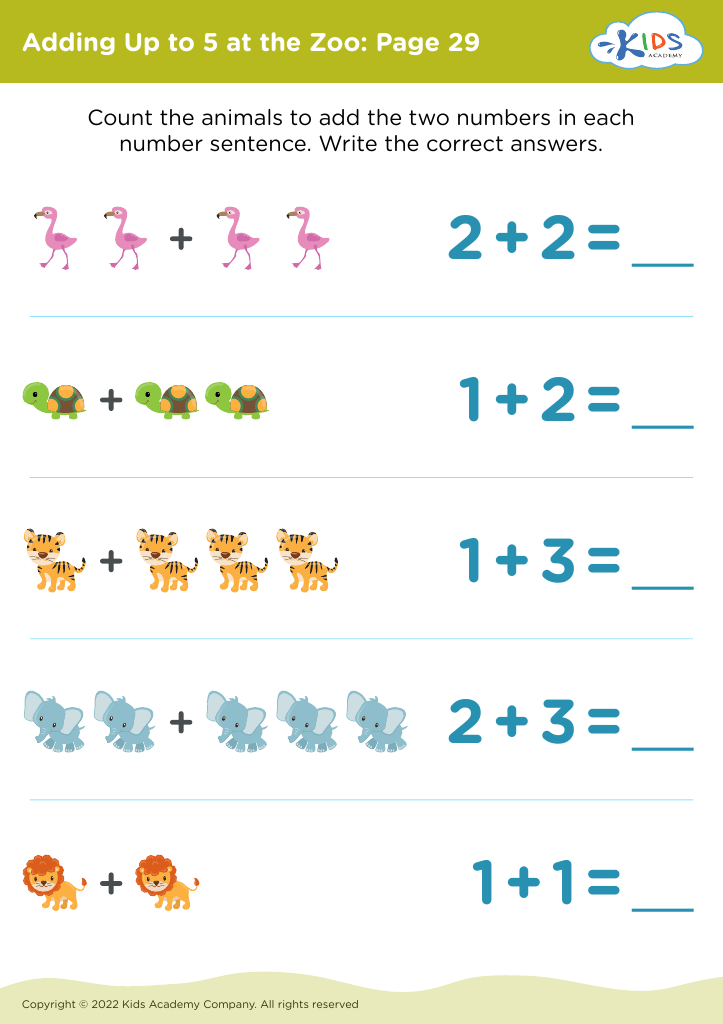
Adding Up to 5 at the Zoo: Page 29
Worksheet
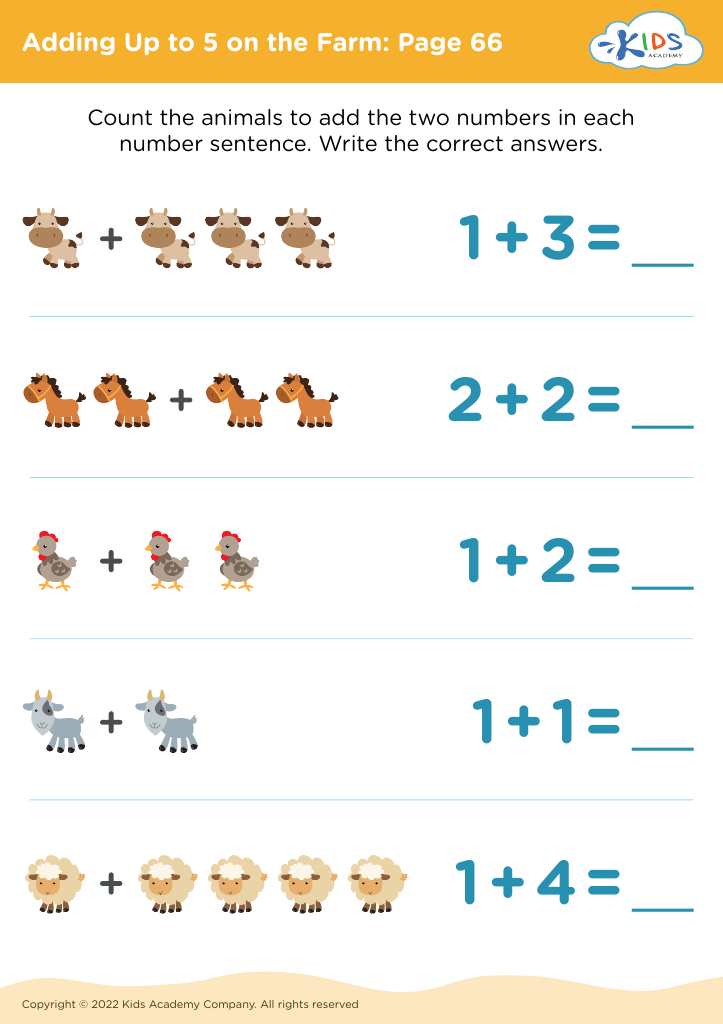
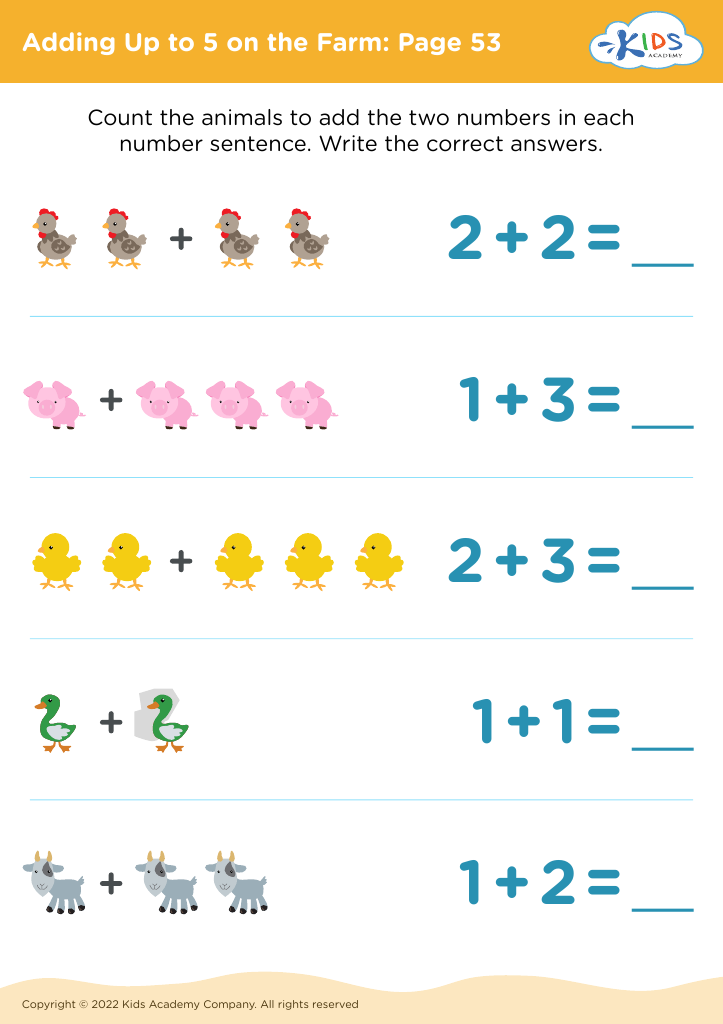
Adding Up to 5 on the Farm: Page 66
Worksheet
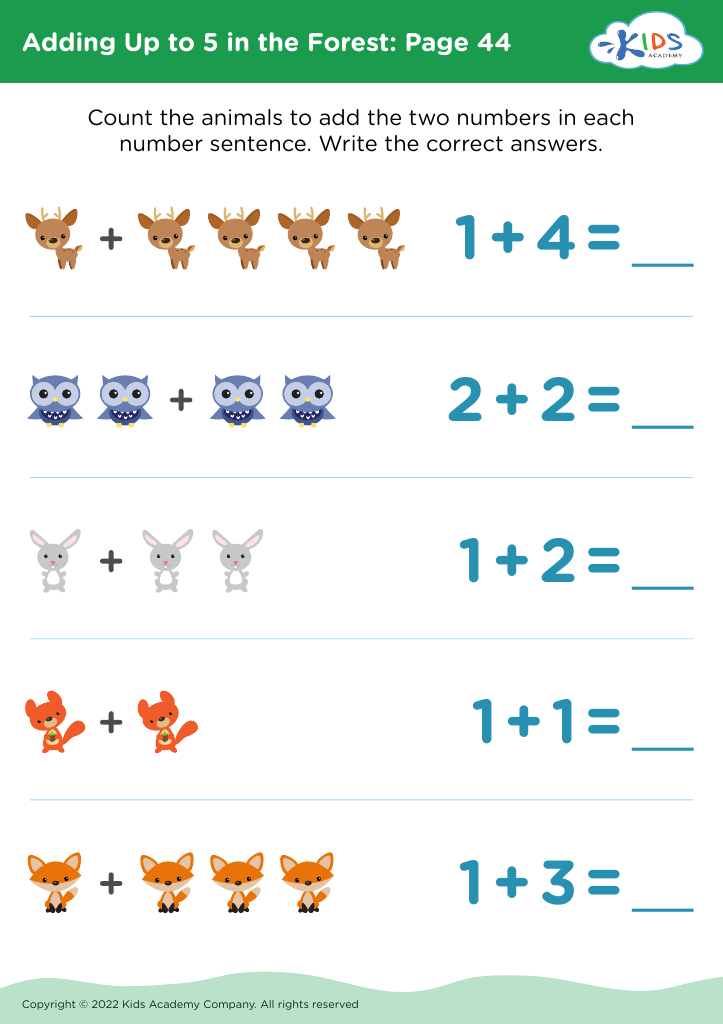
Adding Up to 5 in the Forest: Page 44
Worksheet
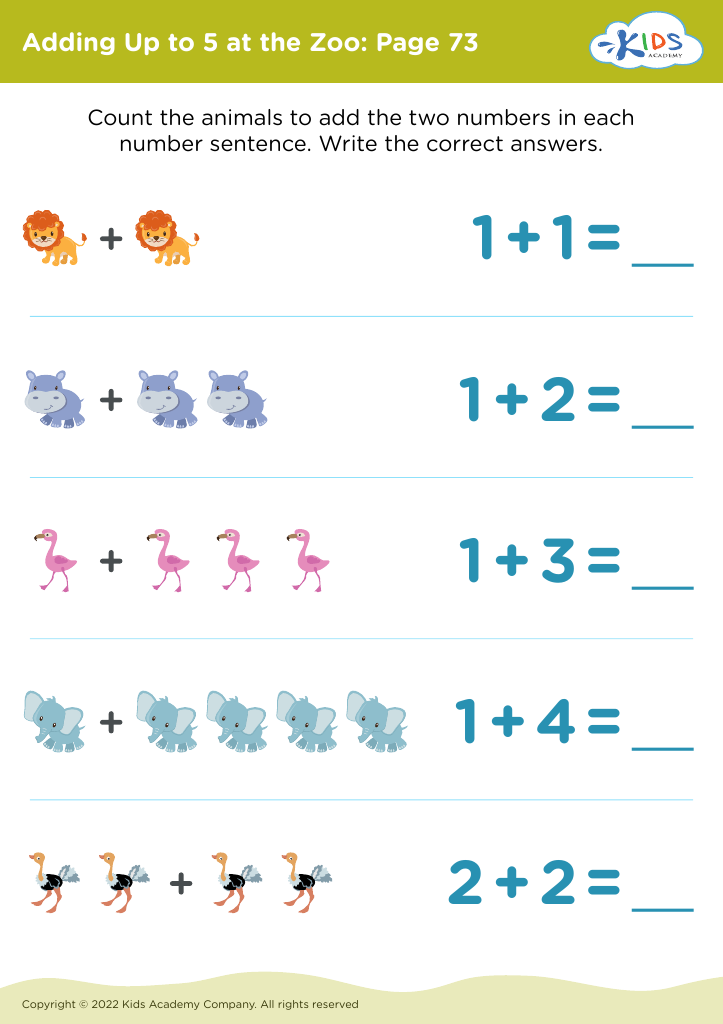
Adding Up to 5 at the Zoo: Page 73
Worksheet
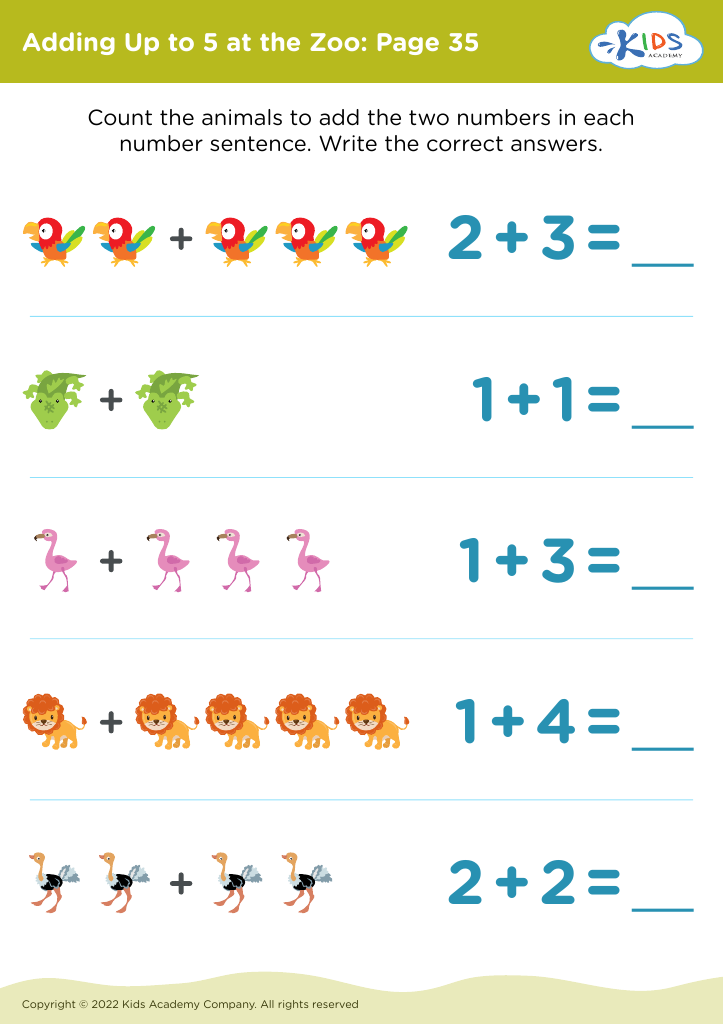
Adding Up to 5 at the Zoo: Page 35
Worksheet
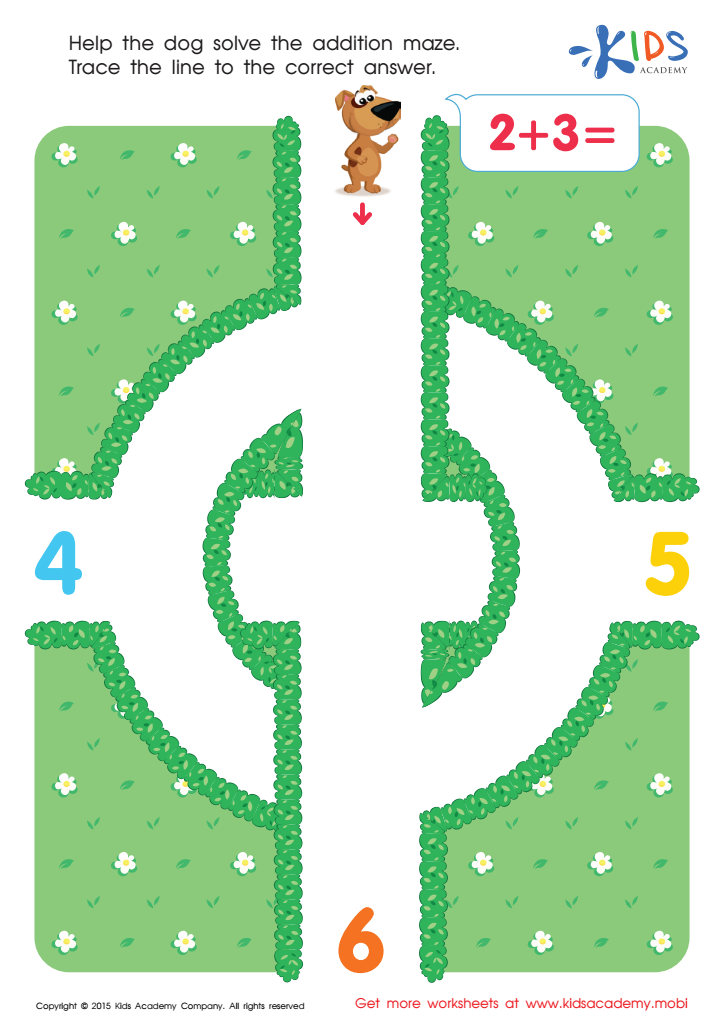
Math: Two And Three Addition PDF Worksheet

Two And Three Addition Worksheet

Give your children the task and let them find the path to the right answer while they make their way through the maze, and don't forget to let them trace the path.
Two And Three Addition Worksheet
Worksheet
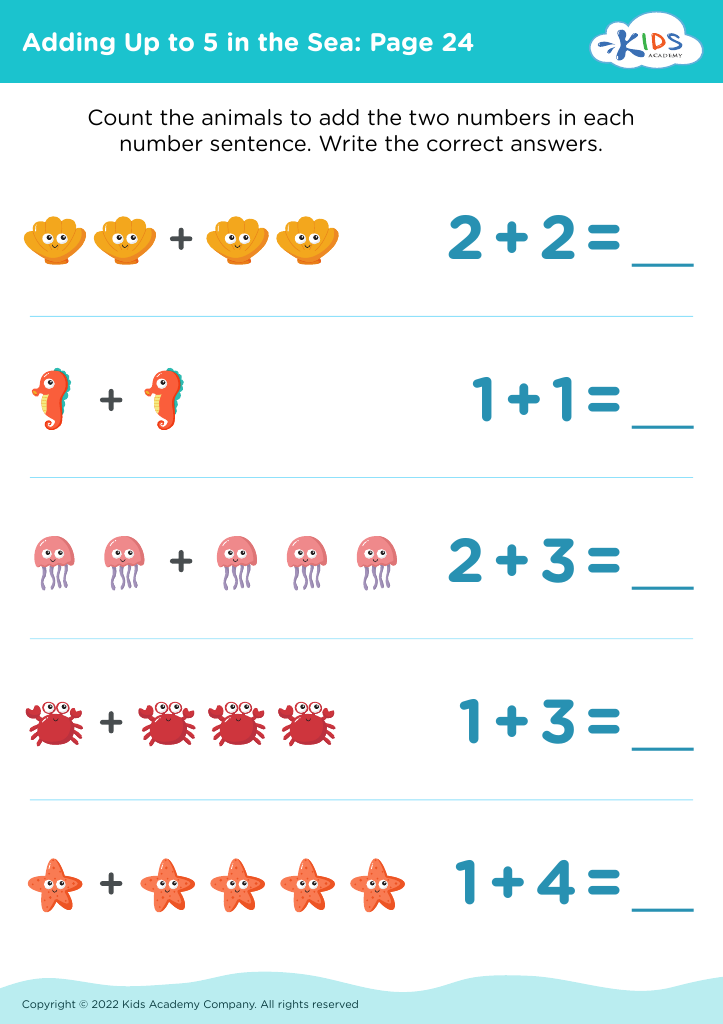
Adding Up to 5 in the Sea: Page 24
Worksheet
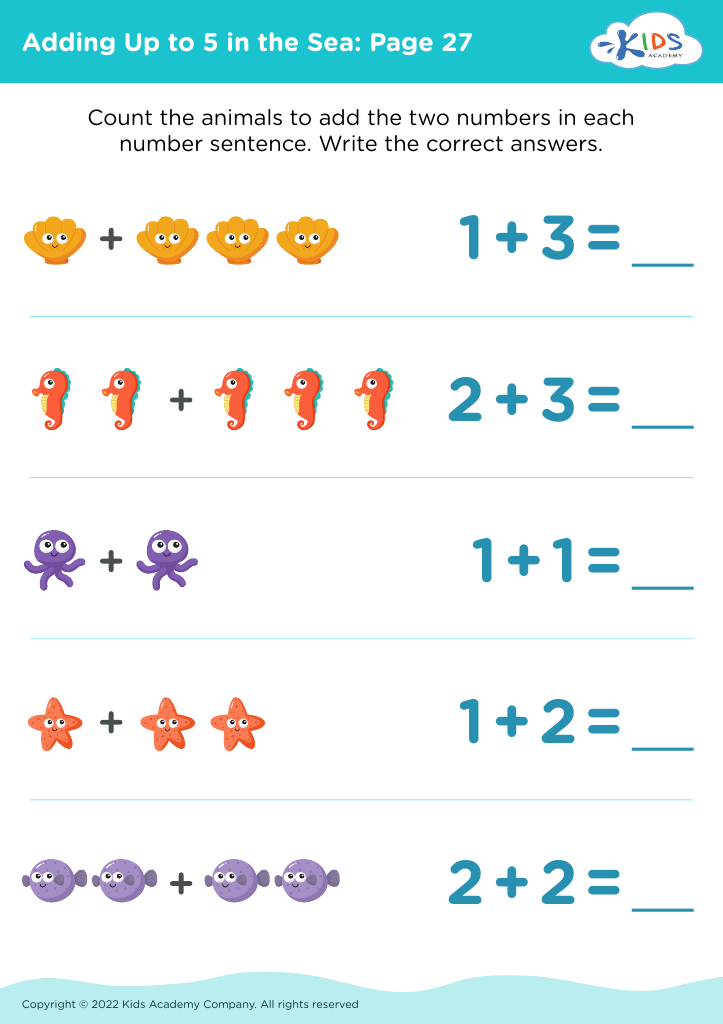
Adding Up to 5 in the Sea: Page 27
Worksheet
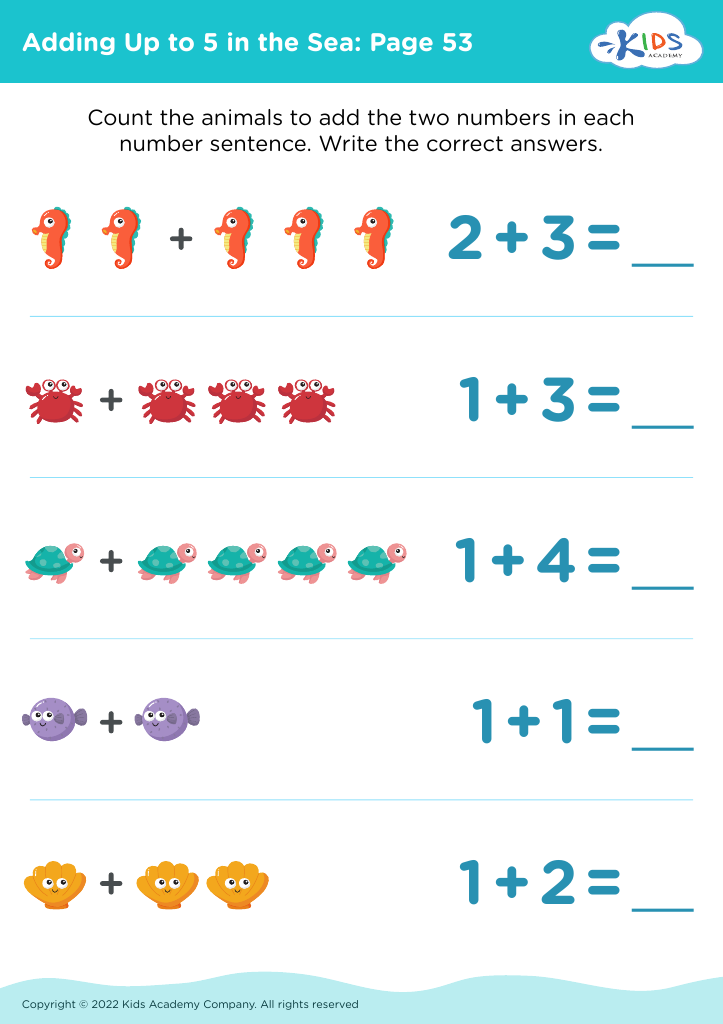
Adding Up to 5 in the Sea: Page 53
Worksheet
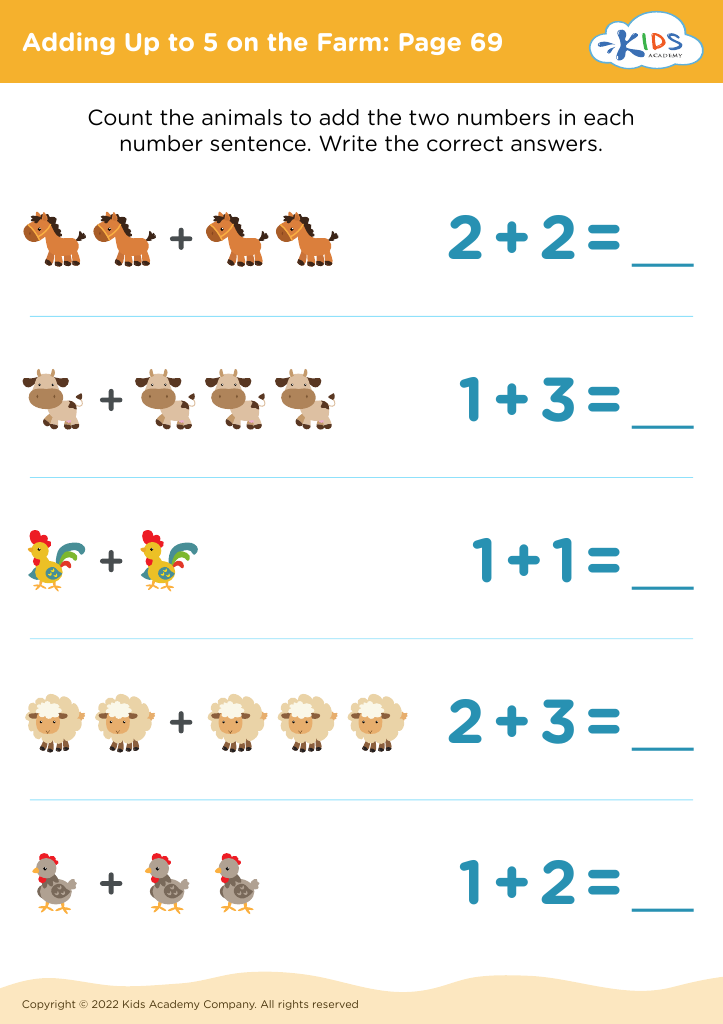
Adding Up to 5 on the Farm: Page 69
Worksheet
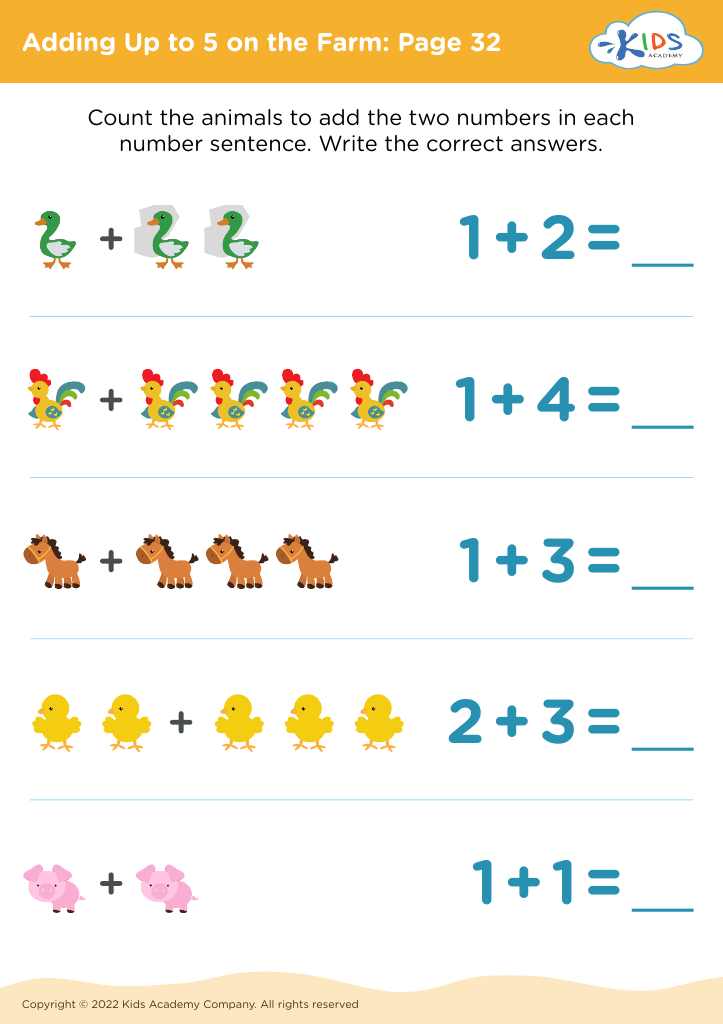
Adding Up to 5 on the Farm: Page 32
Worksheet
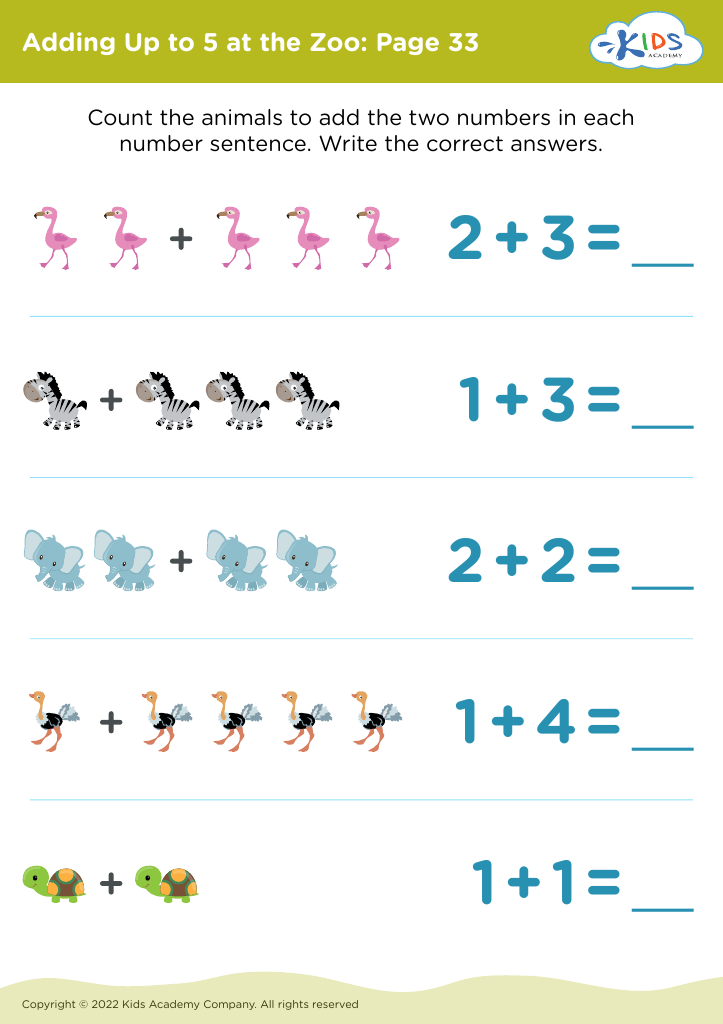
Adding Up to 5 at the Zoo: Page 33
Worksheet
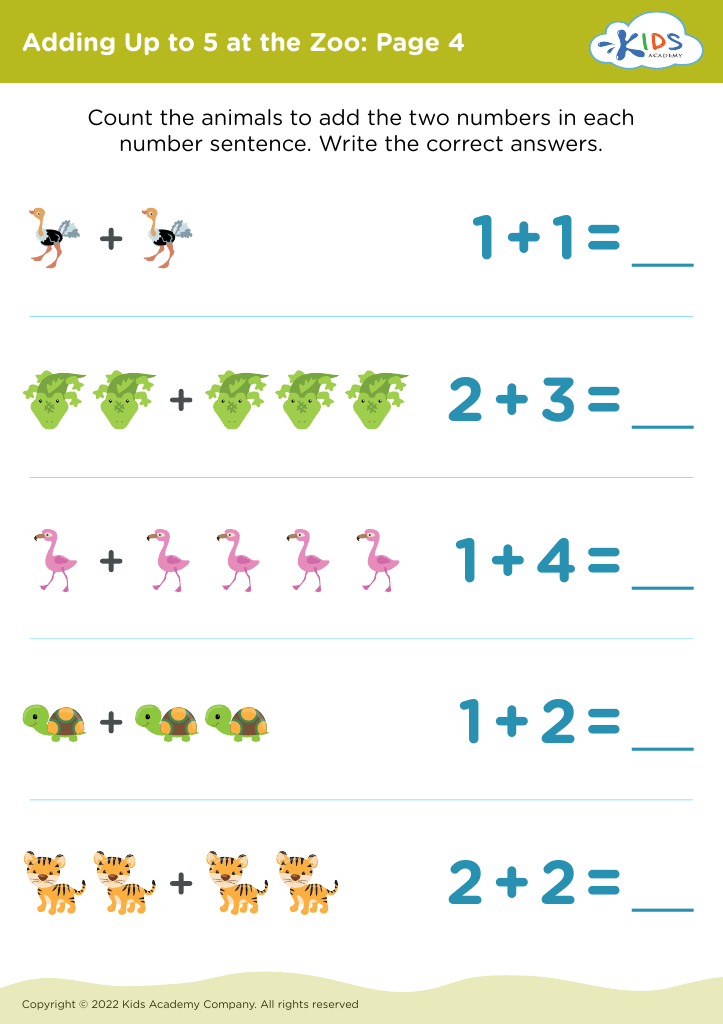
Adding Up to 5 at the Zoo: Page 4

Adding Up to 5 at the Zoo: Page 4

Adding Up to 5 at the Zoo: Page 4
Worksheet
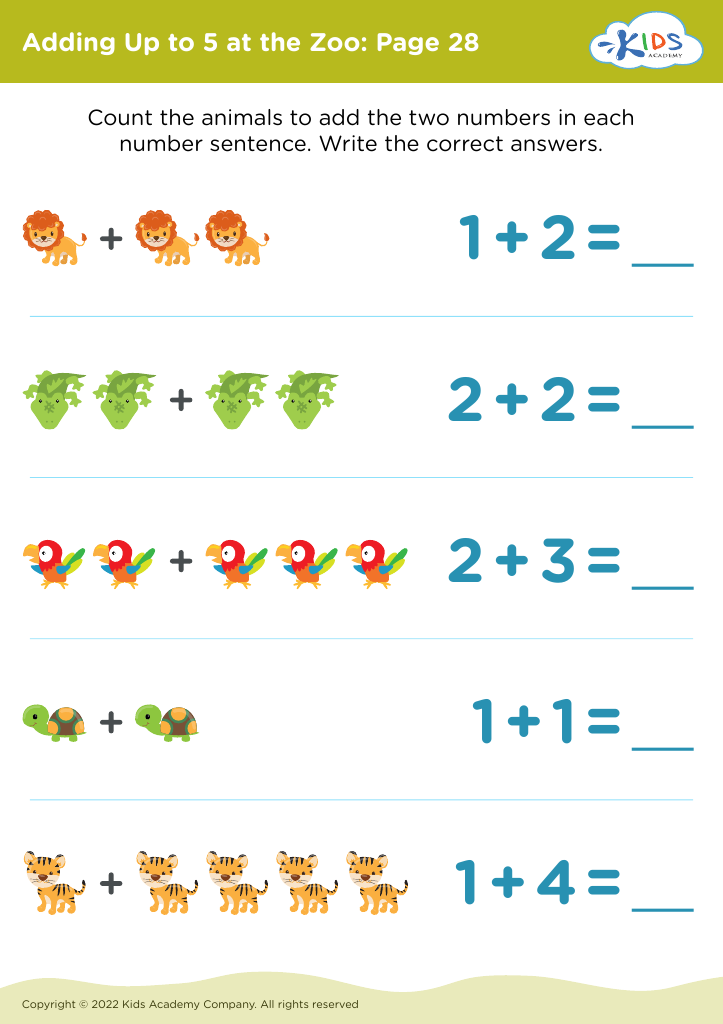
Adding Up to 5 at the Zoo: Page 28
Worksheet
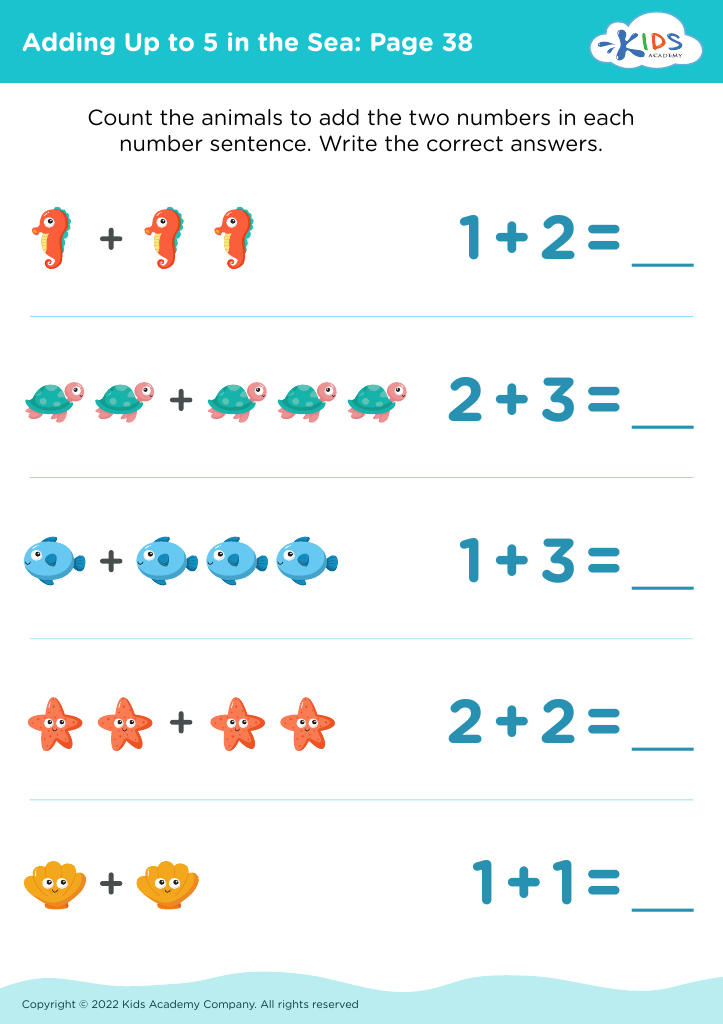
Adding Up to 5 in the Sea: Page 38
Worksheet
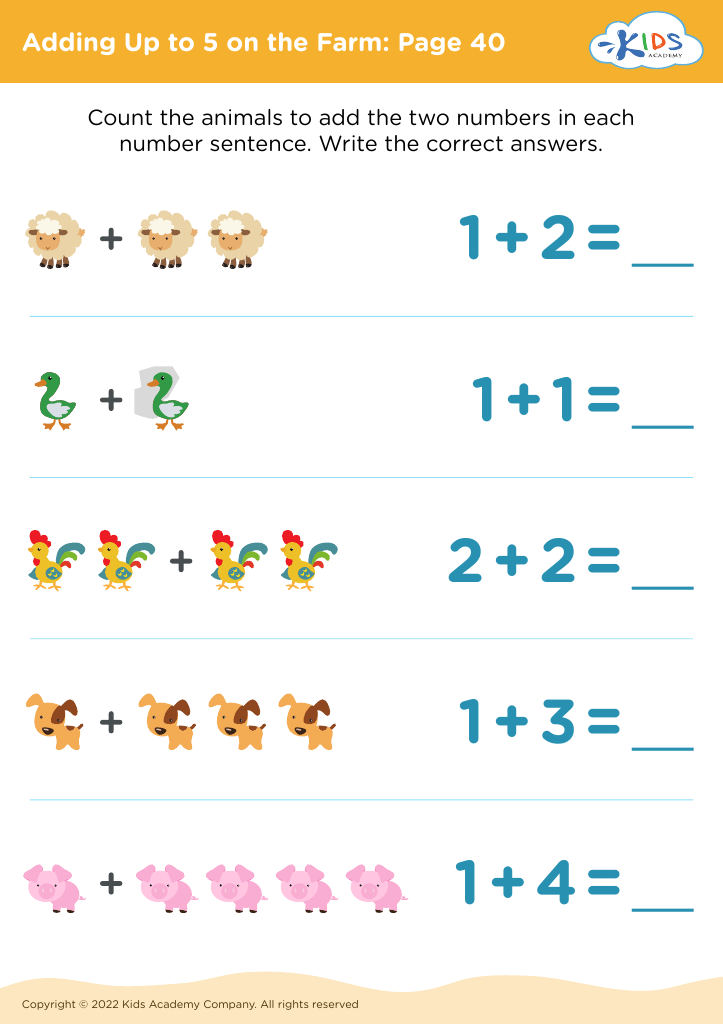
Adding Up to 5 on the Farm: Page 40
Worksheet
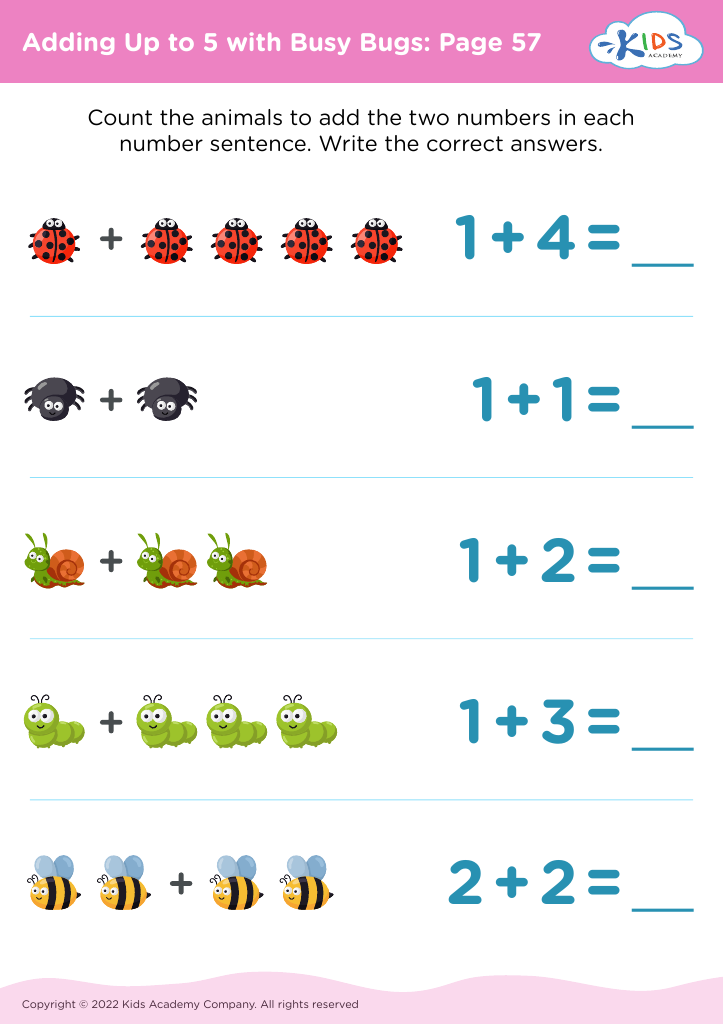
Adding Up to 5 with Busy Bugs: Page 57
Worksheet
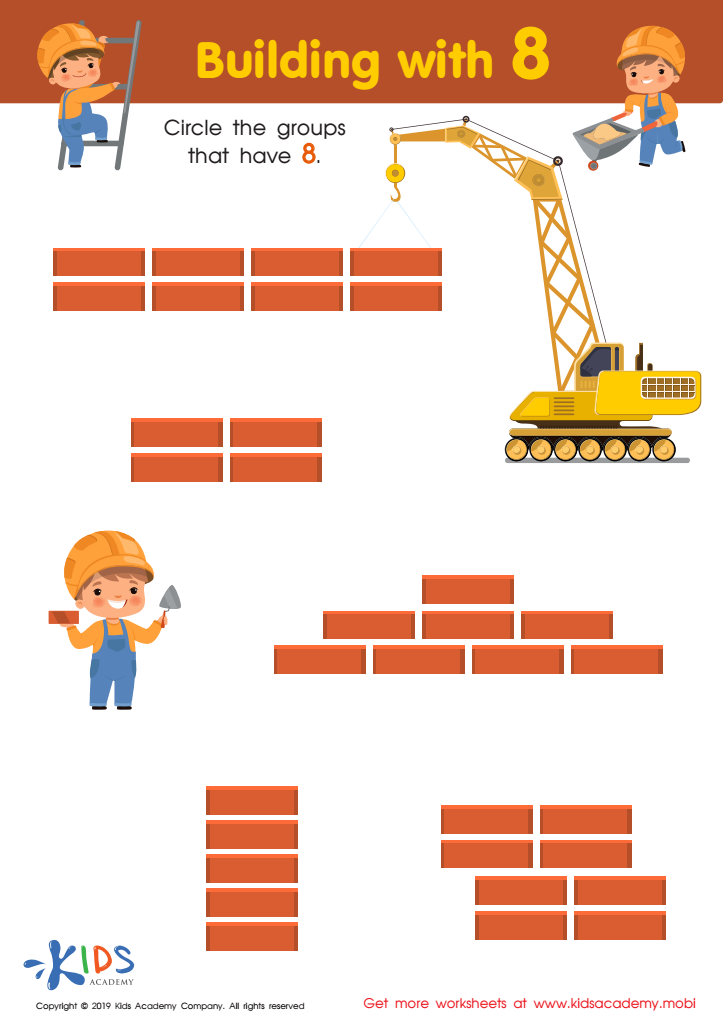
Building with 8 Worksheet
Building with 8 Worksheet
Your child can learn more with this simple exercise! Get them counting and help them circle the groups of 8 bricks. It's a great addition to their post-school lessons, supporting their counting skills. Plus, it's a fun way to learn!
Building with 8 Worksheet
Worksheet
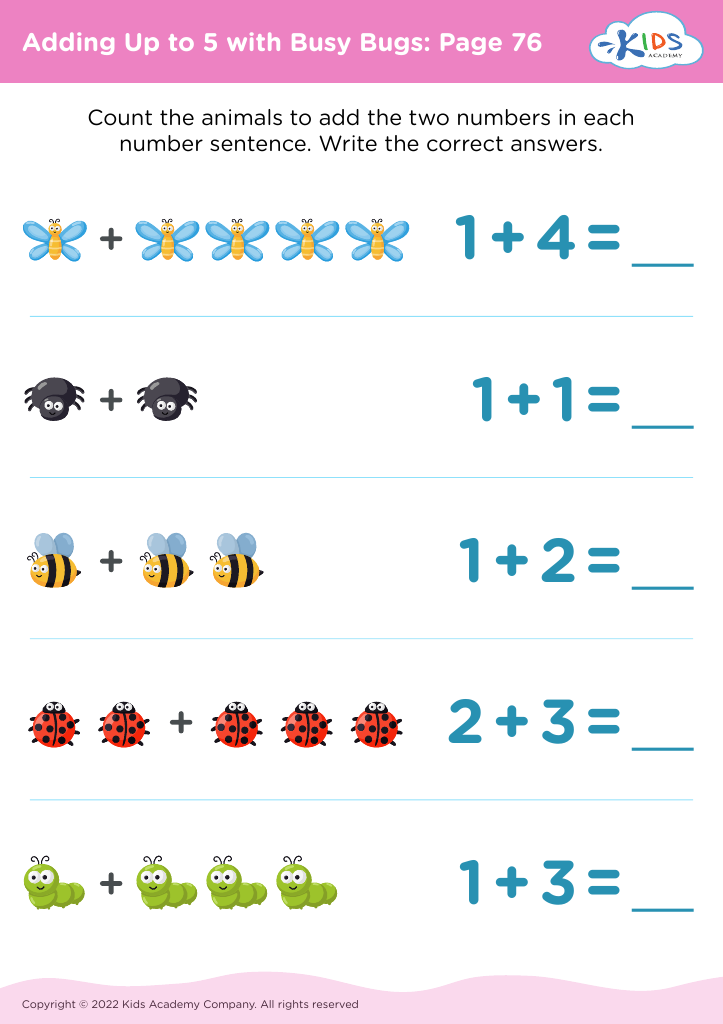
Adding Up to 5 with Busy Bugs: Page 76
Worksheet
Adding Up to 5 on the Farm: Page 53
Worksheet
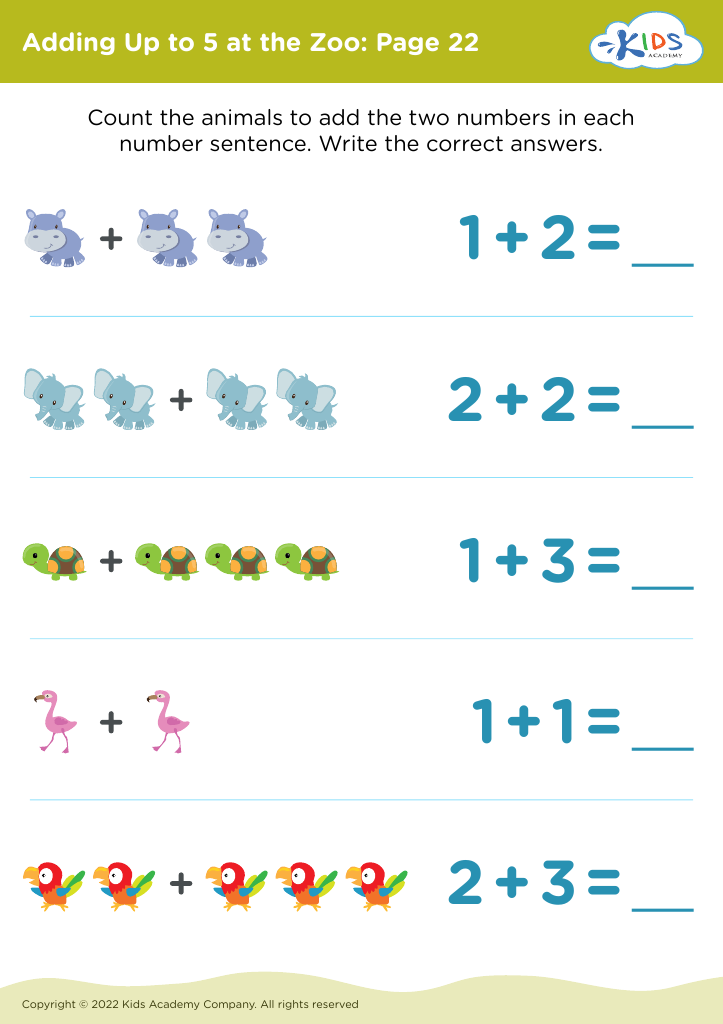
Adding Up to 5 at the Zoo: Page 22
Worksheet
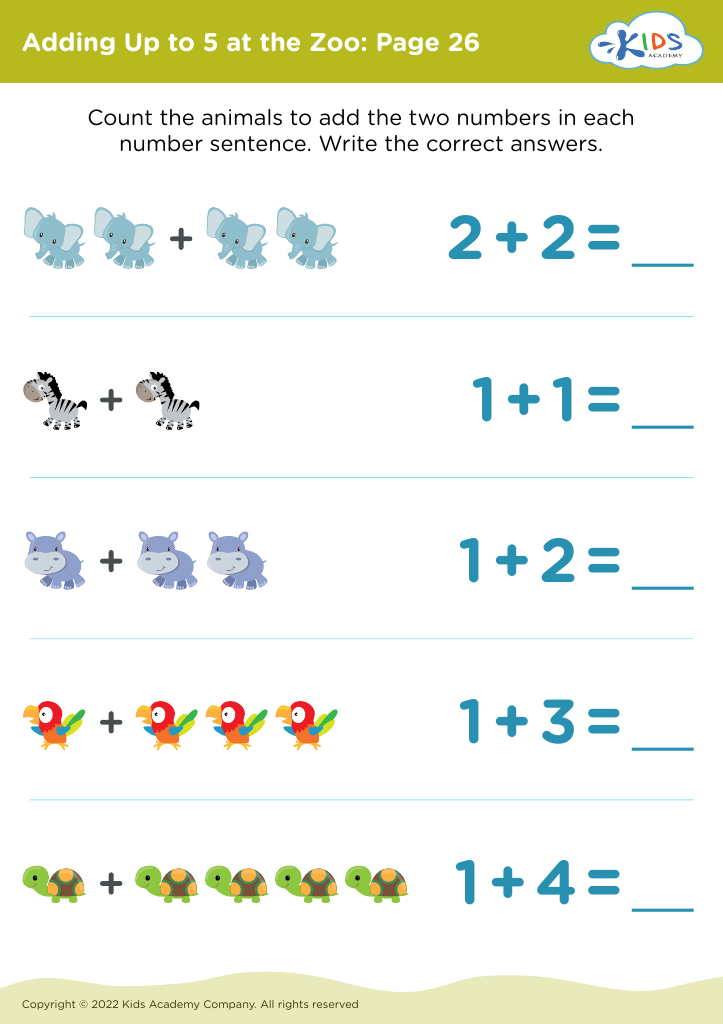
Adding Up to 5 at the Zoo: Page 26
Worksheet
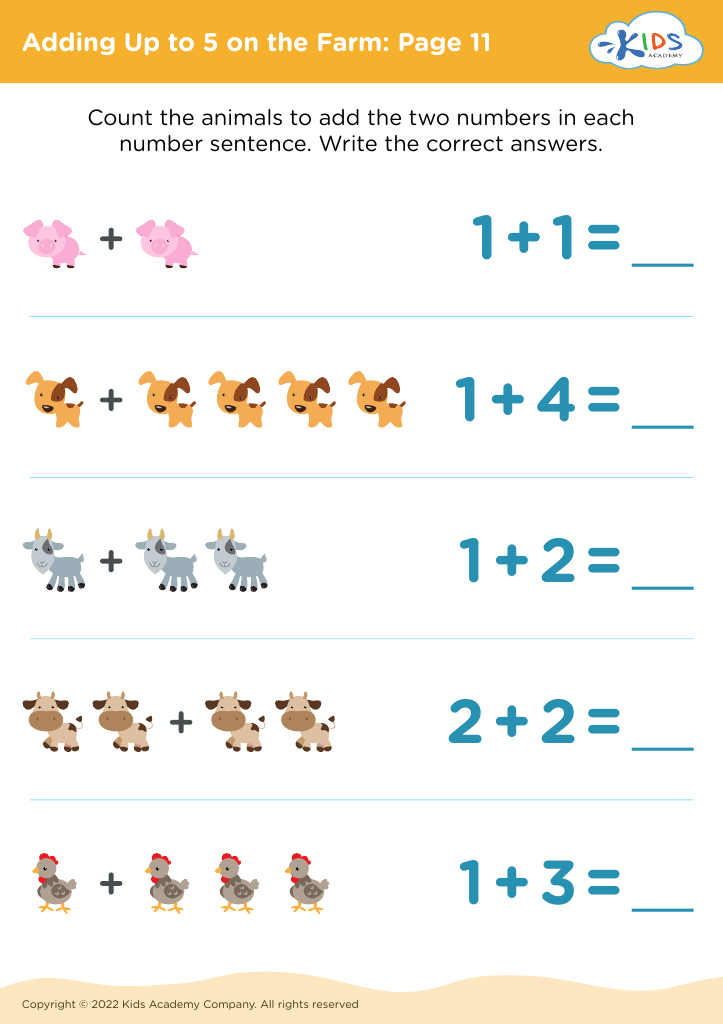
Adding Up to 5 on the Farm: Page 11
Worksheet
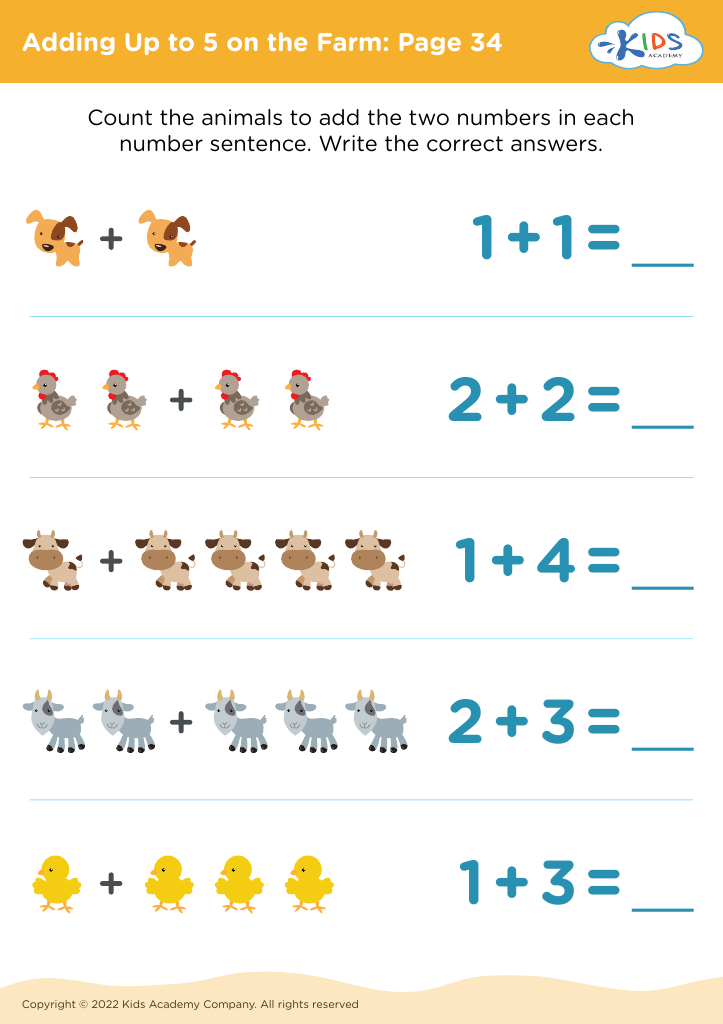
Adding Up to 5 on the Farm: Page 34
Worksheet


Parents and teachers should care deeply about counting practice, addition, and subtraction for 4-year-olds because these foundational skills set the stage for future academic success. At this age, children's brains are particularly receptive to new concepts, and early math skills are crucial for cognitive development. Counting helps young children understand the principle of quantity and lays the groundwork for number sense, which is essential for all higher-level math skills they'll encounter later in school.

Addition and subtraction introduce basic problem-solving and critical thinking skills. When children understand how to combine and separate quantities, they develop what educators call "number flexibility," or the ability to see numbers in different ways. This flexibility is key for understanding more complex math concepts in the future.

Additionally, early exposure to math builds confidence and removes the fear often associated with the subject. Interactive and engaging counting games or simple addition and subtraction activities can also excite curiosity and a love for learning, promoting a positive attitude towards mathematics. Without these early skills, children may struggle to keep up with their peers, impacting their self-esteem and interest in schoolwork.

In summary, counting practice, addition, and subtraction are vital educational cornerstones that support a child's overall learning journey, cognitive development, and future academic achievement.