Filters

18 filtered results

Clear all filters
Favorites
With answer key
Interactive

18 filtered results

Difficulty Level

Grade


Our Hand-eye Coordination Addition Worksheets for 4-Year-Olds are designed to make early math learning fun and engaging. By combining basic addition with hand-eye coordination exercises, these printables foster essential skills in young learners. Each worksheet features colorful, easy-to-understand activities that help children develop fine motor skills while practicing addition. Tailored for preschoolers, these worksheets provide an excellent foundation for future math success. Encourage hands-on learning and boost your child's confidence with our expertly crafted resources available exclusively at Kids Academy. Ideal for both classroom use and at-home practice, these worksheets make learning a delightful adventure!
Check out this FREE Trial Lesson on Addition for age 4!

2 Step Addition Word Problems Using Drawings

Favorites
With answer key
Interactive
  • 4
  • Hand-eye Coordination
  • Addition
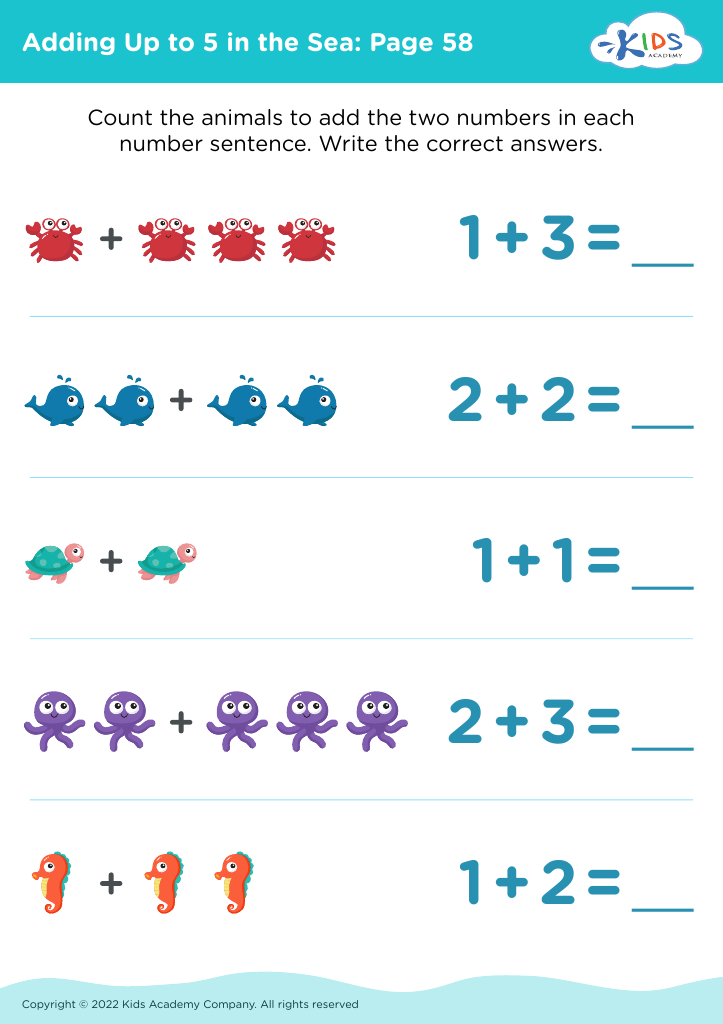
Adding Up to 5 in the Sea: Page 58
Worksheet
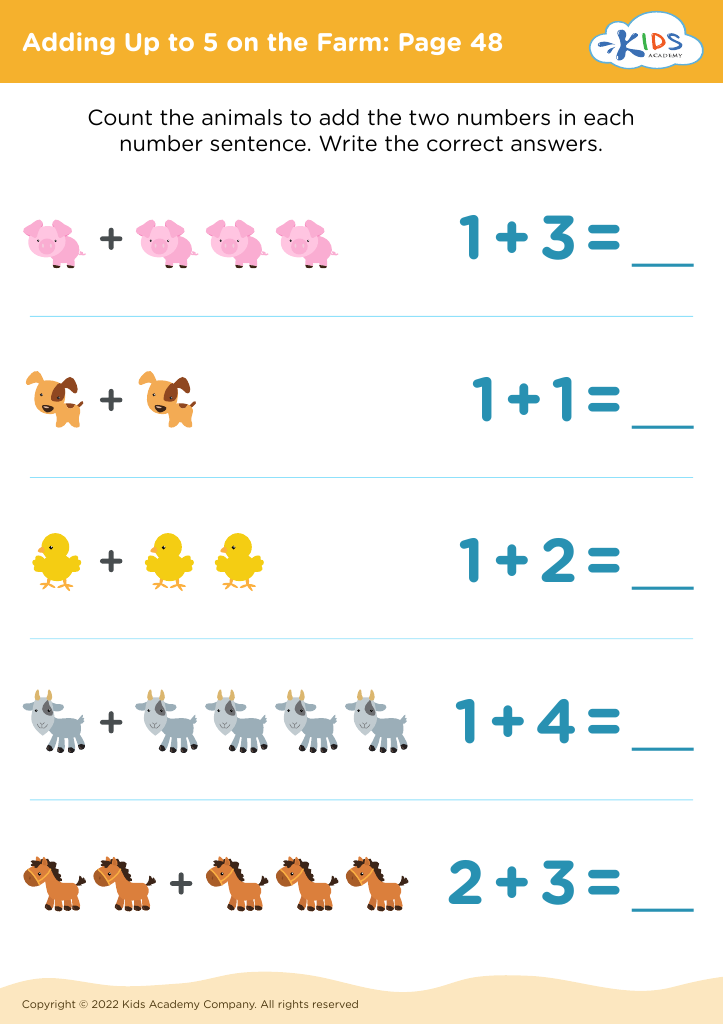
Adding Up to 5 on the Farm: Page 48
Worksheet
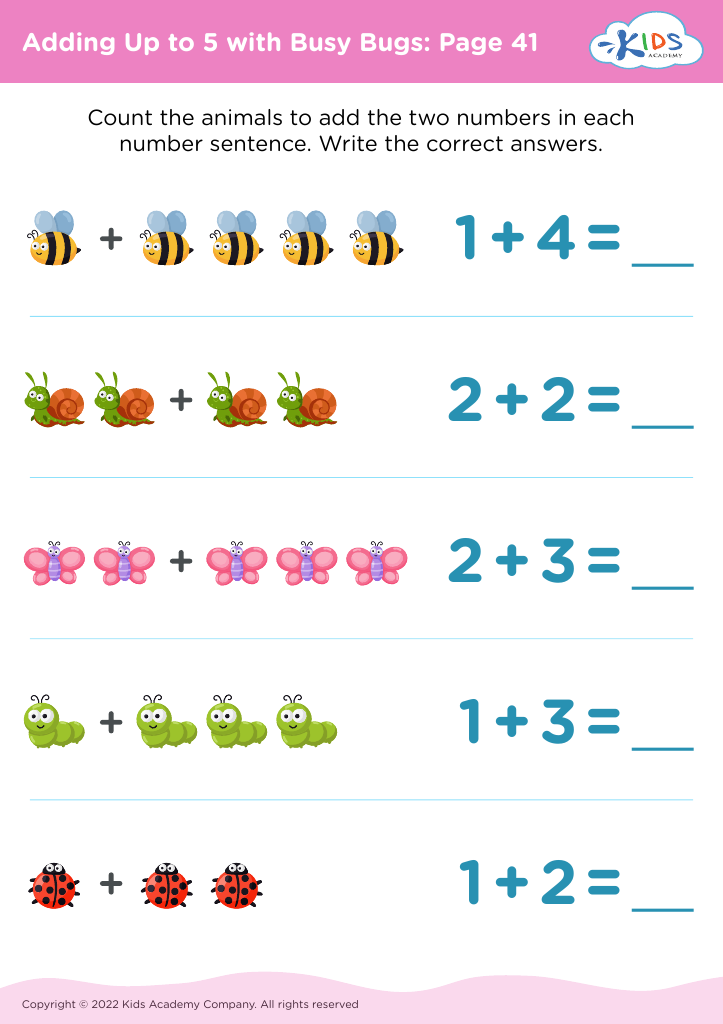
Adding Up to 5 with Busy Bugs: Page 41
Worksheet
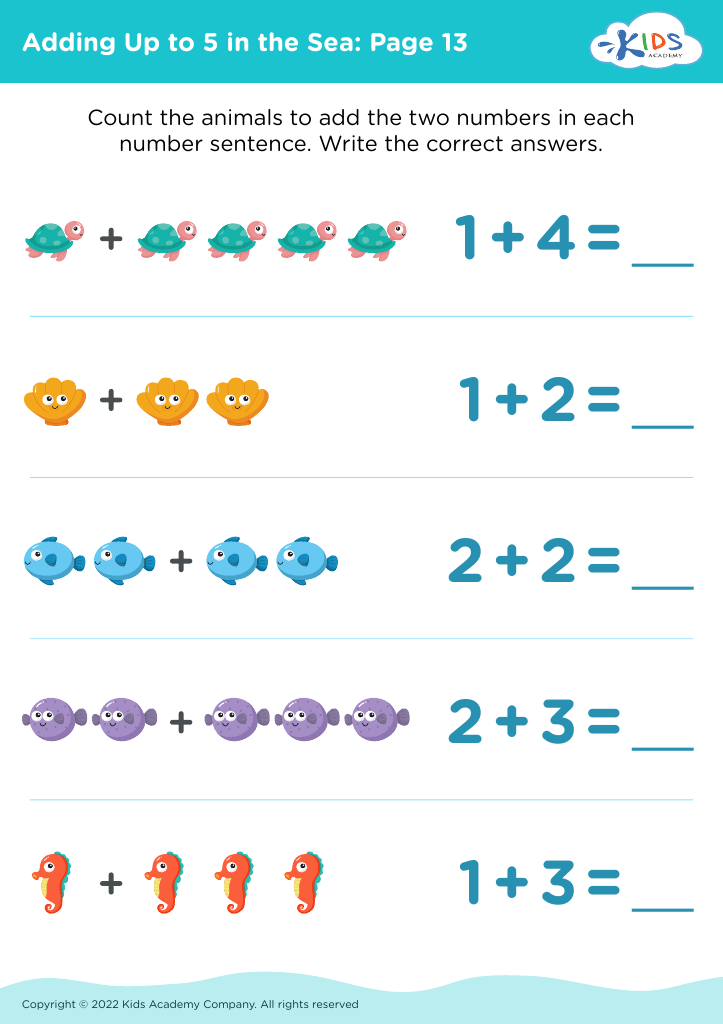
Adding Up to 5 in the Sea: Page 13
Worksheet
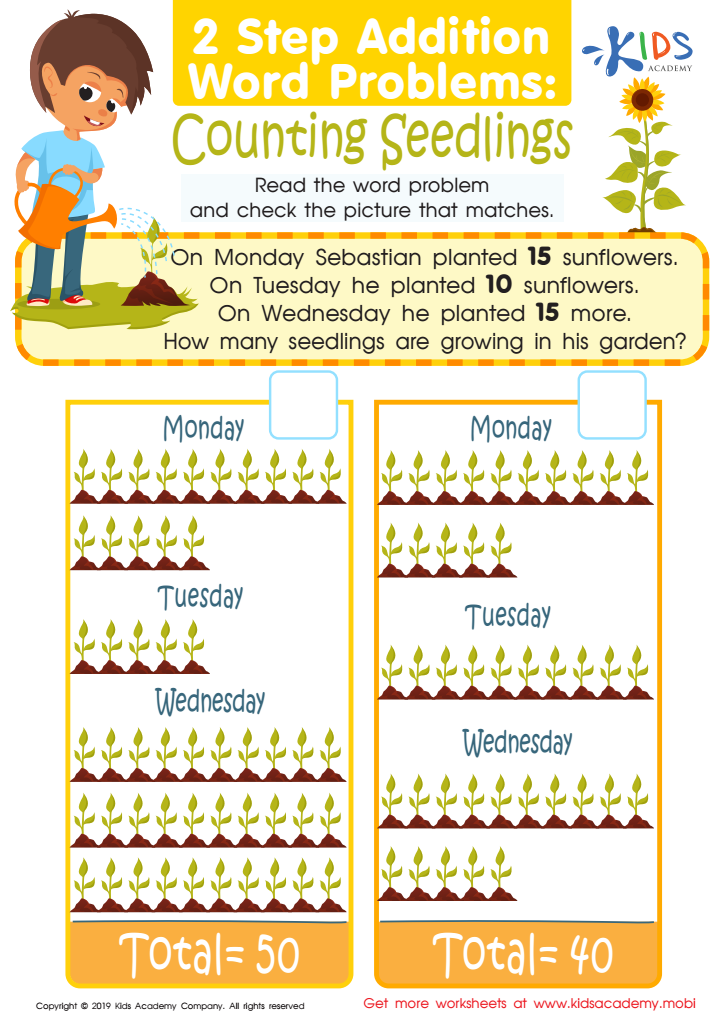
Counting Seedlings Worksheet

Counting Seedlings Worksheet

Understanding math word problems is key. Multiple steps can prove challenging - this free worksheet provides one-to-one picture representation to help kids solve multi-step addition word problems. Strengthen addition skills by choosing the matching picture to the answer.
Counting Seedlings Worksheet
Worksheet
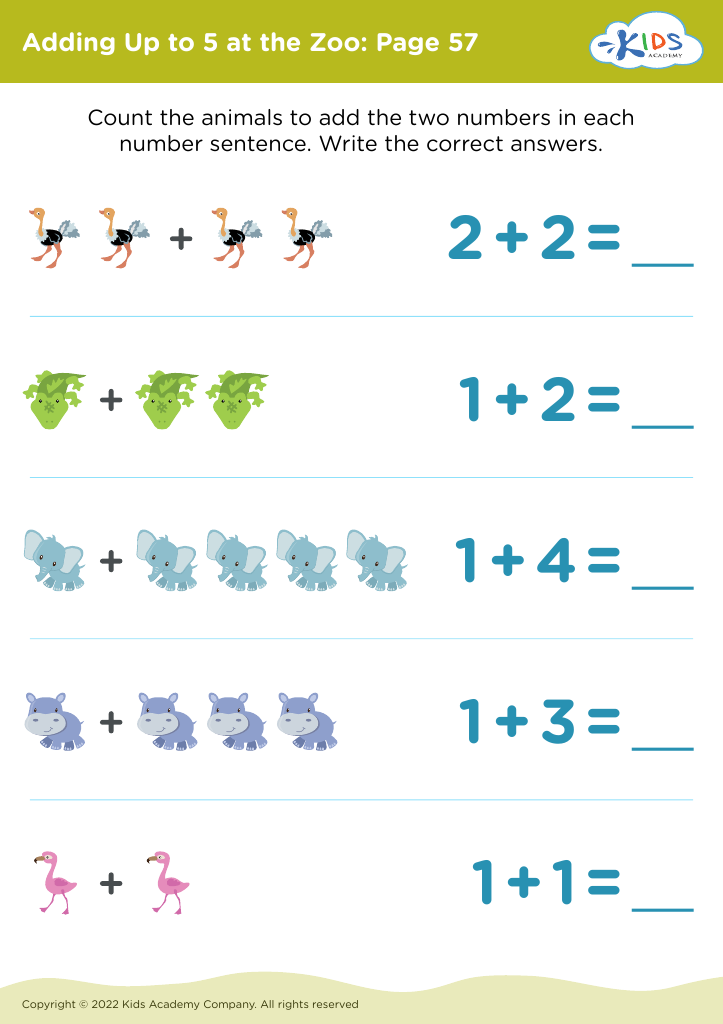
Adding Up to 5 at the Zoo: Page 57
Worksheet
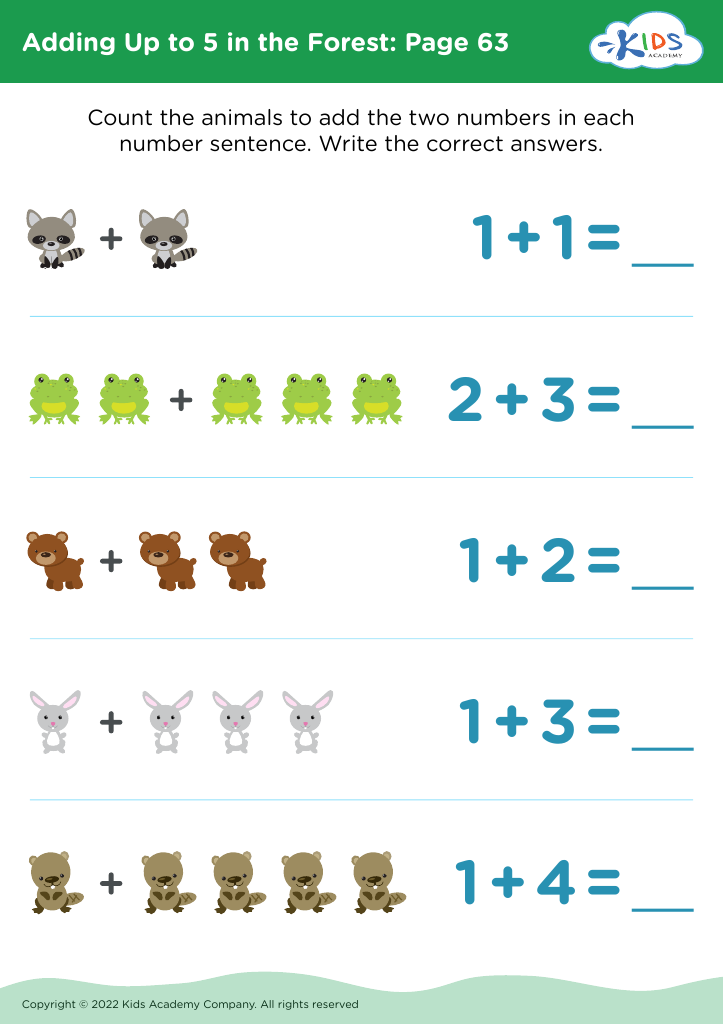
Adding Up to 5 in the Forest: Page 63
Worksheet
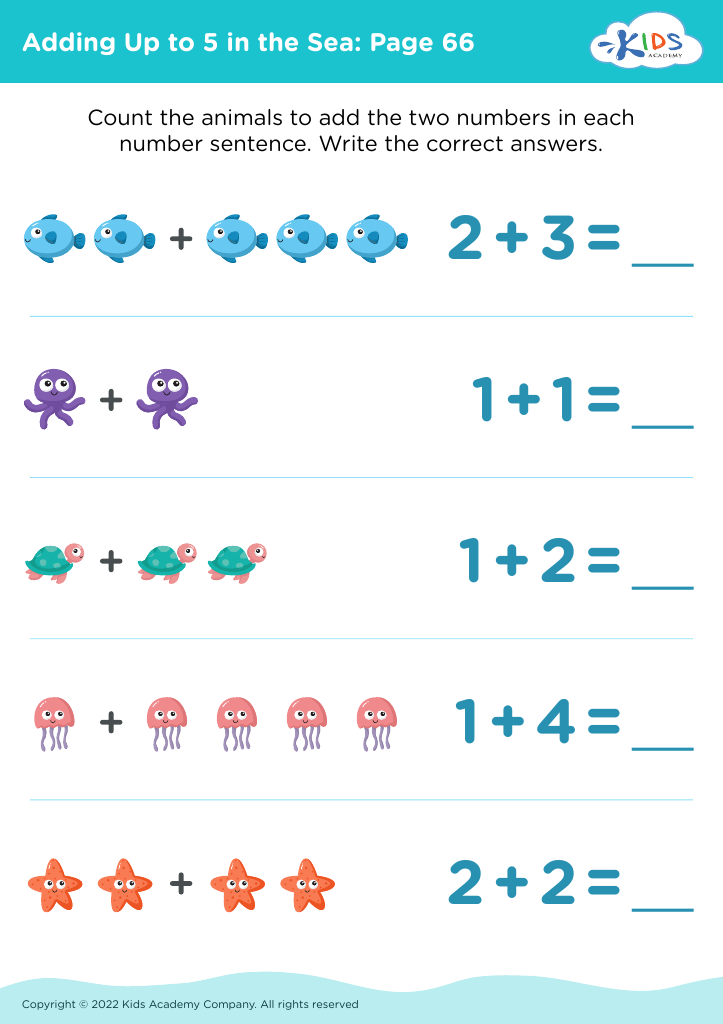
Adding Up to 5 in the Sea: Page 66
Worksheet
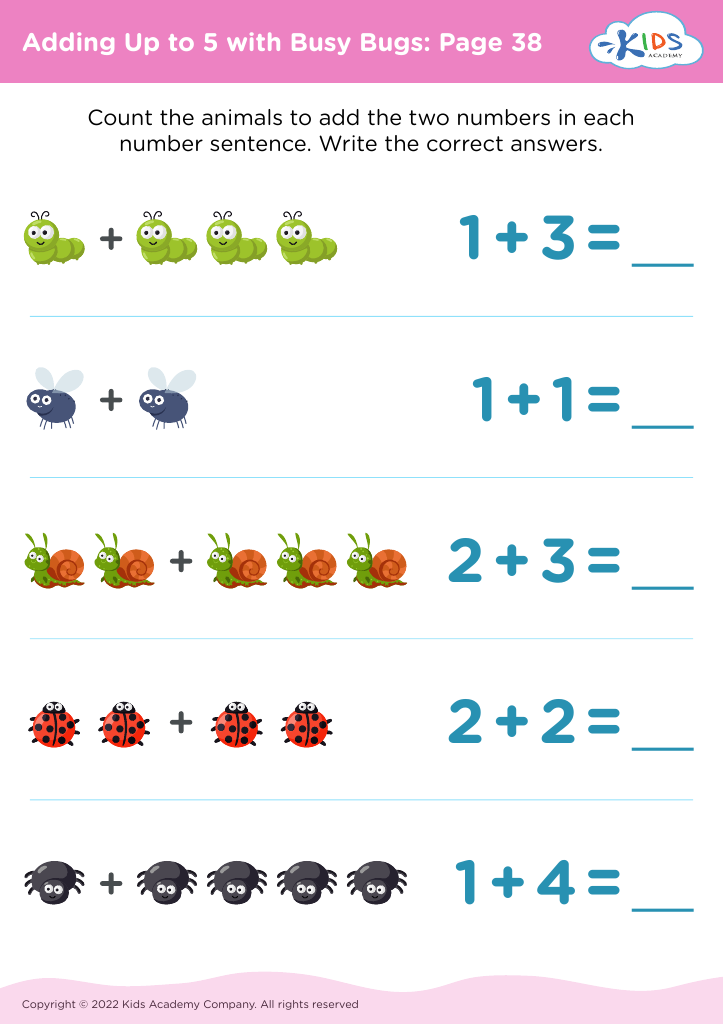
Adding Up to 5 with Busy Bugs: Page 38
Worksheet
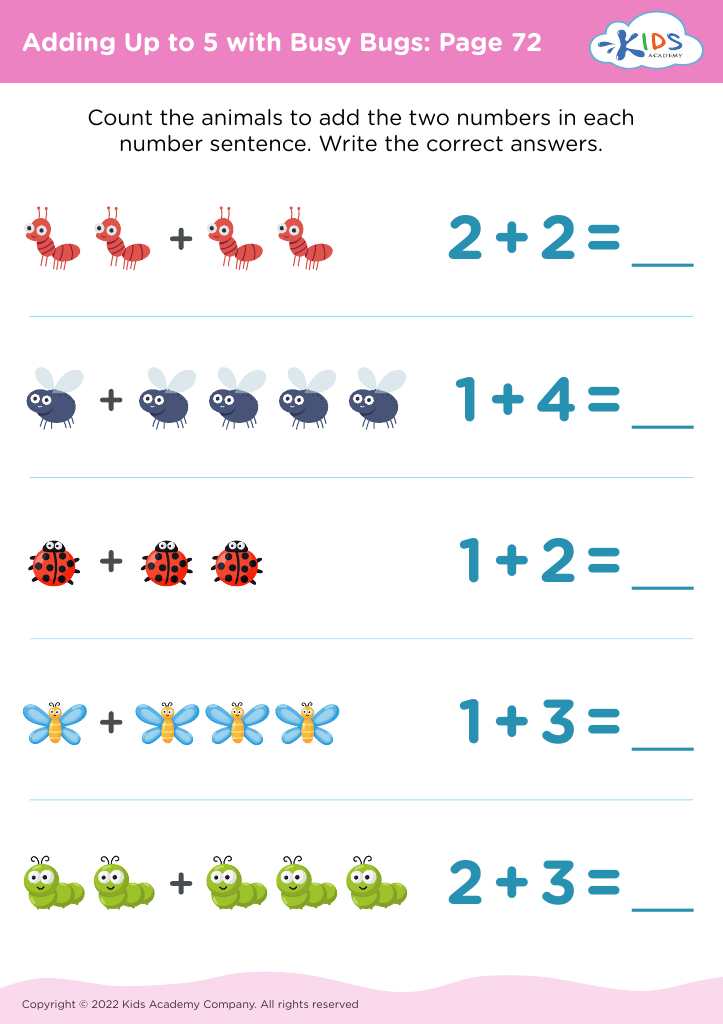
Adding Up to 5 with Busy Bugs: Page 72
Worksheet
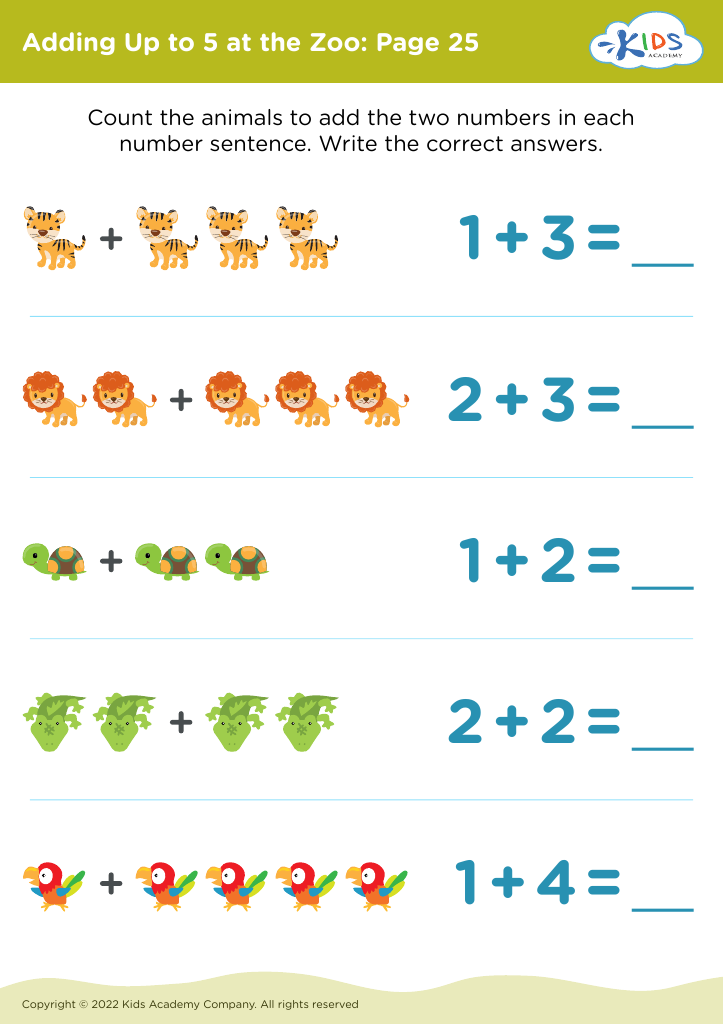
Adding Up to 5 at the Zoo: Page 25
Worksheet
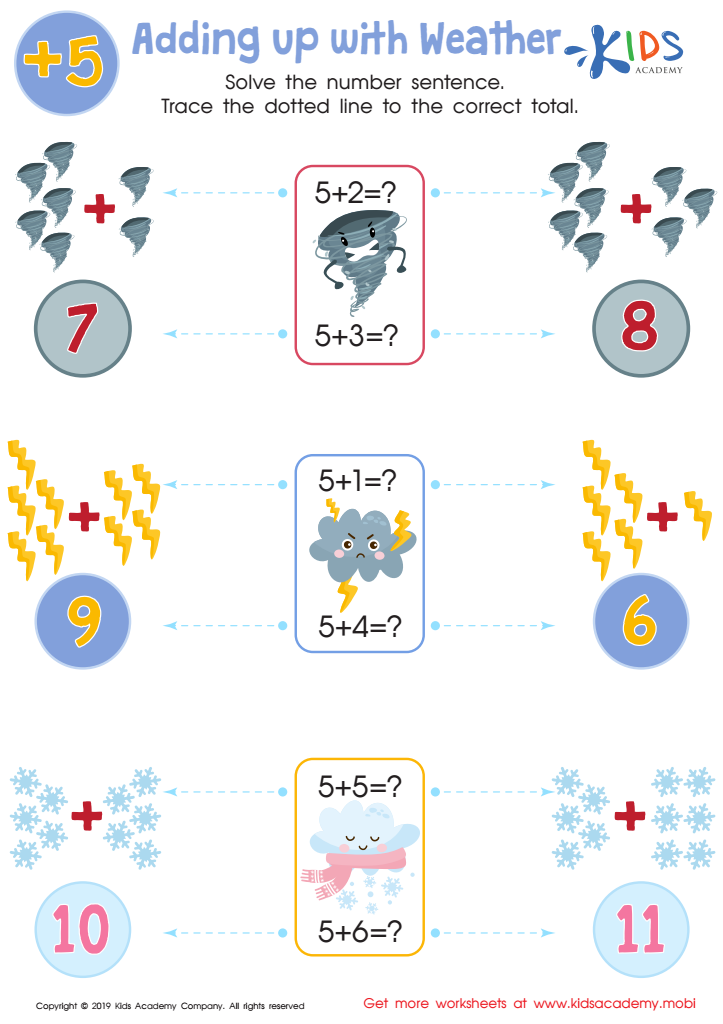
Adding up With Water Worksheet
Adding up With Water Worksheet
Ask your kids to name different kinds of weather and what it's like outside now. Then, help them solve the number sentences on the worksheet by tracing the dotted line to the correct total.
Adding up With Water Worksheet
Worksheet
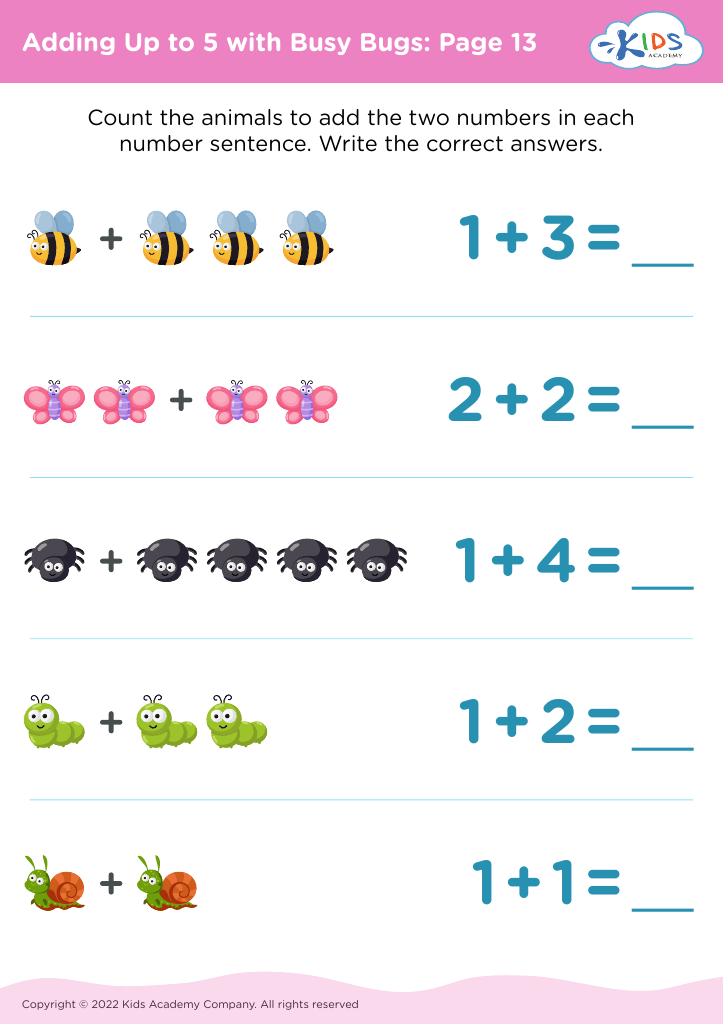
Adding Up to 5 with Busy Bugs: Page 13
Worksheet
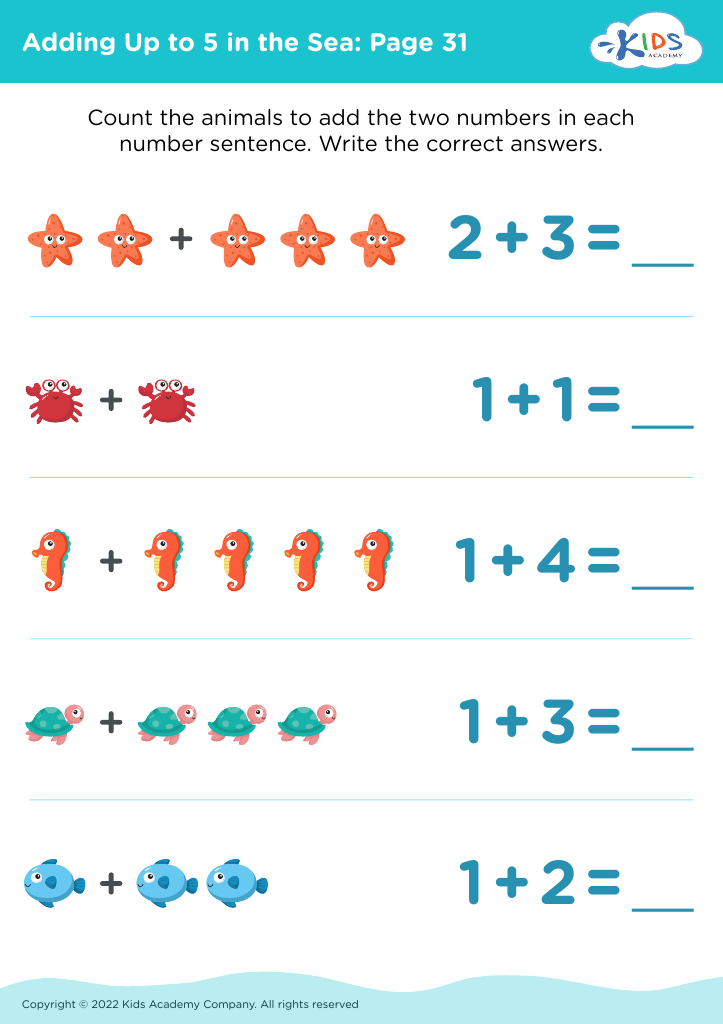
Adding Up to 5 in the Sea: Page 31
Worksheet
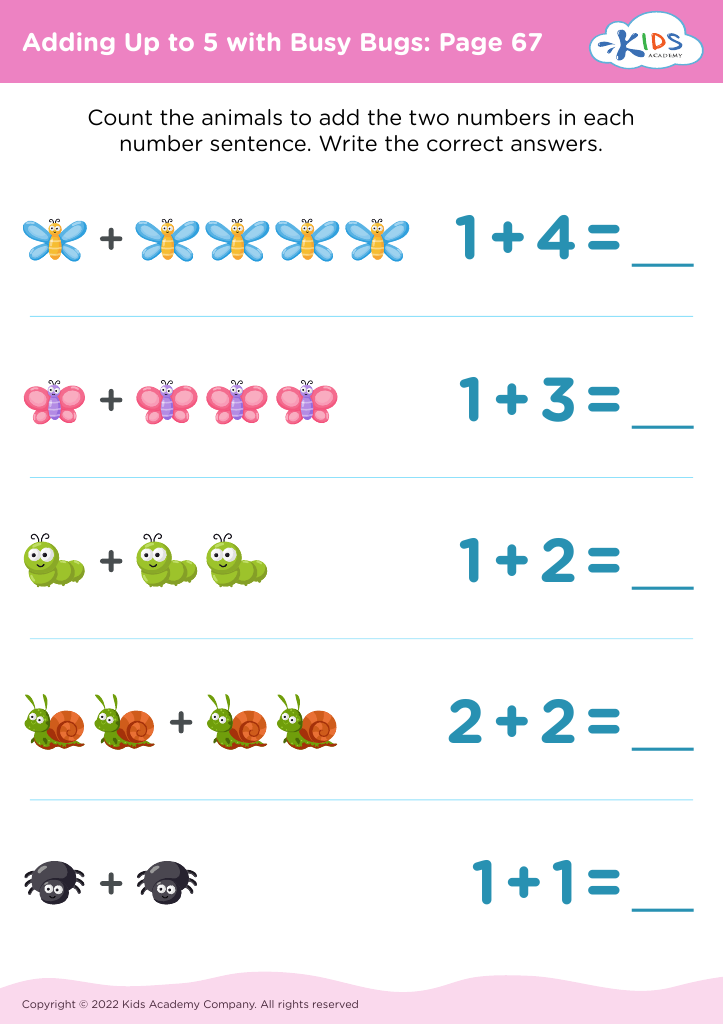
Adding Up to 5 with Busy Bugs: Page 67
Worksheet
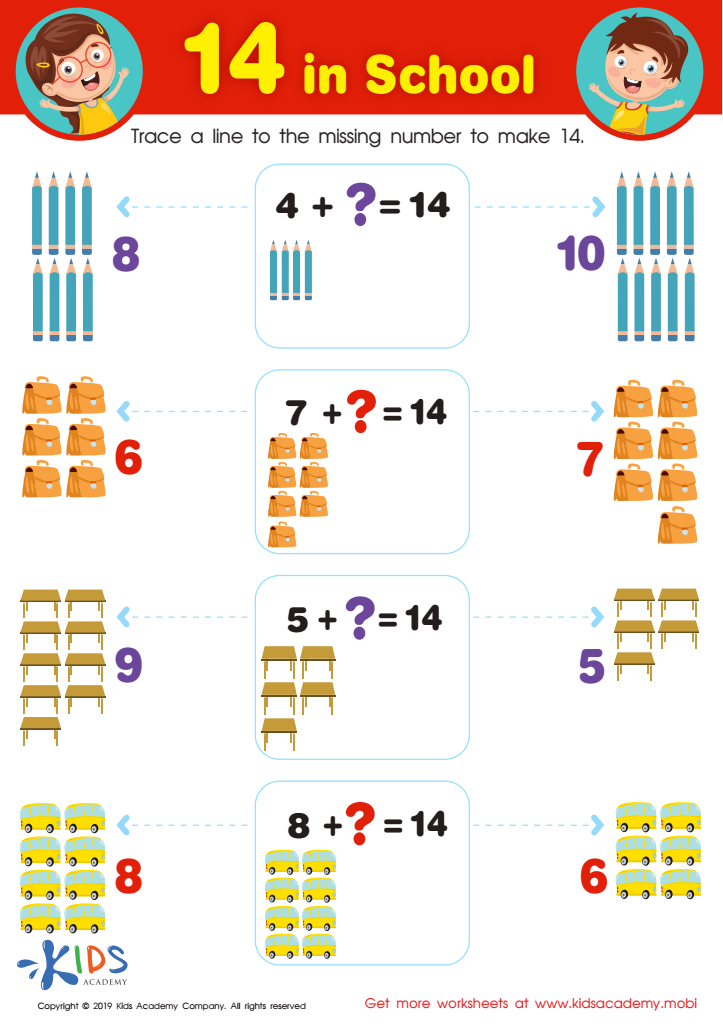
14 in School Worksheet


14 in School Worksheet

Remind your kids that adding different sets of numbers can give the same total (e.g. 2+3=5, 4+1=5). Ask them for more examples. Afterwards, work through the exercise. Help them count the objects and trace a line to the missing number that makes the total 14.
14 in School Worksheet
Worksheet
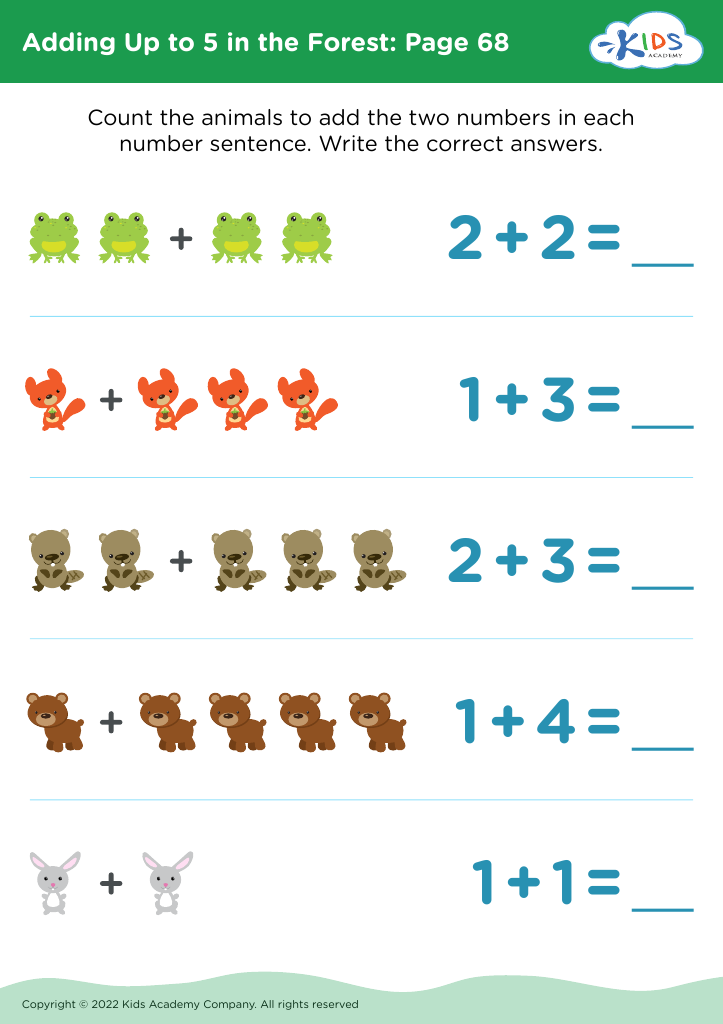
Adding Up to 5 in the Forest: Page 68
Worksheet
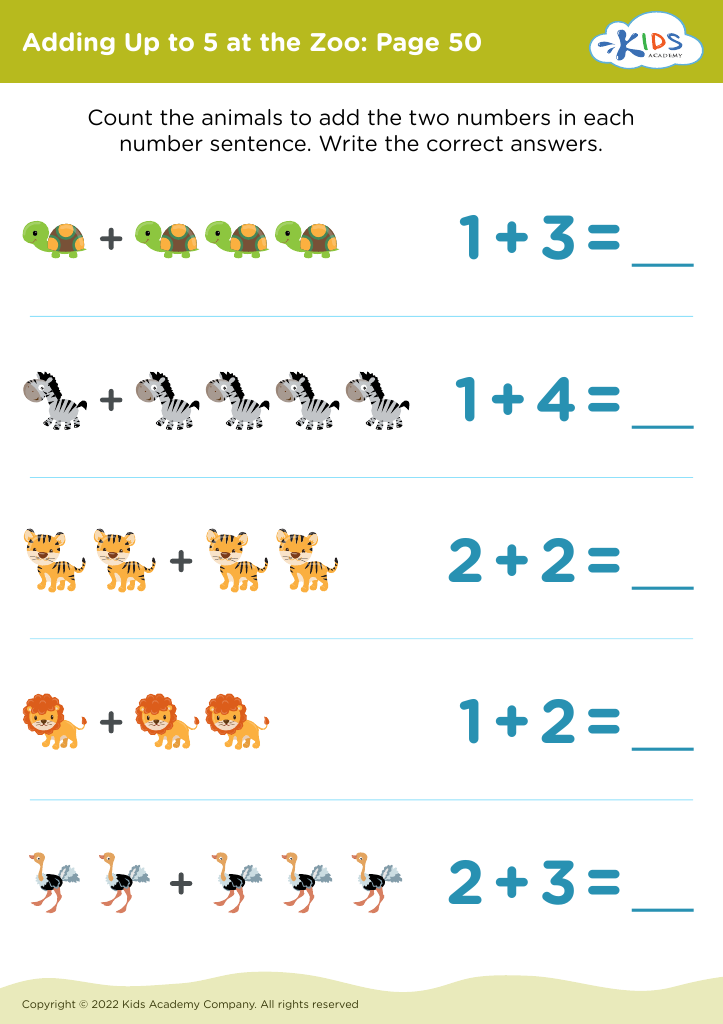
Adding Up to 5 at the Zoo: Page 50
Worksheet


Hand-eye coordination addition activities hold significant importance for 4-year-olds as they lay down vital developmental foundations. At this age, children's brains and bodies are exceptionally receptive to growth and learning. Fostering hand-eye coordination through addition-related tasks, such as counting objects or combining visual elements, provides multiple developmental benefits.

Firstly, these activities enhance fine motor skills, essential for daily tasks such as writing, dressing, and eating. Fine motor development ensures that children can perform precise movements with their fingers and hands, which is crucial for their success in school and life.

Secondly, incorporating addition in hand-eye coordination tasks reinforces early math skills in an engaging manner. By physically manipulating items and visually tracking their counts and sums, children gain a better understanding of fundamental math concepts. This foundational knowledge paves the way for more complex mathematical thinking in the future.

Moreover, activities requiring hand-eye coordination and addition promote cognitive development and problem-solving abilities. Children learn to concentrate, follow instructions, and come up with solutions, all of which improve their intellectual growth and academic readiness.

In conclusion, fostering hand-eye coordination through addition is an essential, multifaceted approach to support the overall development of 4-year-olds. Parents and teachers should prioritize these activities to nurture children's physical skills, cognitive abilities, and a positive attitude towards math.