Numeracy development Addition Worksheets for 4-Year-Olds
3 filtered results
-
From - To
Boost your child's early math skills with our fun and engaging Addition Worksheets for 4-Year-Olds! Designed to support numeracy development, these worksheets introduce basic addition concepts through vibrant illustrations and age-appropriate activities. Each worksheet encourages children to solve simple problems while enhancing their counting and number recognition skills. Perfect for homeschooling or classroom use, these resources promote independent learning and critical thinking in young learners. Increase your child's confidence in math while fostering a lasting love for numbers. Explore our collection today and help your little one embark on a joyful journey through the world of addition!
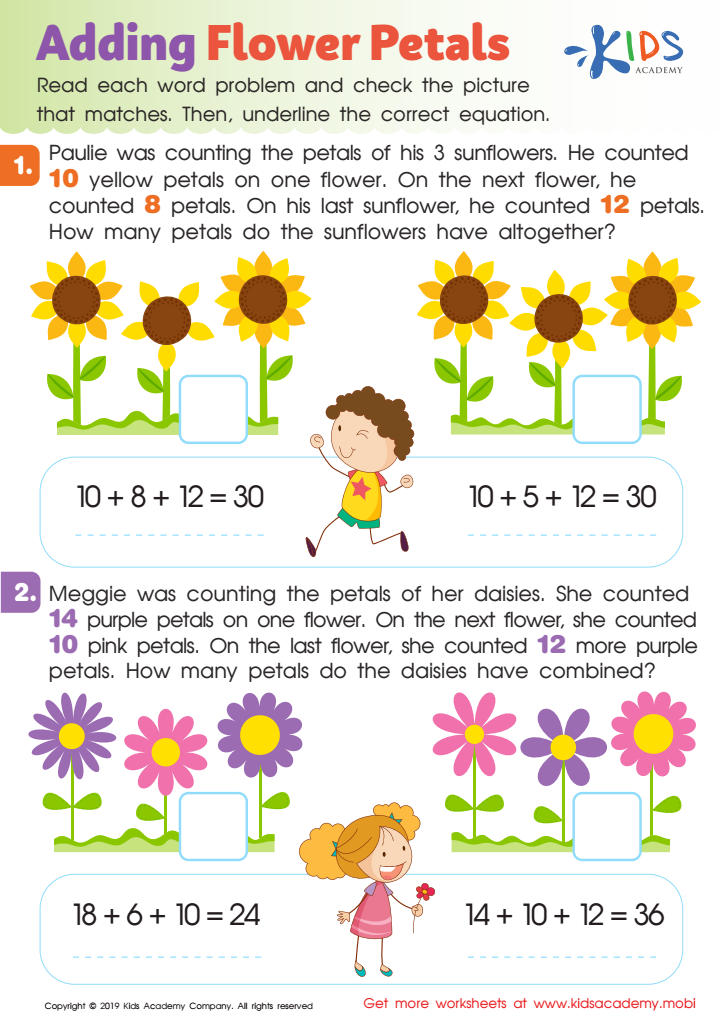
Adding Flower Petals Worksheet
 Assign to My Students
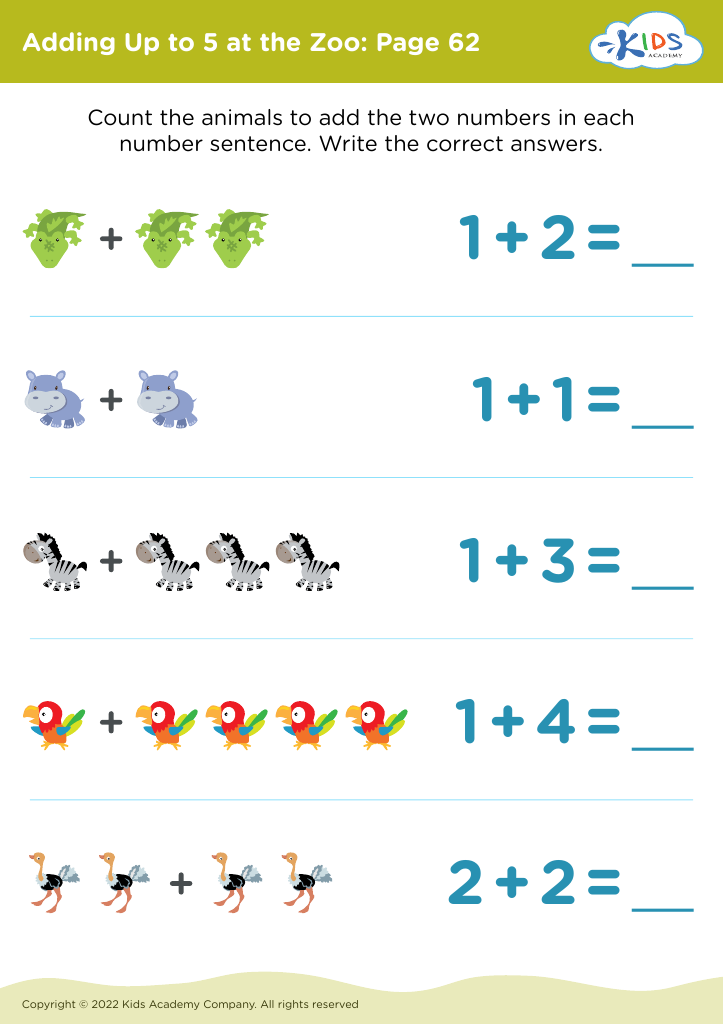
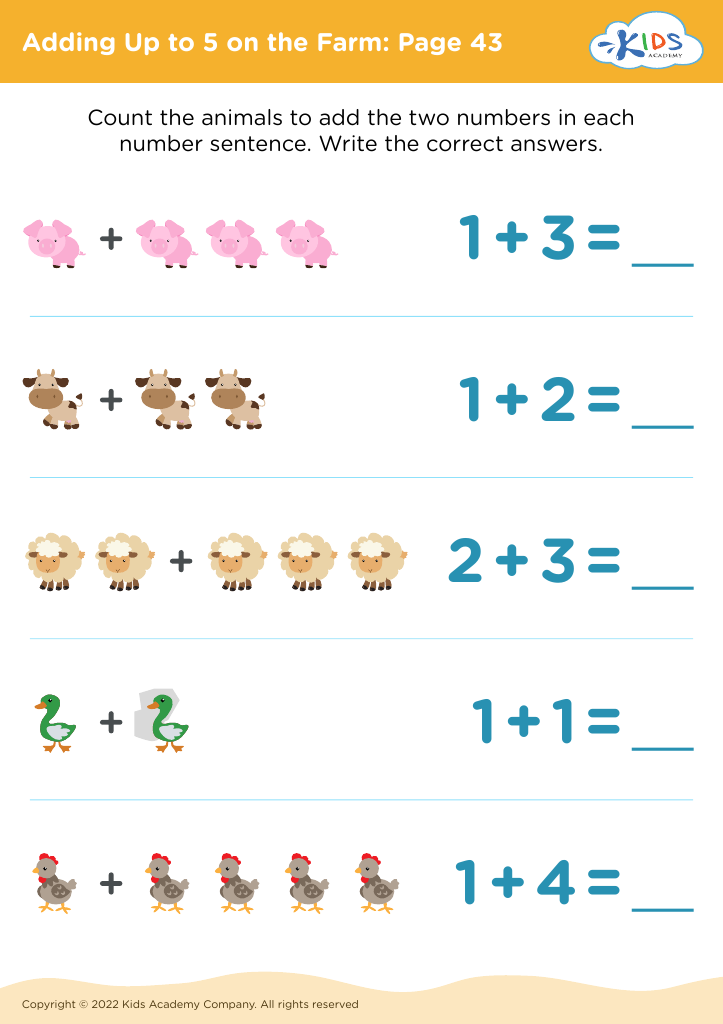








Numeracy development, particularly in the area of addition, is crucial for 4-year-olds as it lays the foundation for their mathematical understanding and cognitive development. During this stage, young children are naturally curious and ready to explore concepts in a playful and engaging manner. Learning addition helps improve their problem-solving skills, critical thinking, and logical reasoning.
When parents or teachers focus on numeracy development, they are fostering essential skills that influence a child’s future success in academics and everyday life. Engaging young children in addition through activities like counting objects, playing simple math games, or using everyday scenarios helps them grasp fundamental mathematical concepts in a fun way. This not only builds confidence and a positive attitude toward math but also promotes language development through math-related vocabulary.
Moreover, early intervention can help identify children who may need additional support or resources as their mathematical journey progresses. In the long run, strong numeracy skills contribute to better performance in school, improved social interactions, and greater opportunities in various fields. By prioritizing early math experiences, parents and teachers not only nurture a love for learning but also equip children with tools they will use throughout their lives.








