Check out this FREE Trial Lesson on Addition for age 4!

P

Favorites
With answer key
Interactive
  • 4
  • Visual Learning
  • Addition
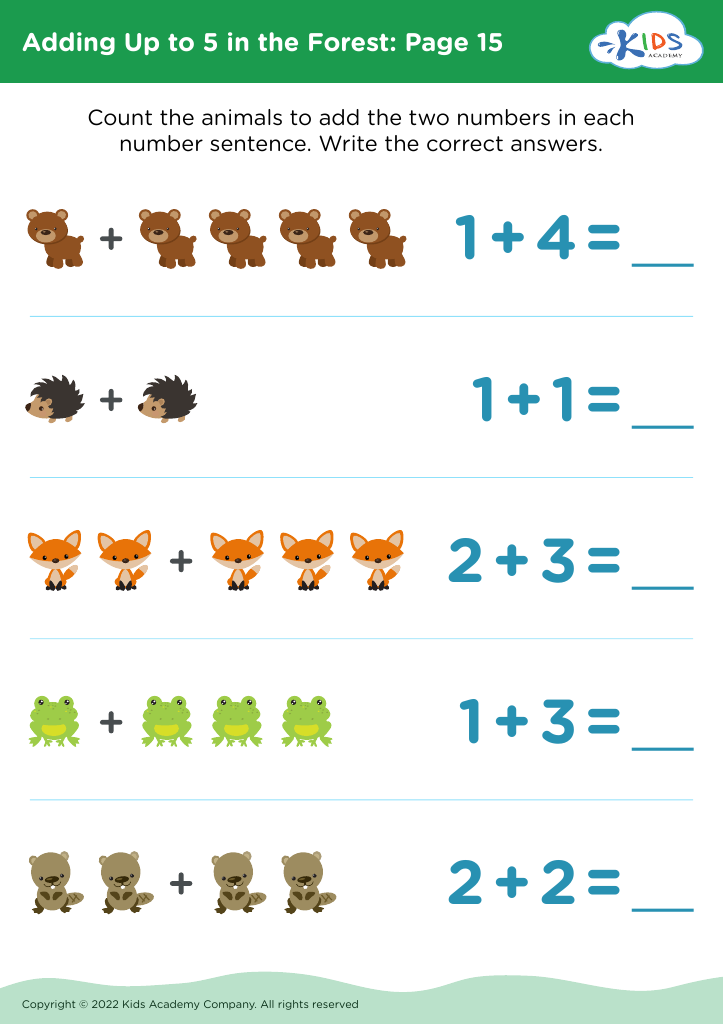
Adding Up to 5 in the Forest: Page 15
Worksheet
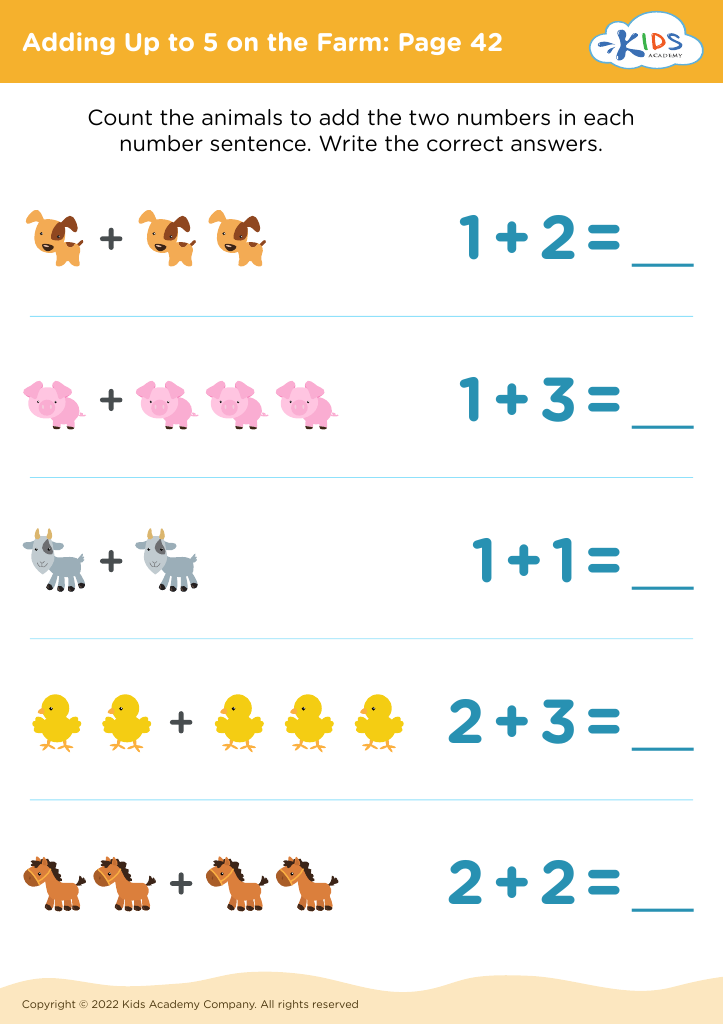
Adding Up to 5 on the Farm: Page 42
Worksheet
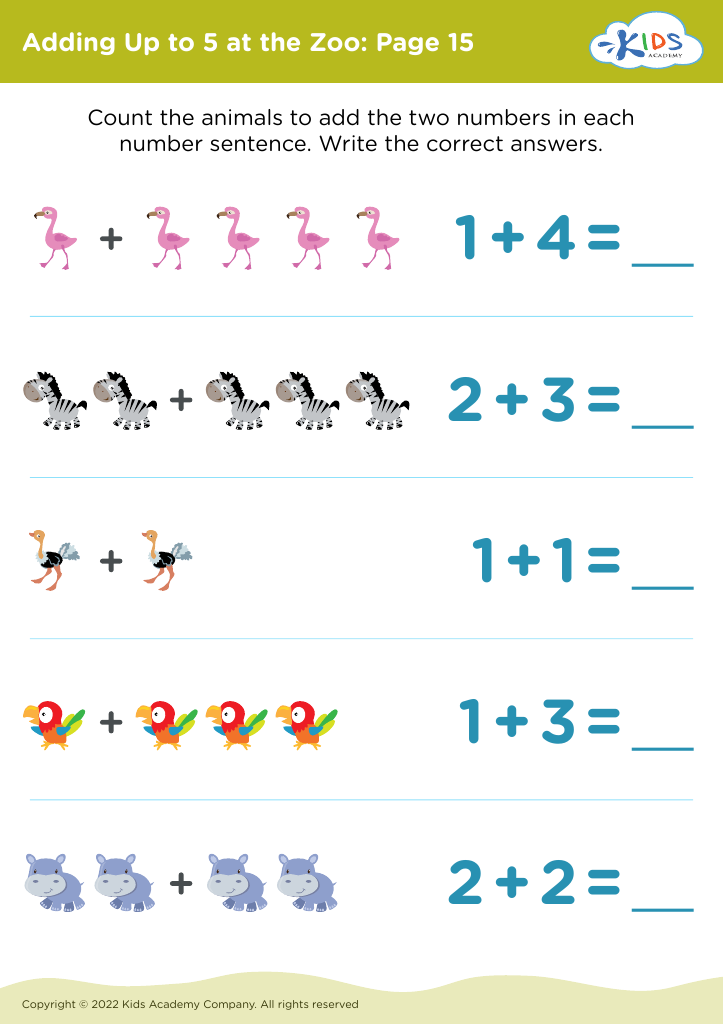
Adding Up to 5 at the Zoo: Page 15
Worksheet
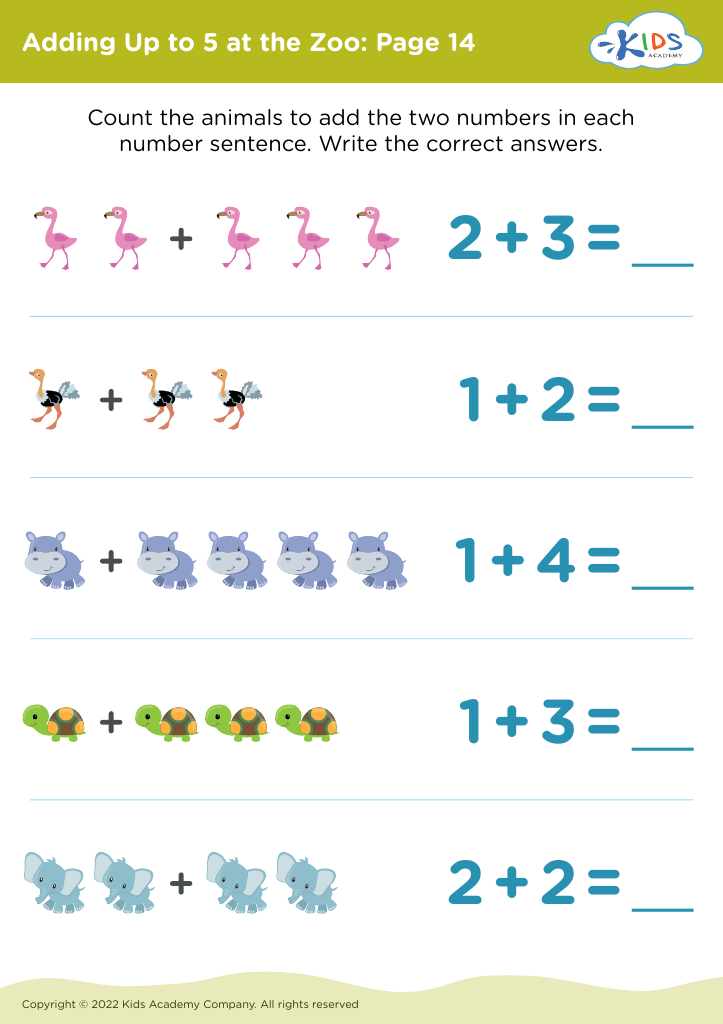
Adding Up to 5 at the Zoo: Page 14
Worksheet
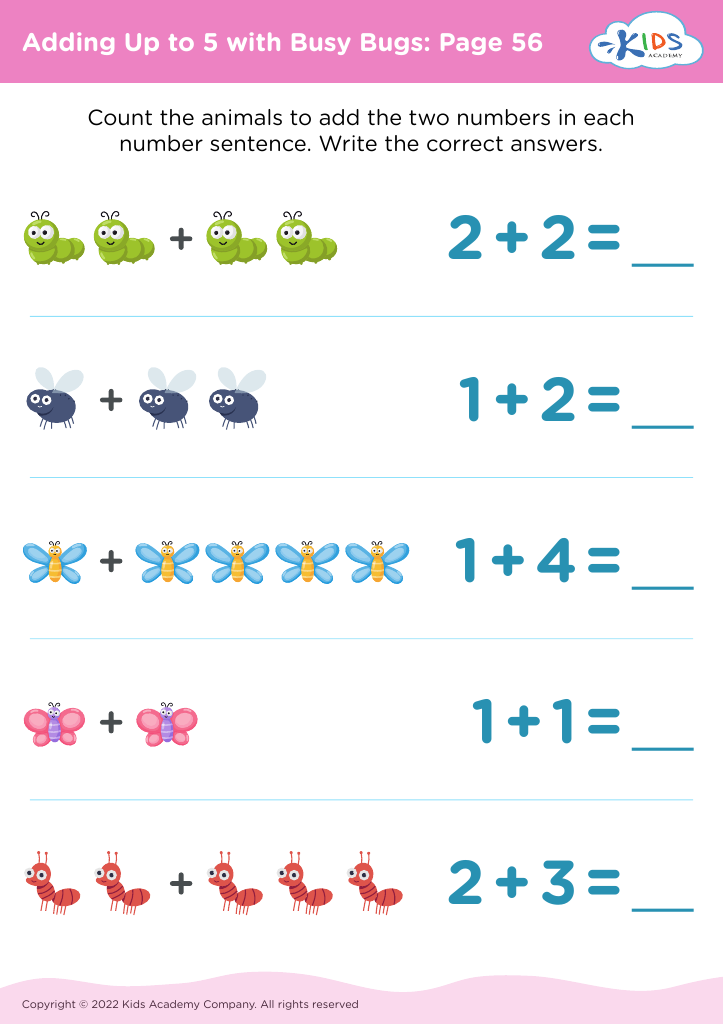
Adding Up to 5 with Busy Bugs: Page 56
Worksheet
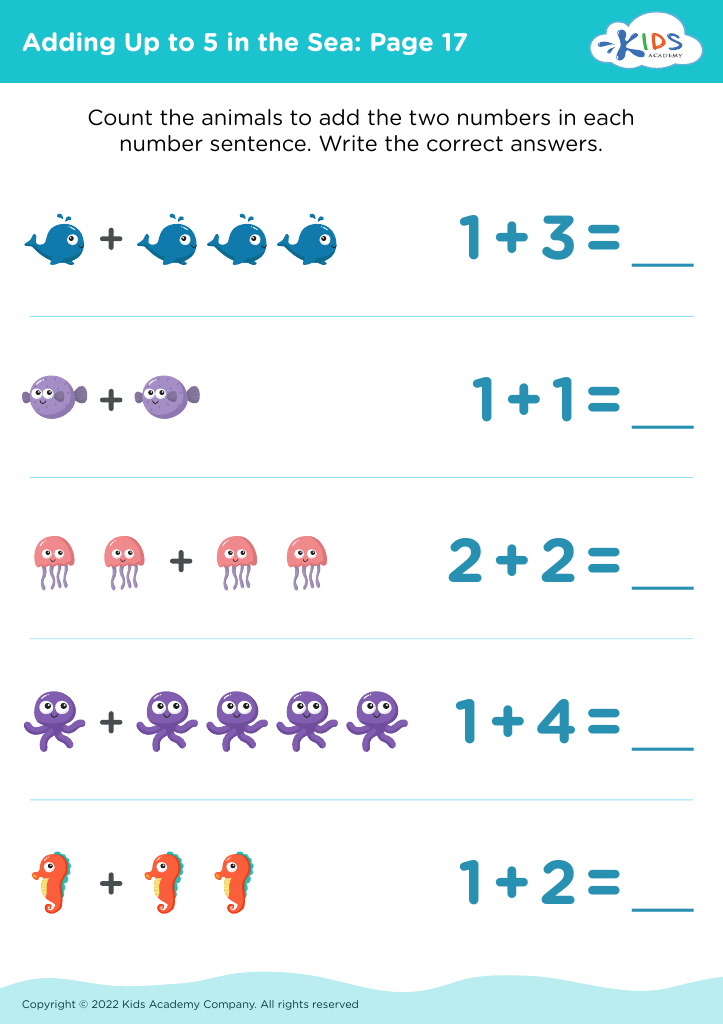
Adding Up to 5 in the Sea: Page 17
Worksheet
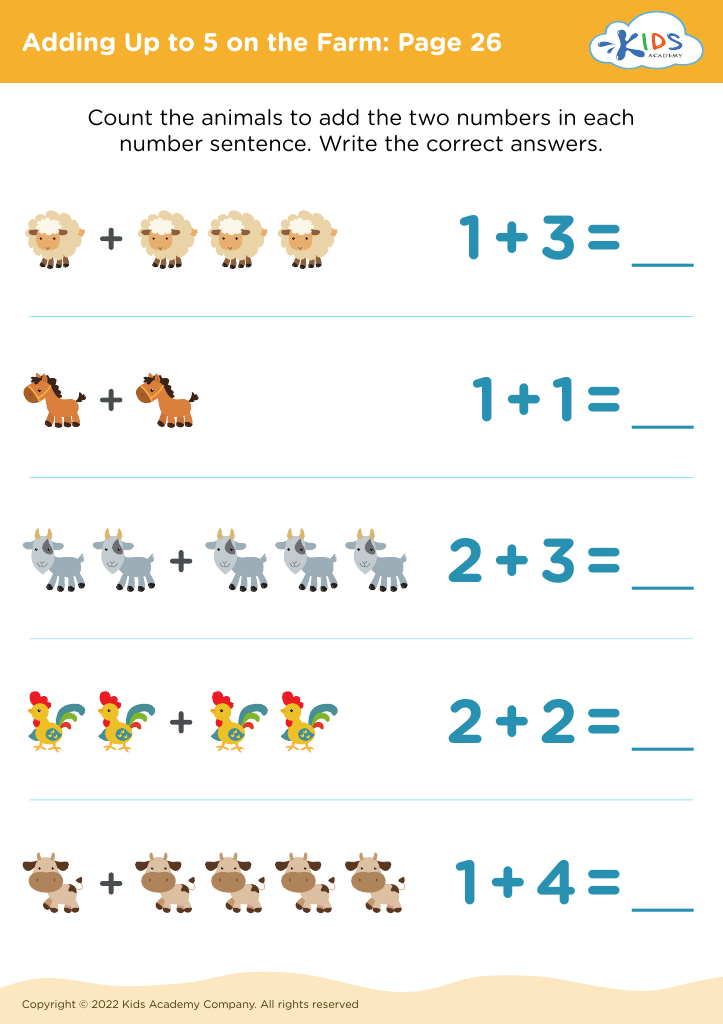
Adding Up to 5 on the Farm: Page 26
Worksheet
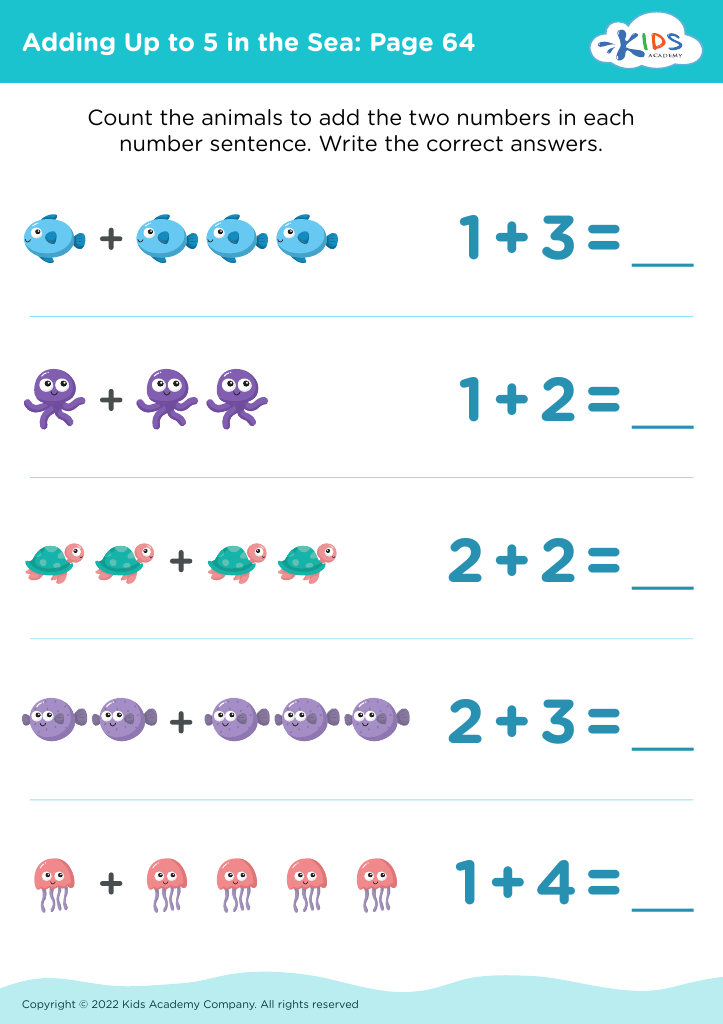
Adding Up to 5 in the Sea: Page 64
Worksheet
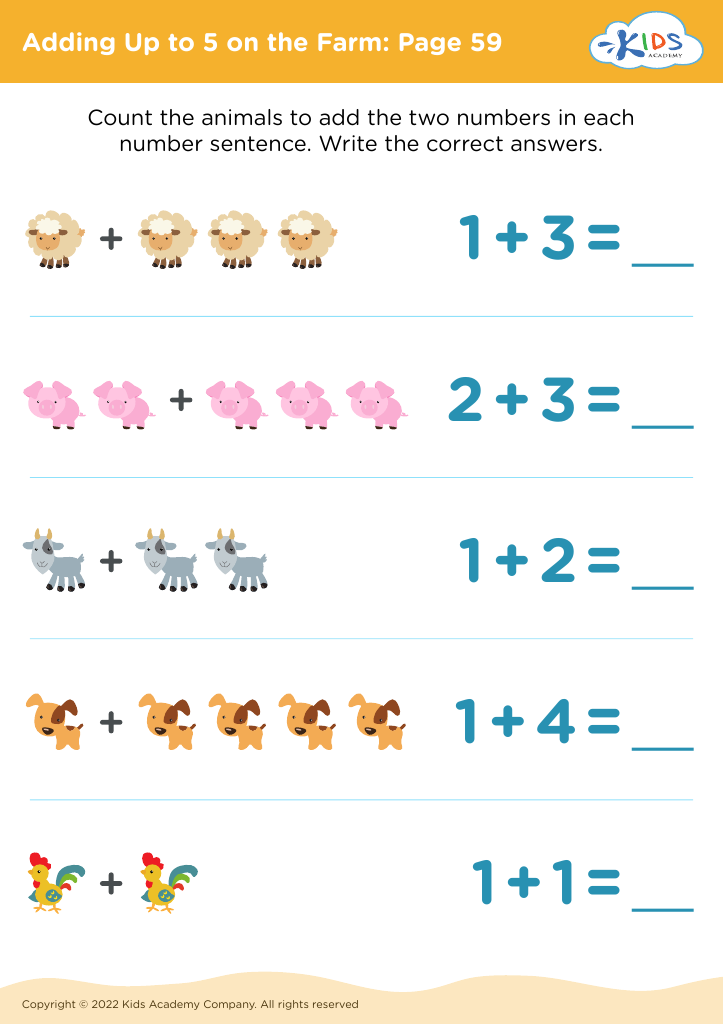
Adding Up to 5 on the Farm: Page 59
Worksheet
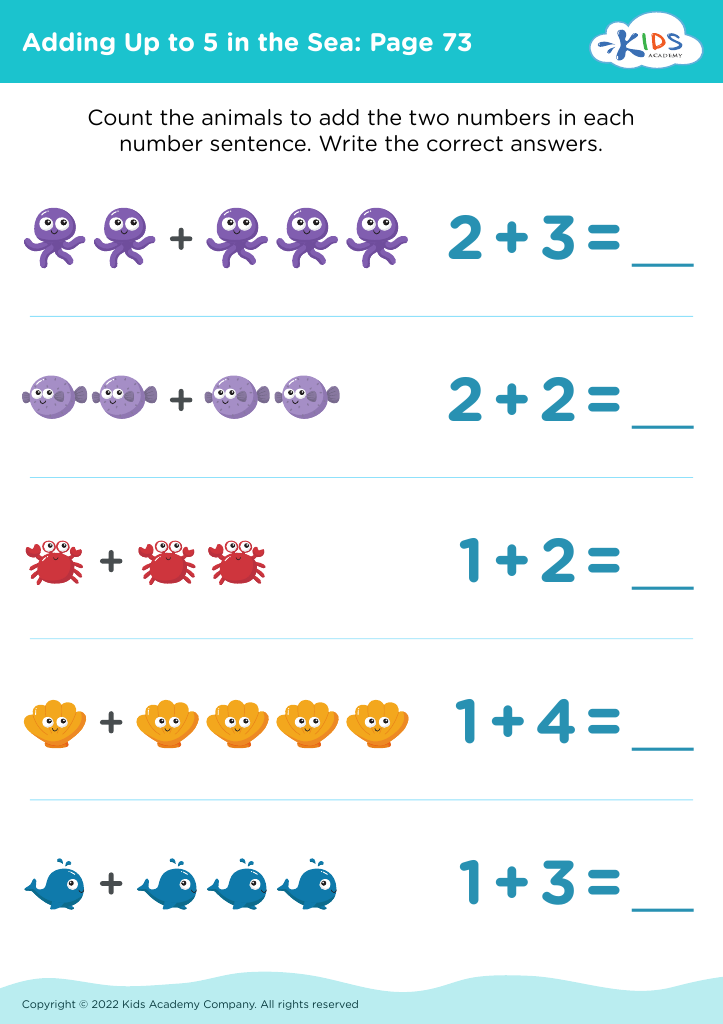
Adding Up to 5 in the Sea: Page 73
Worksheet
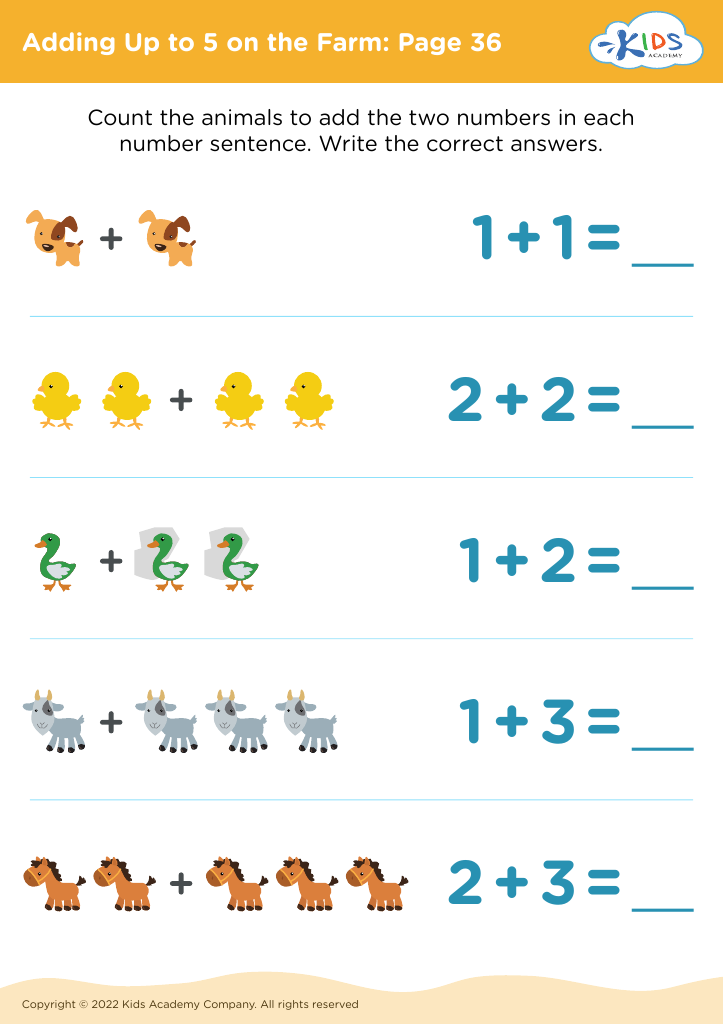
Adding Up to 5 on the Farm: Page 36
Worksheet
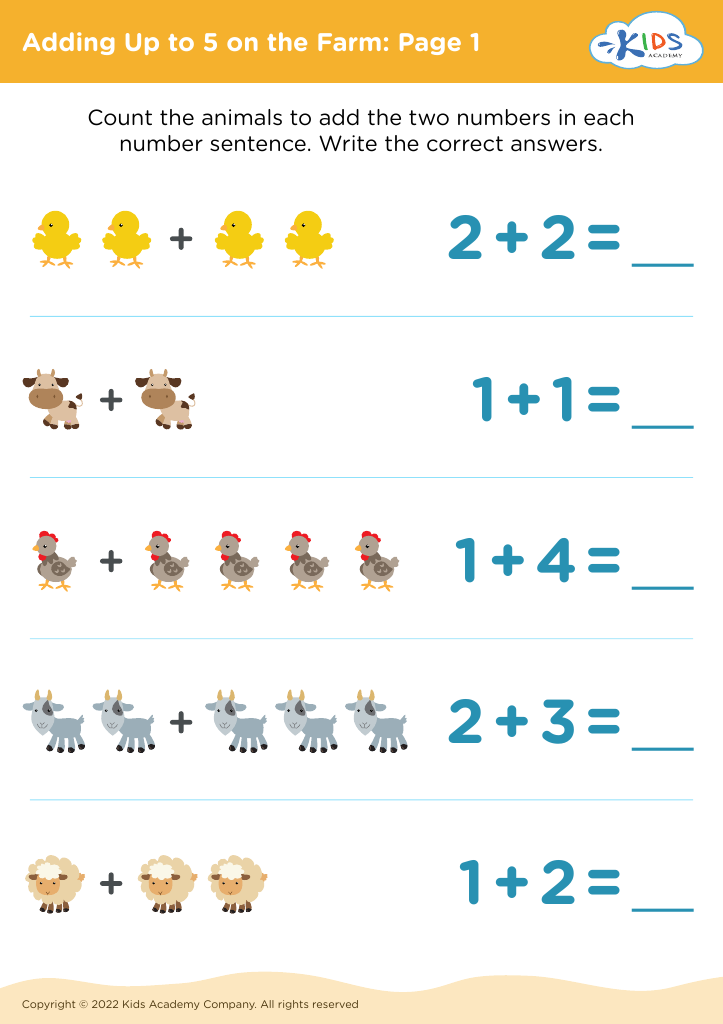
Adding Up to 5 on the Farm: Page 1
Worksheet
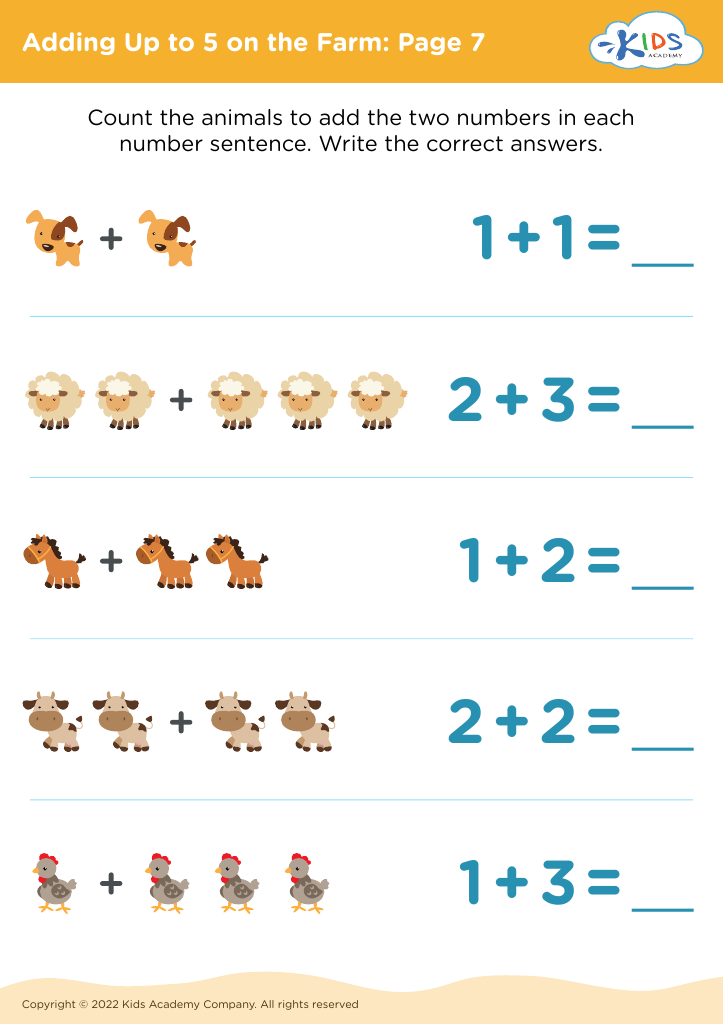
Adding Up to 5 on the Farm: Page 7
Worksheet
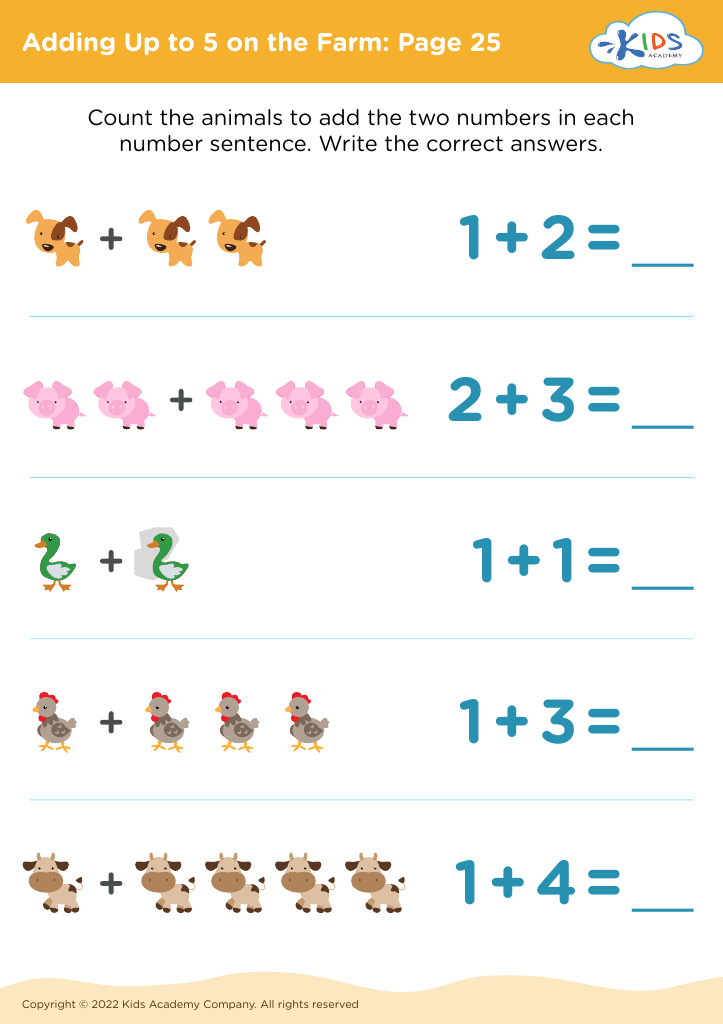
Adding Up to 5 on the Farm: Page 25
Worksheet
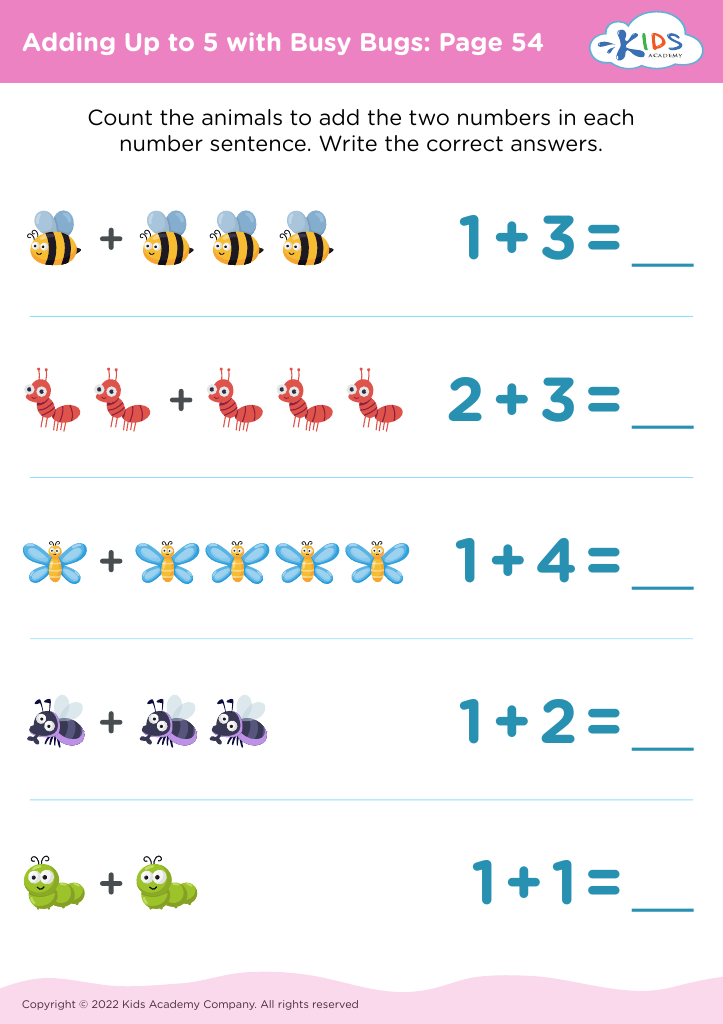
Adding Up to 5 with Busy Bugs: Page 54
Worksheet
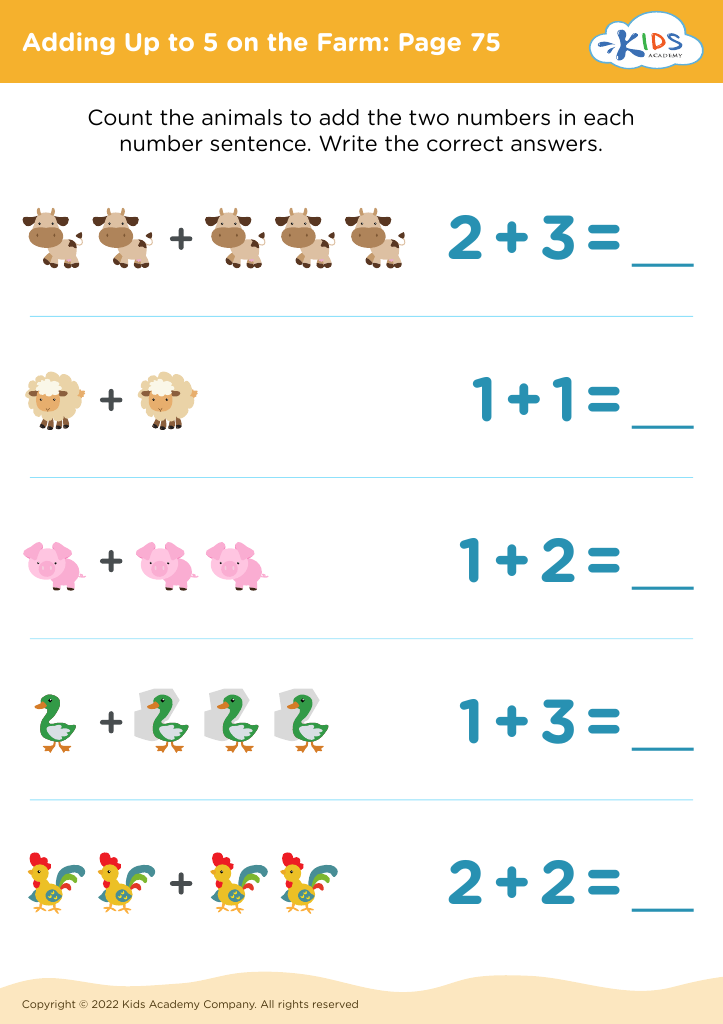
Adding Up to 5 on the Farm: Page 75
Worksheet
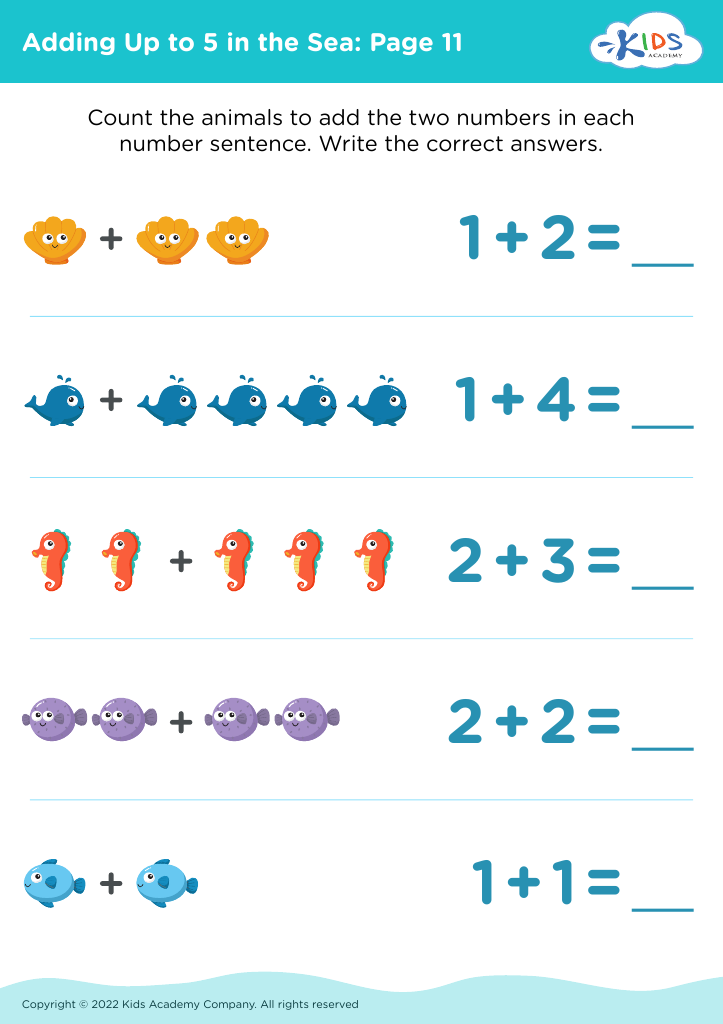
Adding Up to 5 in the Sea: Page 11
Worksheet
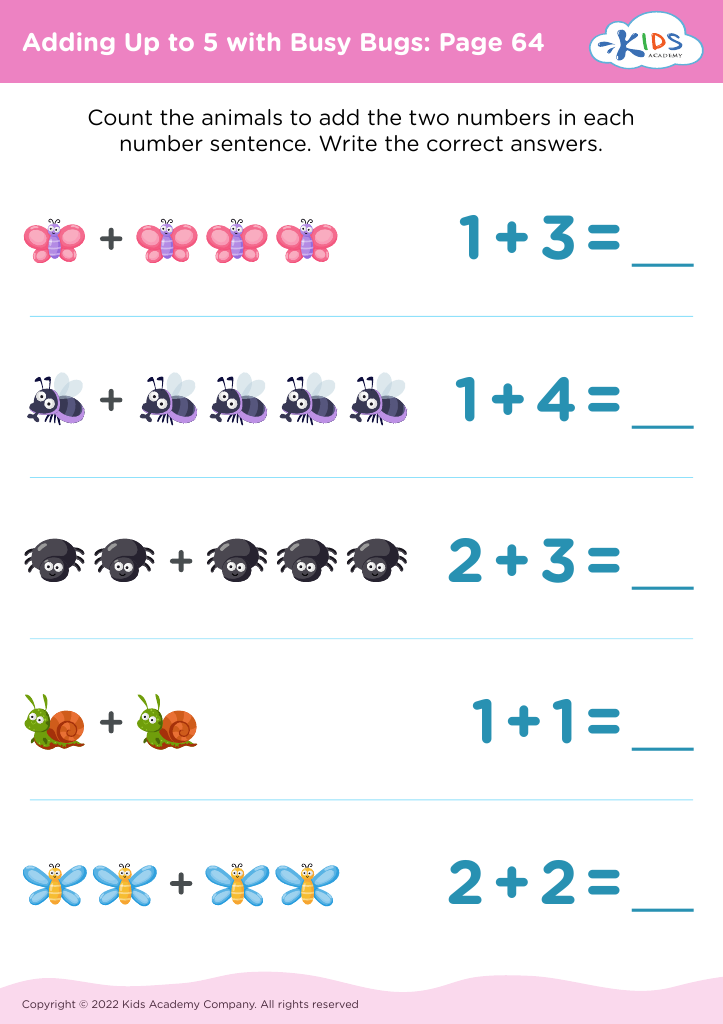
Adding Up to 5 with Busy Bugs: Page 64
Worksheet
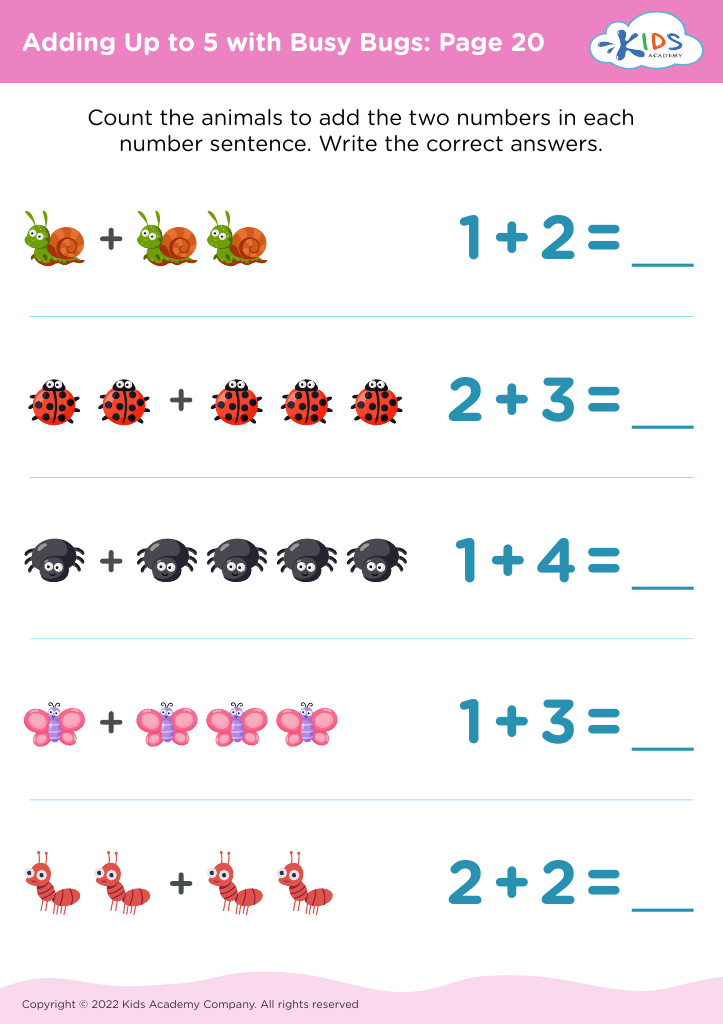
Adding Up to 5 with Busy Bugs: Page 20
Worksheet
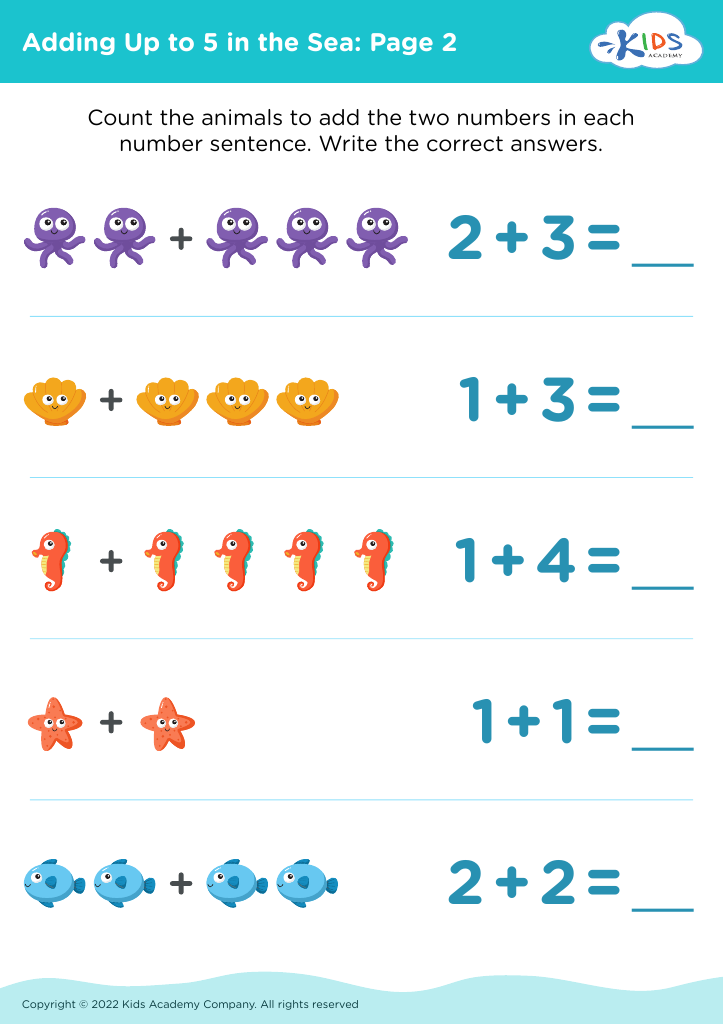
Adding Up to 5 in the Sea: Page 2

Adding Up to 5 in the Sea: Page 2

Adding Up to 5 in the Sea: Page 2
Worksheet
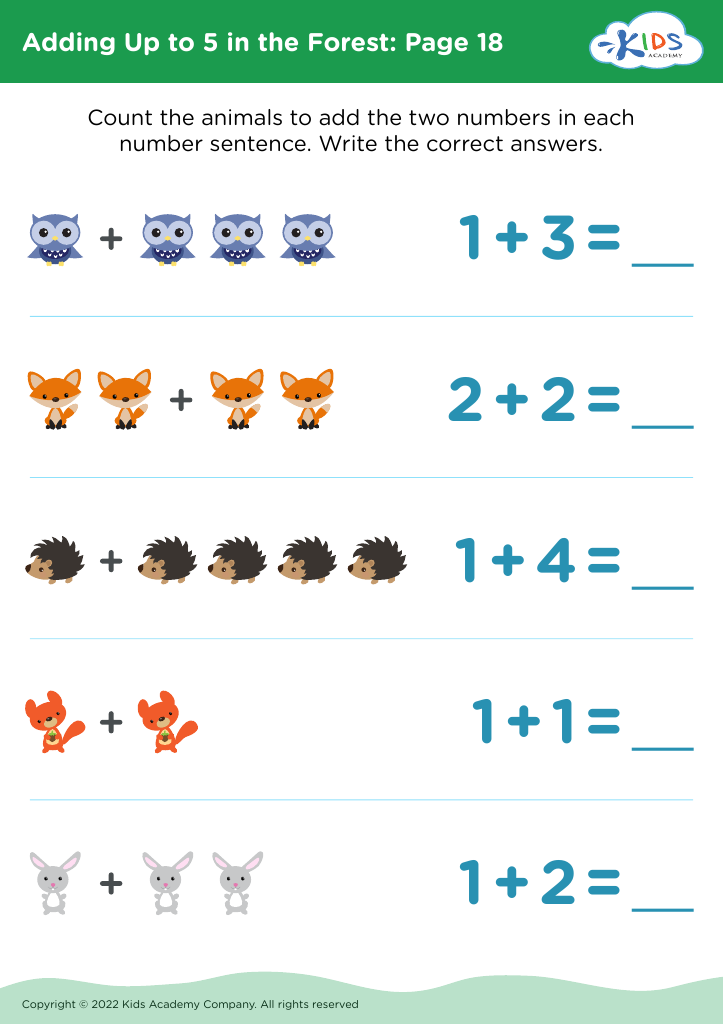
Adding Up to 5 in the Forest: Page 18
Worksheet
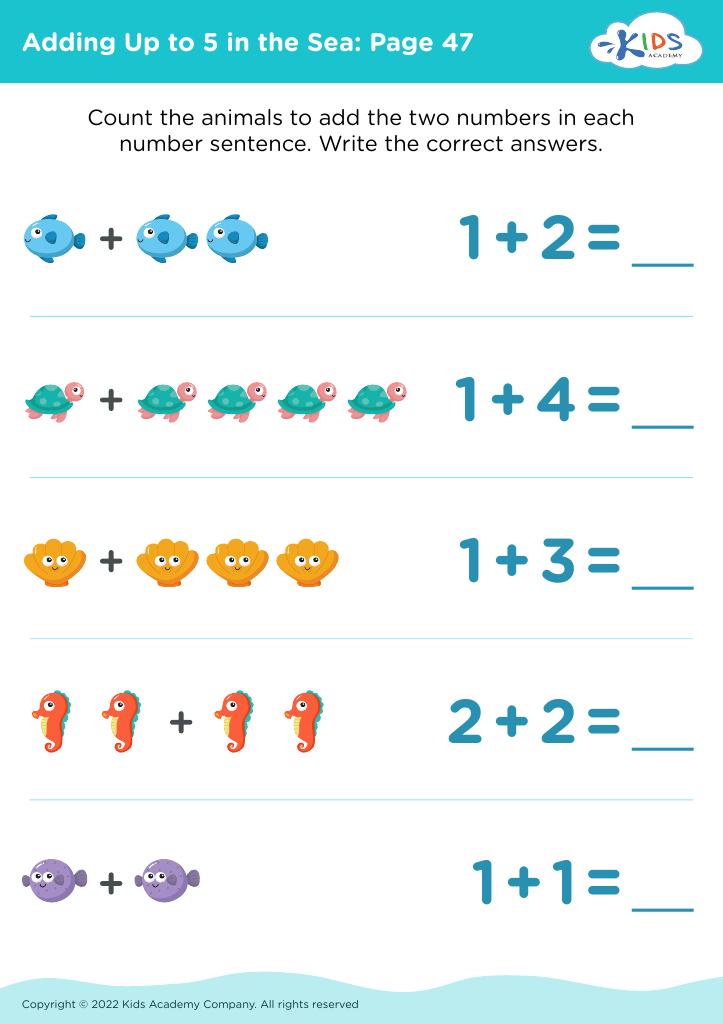
Adding Up to 5 in the Sea: Page 47
Worksheet
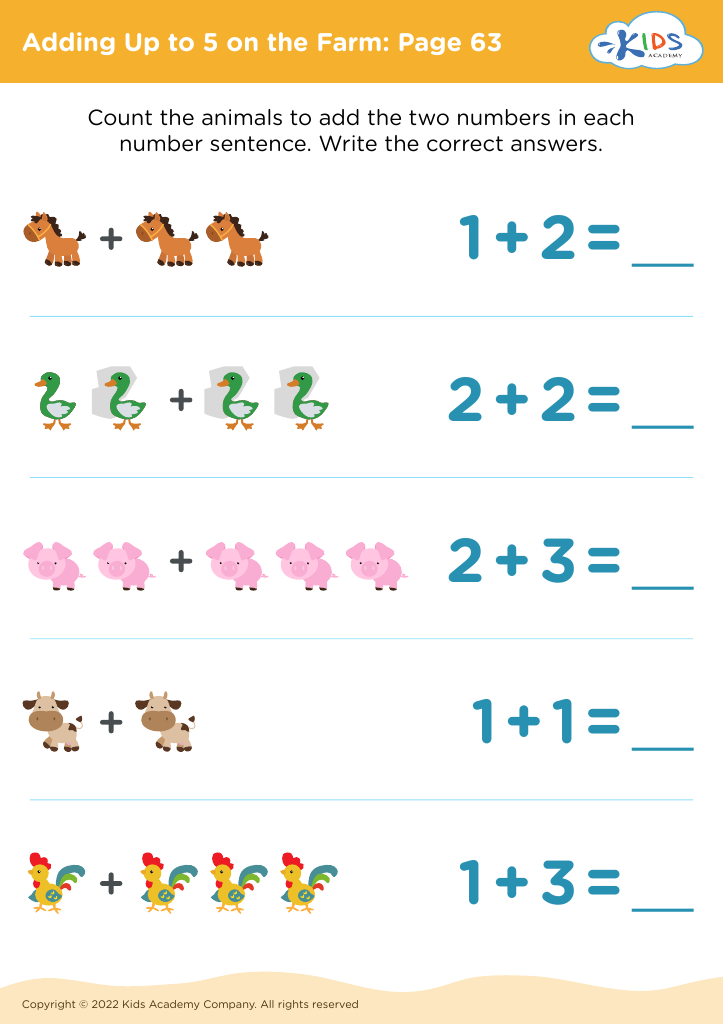
Adding Up to 5 on the Farm: Page 63
Worksheet
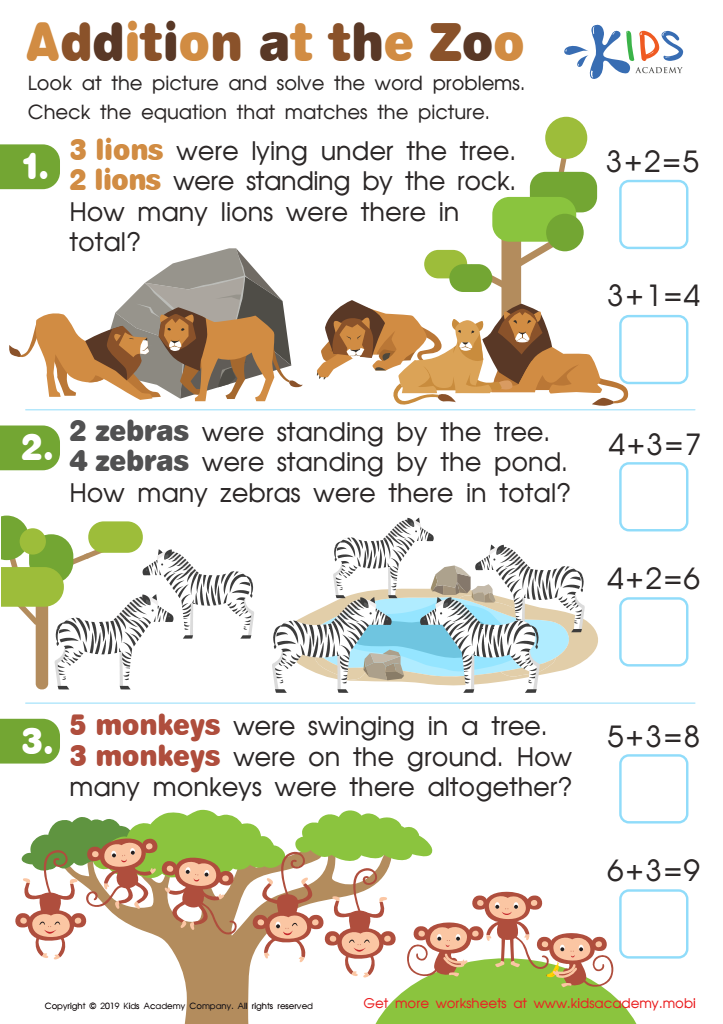
Addition at the Zoo Worksheet

Addition at the Zoo Worksheet

Visit the zoo with your kids and point out all the different animals. Ask them to name their favorites and identify animals on a worksheet. Challenge them to solve word problems related to the pictures. Ask them for the equation that fits the picture and check the answer.
Addition at the Zoo Worksheet
Worksheet


Visual learning is a crucial aspect of cognitive development, especially for 4-year-olds, as it taps into their natural curiosity and engagement with the world around them. Parents and teachers should care about visual learning addition because it provides effective, interactive ways to introduce early math concepts. Young children often understand and retain information better through visual aids, such as colorful charts, blocks, and pictures, which make learning more tangible.

Engaging with visual tools can turn the abstract concept of addition into an exciting and relatable activity. For example, using objects like fruit or toys helps children visualize combining sets, fostering a deeper understanding of numbers beyond rote memorization.

Incorporating visual learning into addition also supports diverse learning styles—some children process information visually rather than verbally. This approach encourages critical thinking and problem-solving skills as students analyze and manipulate visual elements. Moreover, such methods promote positive learning experiences, nurturing a love for math from an early age. Ultimately, supporting visual learning in addition sets a strong foundation for mathematical proficiency, boosting children's confidence and enthusiasm for learning. Parents and teachers play a pivotal role in this, helping shape proficient, enthusiastic learners for future educational success.