
Visual perception Addition Worksheets for 4-Year-Olds
13 filtered results
Difficulty Level
Grade
Age
-
From - To
Subject
Activity
Standards
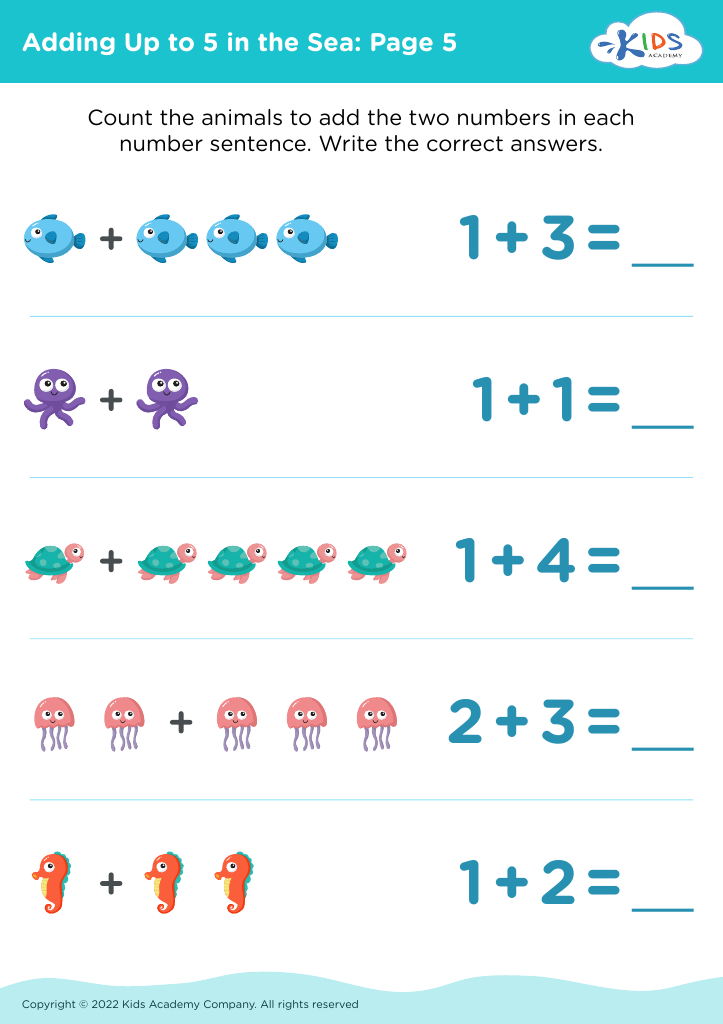
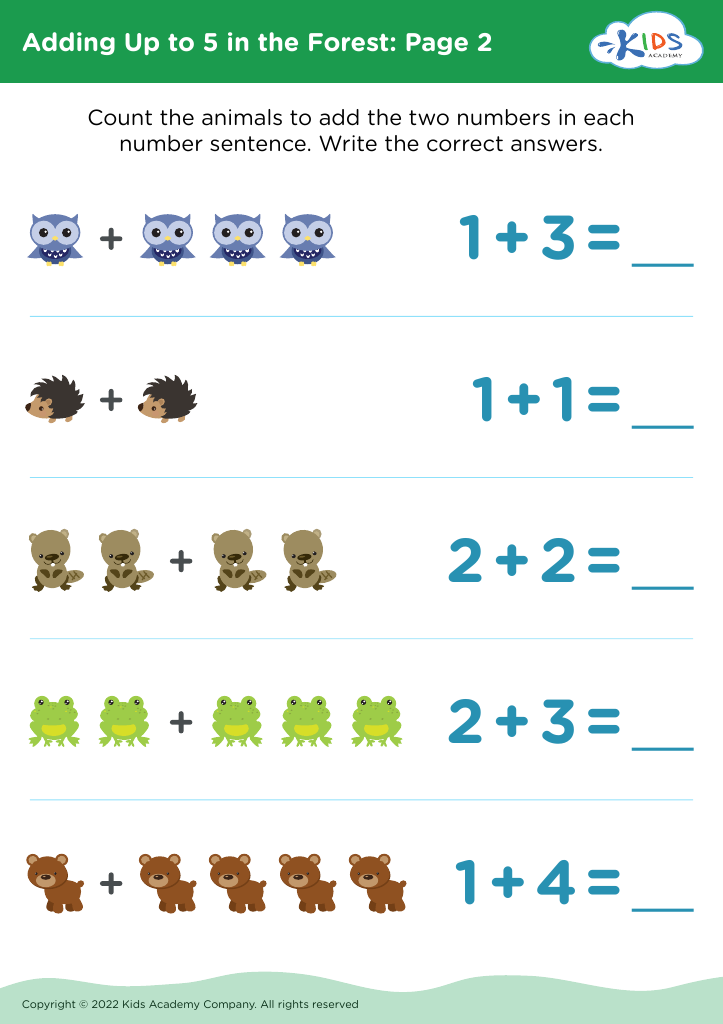
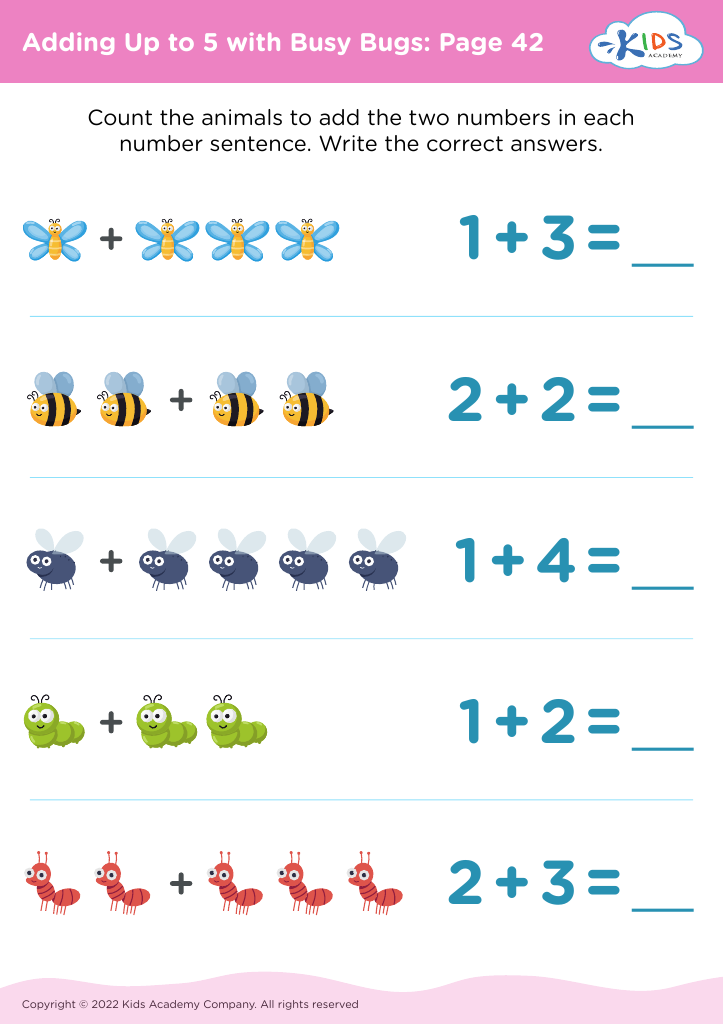
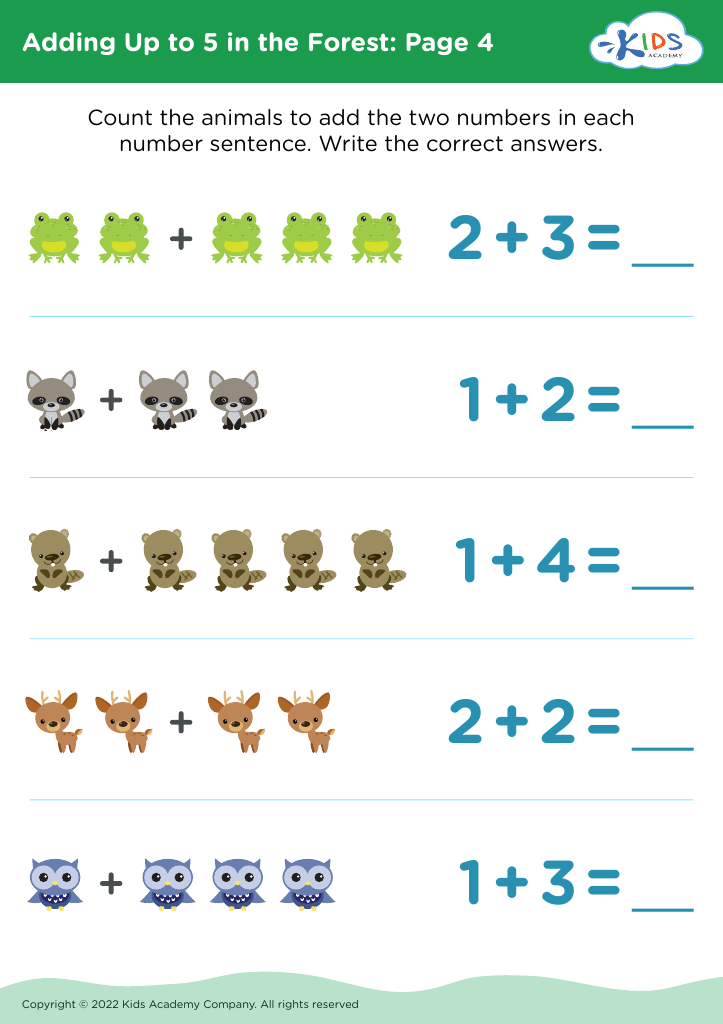
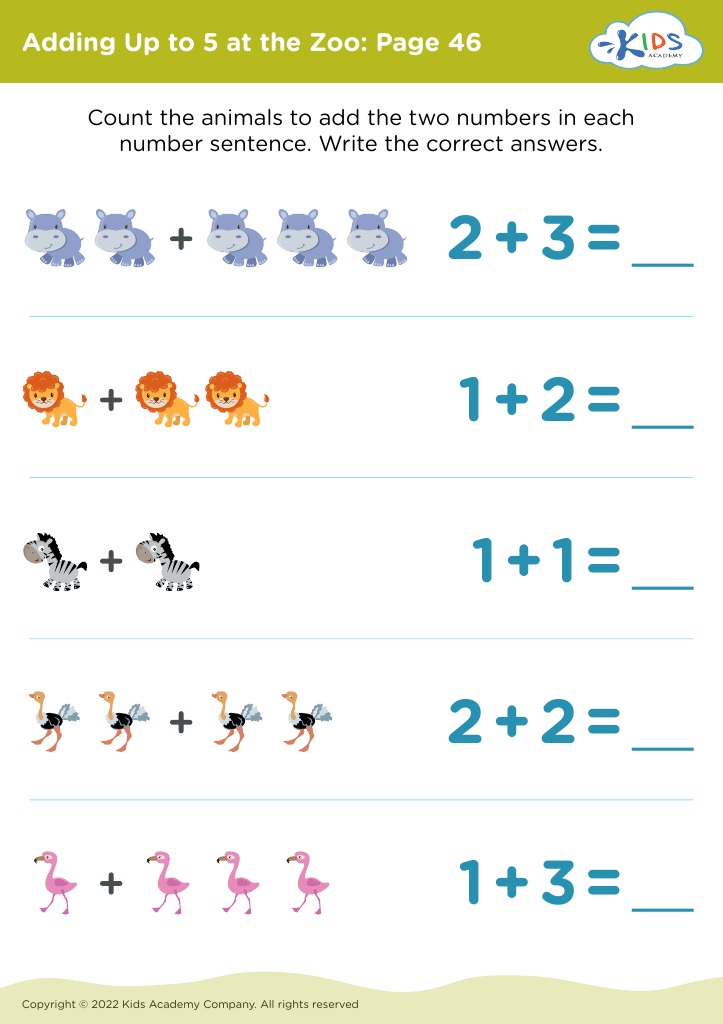
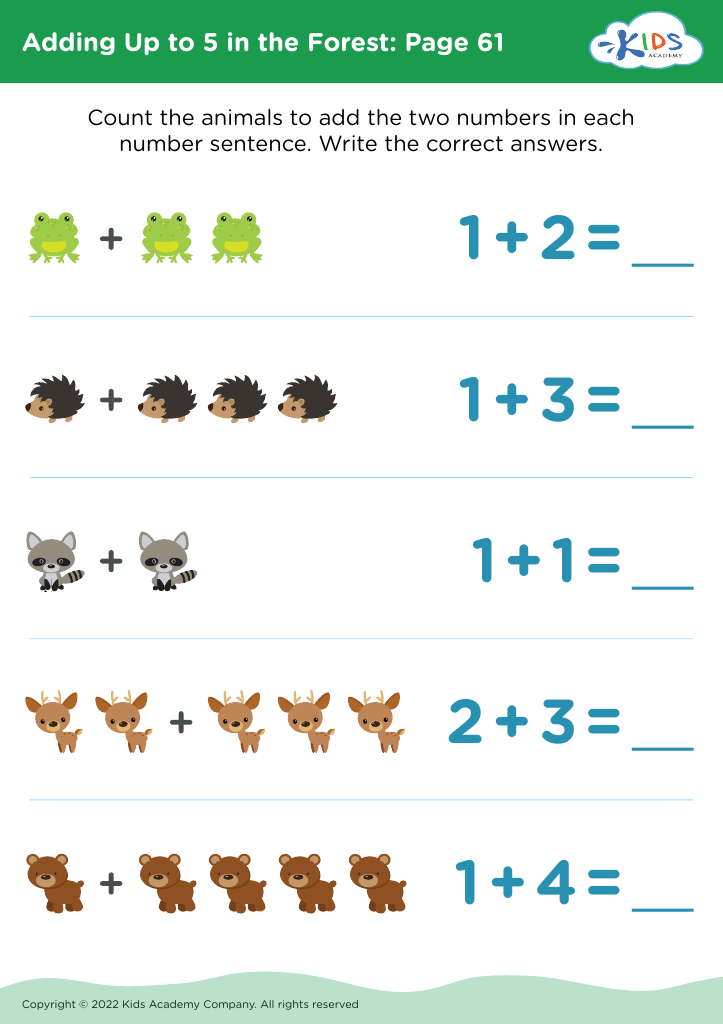
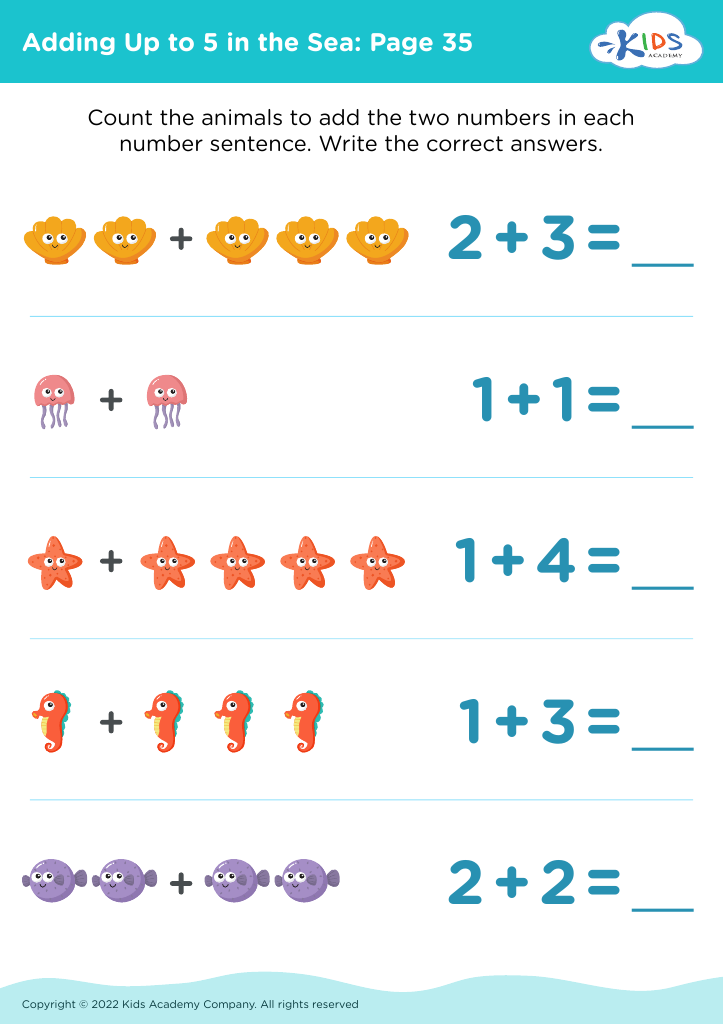
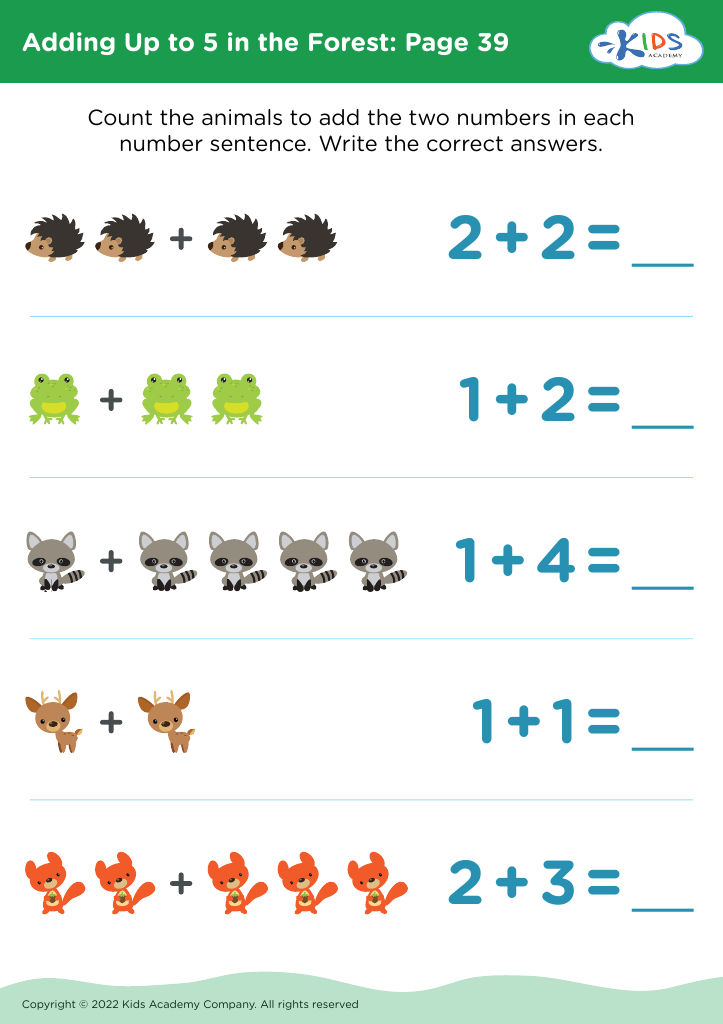
Introducing our Visual Perception Addition Worksheets tailor-made for 4-year-olds! These engaging, printable sheets are perfect for early learners who are just beginning to explore the world of addition. Designed to captivate young minds, each worksheet incorporates colorful visuals and fun activities that help develop both mathematical and visual-spatial skills. Ideal for both classroom and at-home practice, these worksheets offer a fantastic opportunity for preschoolers to enhance their arithmetic abilities while enjoying creative, hands-on learning experiences. Dive into a world of numbers and start building a strong math foundation today!
Favorites
With answer key
Interactive
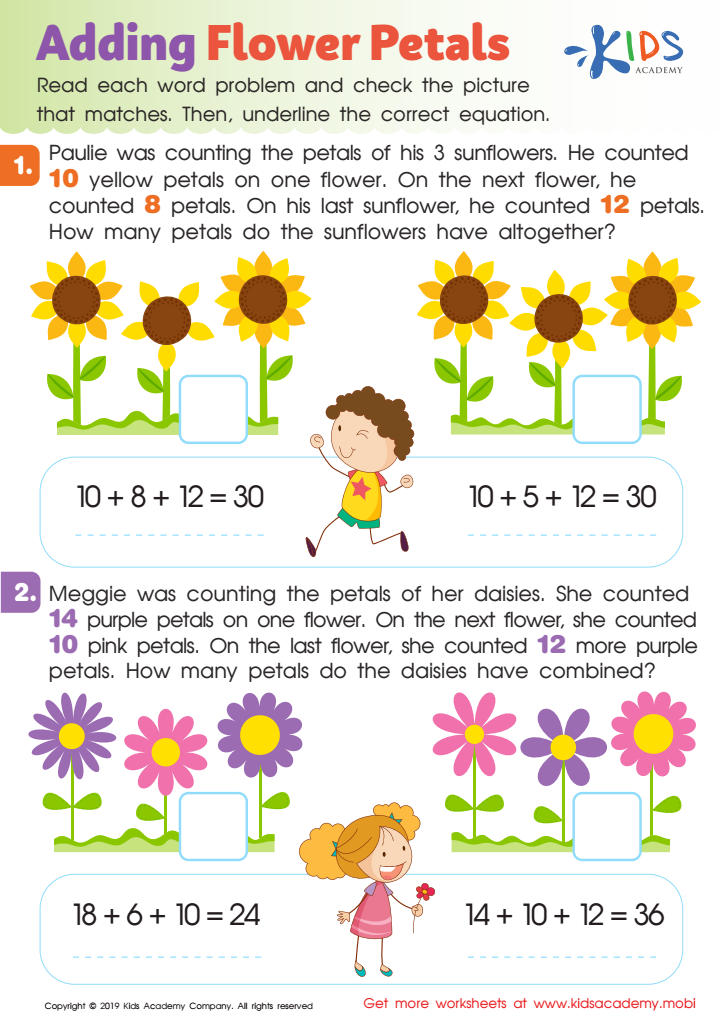
Adding Flower Petals Worksheet
This free worksheet helps little mathematicians learn to understand word problems. They'll read each one and match it to the corresponding picture. Important info is highlighted, teaching kids to look for key info when solving problems. Then they'll underline the correct number equation that matches the picture. A great way to practice problem-solving skills!
 Assign to My Students
Adding Flower Petals Worksheet
Worksheet
Join Kids Academy for Free
Who is primarily going to use this learning content?








Visual perception is the brain's ability to make sense of what the eyes see, and it's crucial for young children, especially around the age of four. At this age, children's brains are highly adaptable and are rapidly developing the skills needed for more advanced learning. Visual perception activities, such as addition exercises, can significantly enhance their cognitive abilities in several ways.
First, visual perception addition enhances early math skills, which are the building blocks for future mathematical concepts. By combining visual learning with numbers, children can better understand and retain basic arithmetic principles. This early exposure sets a solid foundation for more complex problem-solving tasks in later years.
Second, these activities improve hand-eye coordination and fine motor skills. When children engage in tasks that involve visual elements, such as placing tokens or markers corresponding to numbers, they develop better physical control and coordination.
Furthermore, visual perception tasks enhance attention to detail and spatial awareness. Recognizing patterns, distances, and spatial relationships trains children to become more observant and precise, which benefits reading and writing skills later on.
Parents and teachers should invest time in visual perception addition activities for four-year-olds to foster their cognitive development, fine motor skills, and foundational academic abilities. This multi-faceted growth prepares children for more advanced learning and daily life skills.








