
Visual perception improvement Addition Worksheets for 4-Year-Olds
5 filtered results
Difficulty Level
Grade
Age
-
From - To
Subject
Activity
Standards
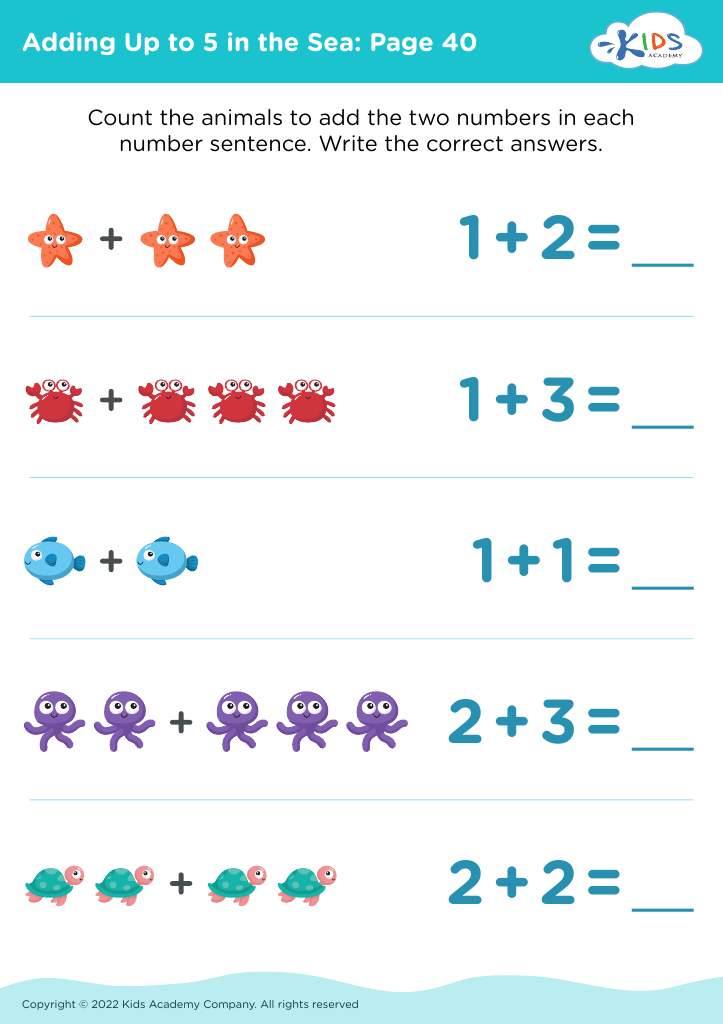
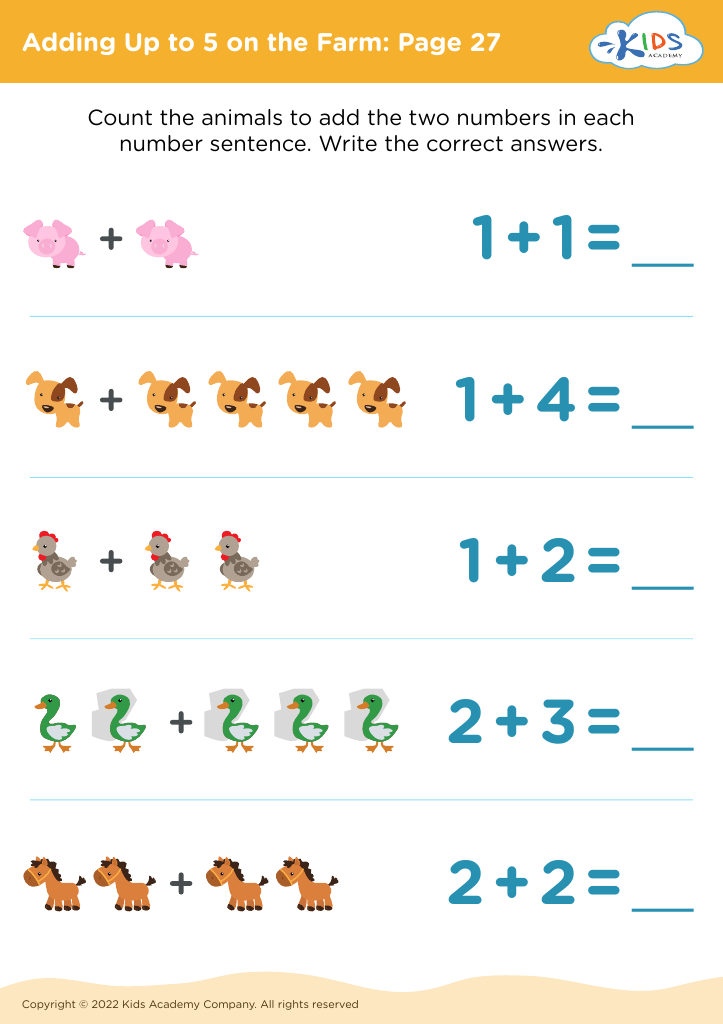
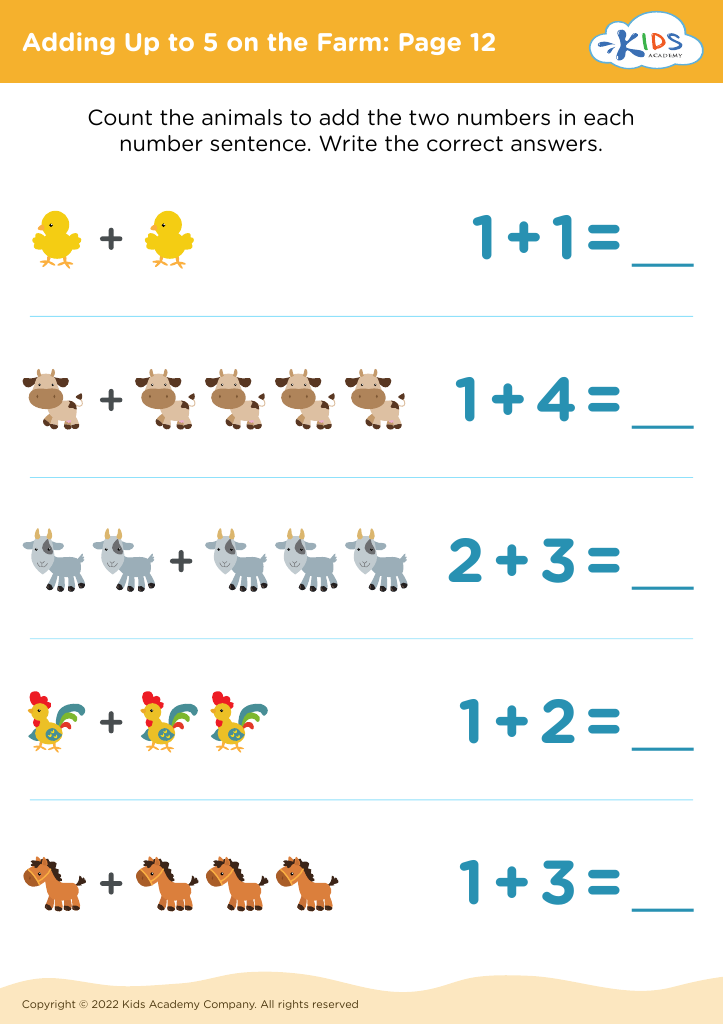
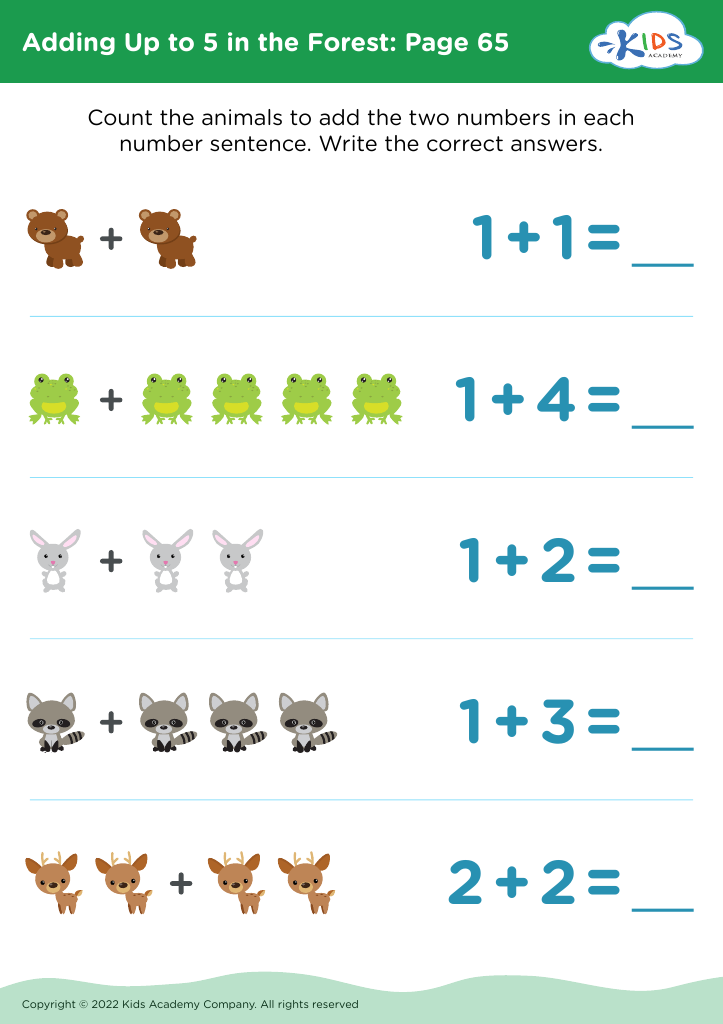
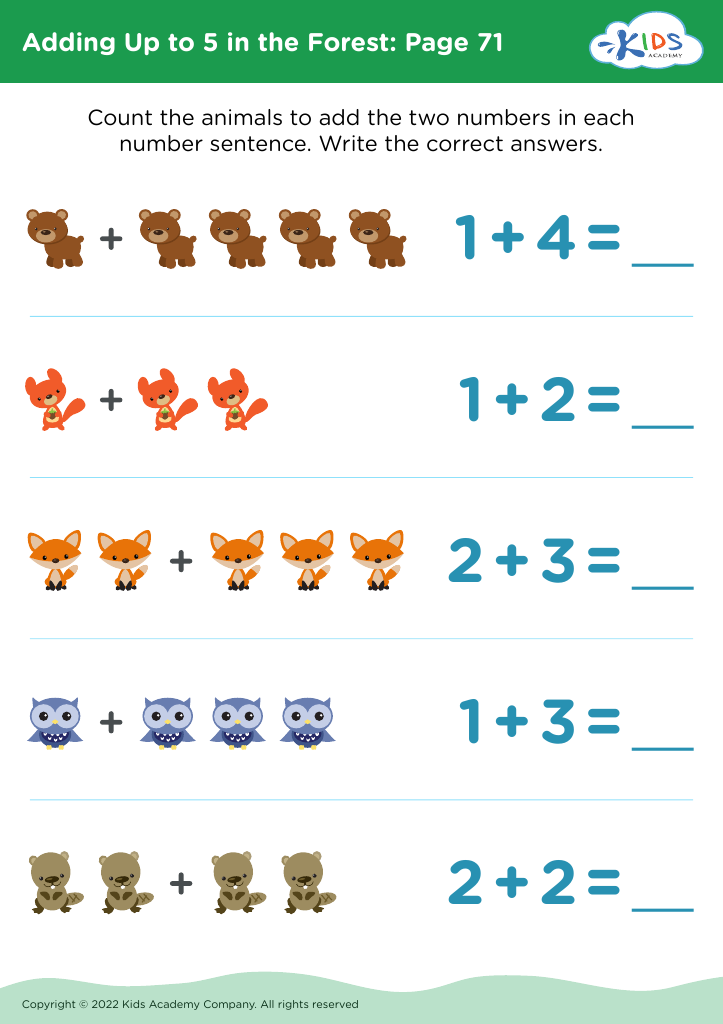
Boost your child's visual perception skills with our engaging Addition Worksheets designed specifically for 4-year-olds! These printable resources focus on enhancing visual discrimination, spatial awareness, and pattern recognition, all integral parts of early math learning. Interactive and fun, each worksheet incorporates colorful illustrations and relatable themes that capture young learners’ attention. Perfect for at-home practice or supplementation to preschool education, our worksheets help children develop the foundational skills needed for future success in math. Give your little ones the tools they need to excel in learning through and strengthen their visual perception while practicing essential addition techniques. Start the journey to math mastery today!
Favorites
With answer key
Interactive
Join Kids Academy for Free
Who is primarily going to use this learning content?








Visual perception is a critical skill that helps young children understand and interact with their environment. For 4-year-olds, improving visual perception is essential for developmental milestones such as reading, writing, and complex problem-solving later in school. When parents and teachers focus on enhancing these skills, they set the stage for a child’s successful academic journey.
Firstly, strong visual perception skills aid in recognizing shapes, colors, and sizes, which are foundational for early math and literacy skills. Children learn to differentiate between letters and numbers, essential for reading readiness. Moreover, improved visual perception helps kids with spatial relations and planning, fostering better motor skills when they engage in activities like drawing, cutting, or building.
Additionally, visual perception is linked to a child’s self-esteem. As children gain competence in these skills, they become more confident in their abilities, leading to more engagement in learning activities. Simple games, such as puzzles or matching games, signify fun while reinforcing these crucial skills.
By prioritizing visual perception activities, parents and teachers can create a supportive learning environment, ensuring that children are equipped with the necessary tools to thrive academically and socially in both preschool and beyond.








