Basic Math Skills Comparison Worksheets for 4-Year-Olds
3 filtered results
-
From - To
Discover our engaging Basic Math Skills Comparison Worksheets designed specifically for 4-year-olds! These interactive printables help young learners delve into essential math concepts, including comparing numbers, sizes, and quantities. By using colorful visuals and fun activities, children will develop critical math skills while enjoying the learning process. Our worksheets foster independent thinking and boost confidence as kids explore the world of numbers through comparison tasks. Tailored to enhance early mathematics education, these resources are perfect for both home and classroom use. Support your child's foundational math skills today with our carefully crafted worksheets that make learning fun and effective!
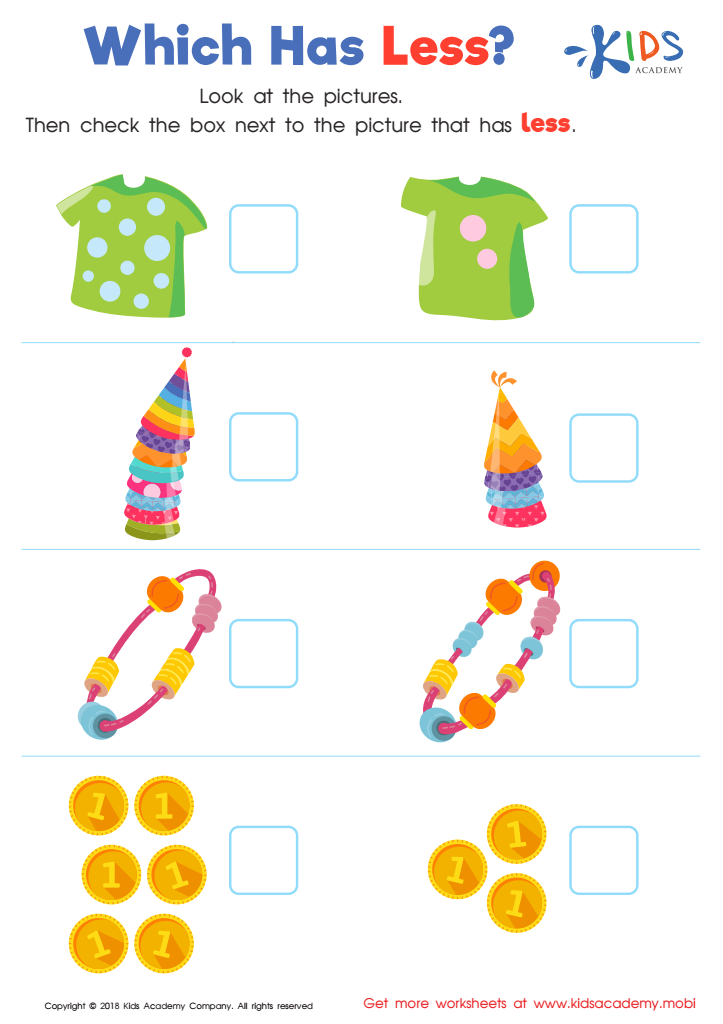
Which Has Less? Worksheet
 Assign to My Students
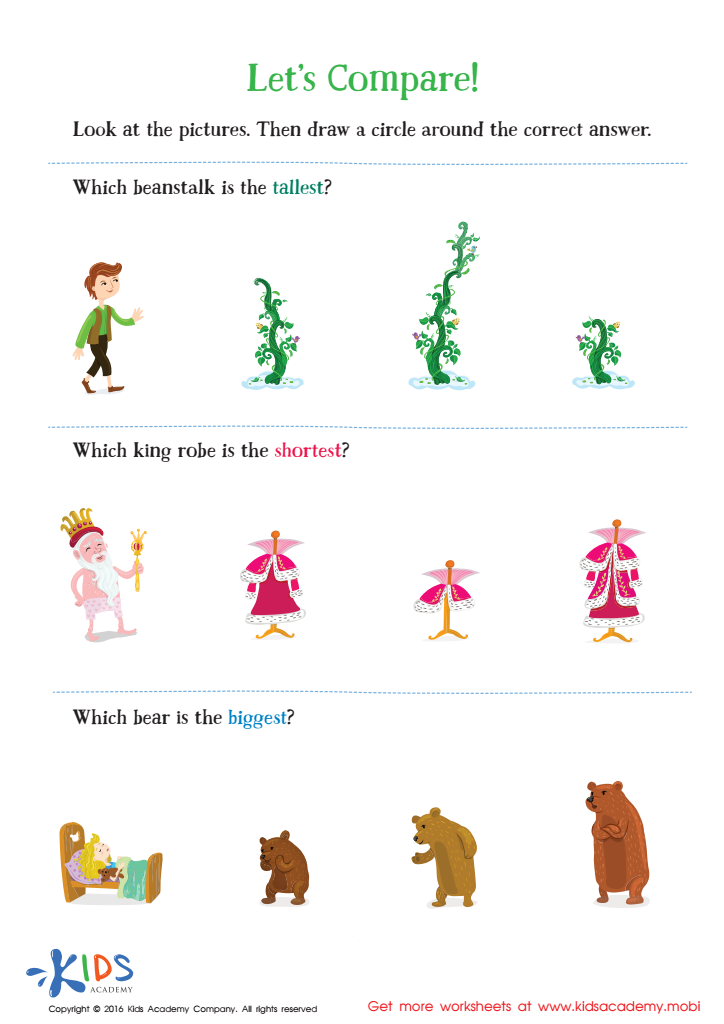
Fairy Tale Worksheet: Let's Compare
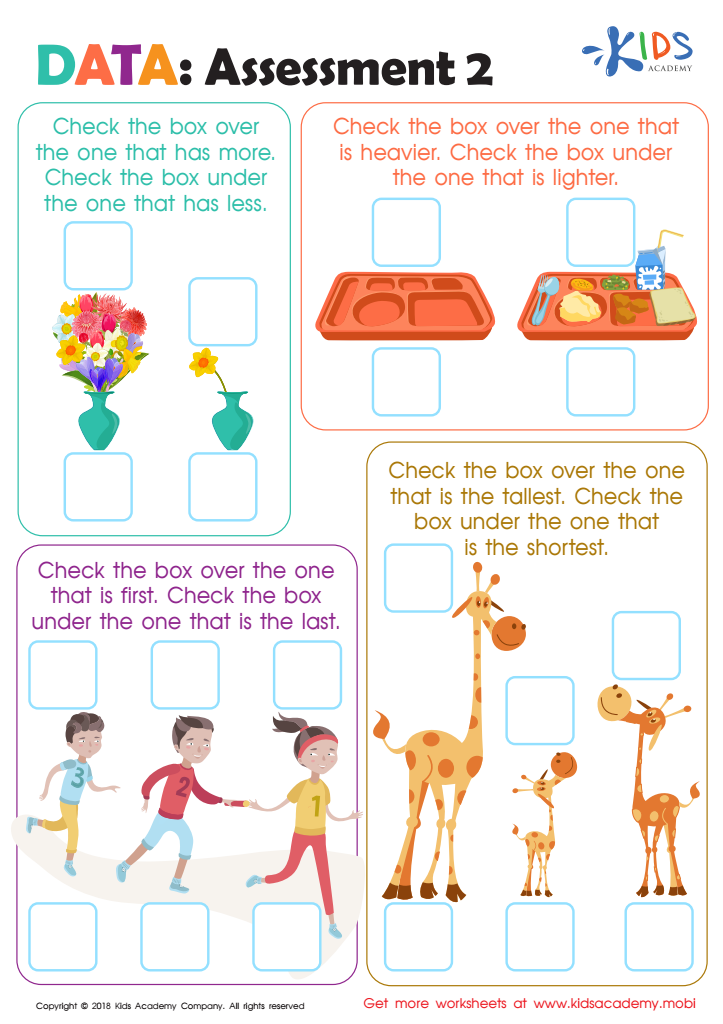
Data: Assessment 2 Worksheet








Understanding and nurturing basic math skills in 4-year-olds is crucial for both parents and teachers. At this tender age, children are in a pivotal developmental stage, where they actively explore the world around them. Math skills provide a foundation for cognitive development and problem-solving abilities, training them to recognize patterns, categorize objects, and develop logical reasoning.
By comparing basic math skills among young children, parents and teachers can identify strengths and weaknesses in their learning processes. Early intervention can be implemented when necessary, ensuring that children receive support tailored to their needs. This proactive approach promotes a love for learning and helps mitigate potential future learning difficulties.
Furthermore, math skills lay the groundwork for academic success in later years. Children who are competent in basic math concepts entering school are likely to perform better in more complex subjects, fostering a positive self-esteem and motivation in their educational journey.
Incorporating fun and engaging math activities at this age also encourages collaboration and communication among peers. By acknowledging the importance of math readiness in 4-year-olds, parents and teachers can foster an enriching environment that cultivates lifelong learners equipped with essential skills for future academic challenges.








