Pattern recognition Geometry Worksheets for 4-Year-Olds
3 filtered results
-
From - To
Introducing our engaging and educational Pattern Recognition Geometry Worksheets for 4-Year-Olds! These vibrant, fun-filled worksheets are designed to help young learners identify and understand basic geometric shapes and patterns. By completing entertaining activities, children will enhance their visual discrimination, critical thinking, and problem-solving skills. Perfect for preschoolers, these printable sheets encourage early math confidence and familiarity with essential geometry concepts. Crafted by experienced educators, our worksheets make learning both exciting and effective. Download today and watch your child's foundational math abilities flourish as they explore the captivating world of shapes and patterns!
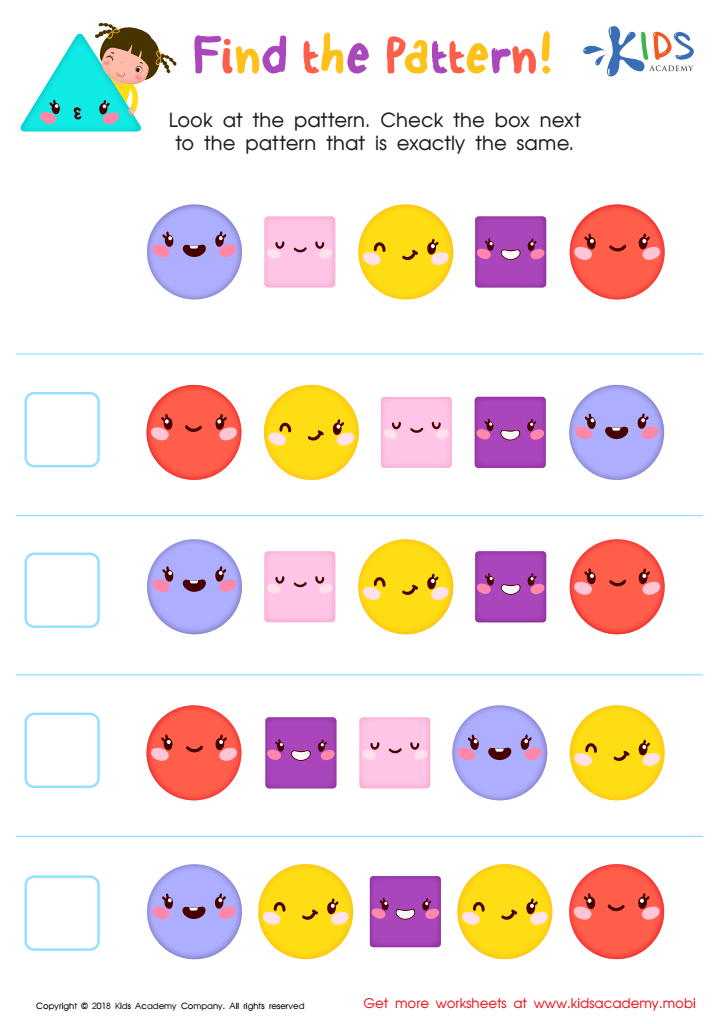
Find the Pattern Worksheet
 Assign to My Students











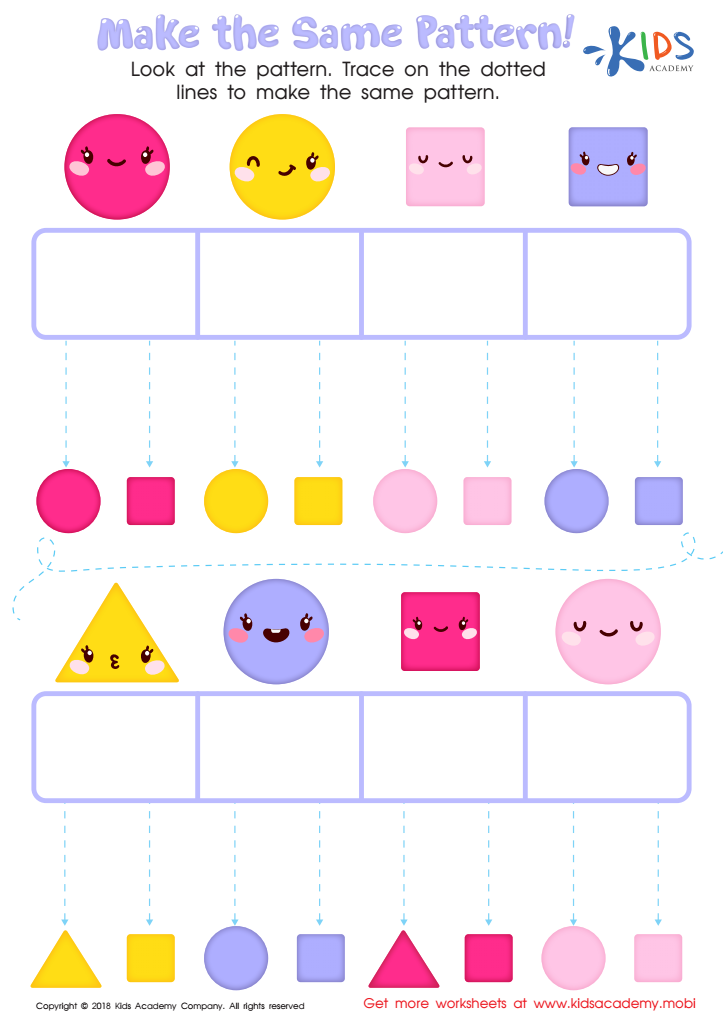
Make the Same Pattern Worksheet
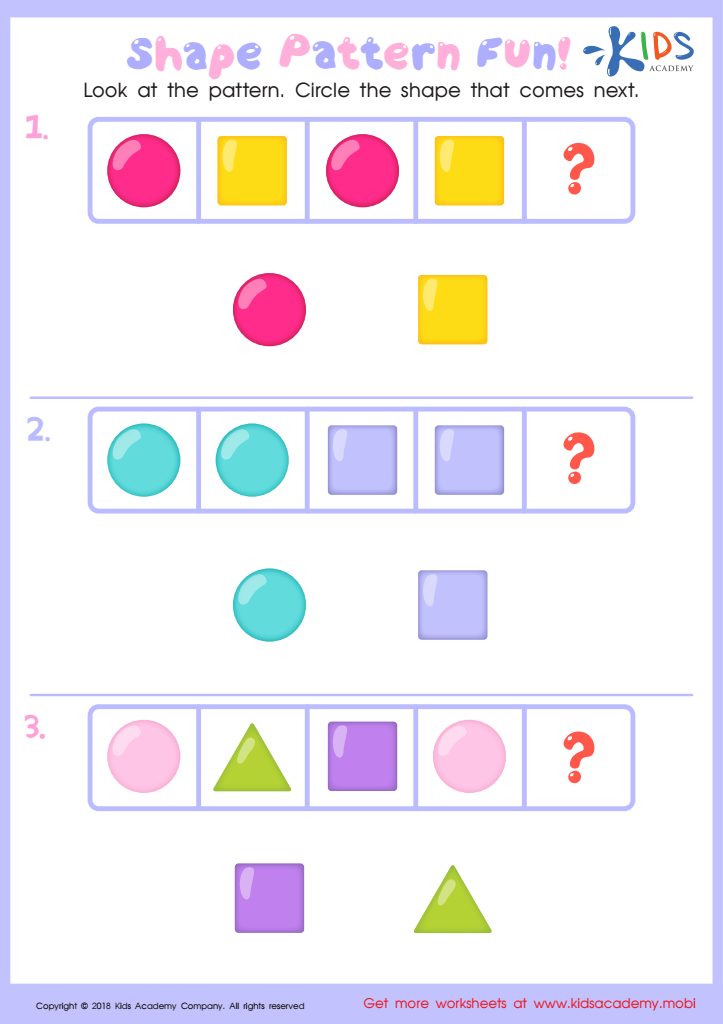
Shape Pattern Fun Worksheet








Recognizing and understanding patterns and basic geometry at an early age plays a pivotal role in a child's cognitive development, impacting their future learning abilities. For 4-year-olds, engaging with patterns and geometric shapes is not only about learning specific concepts but also about fostering critical thinking and problem-solving skills.
Pattern recognition, the ability to notice regularities and irregularities, enhances a child’s analytical skills. By identifying and predicting patterns, children learn to make connections and establish cause-and-effect relationships, which are foundational to later math and science learning. Engaging with patterns helps improve their memory, attention to detail, and sequencing skills.
Geometry introduces young children to spatial awareness, shapes, and the properties of objects in their environment. When children play with blocks, trace shapes, or sort objects based on geometry, they develop an understanding of size, shape, and spatial relationships. This knowledge is crucial for concepts such as understanding directions, navigating spaces, and later, for more complex topics in geometry and other math areas.
Additionally, these skills extend beyond academics. As children interact with patterns and shapes, they improve their hand-eye coordination, fine motor skills, and ability to observe and describe their world—enhancing their language skills and overall cognitive development. Consequently, fostering a child’s abilities in pattern recognition and geometry provides a strong foundation for both academic success and everyday problem-solving.








