Shape identification Geometry Worksheets for 4-Year-Olds
11 filtered results
-
From - To
Introduce your 4-year-old to the exciting world of geometry with our engaging Shape Identification Geometry Worksheets! Specially crafted for little learners, these worksheets help children recognize and name basic shapes through fun and interactive activities. Featuring vibrant illustrations and simple exercises, our printable worksheets promote problem-solving, critical thinking, and fine motor skills. Perfect for both classroom and home use, these worksheets are a fantastic tool for parents and educators aiming to build a strong mathematical foundation in early childhood. Make learning fun and easy with our Shape Identification Geometry Worksheets today!
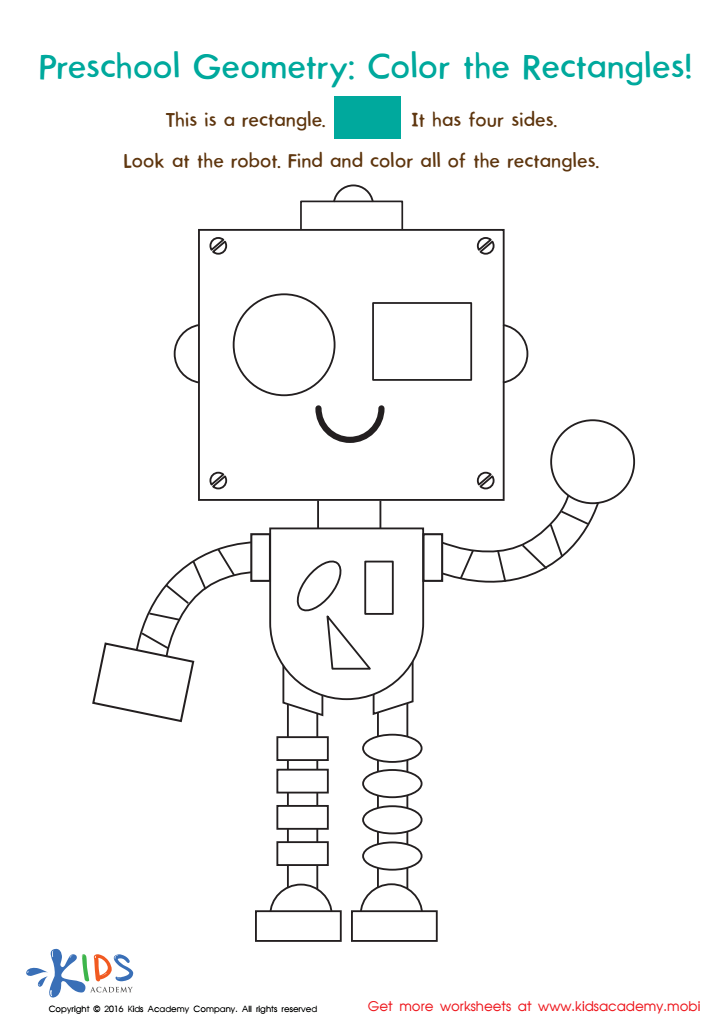
Geometry Worksheet
 Assign to My Students











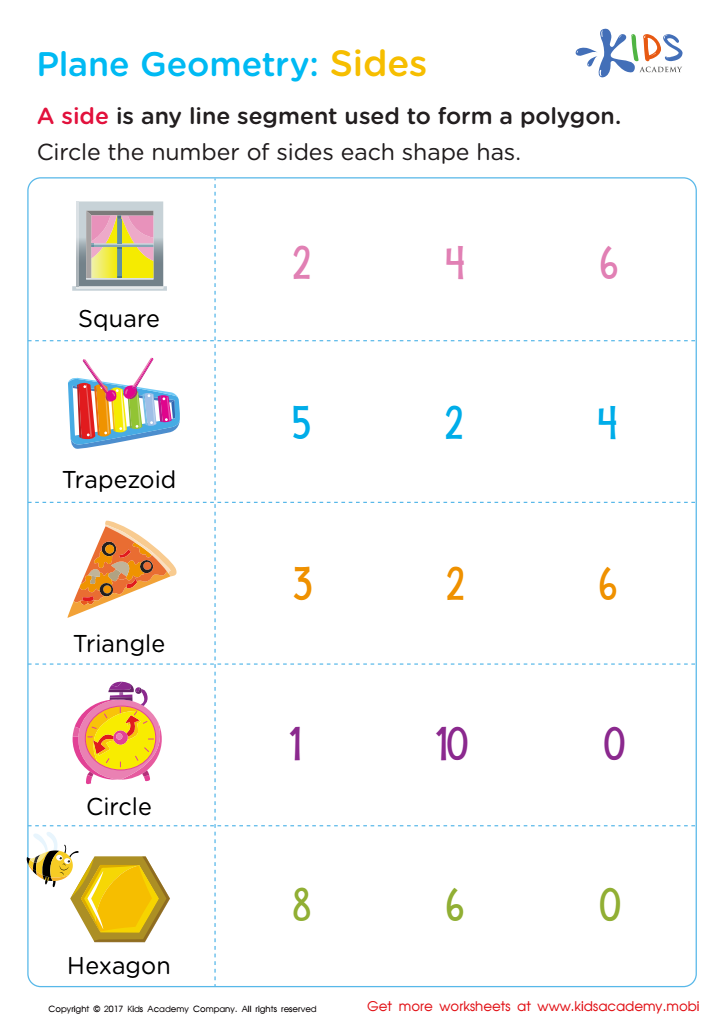
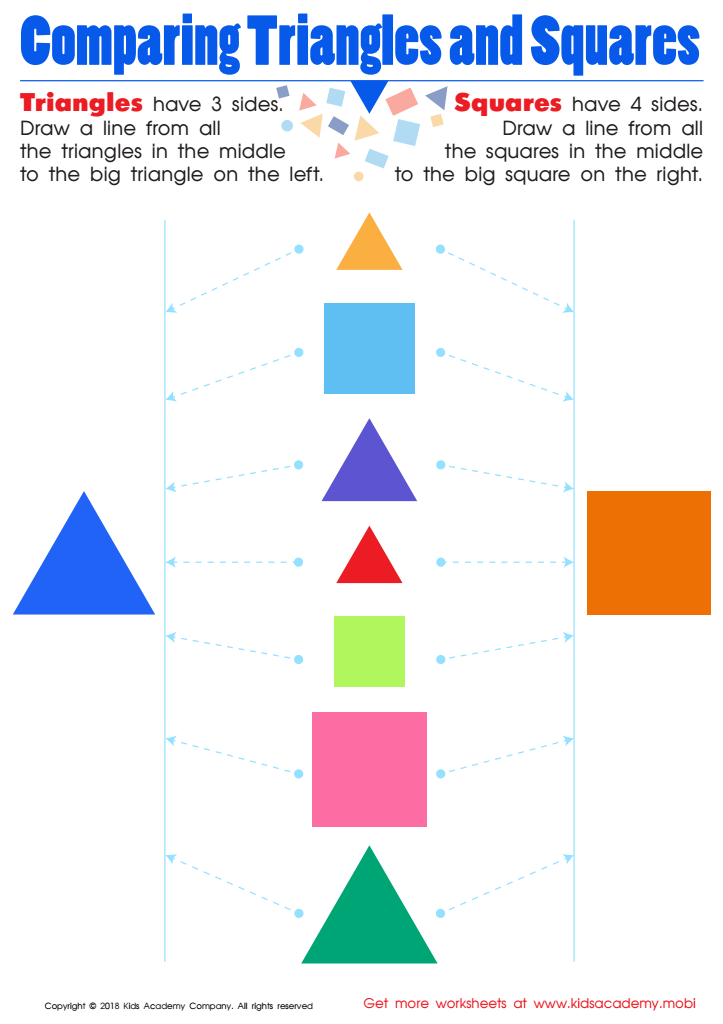
Comparing Triangles Squares Worksheet
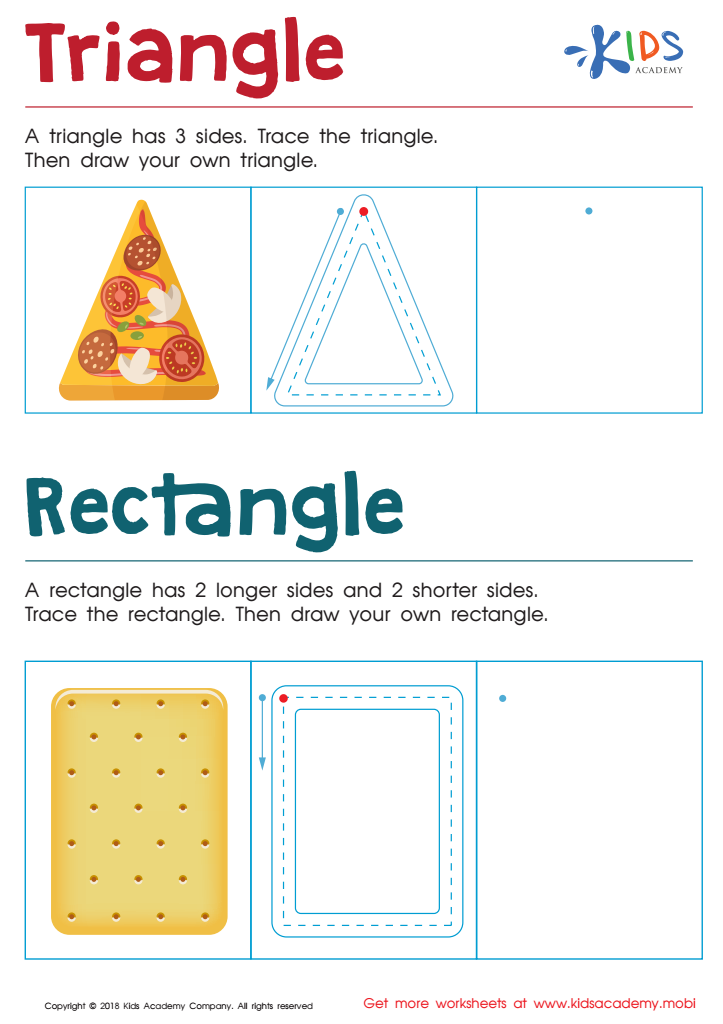
Triangle Rectangle Worksheet
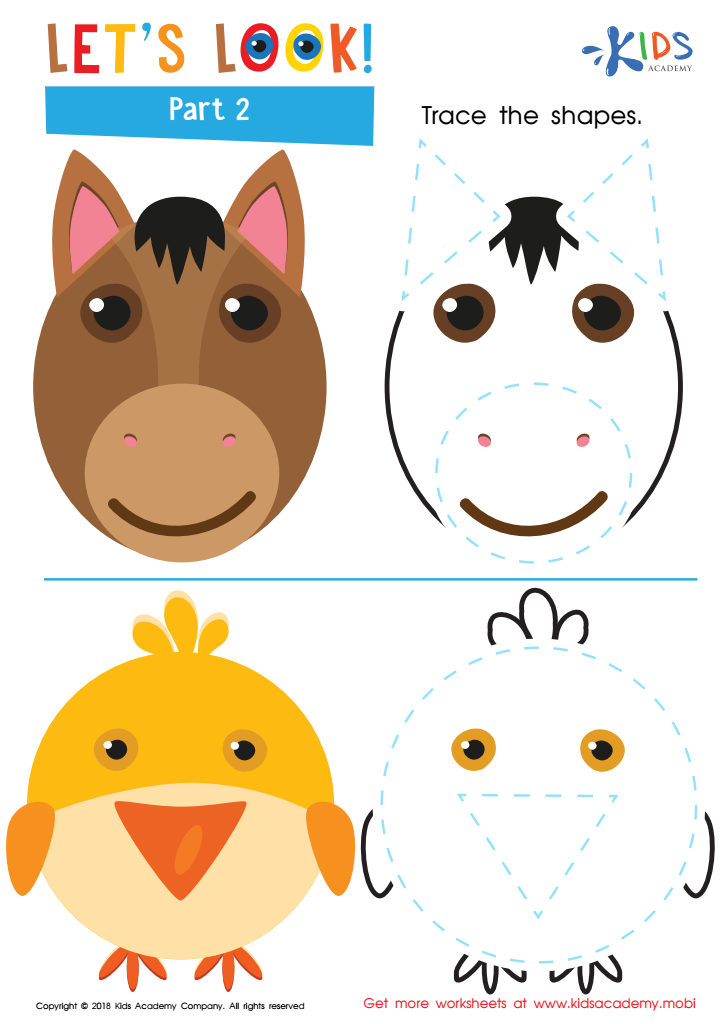
Let's Look! Part 2 Worksheet
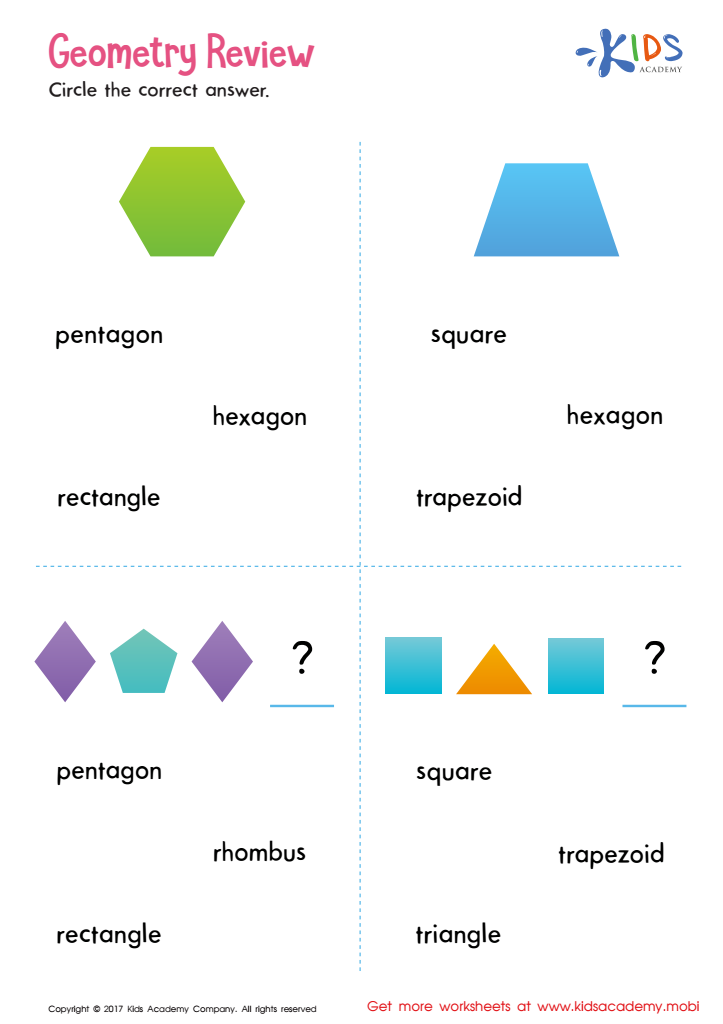
Geometry Review Printable
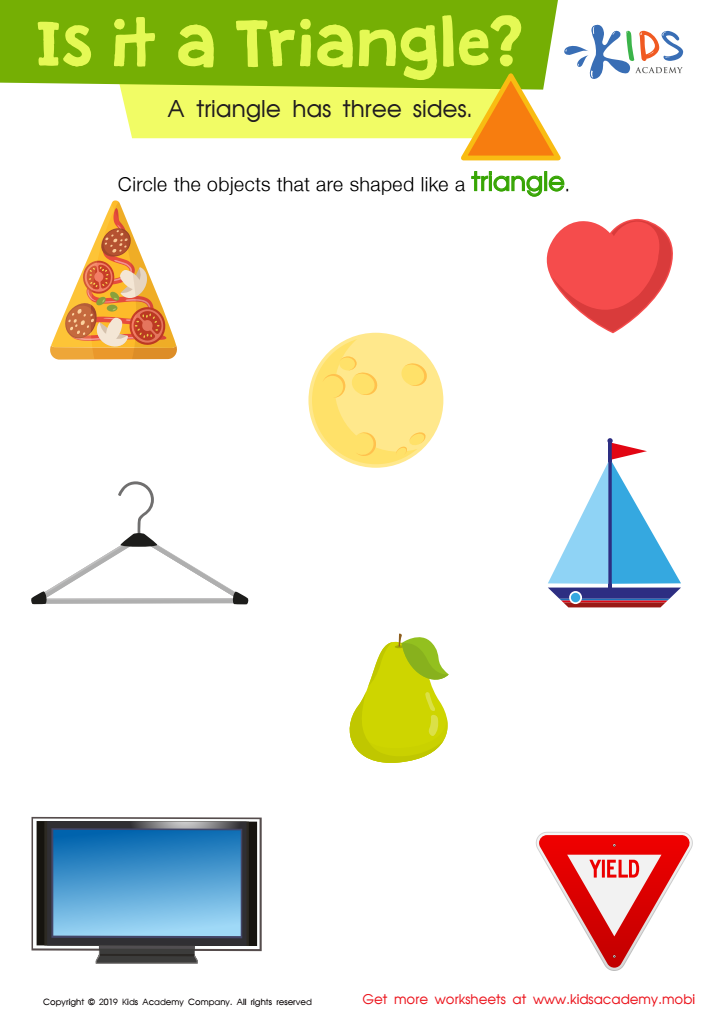
Is It a Triangle? Worksheet
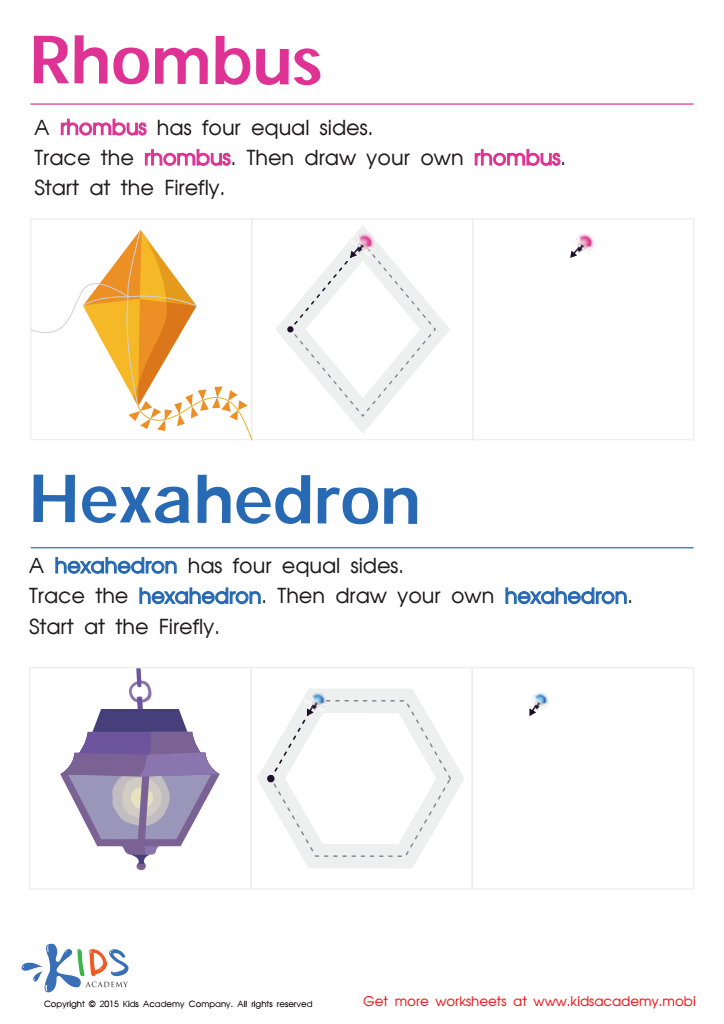
Draw a Rhombus And a Hexahedron Printable
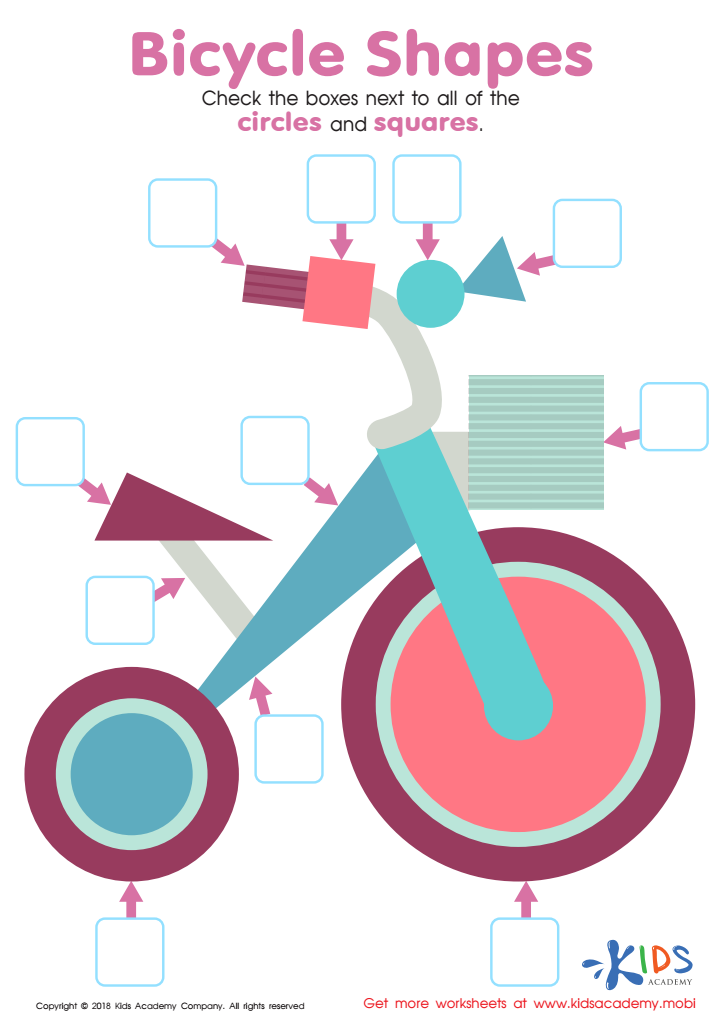
Bicycle Shapes Worksheet
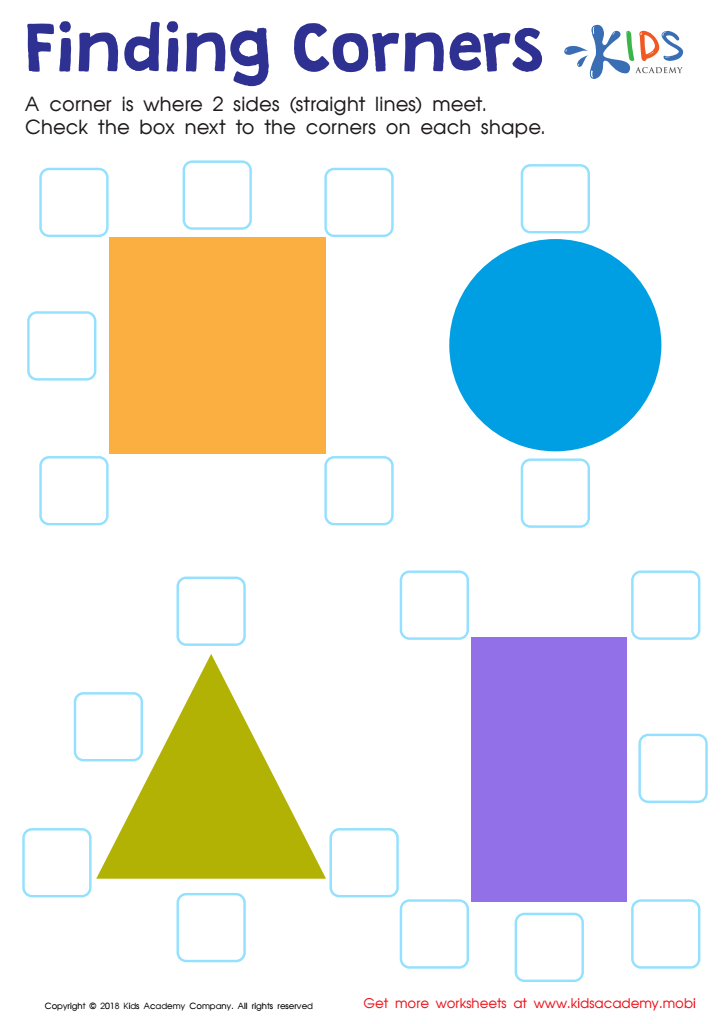
Finding Corners Worksheet
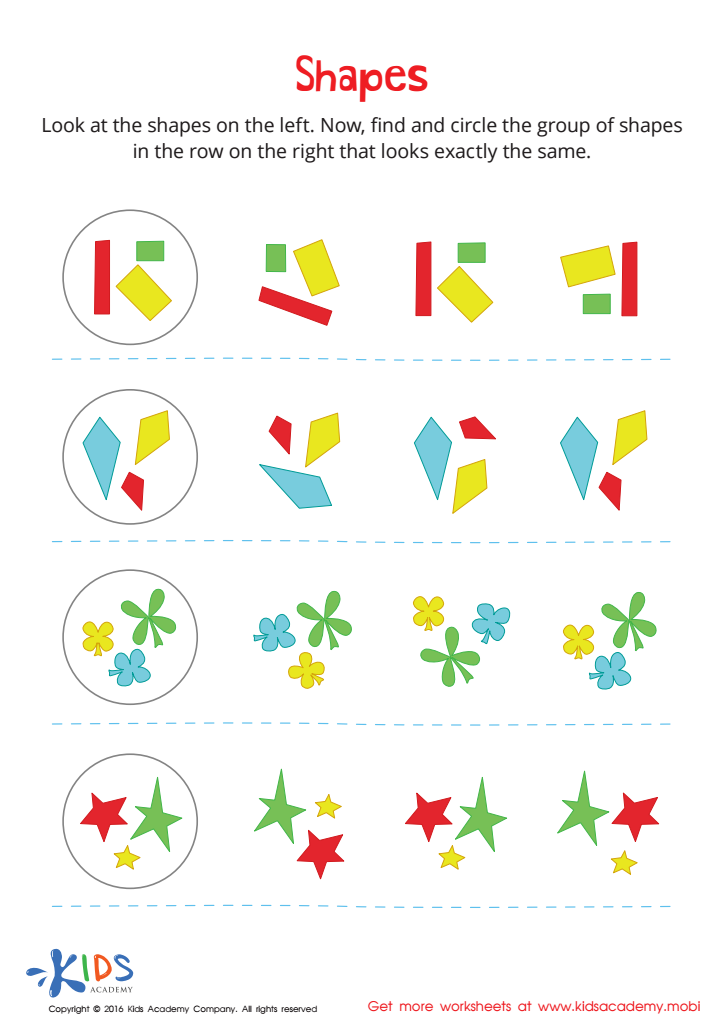
Shapes Worksheet








Shape identification and geometry for 4-year-olds play a crucial role in early childhood development. Parents and teachers should prioritize these skills because they lay the foundation for both cognitive and mathematical learning. Recognizing and naming shapes enhance a child's observation and categorization skills, indispensable for later academic achievement.
Firstly, shape identification aids in developing spatial awareness, a key component of geometry. When children learn to identify and differentiate between shapes, they develop an understanding of how objects fit together in space. This forms the basis for more complex problem-solving skills used in subjects such as math, science, and art.
Additionally, understanding shapes fosters language development and vocabulary expansion. By engaging with shapes, children learn descriptive words and refine their communication abilities. When a child accurately identifies a "circle" or "triangle," they are practicing articulation, listening, and comprehension skills.
Moreover, recognizing shapes promotes early literacy. Many letters and numbers are made up of simple geometric shapes. Being able to visualize these shapes can make the process of learning to read and write more intuitive for young children.
Overall, engaging 4-year-olds in shape identification and geometry sets the stage for broad ranges of educational and real-world skills, making it a foundational aspect that parents and teachers should nurture.








