Color differentiation Math Worksheets for 4-Year-Olds
3 filtered results
-
From - To
Explore our engaging Color Differentiation Math Worksheets specifically designed for 4-year-olds! These fun and interactive worksheets help young learners develop essential color recognition skills while enhancing their early math understanding. Kids will enjoy sorting objects by color, identifying shades, and completing coloring activities that promote cognitive growth. Our age-appropriate exercises foster creativity and make learning enjoyable through vibrant visuals and playful tasks. These worksheets are perfect for parents and educators aiming to enrich their students' learning experiences at home or in the classroom. Download and print our resources today to inspire a love for math and colors in your little ones!
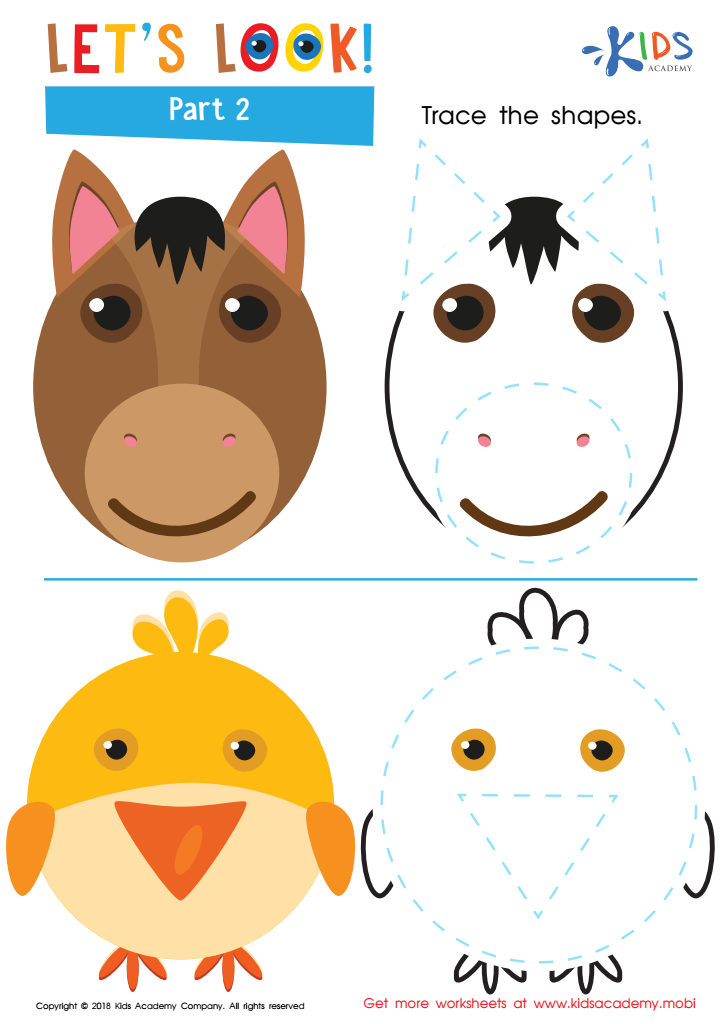
Let's Look! Part 2 Worksheet
 Assign to My Students
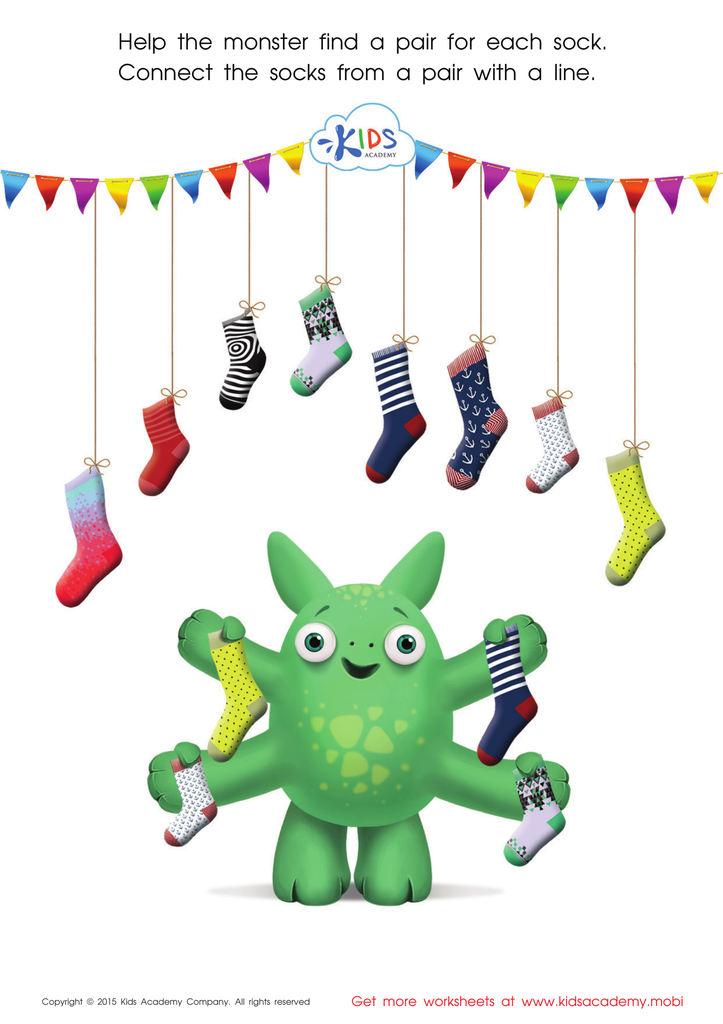
Math Matching Pairs Game: Monsterв's Socks Worksheet








Color differentiation is a crucial foundational skill in early childhood education, particularly in math for 4-year-olds. At this age, children are not only endowed with creative expression through colors, but they are also beginning to grasp basic mathematical concepts. Understanding how to differentiate between colors encourages cognitive development—children learn to categorize and sort objects, which are fundamental skills for early math, such as grouping and counting.
Parents and teachers should pay close attention to color differentiation because it cultivates critical thinking and problem-solving abilities. Activities that involve identifying and matching colors nurture observation skills, enabling children to make connections and discern patterns. For instance, sorting colored blocks into matching groups can serve as an introduction to concepts like addition and subtraction.
Moreover, engaging in color-based activities can foster cooperative play and communication among peers, enhancing social skills. It is vital for parents and teachers to create enriching environments where children can explore colors in various contexts, integrating them with sensory experiences and hands-on activities. By emphasizing color differentiation, adults support holistic development, preparing children for more advanced mathematical concepts, all while instilling a love for learning that will last a lifetime.








