Check out this FREE Trial Lesson on Math for age 4!

Writing Number Sentences for Addition Story Problems

Favorites
With answer key
Interactive
  • 4
  • Visual Learning
  • Math
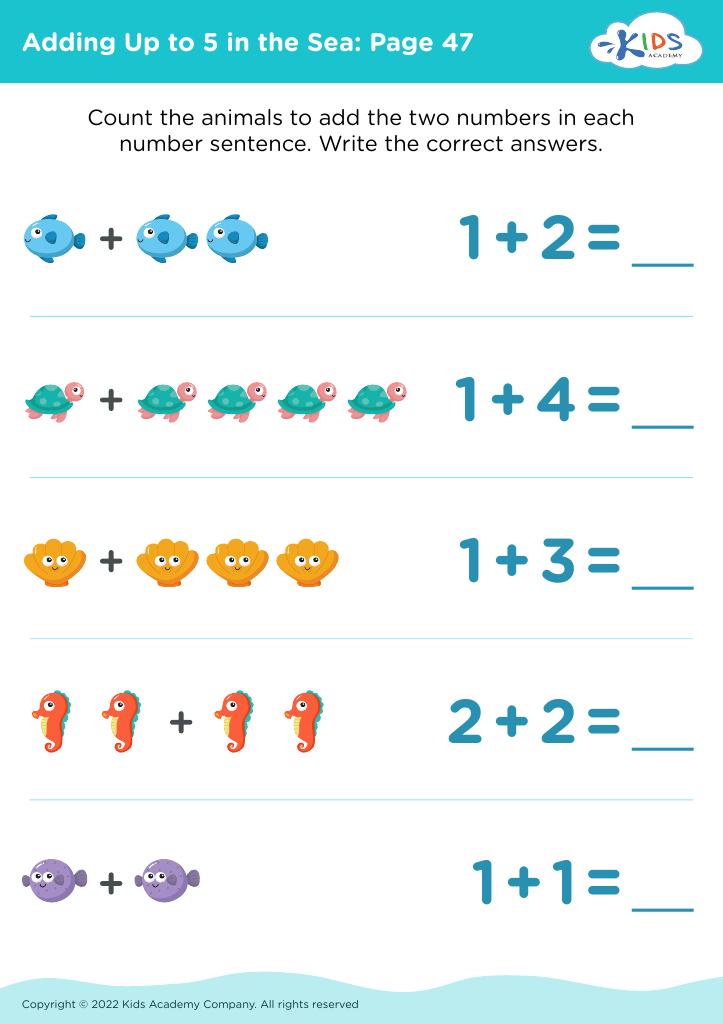
Adding Up to 5 in the Sea: Page 47
Worksheet
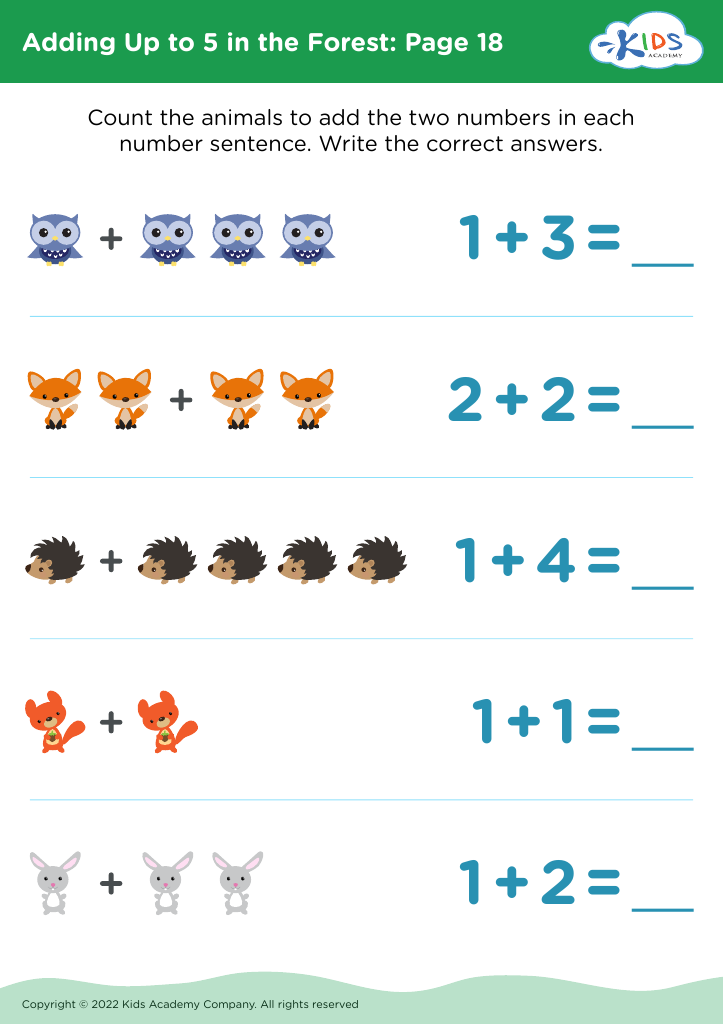
Adding Up to 5 in the Forest: Page 18
Worksheet
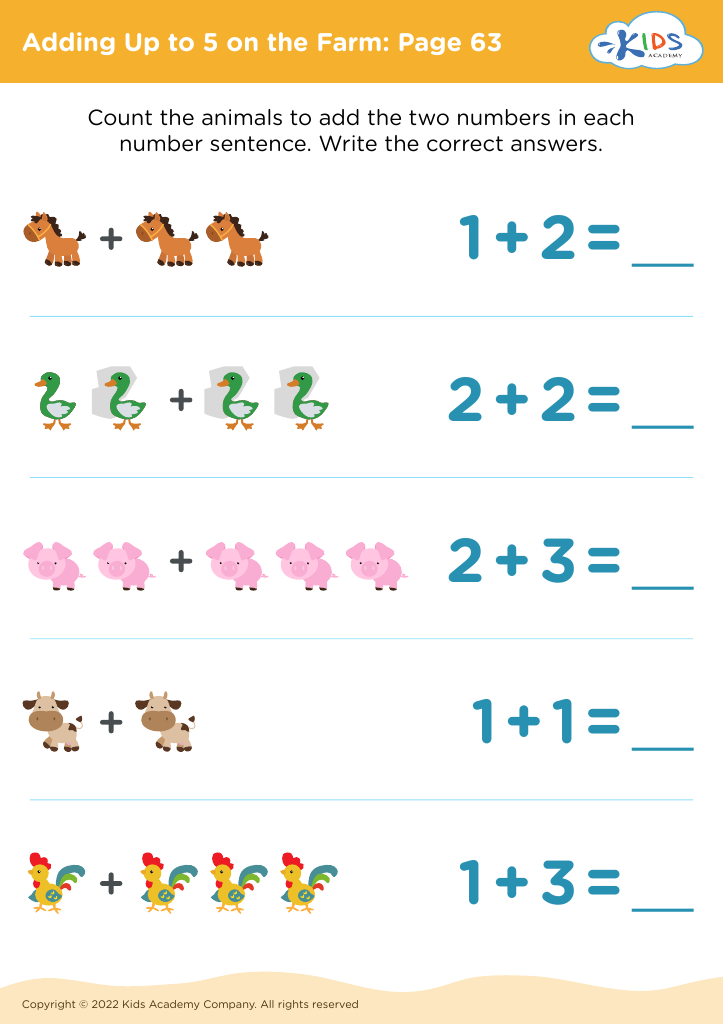
Adding Up to 5 on the Farm: Page 63
Worksheet
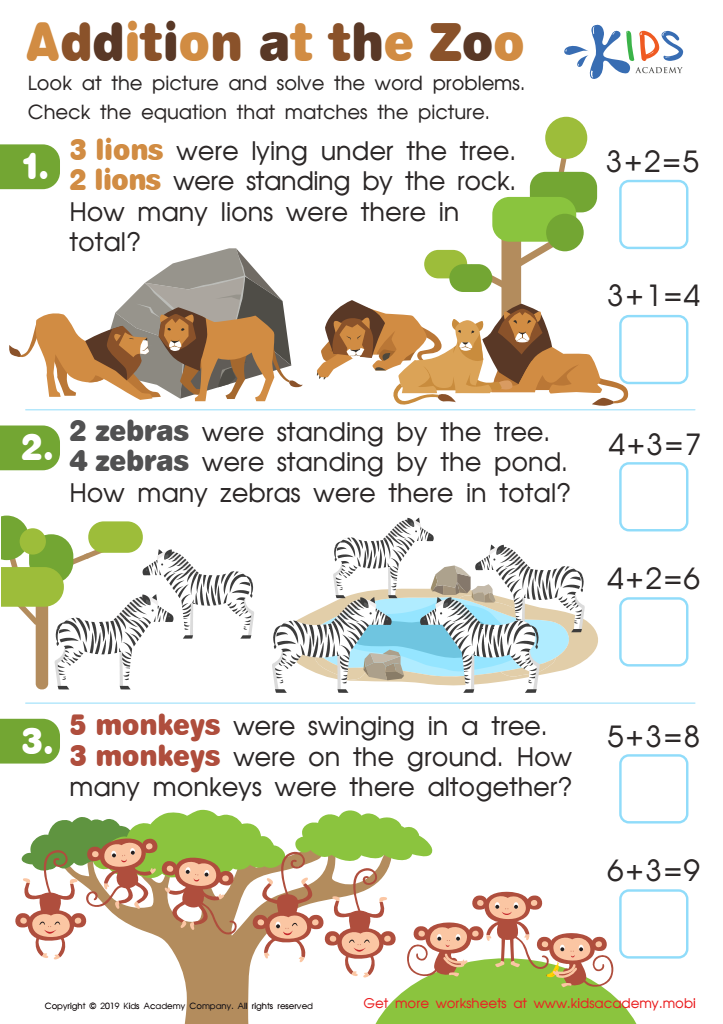
Addition at the Zoo Worksheet

Addition at the Zoo Worksheet

Visit the zoo with your kids and point out all the different animals. Ask them to name their favorites and identify animals on a worksheet. Challenge them to solve word problems related to the pictures. Ask them for the equation that fits the picture and check the answer.
Addition at the Zoo Worksheet
Worksheet
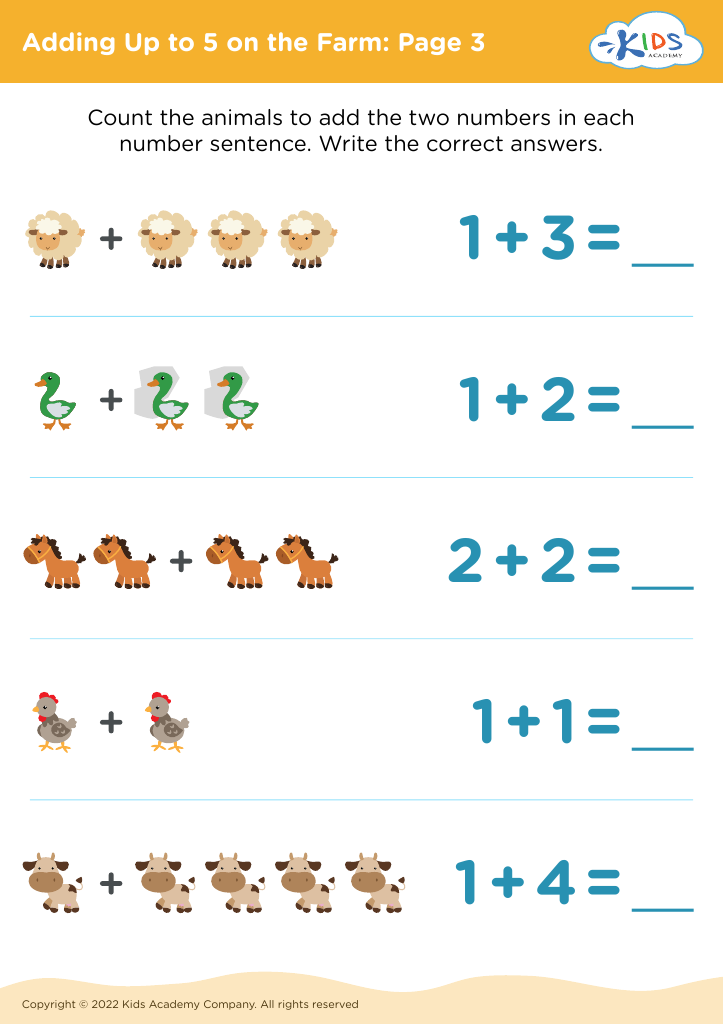
Adding Up to 5 on the Farm: Page 3
Worksheet
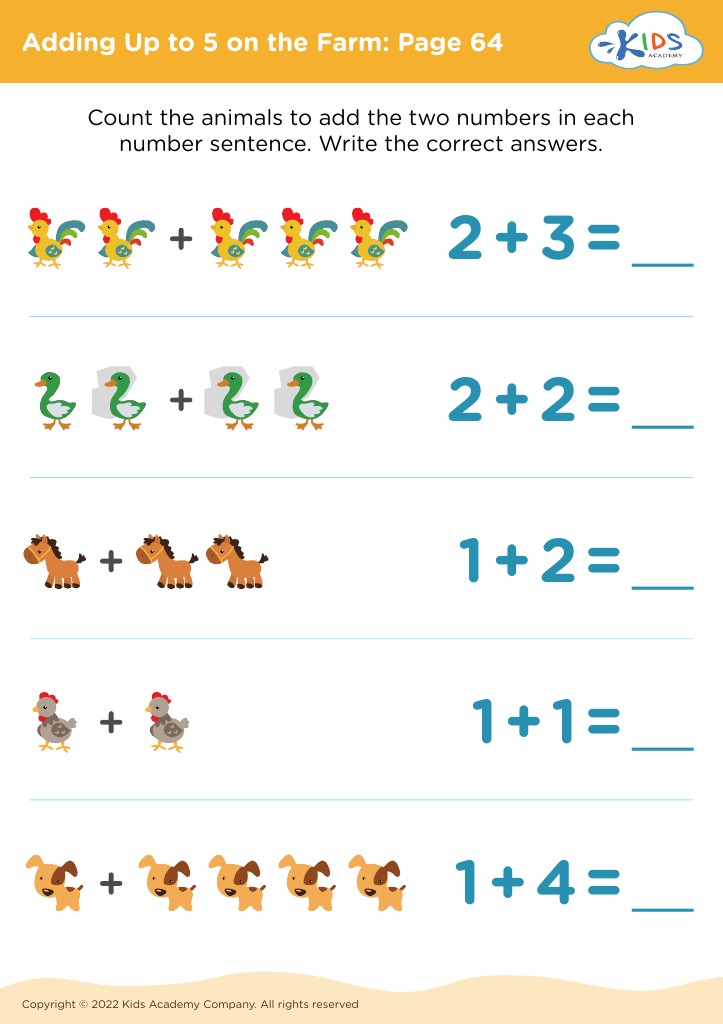
Adding Up to 5 on the Farm: Page 64
Worksheet
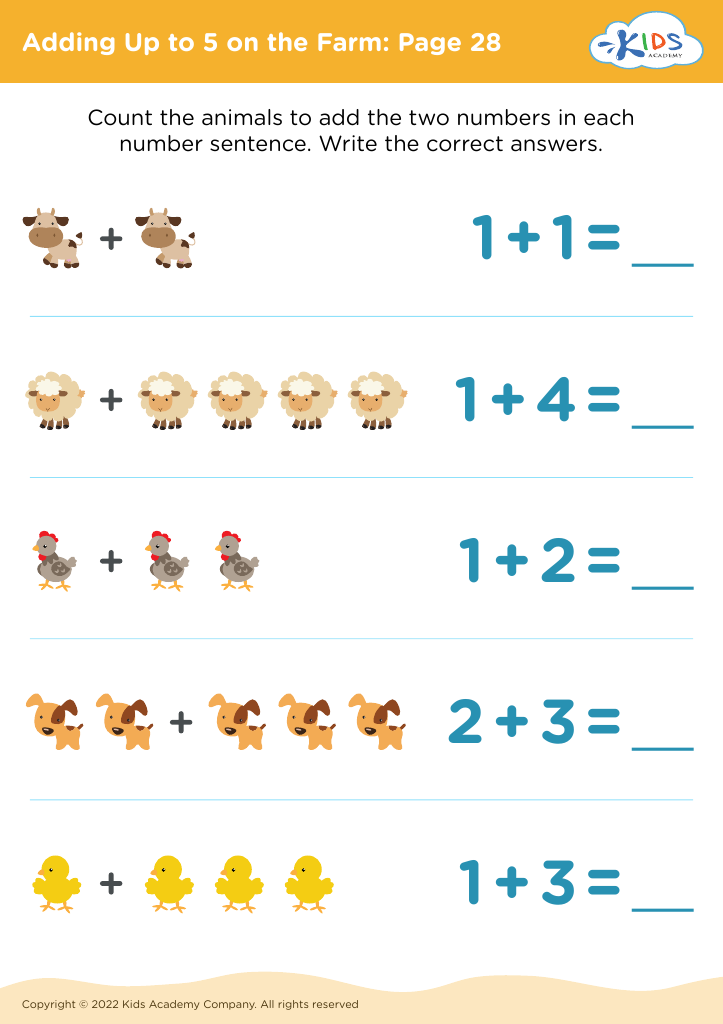
Adding Up to 5 on the Farm: Page 28
Worksheet
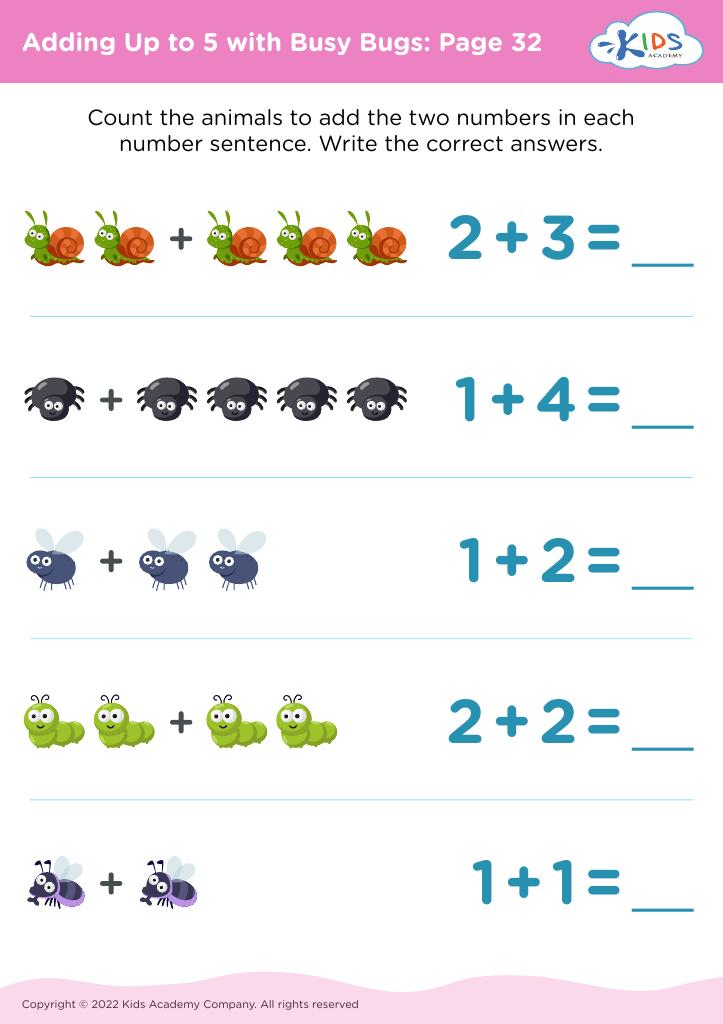
Adding Up to 5 with Busy Bugs: Page 32
Worksheet
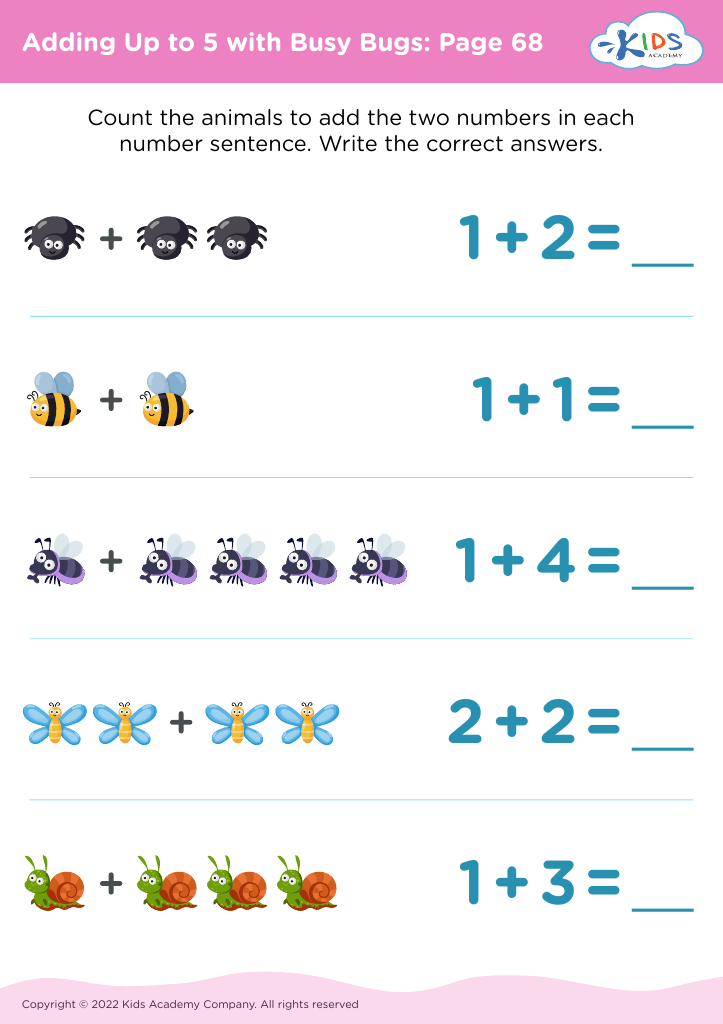
Adding Up to 5 with Busy Bugs: Page 68
Worksheet
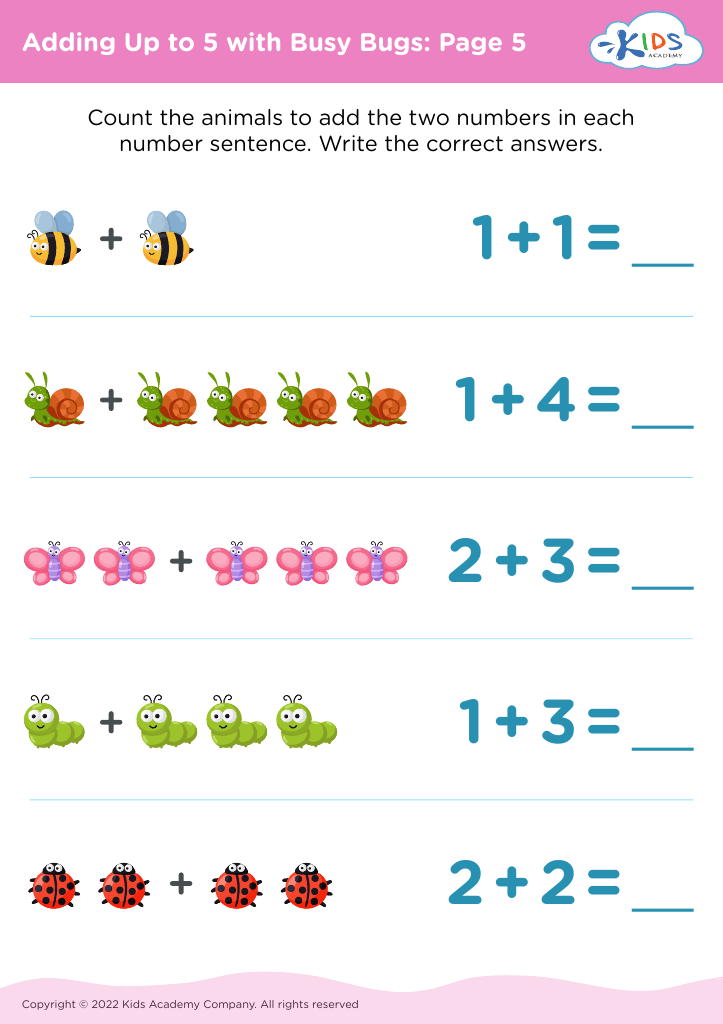
Adding Up to 5 with Busy Bugs: Page 5
Worksheet
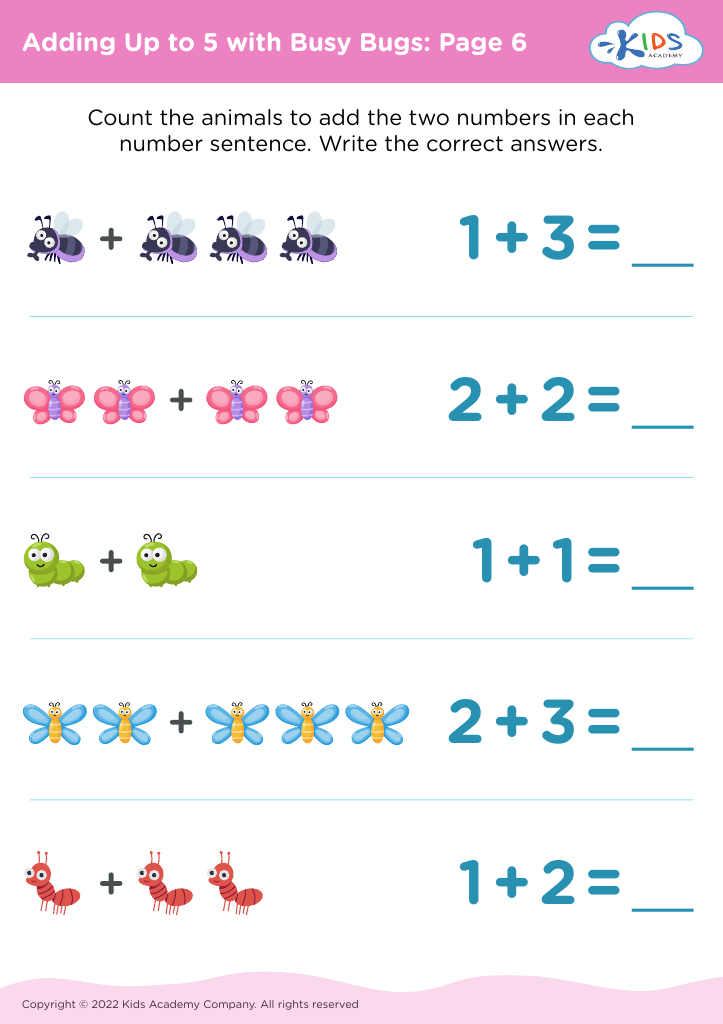
Adding Up to 5 with Busy Bugs: Page 6
Worksheet
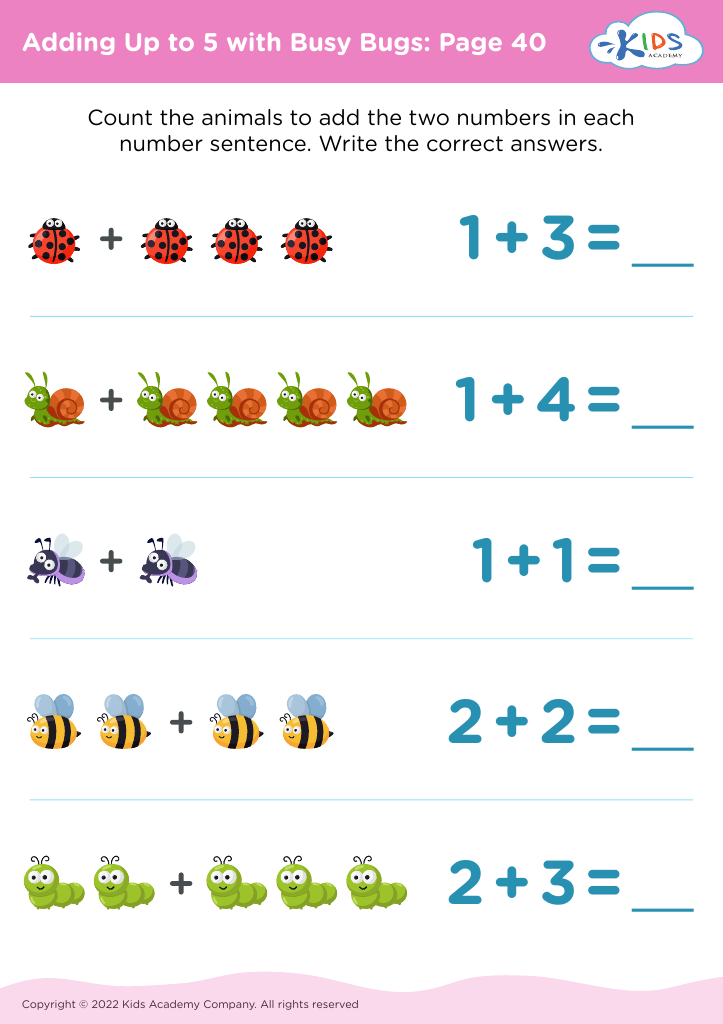
Adding Up to 5 with Busy Bugs: Page 40
Worksheet
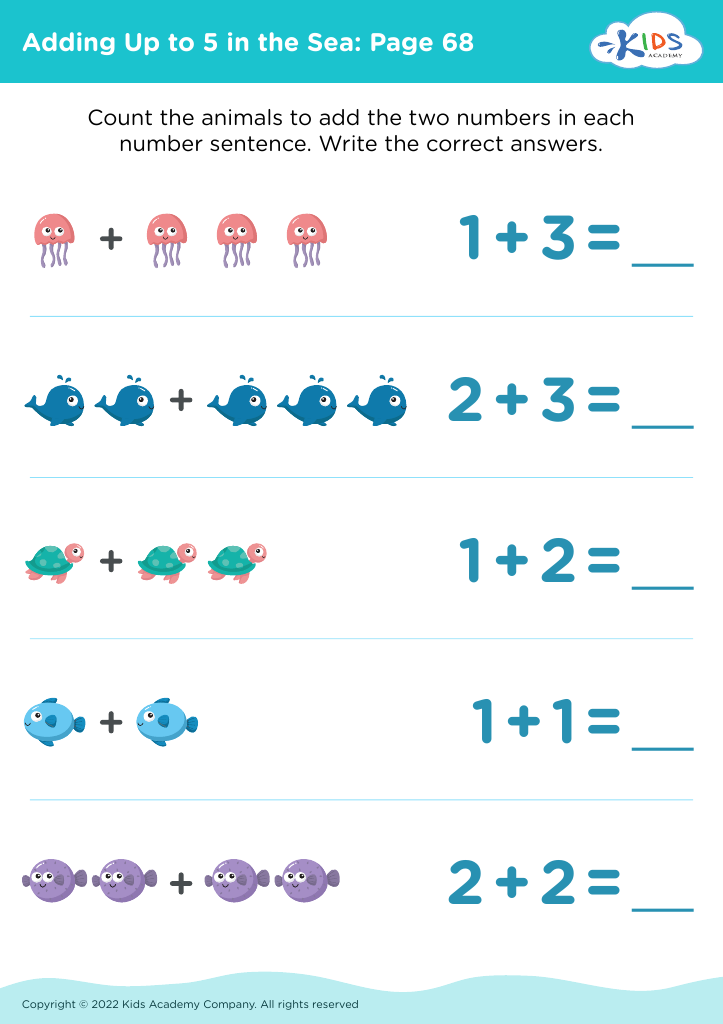
Adding Up to 5 in the Sea: Page 68
Worksheet
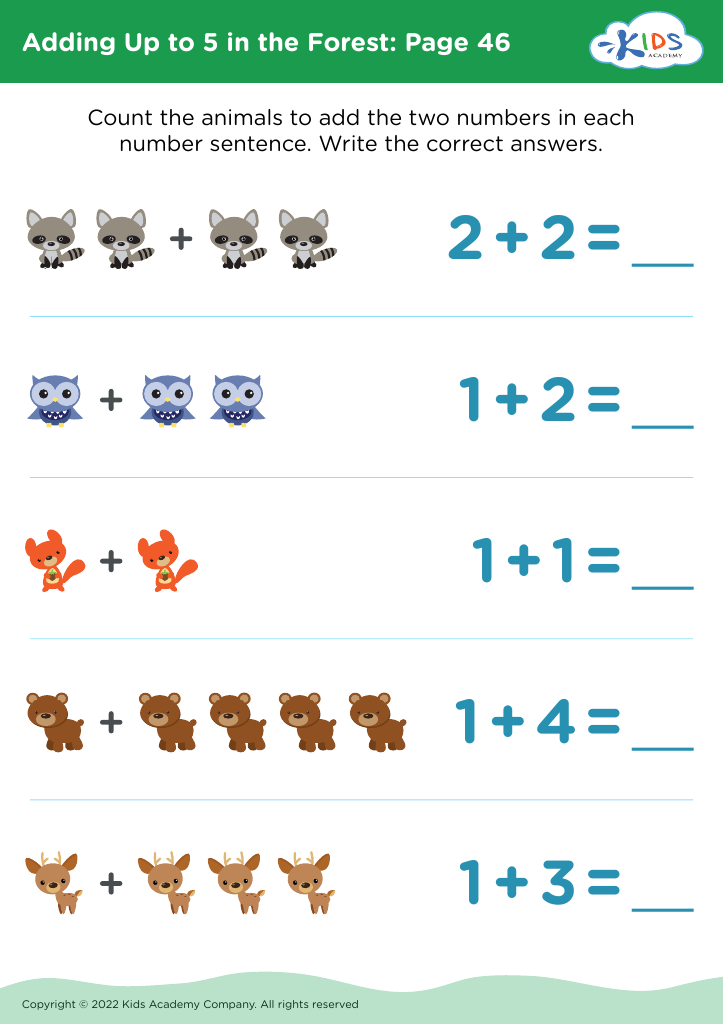
Adding Up to 5 in the Forest: Page 46
Worksheet
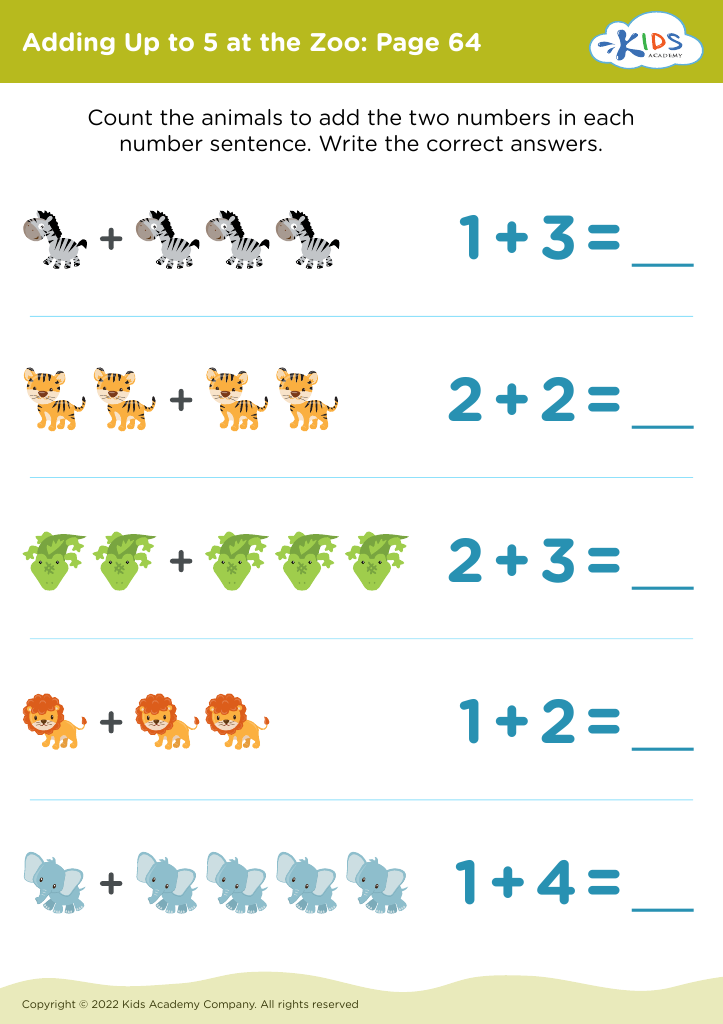
Adding Up to 5 at the Zoo: Page 64
Worksheet
Adding Fruit at the Picnic Worksheet
Adding Fruit at the Picnic Worksheet
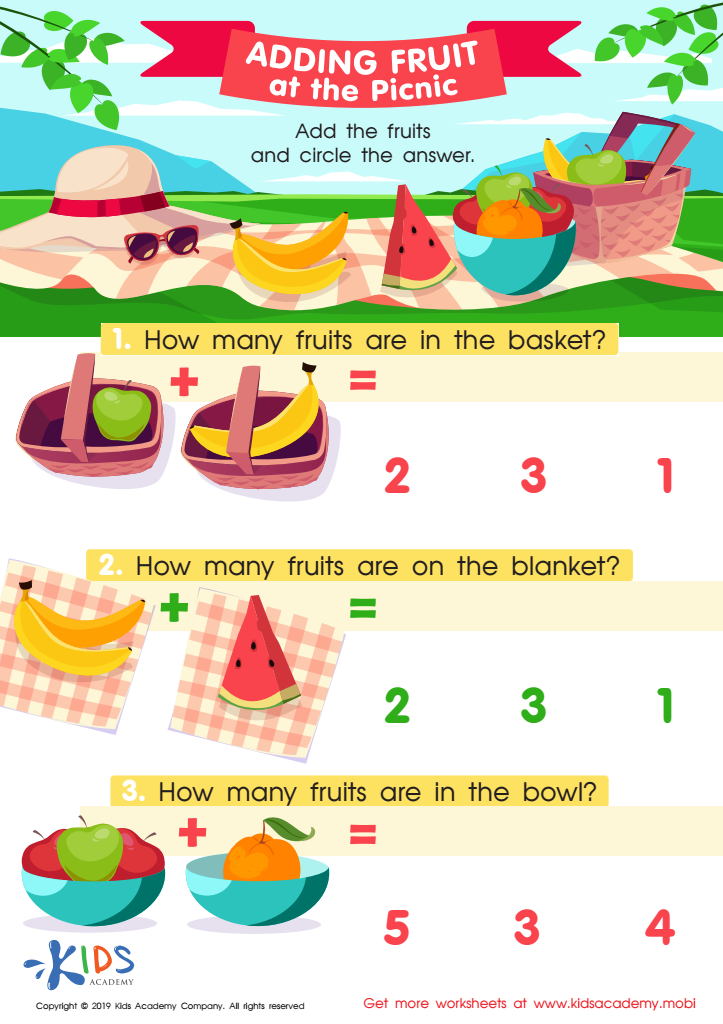
Picnics are a great way for the family to enjoy a fun day in the sun! Get your kids involved by having them help load the picnic basket and do this worksheet to practice their math skills while they get ready. Identify the fruits in the picture, add them up, and circle the correct answer.
Adding Fruit at the Picnic Worksheet

Worksheet
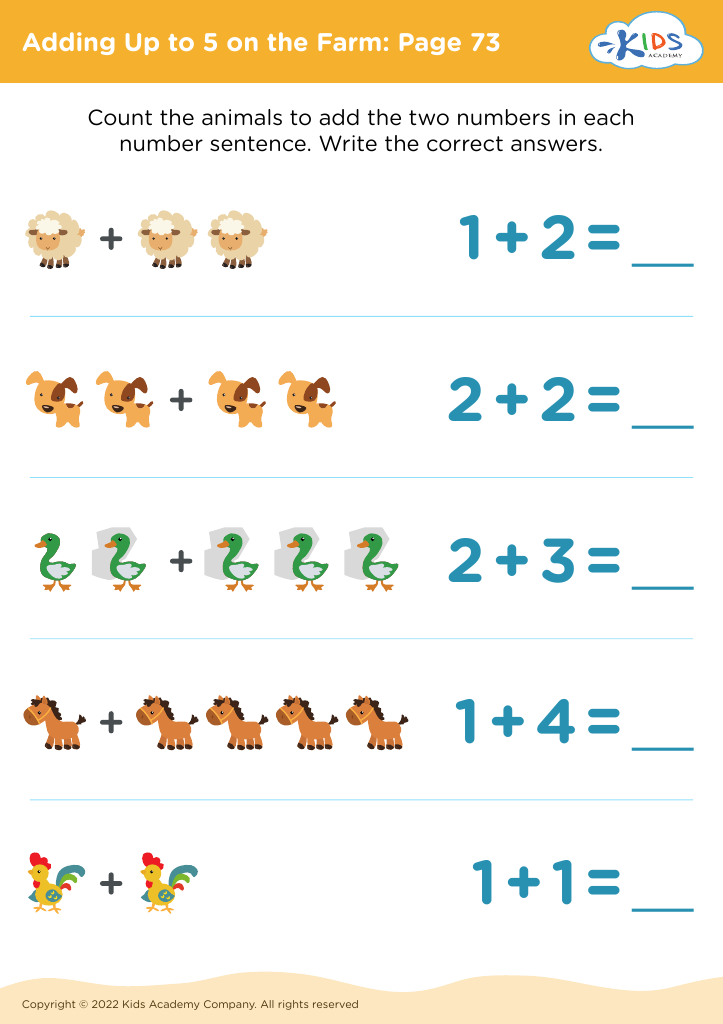
Adding Up to 5 on the Farm: Page 73
Worksheet
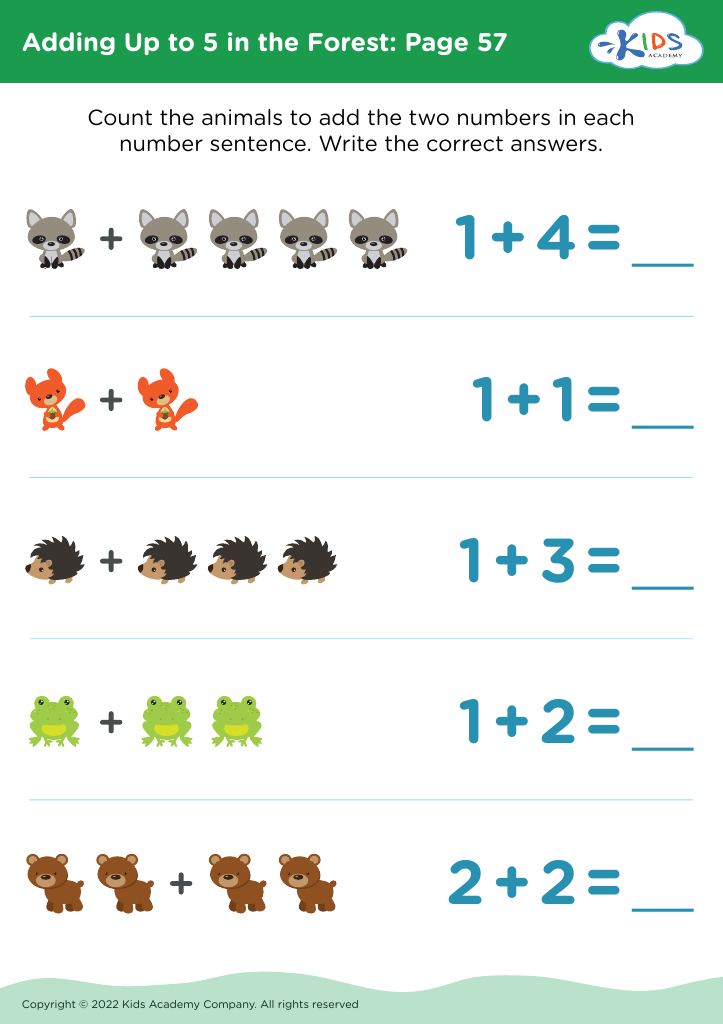
Adding Up to 5 in the Forest: Page 57
Worksheet
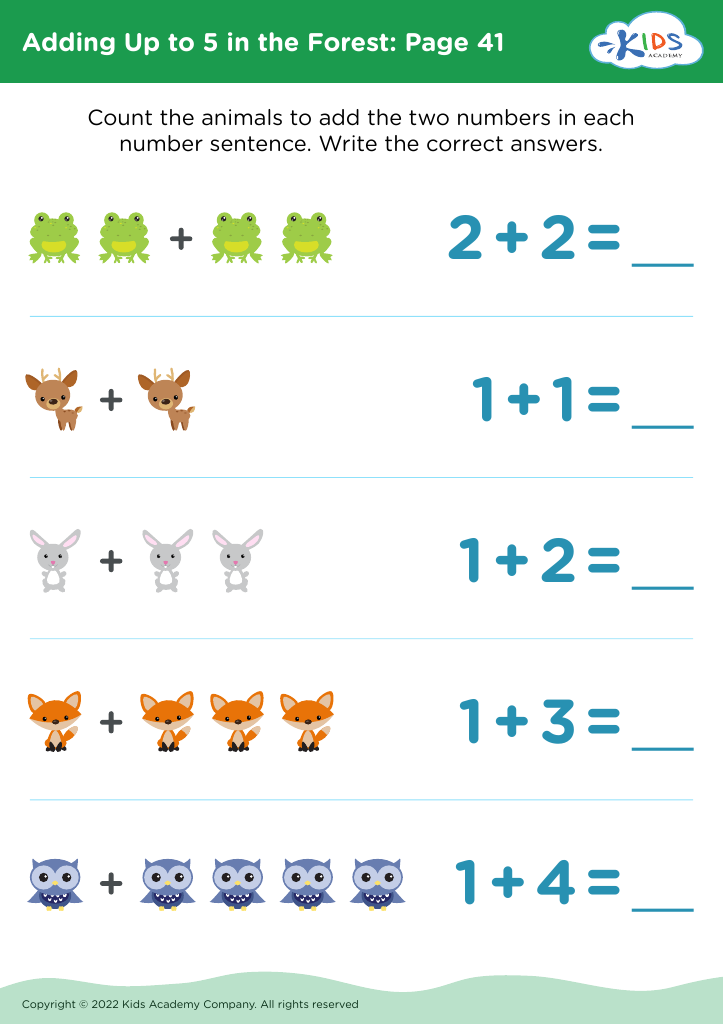
Adding Up to 5 in the Forest: Page 41
Worksheet


... 3 4

Visual learning in math for 4-year-olds plays a crucial role in building foundational numeracy skills. At this early age, children are naturally drawn to bright colors, shapes, and pictures, making visual learning an intuitive and effective method for introducing mathematical concepts. Parents and teachers should care about this because it harnesses young children’s instinctive visual exploration to teach numbers, patterns, and simple problem-solving in an engaging manner.

Early exposure to visual math aids in cognitive development by encouraging kids to recognize and remember mathematical relationships, which enhances memory retention. Because math is such a cumulative subject, early grasp of basic concepts sets the stage for future academic success. Visual representations such as counting beads, sorting blocks by shapes or colors, and simple pictograms are essential tools that make these abstract notions more concrete.

Moreover, visual learning nurtures a positive attitude toward math. Approaching math through pictures and tangible objects turns learning into play; children are more likely to view math with interest rather than intimidation. This positive early experience is critical in preventing math anxiety, which can impede academic progress later on. Therefore, by integrating visual learning into math education for 4-year-olds, parents and teachers lay a solid and enthusiastic foundation for lifelong mathematical learning.