Sorting skills Sorting Worksheets for 4-Year-Olds
5 filtered results
-
From - To
Enhance your child's sorting skills with our engaging sorting worksheets designed for 4-year-olds. These fun and interactive activities introduce young learners to essential classification concepts by sorting objects based on color, shape, size, and more. Our worksheets promote critical thinking, fine motor skills, and early math foundations while keeping your child entertained. Perfect for both home and classroom use, these resources encourage independent learning and boost confidence in young minds. Explore our variety of sorting exercises that make learning enjoyable and effective, providing a solid groundwork for future educational success. Dive into the world of sorting today!
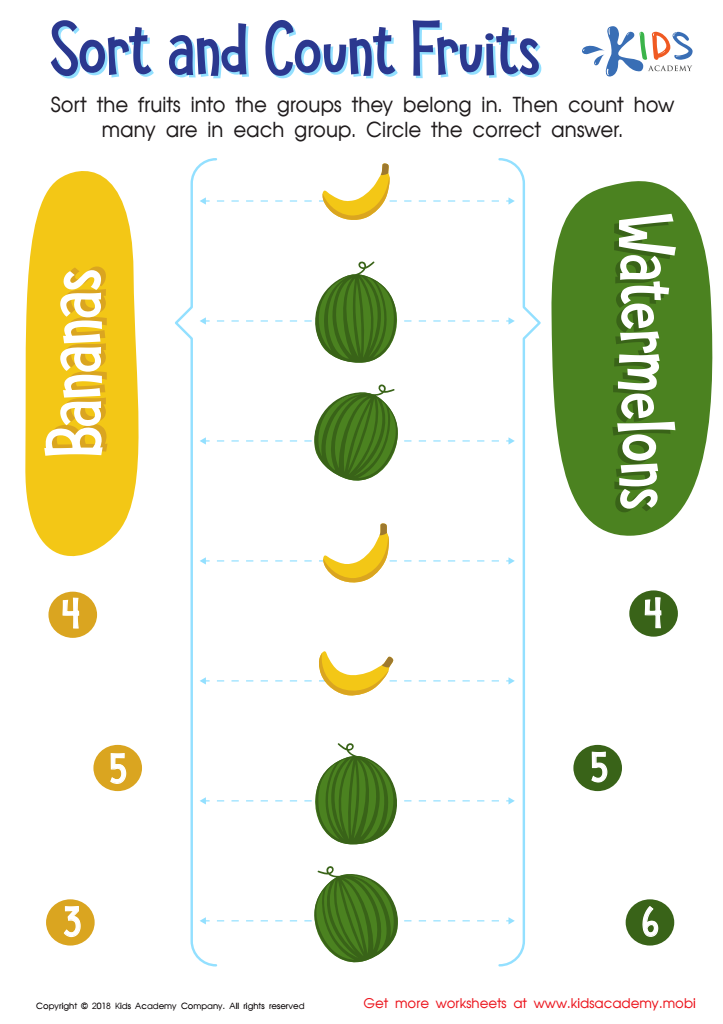
Sort and Count Fruits Worksheet
 Assign to My Students
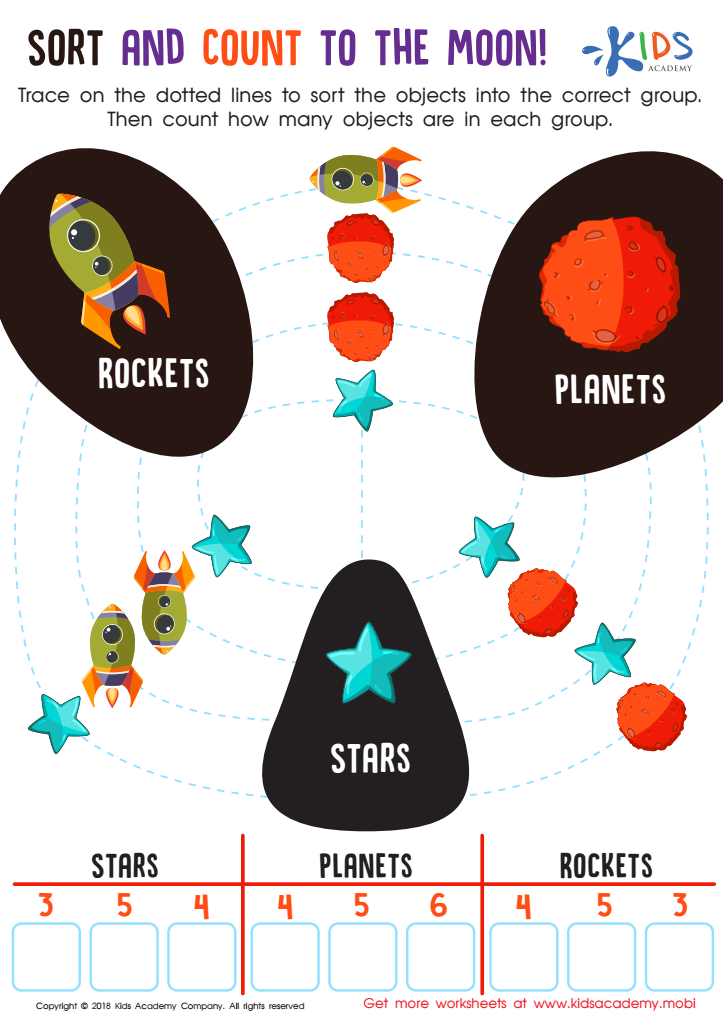
Sort and Count to the Moon Worksheet
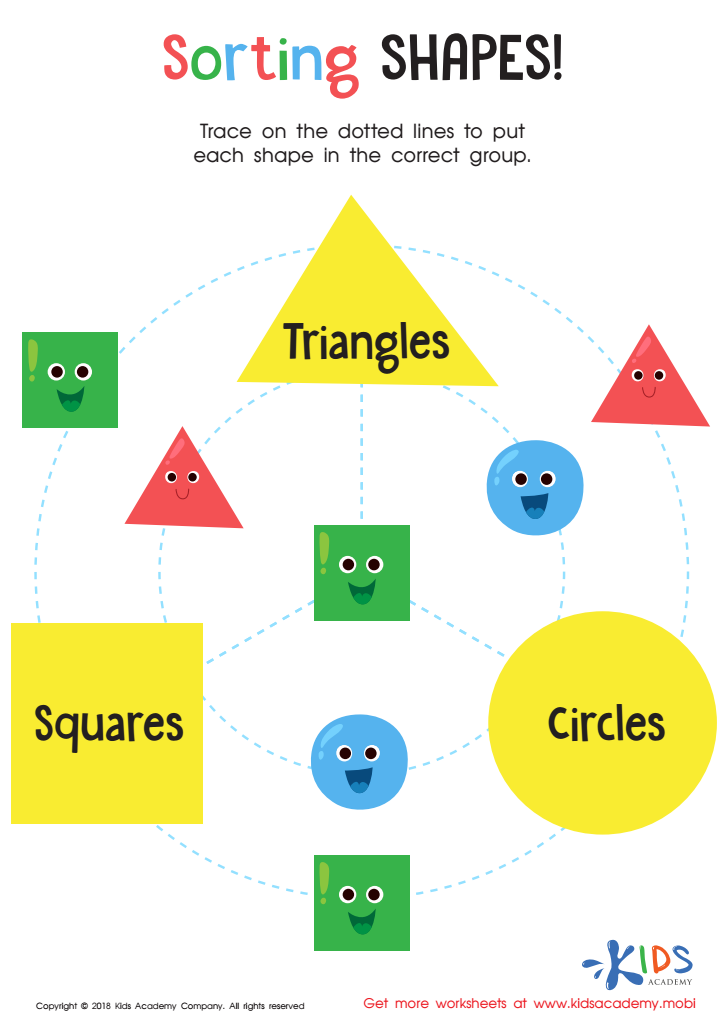
Sorting Shapes - Part 3 Worksheet
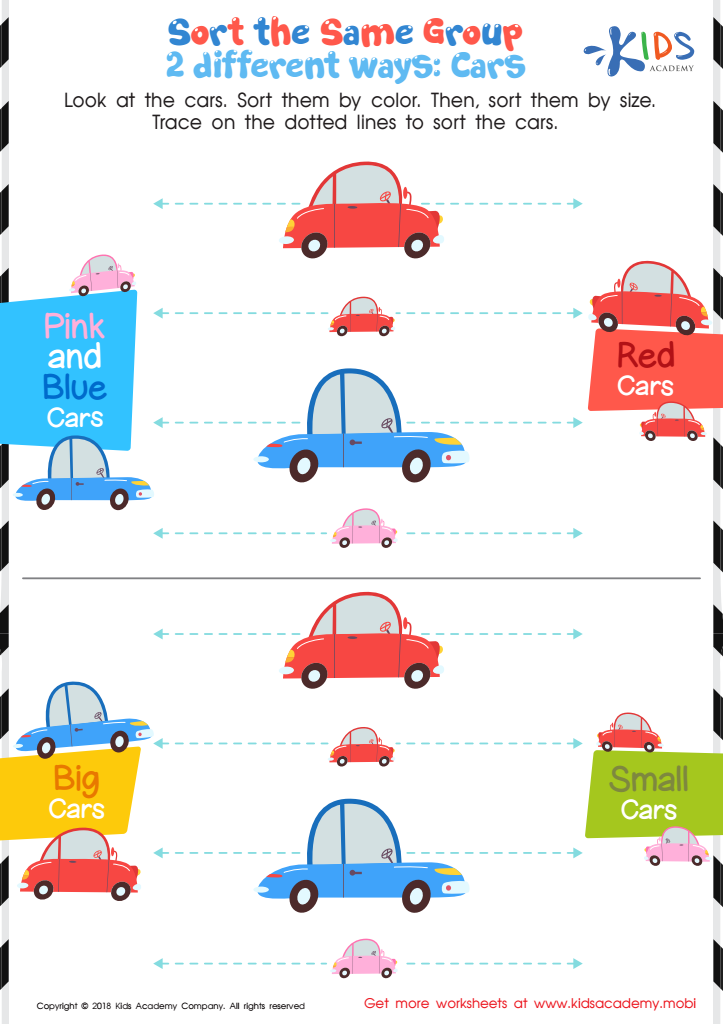
Sort the Same Group 2 Different Ways: Cars Worksheet
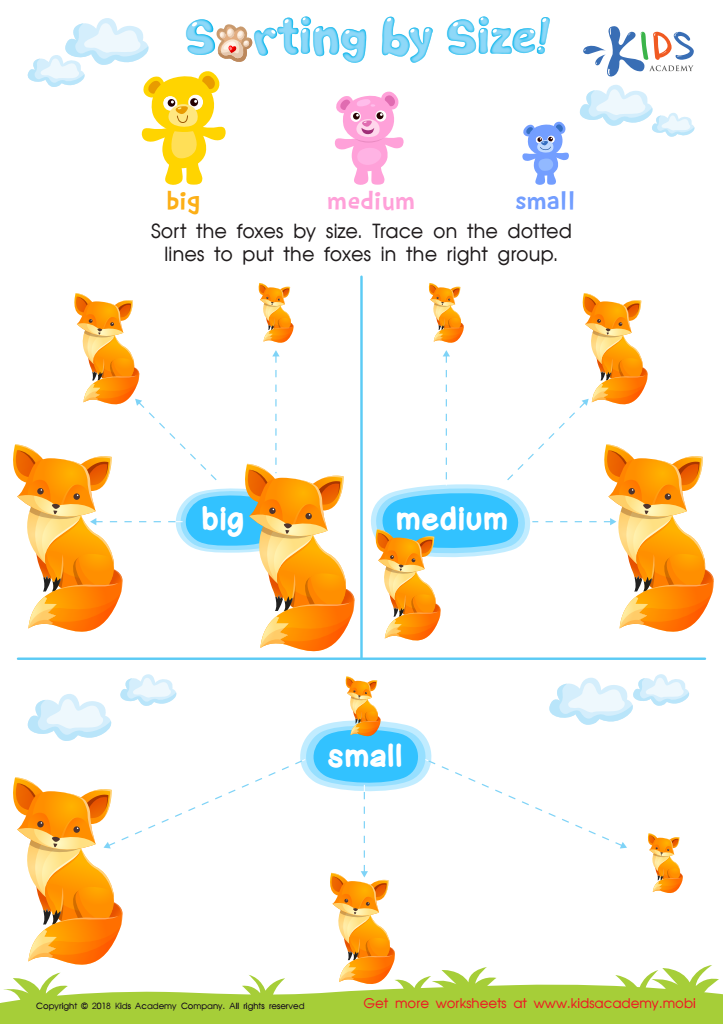
Sorting by Size Worksheet








Sorting skills are fundamental building blocks in early childhood learning that have a significant impact on a child's cognitive development. For parents and teachers, fostering these skills in 4-year-olds is essential for several reasons.
Firstly, sorting teaches children about categorization, helping them recognize similarities and differences in objects. This critical thinking lays the groundwork for more complex problem-solving abilities in later years. By sorting items by color, shape, or size, children enhance their observational skills and learn to think logically.
Moreover, sorting activities promote language development as children practice descriptive words and expand their vocabulary while discussing their criteria for grouping objects. It also encourages social interactions when children engage in sorting games with peers or adults, thereby learning cooperation and communication.
Additionally, sorting imparts a sense of order and organization, skills vital for academic success. Learning to sort trains young minds to classify information, a crucial aspect of subjects like math and science in the future.
Ultimately, by supporting sorting skills, parents and teachers play a vital role in preparing children for a structured learning environment and equipping them with tools that extend beyond the classroom, fostering lifelong learning habits.








