Problem-Solving Skills Two-step Word Problems Worksheets for 4-Year-Olds
12 filtered results
-
From - To
Enhance your 4-year-old's problem-solving skills with our engaging Two-Step Word Problems worksheets! Designed specifically for young learners, these worksheets introduce essential mathematical concepts through simple, relatable scenarios. Children will practice critical thinking and develop their reasoning abilities as they tackle fun word problems that require two steps to solve. Not only do these activities promote cognitive growth, but they also foster a love for math in a playful and interactive way. Our colorful and kid-friendly worksheets make learning enjoyable, providing a solid foundation for future math skills. Start nurturing your child's problem-solving abilities today with these enjoyable resources!
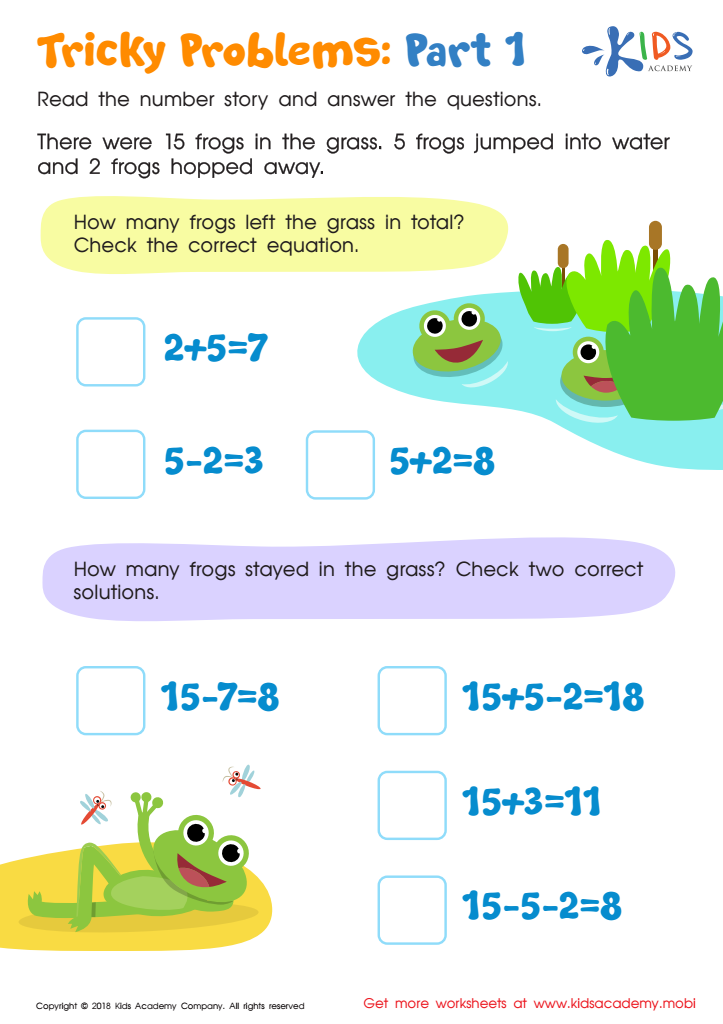
Tricky Problems Worksheet: Part 1
 Assign to My Students
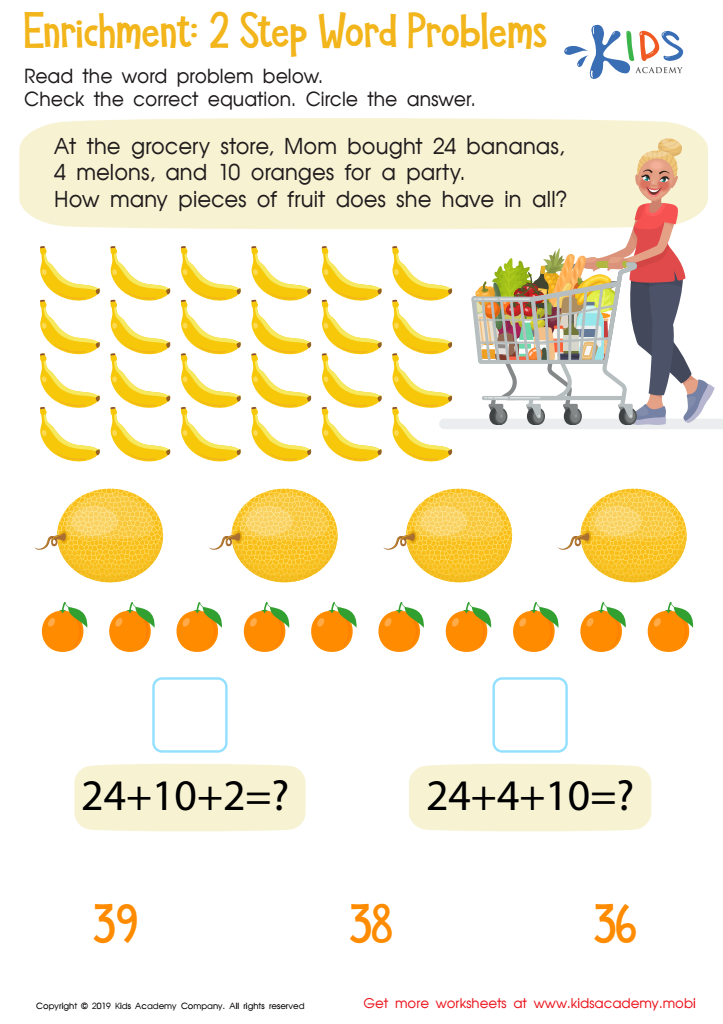
Enrichment -2 Step Word Problems Worksheet
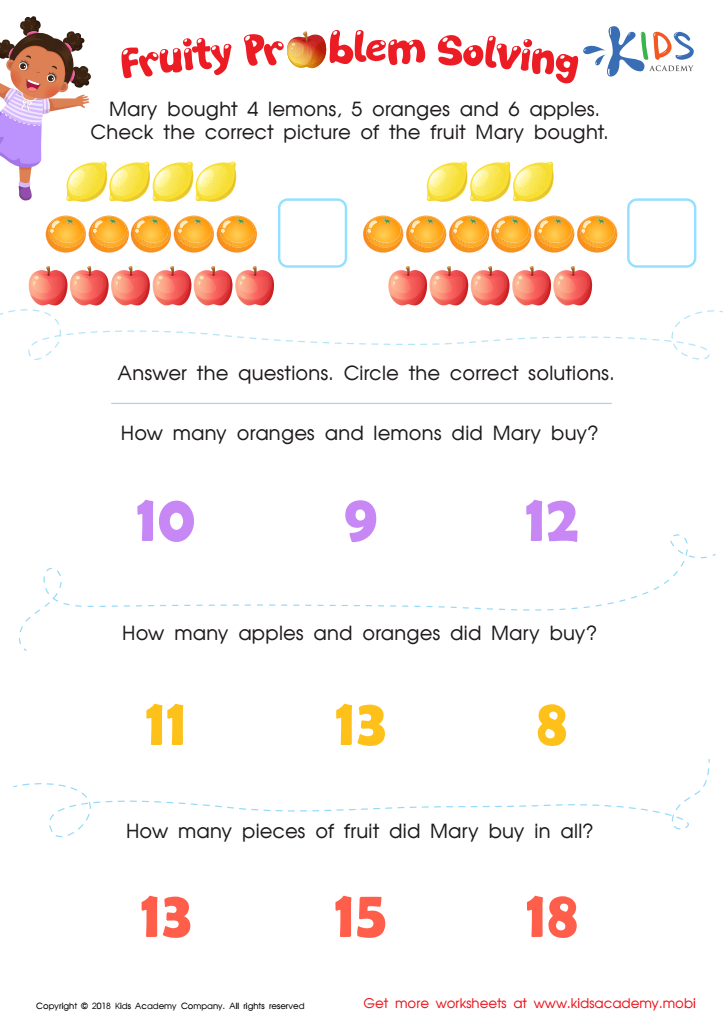
Fruity Problem Solving Worksheet
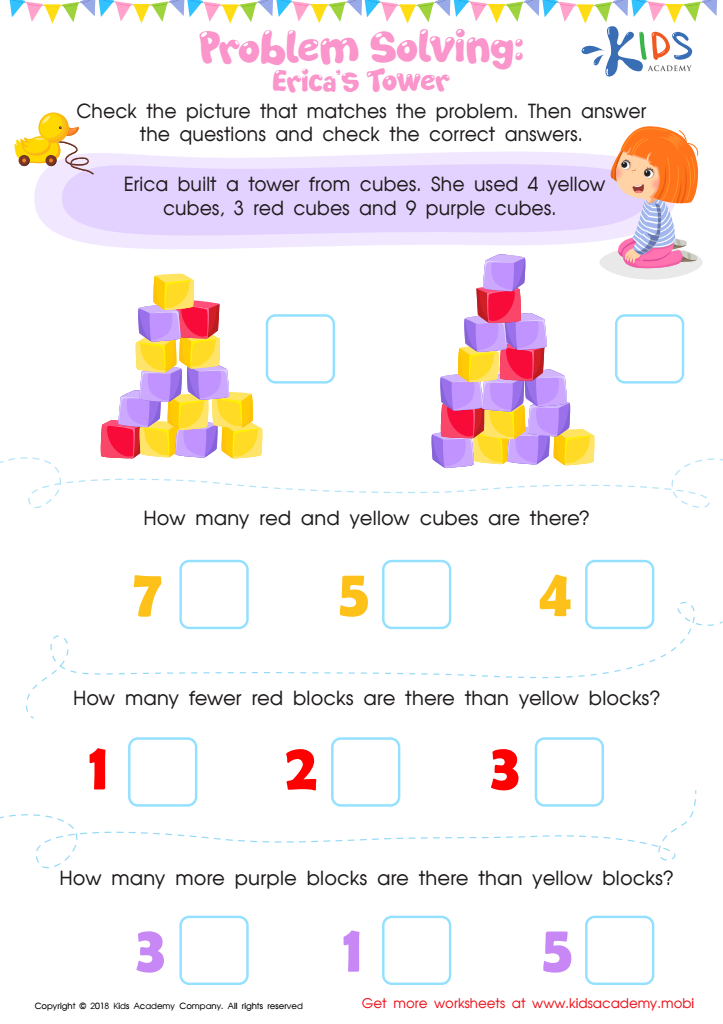
Problem Solving: Erica's Tower Worksheet
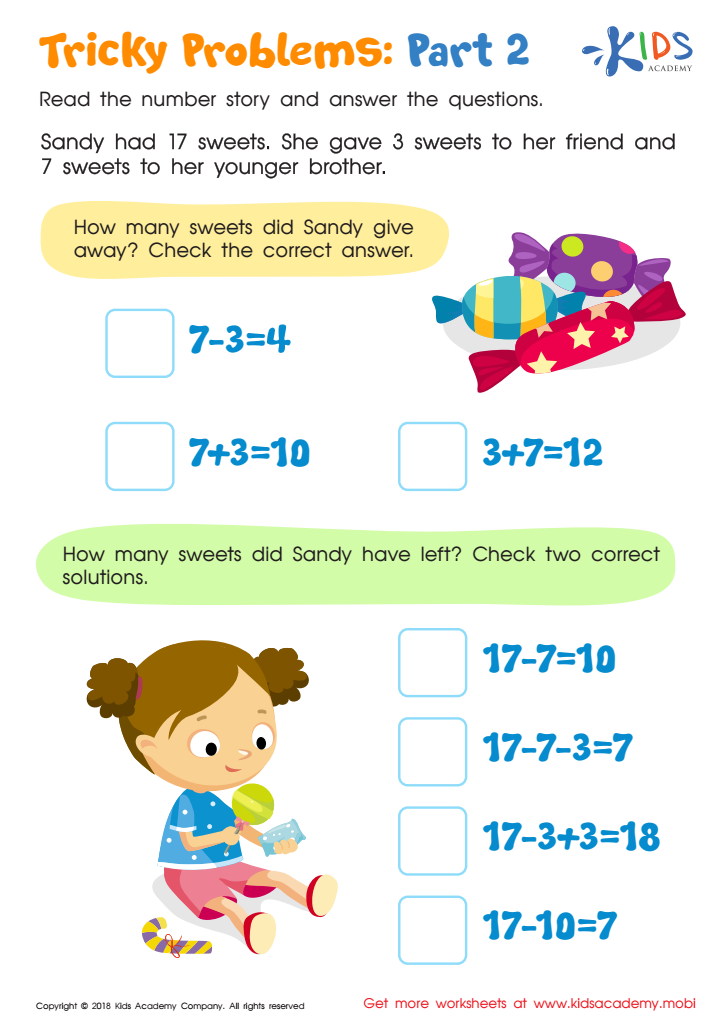
Tricky Problems Worksheet: Part 2
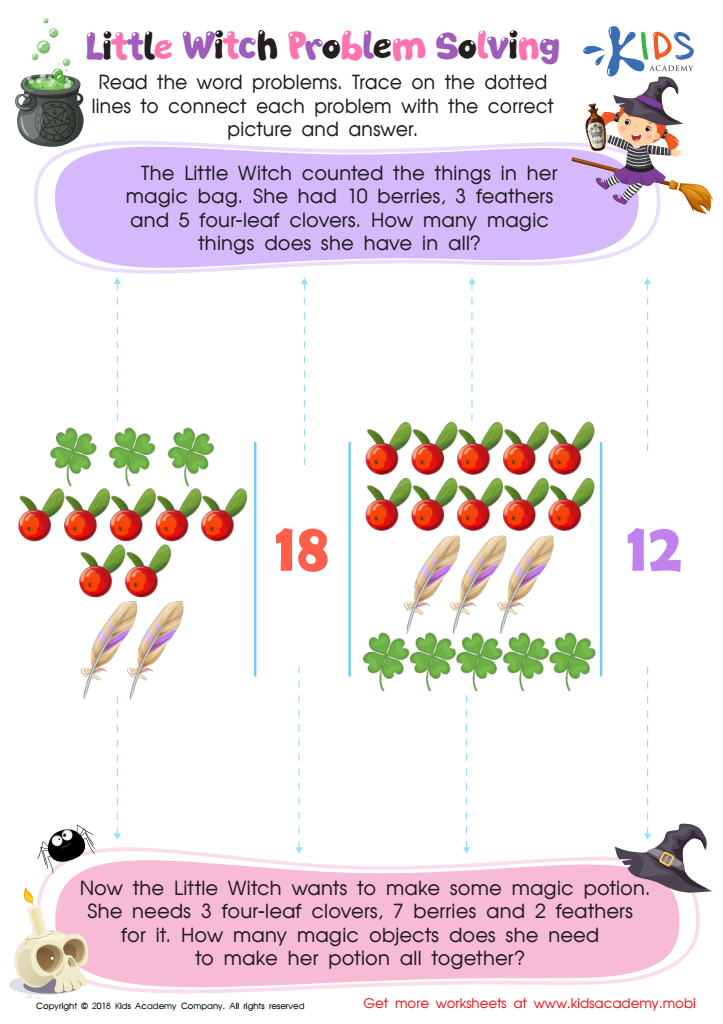
Little Witch Problem Solving Worksheet
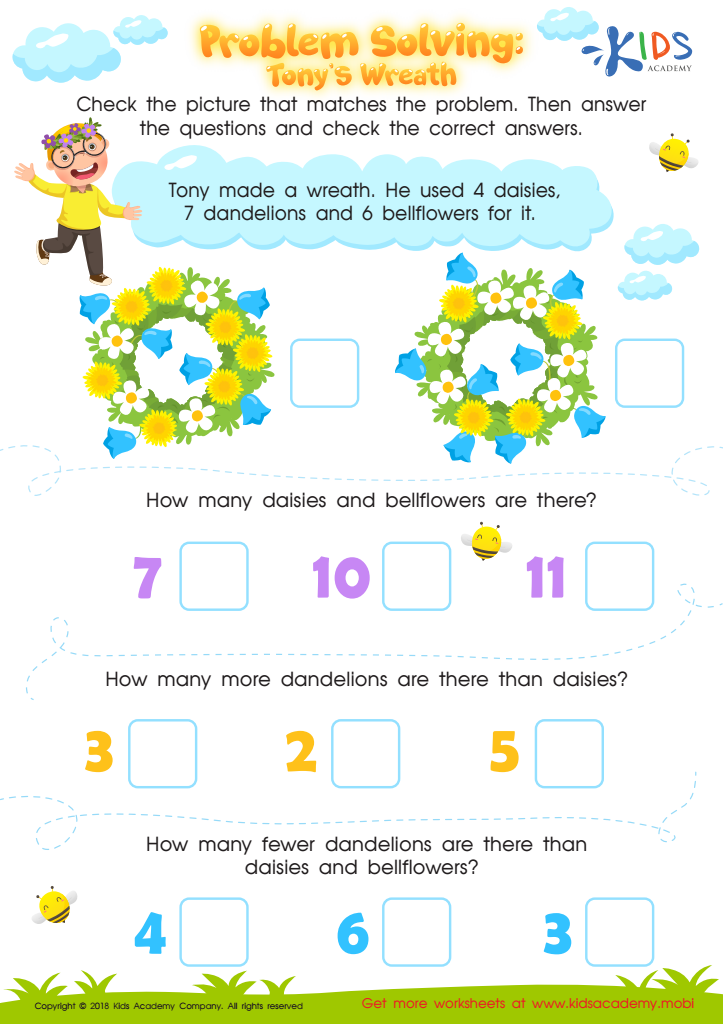
Problem Solving: Tony's Wreath Worksheet
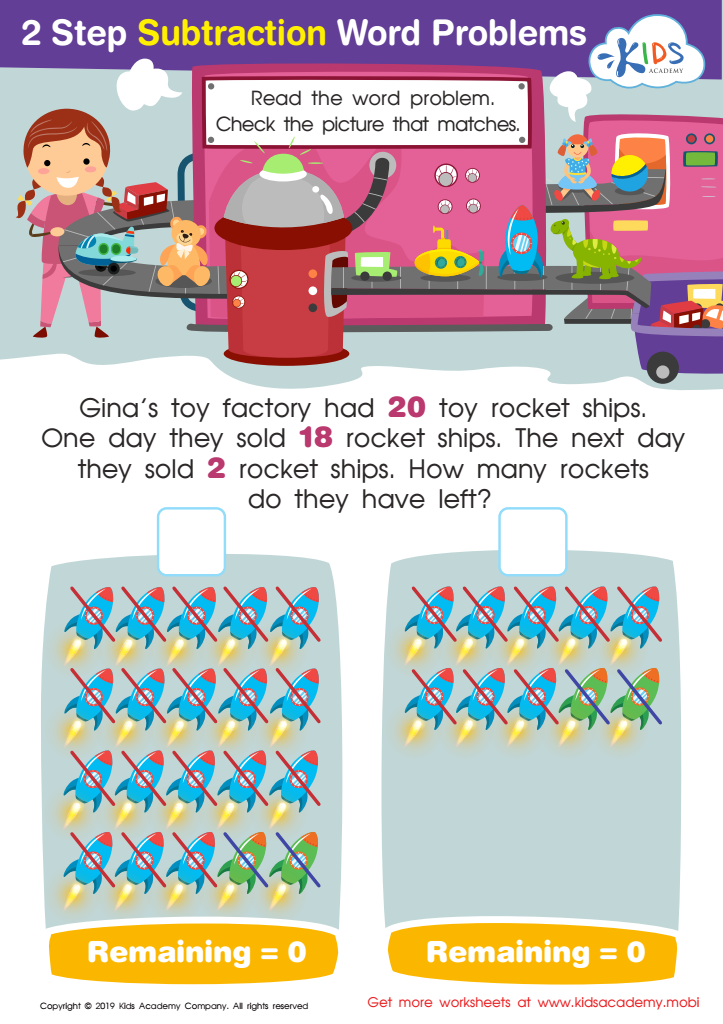
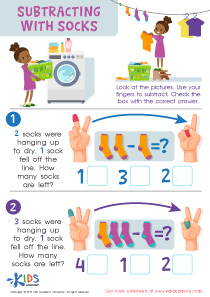
Step Subtraction Word Problems Worksheet
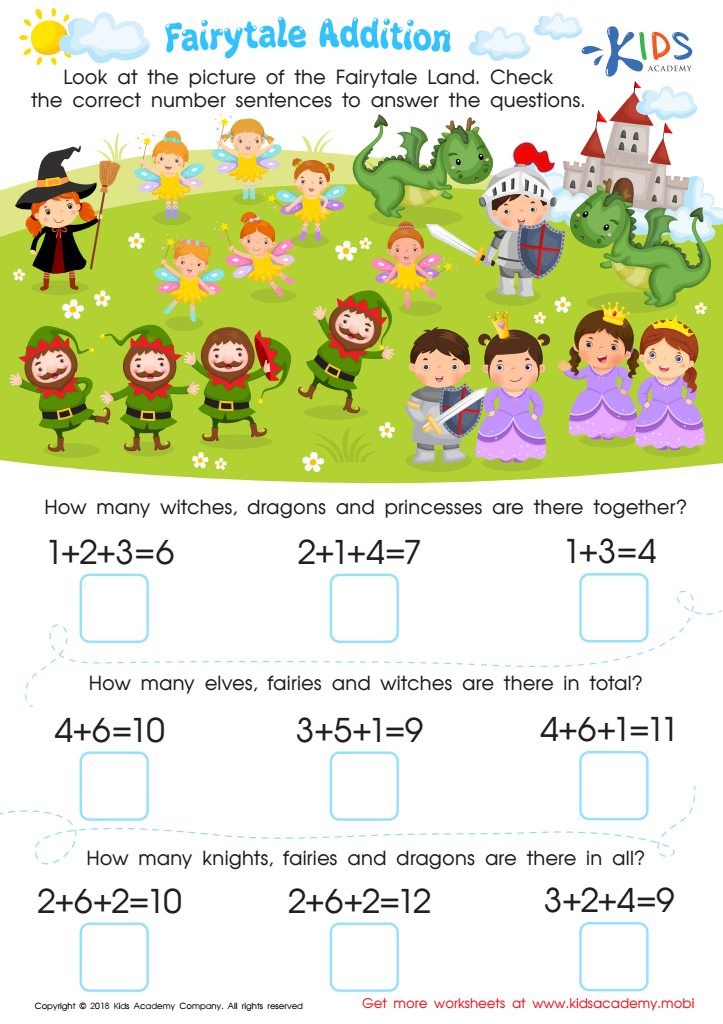
Fairytale Addition Worksheet
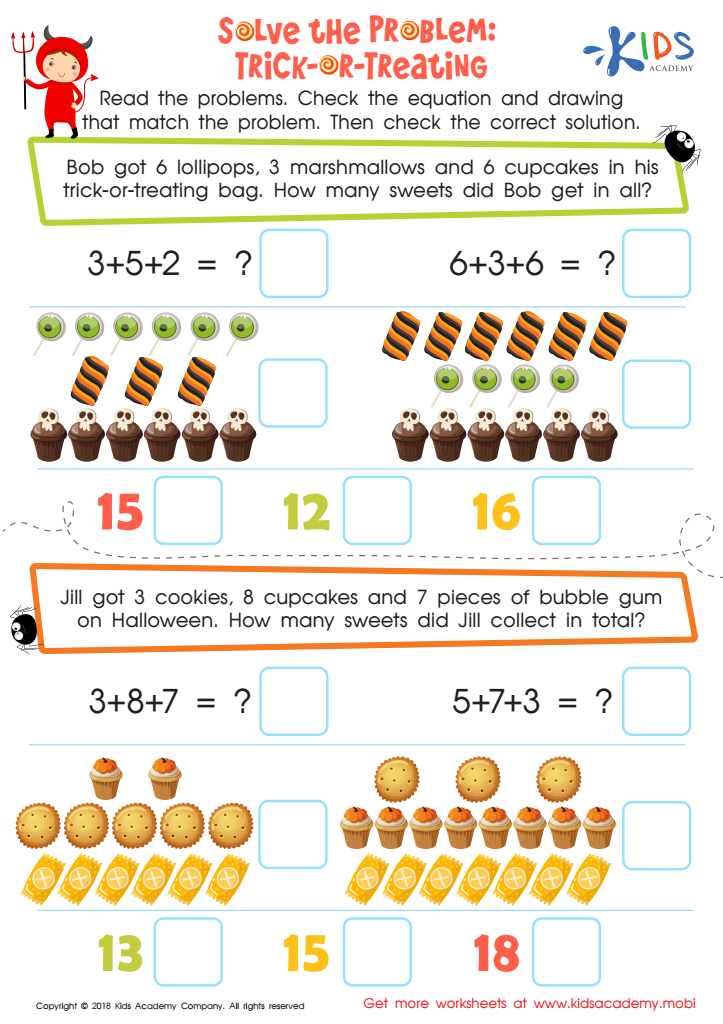
Solve the Problem: Trick–or–treating Worksheet
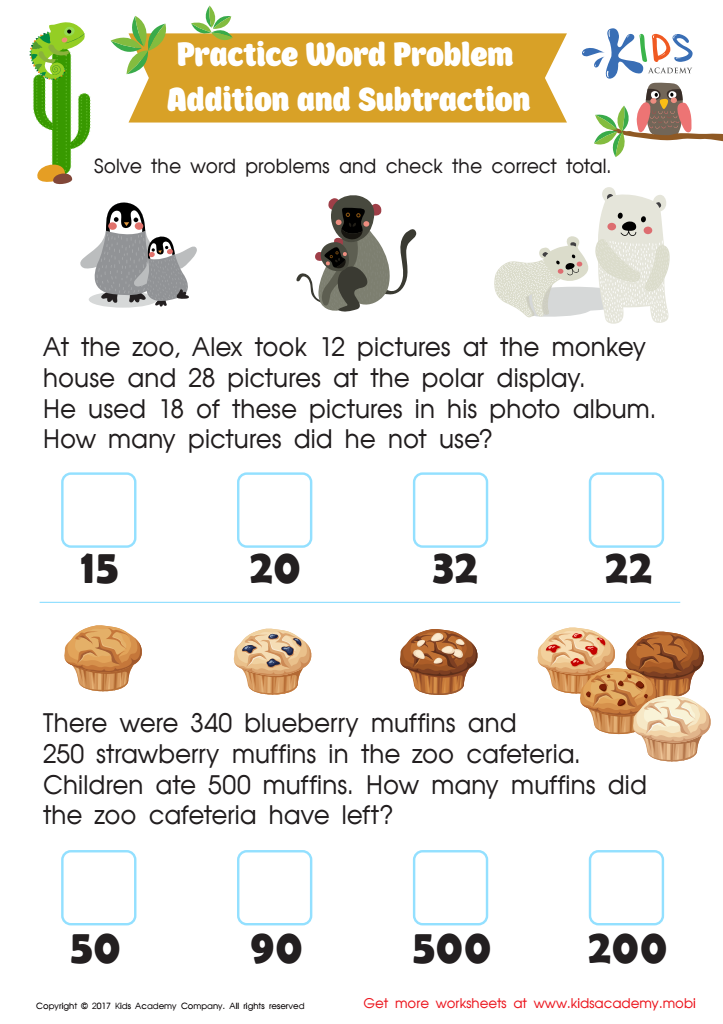
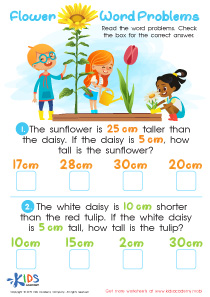
Addition and Subtraction: Word Problems Worksheet
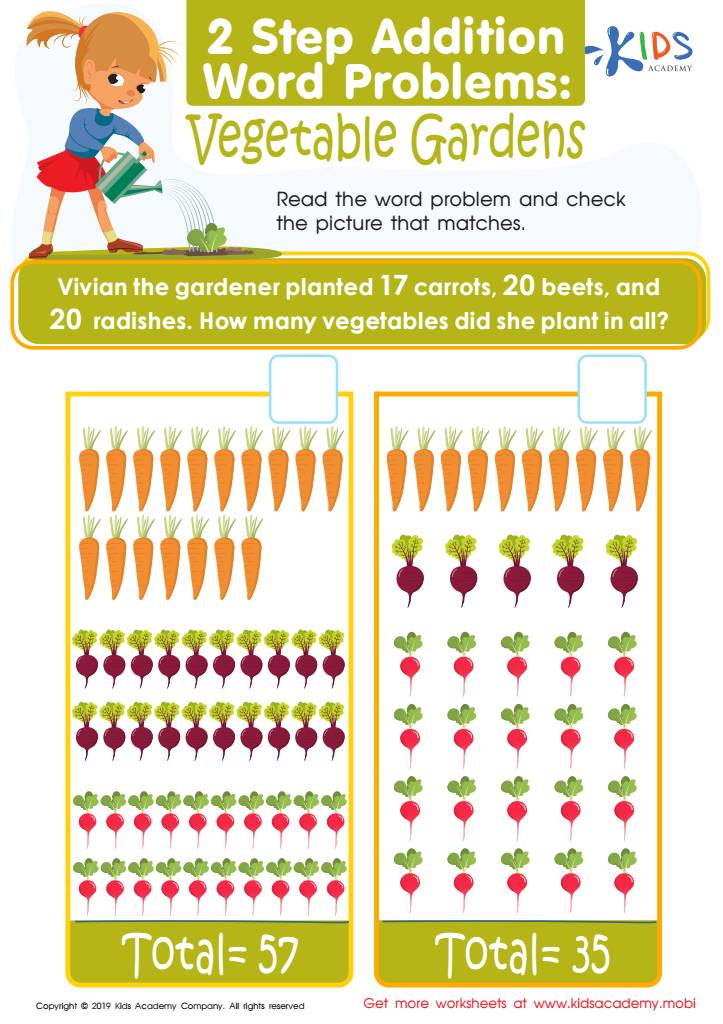
Vegetable Gardens Worksheet



Developing problem-solving skills through two-step word problems for four-year-olds is crucial for their cognitive and social development. This foundational skill not only enhances their critical thinking but also prepares them for more advanced mathematical concepts later in life.
When children engage with two-step word problems, they learn to analyze a situation, identify relevant information, and develop a sequence of actions to arrive at a solution. This process fosters creativity and encourages independence as they learn to approach challenges methodically. Additionally, working through word problems improves their language skills, enabling them to articulate their thoughts and reasoning.
Moreover, solving problems collaboratively can bolster social skills, including effective communication, teamwork, and empathy, as children discuss strategies with peers or adults. These are invaluable life skills that extend beyond academics.
Parents and teachers play a pivotal role in nurturing these abilities. By providing opportunities for children to practice two-step word problems through play and structured activities, they create a supportive learning environment. This engagement lays the groundwork for not only future math achievement but also boosts self-confidence and resilience, teaching children that persistence can lead to success. Consequently, investing time in developing these skills yields lifelong benefits.