Filters

10 filtered results

Clear all filters
Favorites
With answer key
Interactive

10 filtered results

Difficulty Level

Grade


Enhance your 4-year-old's cognitive development with our engaging Building Vocabulary Worksheets. Designed to support early literacy, these worksheets provide fun activities that help young learners expand their word recognition and language skills. Each worksheet incorporates colorful visuals and interactive tasks that ignite curiosity and comprehension. Children will enjoy exercises that promote word associations, matching, and categorization, fostering critical thinking and vocabulary growth. Tailored for preschool environments, our resources ensure that learning is both effective and enjoyable. Explore our carefully crafted worksheets to give your child a solid foundation in reading and comprehension that will benefit them for years to come!

Check out this FREE Trial Lesson on Building Vocabulary for age 4!

Demonstrate Understanding of Frequently Occurring Verbs and Adjectives by Relating Them to Their Opposites

Favorites
With answer key
Interactive
  • 4
  • Cognitive Development
  • Building Vocabulary
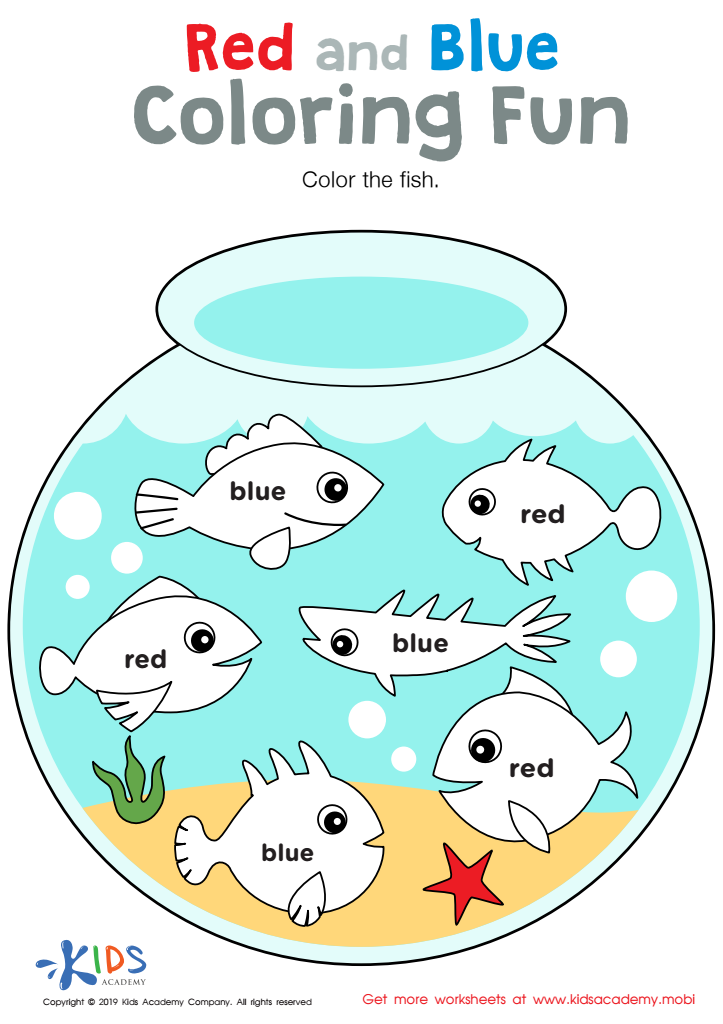
Red and Blue Coloring Fun Worksheet

Red and Blue Coloring Fun Worksheet

Kids know colors like red and blue. But can they read these words? Give them practice with this fun fish bowl coloring sheet. They'll look at the fish, then color them the corresponding hue. Home or classroom, they'll be sure to get a kick out of learning colors in this creative way!
Download (PDF)
Assign to My Students
Red and Blue Coloring Fun Worksheet
Worksheet
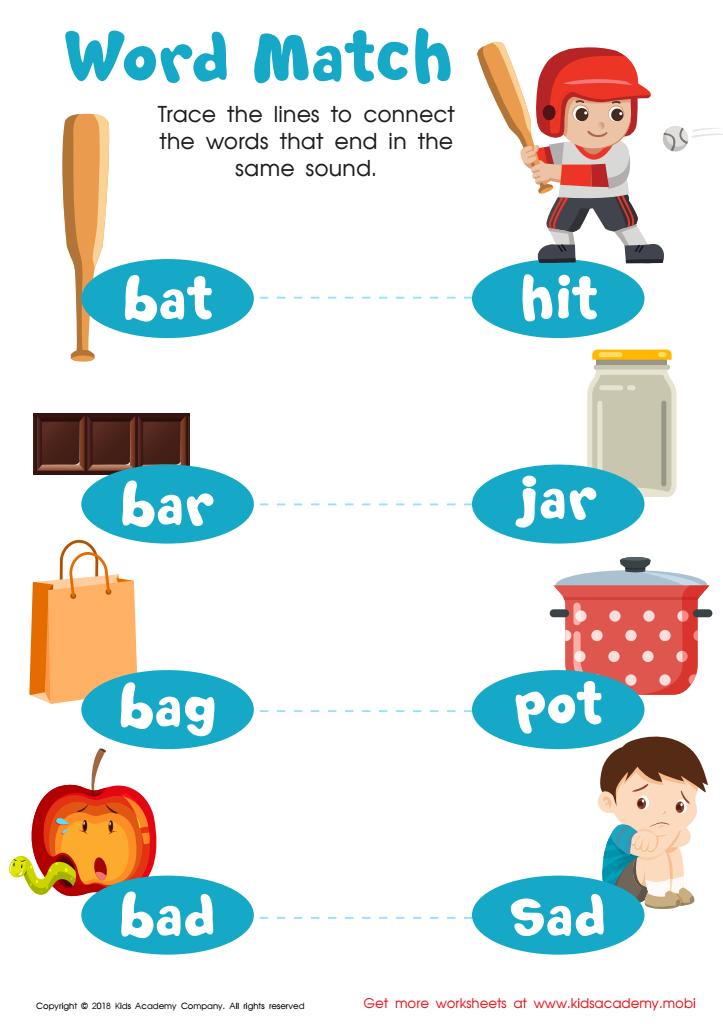
Word Match Reading Worksheet

Word Match Reading Worksheet

This printout helps children learn to read fluently by connecting words with the same sound. Colorful pictures aid understanding and context for kindergarten-level students. Tracing lines, they learn to identify the sounds made by letters of the alphabet and deepen their knowledge of phonics.
Word Match Reading Worksheet
Worksheet
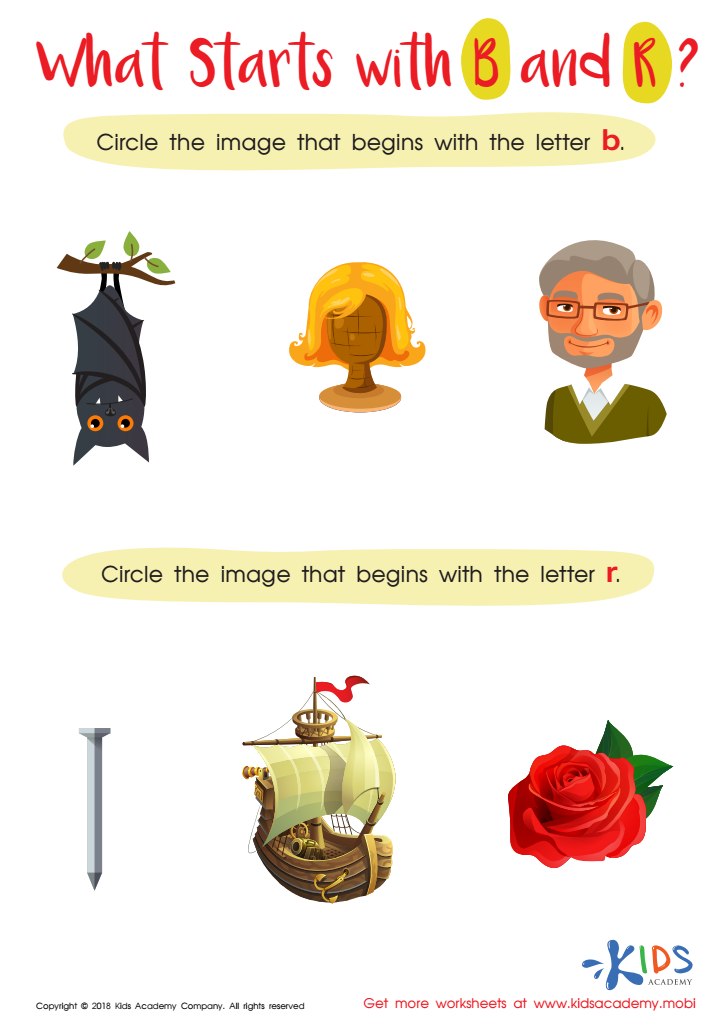
What Starts with B and R? Worksheet

What Starts with B and R? Worksheet

Download this worksheet to help young readers practice visual and motor skills! They'll enjoy matching pictures with "B" and "R" letters while tracing the images. Bright and colorful, this engaging activity will help kids differentiate between words and have fun doing it.
What Starts with B and R? Worksheet
Worksheet
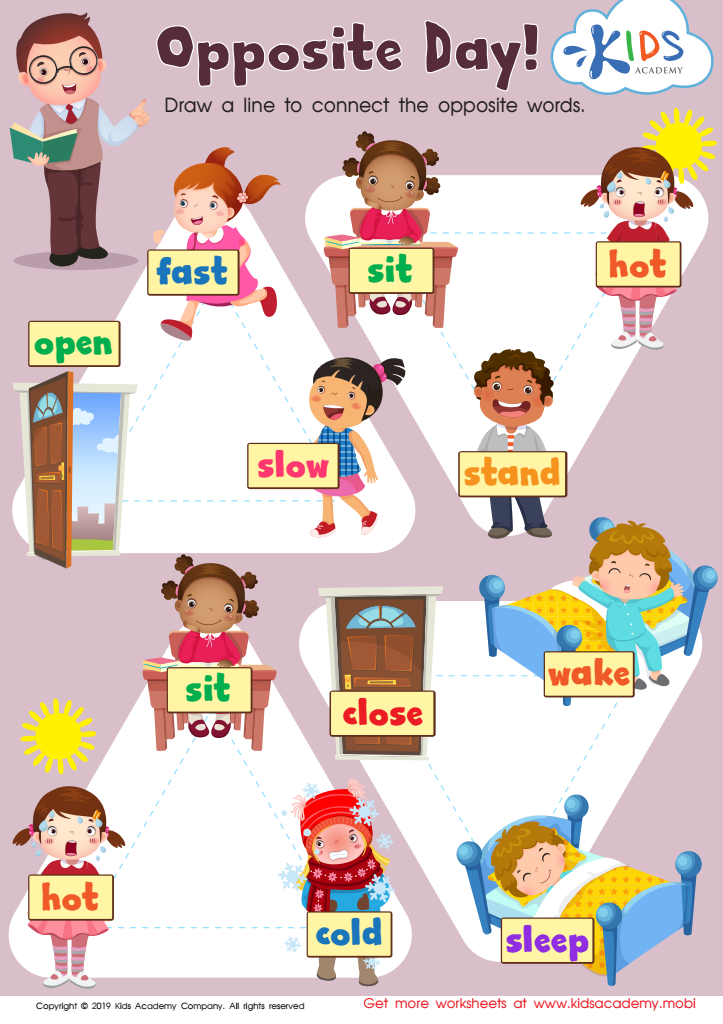
Opposite Day Worksheet

Opposite Day Worksheet

Early learners need to know about opposites to improve their higher-order thinking and critical thinking. This fun worksheet helps them understand the concept, practice opposite words, read high-frequency words and work on fine motor skills. Download the traceable PDF to get started.
Opposite Day Worksheet
Worksheet
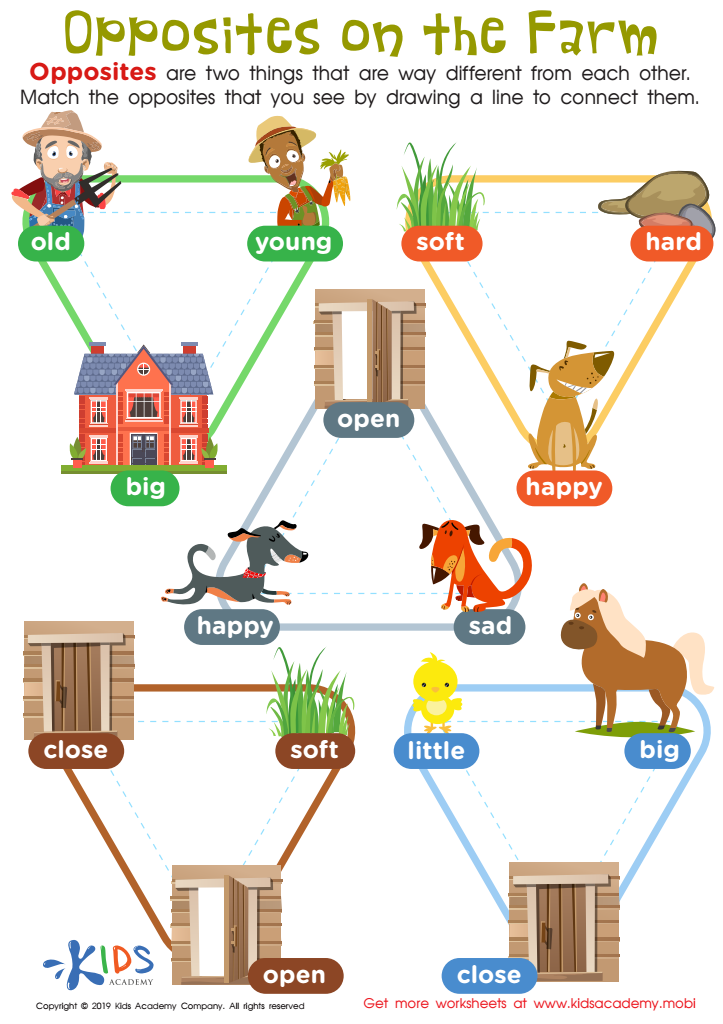
Opposites on the Farm Worksheet

Opposites on the Farm Worksheet

Teaching children the concept of opposites is important for their development. This worksheet offers a fun way to practice. Kids can use traceable lines to match farm imagery with pairs of opposites. It's a great way to help them compare and contrast, a key skill for reading, math, writing and more.
Opposites on the Farm Worksheet
Worksheet
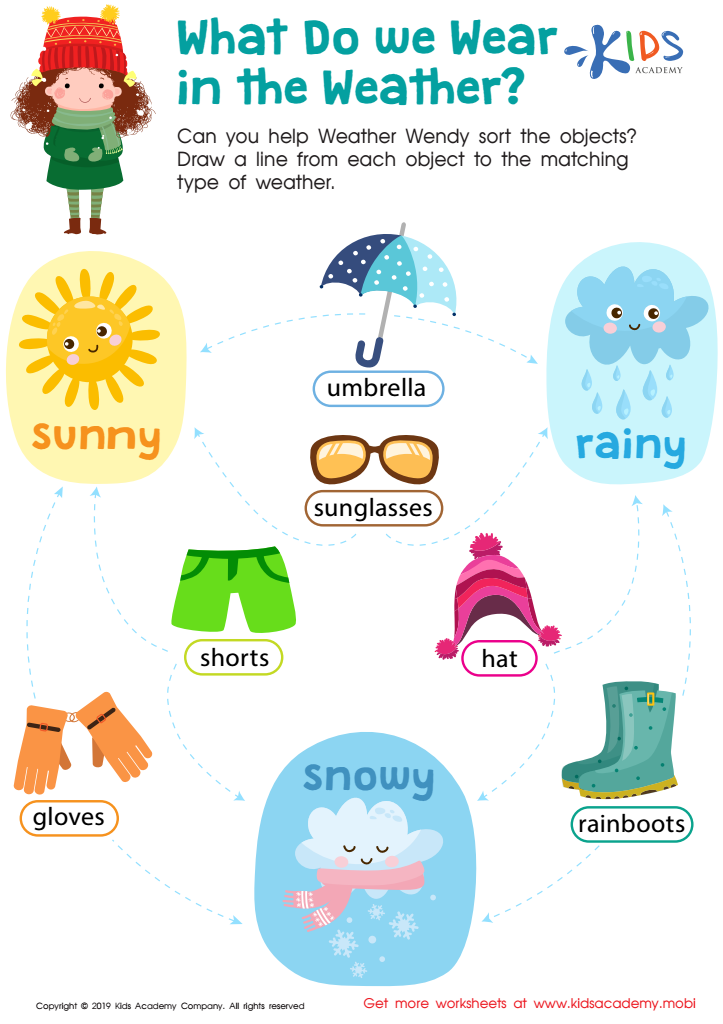
What Do We Wear in the Weather? Worksheet

What Do We Wear in the Weather? Worksheet

This worksheet boosts young learners' everyday vocab with fun high-frequency weather words. They'll see and match familiar pictures to the words they read. Plus, it helps them develop fine motor skills. Perfect for preschoolers.
What Do We Wear in the Weather? Worksheet
Worksheet
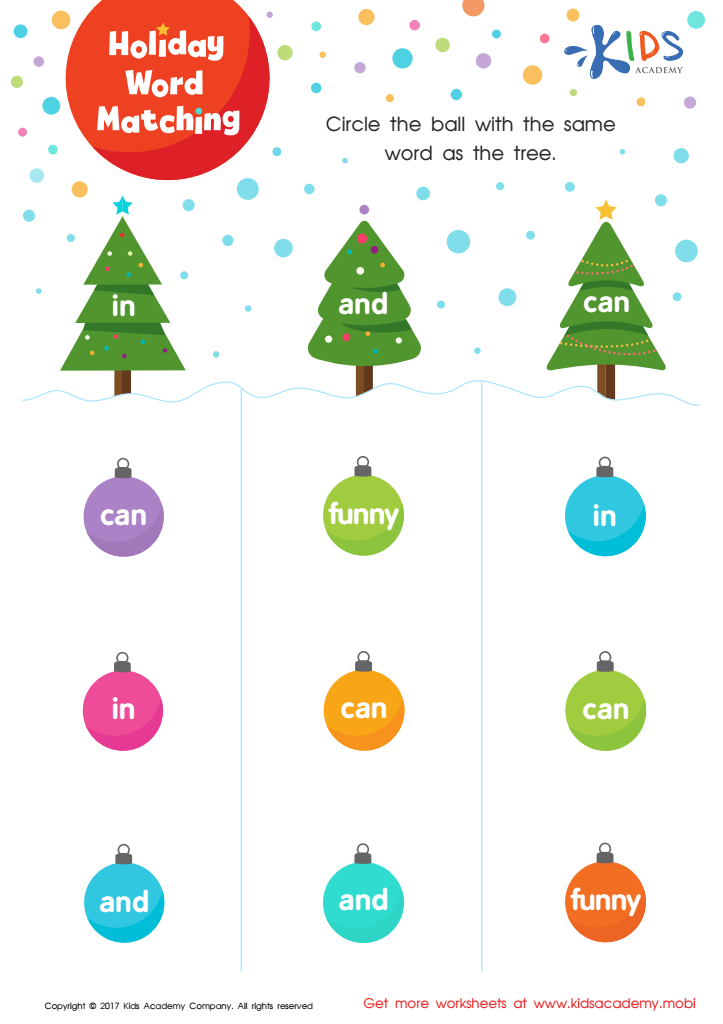
Holiday Word Matching Worksheet

Holiday Word Matching Worksheet

Decorate with Kids Academy this year! Keep kids learning this holiday season with this festive worksheet. Let them look for sight words on Christmas trees then circle the matching ornament to decorate. It's a fun and educational way to enjoy the holidays!
Holiday Word Matching Worksheet
Worksheet
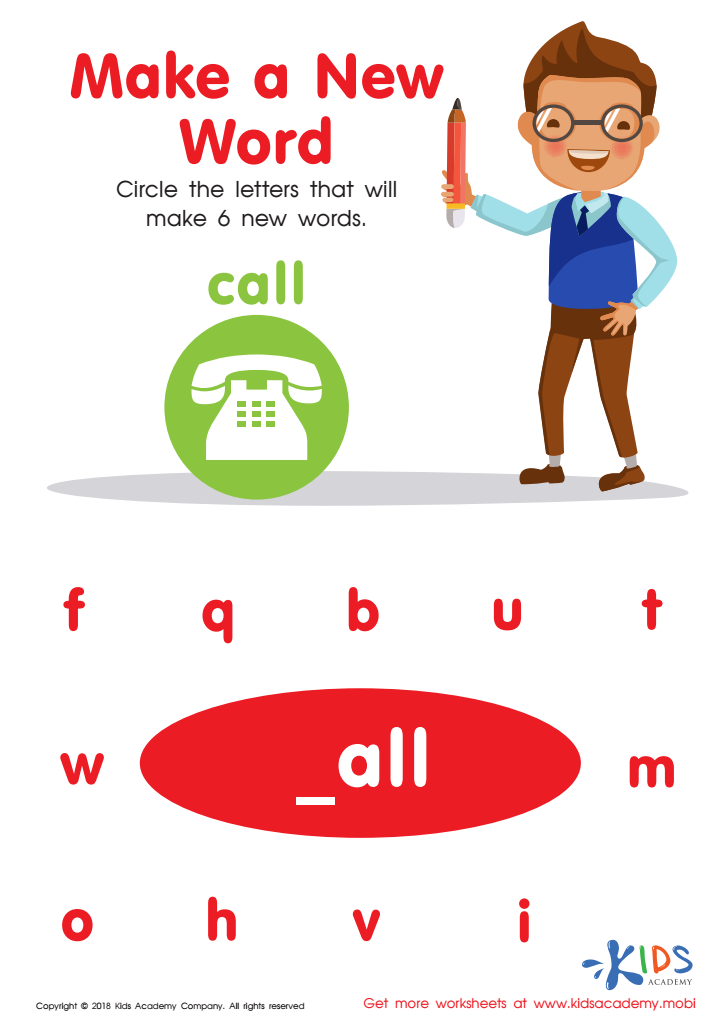
Make a New Word Worksheet

Make a New Word Worksheet

Young readers and writers can enhance their skills with this fun PDF worksheet. They'll trace letters to create new words and feel like super readers and writers after finding six words. They'll also practice building words with the "all" word family.
Make a New Word Worksheet
Worksheet
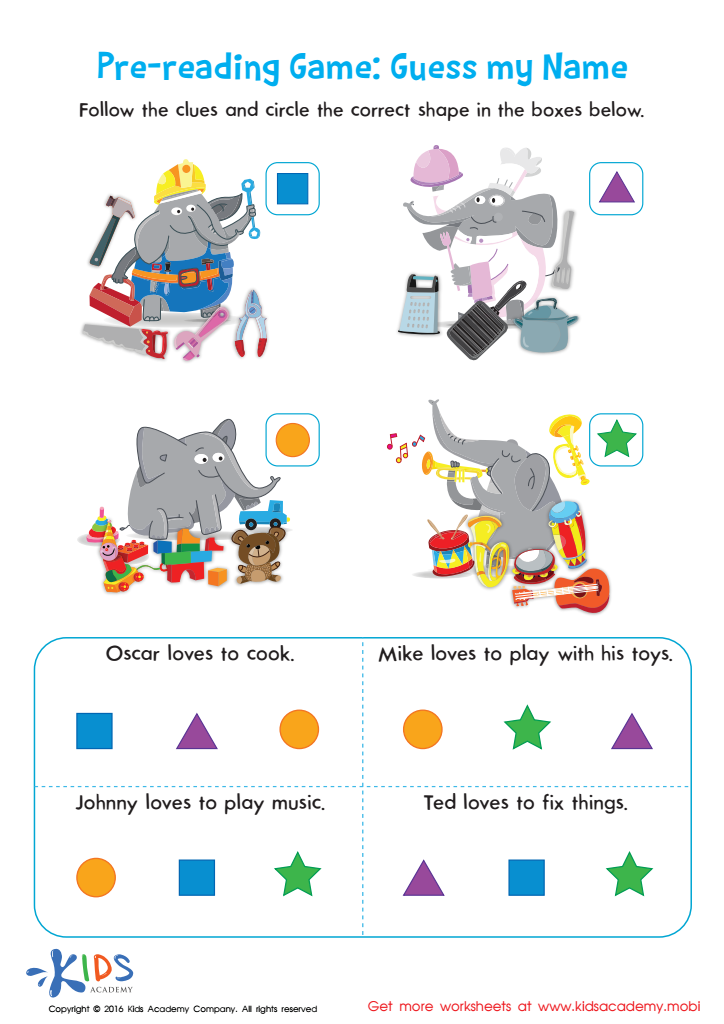
Pre reading worksheet guess my name

Pre Reading Worksheet Guess My Name

Guess My Name is a fun way to practice inference skills. Guess My Name is a fun pre-reading game to help your child practice drawing inferences from clues. With colorful illustrations, they'll use clues to match each elephant with its sentence and sharpen their inference skills.
Pre Reading Worksheet Guess My Name

Worksheet
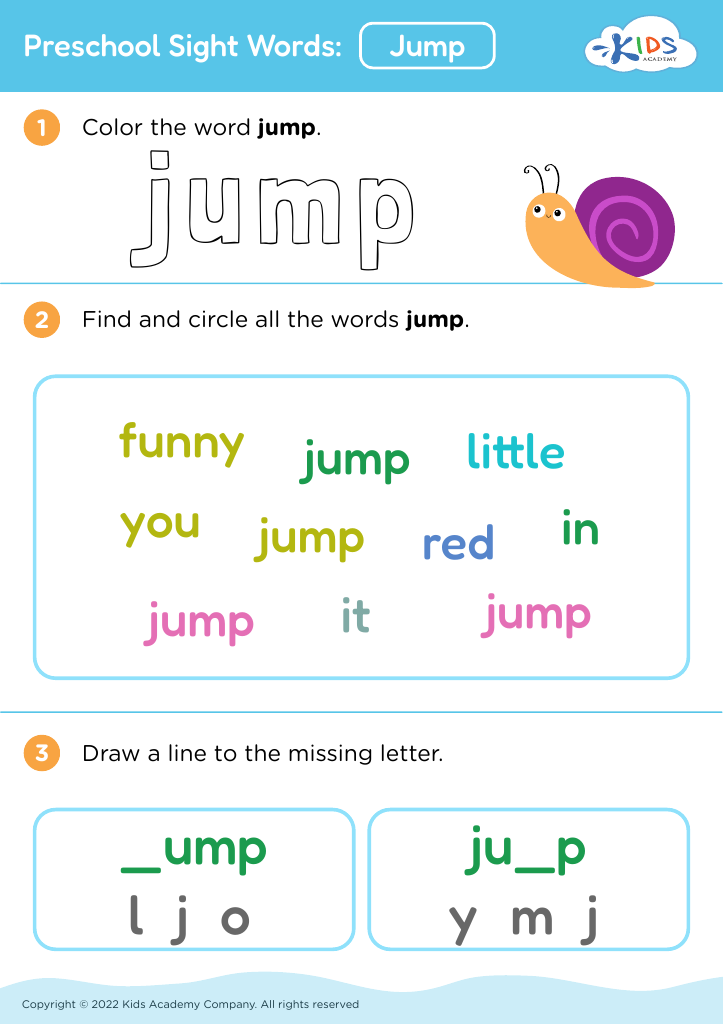
Preschool Sight Words: Jump

Preschool Sight Words: Jump

Preschool Sight Words: Jump
Worksheet


Cognitive development and vocabulary building in 4-year-olds are crucial for a child's overall growth and future academic success. At this stage, children are rapidly acquiring language skills, which serve as the foundation for effective communication and social interaction. A rich vocabulary facilitates their ability to express thoughts, emotions, and ideas, encouraging confidence in speaking and engagement with others.

Parents and teachers play a pivotal role in fostering this development by creating an environment rich in language. Engaging in conversations, reading together, and narrating daily activities can significantly enhance linguistic skills. These practices not only broaden vocabulary but also stimulate cognitive functions like memory, comprehension, and problem-solving.

Furthermore, strong vocabulary skills at this age correlate with better reading and writing abilities later in life, ensuring that children are better prepared for the academic challenges ahead. Ultimately, investing time and strategies for vocabulary building cultivates critical thinking, social skills, and a love for learning, elements that are essential for a well-rounded education. Therefore, by prioritizing cognitive development and vocabulary growth, parents and educators set the stage for lifelong learning and communication success.