
Rhyme recognition Reading Worksheets for 4-Year-Olds
3 filtered results
Difficulty Level
Grade
Age
-
From - To
Subject
Activity
Standards
Boost your 4-year-old's early reading skills with our engaging Rhyme Recognition Reading Worksheets! Designed by experts, these fun and educational worksheets captivate young learners by building essential phonological awareness skills. By identifying and matching rhyming words through engaging activities, children develop a strong foundation for reading success. Perfect for preschool and kindergarten preparation, our worksheets make learning to recognize rhymes both enjoyable and effective. Visit Kids Academy to explore a variety of colorful, age-appropriate printables that turn early literacy into a delightful adventure. Ideal for parents and educators aiming to support their child's reading journey.
Favorites
With answer key
Interactive
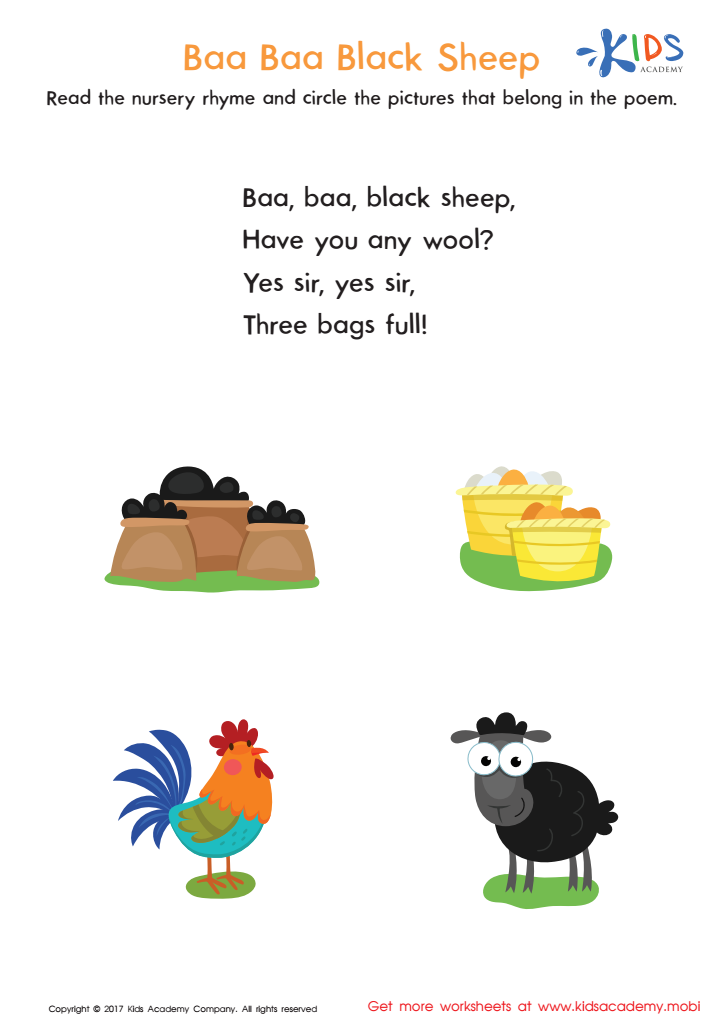
Baa Baa Black Sheep Printable
Jumpstart your child's reading skills with this printable Baa Baa Black Sheep worksheet! Recite the lines with them, then have them select the pictures associated with the poem to test comprehension. Fun and educational!
 Assign to My Students
Baa Baa Black Sheep Printable
Worksheet
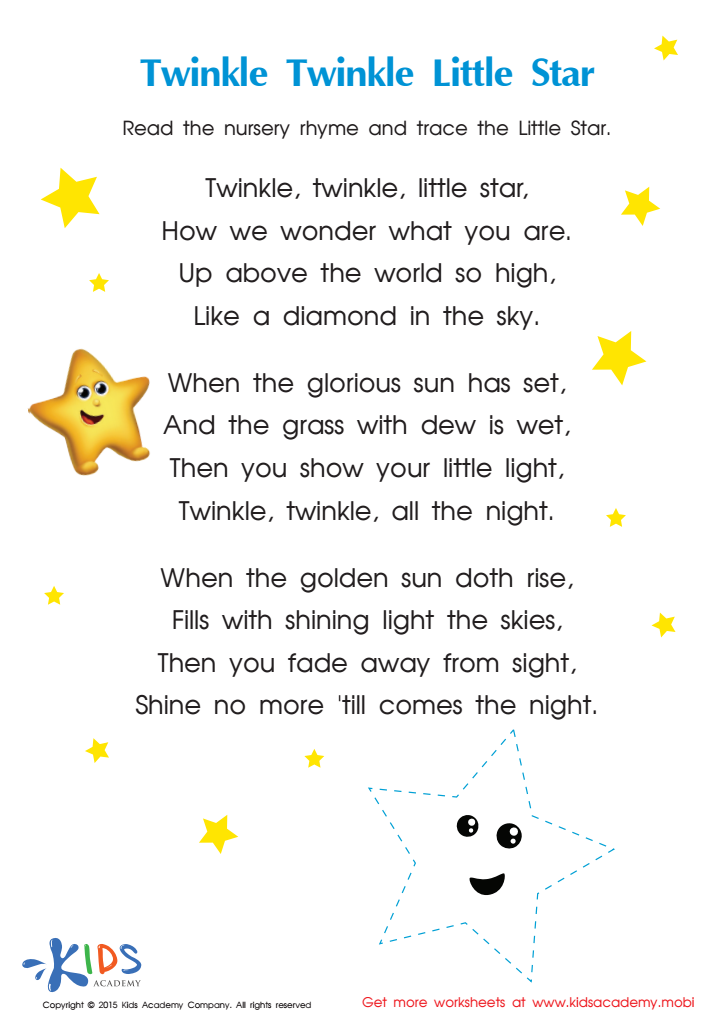
Nursery Rhymes: Twinkle Little Star Worksheet
Introduce your kindergartener to nursery rhymes using this printable worksheet. Sing Twinkle Little Star with your child and incorporate some simple actions. Even as a lullaby, it's a great way to teach letters and counting - have your child find and count all the letter 'S's in the song. For extra fun, try the Twinkle Little Star coloring page.
Nursery Rhymes: Twinkle Little Star Worksheet
Worksheet
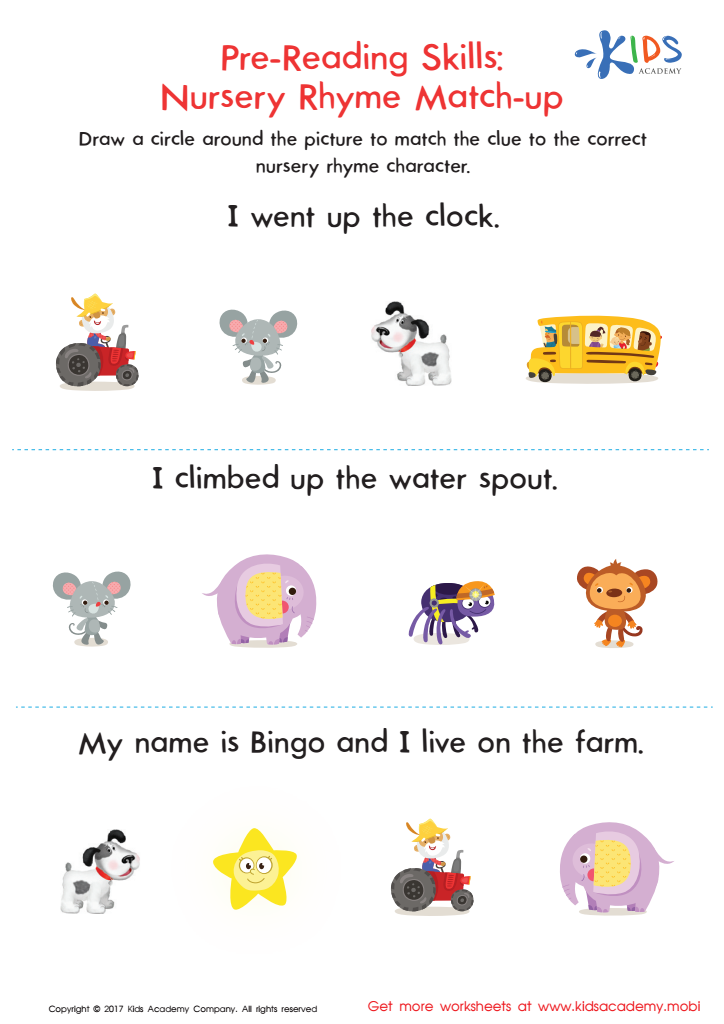
Nursery Rhyme Match–Up Worksheet
This worksheet helps kids build pre-reading skills using stories they know and love! By connecting with prior knowledge, kids can develop ideas about characters and set the stage for reading strategies.
Nursery Rhyme Match–Up Worksheet
Worksheet
Join Kids Academy for Free
Who is primarily going to use this learning content?








Rhyme recognition is a fundamental aspect of early literacy development, making it crucial for parents and teachers to prioritize with 4-year-olds. At this formative age, children's brains are particularly receptive to phonological awareness, the skill of identifying and manipulating sounds in language. Rhyme recognition, a key component of phonological awareness, involves recognizing patterns in word endings, which helps children understand that words are composed of smaller sound units. This foundational understanding is essential for reading and spelling.
Engaging 4-year-olds in rhyme-based activities aids in enhancing their auditory discrimination, enabling them to hear differences and similarities between sounds. This skill is directly linked to their ability to decode words during reading. Rhyming also promotes memory retention; catchy, rhyming phrases are easier for young minds to remember, contributing to an enriched vocabulary and better comprehension.
Moreover, incorporating rhyme recognition can make learning interactive and enjoyable, fostering a love for reading from an early age. Songs, poems, and rhyming games captivate children's interest and make the learning process less intimidating. Strong phonological awareness in early childhood sets the stage for successful reading experiences in the future, laying a vital groundwork for academic achievement and lifelong learning. By focusing on rhyme recognition, parents and teachers invest in children’s reading readiness and overall cognitive development.








