Rhyming skills development Reading Worksheets for 4-Year-Olds
3 filtered results
-
From - To
Enhance your child's early reading experience with our "Rhyming Skills Development Reading Worksheets for 4-Year-Olds." These fun and engaging worksheets are designed to help young learners recognize and create rhyming words, fostering phonetic awareness and early literacy skills. Ideal for preschoolers, each worksheet features colorful illustrations and playful exercises that make learning to rhyme exciting and enjoyable. By identifying word patterns and sounds, children build a strong foundation for reading success. Start your child’s educational journey today with these essential rhyming activities from Kids Academy. Fun learning starts here!
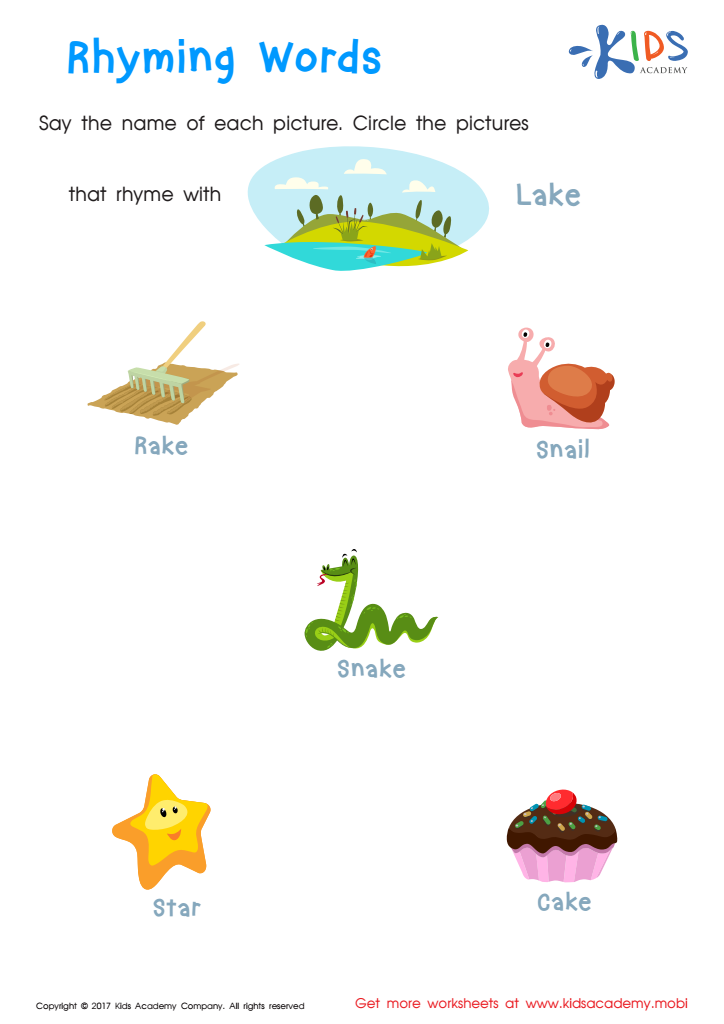
Rhyming Words Rhyming Worksheet
 Assign to My Students
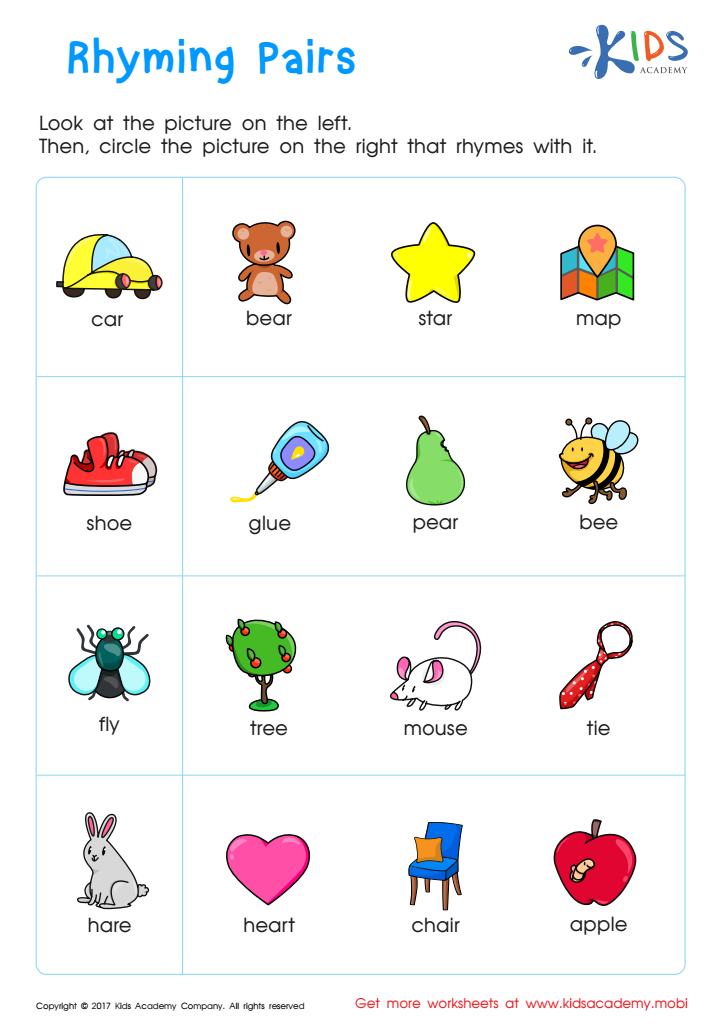
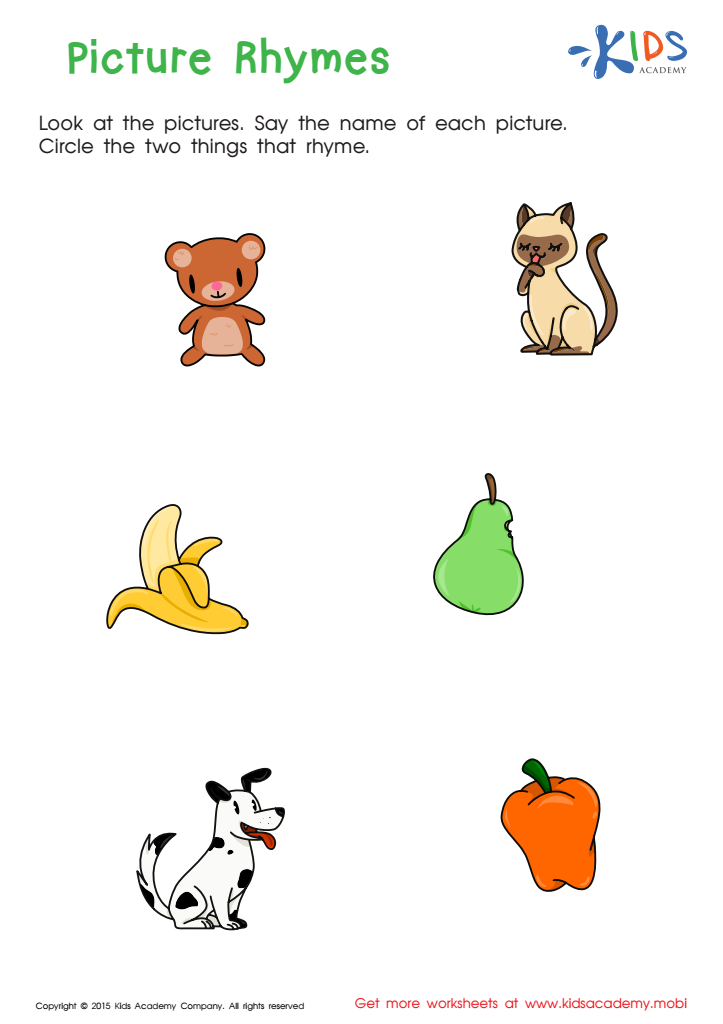
First Words: Picture Rhymes Worksheet







Rhyming skills are a foundational aspect of early literacy and language development, making it crucial for both parents and teachers to prioritize them for 4-year-olds. Rhyming enhances phonemic awareness, which is the ability to recognize and manipulate individual sounds in words—a vital pre-reading skill. When children engage with rhymes, they learn to hear the similarities and differences in sounds, aiding in better word recognition and spelling as they progress.
Furthermore, rhyming promotes memory and cognitive development. Rhymes and rhythmic patterns are easier for young children to remember, which builds their confidence and motivates them to participate actively in reading activities. This also reinforces vocabulary acquisition as children are exposed to a variety of words through rhymed stories, songs, and poems.
In a social context, rhyming games and activities foster a love for reading and storytelling, contributing to positive emotional and social development. They often involve playful, interactive elements that make learning enjoyable and engaging. By investing time in rhyming activities, both parents and teachers are laying down robust educational foundations, ensuring children are better prepared for more complex literacy tasks in their future academic journey. Therefore, prioritizing rhyming skills is not just about learning to read, but setting the stage for a lifetime of successful learning and communication.








