Sound recognition Reading Worksheets for 4-Year-Olds
3 filtered results
-
From - To
Discover our engaging Sound Recognition Reading Worksheets designed specifically for 4-year-olds! These interactive worksheets help young learners develop essential phonemic awareness by focusing on sound recognition. Children will explore various sounds through fun activities, enhancing their vocabulary, listening skills, and early reading abilities. Each worksheet is tailored to keep kids entertained while reinforcing their sound identification skills, ensuring a strong foundation for future literacy. Perfect for parents and teachers, these printable resources blend playful learning with educational value. Get started on your child's reading journey today, fostering a love for learning through sound! Visit us now for a variety of colorful worksheets.
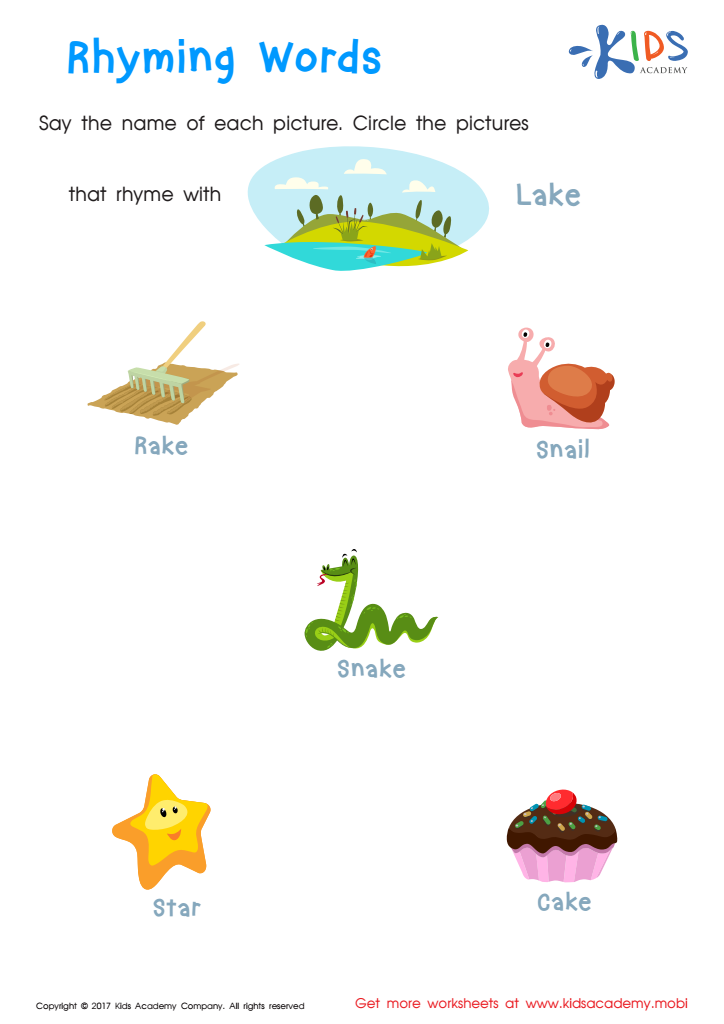
Rhyming Words Rhyming Worksheet

Long and Short U Worksheet
 Assign to My Students

First Words: Picture Rhymes Worksheet








Sound recognition is a foundational skill for reading that significantly impacts a child's literacy development. For 4-year-olds, developing sound recognition involves the ability to identify and manipulate sounds in spoken words. This skill is crucial because it forms the basis for phonemic awareness, which is essential for decoding and spelling when children begin to read.
Parents and teachers should care about sound recognition because it fosters early reading success and confidence in young learners. When children can recognize sounds, they develop a greater understanding of how letters correspond to these sounds, making it easier for them to read words and ultimately, sentences. This skill also enhances listening abilities and builds vocabulary, enabling children to engage more effectively in conversations and comprehension activities.
Additionally, supporting sound recognition can lead to a love for reading, as young children who receive this kind of foundational support are more likely to enjoy the reading process. Introducing playful activities like rhyming games, songs, and sound-based storytelling can make learning fun and engaging. By investing time in developing sound recognition skills, parents and teachers are laying the groundwork for academic success and promoting lifelong learning habits in children.








