Story analysis Reading Comprehension Worksheets for 4-Year-Olds
4 filtered results
-
From - To
Introducing our engaging "Story Analysis Reading Comprehension Worksheets for 4-Year-Olds," designed to spark curiosity and enhance literacy skills in young learners. These worksheets focus on story elements, allowing children to explore characters, settings, and plot in a fun and interactive way. Perfect for preschool educators and parents, each worksheet encourages critical thinking and comprehension through age-appropriate activities. Boost vocabulary and foster a love of storytelling as kids analyze delightful narratives. With colorful illustrations and simple questions, these resources make learning accessible and enjoyable. Start your child's reading journey today with our captivating story analysis worksheets!
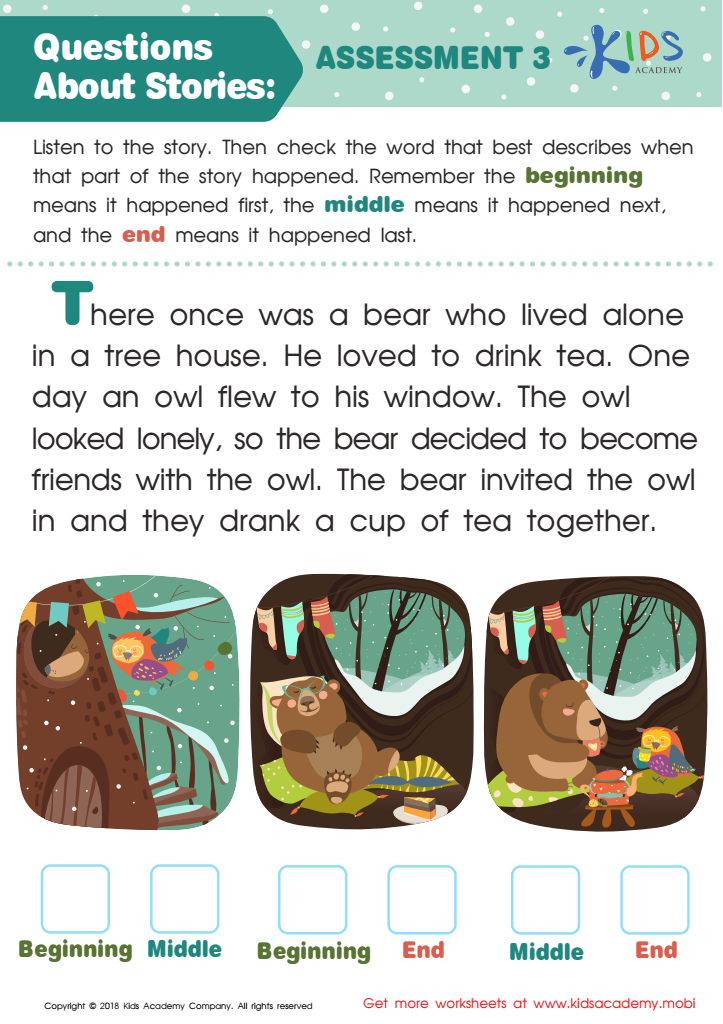
Questions About Stories: Assessment 3 Worksheet
 Assign to My Students
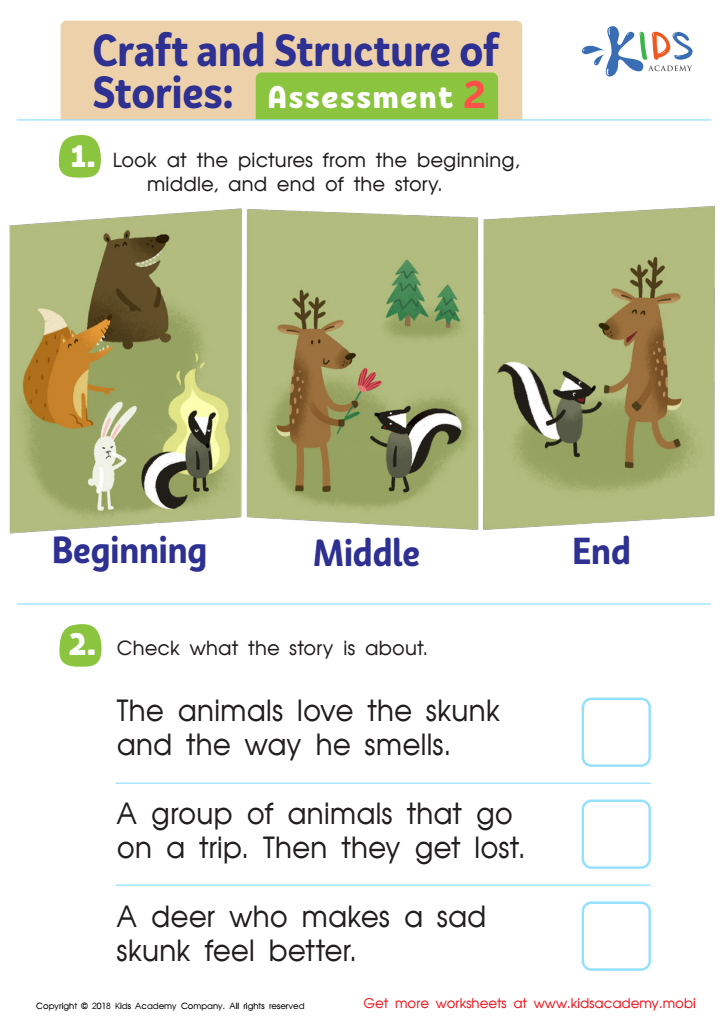
Craft and Structure of Stories: Assessment 2 Worksheet
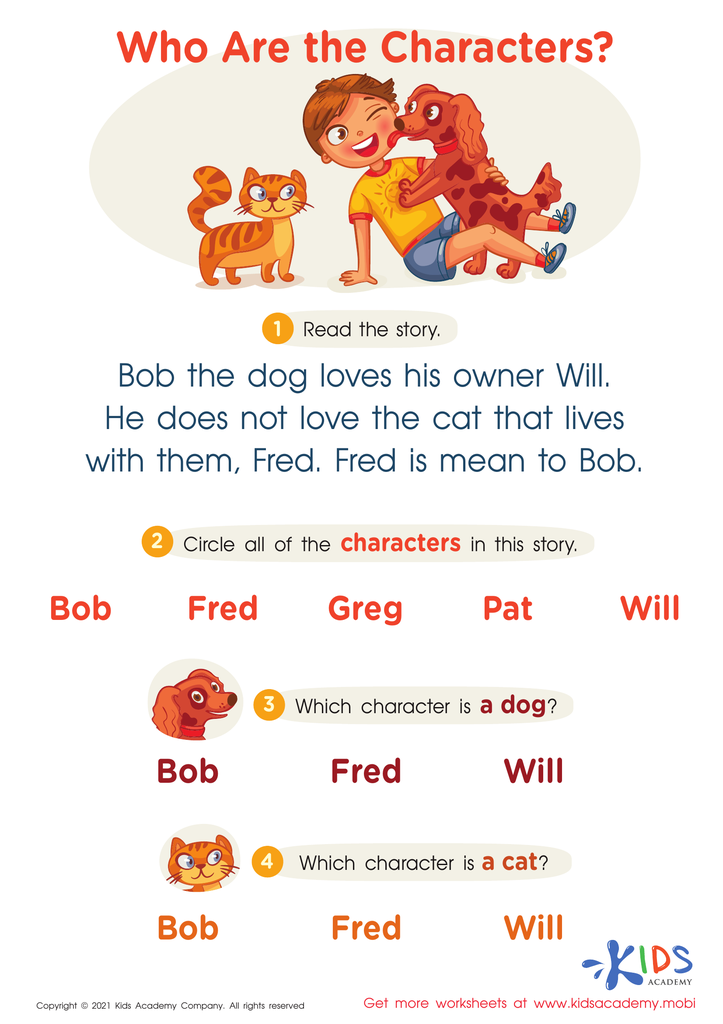
Who Are the Characters? Worksheet
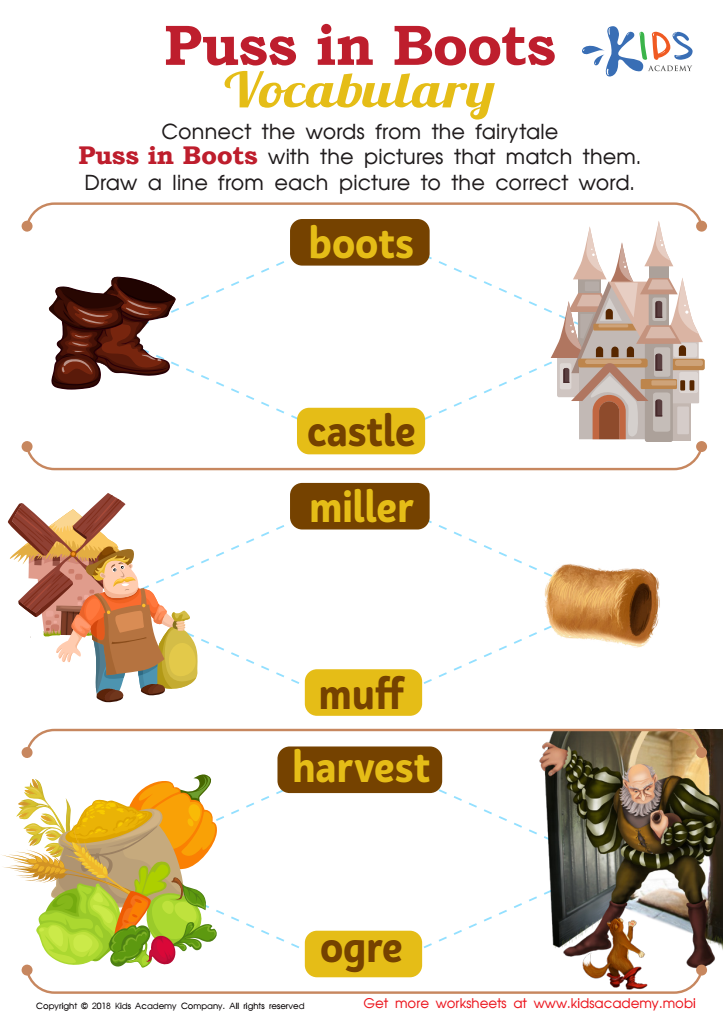
Puss in Boots Vocabulary Worksheet








Story analysis and reading comprehension for 4-year-olds is crucial because it lays the groundwork for future literacy skills and cognitive development. At this age, children are rapidly developing their language abilities, critical thinking, and imaginative capacities. Engaging them in story analysis helps enhance their understanding of narrative structures, character motivations, and thematic elements. These skills not only boost their vocabulary and language proficiency but also cultivate an appreciation for storytelling and reading.
Parents and teachers should recognize the importance of early exposure to comprehension exercises. When children learn to discuss and reflect on stories, they develop the ability to connect ideas, make predictions, and draw conclusions, skills essential for their academic success. Story analysis also promotes social-emotional learning by encouraging empathy and perspective-taking as children relate to characters’ experiences.
Furthermore, incorporating fun, interactive storytelling activities strengthens the bond between adult caregivers and children, making reading a joyful experience rather than a chore. Ultimately, fostering story analysis and comprehension in preschoolers is a vital investment in their educational journey, setting them up for lifelong learning and a love of reading. Engaging in this process now will yield benefits that resonate throughout their academic and personal lives.








