Categorization skills Science Worksheets for 4-Year-Olds
5 filtered results
-
From - To
Introduce young learners to the exciting world of science with our "Categorization Skills Science Worksheets for 4-Year-Olds". Designed to build basic classification skills, these fun and engaging worksheets help children recognize and group objects, animals, plants, and more based on shared characteristics. Through sorting activities, puzzles, and visuals, kids will enhance their observational skills and foster an early interest in the scientific method. Perfectly tailored for curious minds, these printable worksheets blend play and learning, making science an adventure. Ideal for parents and teachers aiming to provide foundational scientific literacy for preschoolers. Download today and start exploring!
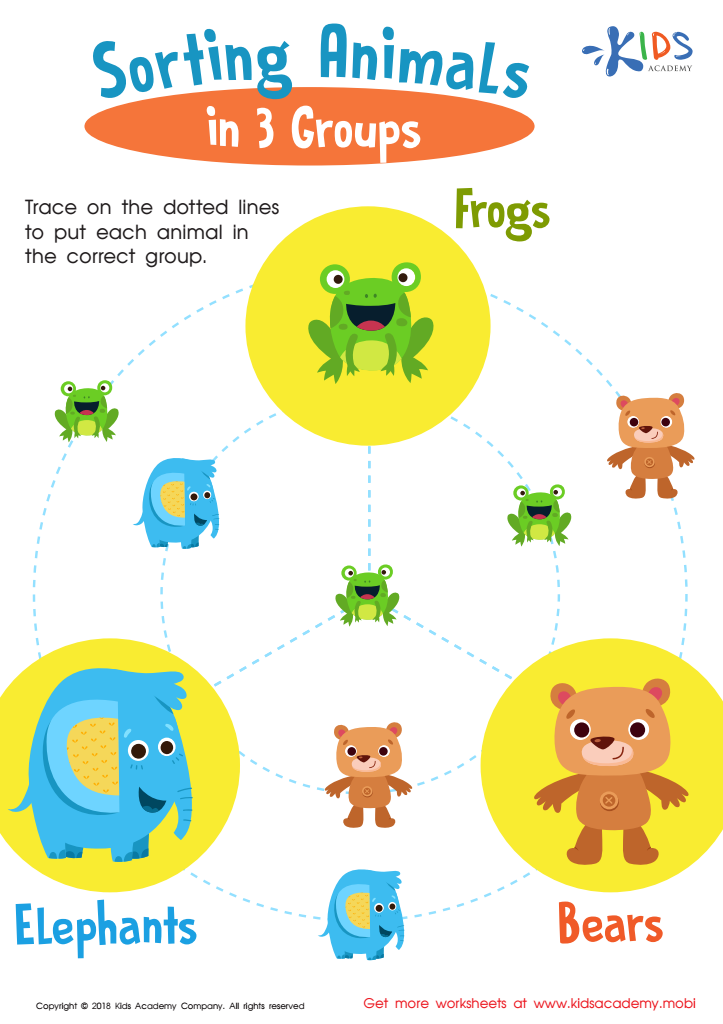
Sorting Animals in 3 Groups Worksheet
 Assign to My Students
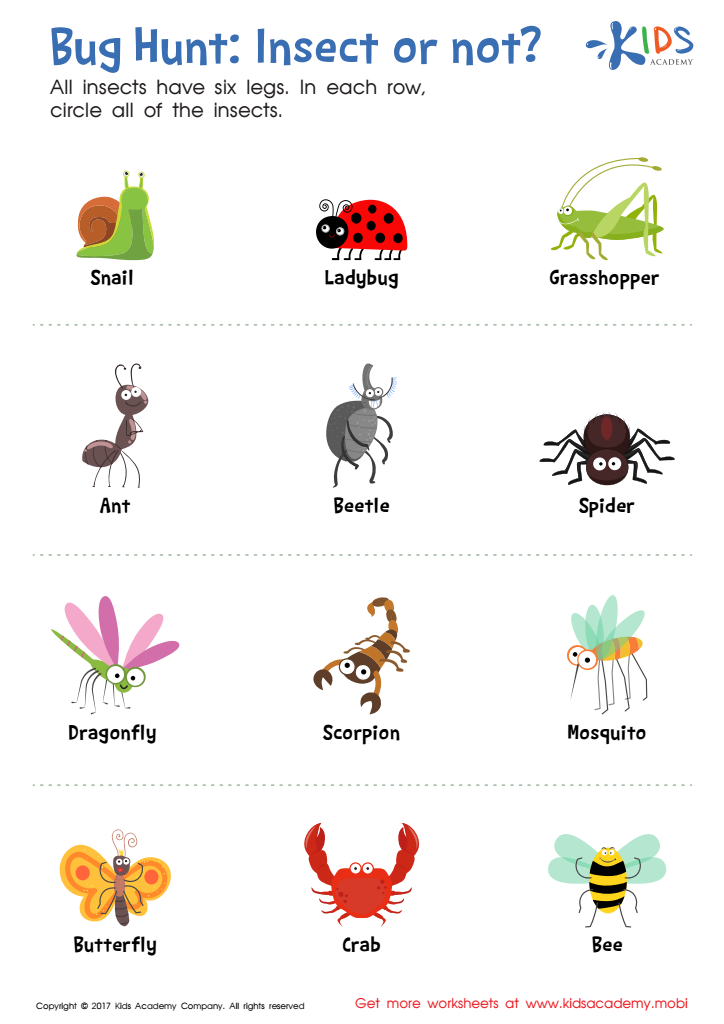
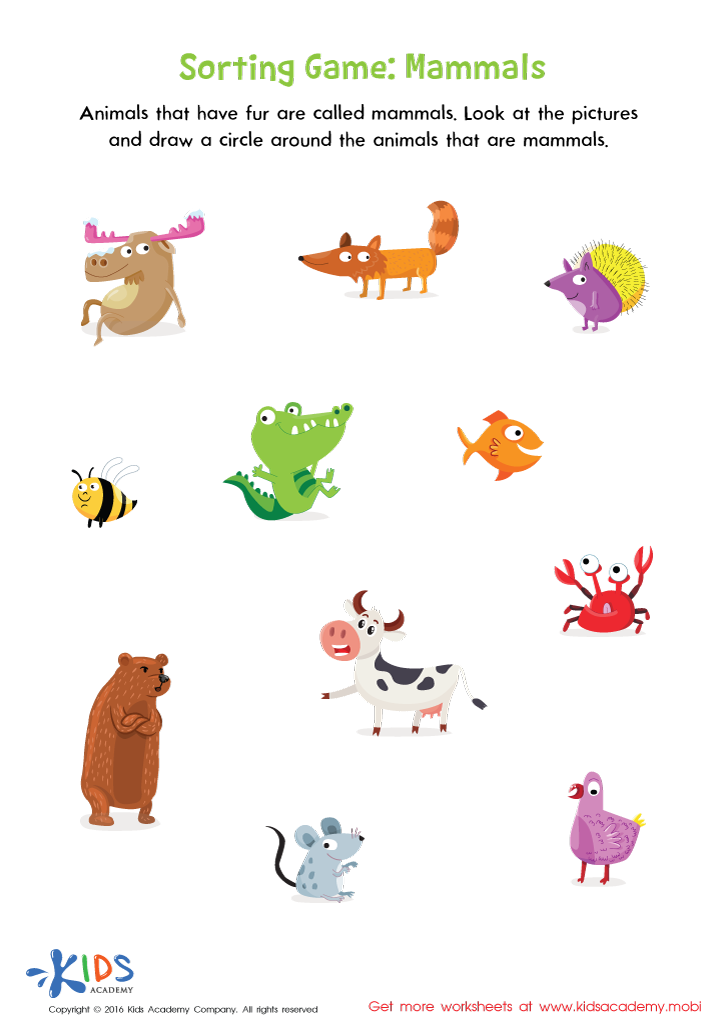
Mammals Sorting Worksheet
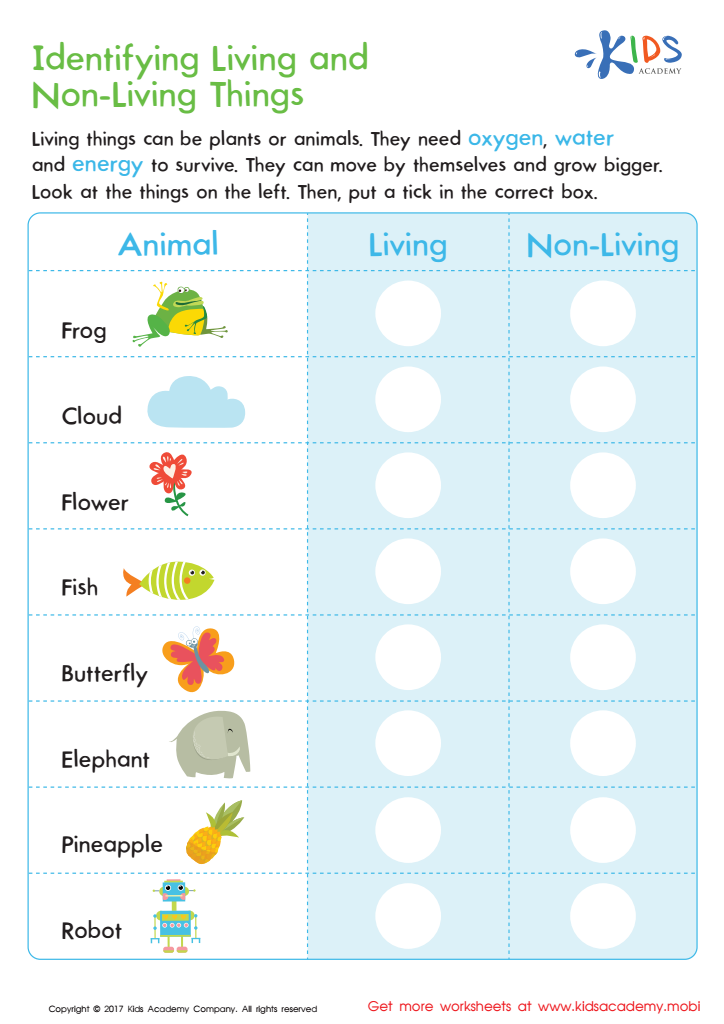
Identifying Living or Non–living Worksheet
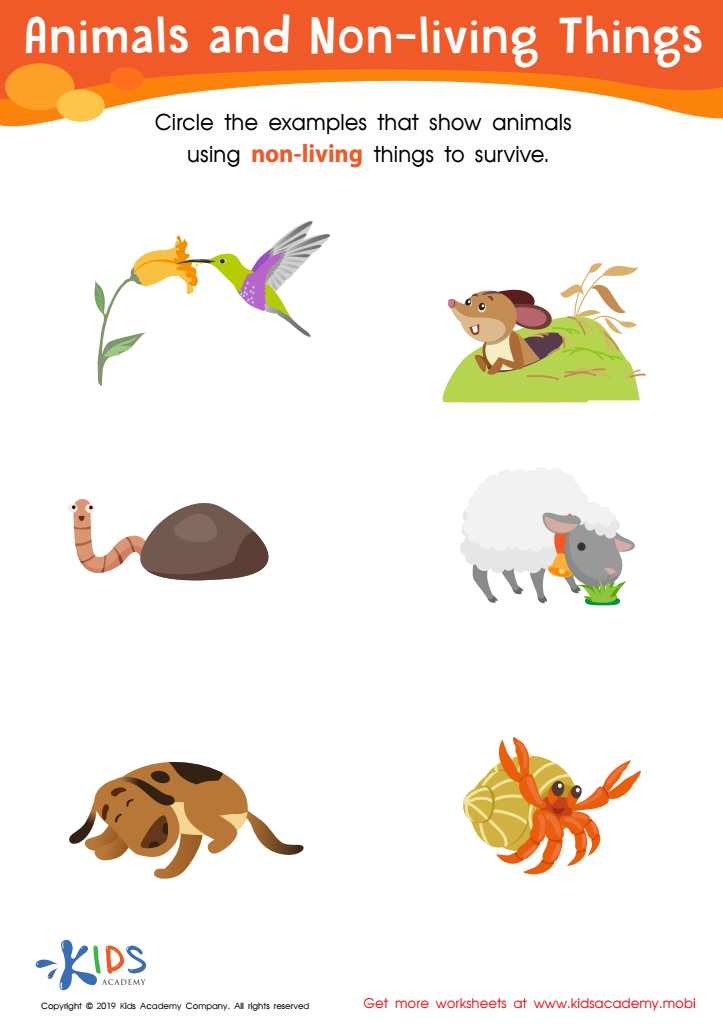
Animals and Non-Living Things Worksheet






Categorization skills are essential for 4-year-olds because they form the foundation for cognitive development and later learning. At this age, children are rapidly learning to understand and organize their world. Categorization helps them make sense of their experiences by grouping objects, ideas, and information into categories based on similarities and differences. This skill enhances their ability to process information efficiently and supports the development of problem-solving techniques.
In science, categorization is particularly significant because it enables young children to observe, compare, and contrast various elements in their environment. For instance, identifying objects that are living versus non-living or sorting animals by characteristics fosters critical thinking and observational skills. Moreover, these activities build vocabulary and language skills as children learn and use new terms associated with different categories.
Parents and teachers play a pivotal role in nurturing these skills by providing engaging and interactive learning experiences. Simple activities, like sorting toys by color, shape, or size, can make learning fun and effective. By emphasizing categorization, adults help children develop logical thinking, attention to detail, and the ability to discern patterns—skills that are not just essential for science, but for all areas of learning and everyday living. Fostered early, these abilities lay the groundwork for academic success and a lifelong love of inquiry and discovery.







