Weather identification Science Worksheets for 4-Year-Olds
5 filtered results
-
From - To
Explore our engaging Weather Identification Science Worksheets designed specifically for 4-year-olds! These printable worksheets provide a fun and interactive way for young learners to familiarize themselves with different weather types, including sunny, rainy, snowy, and windy conditions. Each activity encourages children to observe and identify various weather patterns while enhancing their understanding of the environment. With colorful illustrations and simple prompts, these worksheets are perfect for fostering critical thinking and observational skills. Early childhood educators and parents can easily integrate these resources into learning sessions, making science enjoyable and accessible for young minds. Start your weather exploration today!
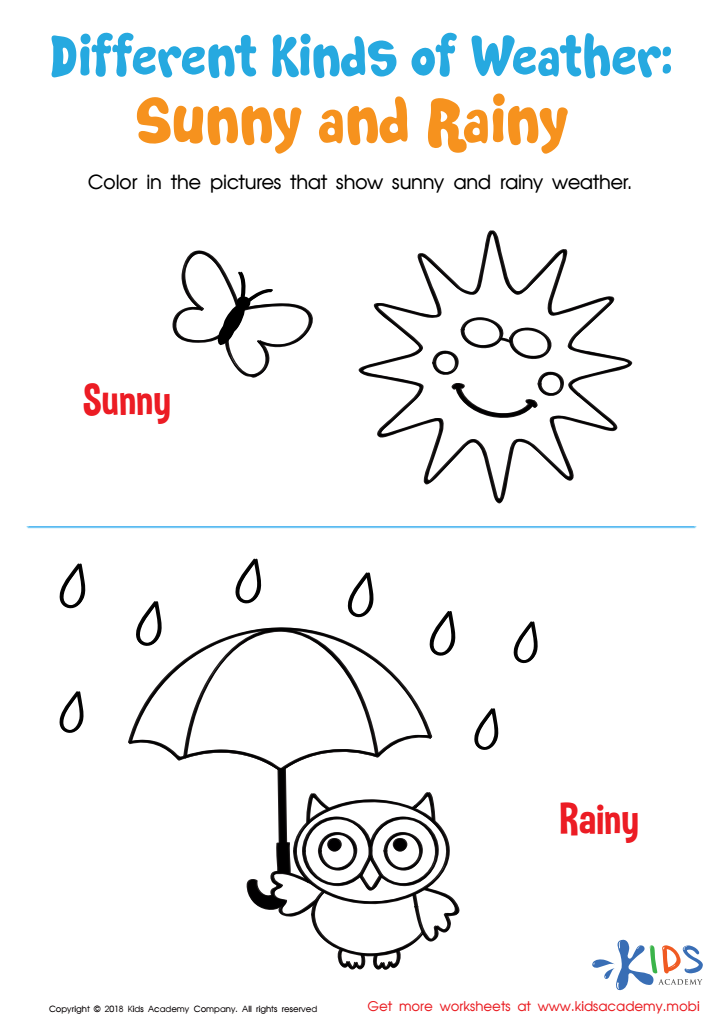
Different Kinds of Weather: Sunny and Rainy Worksheet
 Assign to My Students
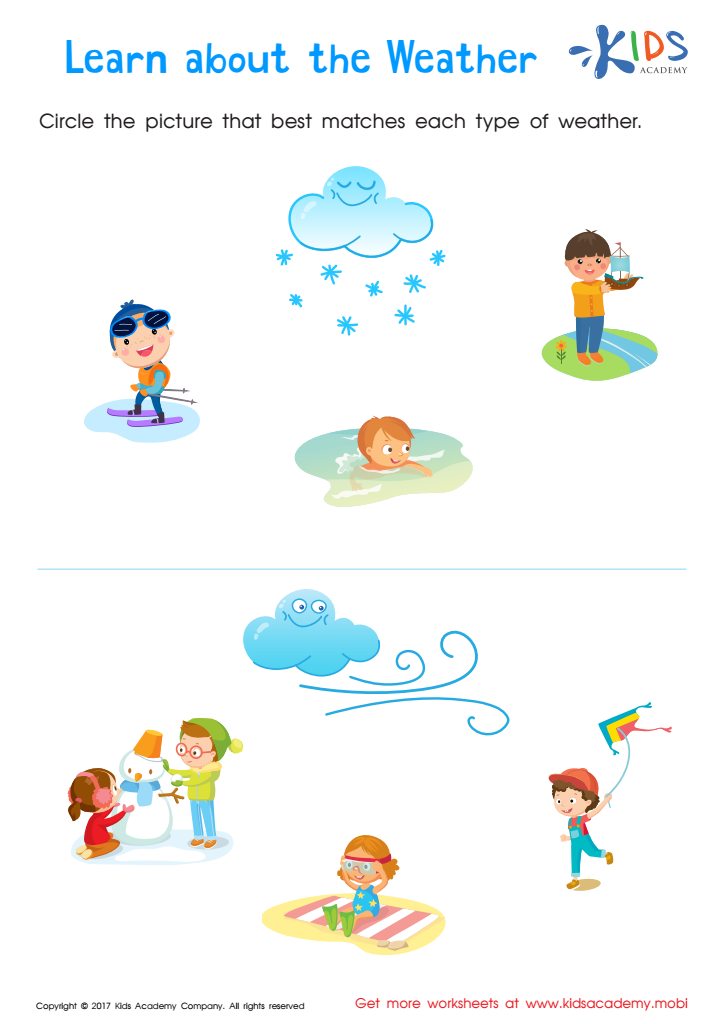
About the Weather Printable
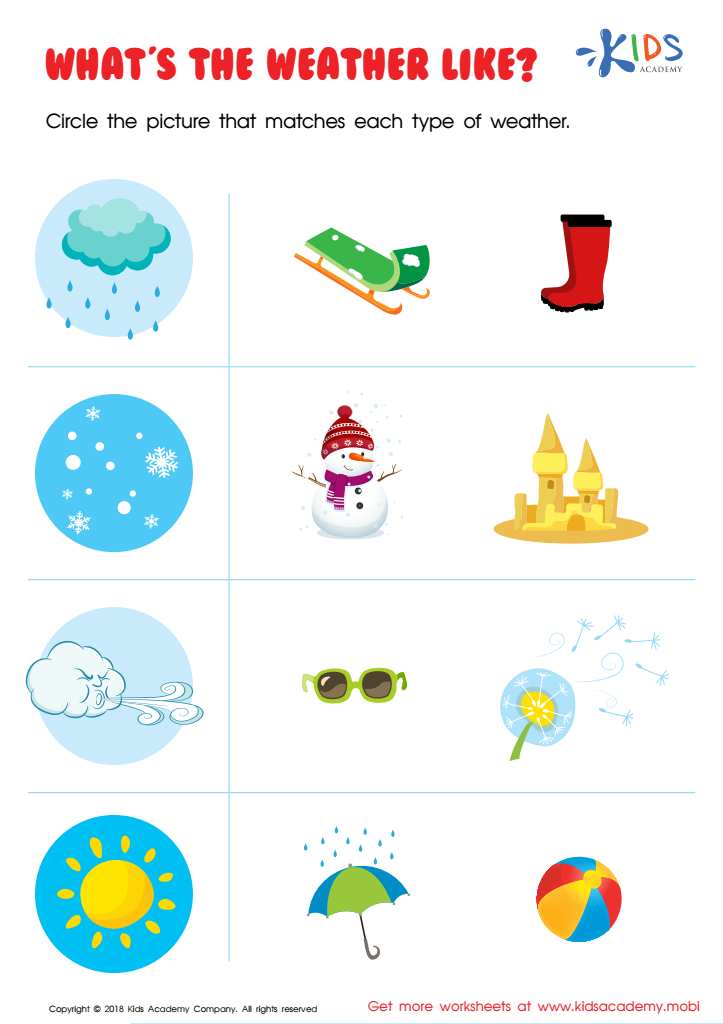
What's the Weather Like? Worksheet
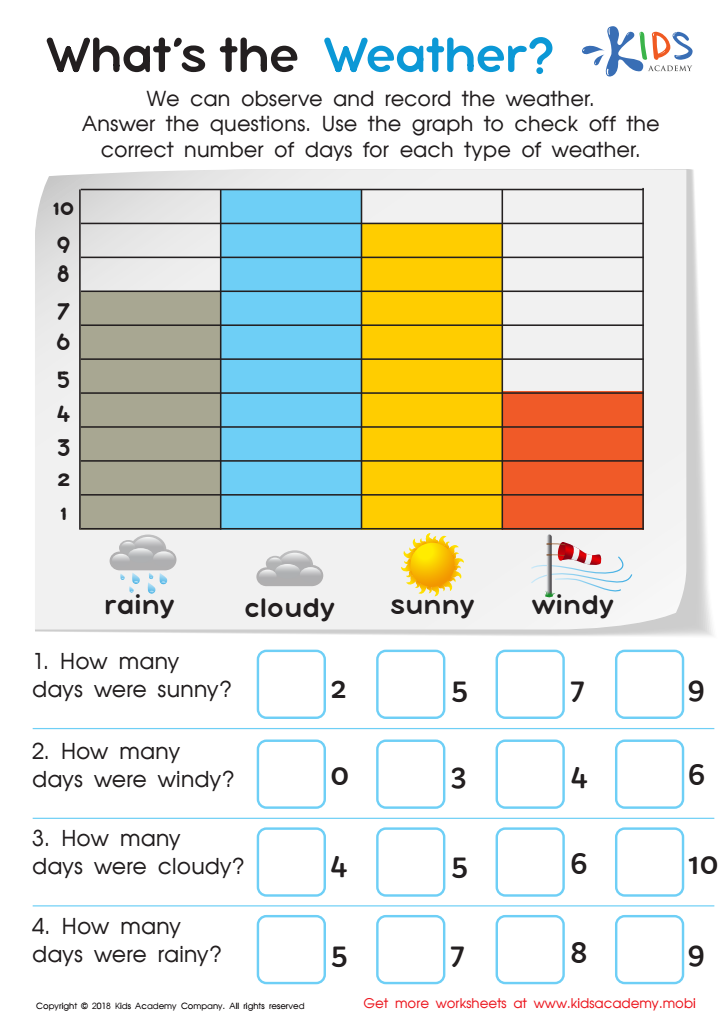
What's the Weather? Worksheet
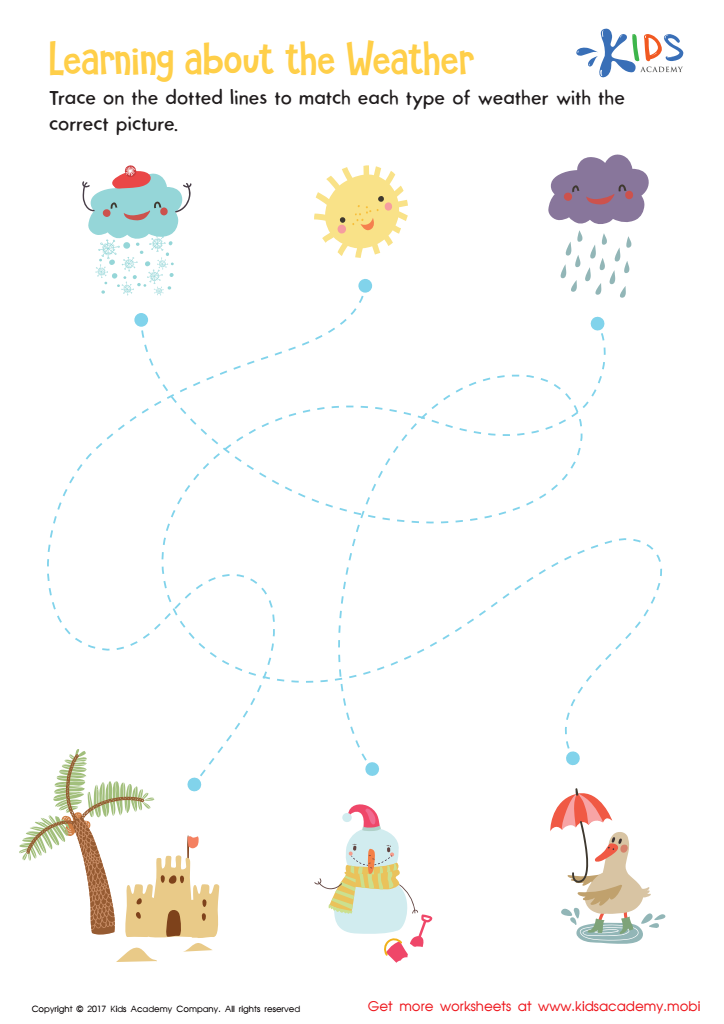







Weather identification science is an essential component of early childhood education that helps 4-year-olds understand their environment. This fundamental knowledge promotes curiosity and exploration, encouraging children to observe and engage with the world around them. By learning about different weather types—sunny, rainy, windy, snowy—children develop essential cognitive skills such as observation, classification, and critical thinking.
Parents and teachers should care about this subject as it lays the foundation for scientific literacy. Through basic weather concepts, children can learn cause-and-effect relationships, fostering their ability to make predictions. Additionally, understanding weather patterns can influence children’s daily activities and choices, promoting independence as they learn to dress appropriately for various conditions.
Incorporating weather education also encourages communication and vocabulary development. Children learn to express their observations and feelings about the weather, enriching their language skills and social interactions. Moreover, awareness of weather can lead to conversations about safety and care for the environment.
Ultimately, fostering a love for science and nature at an early age enhances a child's overall development and sense of belonging in the world, making it a valuable focus for both parents and educators. Building this knowledge can spark lifelong interests in science and environmental stewardship.







