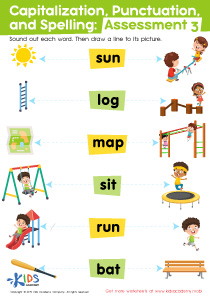
Contextual understanding Writing Worksheets for 4-Year-Olds
3 filtered results
Difficulty Level
Grade
Age
-
From - To
Subject
Activity
Standards
Enhance your 4-year-old's writing skills with our Contextual Understanding Writing Worksheets at Kids Academy. These expertly designed resources make learning to write fun and effective, introducing young learners to essential writing skills through engaging activities and playful scenarios. Providing age-appropriate exercises, the worksheets help children grasp context, improve vocabulary, and develop critical thinking. Perfect for preschoolers, our creative and interactive printables support early literacy and cognitive development, ensuring kids not only learn to write but also understand the meaning and use of words within different contexts. Set your child up for writing success with our enriching worksheets!
Favorites
With answer key
Interactive
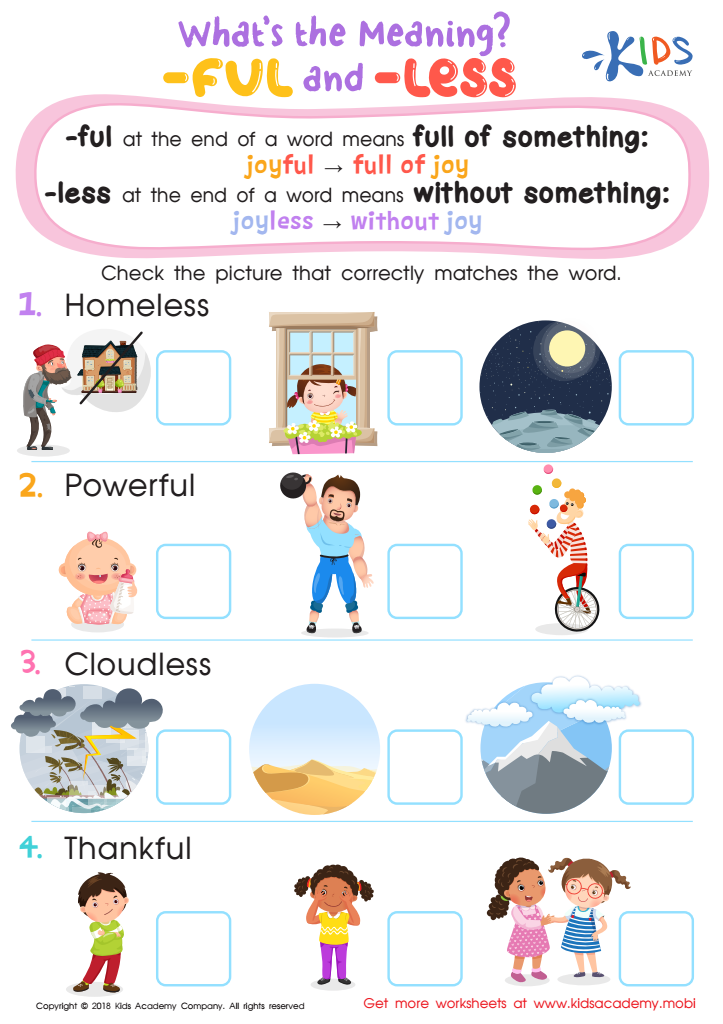
What's the Meaning? Worksheet
Look with your youngster through this colorful worksheet and match the pictures to the words at the top. These words have different meanings due to either a prefix or suffix being added, such as "ful" or "less".
 Assign to My Students
What's the Meaning? Worksheet
Worksheet
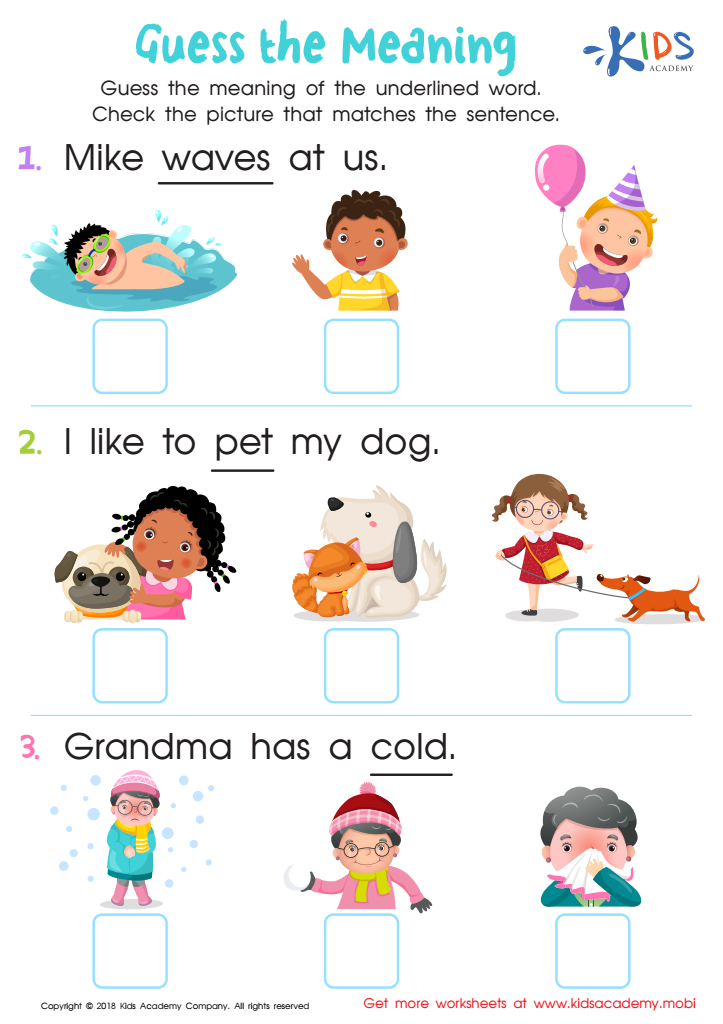
Guess the Meaning Worksheet
Help your child learn the meanings of words in different contexts by using this colourful, free worksheet. What is the meaning of the underlined words in each sentence? Look at the images and pick the one that accurately describes the word's context.
Guess the Meaning Worksheet
Worksheet
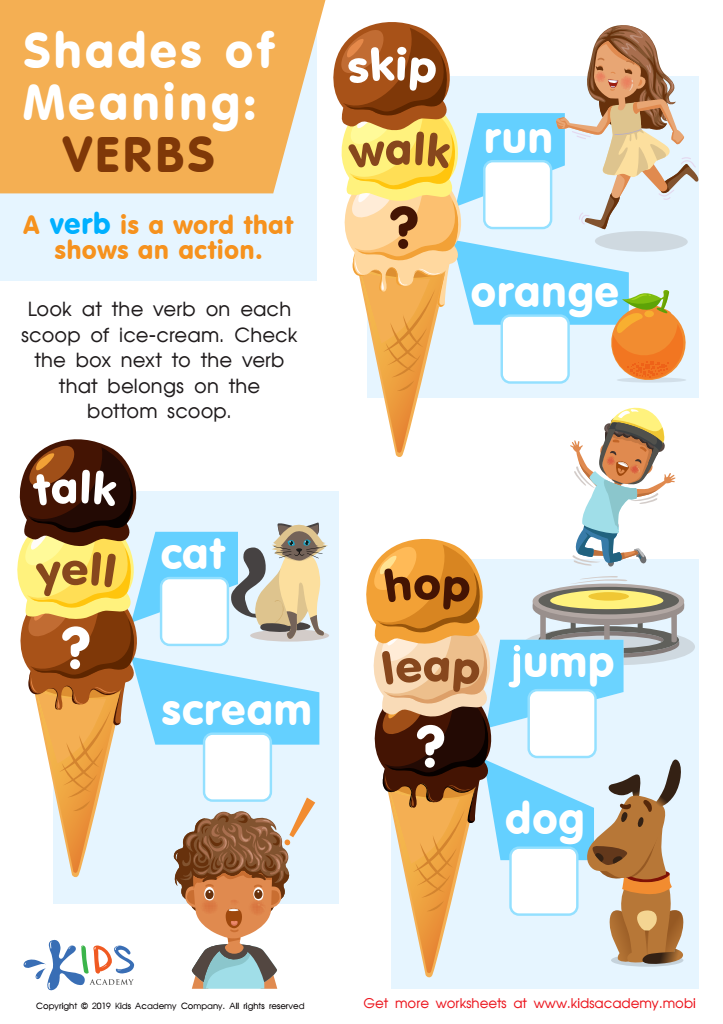
Shades of Meaning: Verbs Worksheet
Verbs are words that show action. Introduce kindergartners to verbs by having them check the box next to the verb that belongs on the bottom scoop in a worksheet. This is a great way to teach them this important part of speech and help them learn to write proper sentences and speak correctly.
Shades of Meaning: Verbs Worksheet
Worksheet
Join Kids Academy for Free
Who is primarily going to use this learning content?








Contextual understanding in writing is essential for 4-year-olds as it fuels cognitive and linguistic development, setting the foundation for future academic success and effective communication. At this age, children begin forming basic language skills, and integrating a contextual approach deepens their comprehension, making learning more meaningful.
By recognizing that words and sentences relate to specific situations and experiences, young children can better grasp the nuances of language. This boosts their ability to express thoughts coherently and understand others. For parents and teachers, fostering contextual understanding helps children connect new vocabulary with everyday activities, enhancing retention and engagement.
Context-rich writing activities promote critical thinking and creativity, allowing children to explore various scenarios and develop problem-solving skills. For instance, writing a story about a family picnic not only involves vocabulary learning but also understanding relationships, sequencing events, and emotional expression.
Moreover, a strong contextual foundation lays the groundwork for social skills. By understanding and using context correctly, children learn appropriate language cues, making interactions smoother and more effective. Parents and teachers should prioritize this as it equips children with the essential tools for lifelong learning, effective communication, and emotional intelligence.