Sentence completion Writing Worksheets for 4-Year-Olds
4 filtered results
-
From - To
Discover our engaging Sentence Completion Writing Worksheets designed especially for 4-year-olds! These printable worksheets from Kids Academy are tailored to boost early writing and reading skills. They encourage young learners to use their creativity and practice sentence structure, grammar, and vocabulary. With colorful illustrations and fun themes, these activities make learning exciting and accessible. Perfect for preschool and kindergarten children, our worksheets help develop essential literacy skills through hands-on practice. Foster a love for language and build a strong foundation in writing with our expertly crafted sentence completion exercises. Start your child’s educational journey today with Kids Academy!
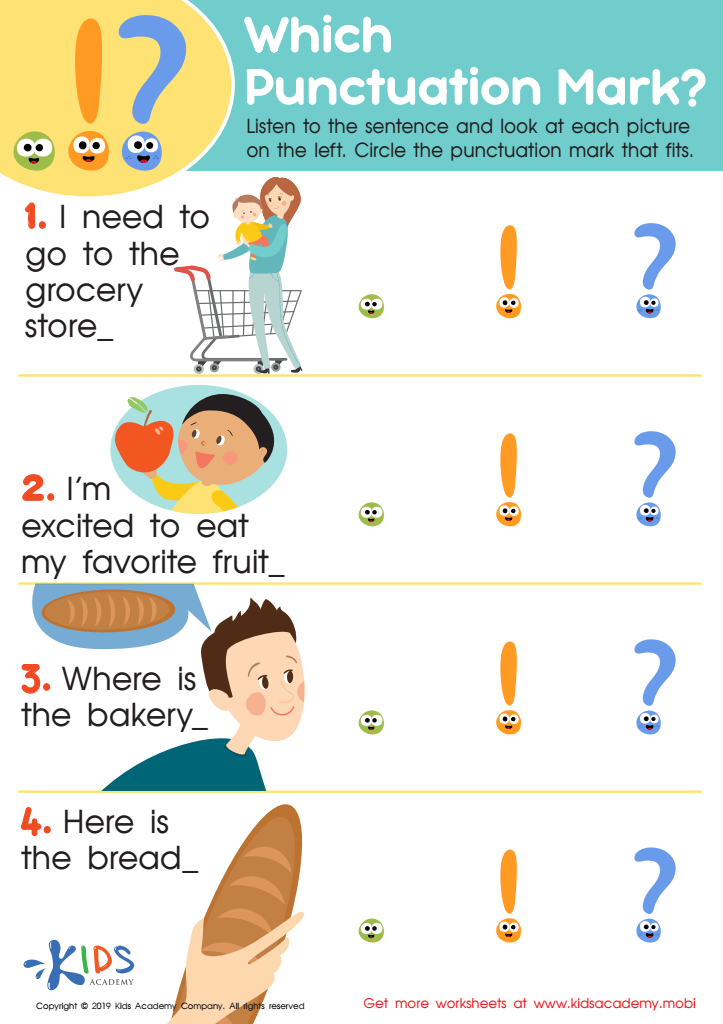
Which Punctuation Mark Worksheet
 Assign to My Students
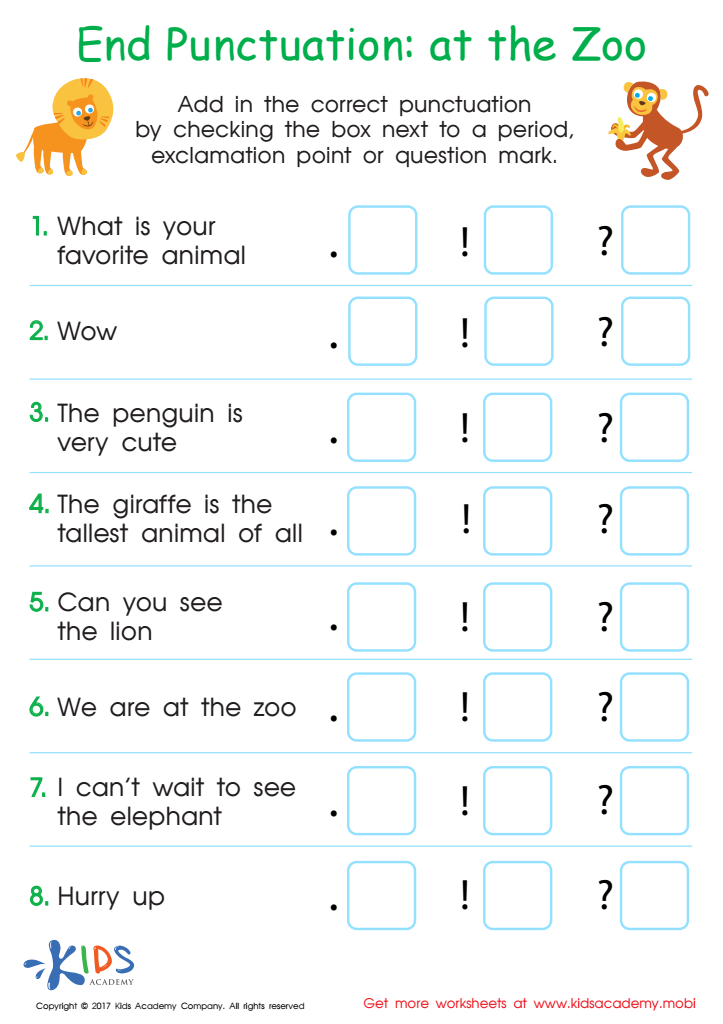
End Punctuation: At the Zoo Worksheet
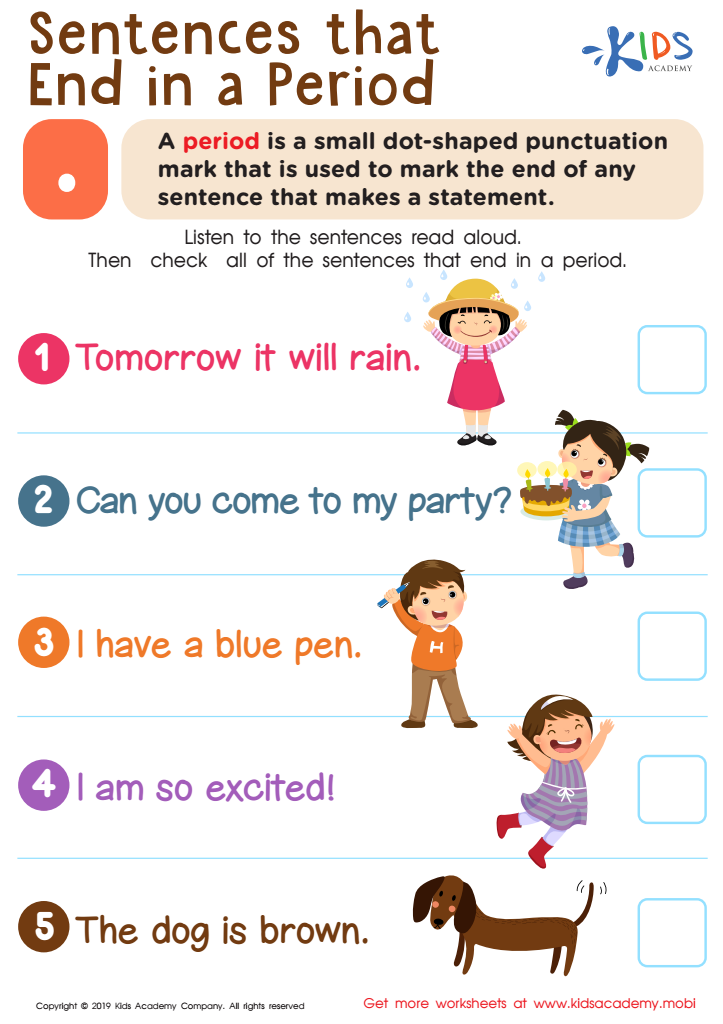
Sentences That End in a Period Worksheet
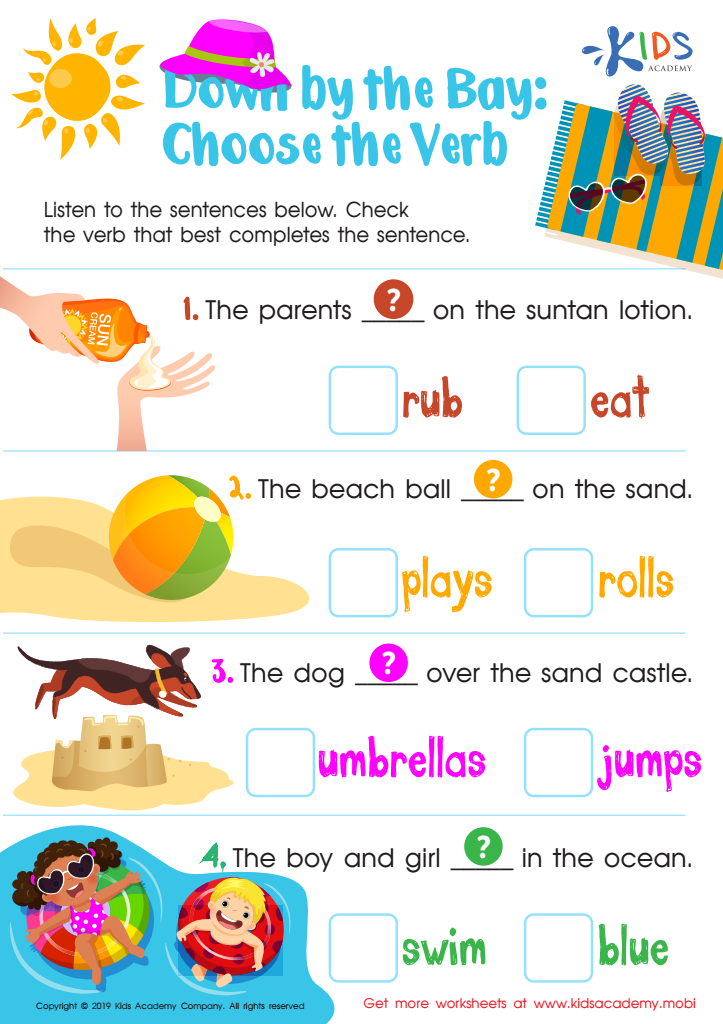
Down by the Bay: Choose the Verb Worksheet








Sentence completion activities are essential for 4-year-olds and benefit their language development and cognitive growth in many ways. At this stage, children are expanding their vocabulary and learning fundamental rules of grammar. Sentence completion helps them practice word usage and sentence structure. This activity encourages them to think critically about which words fit in particular contexts, thus bolstering their problem-solving abilities.
Moreover, sentence completion exercises foster better comprehension and listening skills. When a teacher or parent begins a sentence, the child must listen attentively to understand it fully and supply a suitable ending. This practice also promotes conversational skills, as the child learns to form coherent and contextually appropriate responses.
Another significant benefit is the enhancement of fine motor skills if the activity involves writing, as young children practice holding pencils and forming letters. It instills a sense of accomplishment and confidence when children correctly complete a sentence, encouraging a positive attitude toward learning.
Socially and emotionally, these tasks offer opportunities for interaction, collaboration, and shared learning experiences. They prepare children for more complex language and writing tasks in school settings, fostering a solid language foundation crucial for future academic success. Therefore, parents and teachers should embrace sentence completion activities as an enriching component of early childhood education.








