
Alphabet sequencing Alphabet Worksheets for Ages 5-6
8 filtered results
Difficulty Level
Grade
Age
-
From - To
Subject
Activity
Standards
Discover engaging Alphabet Sequencing Worksheets designed specifically for children aged 5-6! Our user-friendly resources help young learners master letter order while enhancing their fine motor skills and cognitive development. Each worksheet features colorful illustrations and interactive activities that make learning the alphabet fun and effective. As kids practice sequencing letters, they boost their reading readiness and spelling skills. Perfect for both classroom use and home practice, these worksheets cater to diverse learning styles and ensure an enjoyable educational experience. Dive into the world of letters and watch your child's confidence flourish with our thoughtfully crafted alphabet sequencing materials!
Favorites
With answer key
Interactive
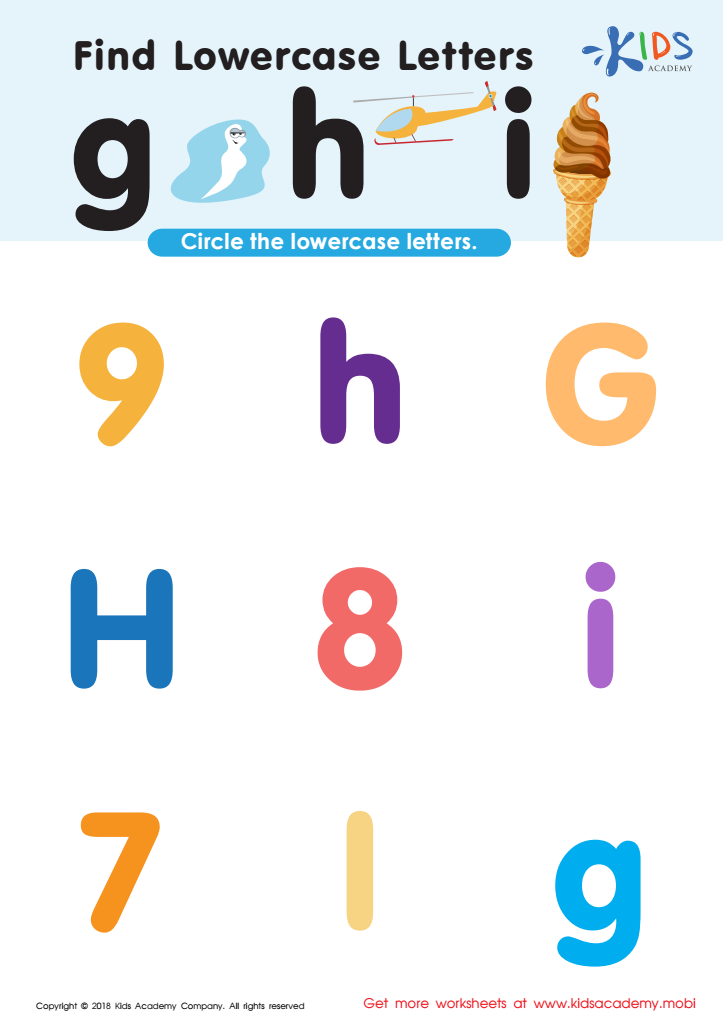
Find Lowercase Letters g h i Worksheet
Turn learning into a fun journey with your child! Use this free worksheet to find and circle the lowercase letters hidden amongst uppercase letters and numbers. Your child will understand what you're teaching them as they enjoy the search.
 Assign to My Students
Find Lowercase Letters g h i Worksheet
Worksheet
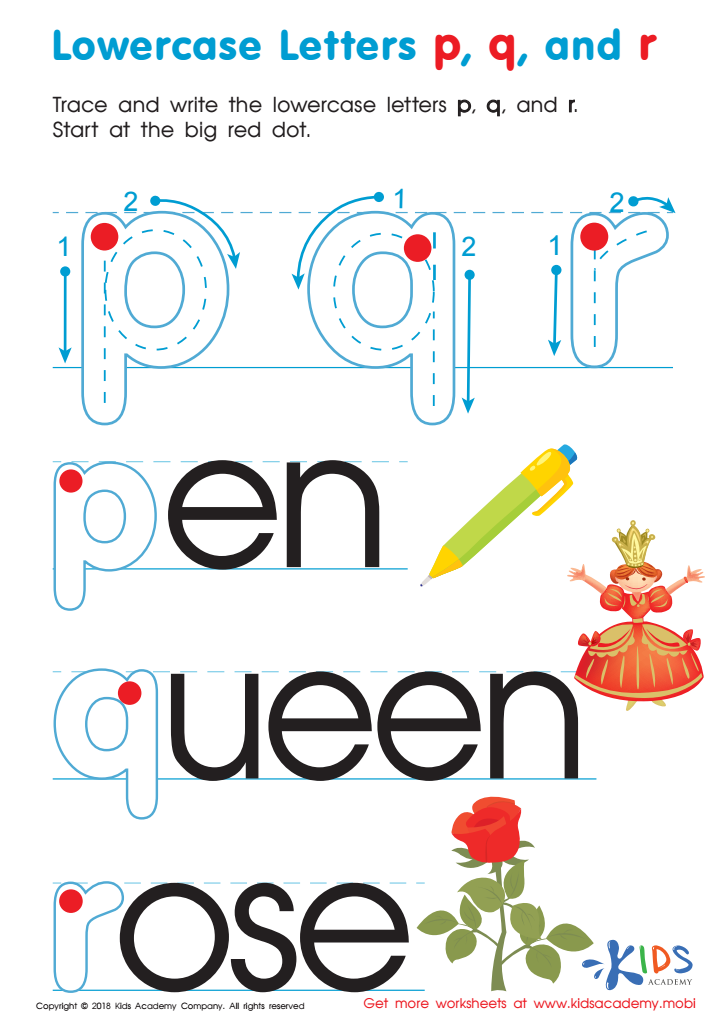
Lowercase Letters p q r Worksheet
Trace and write lowercase letters p, q and r with this fun worksheet. Each letter has a large red dot to mark the start, and dotted lines to follow with a pencil. Colorful images and text make it an enjoyable way to learn.
Lowercase Letters p q r Worksheet
Worksheet
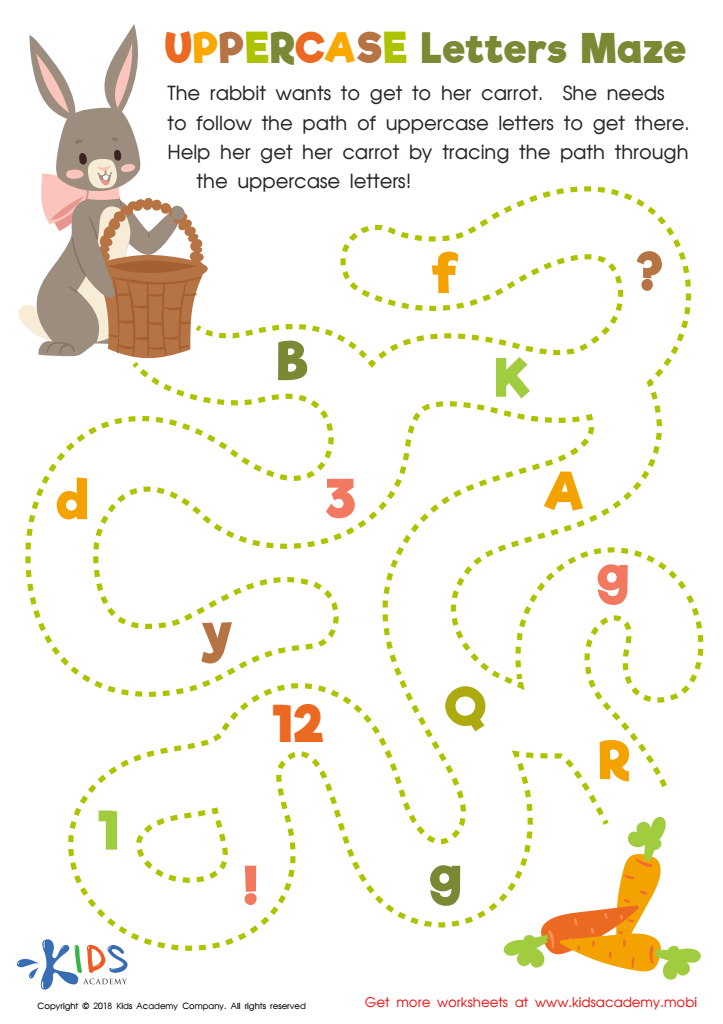
Uppercase Letters Maze Worksheet
Kids can have fun helping a rabbit find her carrot by picking the path with uppercase letters. This worksheet teaches letter differentiation while building confidence. Kids will have a great time while getting an essential skill!
Uppercase Letters Maze Worksheet
Worksheet
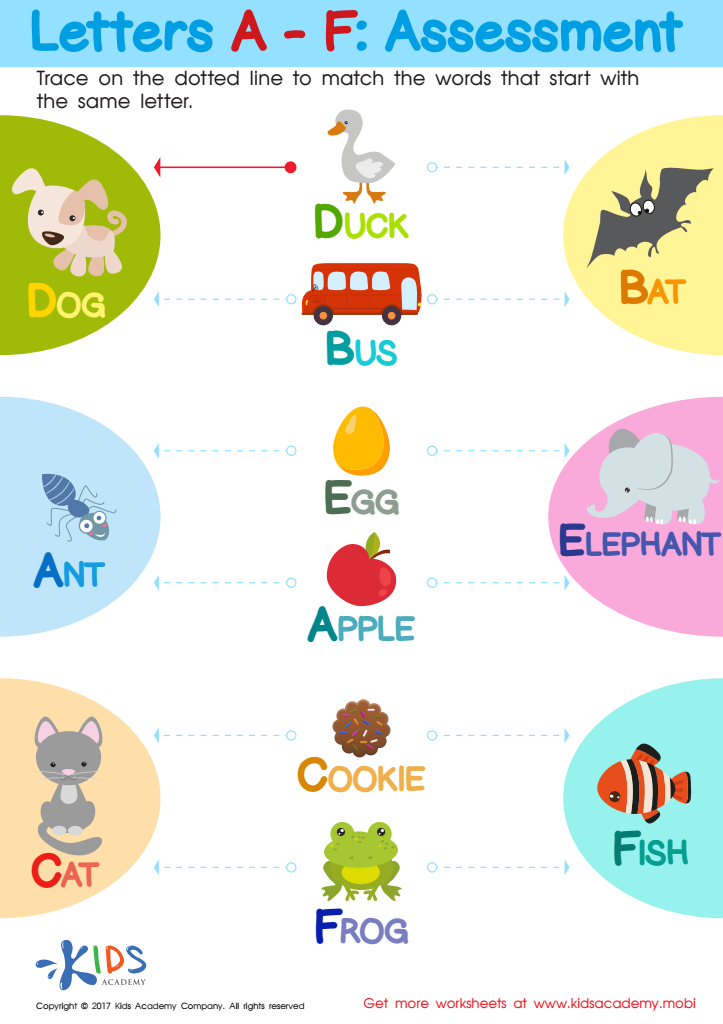
Letters A - F Worksheet
Help your child develop their reading skills with this fun phonics worksheet aimed at preschoolers. They can match letters A-F using colorful words and pictures. Assist your child by sounding out the letters and words - it's a great way to learn!
Letters A - F Worksheet
Worksheet

Lowercase Letters j k l Worksheet
Teach your child the difference between uppercase and lowercase letters. Have them trace and write the lowercase letters j, k, and l, starting at the red dot. Guide your child's hand to form the letters correctly.
Lowercase Letters j k l Worksheet
Worksheet
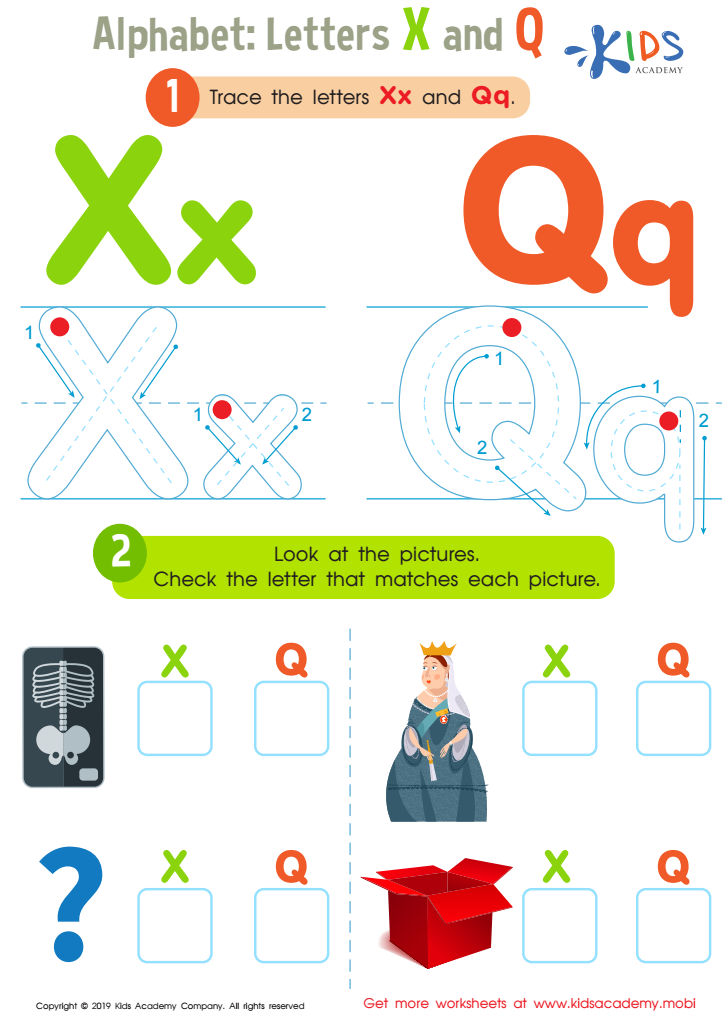
Letters X and Q Tracing Worksheet
Do you want your students to improve writing and letter recognition? This worksheet is a great place to start! Kids can trace the letters «X» and «Q» and identify pictures that match each letter. With a little encouragement, they'll do a great job!
Letters X and Q Tracing Worksheet
Worksheet
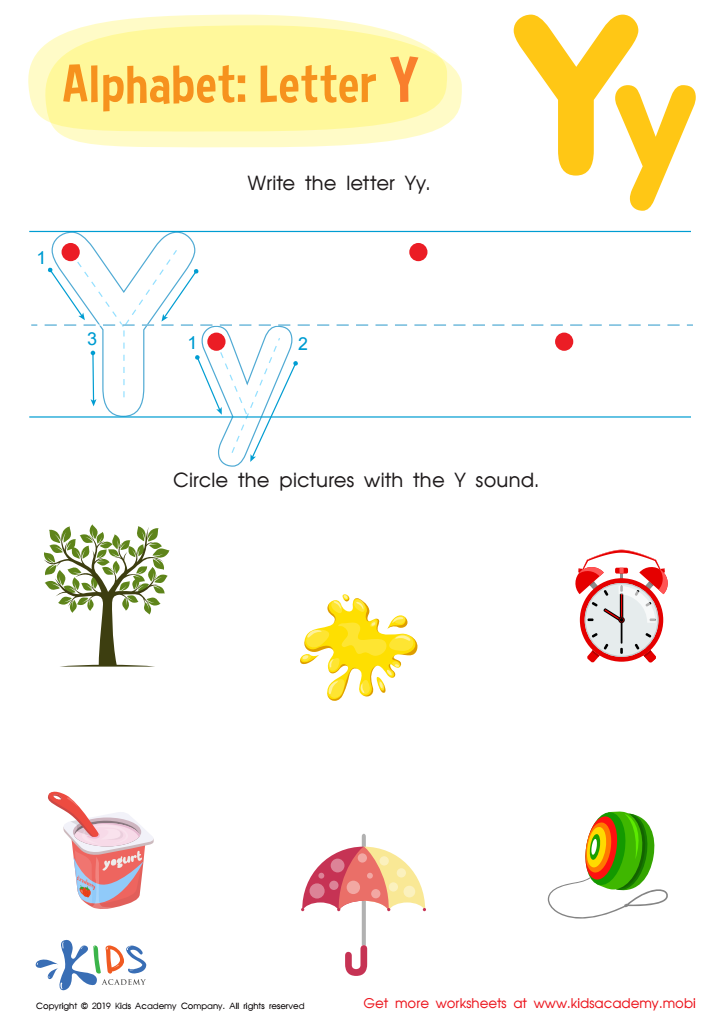
Letter Y Tracing Worksheet
Does your child need help with learning the final letters of the alphabet? This PDF worksheet is perfect then! Kids can practice tracing the letter «Y» and circle pictures that start with the same sound. Options include «yellow» and «yogurt». It's a great way of honing their letter-learning skills.
Letter Y Tracing Worksheet
Worksheet
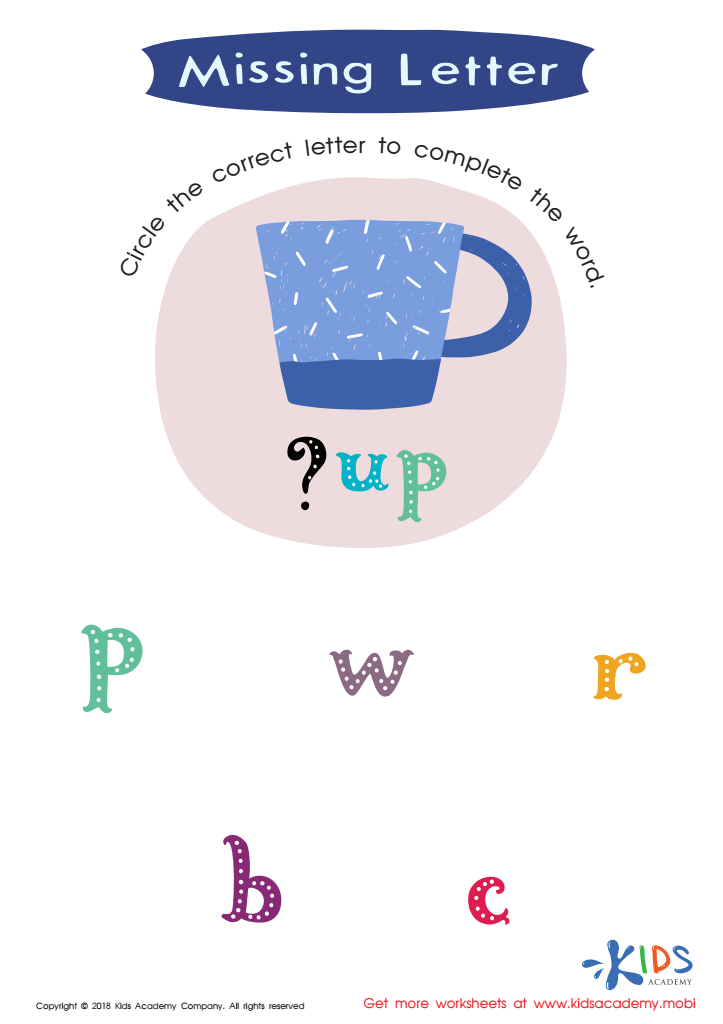
Missing Letter Worksheet
Congrats! If your kids can spell some small words, pat yourself on the back. Struggling with the alphabet? Help them learn with this simple worksheet. They'll have to find the missing letter to complete the word. Print this worksheet and help your little one find and circle the right letter.
Missing Letter Worksheet
Worksheet
Join Kids Academy for Free
Who is primarily going to use this learning content?






Alphabet sequencing is a crucial element in early literacy development, particularly for children aged 5-6. At this stage, children are typically beginning to familiarize themselves with letters and sounds, forming the foundation for reading and writing skills. Teachers and parents should care about alphabet sequencing because it directly impacts a child's ability to decode words. Understanding the correct sequence not only helps children identify letters more easily but also enhances their phonemic awareness, which is vital for language development.
Furthermore, mastering the alphabet's order aids in developing essential organizational skills. Children learn to categorize information and separate letters from alphabet sets effectively, which is beneficial for both literacy and math activities. Moreover, a solid grasp of the sequencing leads to increased confidence as children progress through literacy tasks, fostering a positive attitude toward learning.
Additionally, incorporating fun activities like songs, games, and crafts can make learning the alphabet enjoyable, strengthening the parent-teacher bond. When parents and teachers collaborate in reinforcing alphabet sequencing at this early stage, they set a strong groundwork for a child’s academic success, ultimately nurturing a lifelong love for learning.







