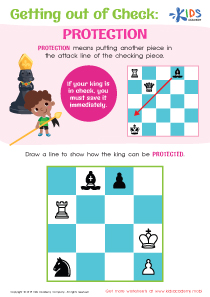
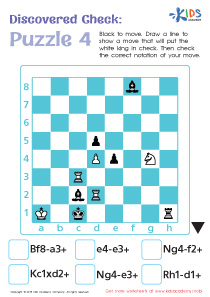
Strategic thinking development Chess Worksheets for Ages 5-6
10 filtered results
-
From - To
Enhance your child's strategic thinking with our engaging Chess Worksheets designed for Ages 5-6. These worksheets introduce kids to the fundamentals of chess, promoting problem-solving skills, patience, and foresight. Each activity is thoughtfully crafted to suit young minds, turning learning into an exciting adventure. By practicing with these worksheets, children will develop crucial cognitive abilities that extend beyond the game, fostering improved concentration, memory, and logical thinking. Encourage your child's growth with our fun, educational chess exercises and watch them excel in strategic thinking and beyond. Start your little one's journey to mastering chess today!
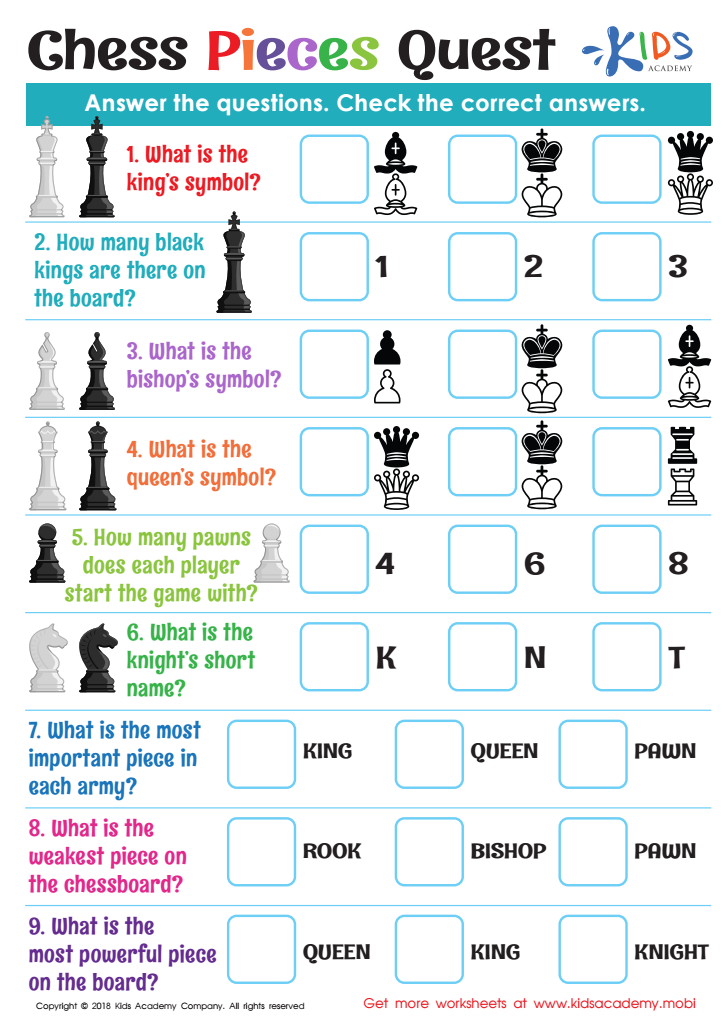
Chess Pieces Quest Worksheet
 Assign to My Students
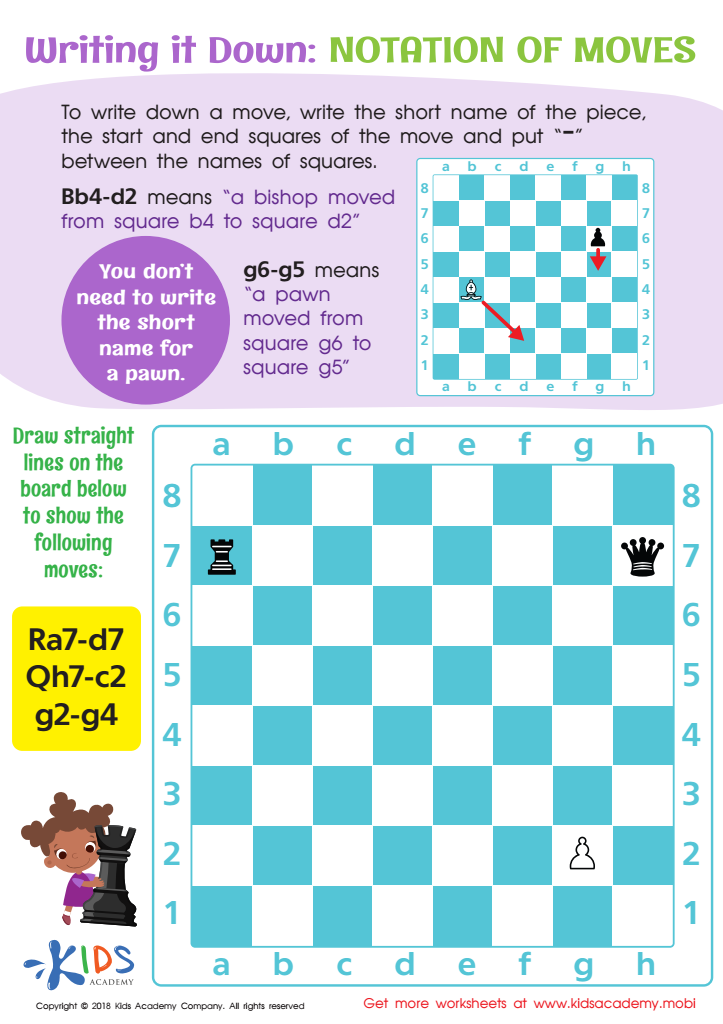
Notation of Moves Writing it Down Worksheet
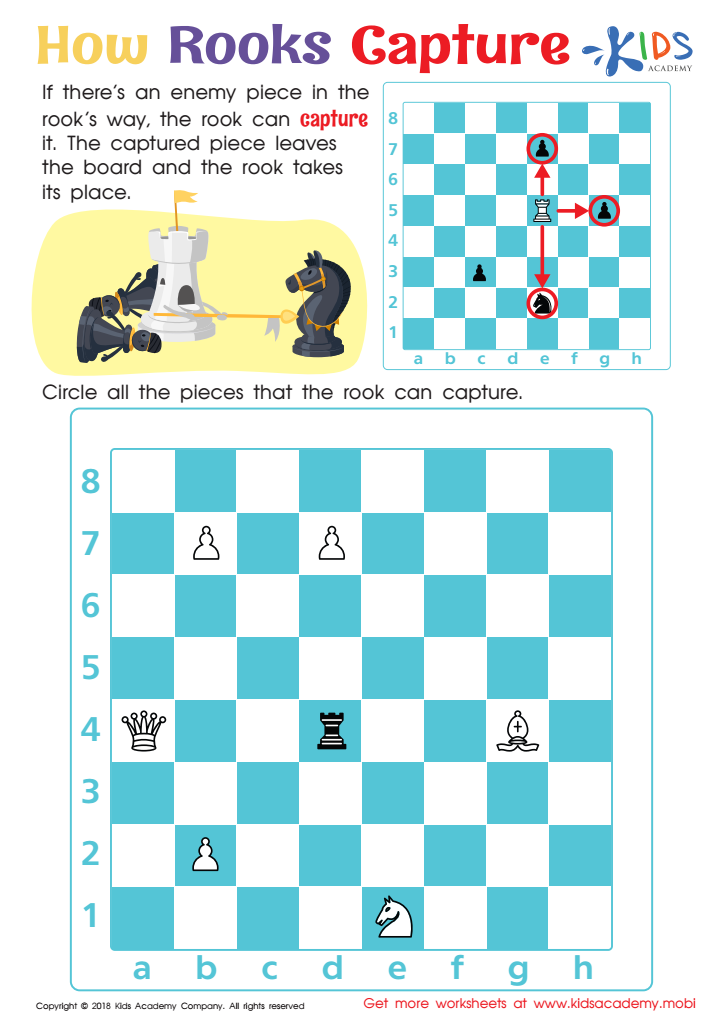
How Rooks Capture Worksheet
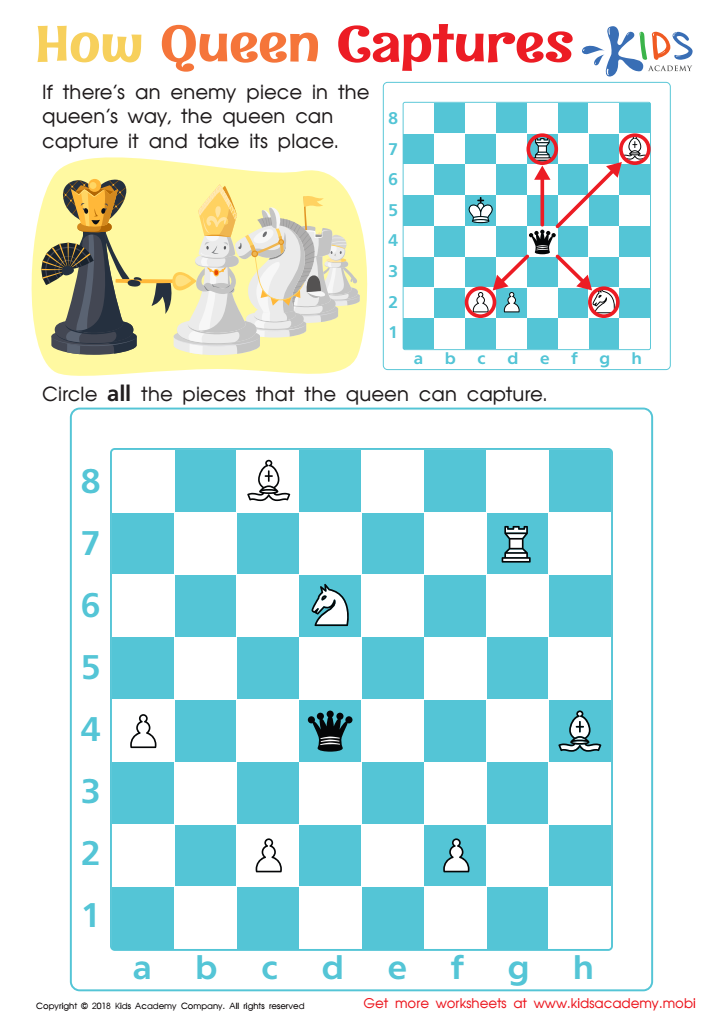
How Queen Captures Worksheet
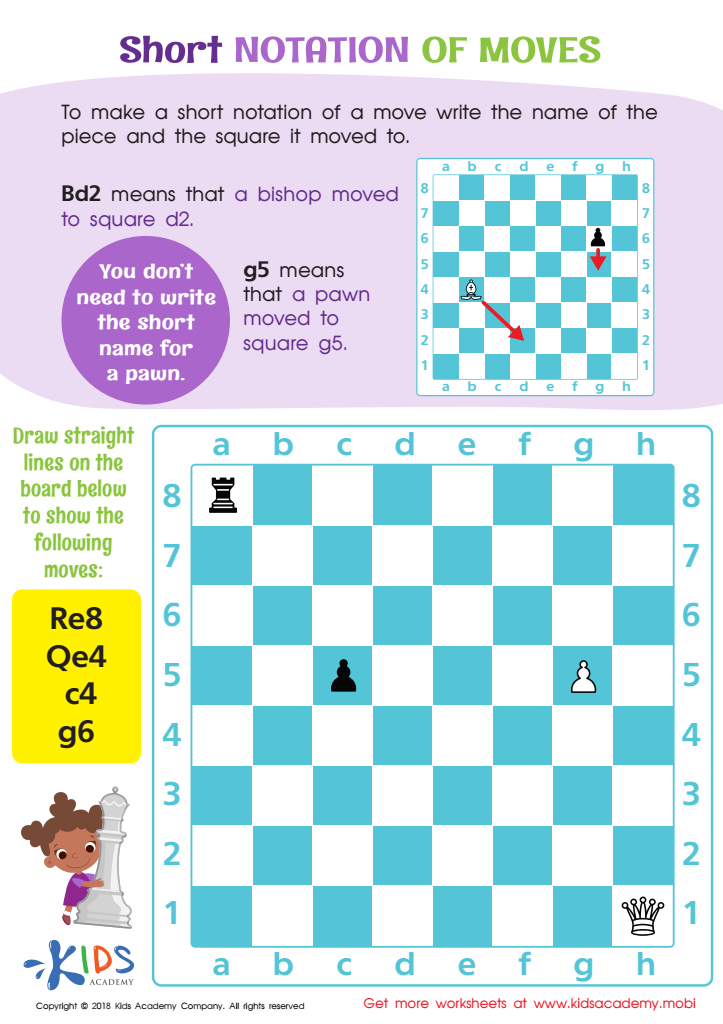
Short Notation of Moves Worksheet
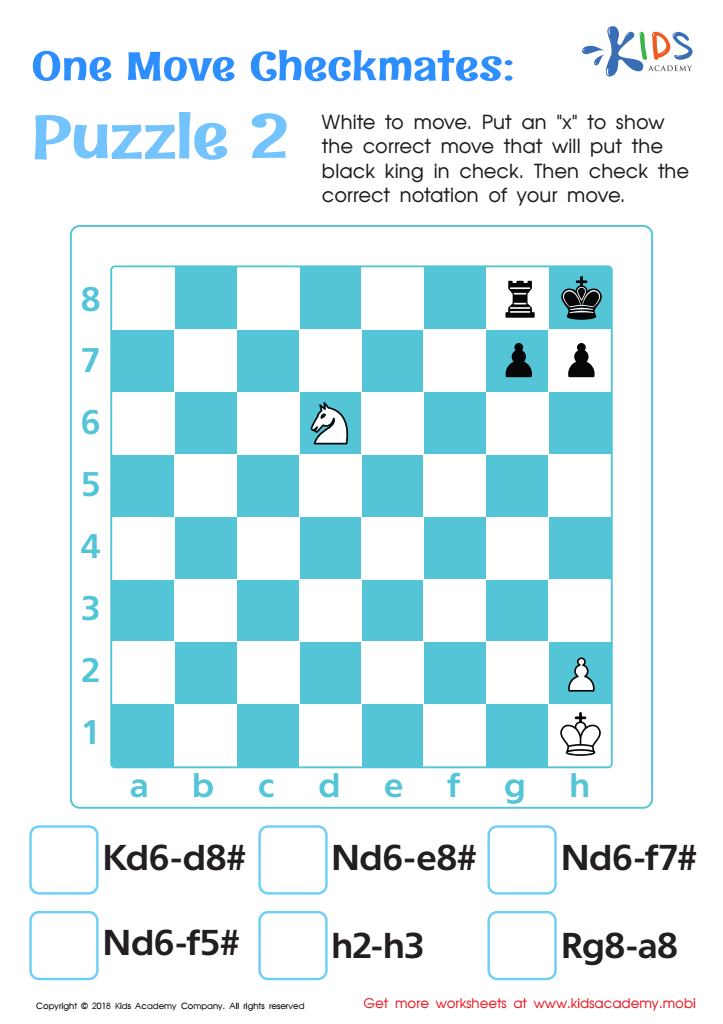
One Move Checkmates: Puzzle 2 Worksheet
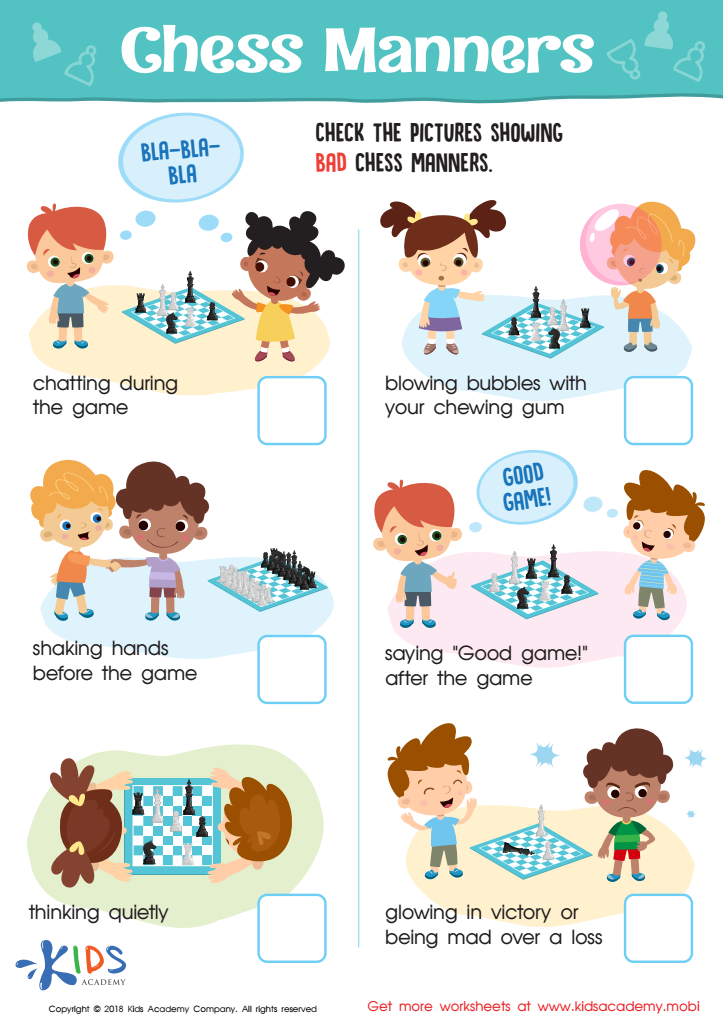
Chess Manners Worksheet
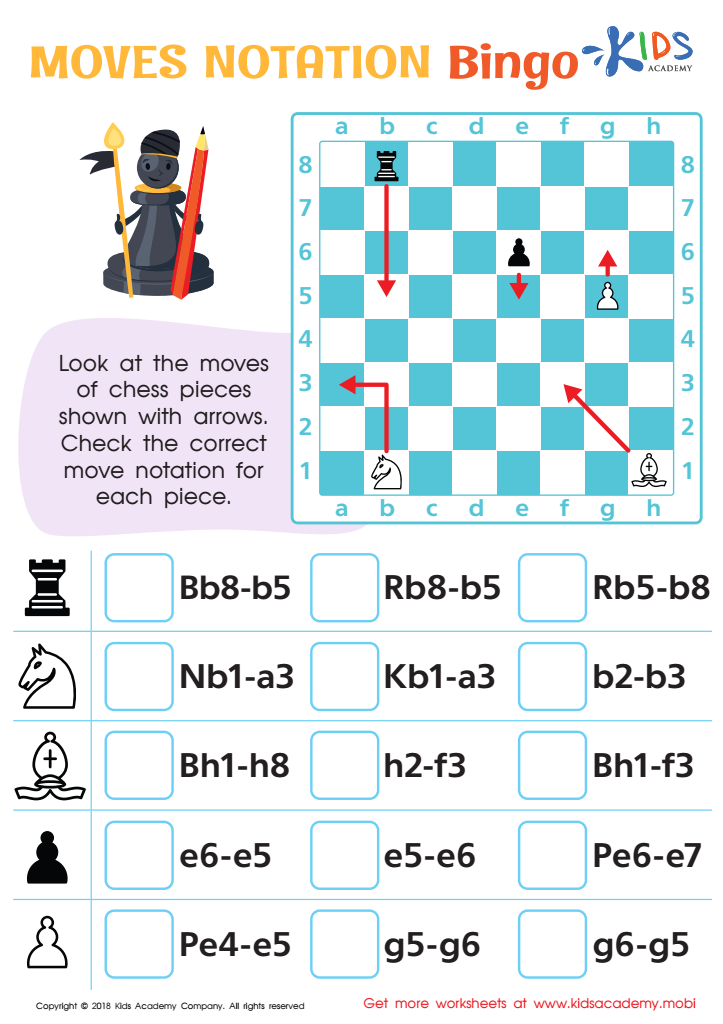
Moves Notation Bingo Worksheet
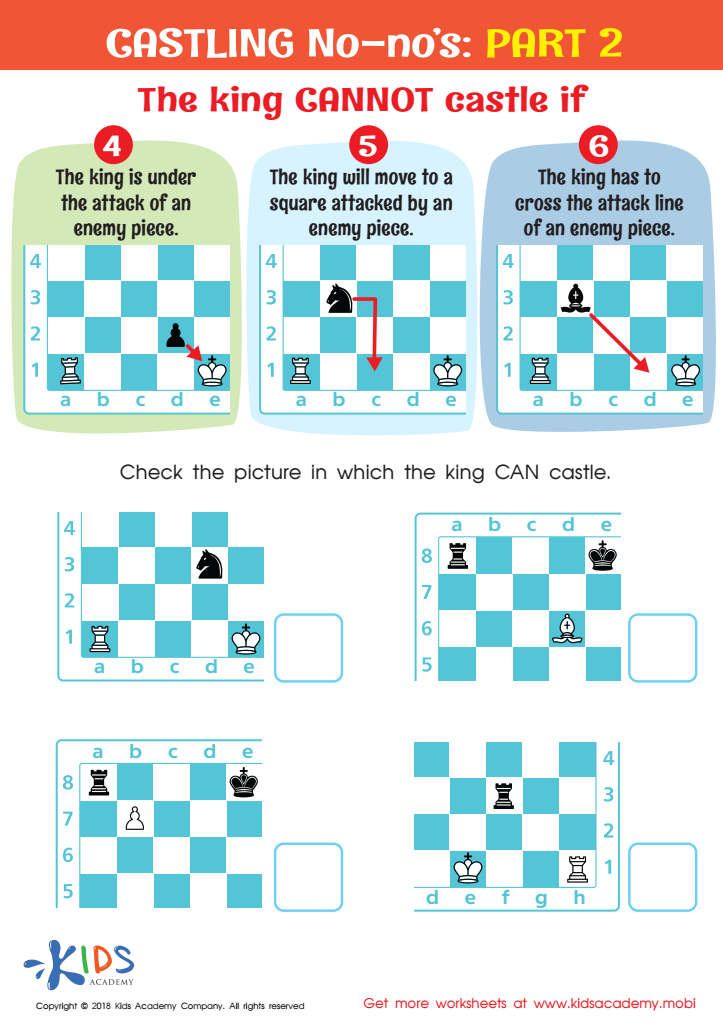
Castling No - no's: Part 2 Worksheet
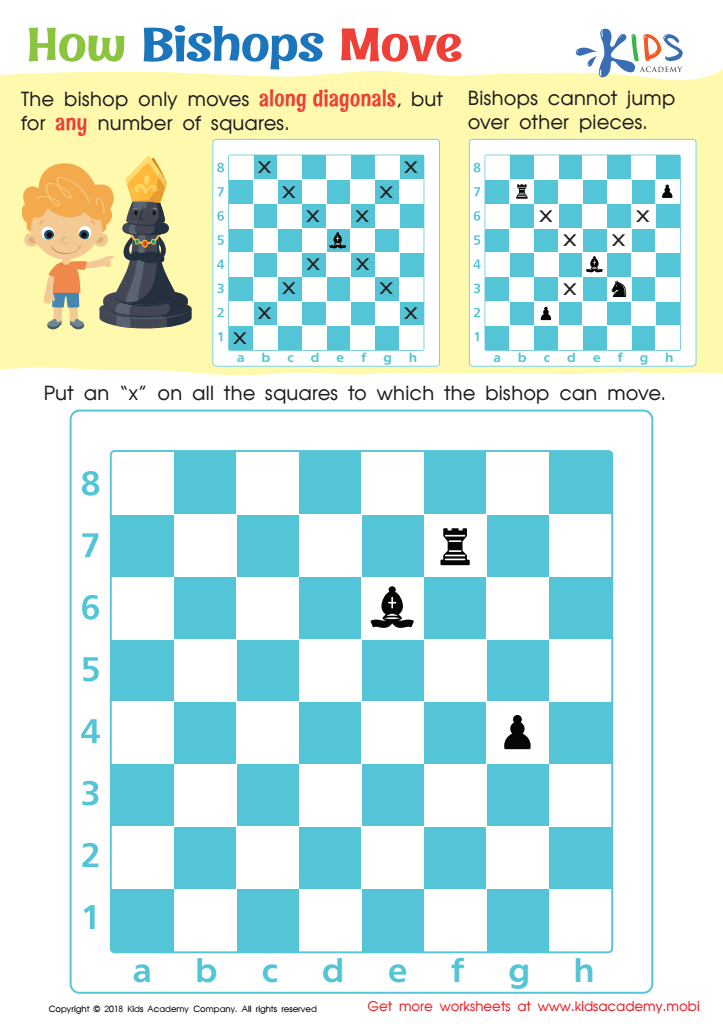
How Bishops Move Worksheet




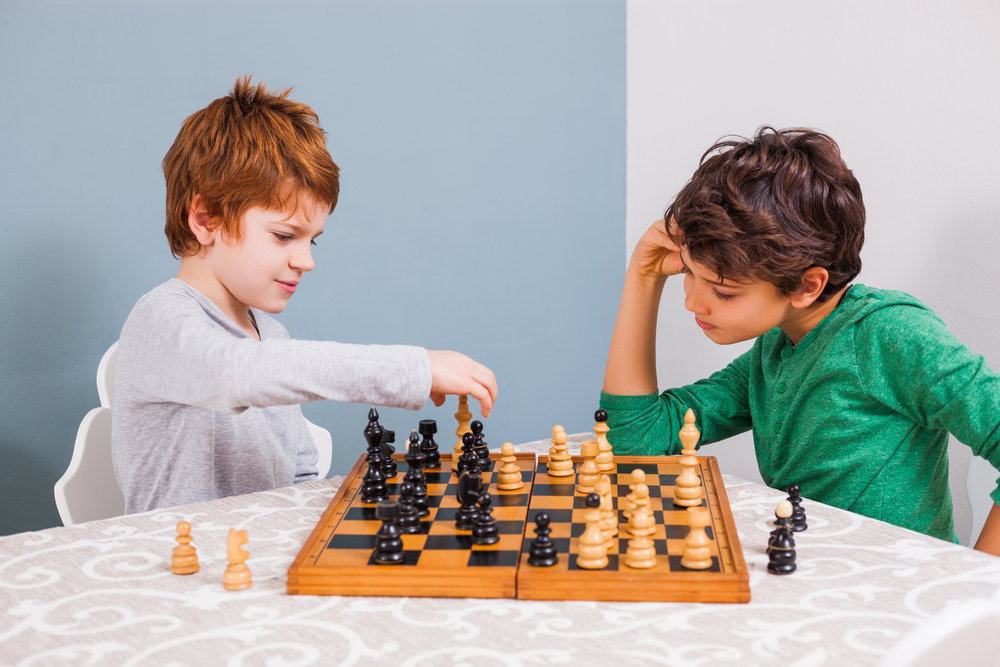


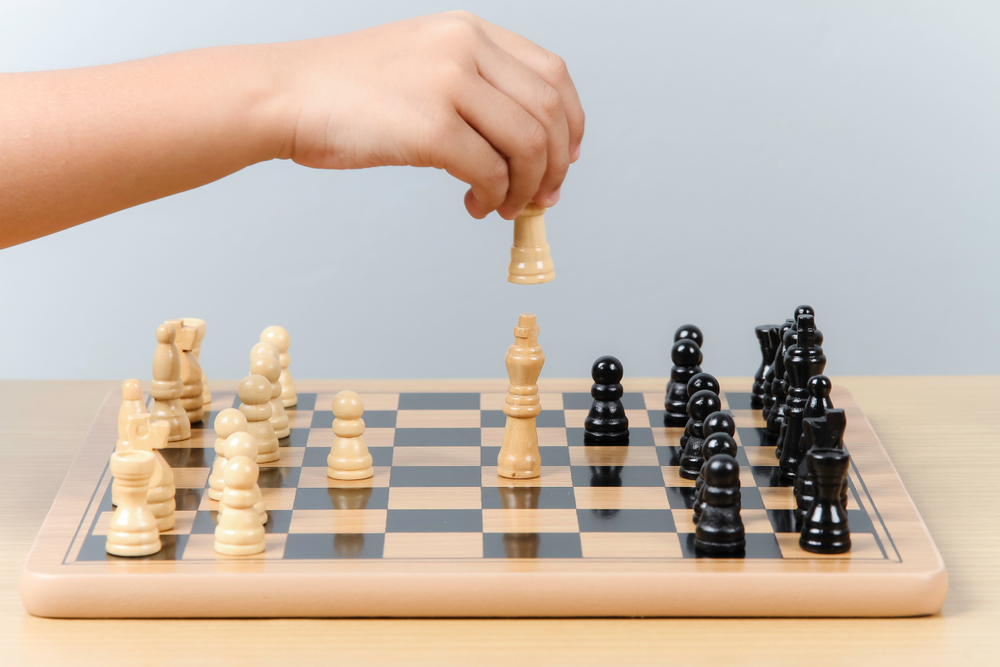
Strategic thinking development through chess is crucial for young minds aged 5-6 because it provides a multitude of cognitive and developmental benefits. At this age, children's brains are exceptionally malleable and capable of rapid growth, which makes it the perfect time to introduce them to activities that enhance higher-order thinking skills.
First, chess teaches patience and the value of thinking ahead before making a move. This is crucial for developing foresight and planning skills that are beneficial in academic settings and everyday life. Children learn to weigh options, predict outcomes, and understand consequences, which bolsters their problem-solving proficiency.
Secondly, playing chess enhances memory and concentration. The game requires participants to remember the rules, the moves, and the playing style of their opponents. This engages and strengthens both short-term and long-term memory capabilities.
Additionally, chess fosters emotional intelligence by teaching children to handle victory and defeat gracefully, promoting sportsmanship and resilience.
Lastly, through chess, children develop fine motor skills and hand-eye coordination as they maneuver the pieces across the board. Overall, introducing chess to 5-6-year-olds cultivates a well-rounded skill set that will aid in their academic journey and personal growth, making it a beneficial activity for parents and teachers to prioritize.