Addition skills Worksheets for Ages 5-6 - Page 2
116 filtered results
-
From - To
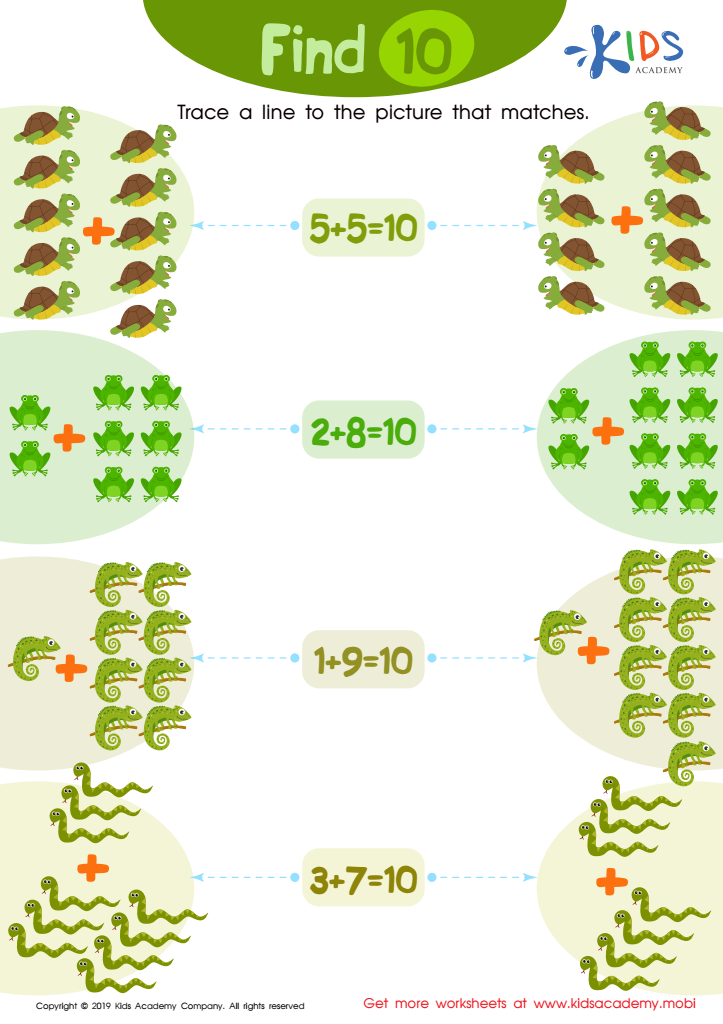
Find 10 Worksheet
 Assign to My Students
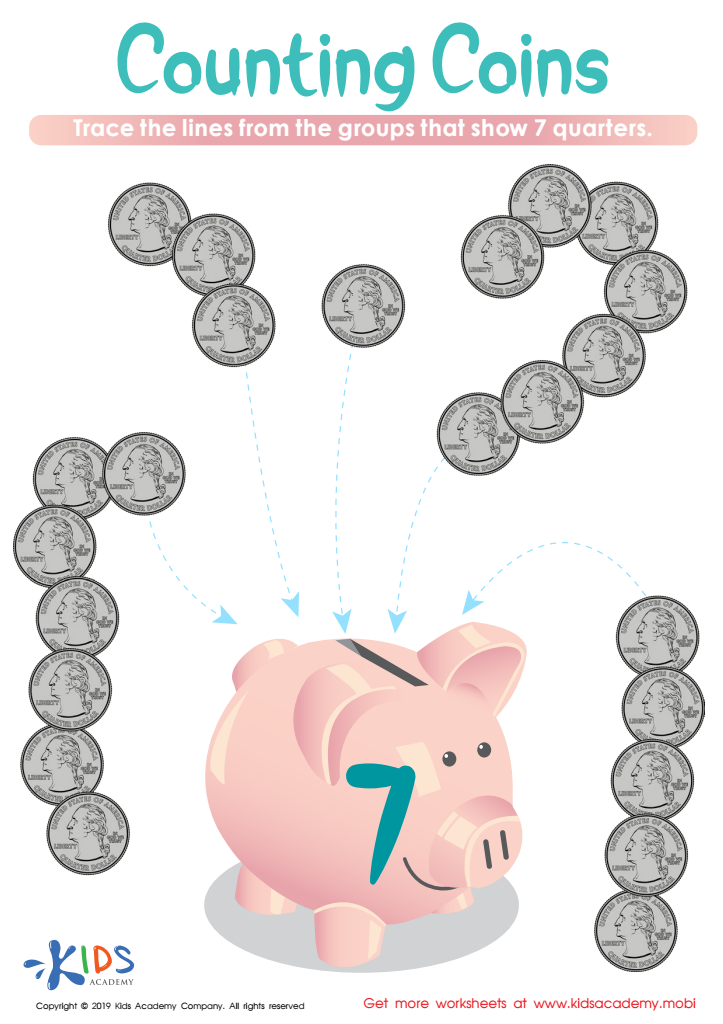
Counting Coins Worksheet
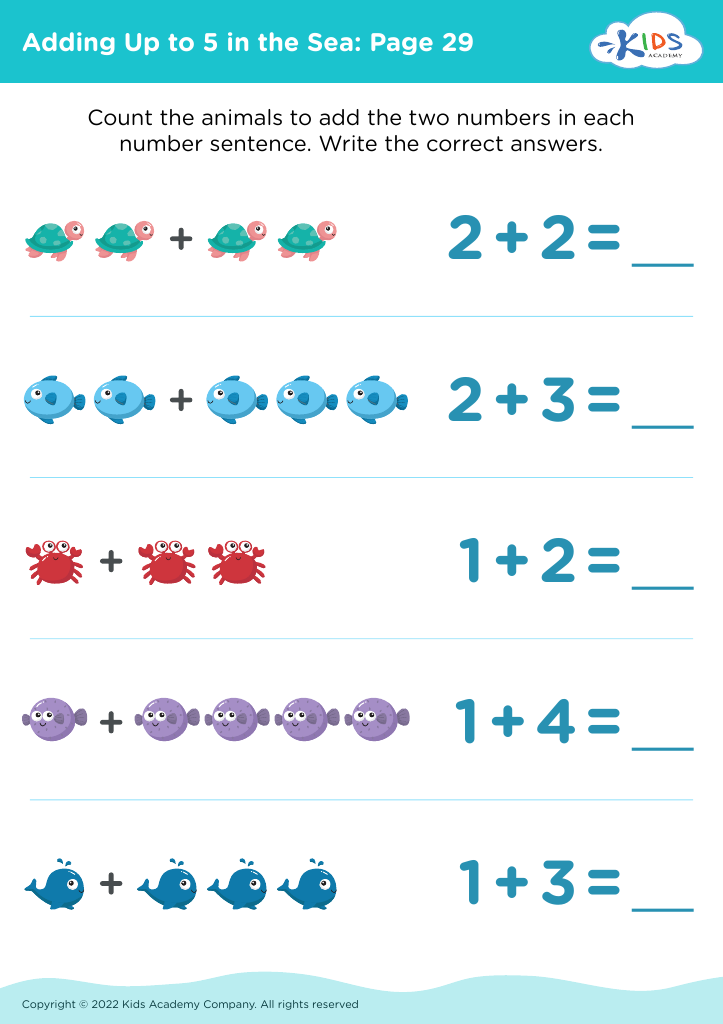
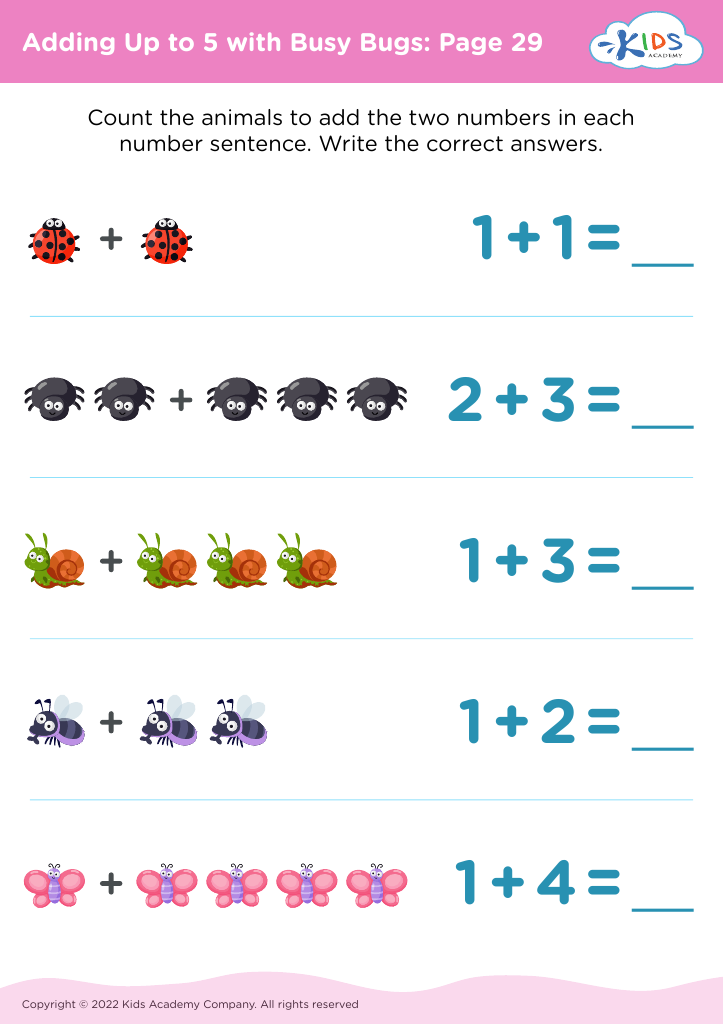
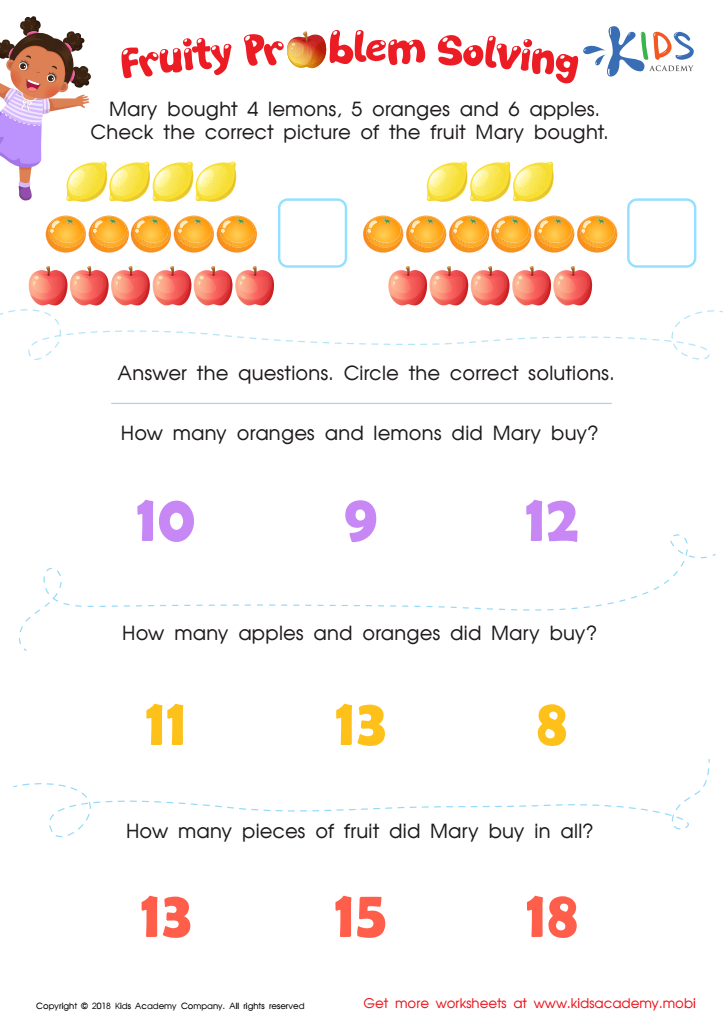
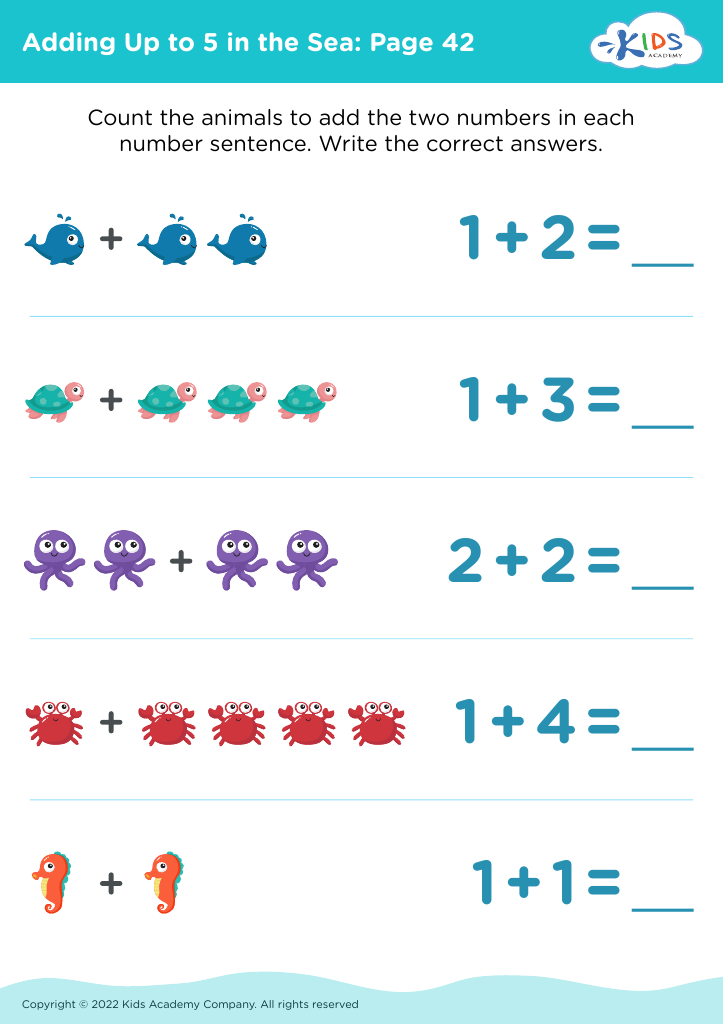
Fruity Problem Solving Worksheet
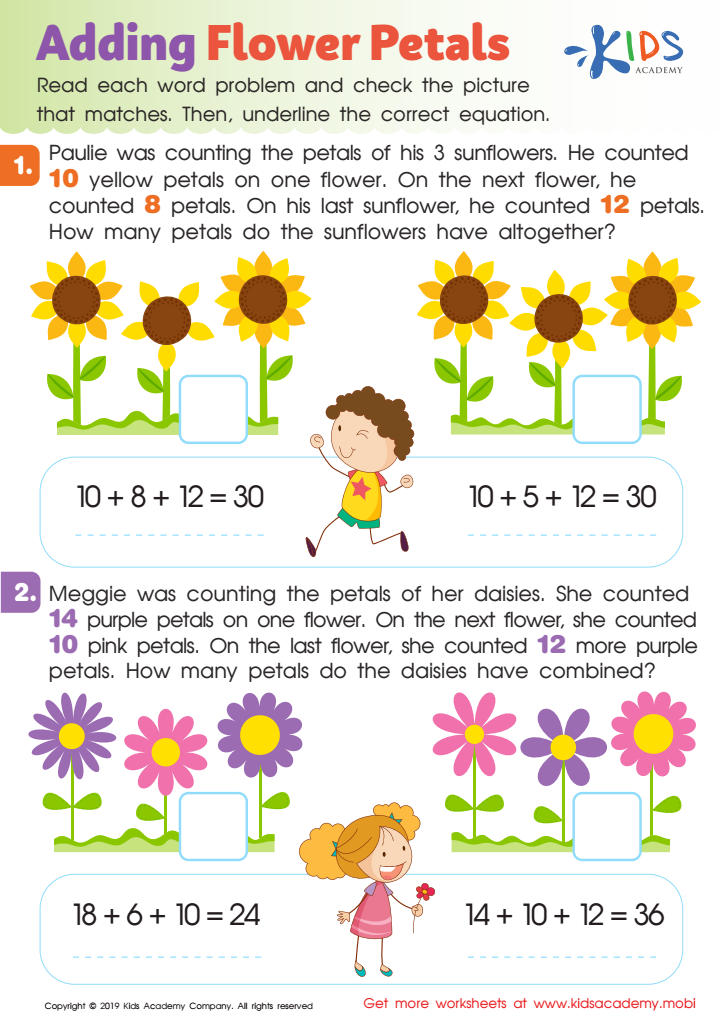
Adding Flower Petals Worksheet
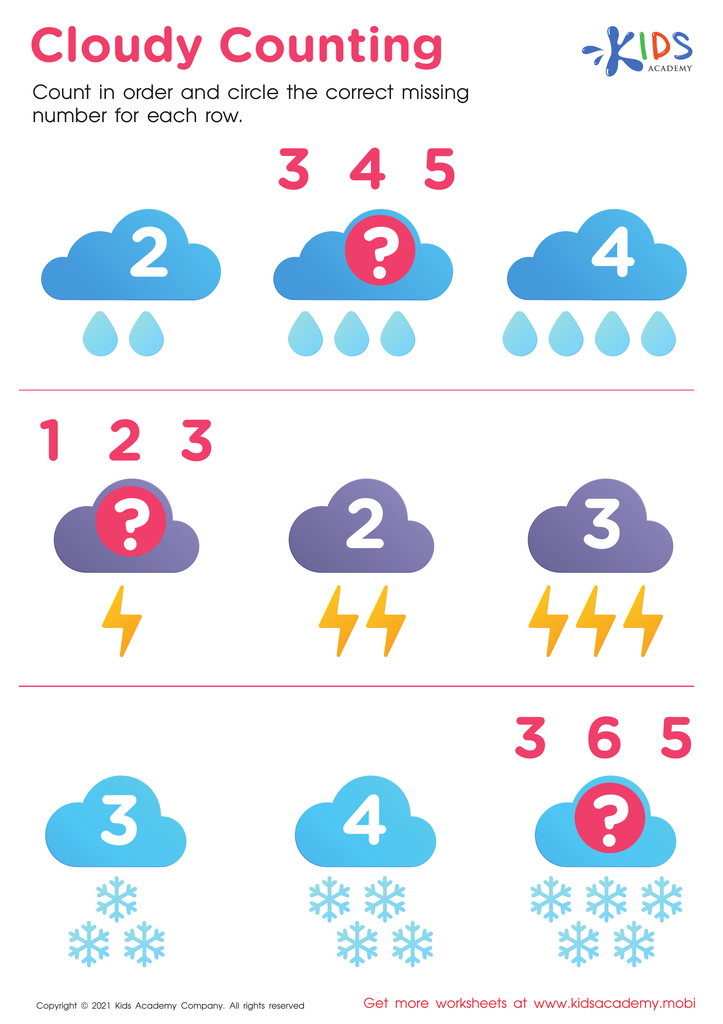
Cloudy Counting Worksheet
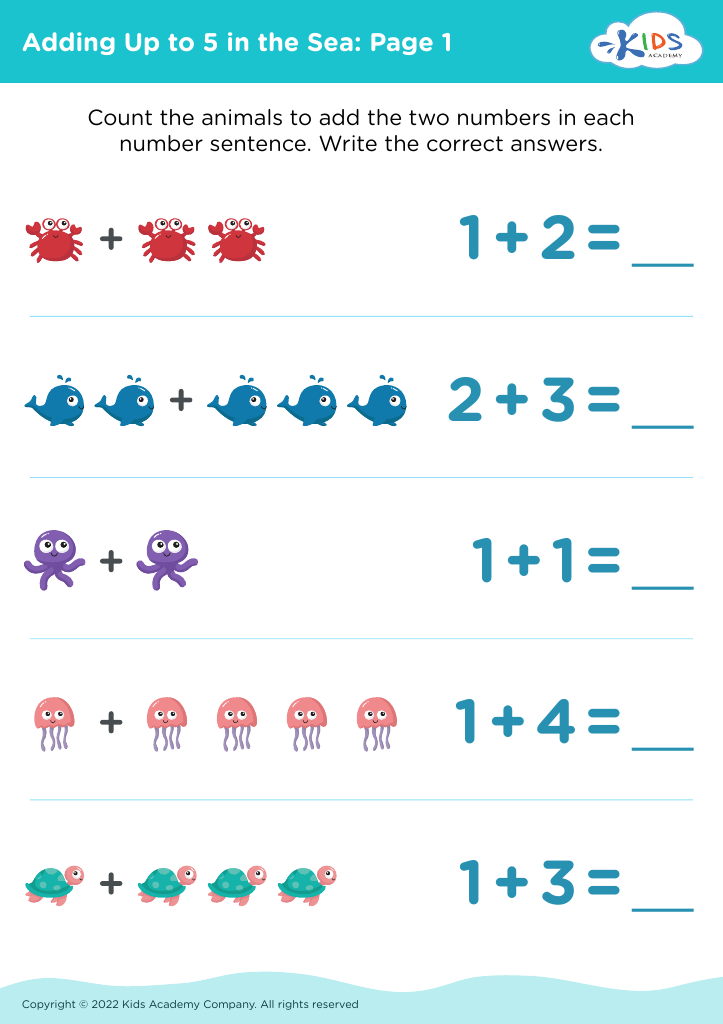
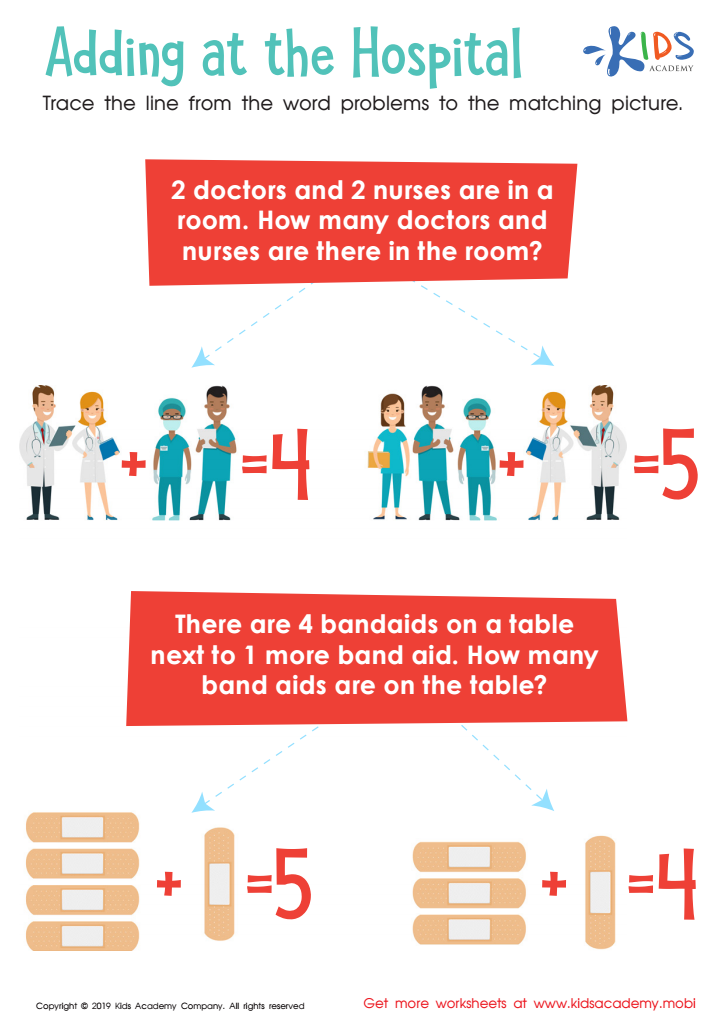
Adding at the Hospital Worksheet
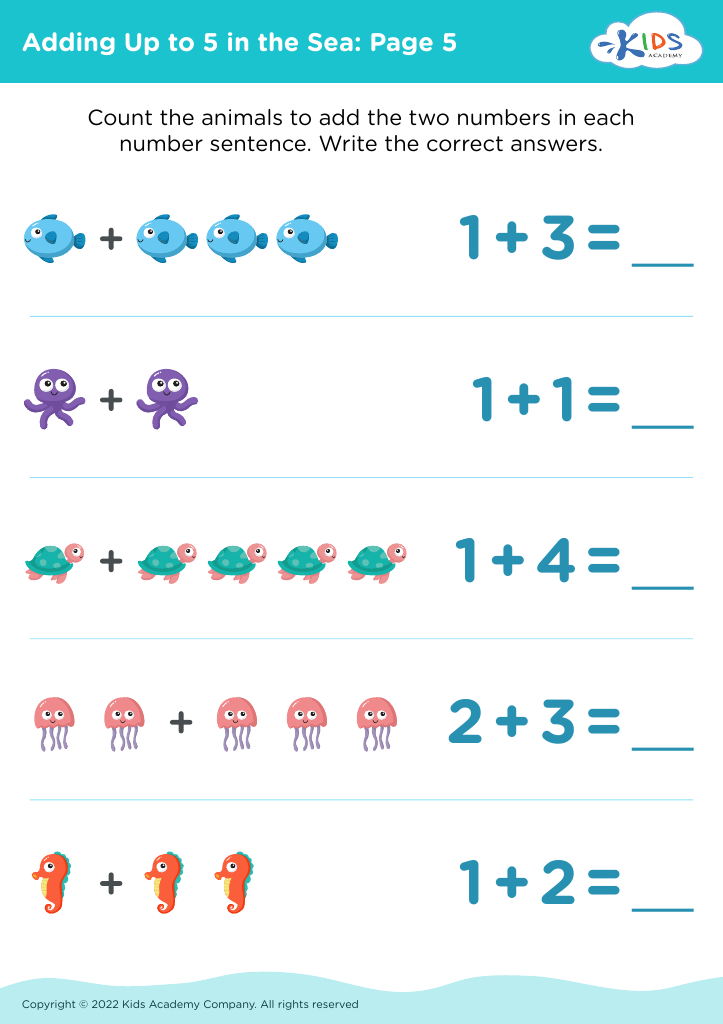
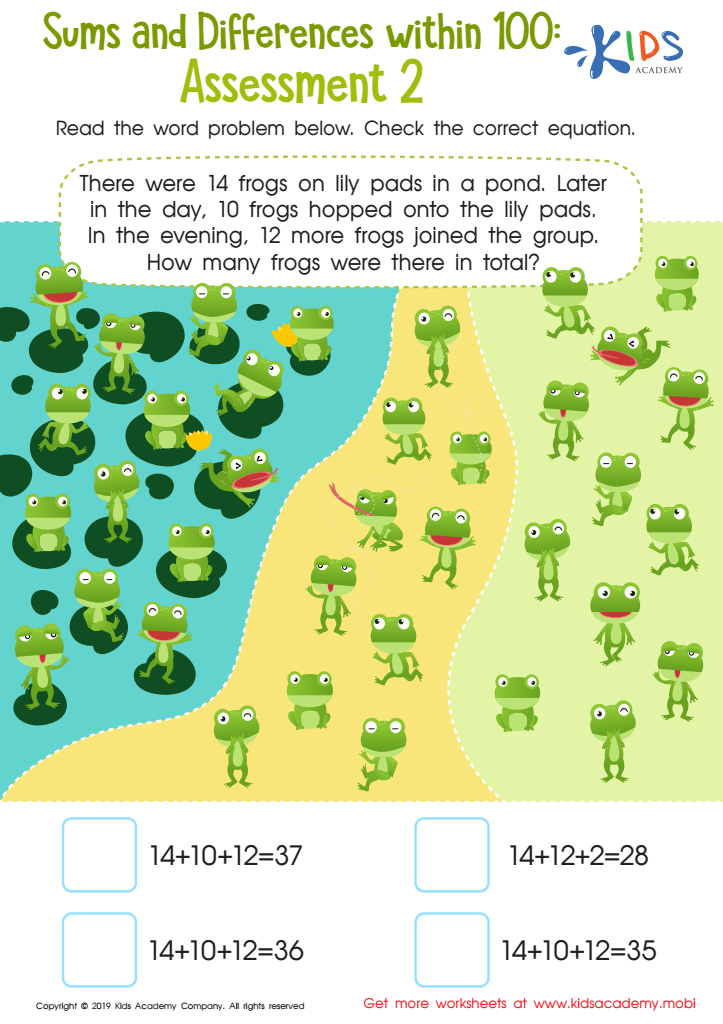
Sums and Differences Within 1 - Assessment 2 Worksheet
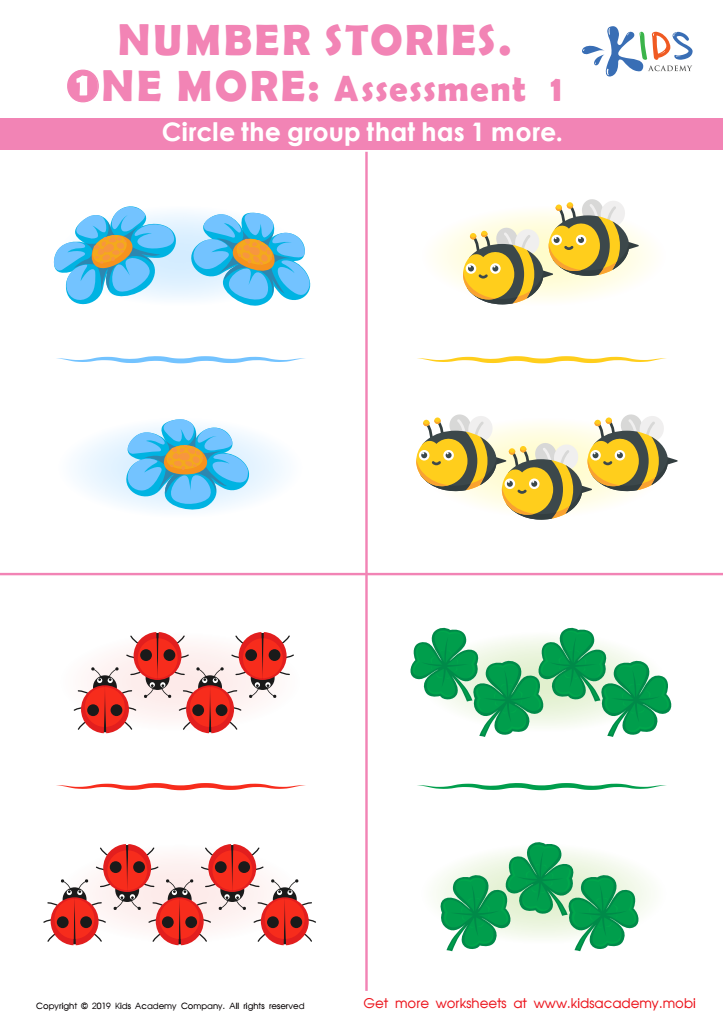
Number Stories One More – Assessment 1 Worksheet
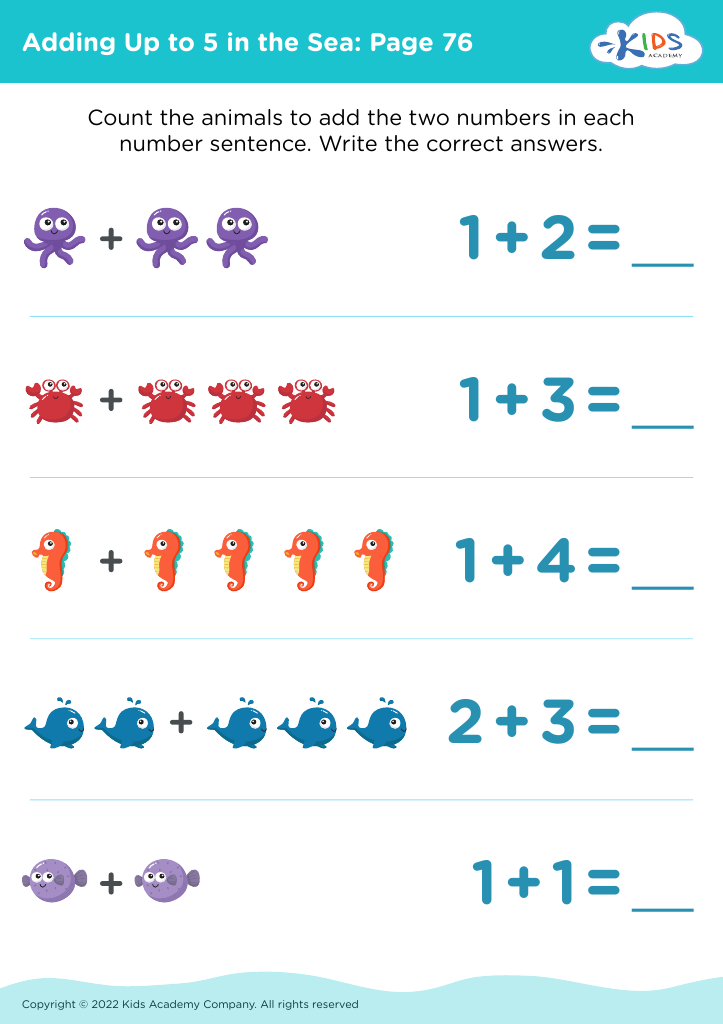
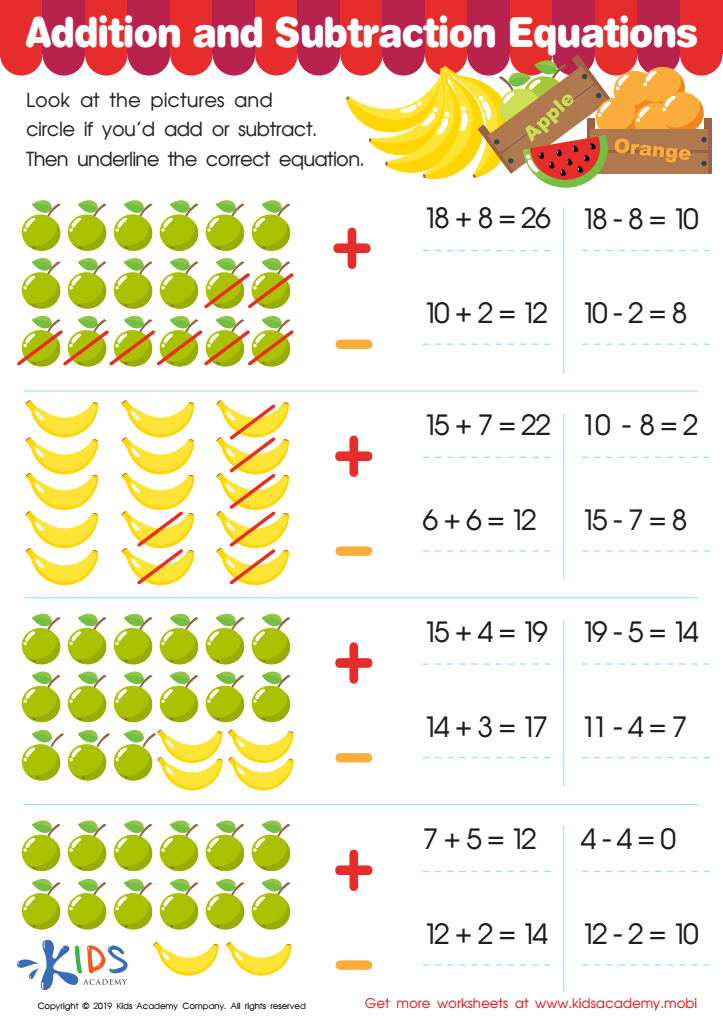
Addition and Subtraction: Equations Worksheet
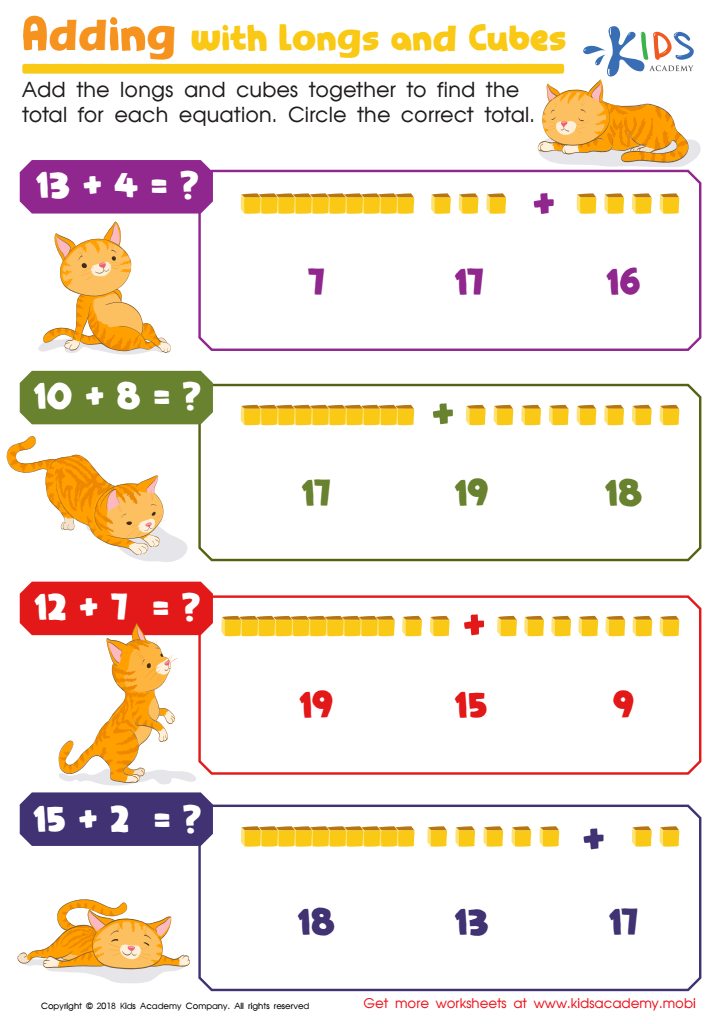
Adding With Longs and Cubes Worksheet
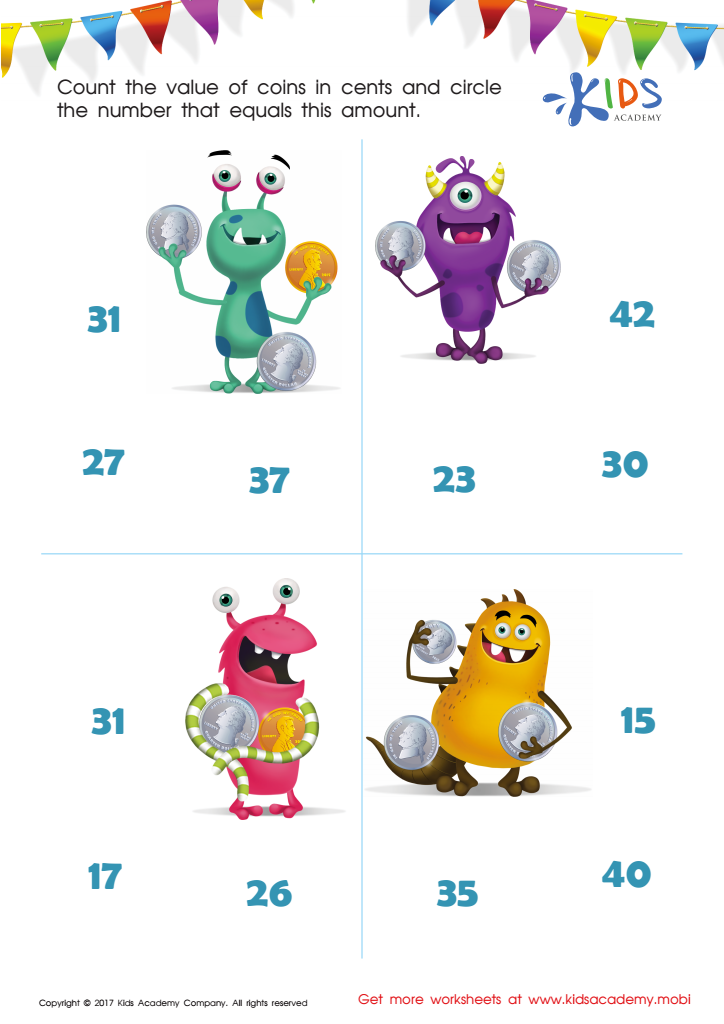
How Many Coins Money Worksheet
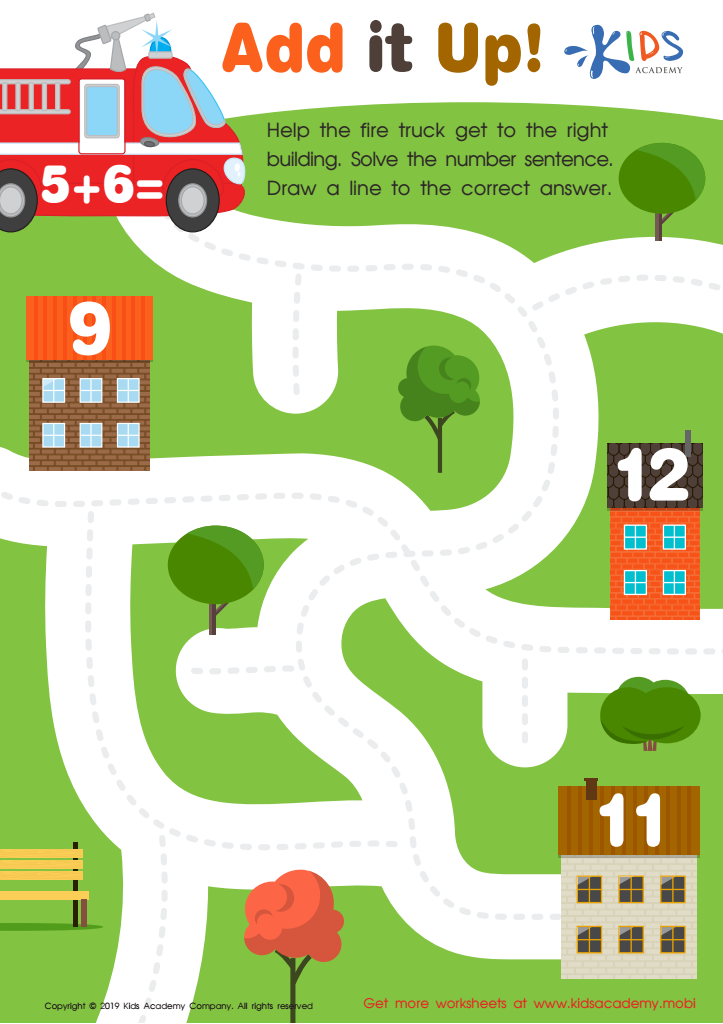
Add it Up Worksheet
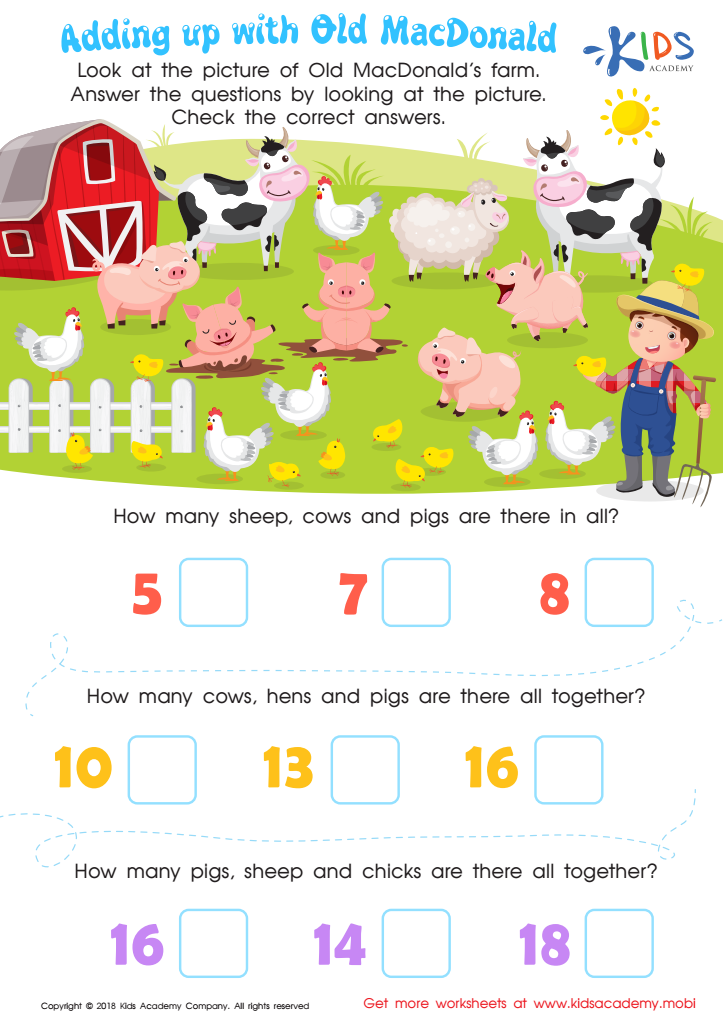
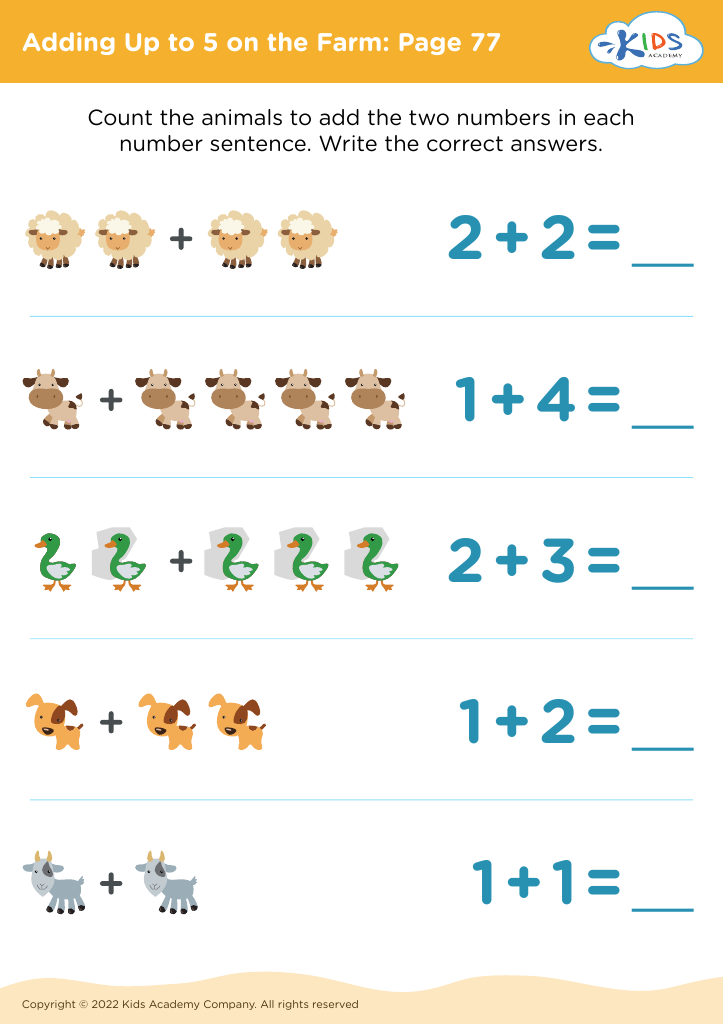
Adding Up with Old MacDonald Worksheet
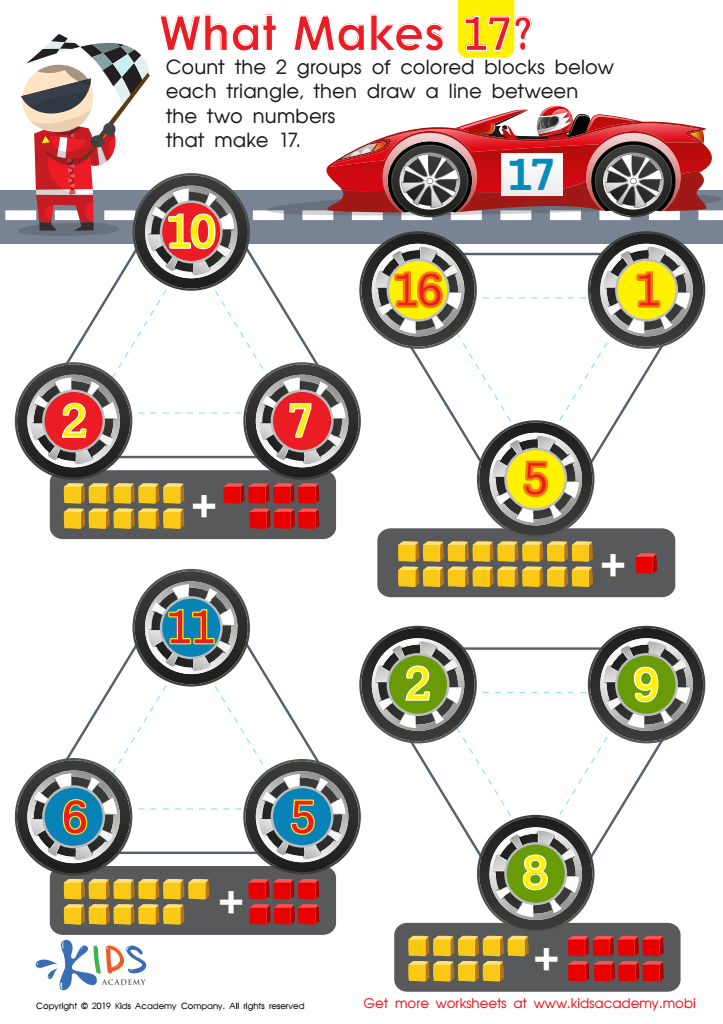
What Makes 17 Worksheet








Addition skills are essential for children aged 5-6 as they form the cornerstone of early math education. During these formative years, mastering addition lays a foundation for more advanced mathematical concepts. Understanding addition helps develop logical thinking and problem-solving skills, which are critical not only in math but in daily life. Simple tasks, such as counting objects, sharing equally, and understanding the concept of more and less, become manageable and intuitive when kids grasp addition.
For teachers and parents, focusing on addition aids in fostering a positive attitude towards math. Children who feel confident in their addition skills are more likely to enjoy math activities, participate actively in class, and avoid math-related anxiety. This enthusiasm and self-assurance can have long-term benefits, leading to academic success in more complex subjects.
Moreover, early proficiency in addition supports other academic areas, including reading comprehension and critical thinking. Parents and teachers who prioritize these basic skills can observe improved cognitive development and overall academic performance. By nurturing addition skills at ages 5-6, adults help children build a sturdy mathematical foundation, instilling the belief that learning is achievable and fun, thereby setting them on a path to lifelong success.








