
Basic math practice Worksheets for Ages 5-6
6 filtered results
Difficulty Level
Grade
Age
-
From - To
Subject
Activity
Standards
Discover a fantastic collection of Basic Math Practice Worksheets designed specifically for children aged 5-6! Our engaging and interactive worksheets help young learners develop essential math skills, including counting, addition, and subtraction, in a fun and effective way. With colorful graphics and age-appropriate activities, your little ones will stay motivated and excited about learning. These printable resources make it easy for parents and educators to reinforce key concepts at home or in the classroom. Foster a strong math foundation for your child with our carefully crafted worksheets and watch their confidence and skills grow! Start exploring today!
Favorites
With answer key
Interactive
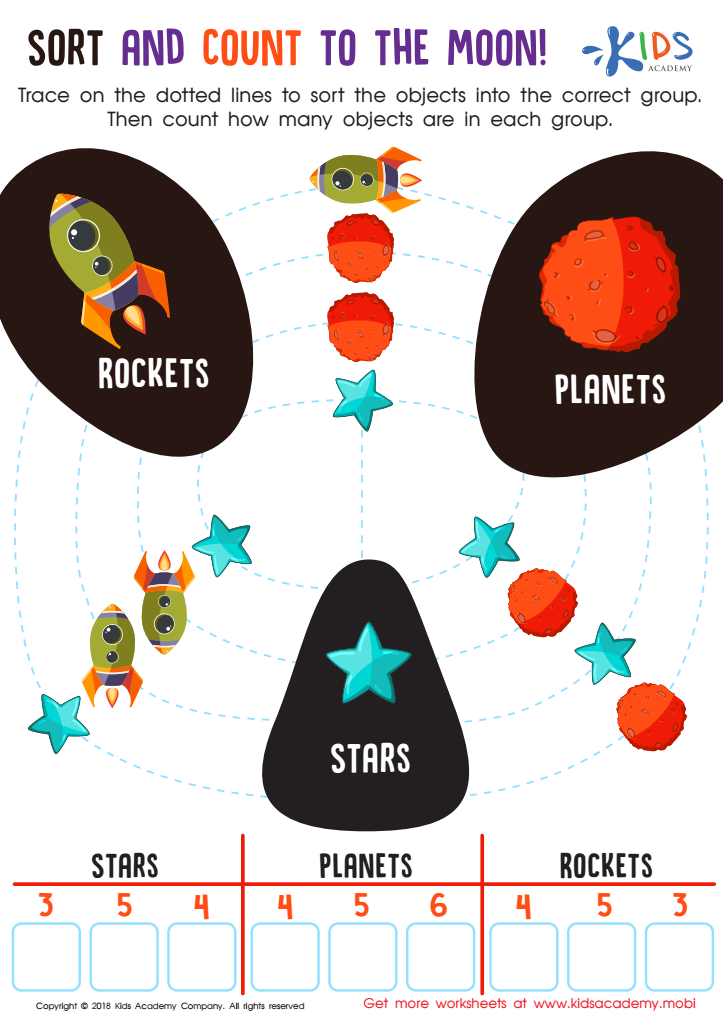
Sort and Count to the Moon Worksheet
Little space explorers will love counting, sorting and strengthening number sense with this galactic worksheet! They'll use traceable lines to sort pictures of stars, planets and rockets into categories according to properties. After sorting, they'll count each item and fill in the boxes. Bold pictures make it fun and build critical thinking skills.
 Assign to My Students
Sort and Count to the Moon Worksheet
Worksheet
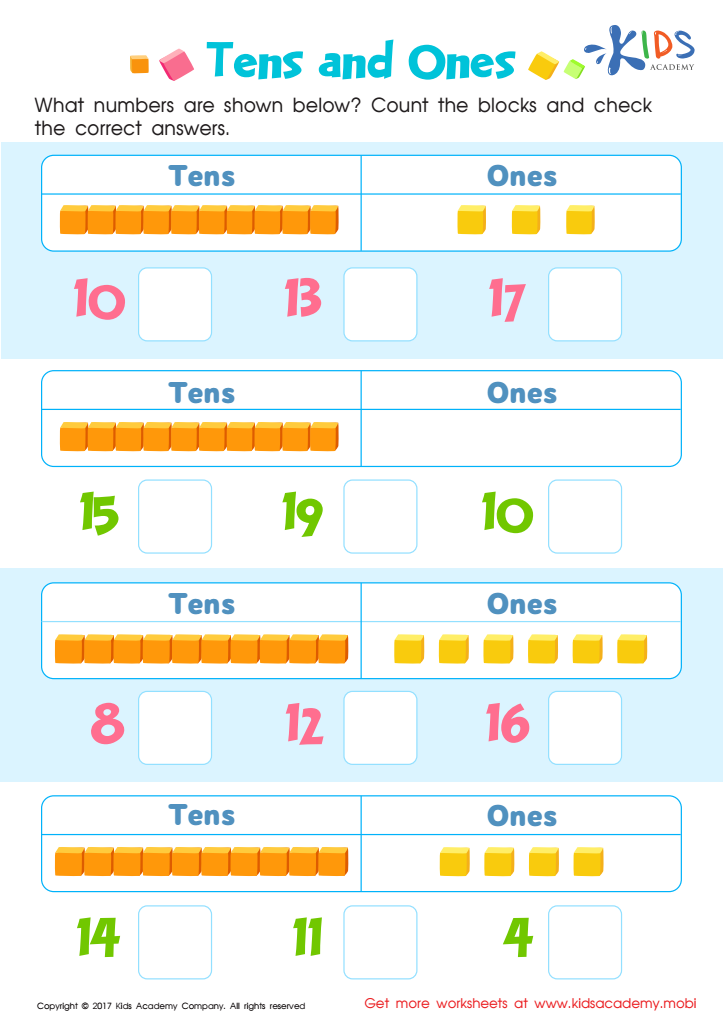
Tens and Ones Worksheet
Help your child make math fun with this worksheet! Count the blocks on both sides and enter the total in the box below the figures. This will help them overcome any math-related anxieties they might have and let them enjoy the learning process.
Tens and Ones Worksheet
Worksheet
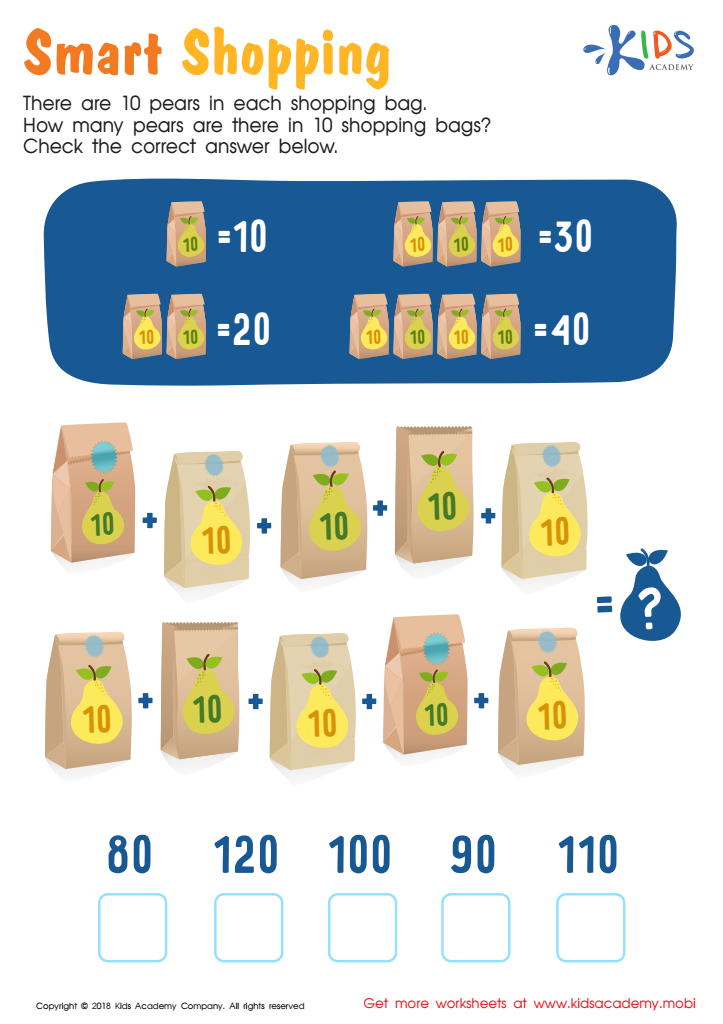
Smart Shopping: Trade Tens for a Hundred Worksheet
Use this worksheet to test counting skills: each bag has 10 pears. Ask your child how many pears are in 10 bags. Guide them as they count through the printout and check the answer below. See if they got it right!
Smart Shopping: Trade Tens for a Hundred Worksheet
Worksheet
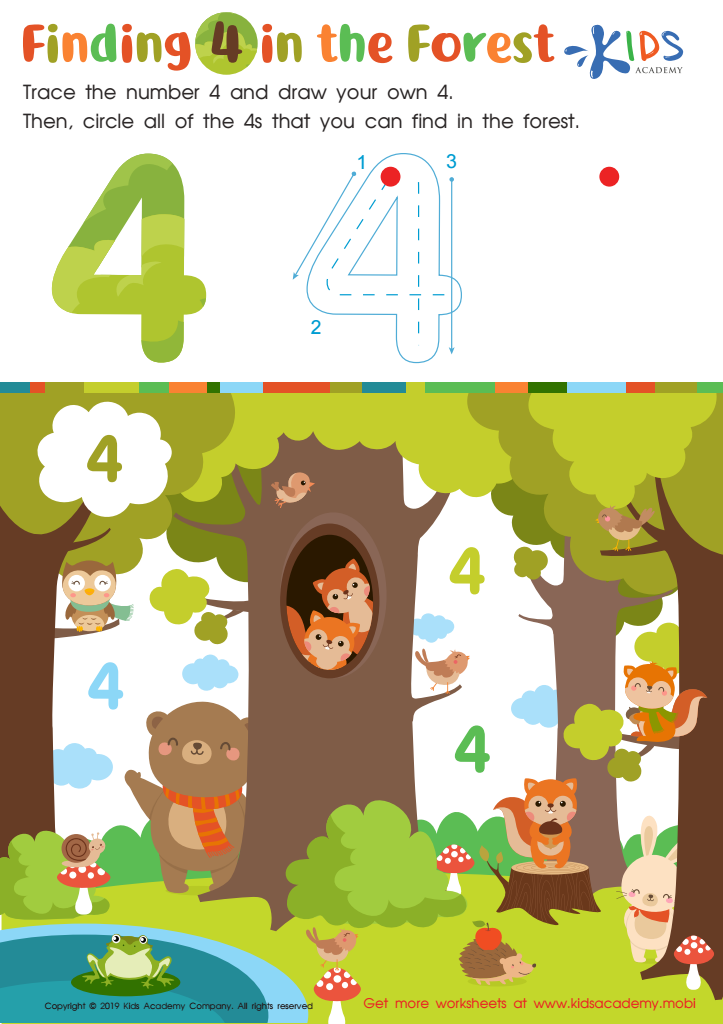
Finding 4 in the Forest Worksheet
Before starting, have your kids count as high as they can. Ask them to identify the setting and point out the 4s. Trace 4 and draw your own. Help your kids circle all the 4s they can find in the forest. How far can they count? How well did they find the hidden 4s?
Finding 4 in the Forest Worksheet
Worksheet
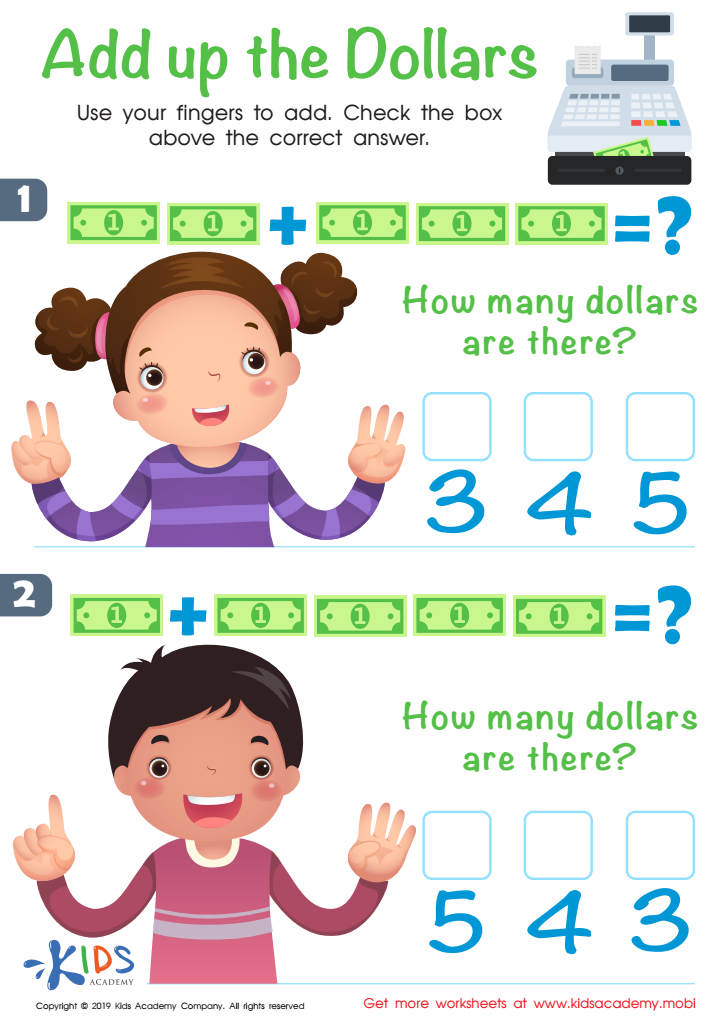
Add up the Dollars Worksheet
Money is key in life. It buys what we love and need. Get students to learn with exercises full of colour and familiar items like this worksheet. It shows two kids and some money. Ask pupils to use their fingers to add the money and check the box with the right answer.
Add up the Dollars Worksheet
Worksheet
Join Kids Academy for Free
Who is primarily going to use this learning content?




.jpg)

Basic math practice for ages 5-6 is crucial for several reasons that should matter to both parents and teachers. At this developmental stage, children begin to form foundational skills that will support their future academic success. Engaging in basic math activities helps young learners develop essential skills such as number recognition, counting, and simple addition and subtraction.
Early math practice also nurtures critical thinking, problem-solving, and logical reasoning skills, which are vital for overall cognitive development. These skills not only apply to math but also translate into better performance across various subjects.
Furthermore, instilling a positive attitude towards math from a young age can significantly impact a child's self-confidence and willingness to explore more complex mathematical concepts in later years. By incorporating fun and engaging math activities into daily routines, parents and teachers make learning enjoyable, fostering a lifelong love for learning.
Lastly, basic math skills are fundamental for practical daily situations—such as managing allowances or understanding time—equipping children with tools they need for everyday life. Thus, prioritizing math practice at this age is essential for both immediate learning and long-term success.








