Number Matching Worksheets for Ages 5-6
4 filtered results
-
From - To
Discover our engaging Number Matching Worksheets designed specifically for children ages 5-6! These interactive resources foster early math skills by encouraging young learners to connect numbers with corresponding quantities. Each worksheet is thoughtfully crafted to not only enhance number recognition but also develop cognitive abilities as children think critically and solve number-related puzzles. Perfect for use at home or in the classroom, our worksheets offer colorful visuals and fun activities that keep kids motivated and focused. Support your child's learning journey with our approachable, printable worksheets that make math a delightful experience! Download today and make learning numbers exciting!
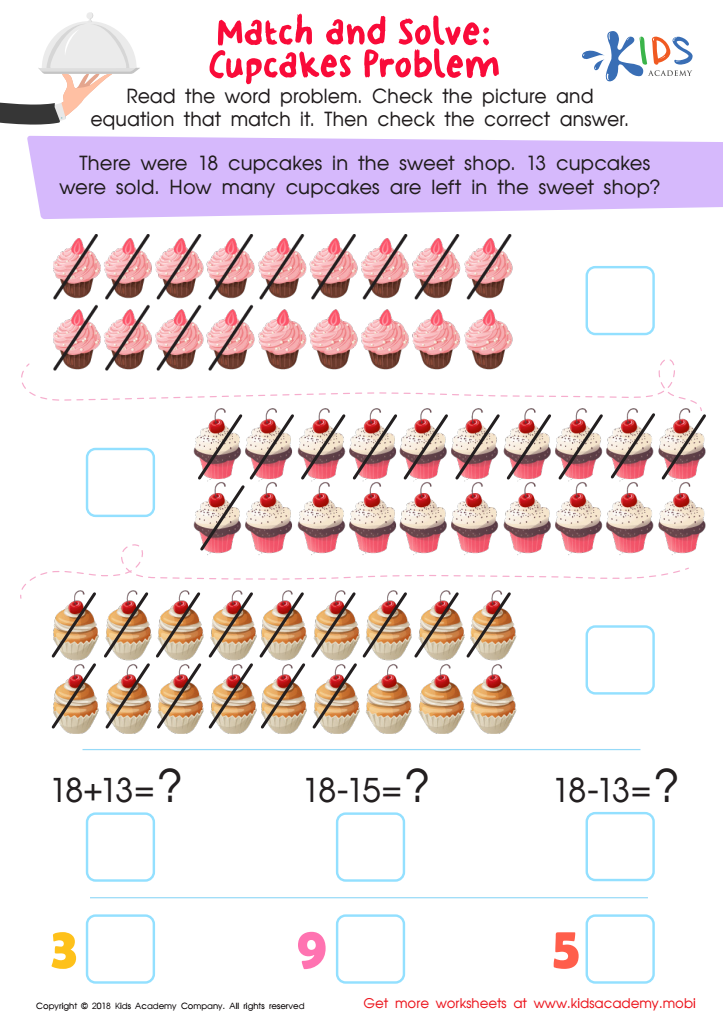
Match and Solve: Cupcakes Problem Worksheet
 Assign to My Students
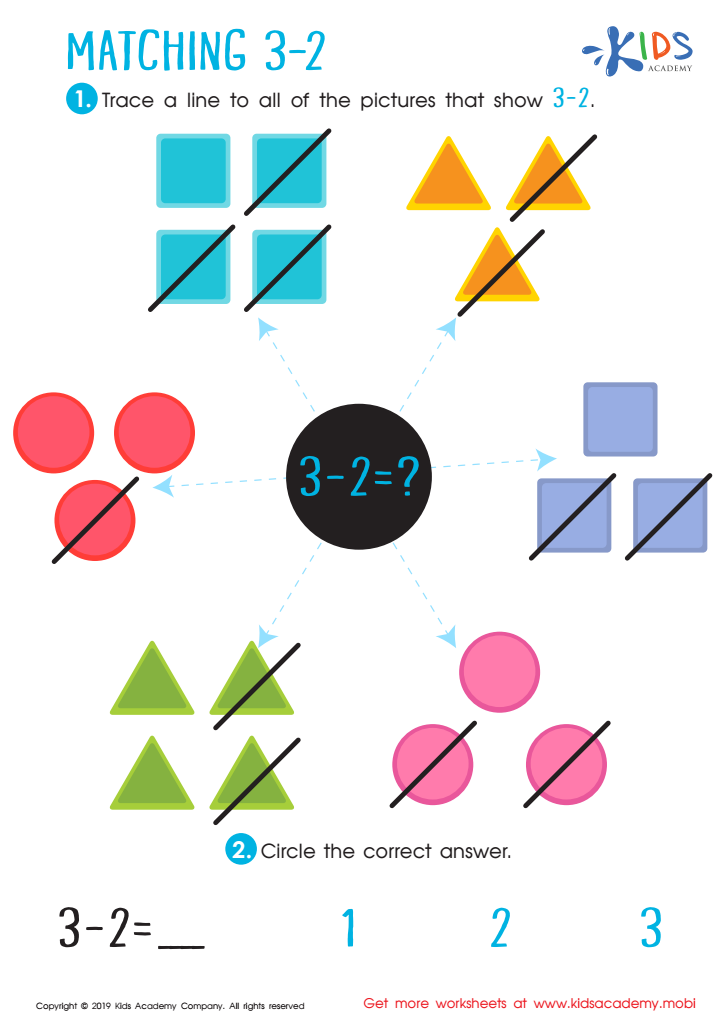
Matching 3-2 Worksheet
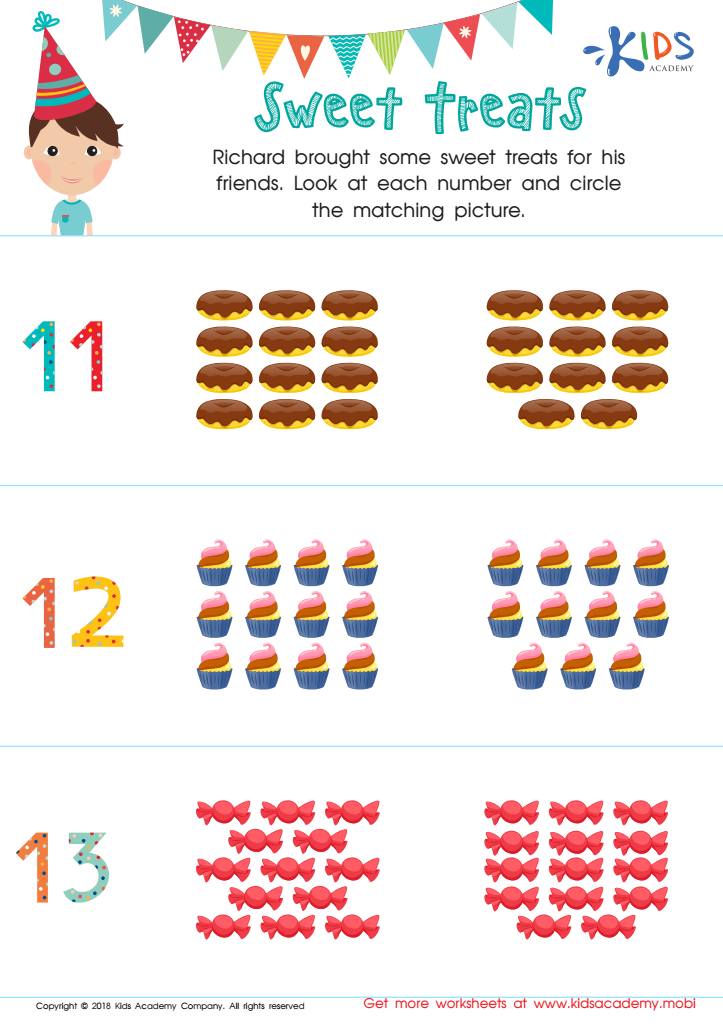
Kindergarten Math Worksheet Matching Numbers
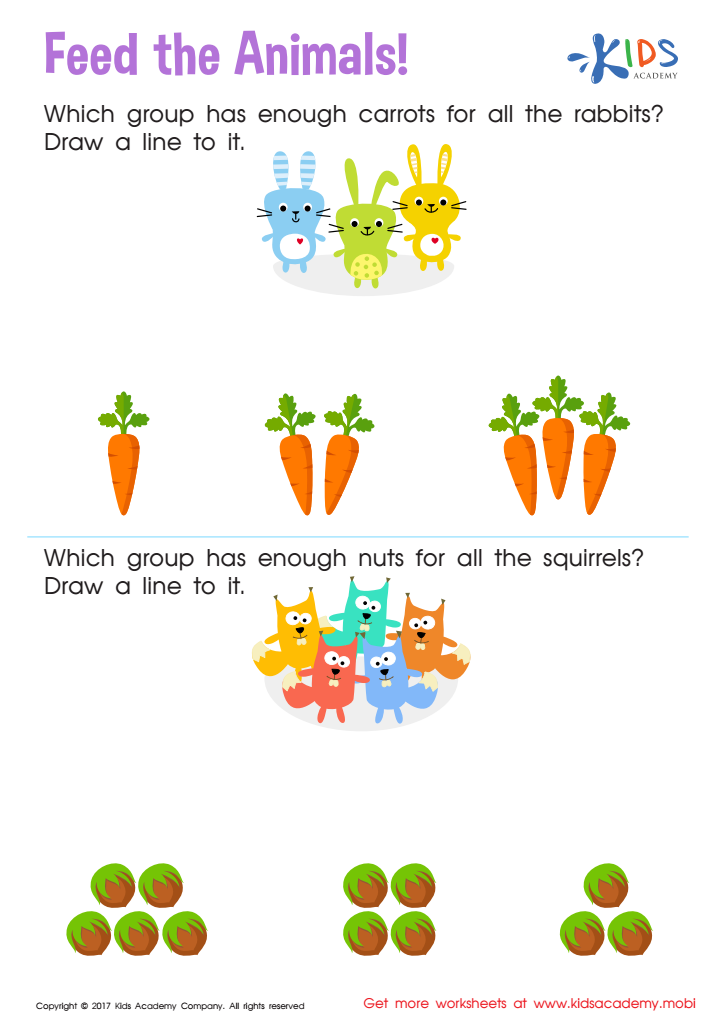
Count and Match: Feed the Animals Worksheet


.jpg)




Number matching for children aged 5-6 is crucial for early mathematical development, providing a foundational skill that supports various aspects of learning. At this stage, children begin to understand the relationship between numbers and quantities, which lays the groundwork for arithmetic and problem-solving skills later on.
For parents and teachers, fostering number matching skills builds confidence in young learners. When children can match numbers to corresponding quantities, they develop a sense of accomplishment and mastery that encourages further exploration of math concepts. This skill also enhances cognitive abilities, including memory and concentration, as children practice recognizing and associating numbers with physical objects.
Moreover, strong number matching skills are linked to greater academic success in math and other subjects. By engaging in activities that promote this skill, such as games or hands-on learning, adults can create enjoyable and meaningful experiences that promote learning through play. This early engagement is vital, as positive attitudes towards math often start in these formative years.
In summary, investing time and resources into developing number matching abilities for 5- to 6-year-olds fosters critical thinking, lays the foundation for future mathematical concepts, and helps children develop a lifelong appreciation for learning.








