Understanding chess rules Worksheets for Ages 5-6
7 filtered results
-
From - To
Discover engaging and educational "Understanding Chess Rules" worksheets tailored for children aged 5-6! Designed to teach young learners the basic rules and foundational concepts of chess, these worksheets offer fun, interactive activities that make learning enjoyable. Through step-by-step instructions and captivating illustrations, kids will embark on a journey to understand the moves and values of chess pieces, board setup, and game strategies. Perfect for developing critical thinking, problem-solving skills, and patience, these resources make it easy for parents and educators to introduce chess in a way that captures a child's interest and imagination. Start their chess adventure today!
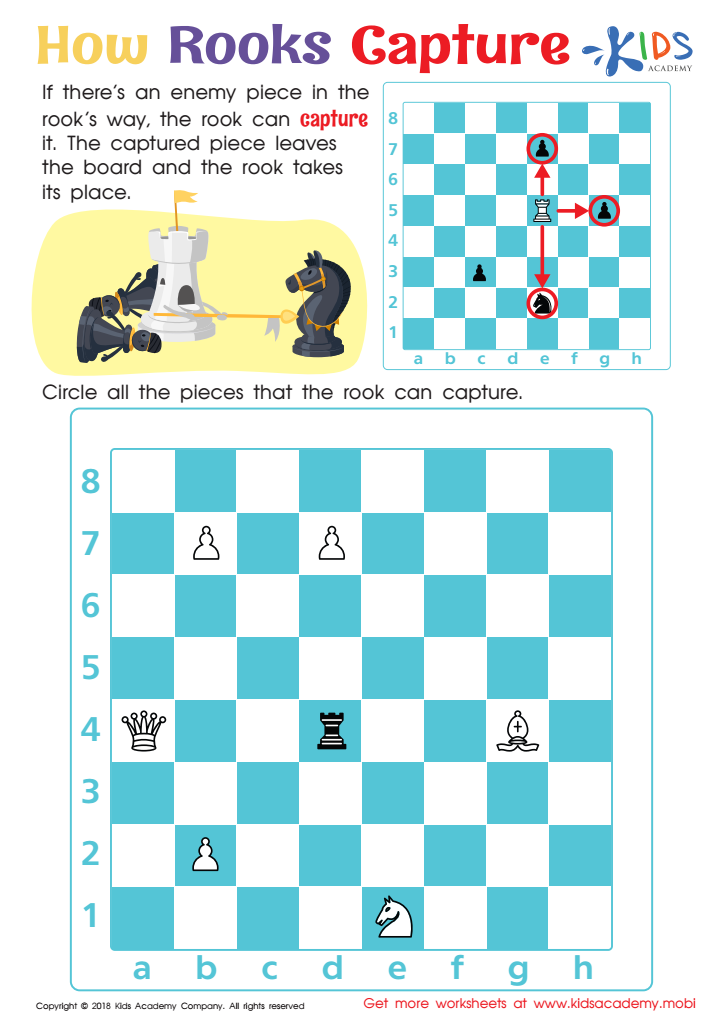
How Rooks Capture Worksheet
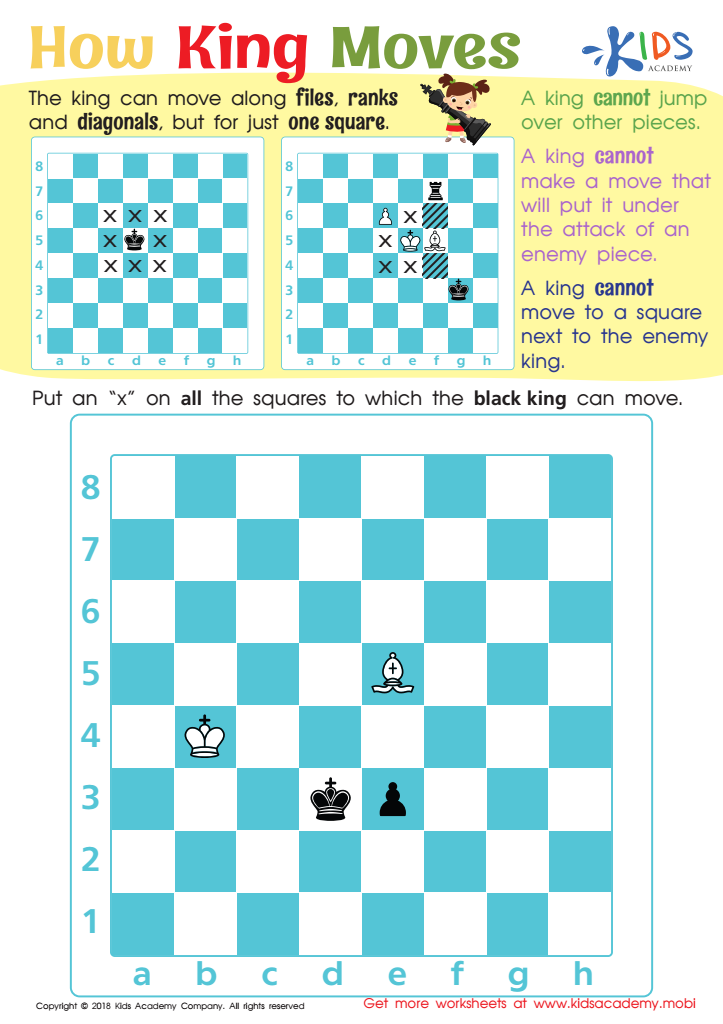
How King Moves Worksheet
 Assign to My Students
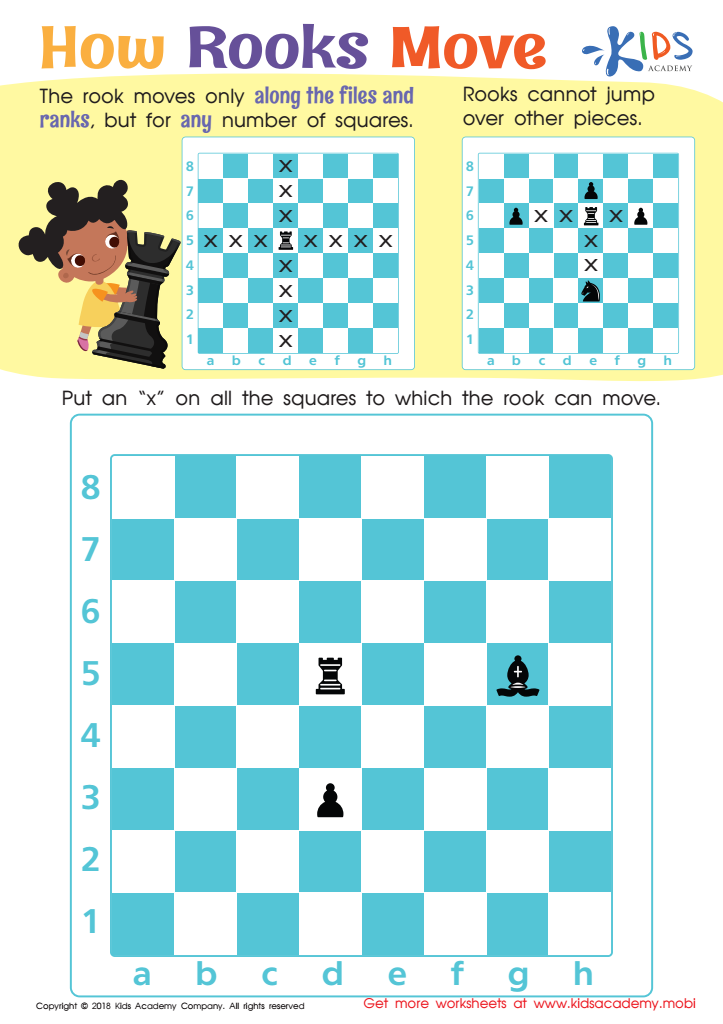
How Rooks Move Worksheet
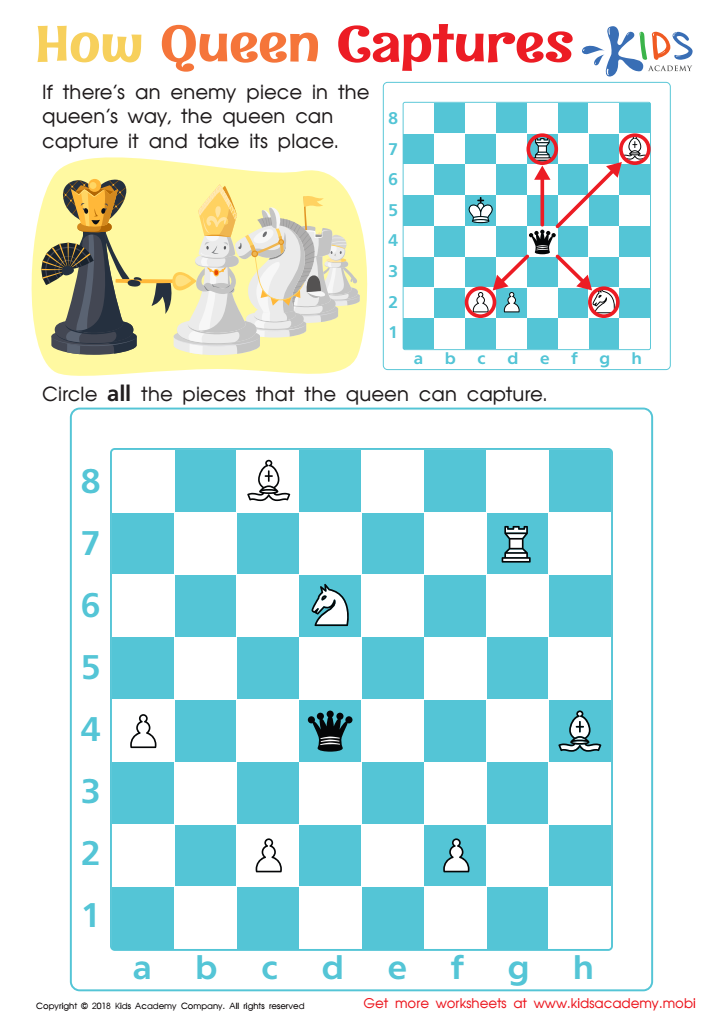
How Queen Captures Worksheet
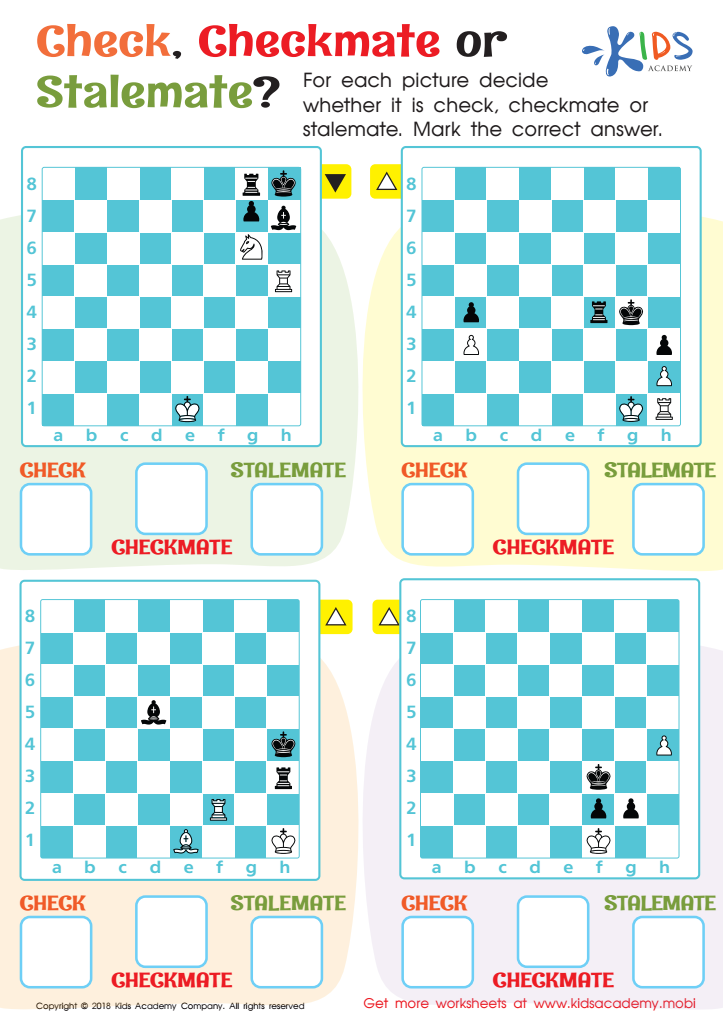
Check. Checkmate or Stalemate? Worksheet
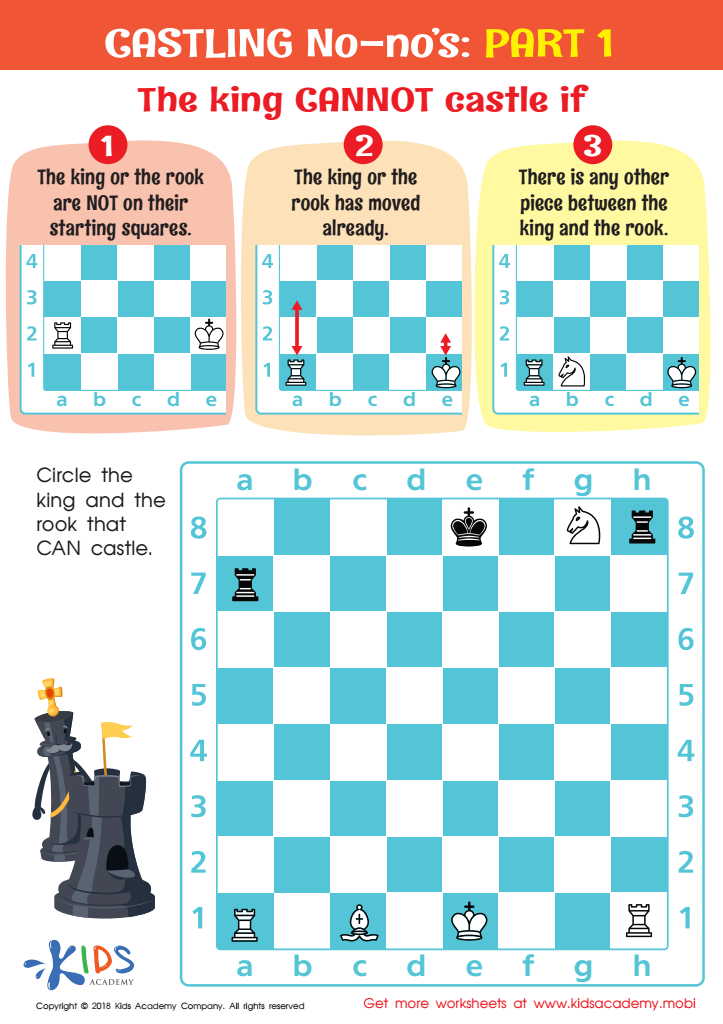
Castling No–no's: Part 1 Worksheet
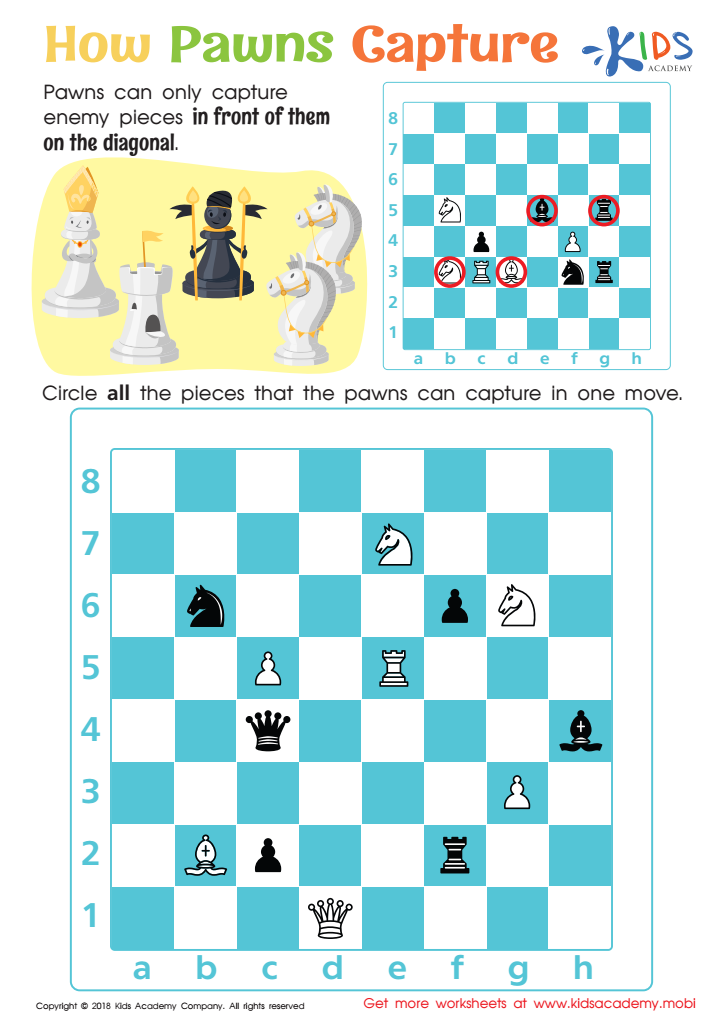
How Pawns Capture Worksheet






Understanding chess rules for children aged 5-6 can be incredibly beneficial and is worth the attention of parents and teachers. At this developmental stage, young minds are highly impressionable and can absorb new information rapidly, making it an ideal time to introduce foundational skills through chess.
Firstly, chess promotes cognitive development. By learning the different pieces and their moves, children enhance their memory and concentration skills. These brain exercises can translate into better performance in academic subjects like math and reading, as they practice strategies that involve critical thinking and problem-solving.
Secondly, the game teaches patience and impulse control. With its turn-based nature, chess encourages children to think ahead and consider the consequences of their actions. This can foster improved self-regulation—an essential skill for overall behavioral development.
Socially, playing chess with peers or adults helps children practice good sportsmanship. They learn to graciously win and lose, which builds emotional resilience and the understanding of fair play. Such interactions also encourage communication skills and reinforce positive relationships.
Lastly, chess is enjoyable and stimulating. It’s an excellent way for children to engage in constructive play, which is crucial for emotional well-being. By integrating chess into early childhood education, whether at home or in school, parents and teachers can provide a well-rounded, enriching experience that supports multiple facets of a child's growth.








