Understanding number patterns Worksheets for Ages 5-6
4 filtered results
-
From - To
Discover our engaging "Understanding Number Patterns Worksheets" designed specifically for children aged 5-6. These worksheets provide a fun way for young learners to grasp essential mathematical concepts through colorful visuals and interactive activities. As children explore number sequences, they develop critical thinking and problem-solving skills necessary for their academic growth. Ideal for home or classroom use, our worksheets include a variety of exercises that encourage recognition of patterns and strengthening of mathematical foundations. Foster a love for numbers and improve numeracy skills effortlessly with our thoughtfully crafted resources that make learning enjoyable and effective!
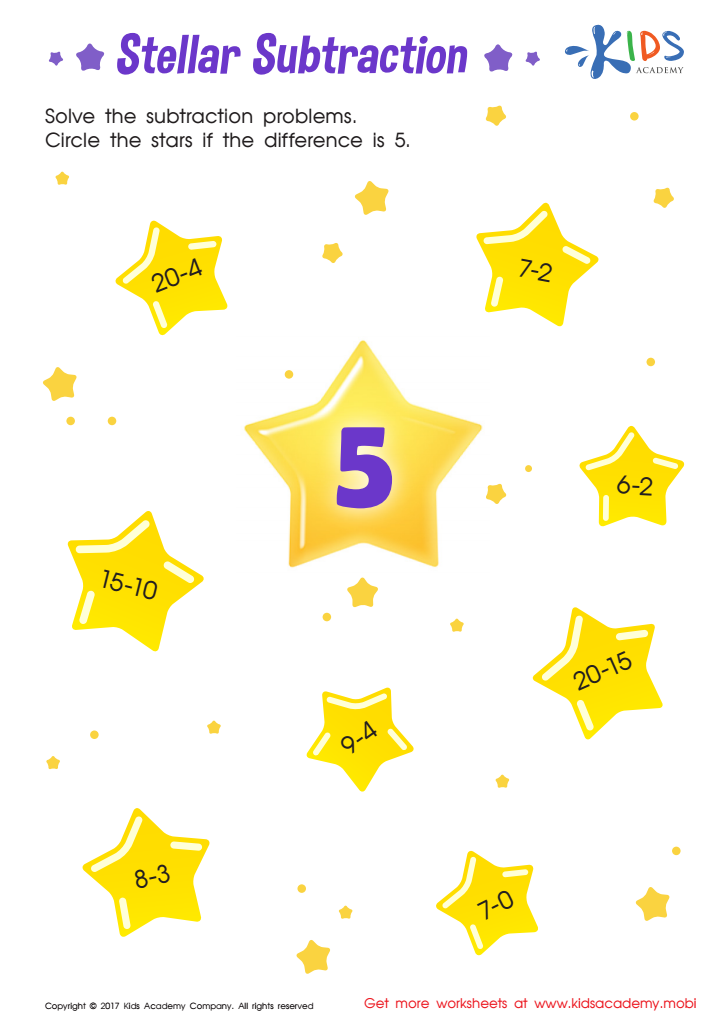
 Assign to My Students
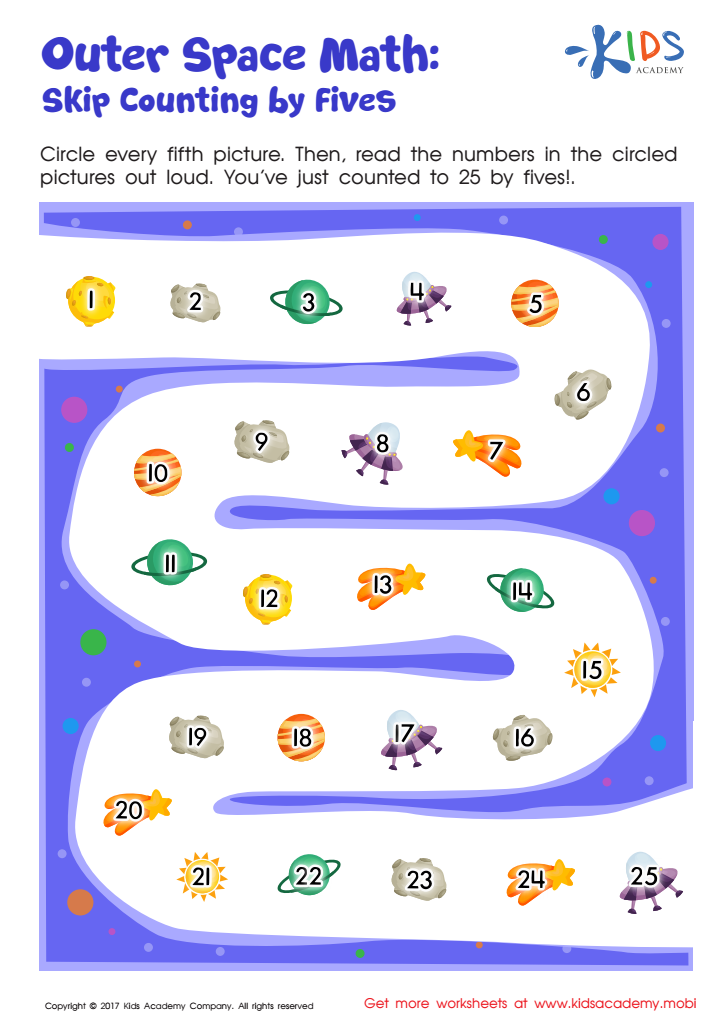
Skip Counting by 5s: Outer Space Math Printable
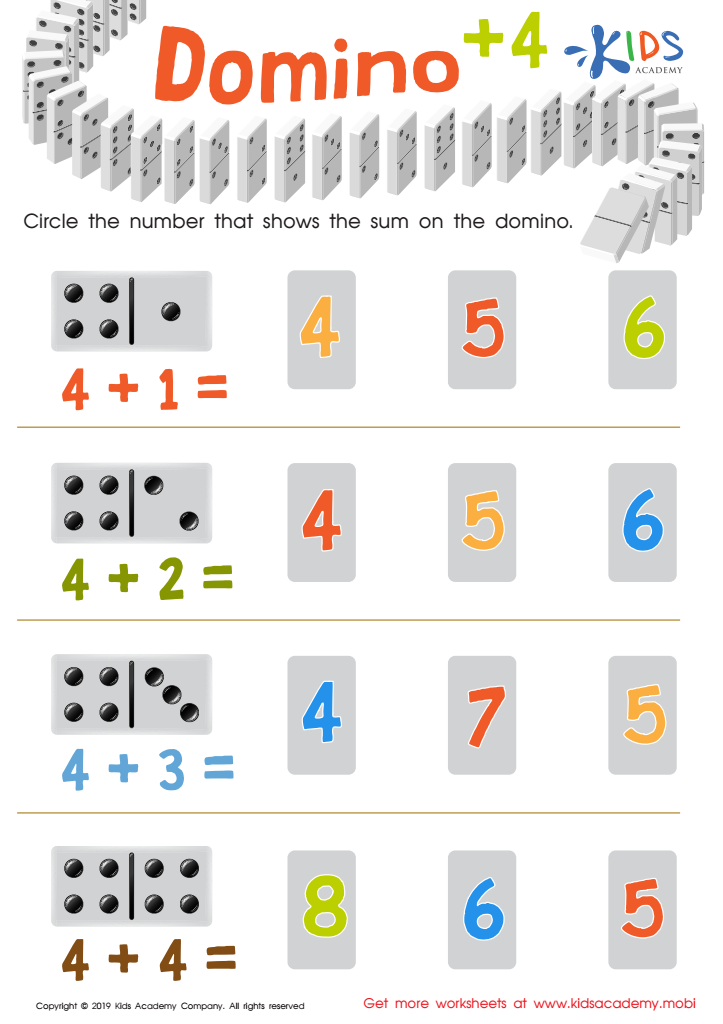
Domino +4 Worksheet
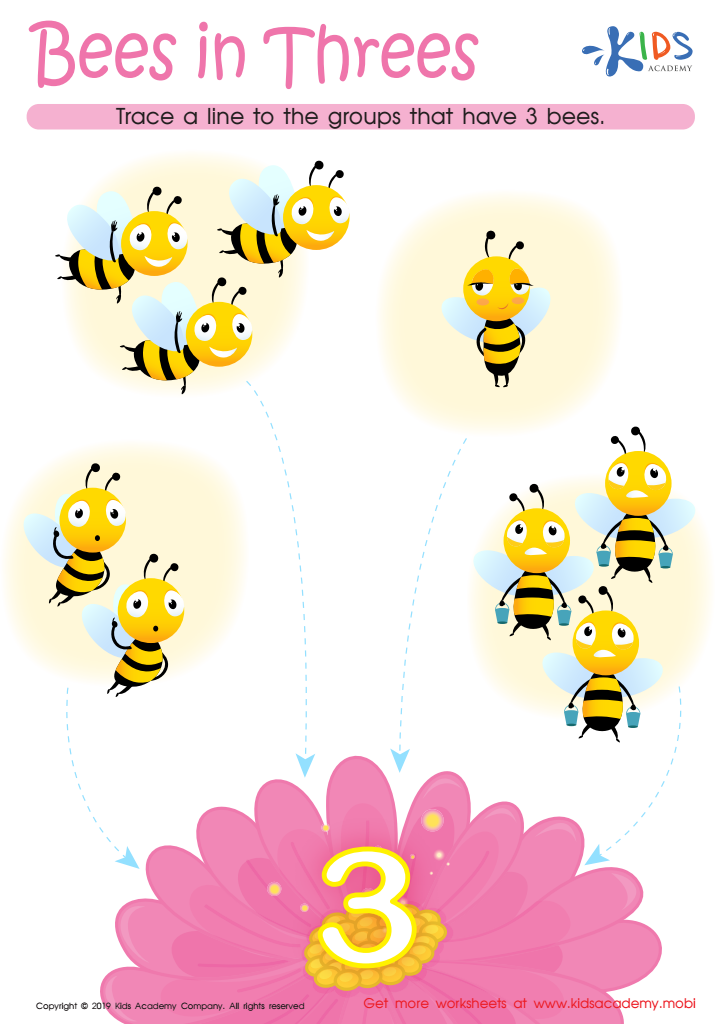
Bees in Threes Worksheet








Understanding number patterns is crucial for children aged 5-6, as it lays a strong foundation for their mathematical skills. At this age, children are naturally curious and are developing their ability to recognize relationships between numbers. By engaging with number patterns, they learn to identify sequences, which bolsters their problem-solving abilities and strengthens their cognitive development.
Patterns also teach children the concept of predictability and order, essential skills not only in mathematics but in everyday life. This understanding fosters critical thinking as they begin to make connections between numbers, helping them to grasp more complex mathematical concepts in later years, such as addition and subtraction.
Moreover, recognizing patterns can enhance a child's confidence and enthusiasm for learning mathematics. When children see the logical progression in number patterns, it encourages them to participate actively in learning activities.
For parents and teachers, encouraging exploration of number patterns can lead to richer educational experiences, supporting children in becoming confident and capable learners. Ultimately, caring about number patterns nurtures a positive attitude toward math early on, fostering a lifelong appreciation for the subject. Providing children with the tools to recognize and work with patterns sets them up for future academic success.








