Uppercase identification Worksheets for Ages 5-6
5 filtered results
-
From - To
Help your child master uppercase letter recognition with our engaging Uppercase Identification Worksheets designed for ages 5-6! These colorful, interactive worksheets are perfect for pre-kindergarten and kindergarten students, encouraging them to identify and match uppercase letters through fun activities. Children will enjoy a variety of exercises, including tracing, coloring, and sorting letters, which will reinforce their early literacy skills. Our worksheets align with educational standards, making learning both effective and enjoyable. Enhance your child's reading and writing development with these easy-to-follow, printable resources that foster independence and confidence in recognizing uppercase letters. Get started today!
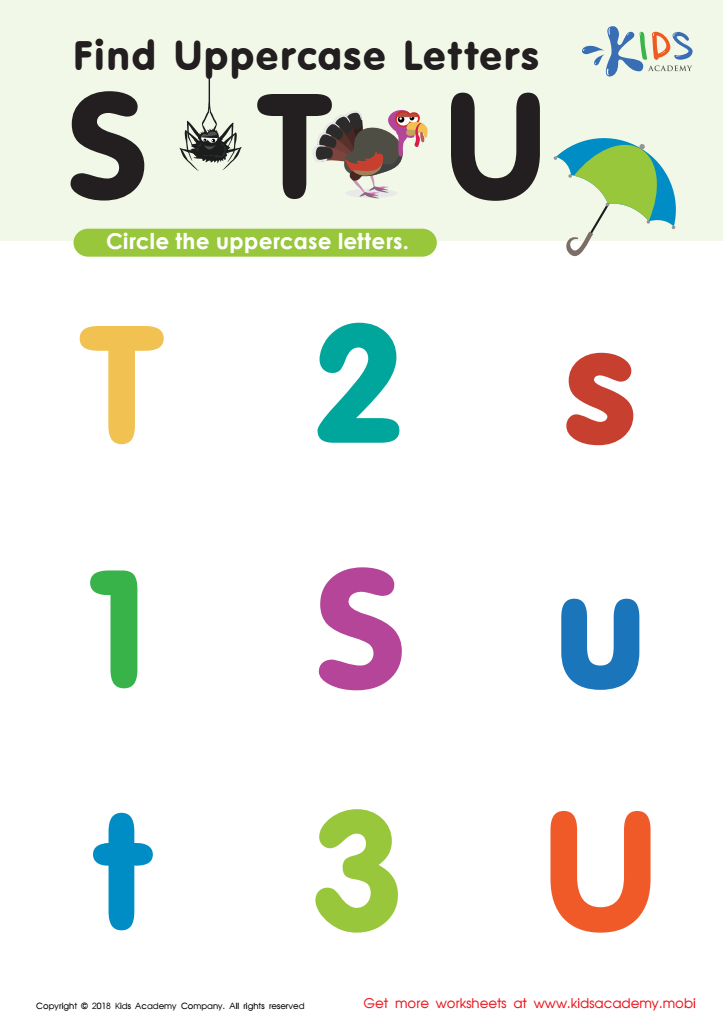
Find Uppercase Letters Worksheet
 Assign to My Students
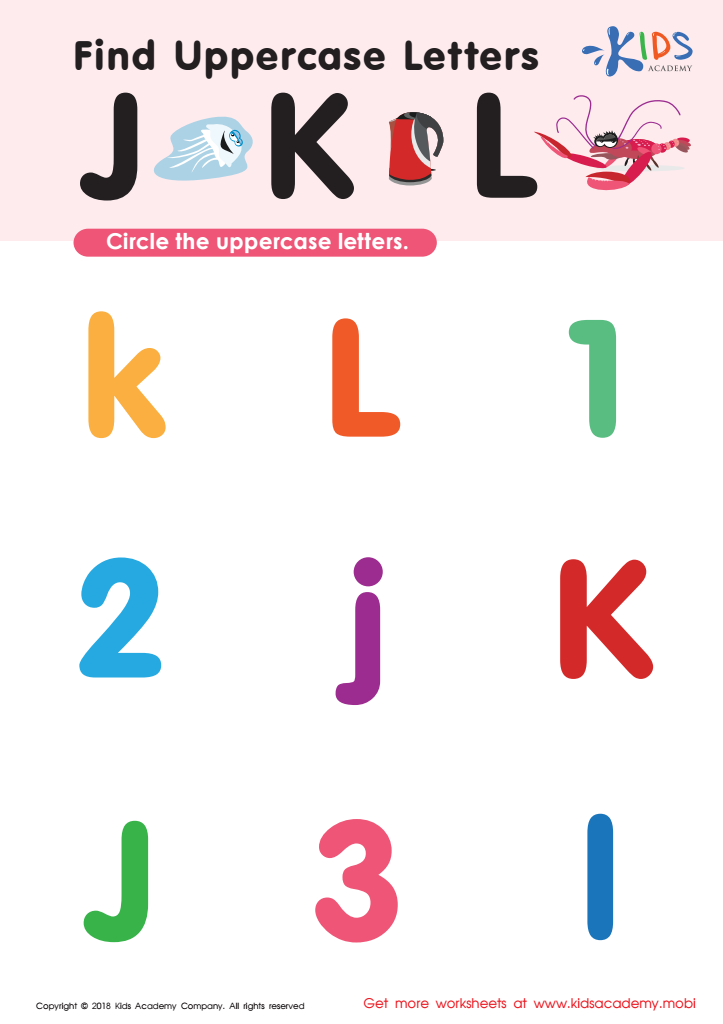
Find Uppercase Letters J, K, and L Worksheet
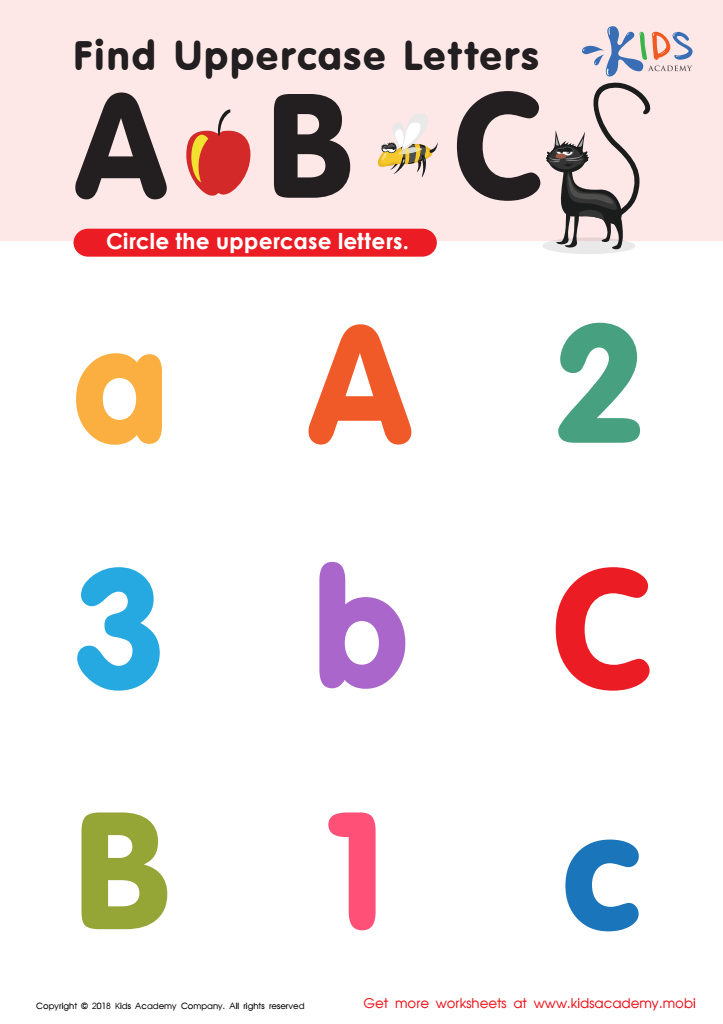
Find Uppercase Letters A, B, and C Worksheet

Find Uppercase Letters V, W, X Worksheet
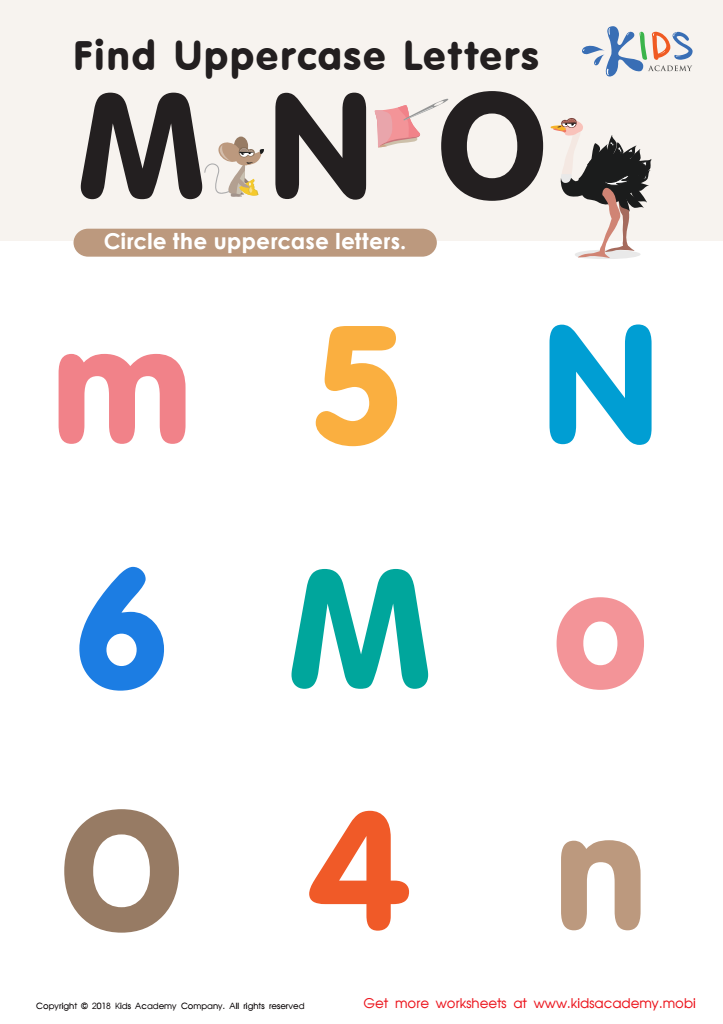
Find Uppercase Letters M, N, and O Worksheet







Uppercase letter identification is a critical component of early literacy development for children aged 5-6. At this developmental stage, children are often introduced to reading and writing, making the recognition of uppercase letters essential. Understanding these letters allows them to form and recognize the beginning of words, as most proper nouns and the start of sentences are written in uppercase.
Additionally, uppercase letters help children establish a connection between letters and sounds, which is fundamental for phonemic awareness. Recognizing uppercase letters gives children confidence as they begin to decode words, enhancing their reading experience and supporting vocabulary growth. By being able to identify and differentiate uppercase letters, children also improve their writing skills, as they learn to structure sentences properly.
Parents and teachers play a pivotal role in this process. Encouraging activities, such as letter identification games, reading aloud, and interactive writing, can foster letter recognition in a fun and engaging environment. This foundational skill setting is crucial for future academic success; mastery of uppercase letters opens doors to further reading and comprehension skills essential as they transition into higher grade levels. Therefore, active engagement by both parents and teachers in identifying uppercase letters will nurture a child's love for learning and literacy.








