Check out this FREE "Visual Learning" Trial Lesson for age 5-6!

Language

Favorites
With answer key
Interactive
  • 5-6
  • Visual Learning
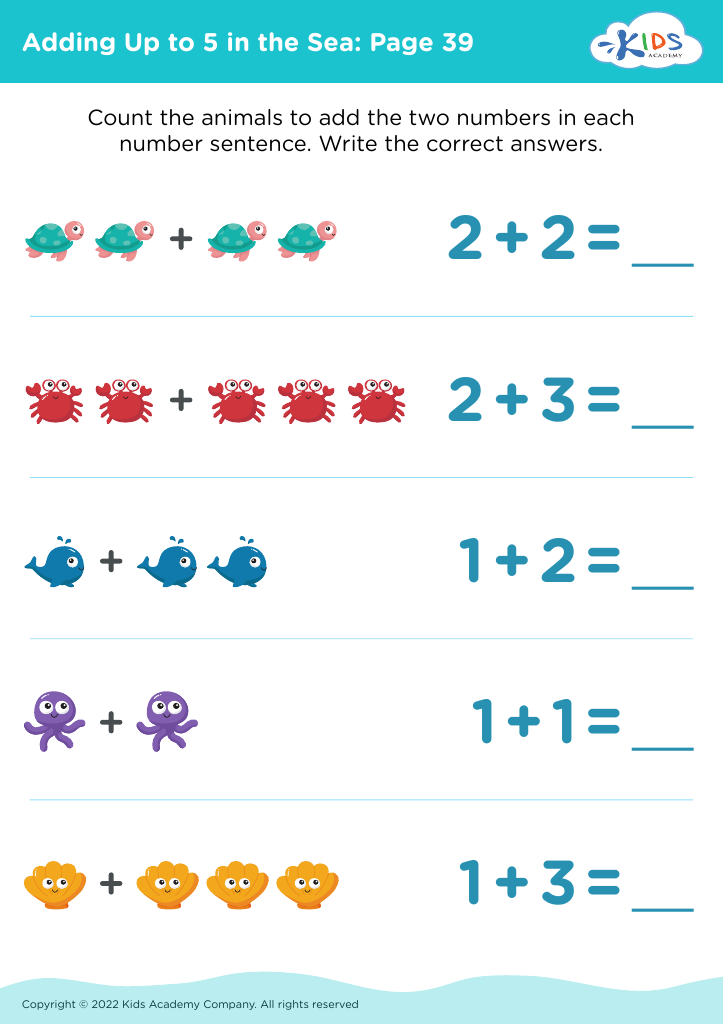
Adding Up to 5 in the Sea: Page 39
Worksheet
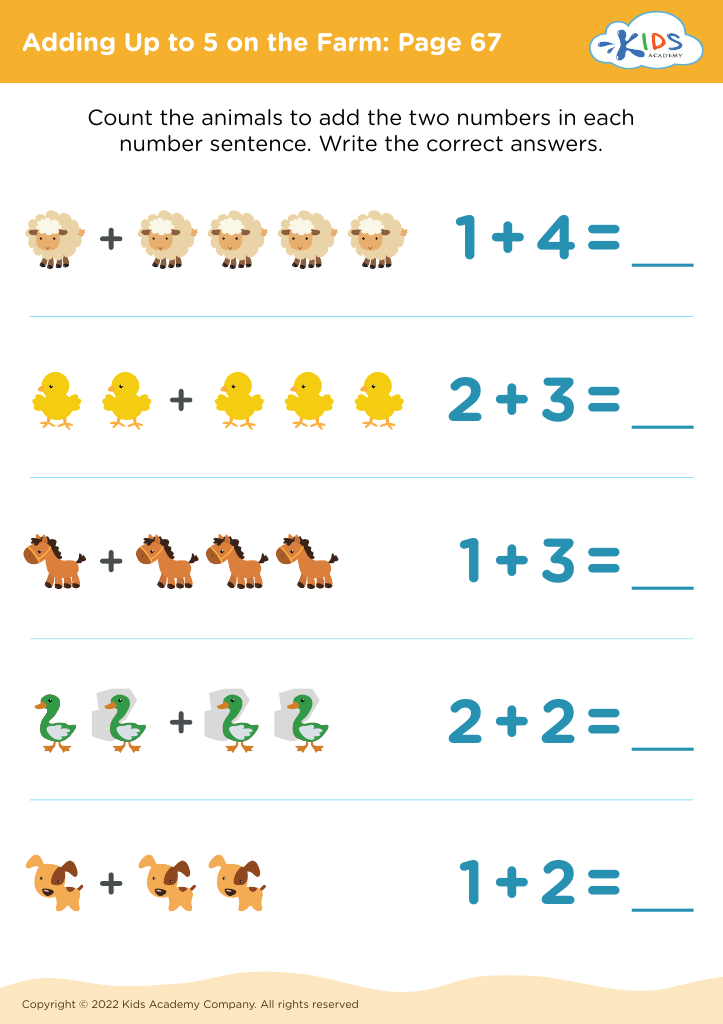
Adding Up to 5 on the Farm: Page 67
Worksheet
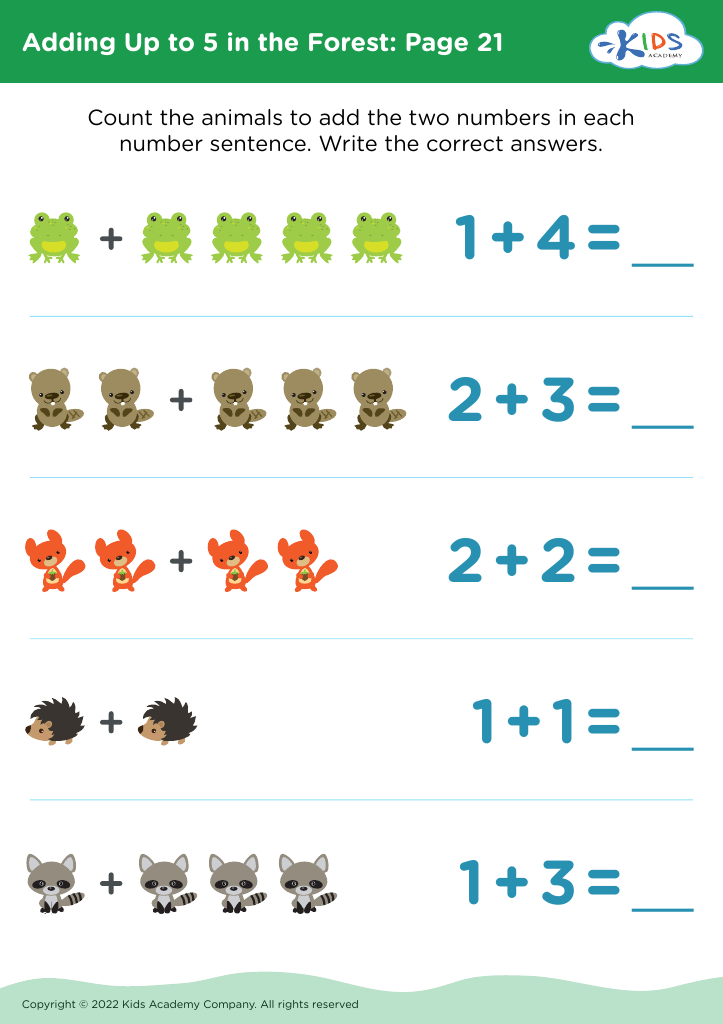
Adding Up to 5 in the Forest: Page 21
Worksheet
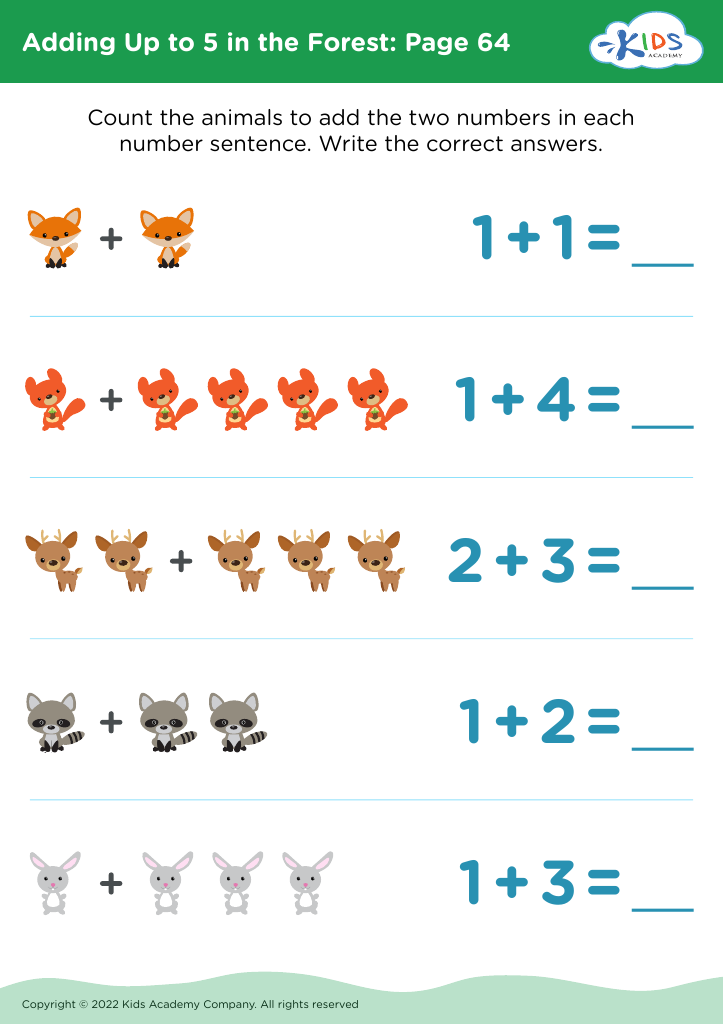
Adding Up to 5 in the Forest: Page 64
Worksheet
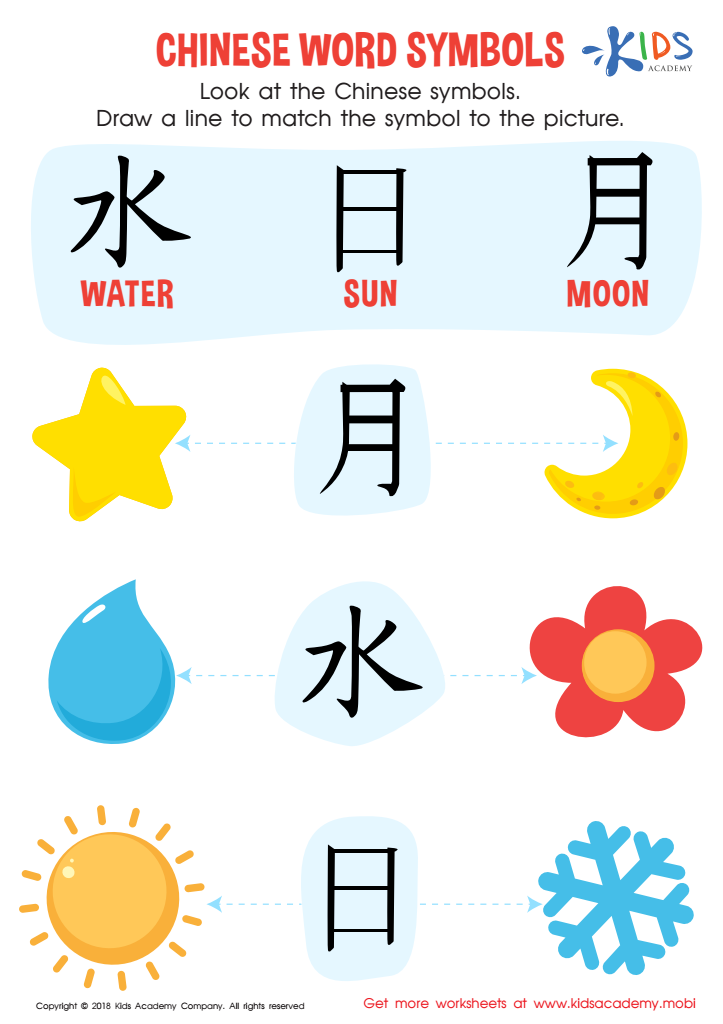
Chinese Word Symbols Worksheet

Chinese Word Symbols Worksheet

This fun worksheet helps kids learn Chinese symbols for words like water, sun, and moon. Paired with colorful pictures, tracing lines encourages fine motor skills and builds success. Kids will learn without realizing it, having fun in the process.
Chinese Word Symbols Worksheet
Worksheet
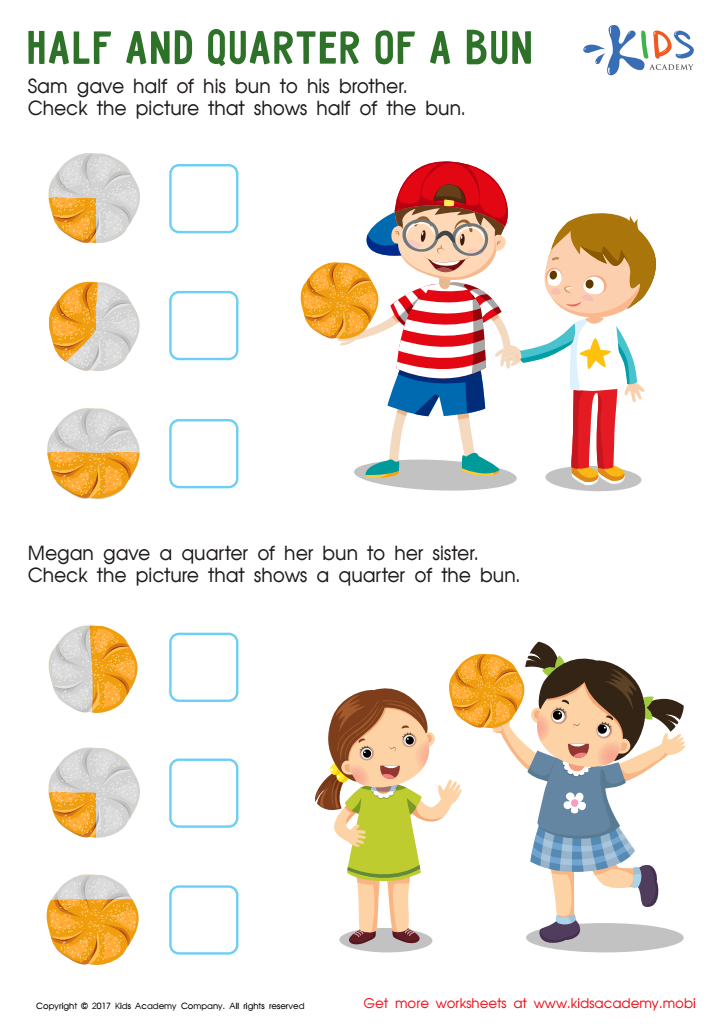
Half and Quarter of a Bun Worksheet
Half and Quarter of a Bun Worksheet
This worksheet introduces Sam, his brother and Megan, her sister, who are sharing buns. Show kids the picture of half and quarter to help them understand. Ask if they know what half and quarter of a shape is before progressing. Help them check the picture showing half and quarter of a bun.
Half and Quarter of a Bun Worksheet
Worksheet
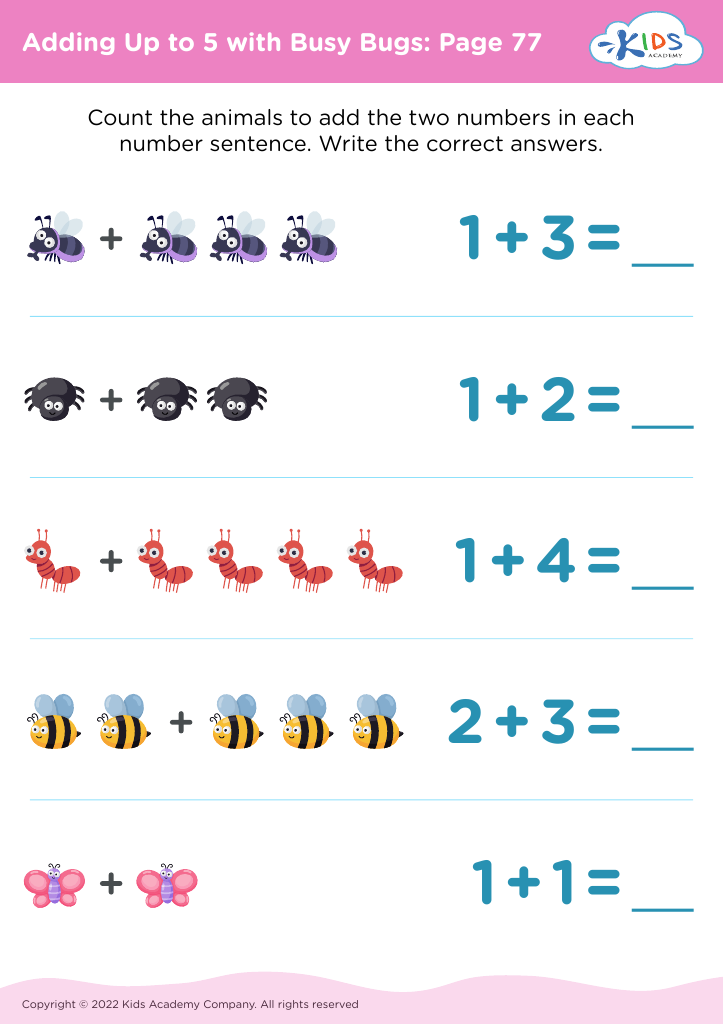
Adding Up to 5 with Busy Bugs: Page 77
Worksheet
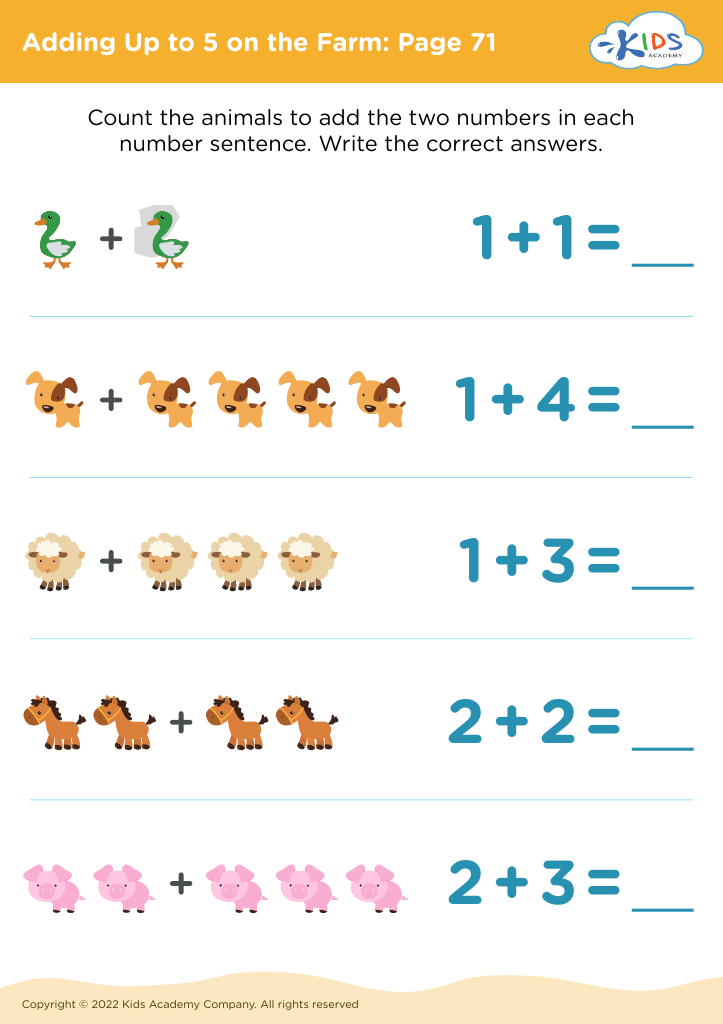
Adding Up to 5 on the Farm: Page 71
Worksheet
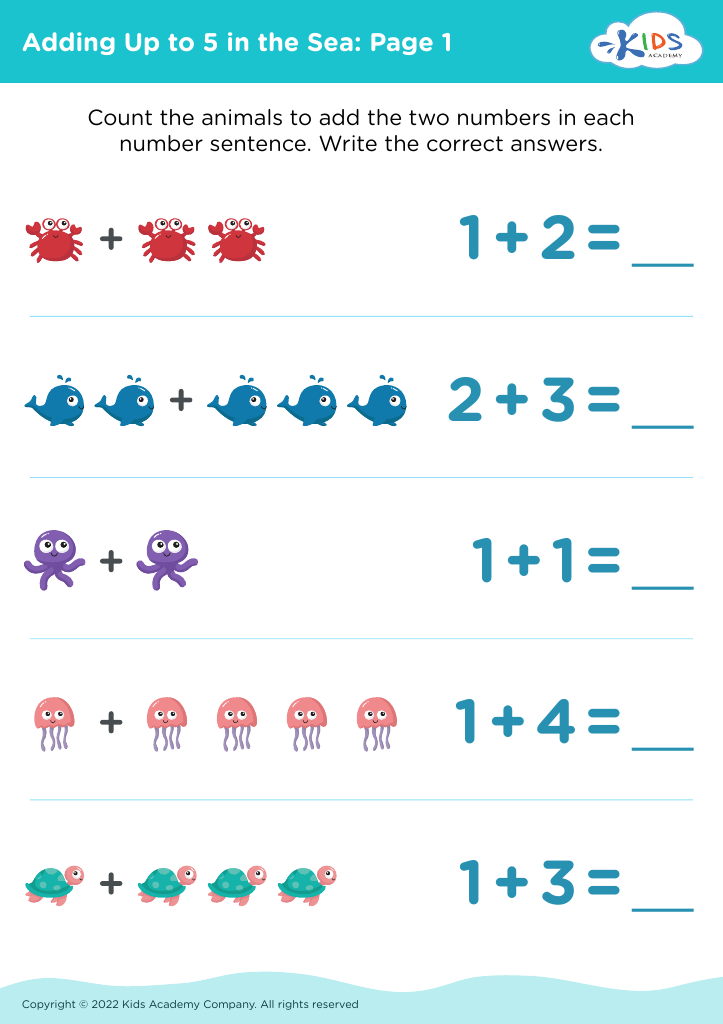
Adding Up to 5 in the Sea: Page 1

Adding Up to 5 in the Sea: Page 1

Adding Up to 5 in the Sea: Page 1
Worksheet
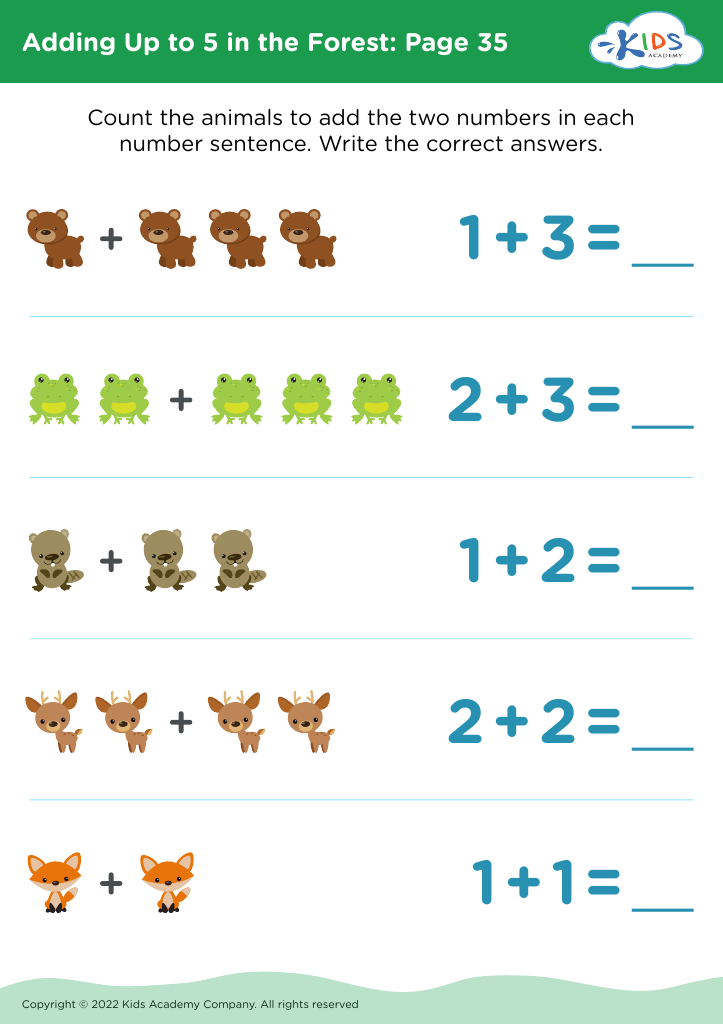
Adding Up to 5 in the Forest: Page 35
Worksheet
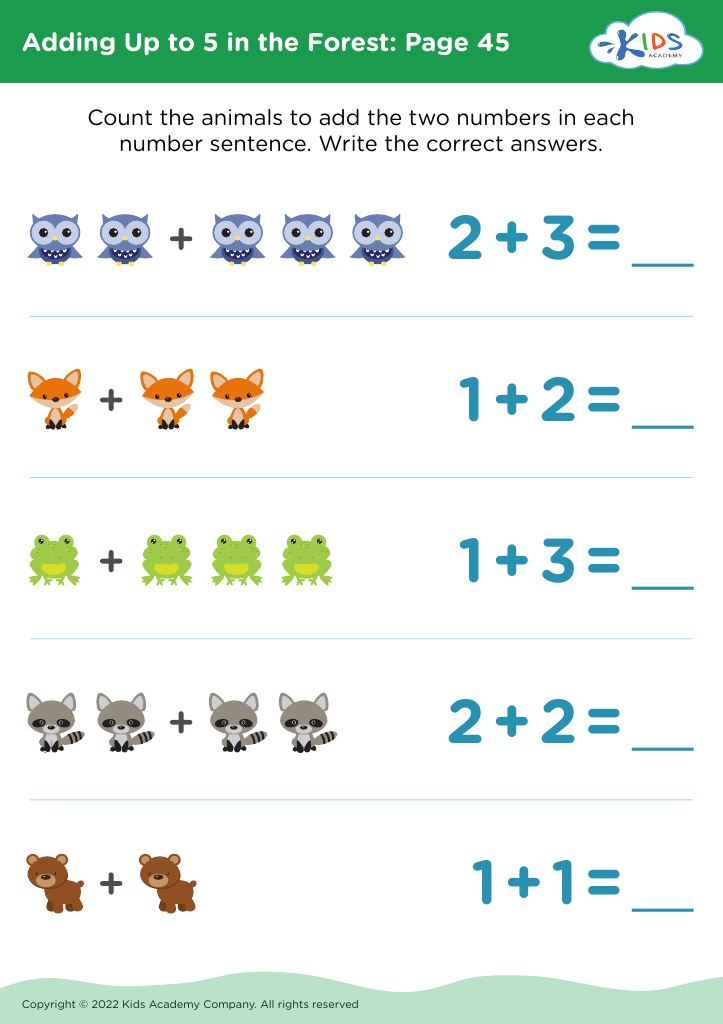
Adding Up to 5 in the Forest: Page 45
Worksheet
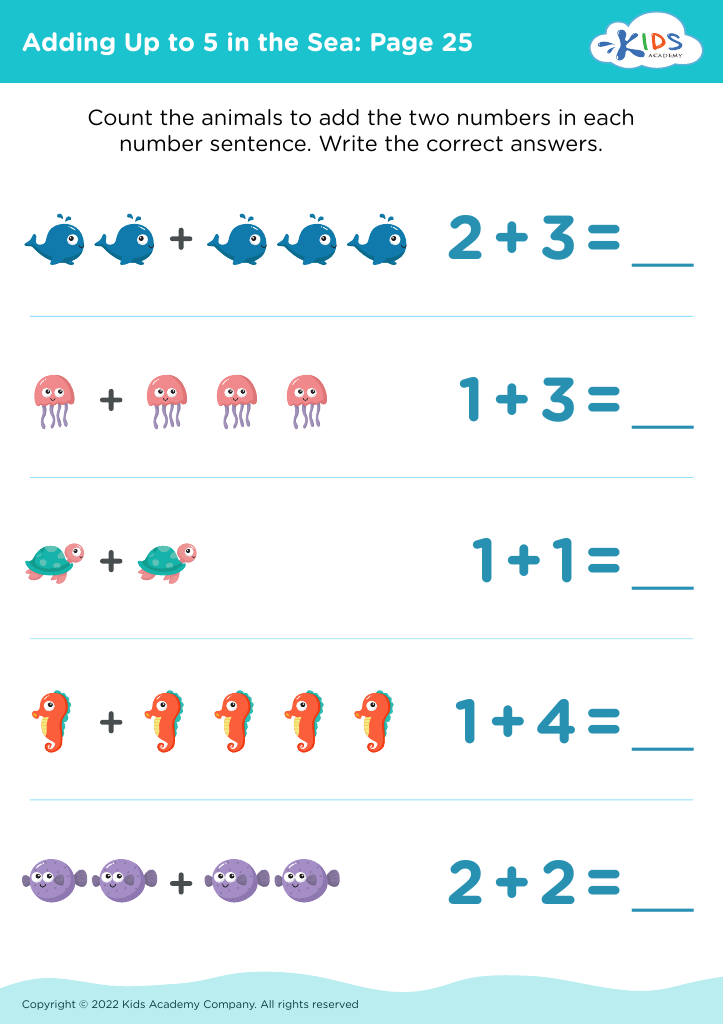
Adding Up to 5 in the Sea: Page 25
Worksheet
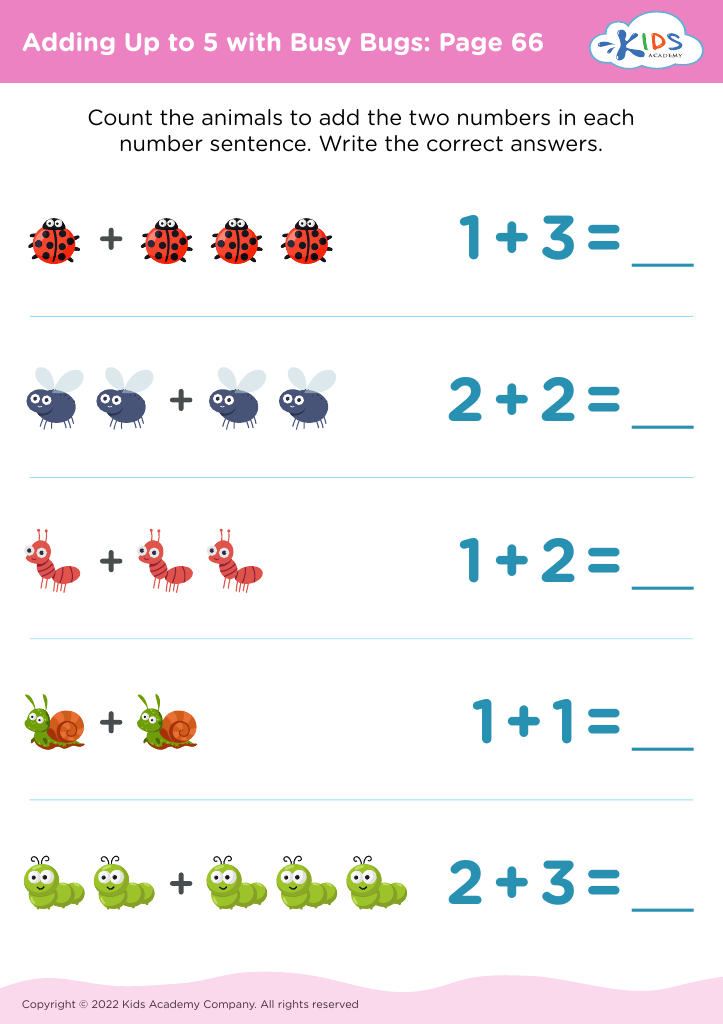
Adding Up to 5 with Busy Bugs: Page 66
Worksheet
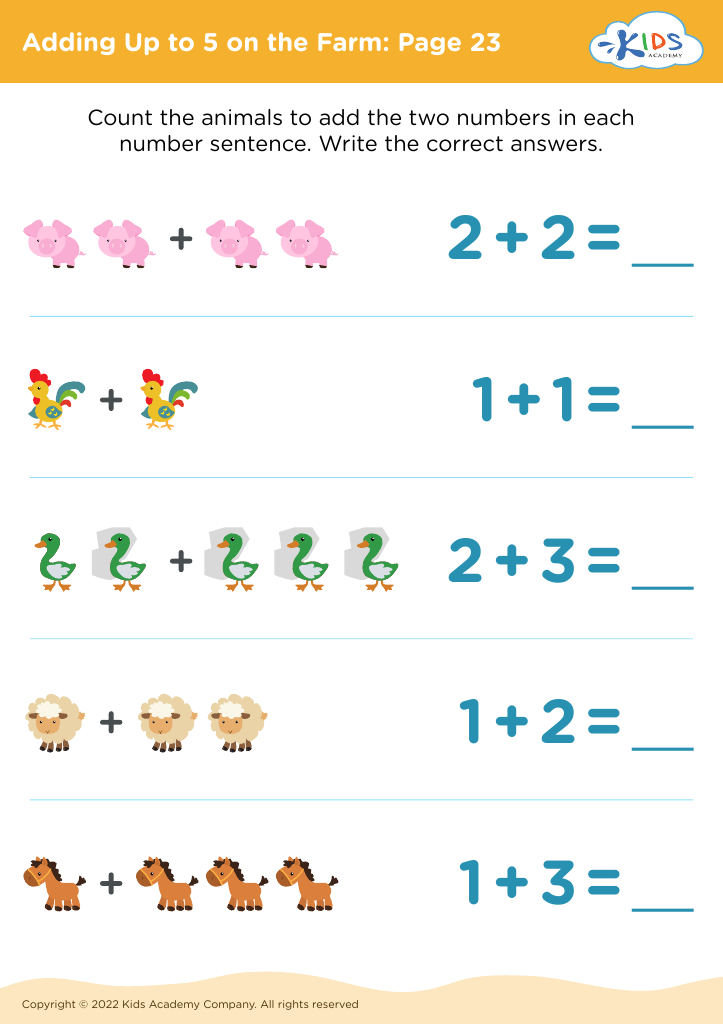
Adding Up to 5 on the Farm: Page 23
Worksheet
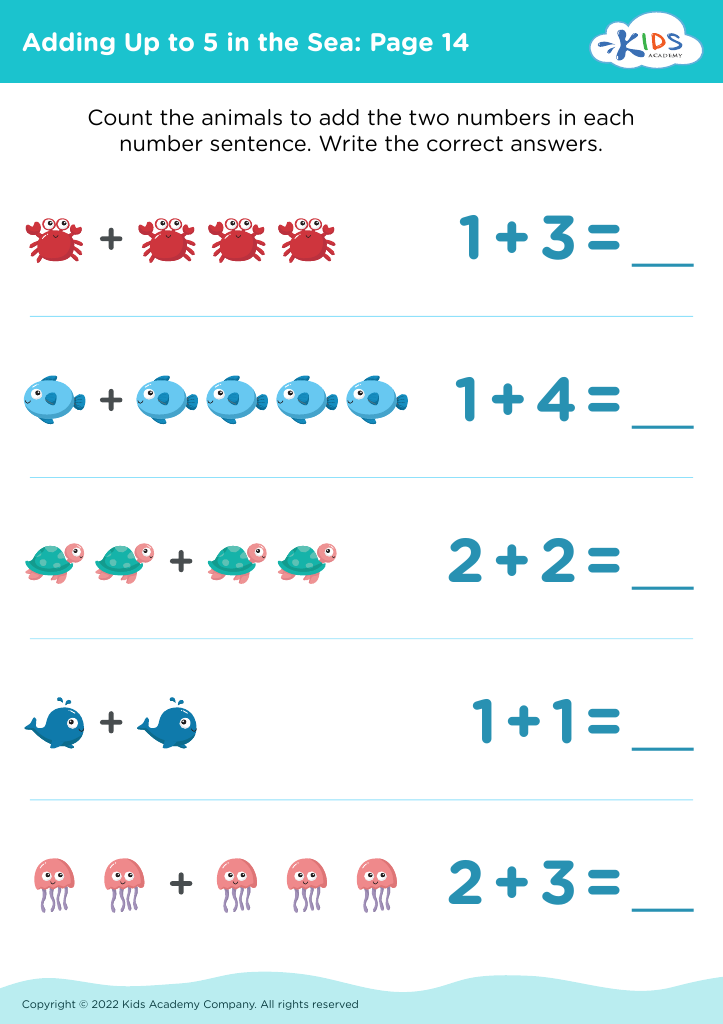
Adding Up to 5 in the Sea: Page 14
Worksheet
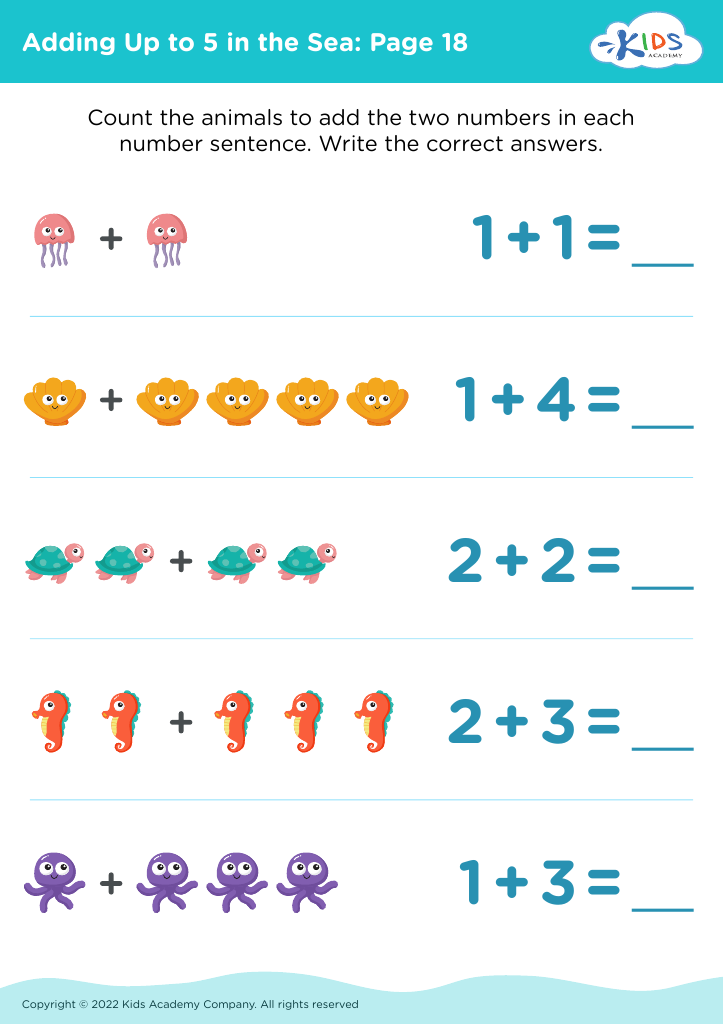
Adding Up to 5 in the Sea: Page 18
Worksheet
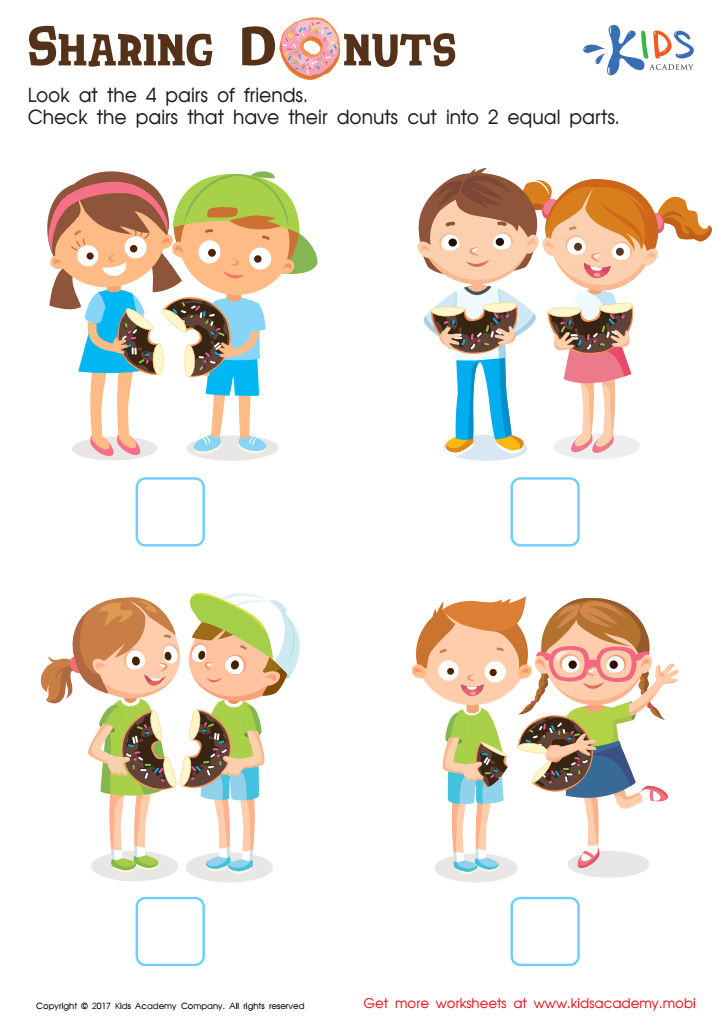
Sharing Donuts Worksheet
Sharing Donuts Worksheet
Get your kids to check which of the 4 pairs of friends in the worksheet have evenly-split donuts. No one likes being cheated out of a treat, so it's important to make sure the donuts are divided fairly. Plus, your kids will love the challenge!
Sharing Donuts Worksheet
Worksheet
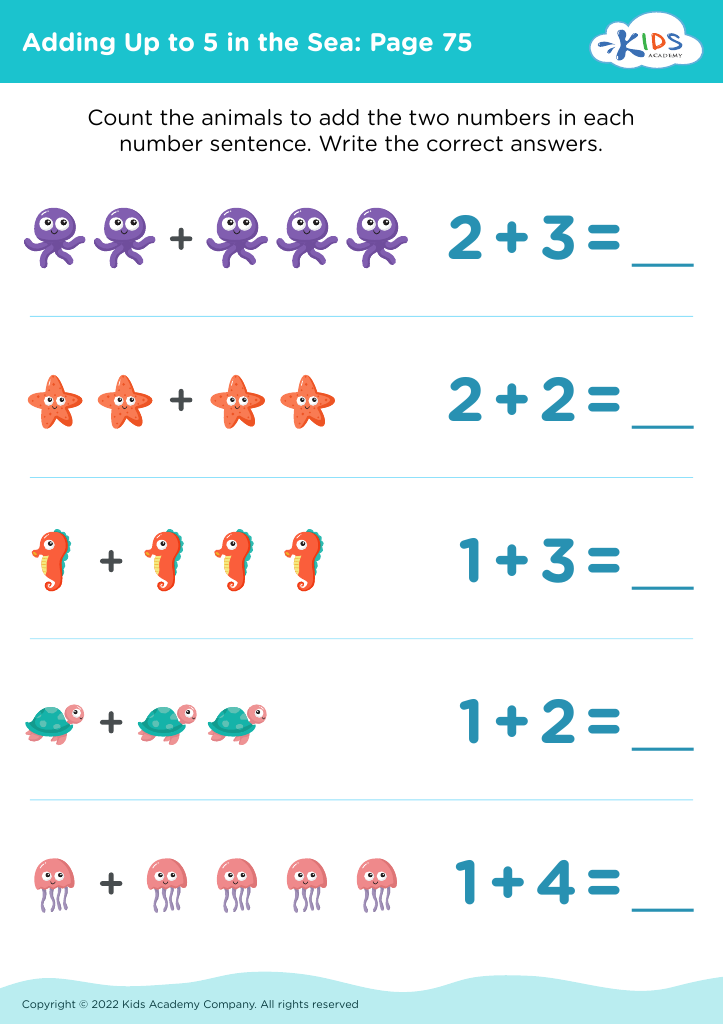
Adding Up to 5 in the Sea: Page 75
Worksheet
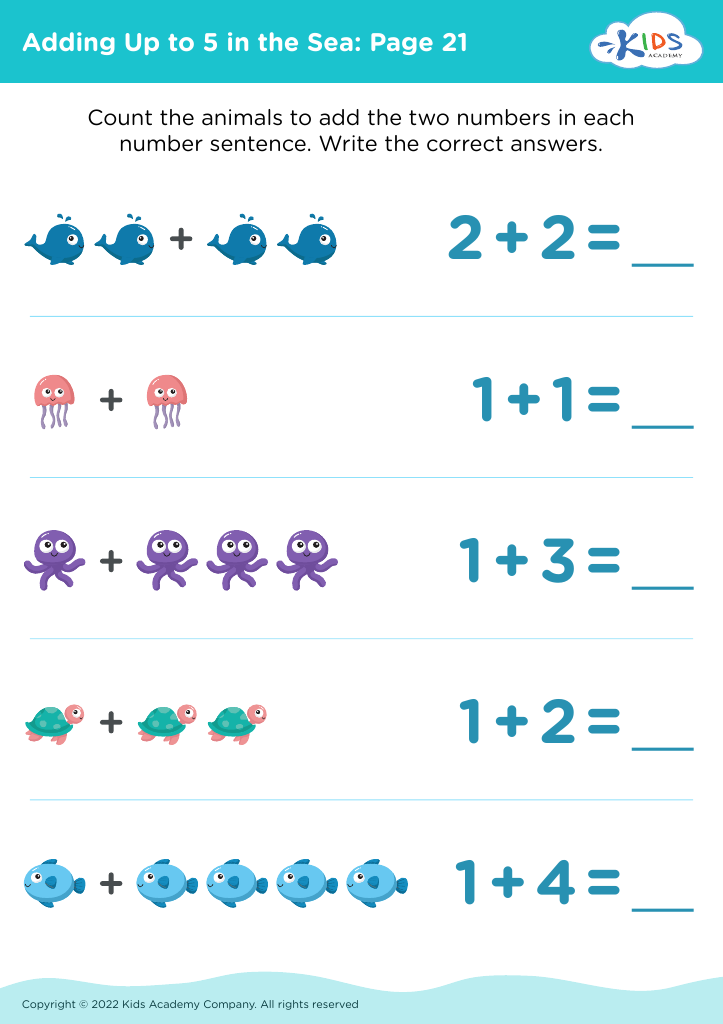
Adding Up to 5 in the Sea: Page 21
Worksheet
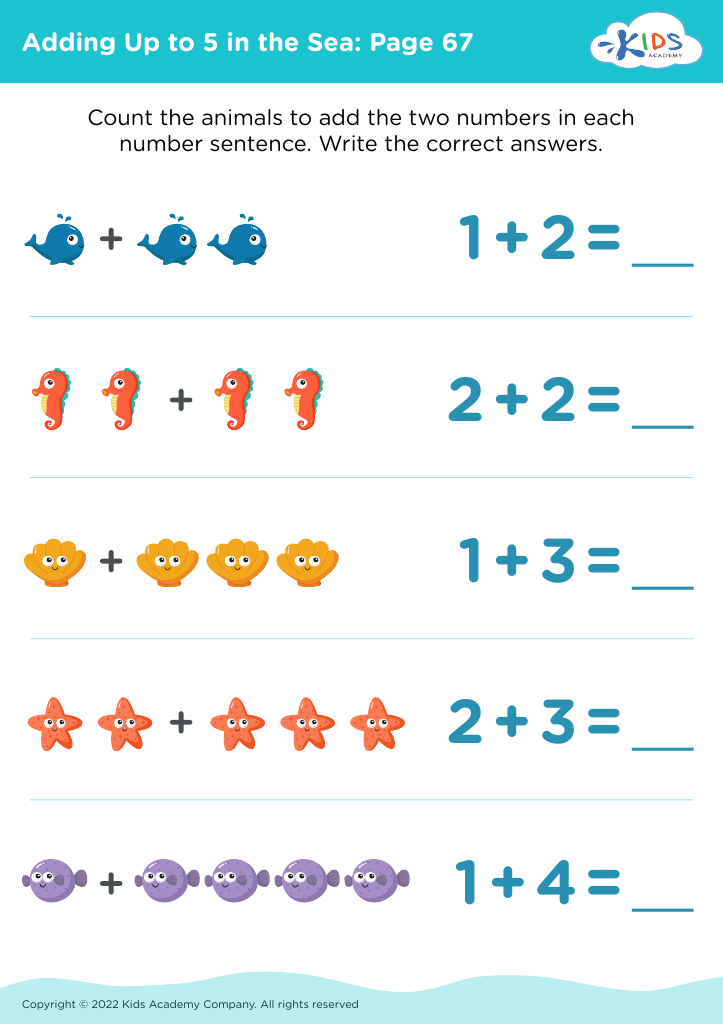
Adding Up to 5 in the Sea: Page 67
Worksheet
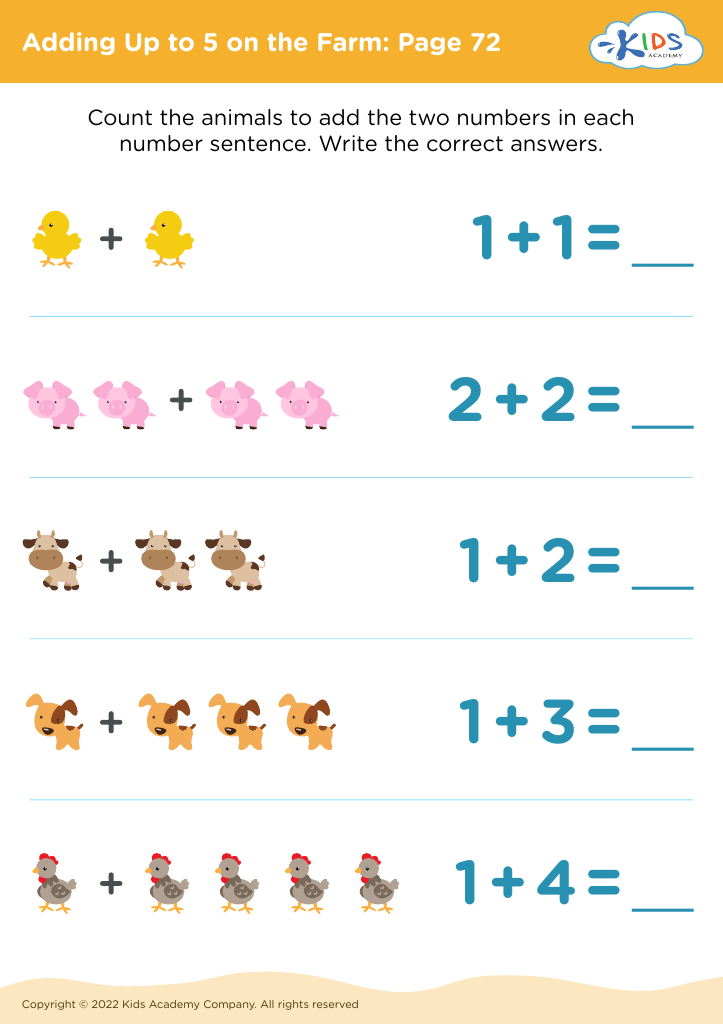
Adding Up to 5 on the Farm: Page 72
Worksheet
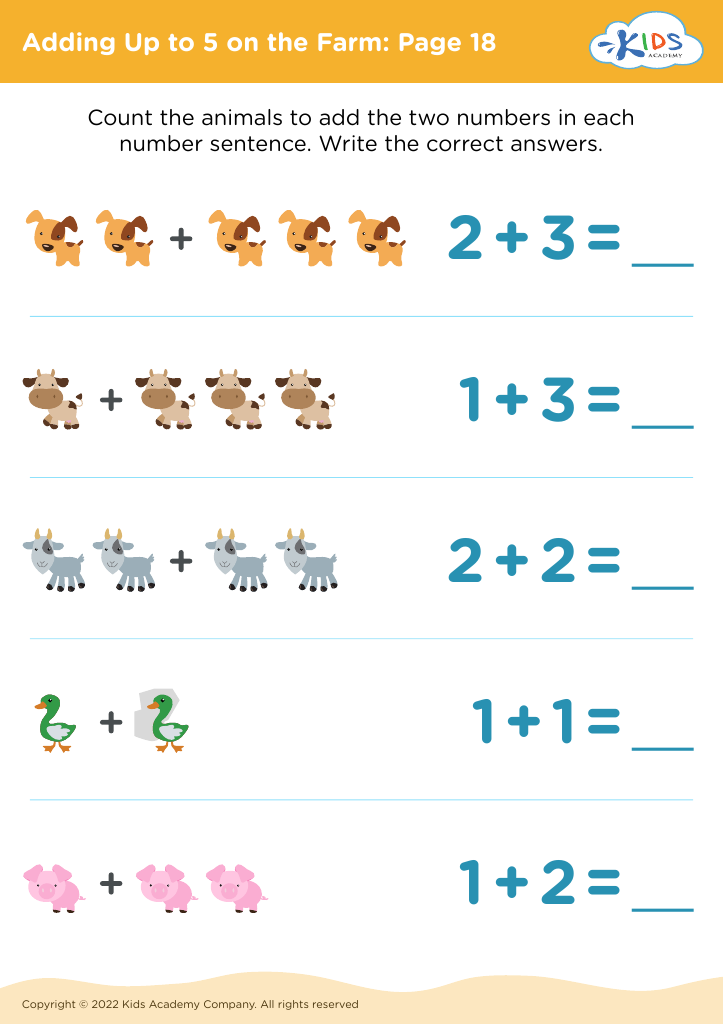
Adding Up to 5 on the Farm: Page 18
Worksheet
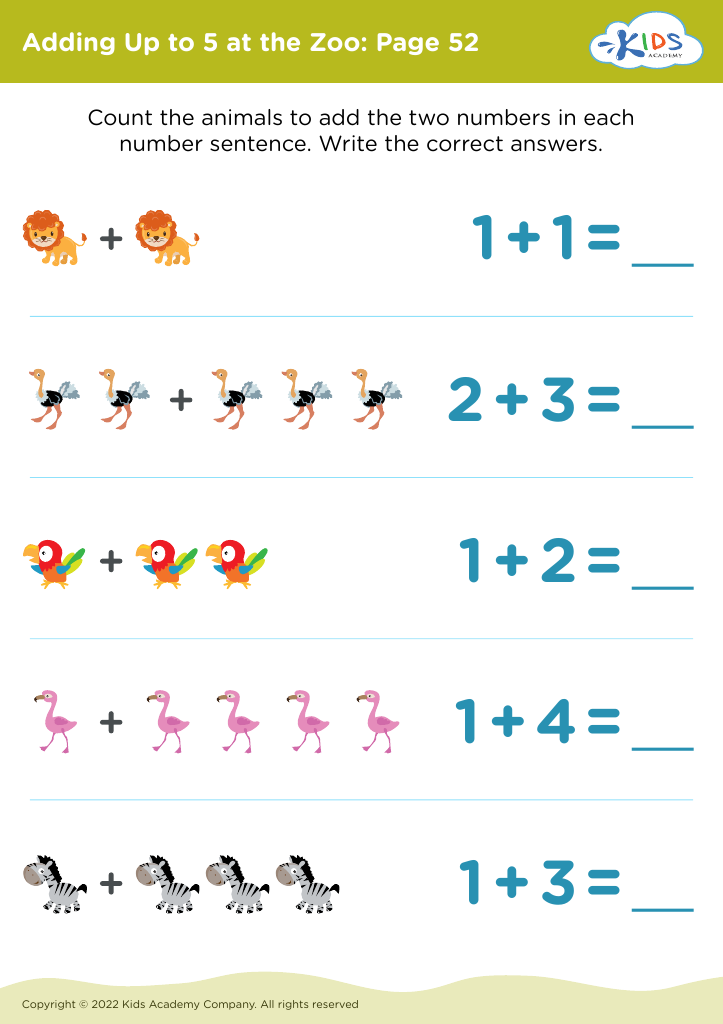
Adding Up to 5 at the Zoo: Page 52
Worksheet
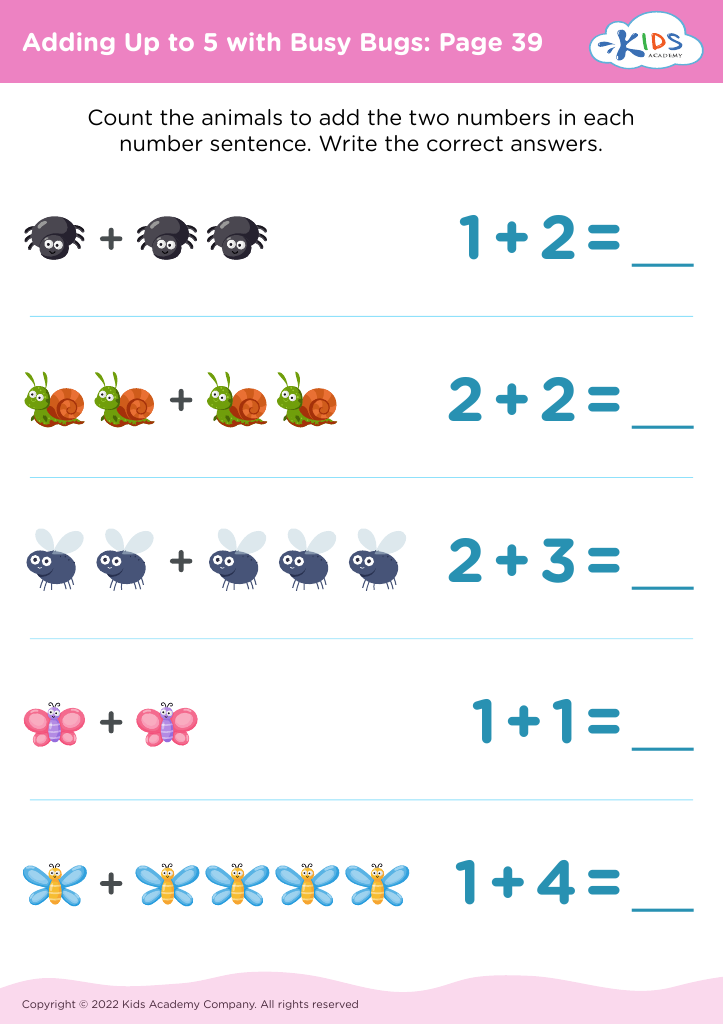
Adding Up to 5 with Busy Bugs: Page 39
Worksheet


Visual learning is a crucial aspect of education for children aged 5-6, as it harnesses their natural inclination to process information visually. At this age, children's brains are rapidly developing, and they are highly receptive to visual stimuli, making learning through pictures, diagrams, and videos particularly effective.

Engaging with visual content can enhance comprehension and memory retention. For example, using colorful illustrations in storybooks helps children envision narratives, thereby improving their understanding and enjoyment of reading. Similarly, visual aids in math, like charts or block manipulatives, can simplify complex concepts, fostering a stronger grasp of fundamental skills.

Moreover, visual learning supports diverse learning styles. Many children may struggle with traditional text-based instruction, but visuals can bridge those gaps, encouraging participation and motivation. This approach fosters creativity and critical thinking as children analyze images and relate them to real-world contexts.

By investing in visual learning strategies—through interactive lessons, storytelling, and art—parents and teachers can nurture a love for learning, building a solid foundation for future academic success. In a visually-oriented world, teaching children to interpret and create visuals equips them with essential skills for effective communication and problem-solving as they grow.