Visual discrimination 2D Shapes Worksheets for Ages 5-6
4 filtered results
-
From - To
Enhance your child's visual discrimination skills with our engaging 2D Shapes Worksheets designed for ages 5-6! These fun, printable activities help young learners identify, compare, and differentiate various shapes through vibrant illustrations and interactive exercises. Perfect for preschool and kindergarten kids, our worksheets promote critical thinking, improve attention to detail, and encourage a solid foundation in math. Each worksheet offers a variety of challenges, from matching shapes to sorting them by size or color, making learning both enjoyable and effective. Foster your child’s creativity and confidence as they explore the exciting world of 2D shapes with our comprehensive resources!
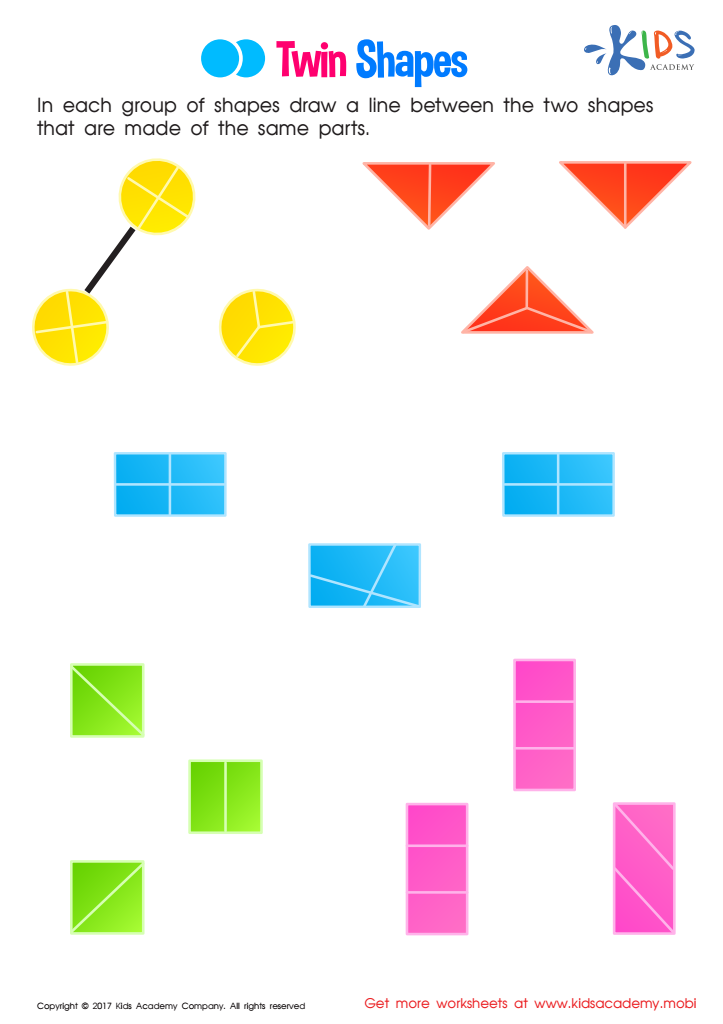
Twin Shapes Worksheet
 Assign to My Students



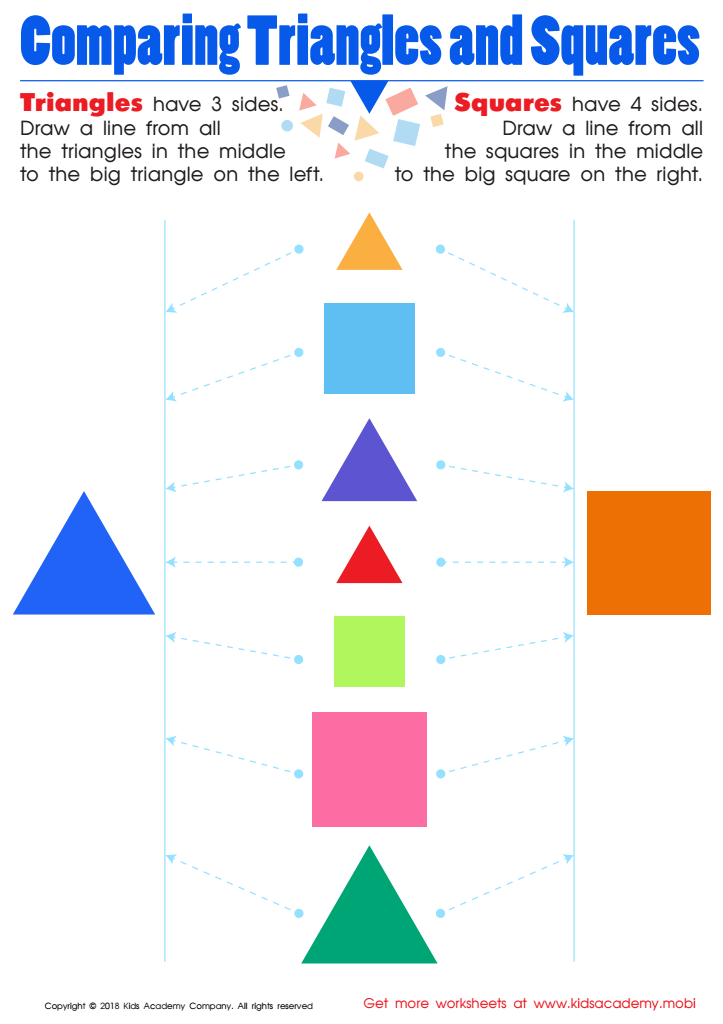
Comparing Triangles Squares Worksheet
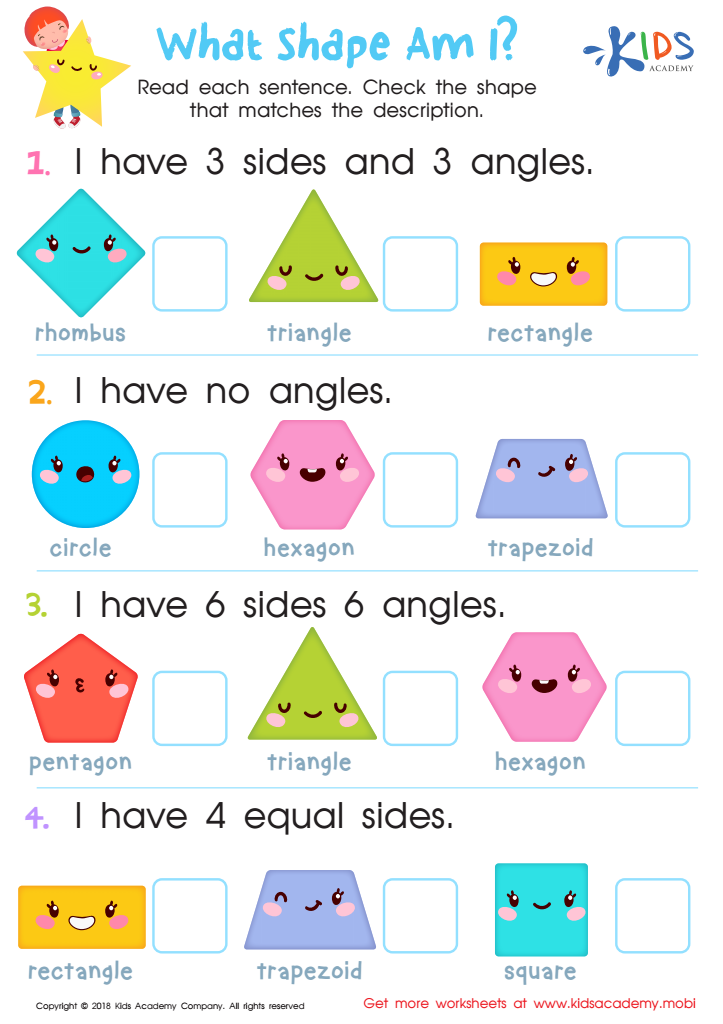
What Shape Am I? Worksheet
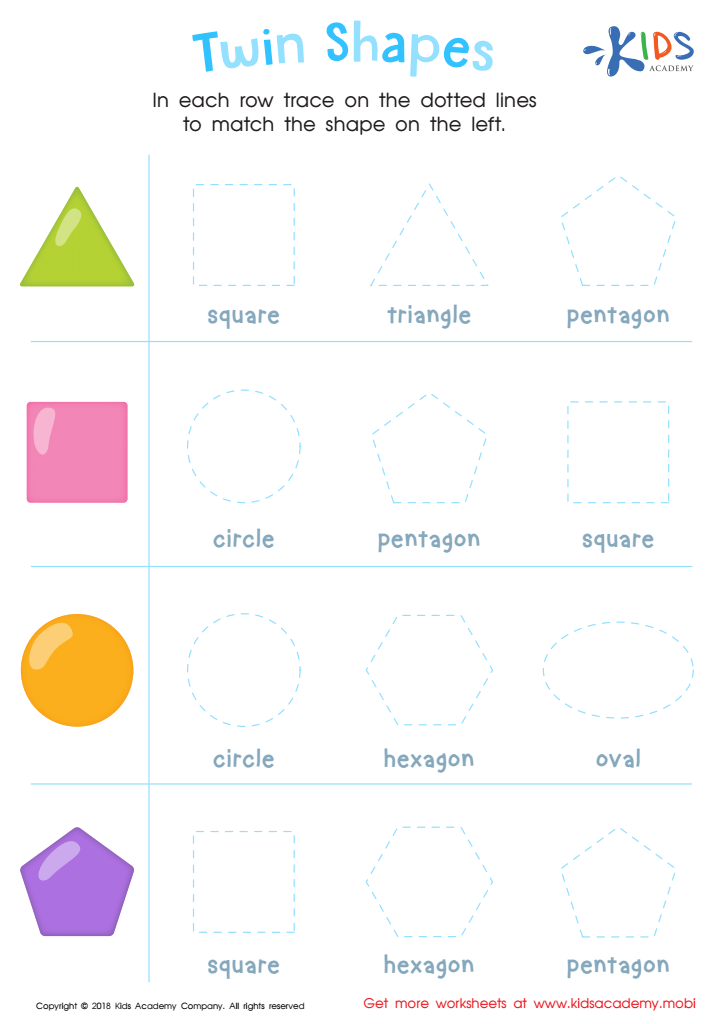
Twin Shapes Dot-to-Dot Worksheet








Visual discrimination of 2D shapes is crucial for children aged 5-6, as it lays the foundation for a multitude of cognitive and academic skills. At this age, children are developing important visual processing abilities, which influence their understanding of the world around them. Recognizing, comparing, and contrasting different shapes helps children enhance their problem-solving skills and logical reasoning.
Moreover, visual discrimination is integral to early mathematics, paving the way for geometry concepts as students progress. Children who can easily identify shapes can better understand spatial relationships, measure, and classify objects, making math more accessible and enjoyable.
In addition to math, strong visual discrimination supports reading development. Recognizing letter shapes, differences, and similarities contributes to phonemic awareness, aiding literacy skills at an early stage. Loaded with educational value, visually discerning shapes fosters critical thinking and improves fine motor skills through activities such as drawing and crafting.
Finally, in a world that increasingly relies on visual literacy, nurturing a child’s ability to discriminate between shapes and forms is essential for future success. By focusing on 2D shapes, parents and teachers can significantly enhance a child's cognitive capability, setting a solid groundwork for lifelong learning.