Visual Perception Skills 2D Shapes Worksheets for Ages 5-6
3 filtered results
-
From - To
Enhance your child's visual perception skills with our engaging 2D Shapes Worksheets designed for ages 5-6. These carefully crafted activities help young learners identify, differentiate, and understand basic 2D shapes while boosting their recognition abilities and cognitive development. Perfect for both classroom and home use, our worksheets foster analytical skills through fun, interactive exercises. Prepare your child for advanced math concepts with our visually appealing and educational worksheets. Ignite their imagination and make learning enjoyable with our expertly designed printables. Dive into a world of shapes and set the foundation for future geometric success!
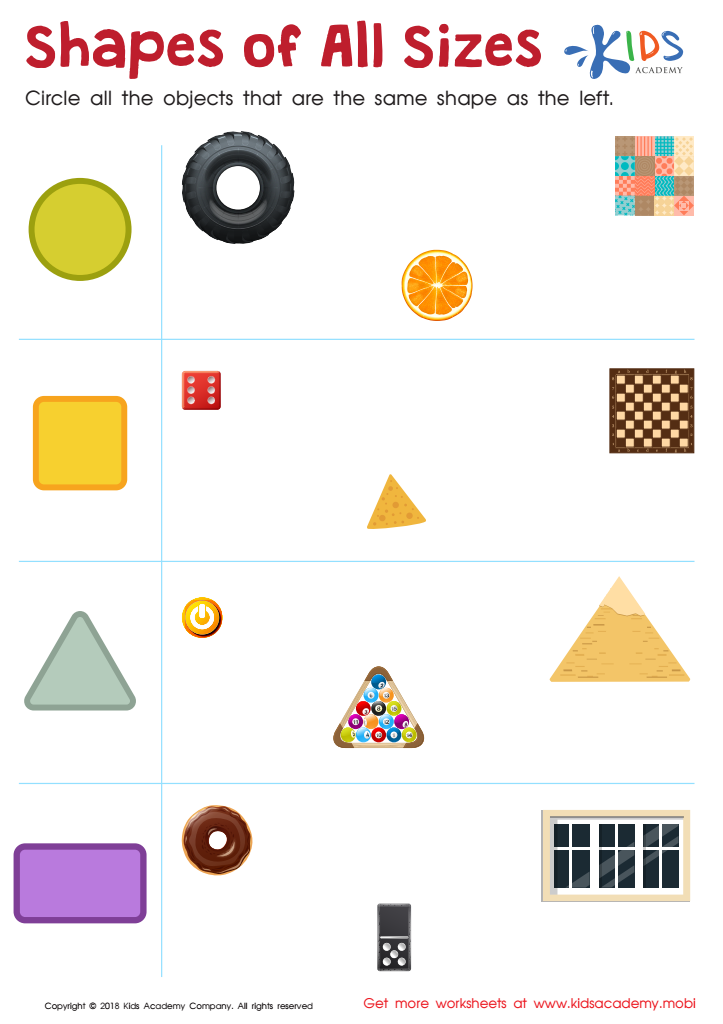
Shapes of All Sizes Worksheet
 Assign to My Students











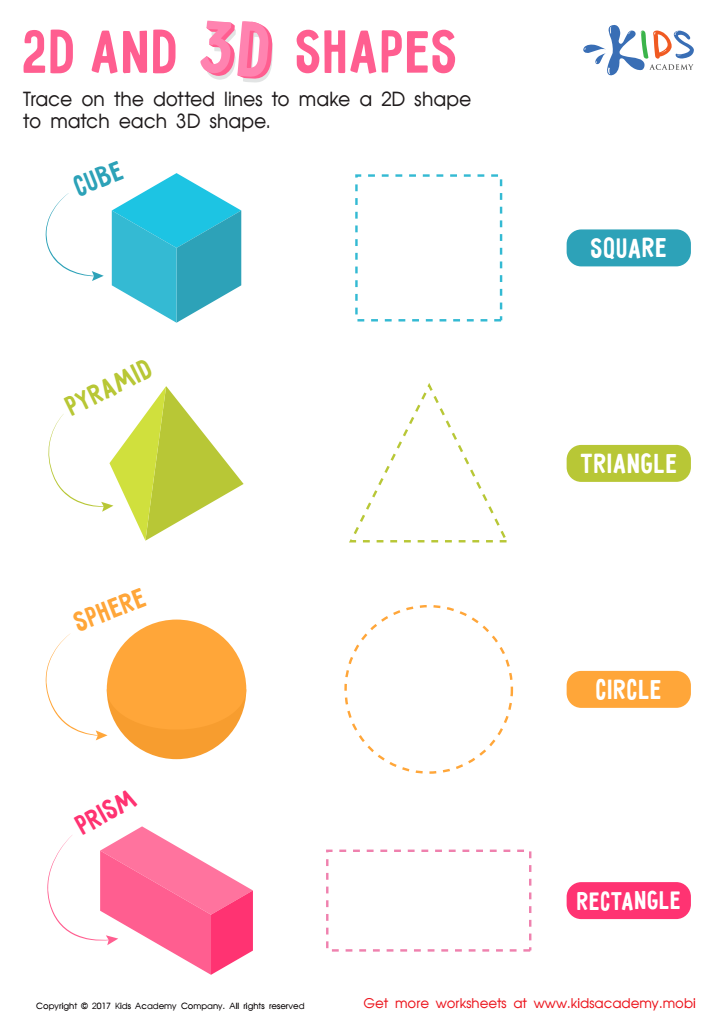
2D and 3D Shapes Worksheet
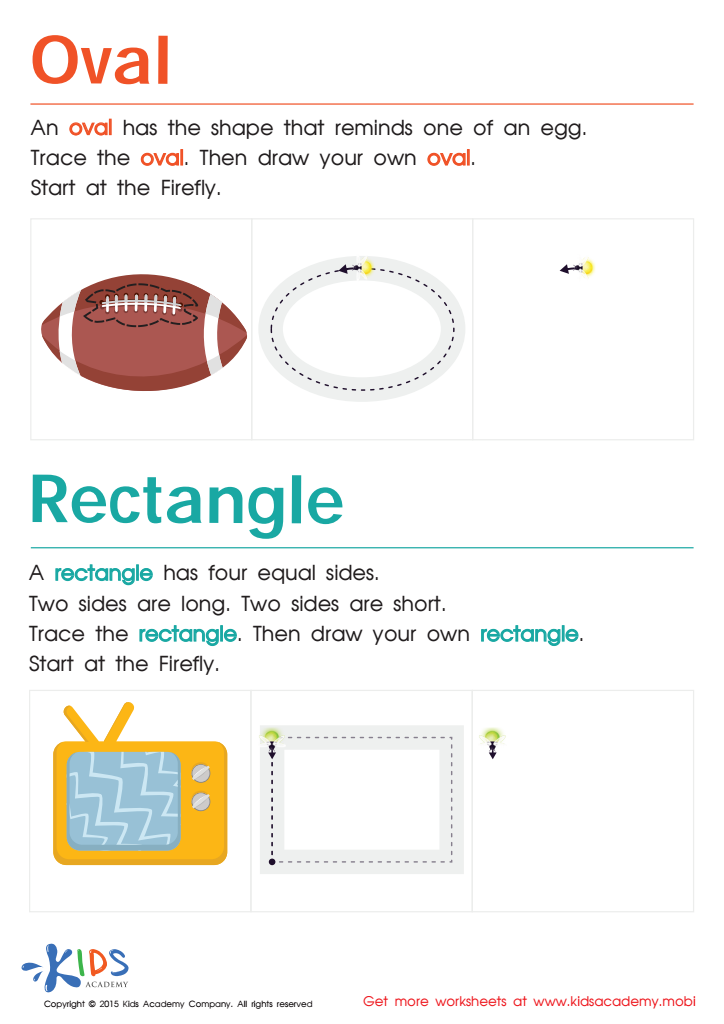
Easy Drawing of Ovals And Rectangles Worksheet








Visual perception skills, particularly in understanding 2D shapes, are crucial for children aged 5-6 as they form the foundation of early learning and development. At this stage, children are beginning to comprehend and make sense of the world around them, and visual perception is key to this process. These skills allow children to recognize, compare, and differentiate between various shapes, which is essential for both cognitive and academic growth.
Firstly, recognizing 2D shapes enhances spatial awareness and geometric thinking, which are vital for solving everyday problems and succeeding in subjects like math and science. Knowing how to identify and understand shapes helps children grasp more abstract concepts later in life.
Moreover, visual perception skills in shape recognition support reading and writing readiness. These skills enable children to distinguish between different letters and numbers, which are essentially composed of basic shapes. This recognition is critical for developing literacy skills, including word formation and reading fluency.
Additionally, developing these skills boosts fine motor development. Activities that involve tracing or drawing shapes improve hand-eye coordination and dexterity, preparing children for more complex tasks.
Overall, parents and teachers should prioritize fostering visual perception skills related to 2D shapes, as doing so equips children with fundamental abilities that underpin academic success and practical, everyday functioning.








