Filters

18 filtered results

Clear all filters
Favorites
With answer key
Interactive

18 filtered results

Difficulty Level

Grade


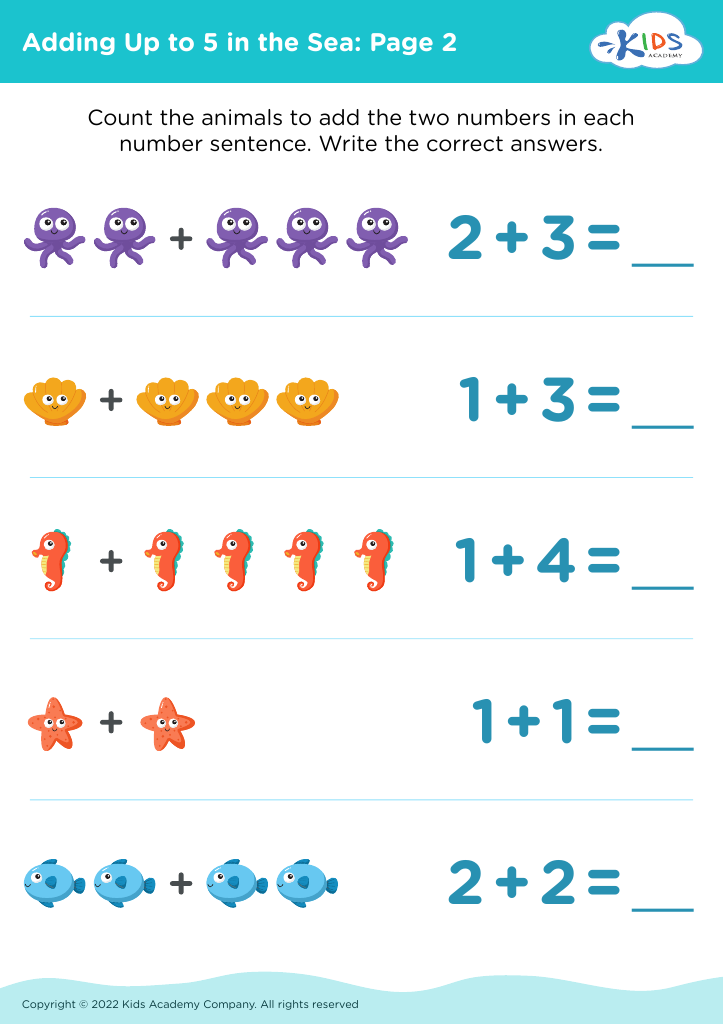
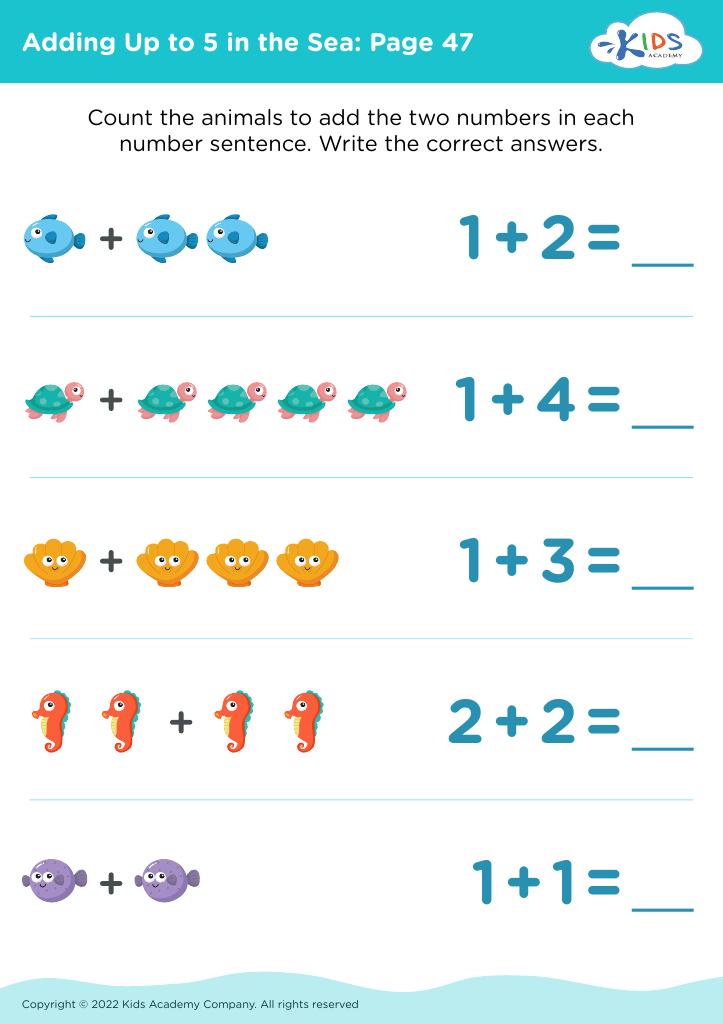
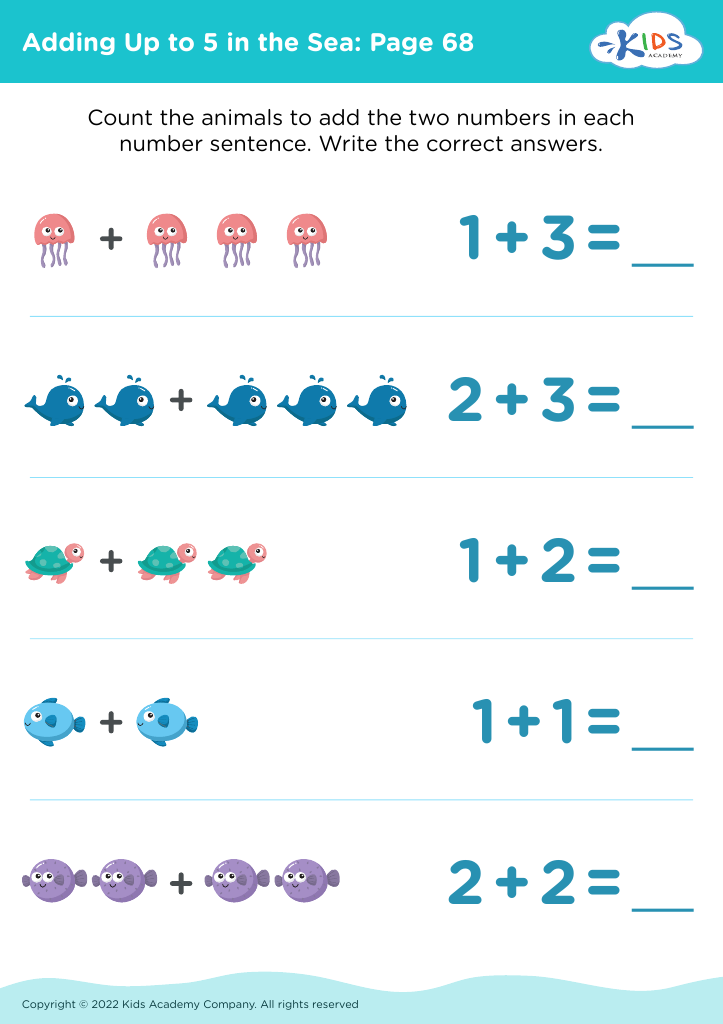
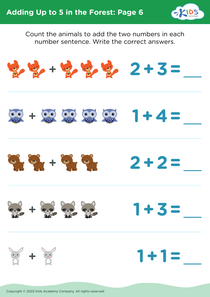
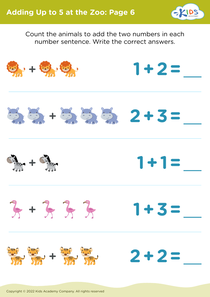
Discover our "Visual Learning Adding in the Sea Worksheets," specifically designed for children ages 5-6! These engaging, colorful worksheets support early math skills through visual aids and fun themes. Kids will dive into the ocean world while practicing addition using vibrant illustrations of sea creatures and interactive exercises. Each worksheet fosters comprehension and retention, making learning enjoyable and effective. Parents and educators can enhance children's mathematical abilities by utilizing these visual tools that build confidence in basic arithmetic concepts. Perfect for use at home or in the classroom, these worksheets provide a fantastic way to make learning meaningful and enjoyable!
Check out this FREE Trial Lesson on Adding in the Sea for age 5-6!

A

Favorites
With answer key
Interactive
  • 5-6
  • Visual Learning
  • Adding in the Sea
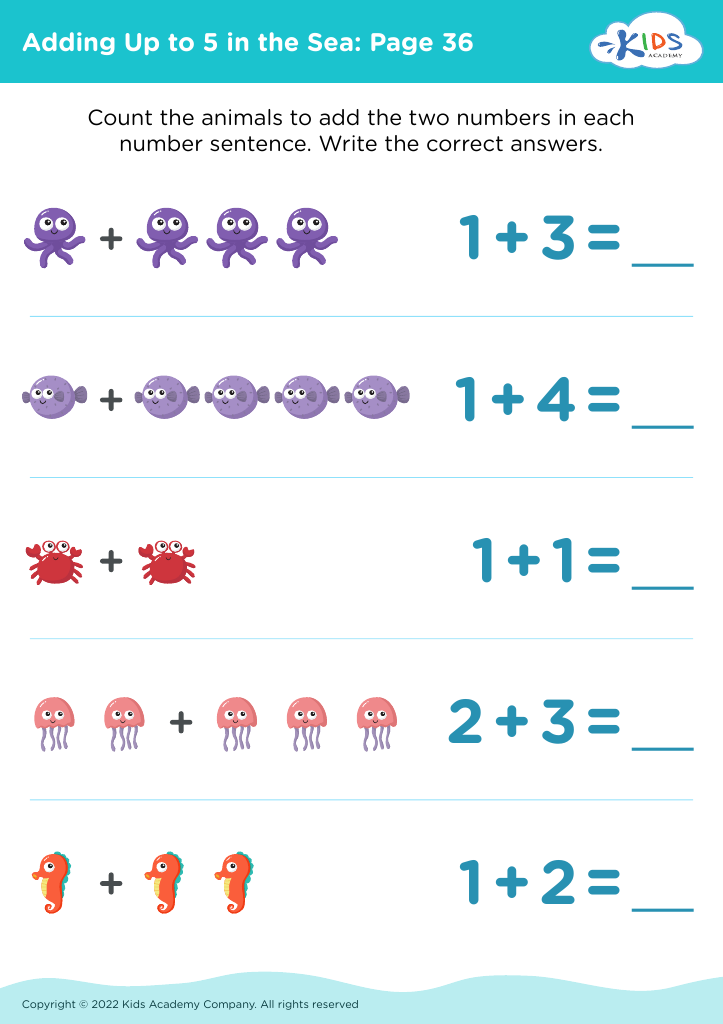
Adding Up to 5 in the Sea: Page 36
Worksheet
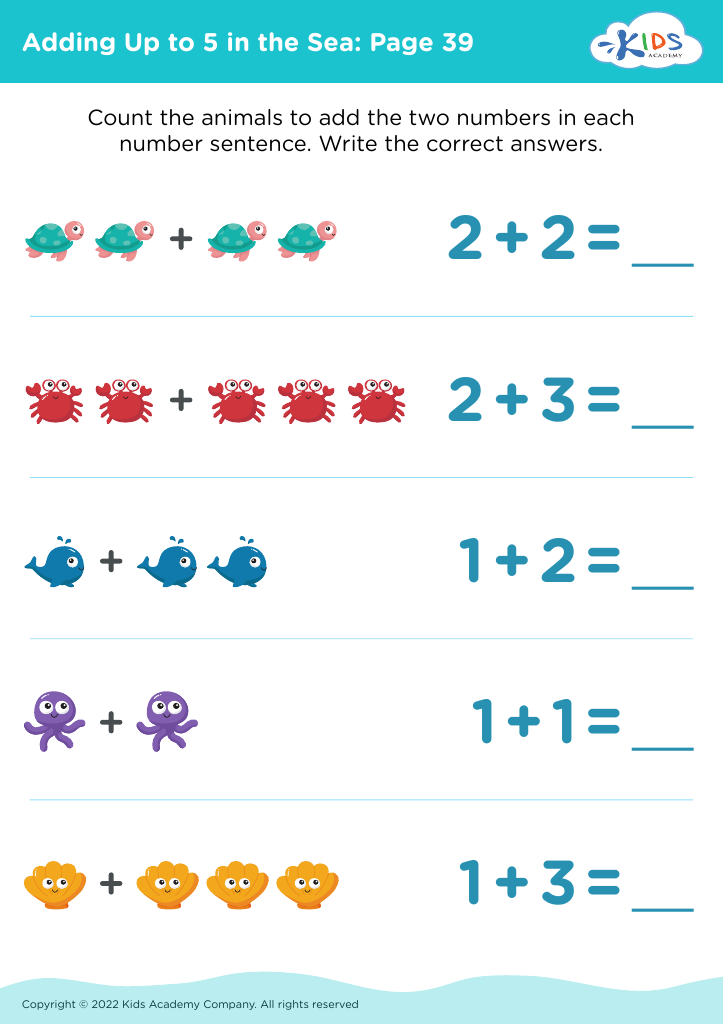
Adding Up to 5 in the Sea: Page 39
Worksheet
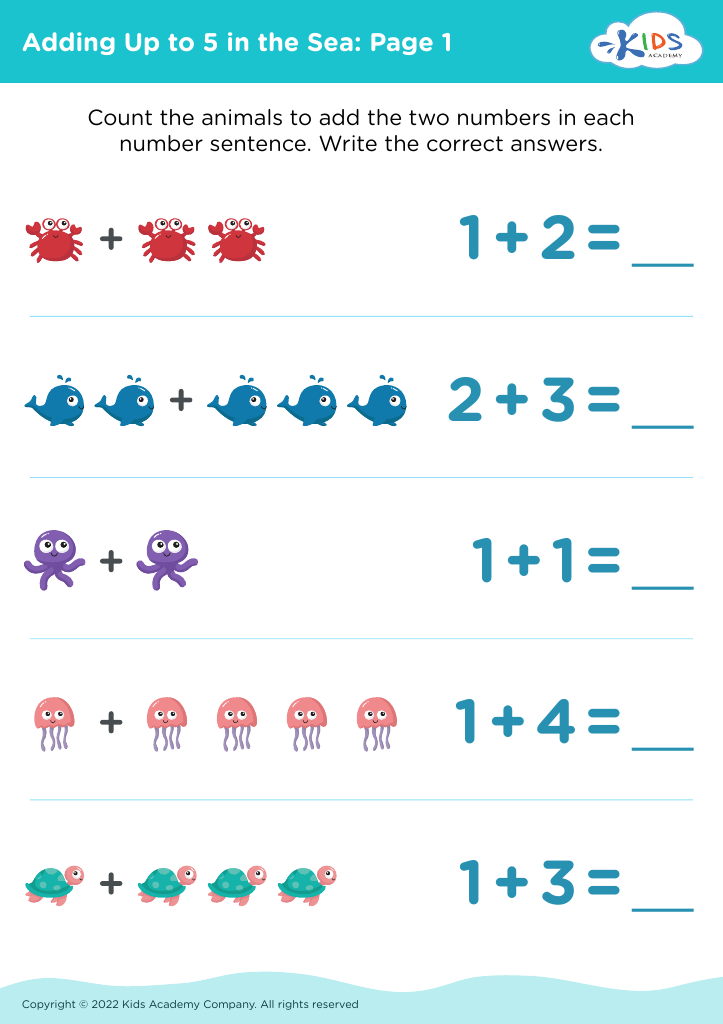
Adding Up to 5 in the Sea: Page 1

Adding Up to 5 in the Sea: Page 1

Adding Up to 5 in the Sea: Page 1
Worksheet
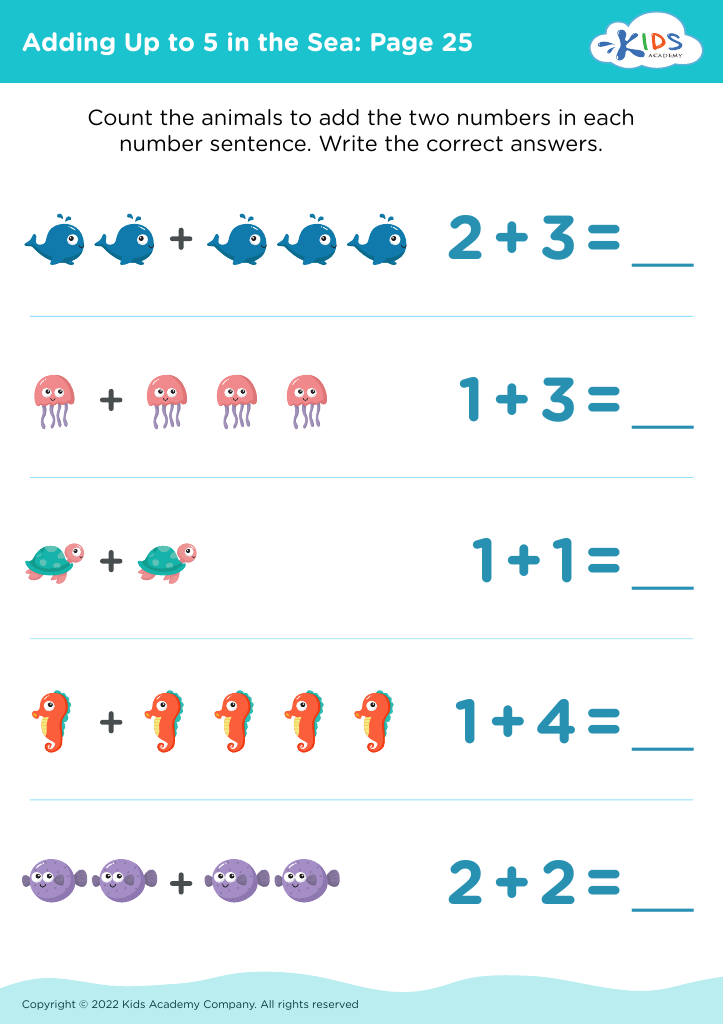
Adding Up to 5 in the Sea: Page 25
Worksheet
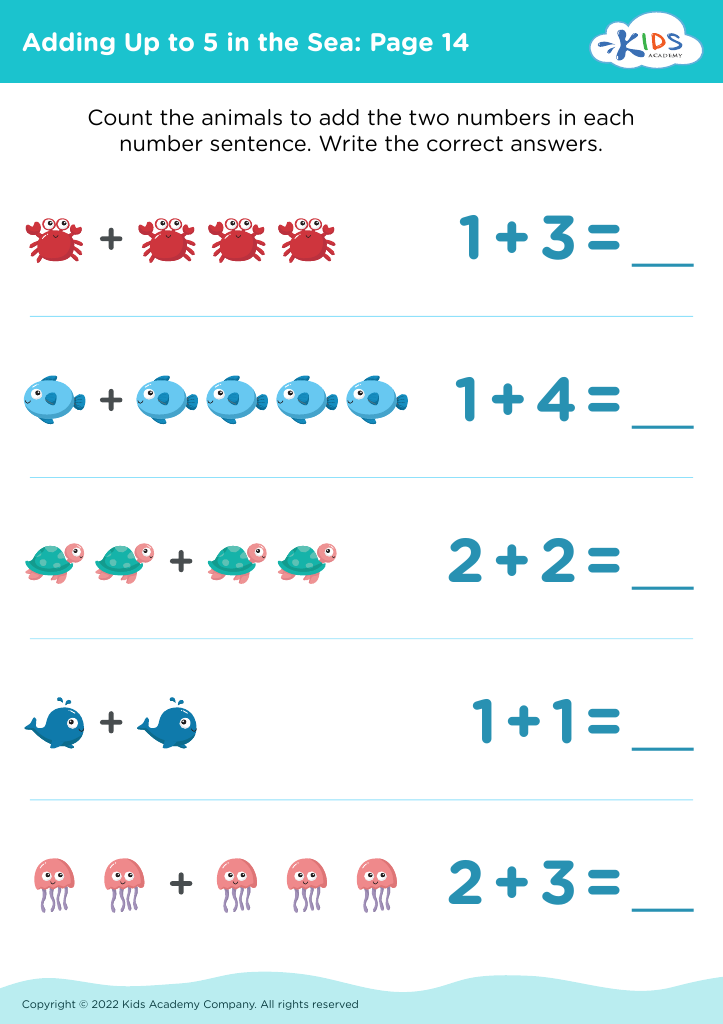
Adding Up to 5 in the Sea: Page 14
Worksheet
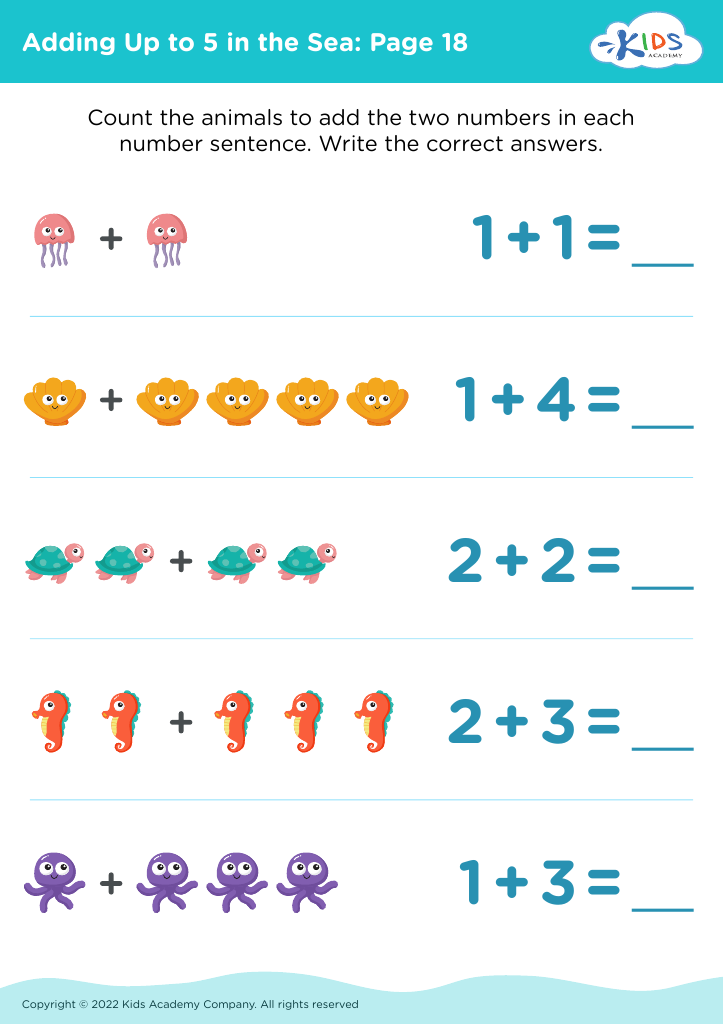
Adding Up to 5 in the Sea: Page 18
Worksheet
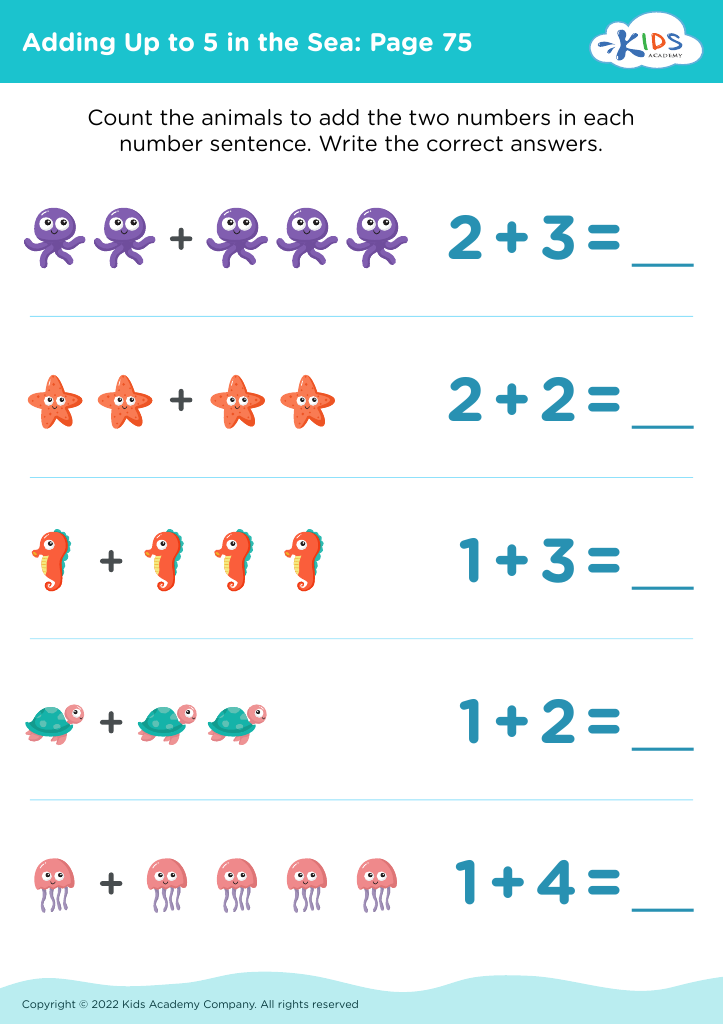
Adding Up to 5 in the Sea: Page 75
Worksheet
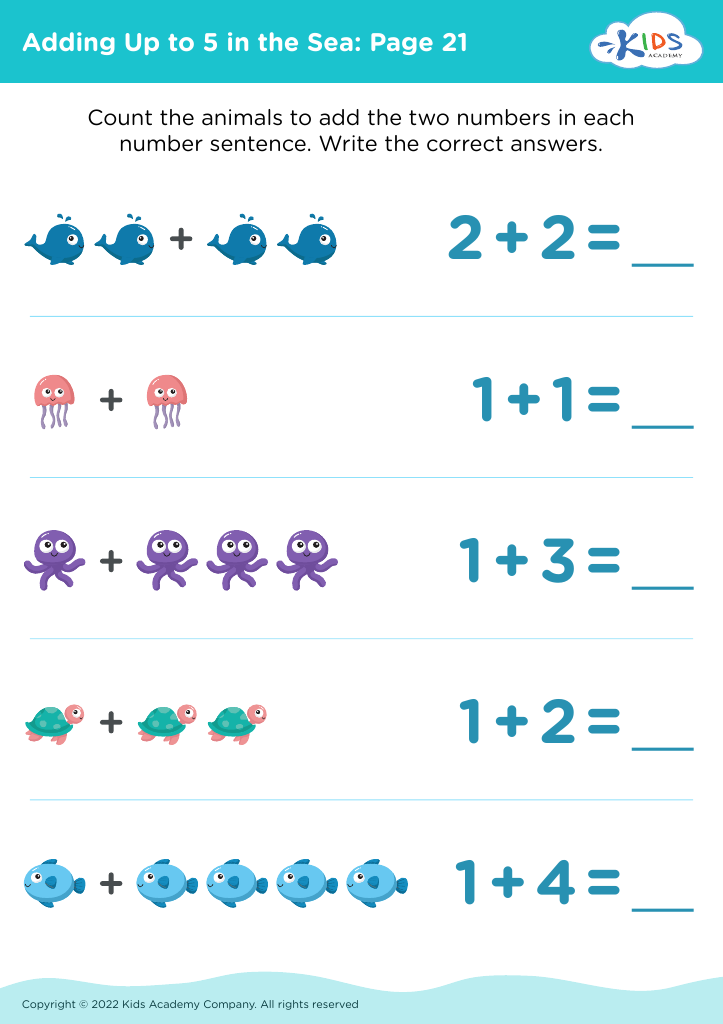
Adding Up to 5 in the Sea: Page 21
Worksheet
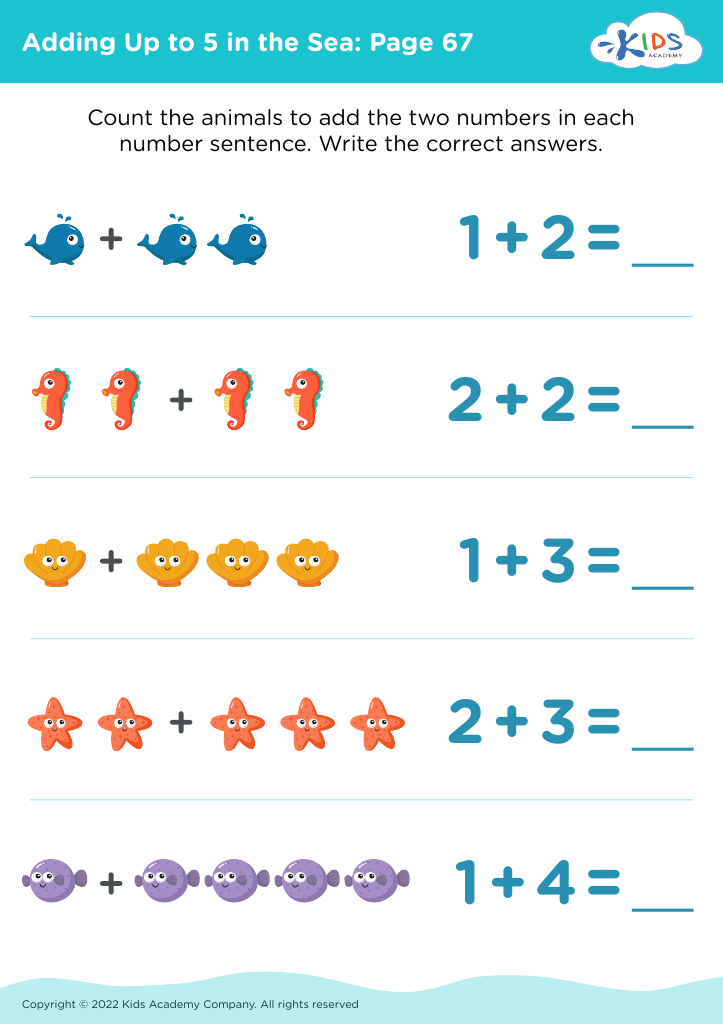
Adding Up to 5 in the Sea: Page 67
Worksheet
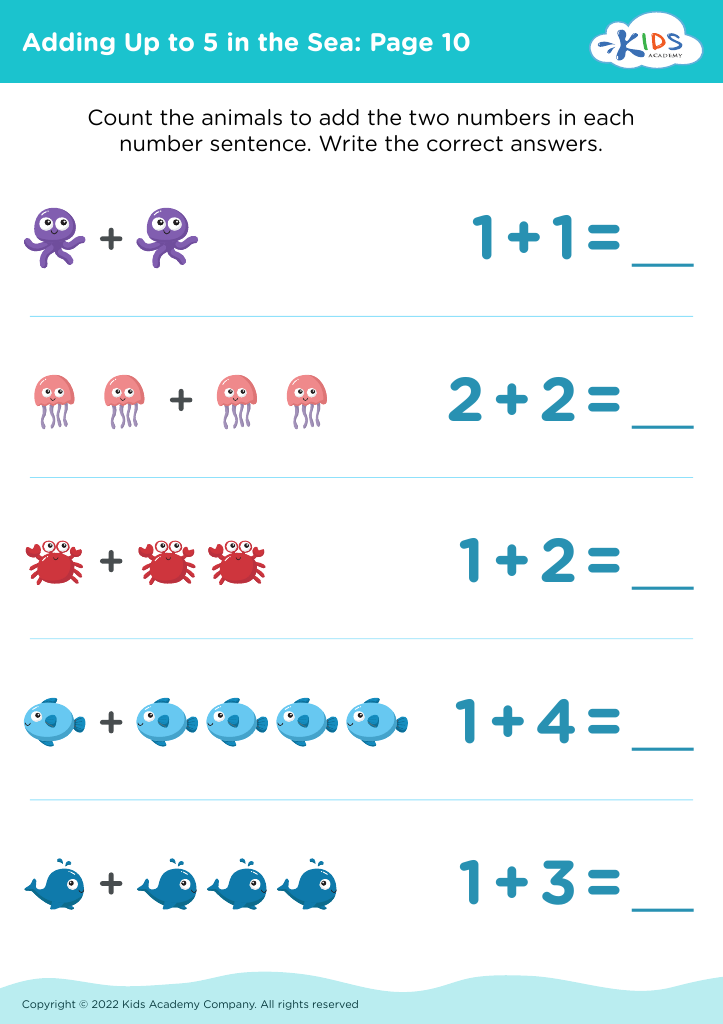
Adding Up to 5 in the Sea: Page 10
Worksheet
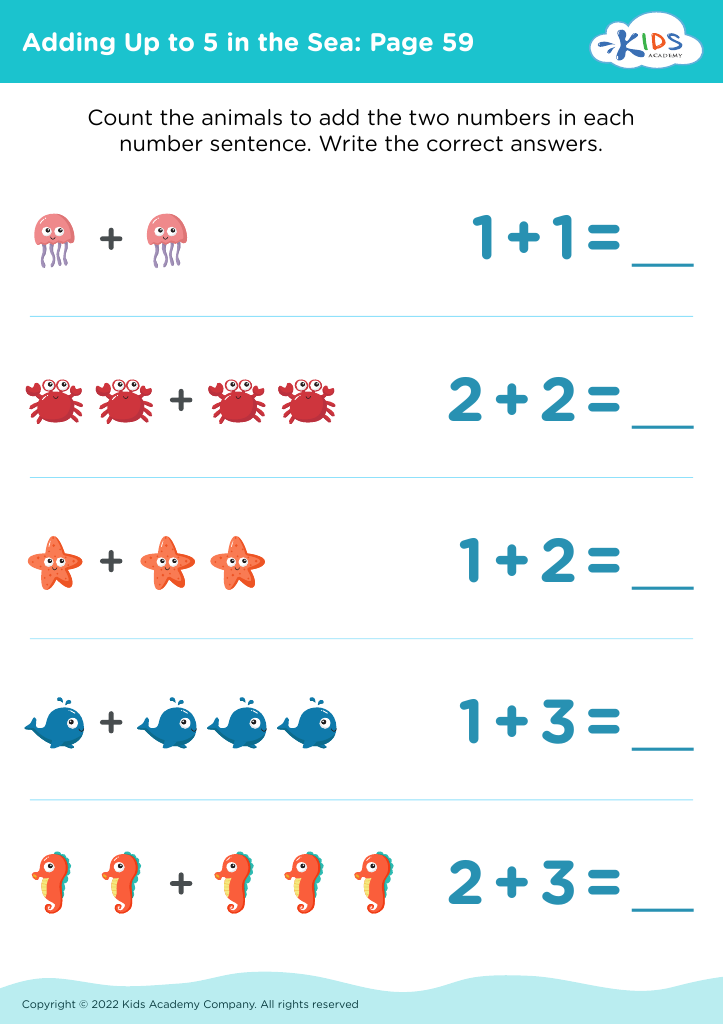
Adding Up to 5 in the Sea: Page 59
Worksheet
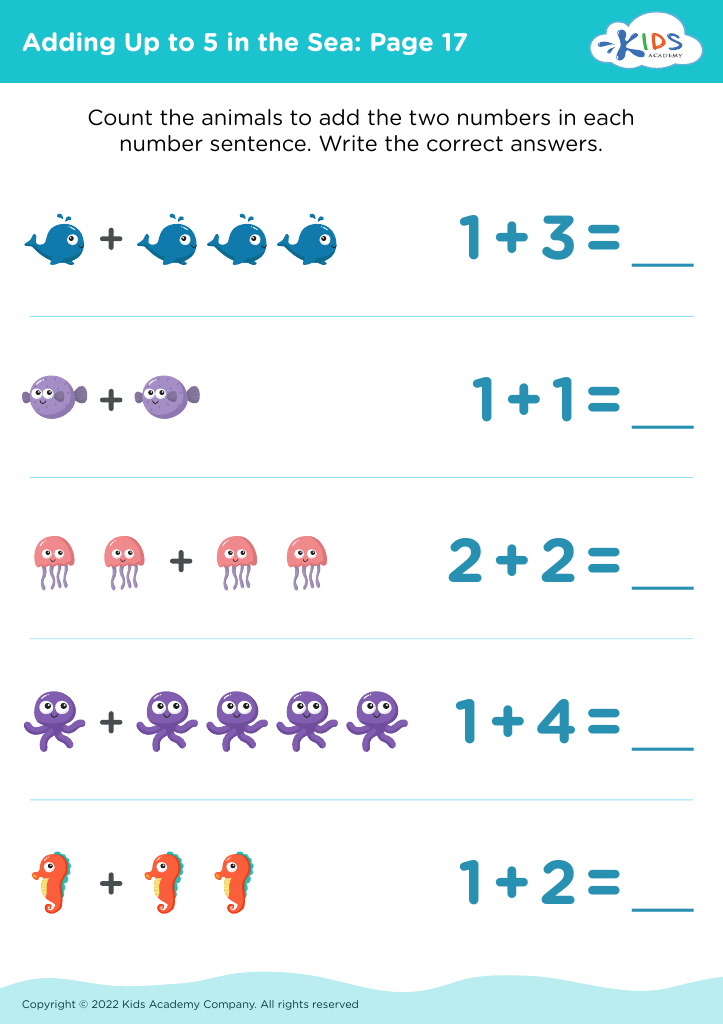
Adding Up to 5 in the Sea: Page 17
Worksheet
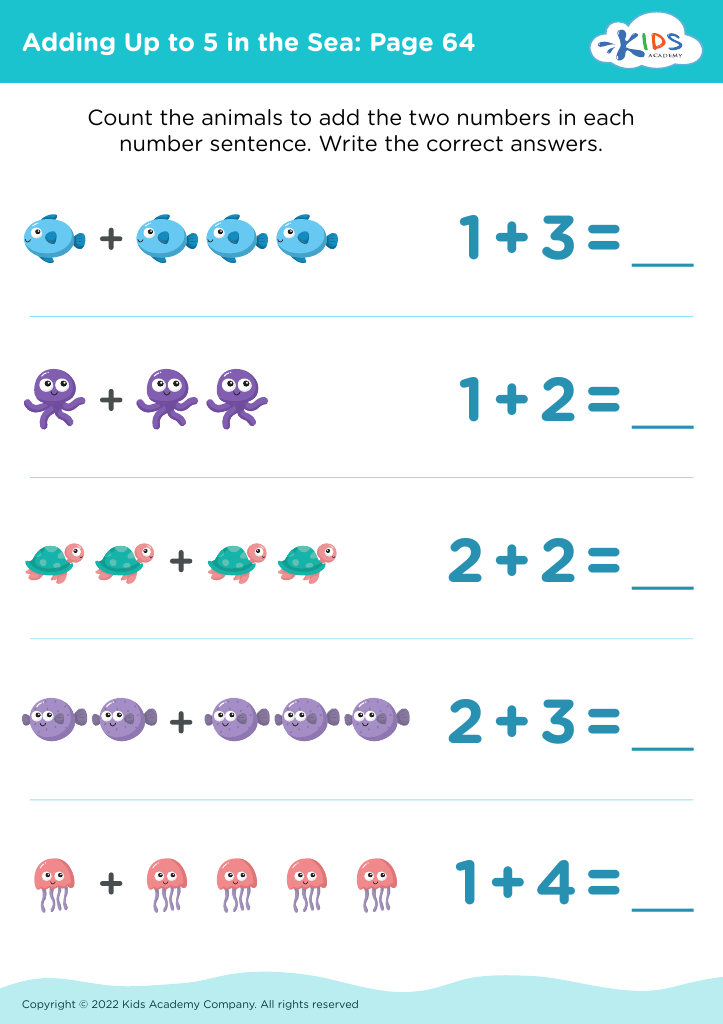
Adding Up to 5 in the Sea: Page 64
Worksheet
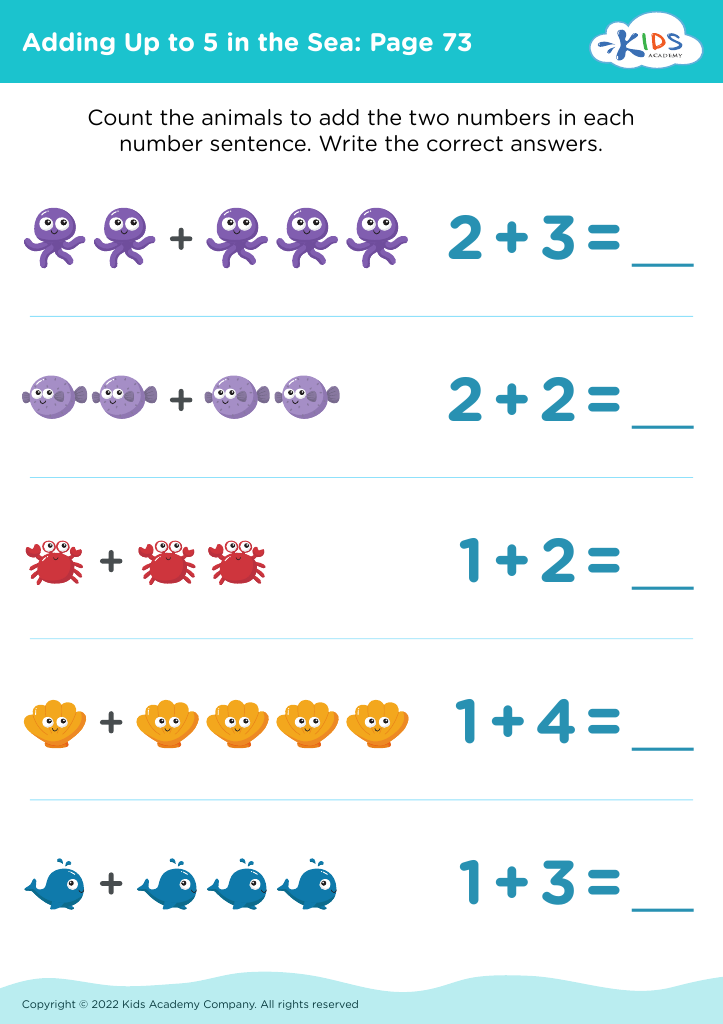
Adding Up to 5 in the Sea: Page 73
Worksheet
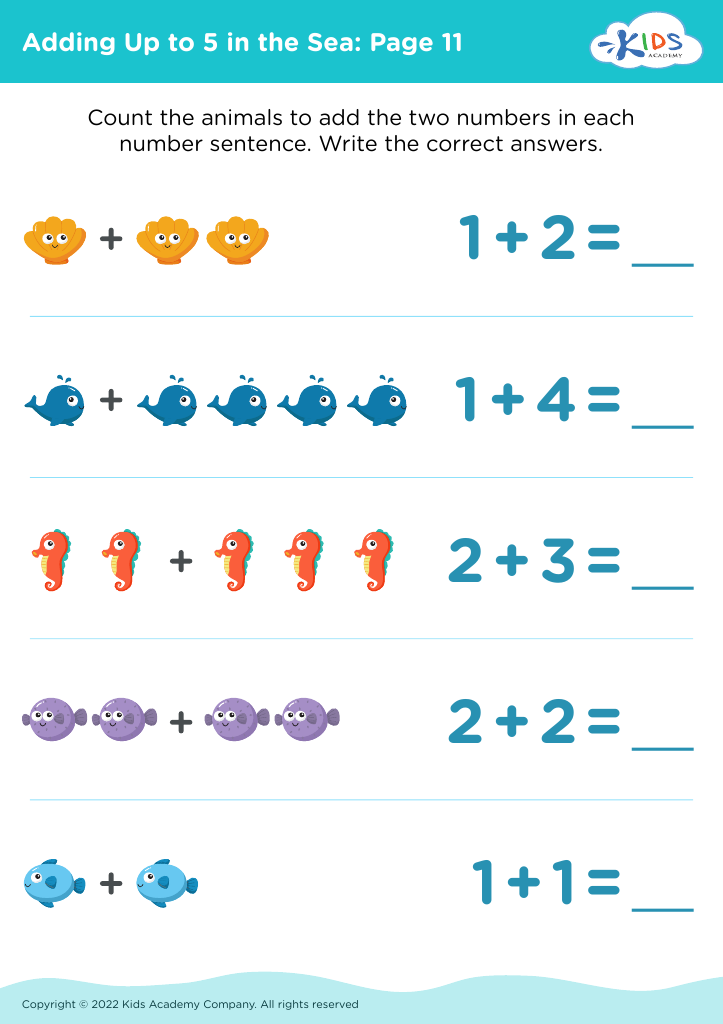
Adding Up to 5 in the Sea: Page 11
Worksheet
Adding Up to 5 in the Sea: Page 2

Adding Up to 5 in the Sea: Page 2

Adding Up to 5 in the Sea: Page 2
Worksheet
Adding Up to 5 in the Sea: Page 47
Worksheet
Adding Up to 5 in the Sea: Page 68
Worksheet


Visual learning is crucial for children ages 5-6, especially when teaching complex concepts like adding in the sea. At this age, children are highly visual learners, often processing information better through pictures, diagrams, and hands-on activities rather than through abstract numbers alone. When parents and teachers incorporate visual aids, such as colorful sea creatures or vibrant charts, they transform abstract addition into a tangible experience that captures children's imaginations.

Using a theme like adding in the sea not only grabs students' attention but also helps them to contextualize math concepts in a fun and engaging way. For example, counting seashells, starfish, or fish can make the addition process come alive, leading to improved retention and understanding. Furthermore, visual learning supports diverse learning styles; some children may struggle with traditional methods but thrive when they can see and manipulate concrete objects.

Additionally, visual learning promotes critical thinking and problem-solving skills. By working through visual problems, children learn to develop strategies for addition and gain confidence in their abilities. Ultimately, engaging with visual learning makes math enjoyable while providing a strong foundation for future mathematical concepts, making it an essential focus for parents and teachers alike.