Filters

54 filtered results

Clear all filters
Favorites
With answer key
Interactive

54 filtered results

Difficulty Level

Grade


Check out this FREE Trial Lesson on Adding on the Farm for age 5-6!

D

Favorites
With answer key
Interactive
  • 5-6
  • Counting practice
  • Adding on the Farm
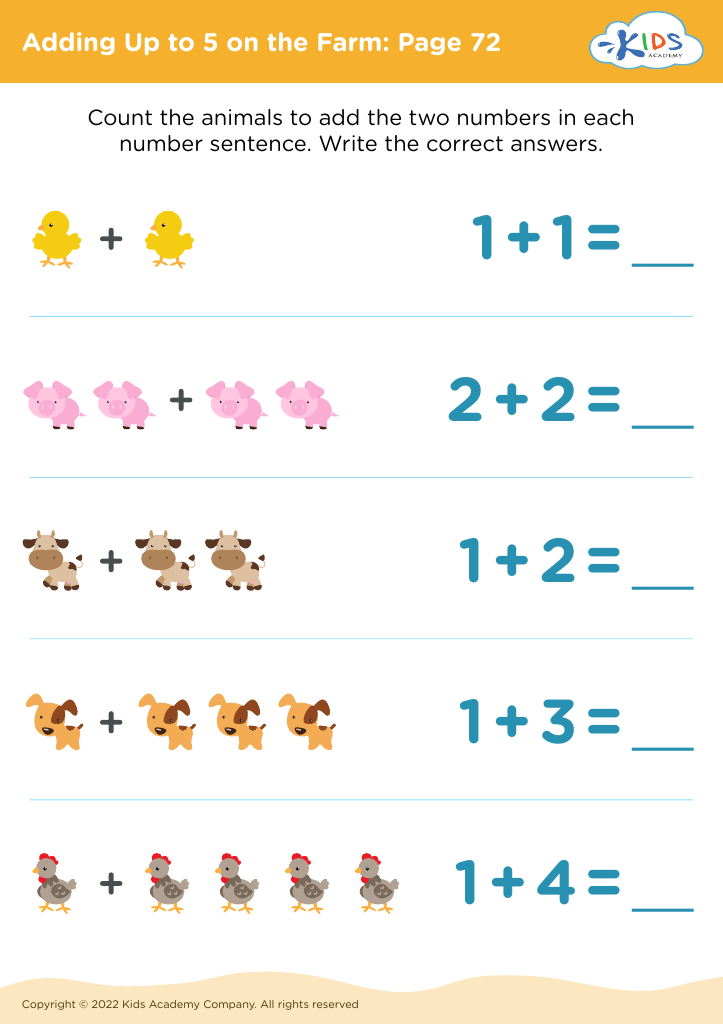
Adding Up to 5 on the Farm: Page 72
Worksheet
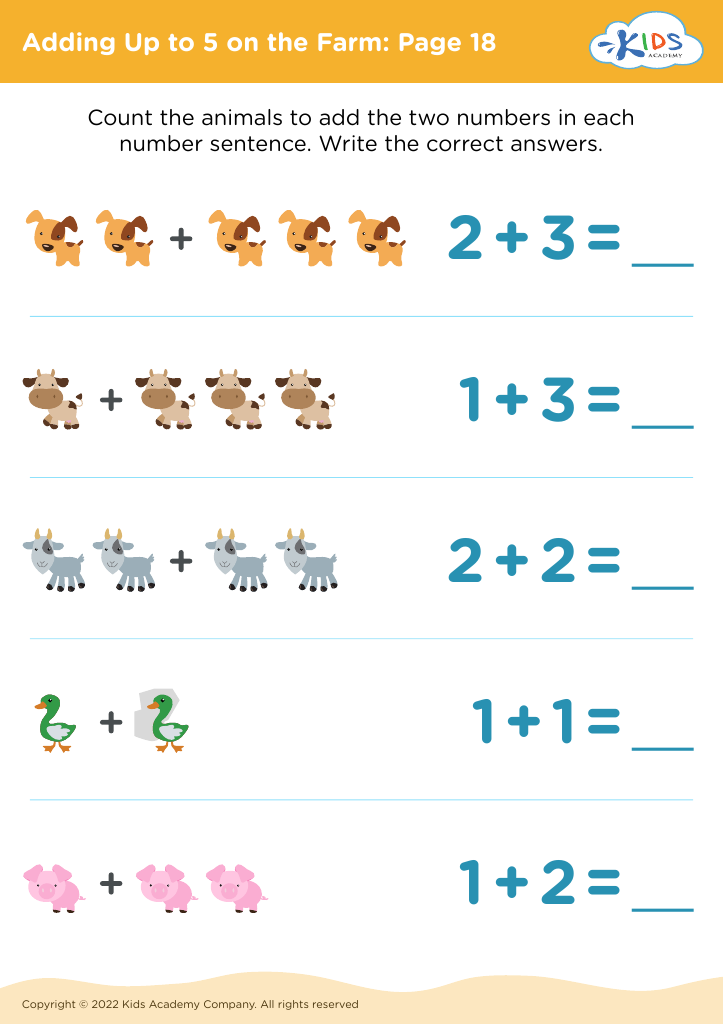
Adding Up to 5 on the Farm: Page 18
Worksheet
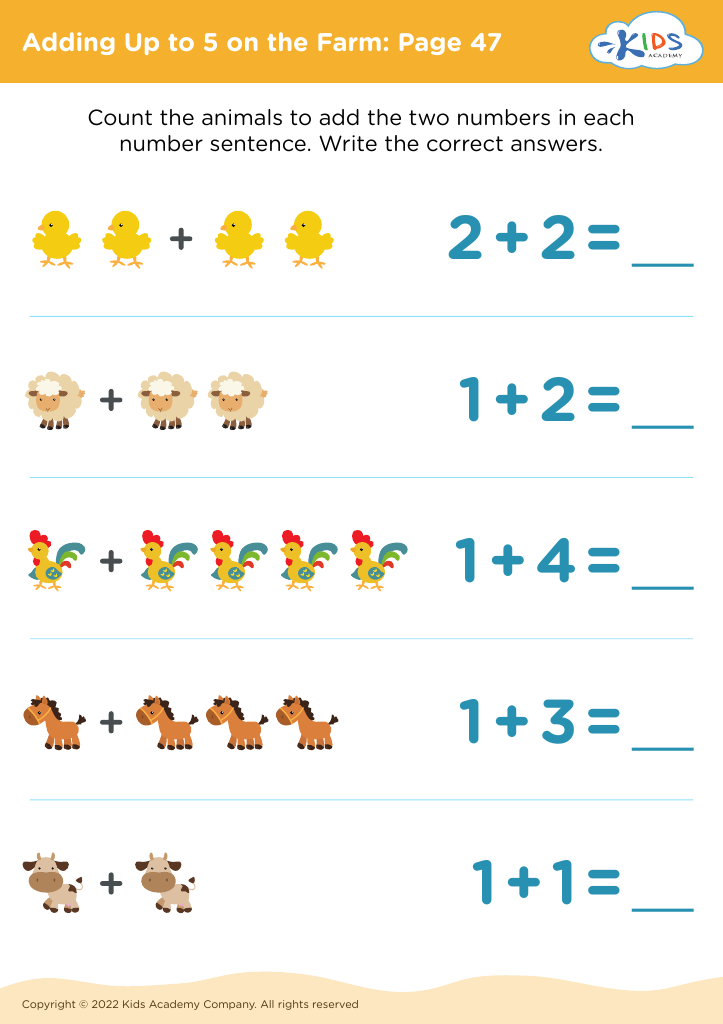
Adding Up to 5 on the Farm: Page 47
Worksheet
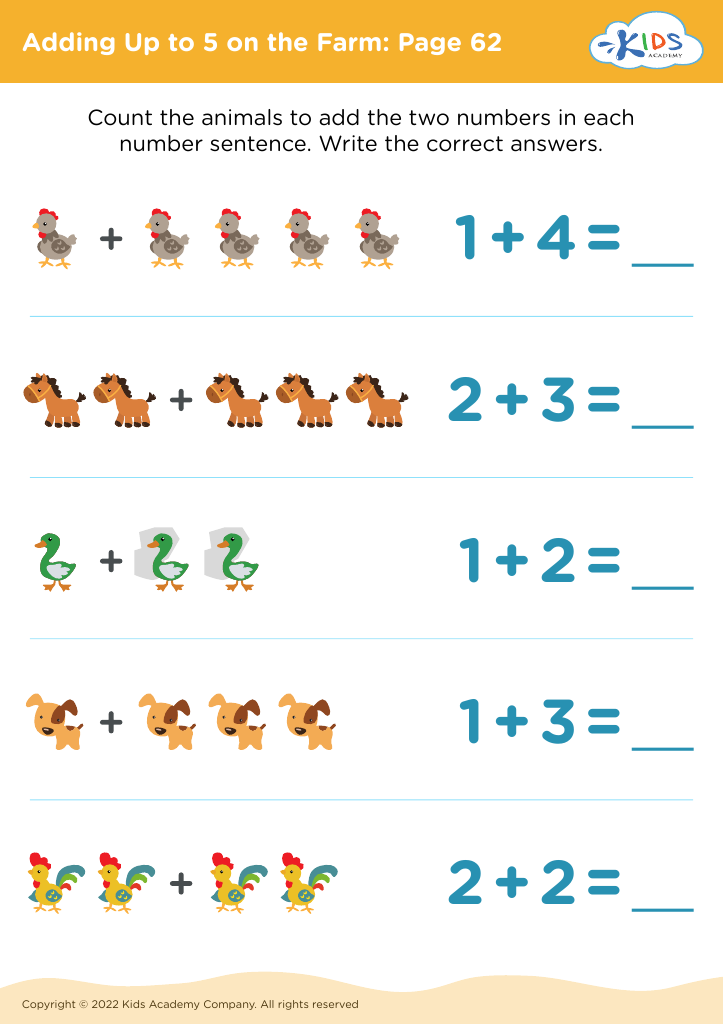
Adding Up to 5 on the Farm: Page 62
Worksheet
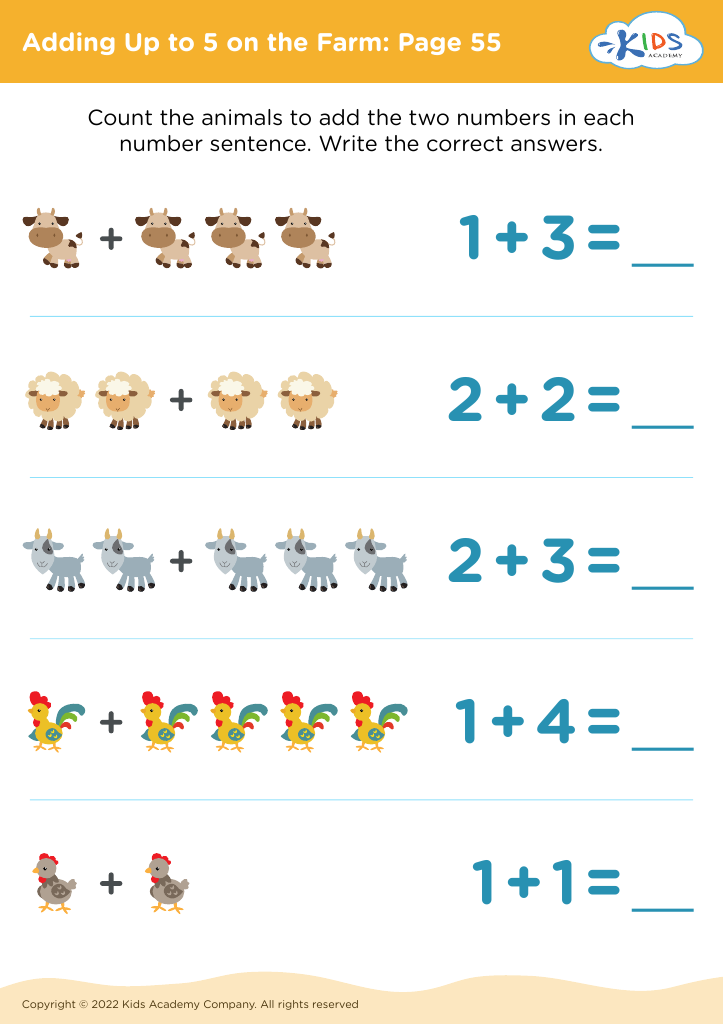
Adding Up to 5 on the Farm: Page 55
Worksheet
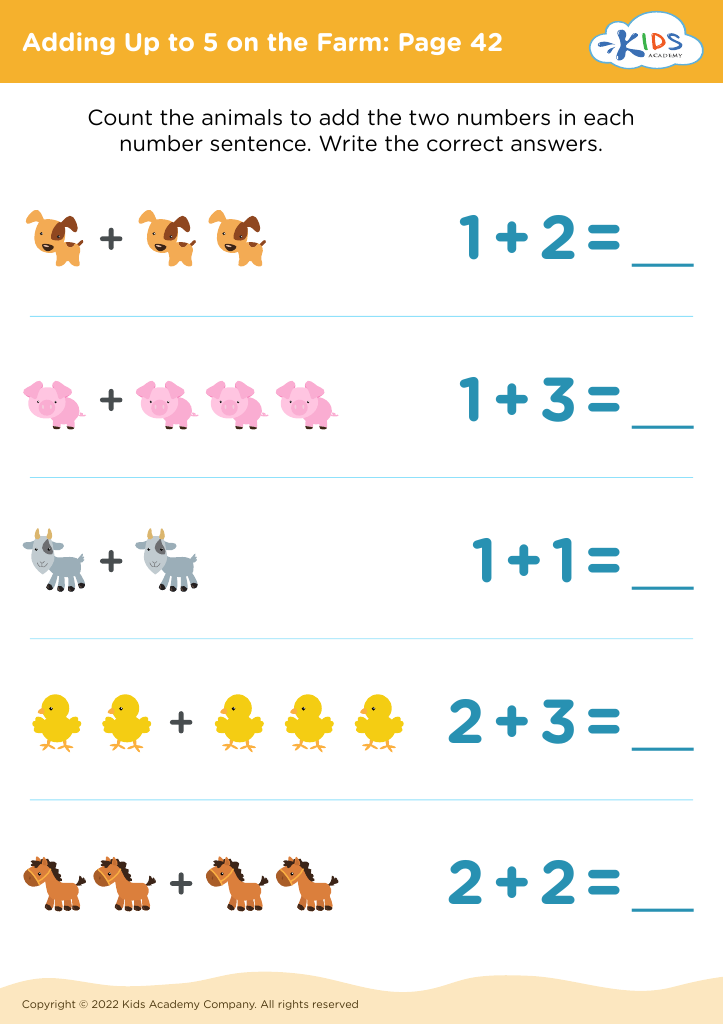
Adding Up to 5 on the Farm: Page 42
Worksheet
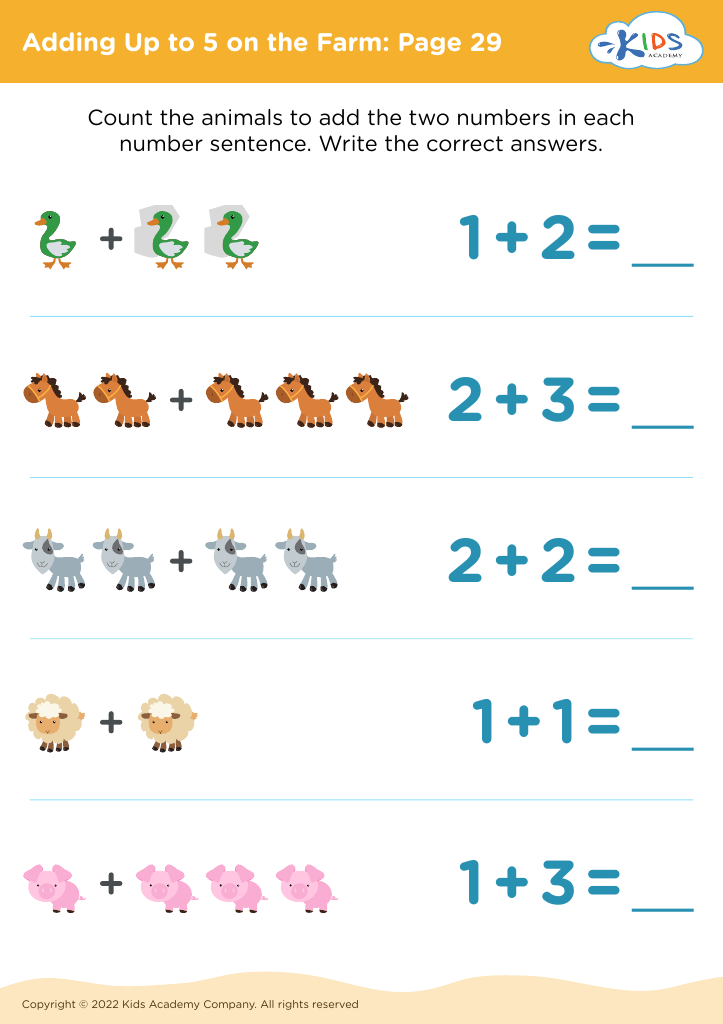
Adding Up to 5 on the Farm: Page 29
Worksheet
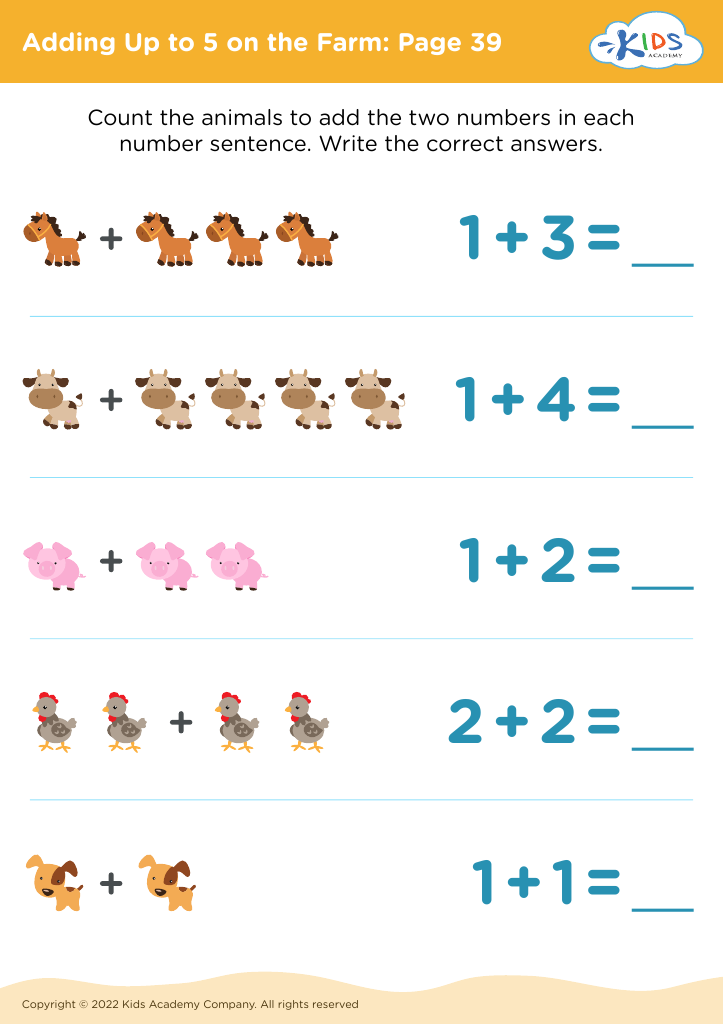
Adding Up to 5 on the Farm: Page 39
Worksheet
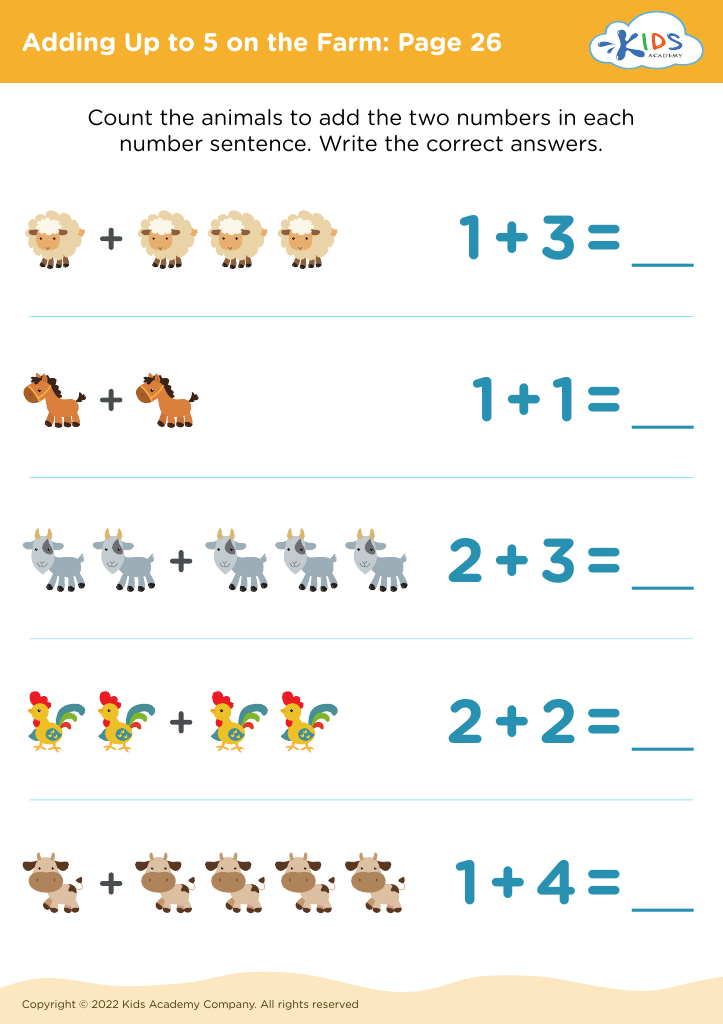
Adding Up to 5 on the Farm: Page 26
Worksheet
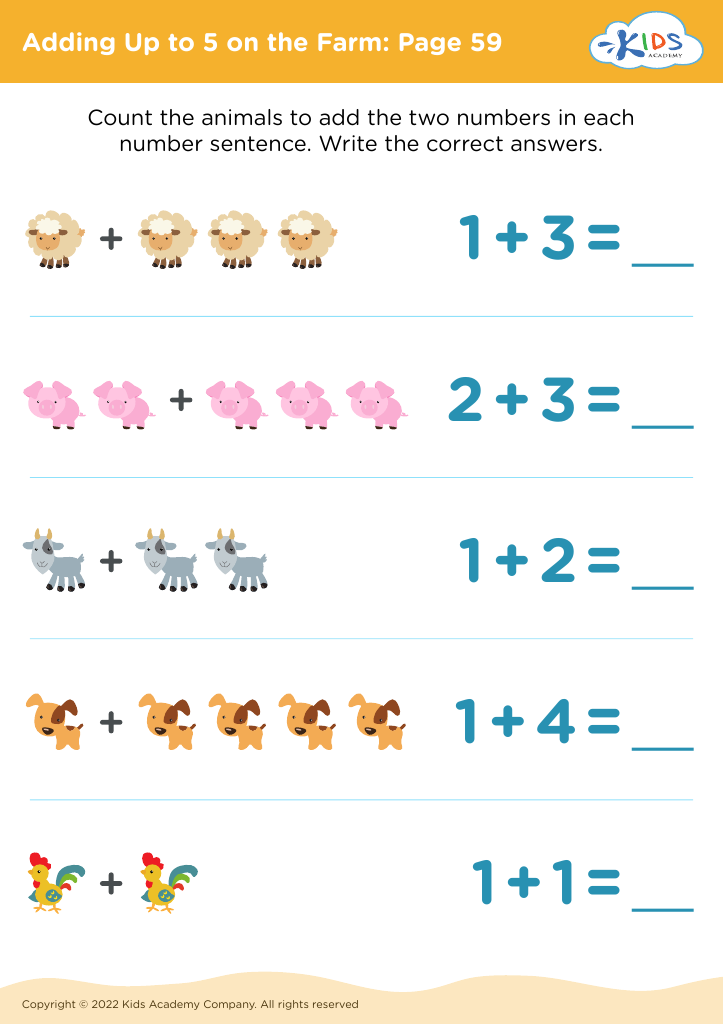
Adding Up to 5 on the Farm: Page 59
Worksheet
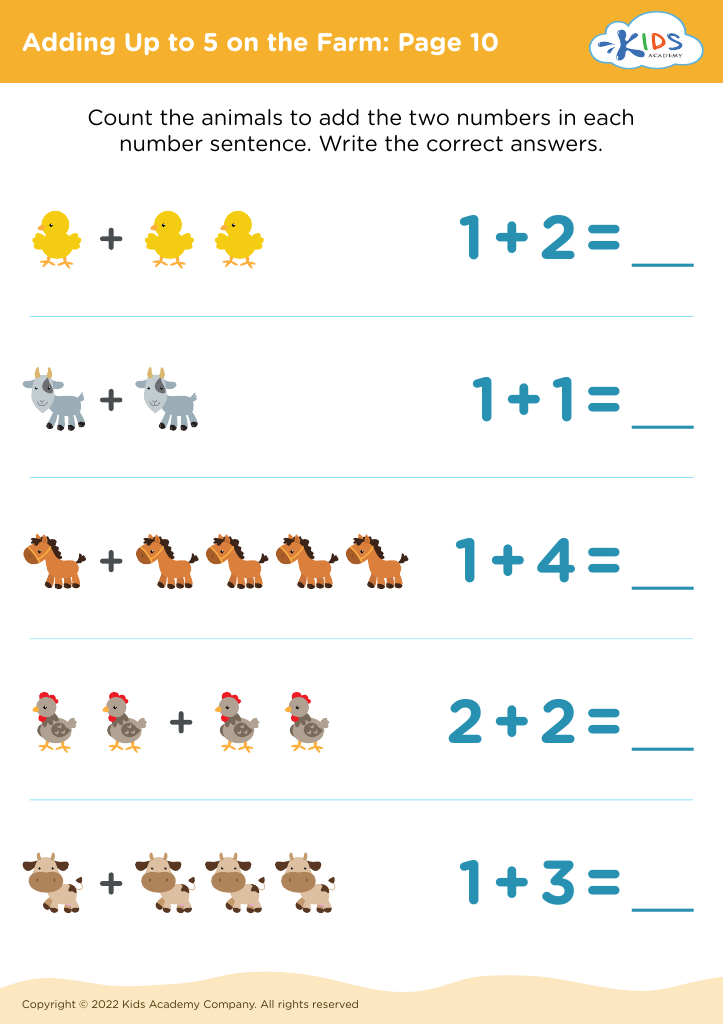
Adding Up to 5 on the Farm: Page 10
Worksheet
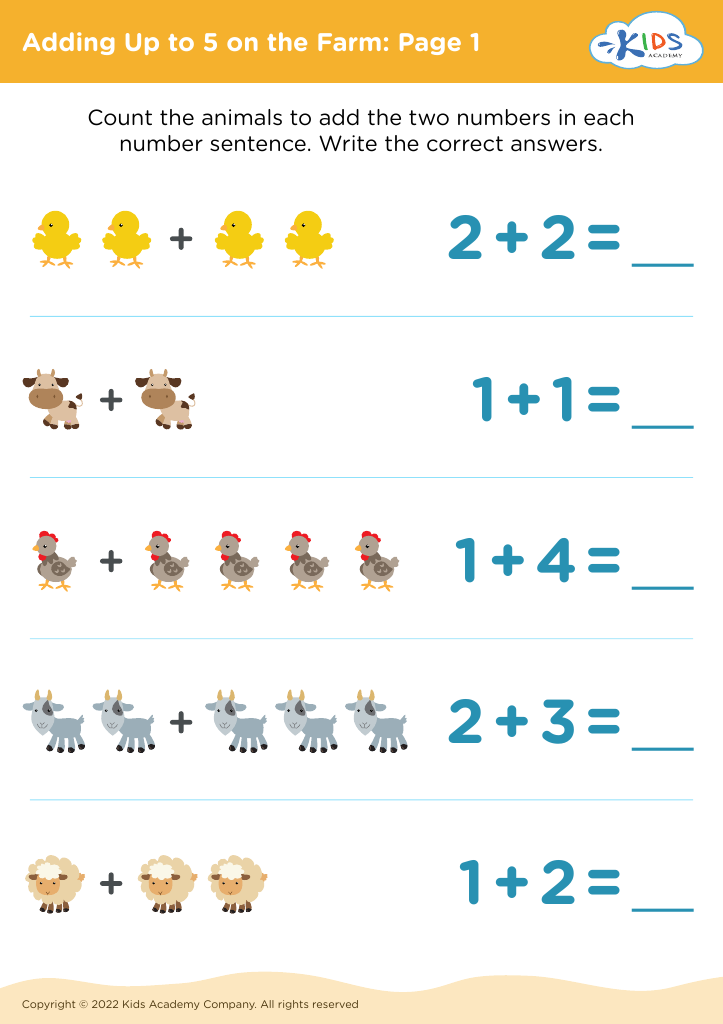
Adding Up to 5 on the Farm: Page 1
Worksheet
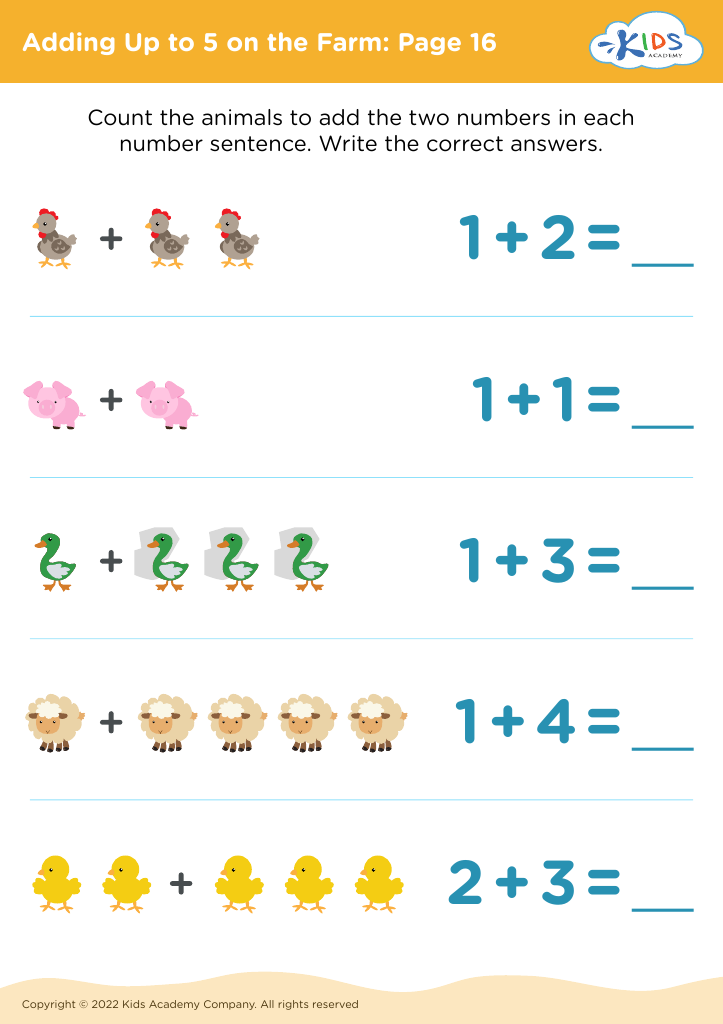
Adding Up to 5 on the Farm: Page 16
Worksheet
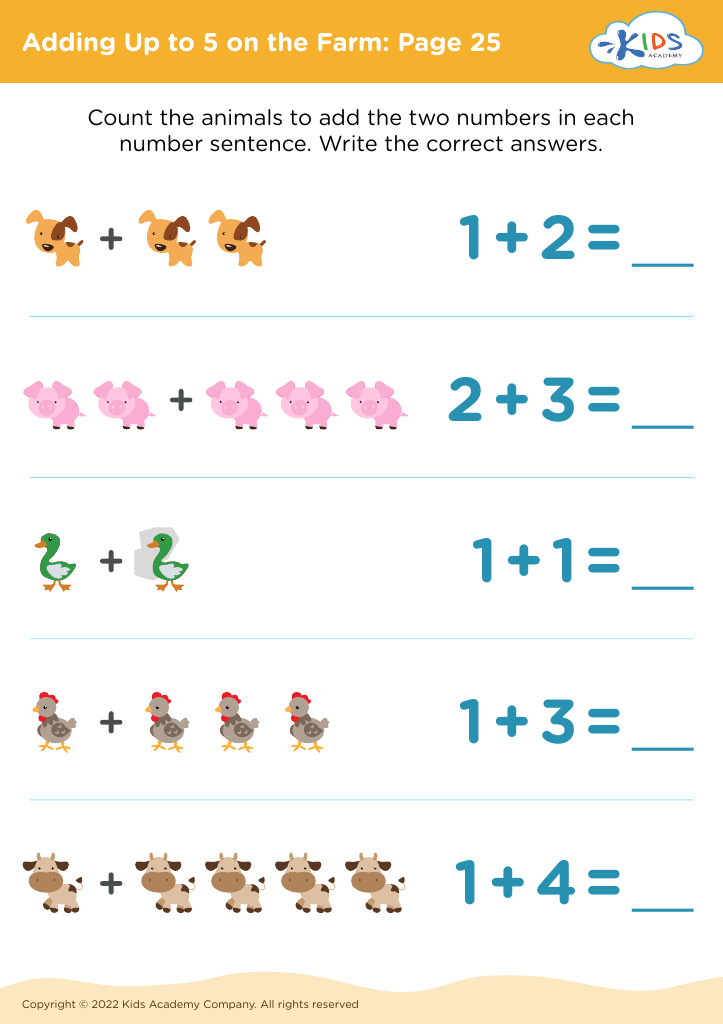
Adding Up to 5 on the Farm: Page 25
Worksheet
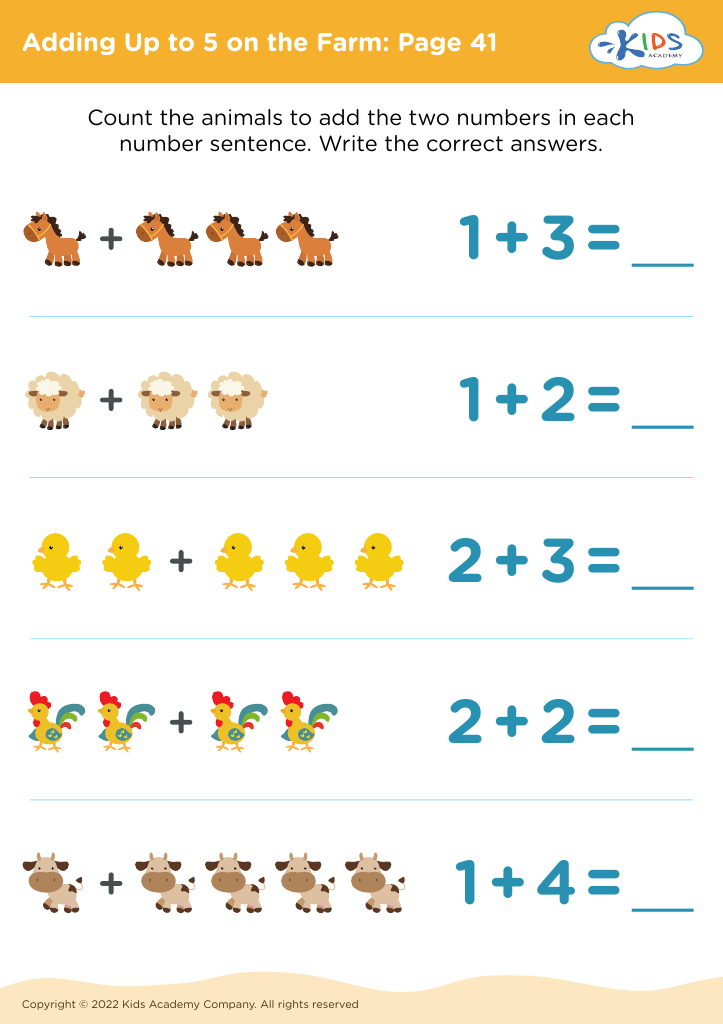
Adding Up to 5 on the Farm: Page 41
Worksheet
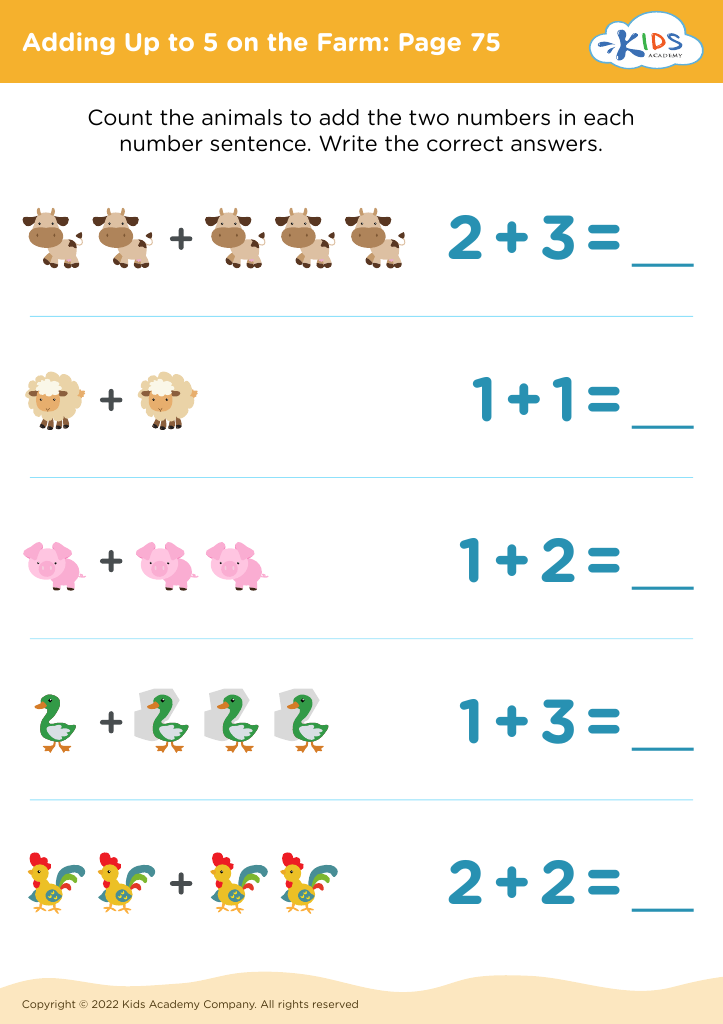
Adding Up to 5 on the Farm: Page 75
Worksheet
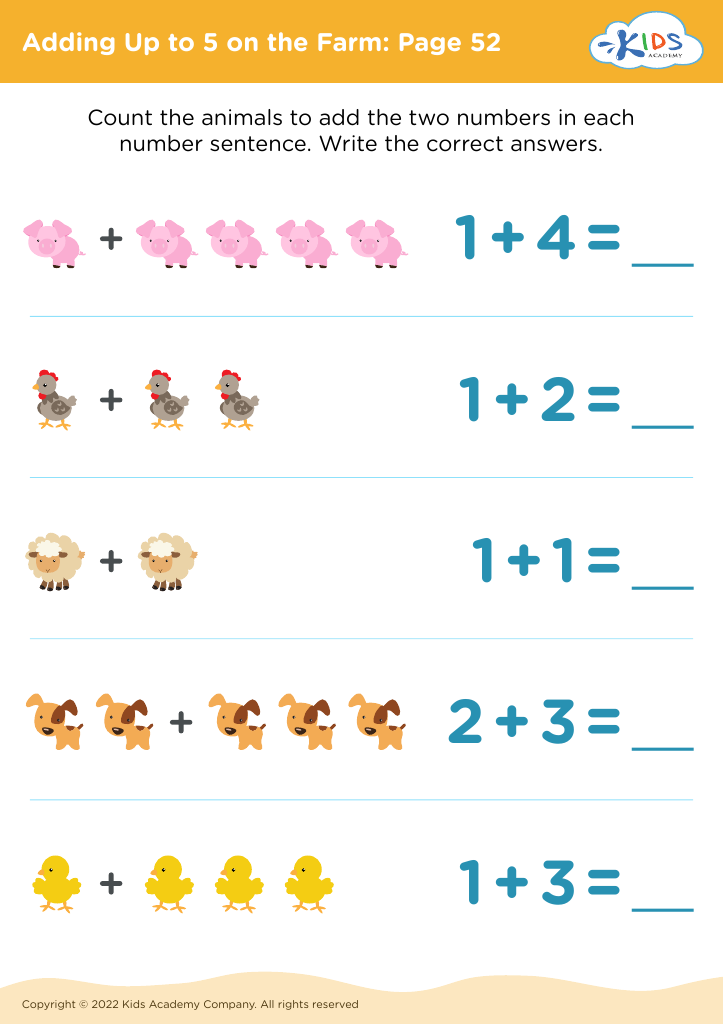
Adding Up to 5 on the Farm: Page 52
Worksheet
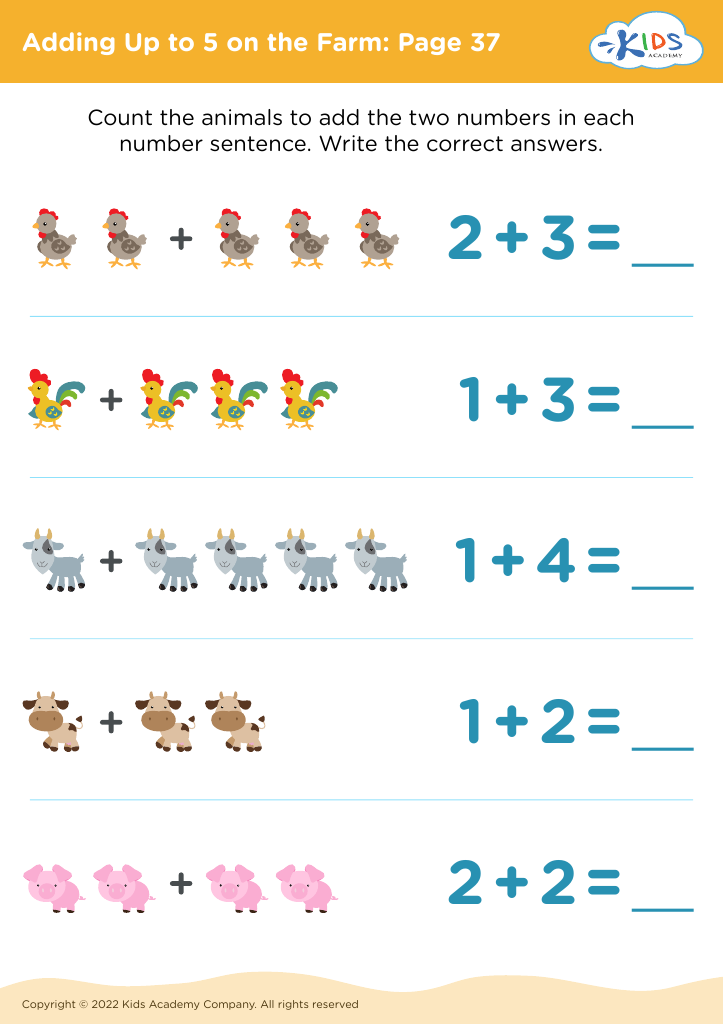
Adding Up to 5 on the Farm: Page 37
Worksheet
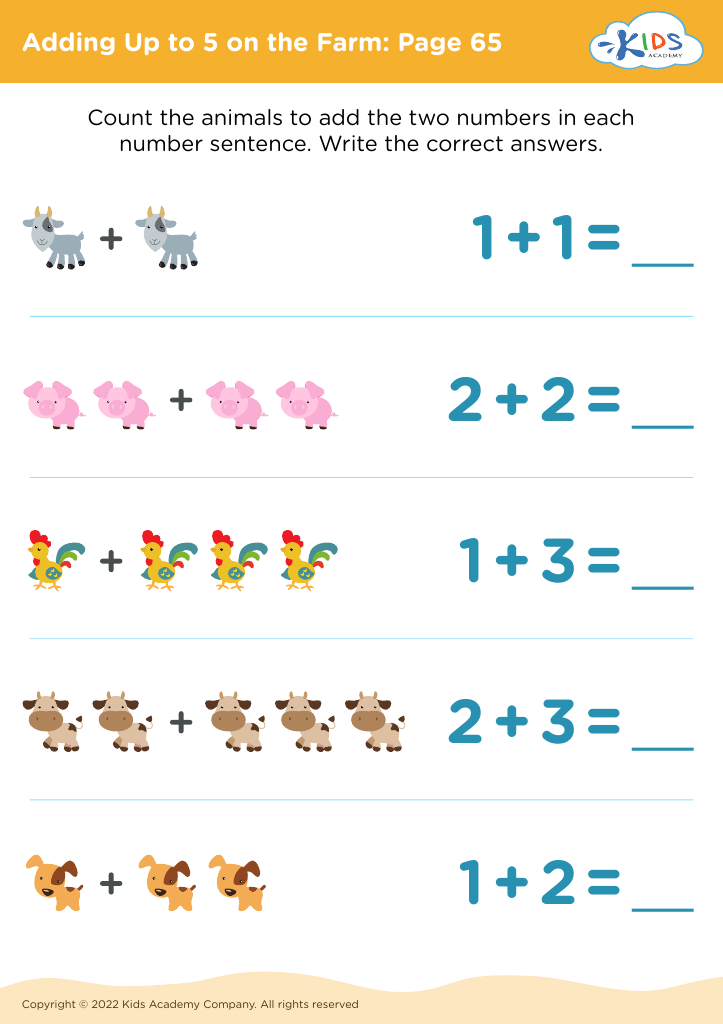
Adding Up to 5 on the Farm: Page 65
Worksheet
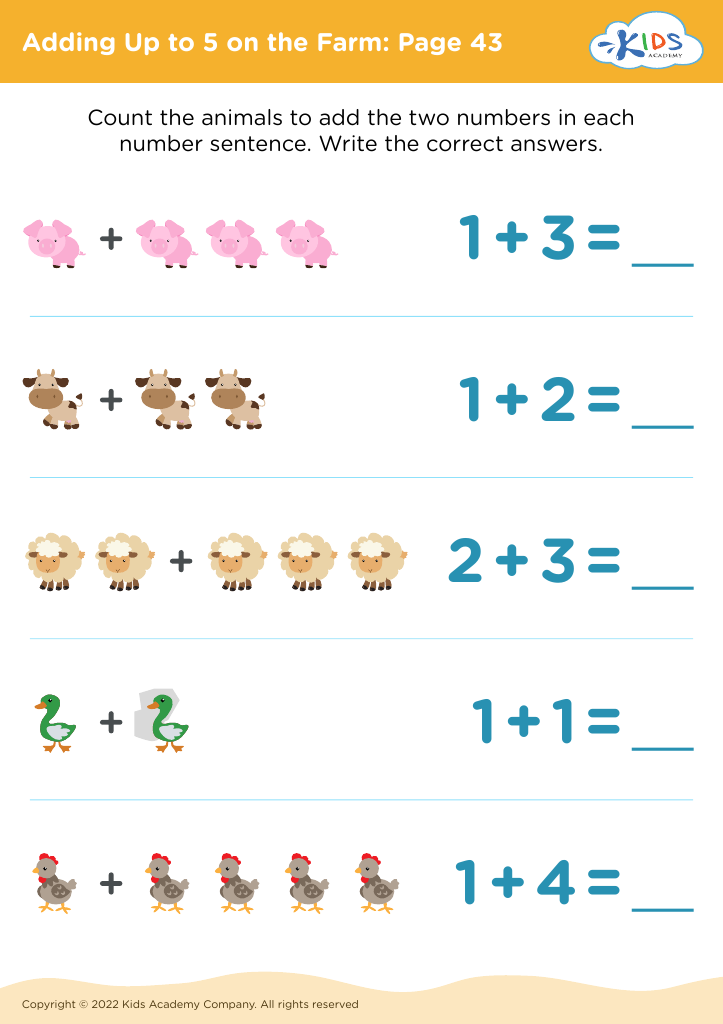
Adding Up to 5 on the Farm: Page 43
Worksheet
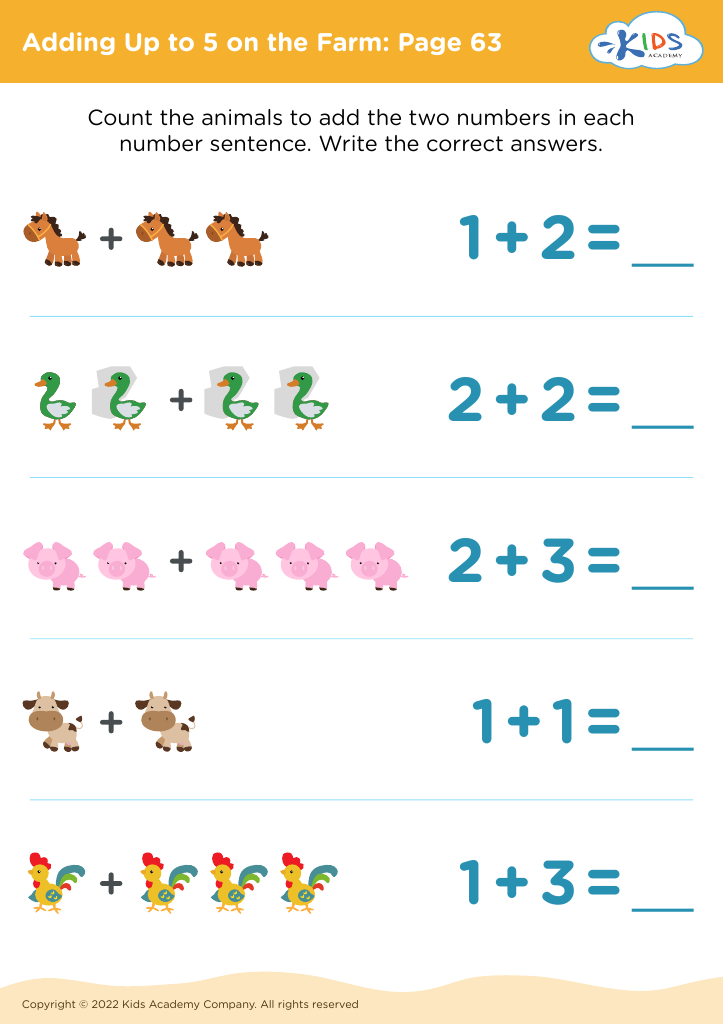
Adding Up to 5 on the Farm: Page 63
Worksheet
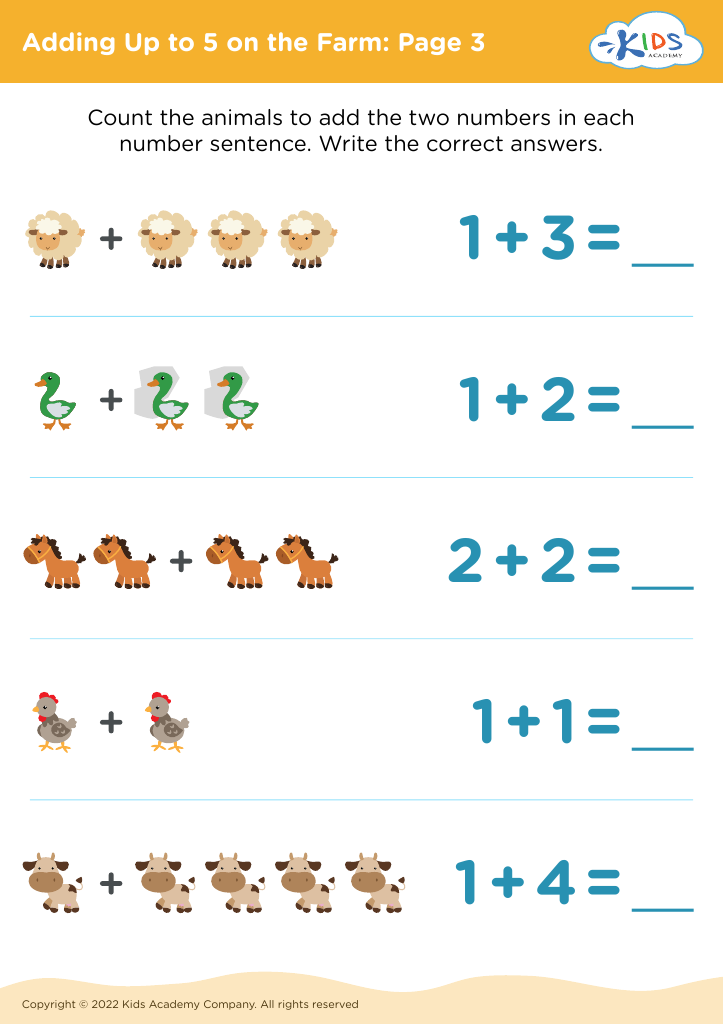
Adding Up to 5 on the Farm: Page 3
Worksheet
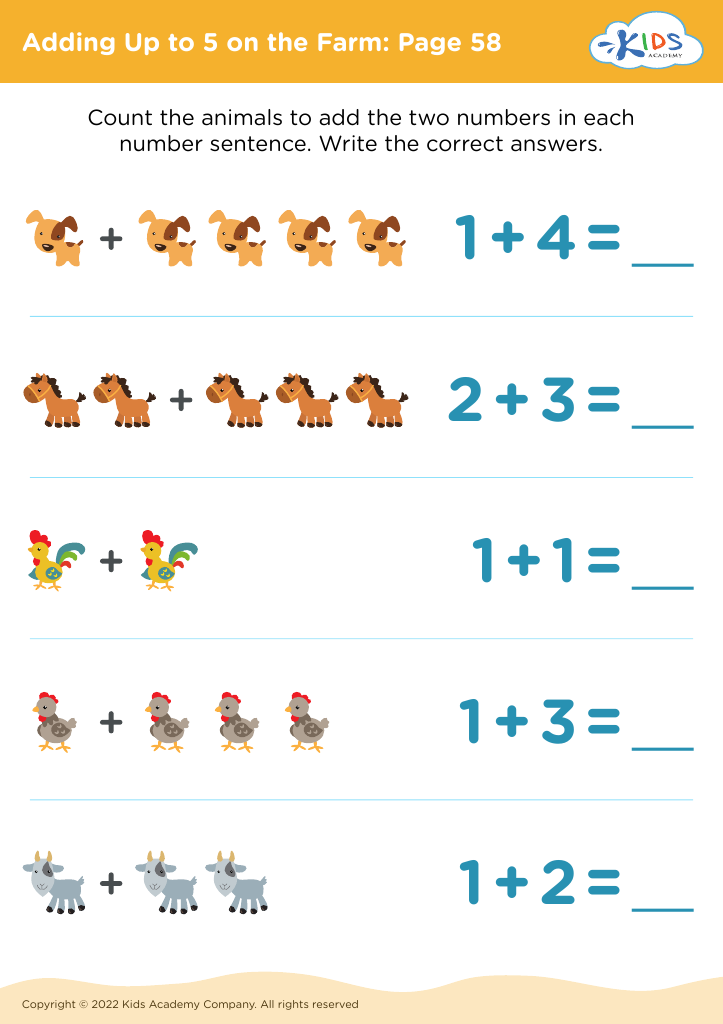
Adding Up to 5 on the Farm: Page 58
Worksheet
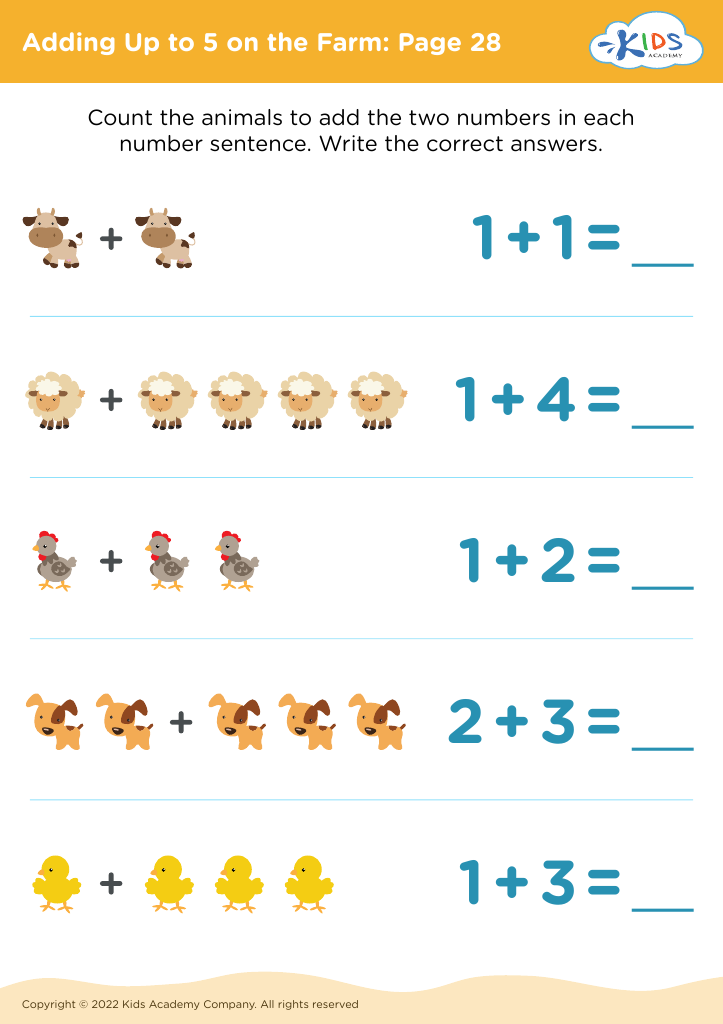
Adding Up to 5 on the Farm: Page 28
Worksheet


Counting practice, particularly through engaging themes like "Adding on the Farm," is crucial for young learners aged 5-6. At this stage, children develop foundational mathematical skills, and incorporating familiar and relatable contexts, such as farm animals and activities, enhances their learning experience. Here are several reasons why parents and teachers should prioritize this type of practice:

  1. Enhanced Engagement: Farm themes capture children's interest. By associating counting and math with fun, everyday scenarios, kids are more motivated to participate and learn.

  2. Real-World Connections: Learning to count using farm settings helps children understand practical applications of math. It makes abstract concepts more concrete, as they can visualize animals or plants in real environments.

  3. Development of Basic Skills: Counting exercises improve numerical comprehension, leading to better addition and subtraction skills. For example, adding animals helps children grasp the concept of combining groups.

  4. Cognitive and Social Development: Group activities on a farm theme foster collaboration and communication among peers, which enhances social skills while learning.

  5. Confidence Building: Frequent practice in a familiar context helps children build confidence in their math abilities, laying a solid foundation for future learning.

In summary, "Adding on the Farm" not only makes counting enjoyable but also supports essential developmental milestones in young learners.