Understanding patterns Addition & Subtraction Worksheets for Ages 5-6
6 filtered results
-
From - To
Discover a fun and engaging way to enhance your child's math skills with our "Understanding Patterns Addition & Subtraction Worksheets" designed for ages 5-6. These worksheets focus on recognizing and creating patterns while developing essential addition and subtraction abilities. By using colorful visuals and interactive exercises, children will enjoy learning through play. Our carefully crafted activities promote critical thinking and logical reasoning, helping young learners connect the concept of patterns to mathematical operations. Perfect for homeschooling or supplementing classroom learning, these worksheets support early math development and nurture a love for numbers. Start building a strong foundation for your child's future success today!
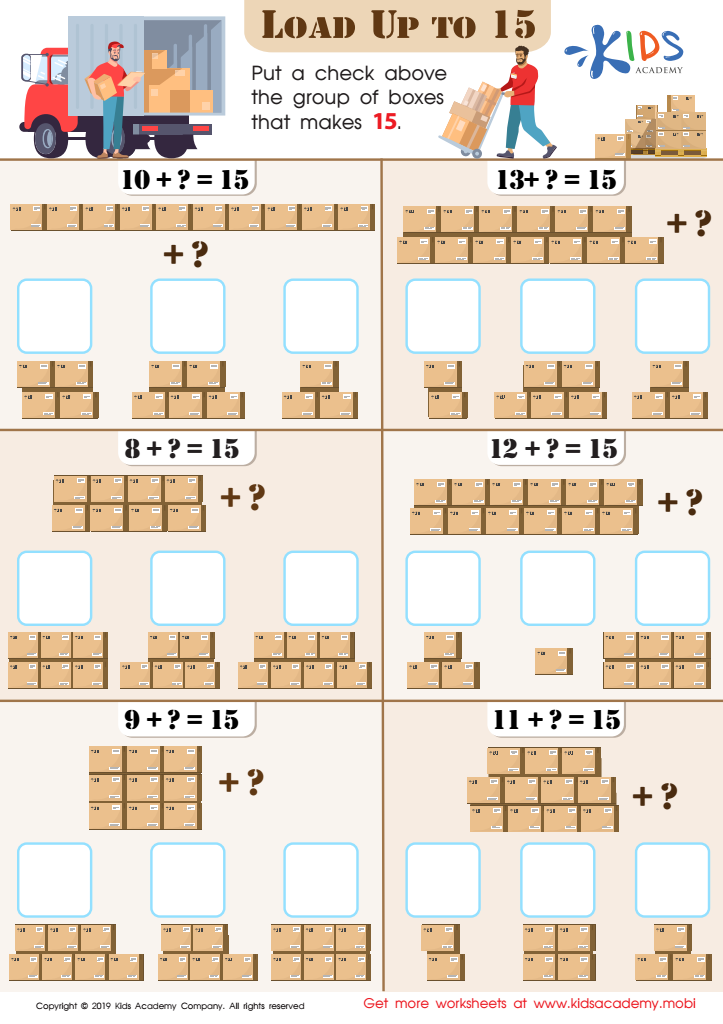
Load up to 15 Worksheet
 Assign to My Students
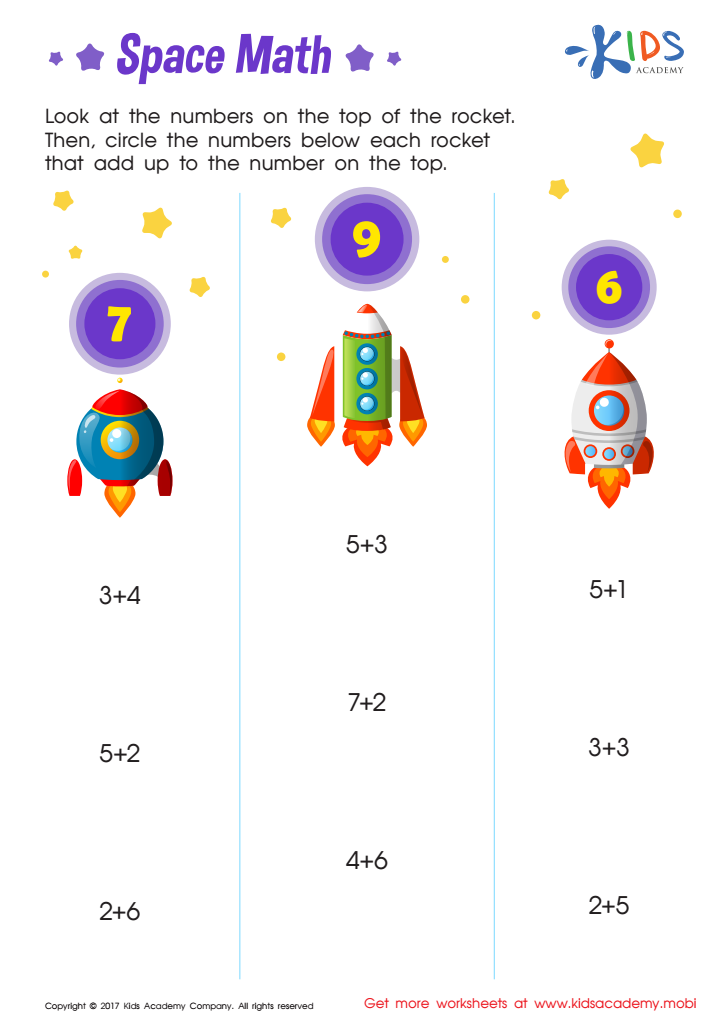
Addition: Space Math Worksheet
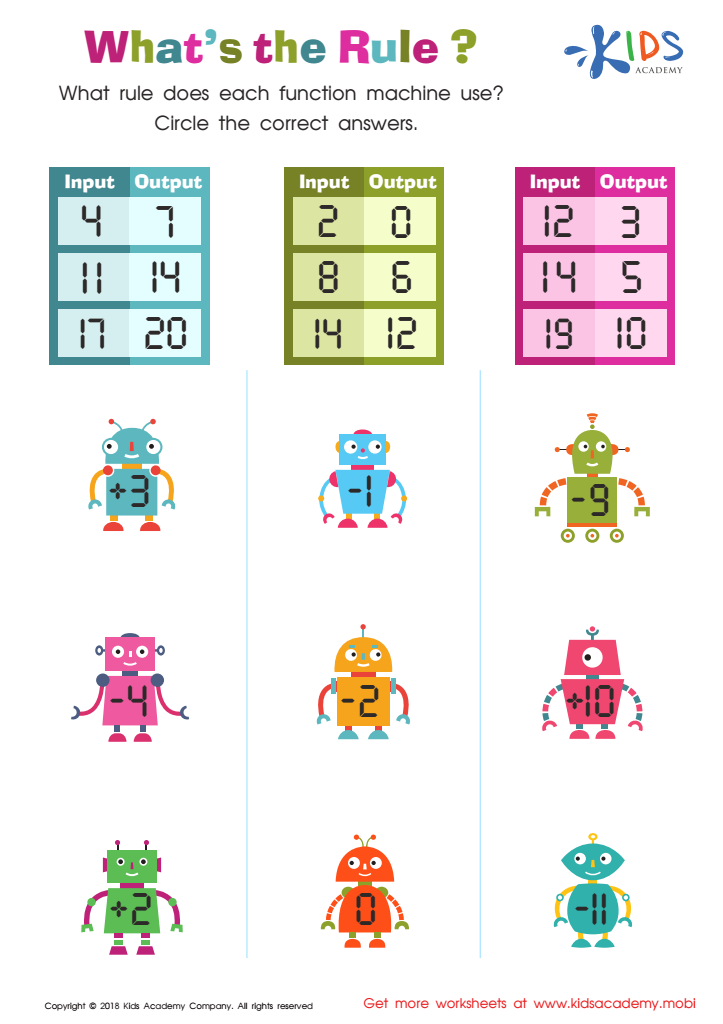
What's the Rule Worksheet
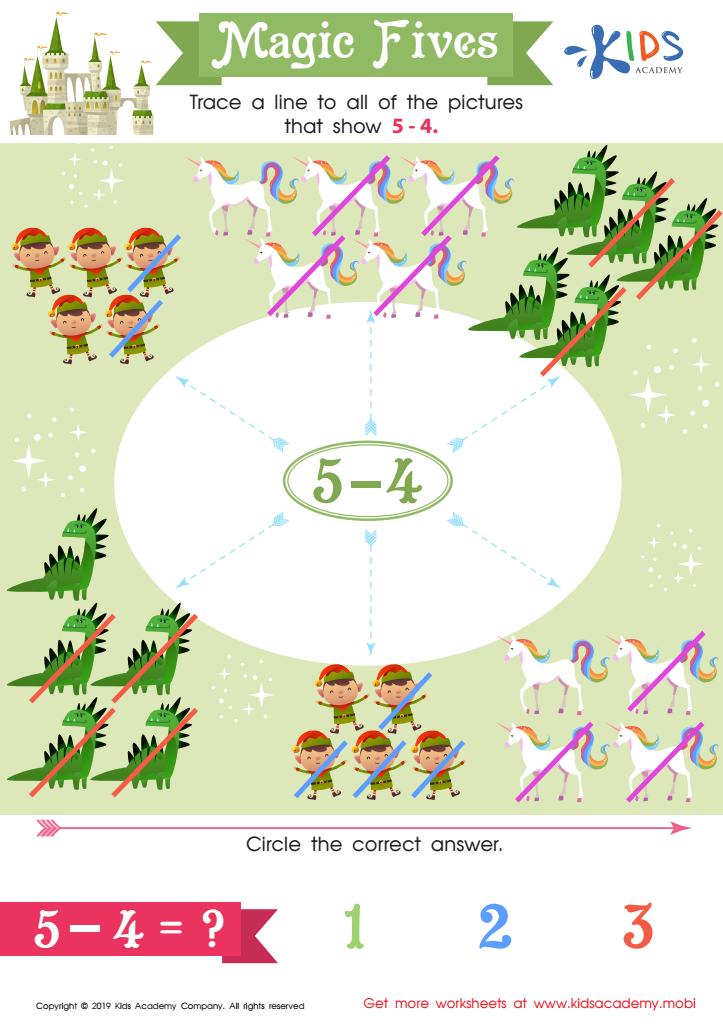
Magic Fives Worksheet
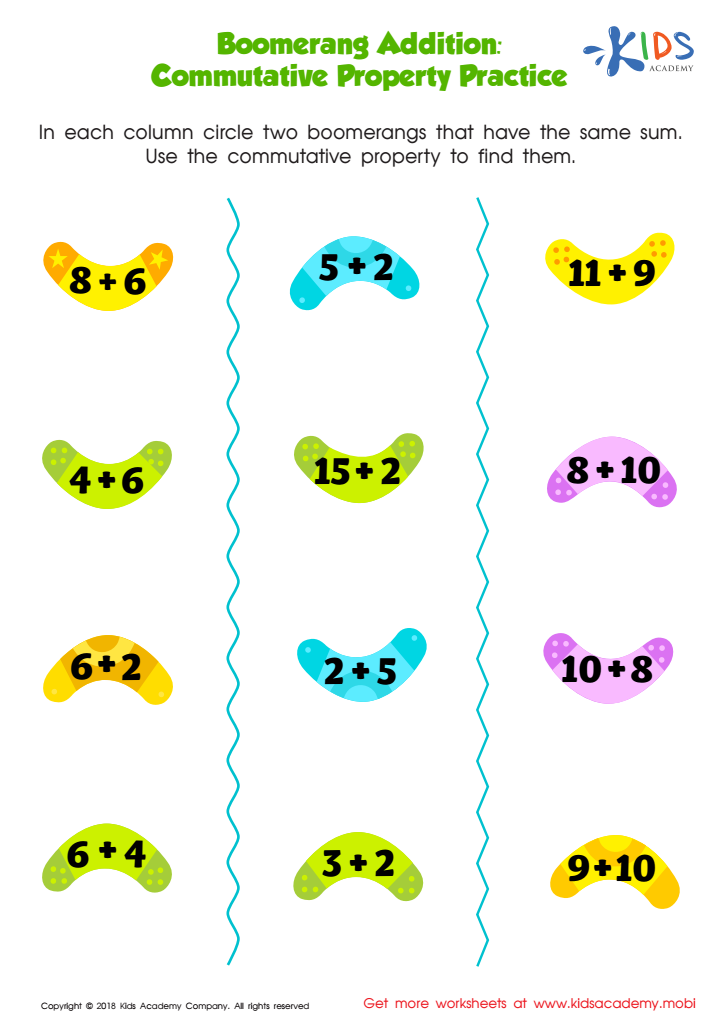
Boomerang Addition Worksheet
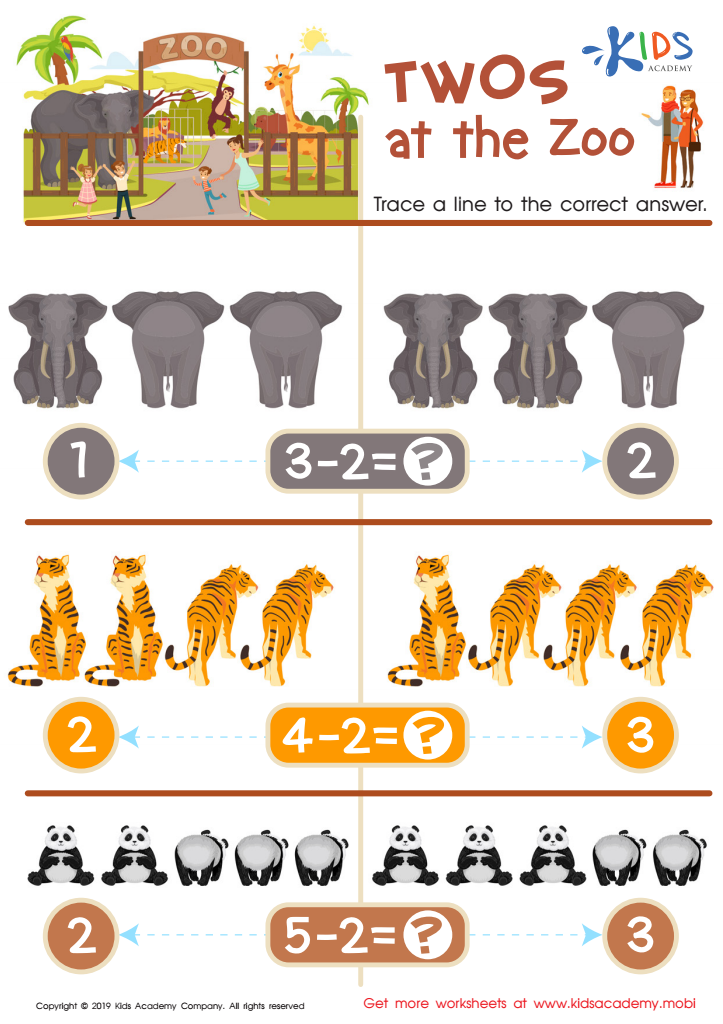
Twos at the Zoo Worksheet








Understanding patterns in addition and subtraction is vital for children aged 5-6 as it lays the foundation for their mathematical skills and problem-solving abilities. During this crucial developmental stage, children begin to recognize and create patterns, which is essential for grasping the concept of numbers and operations.
By exploring patterns, young learners develop critical thinking skills. They begin to understand the relationships between numbers, making it easier to predict subsequent numbers in a sequence. This foundational understanding supports their ability to perform addition and subtraction, while also helping them to recognize patterns in other areas, such as language, science, and music.
Moreover, teaching patterns helps enhance a child's numerical fluency. When children recognize and understand patterns, they become more confident in performing mathematical operations, which leads to improved engagement in learning. It encourages them to share discoveries, collaborate with peers, and communicate their thought processes, reinforcing their social and emotional growth.
Involving parents or teachers in this process helps create a supportive learning environment, fostering a love for mathematics that can influence academic performance in the future. Ultimately, understanding patterns in math is a stepping stone for young learners, establishing a solid base for all future mathematical concepts.








