Check out this FREE Trial Lesson on Addition for age 5-6!

Exactly the Same, or Not

Favorites
With answer key
Interactive
  • 5-6
  • Basic Addition Skills
  • Addition
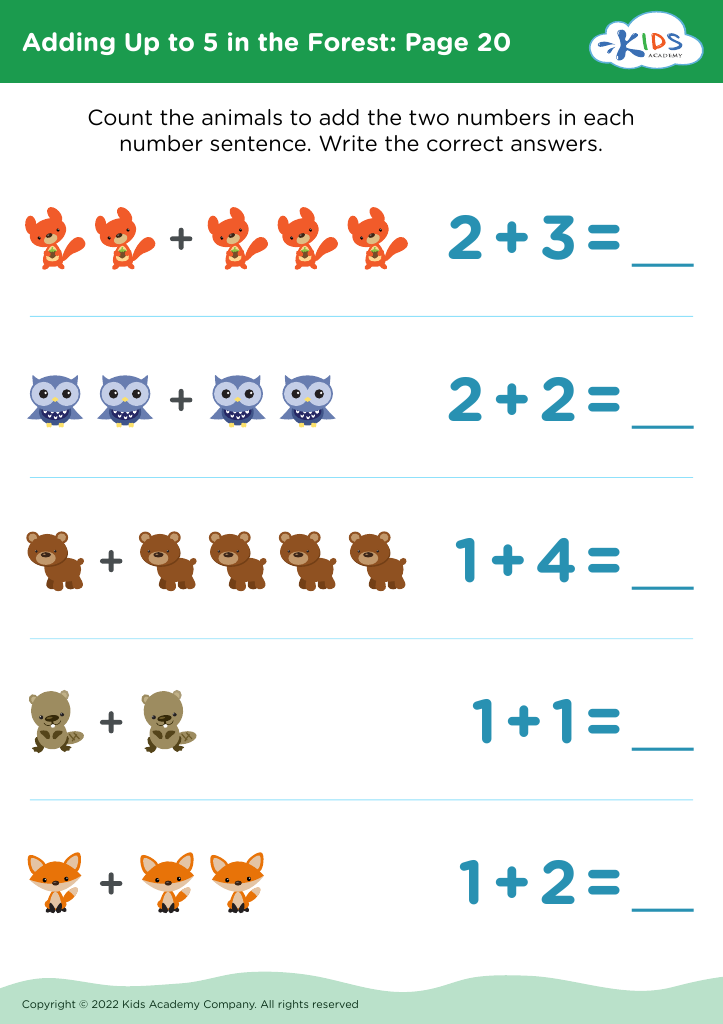
Adding Up to 5 in the Forest: Page 20
Worksheet
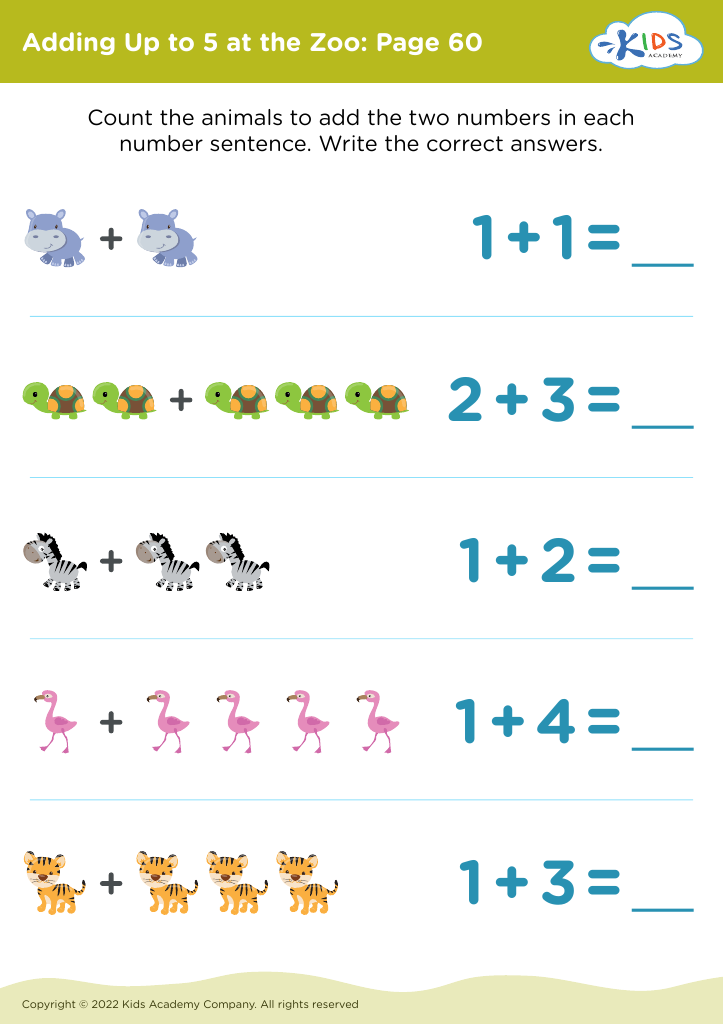
Adding Up to 5 at the Zoo: Page 60
Worksheet
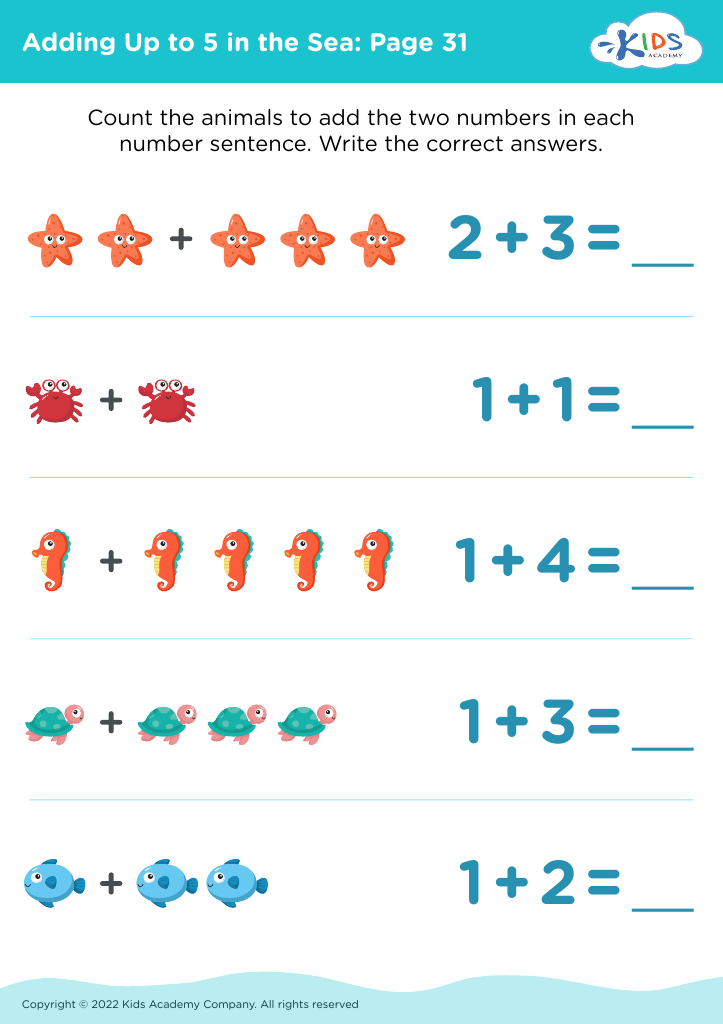
Adding Up to 5 in the Sea: Page 31
Worksheet
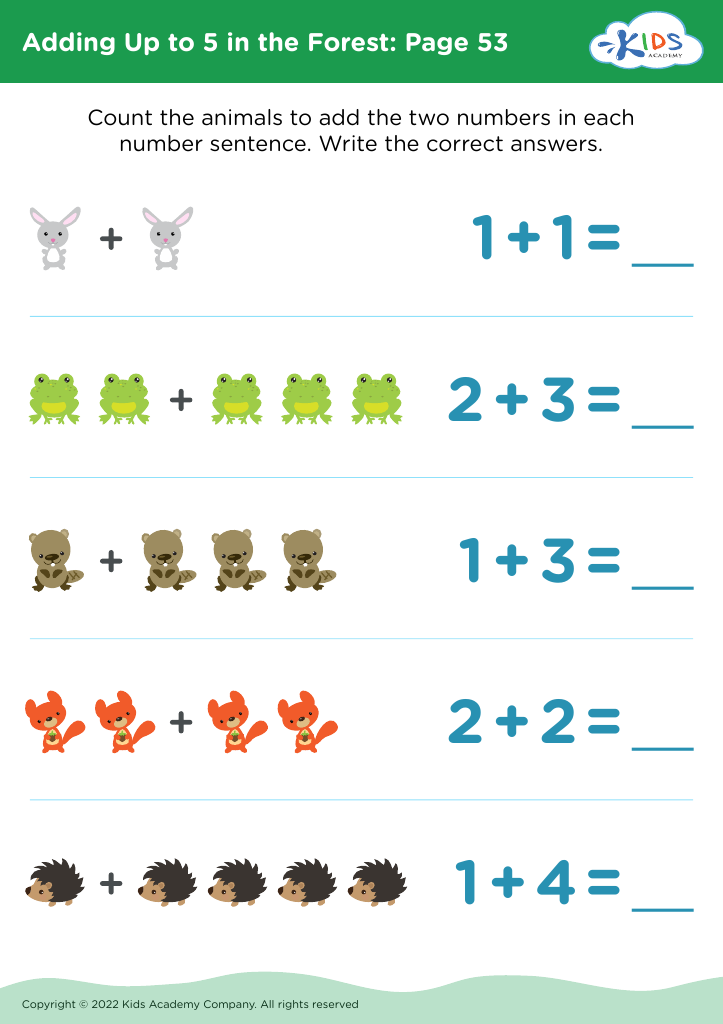
Adding Up to 5 in the Forest: Page 53
Worksheet
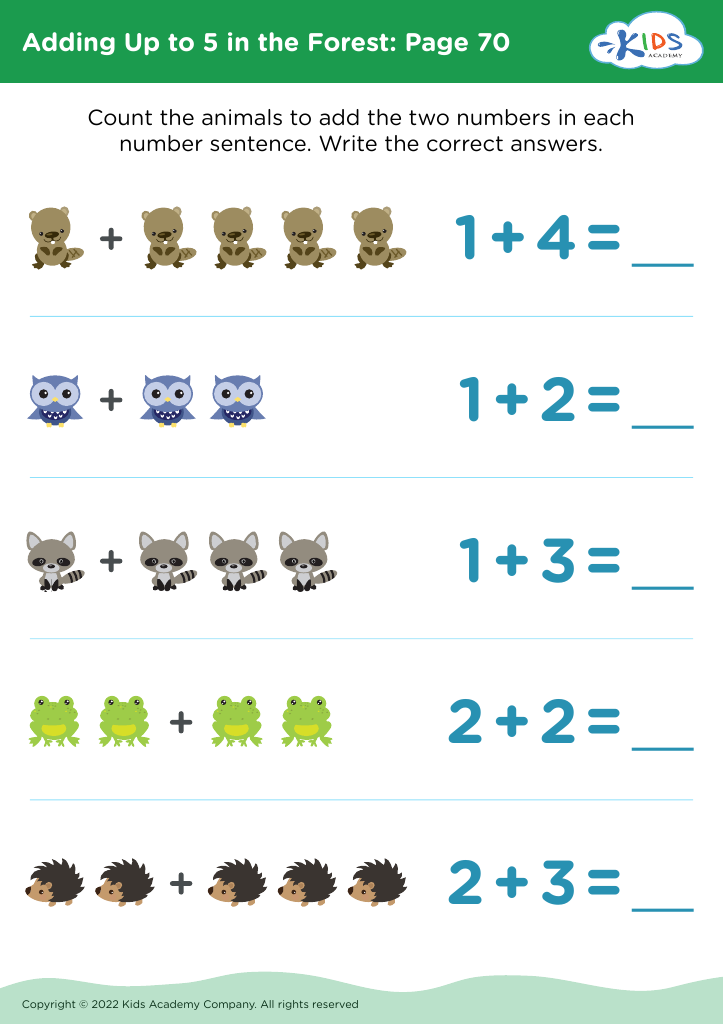
Adding Up to 5 in the Forest: Page 70
Worksheet
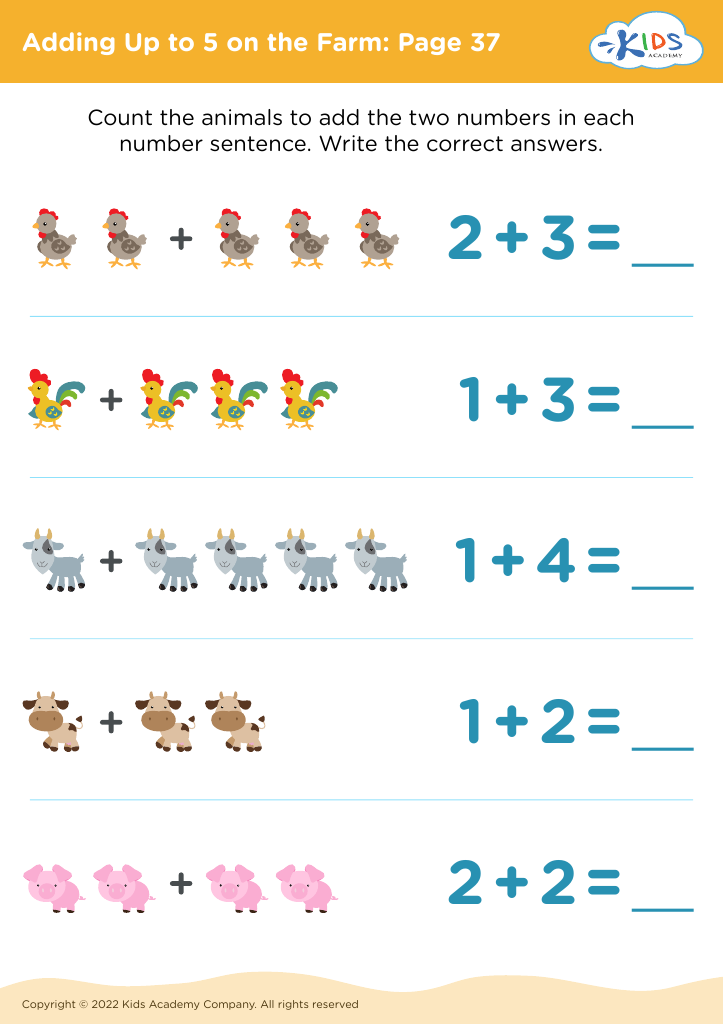
Adding Up to 5 on the Farm: Page 37
Worksheet
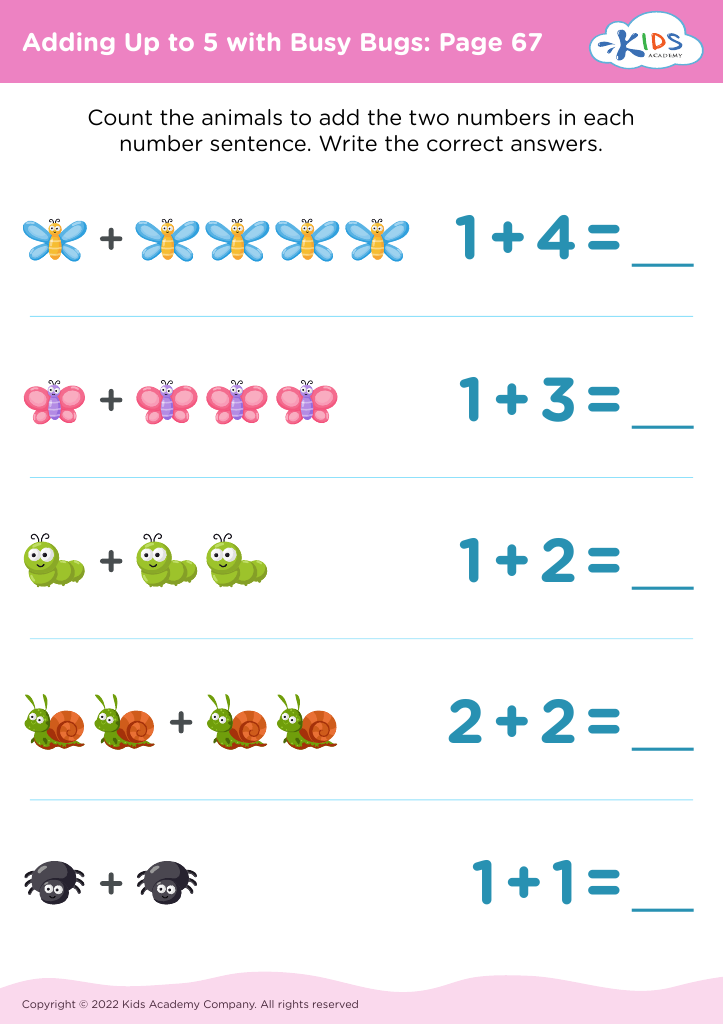
Adding Up to 5 with Busy Bugs: Page 67
Worksheet
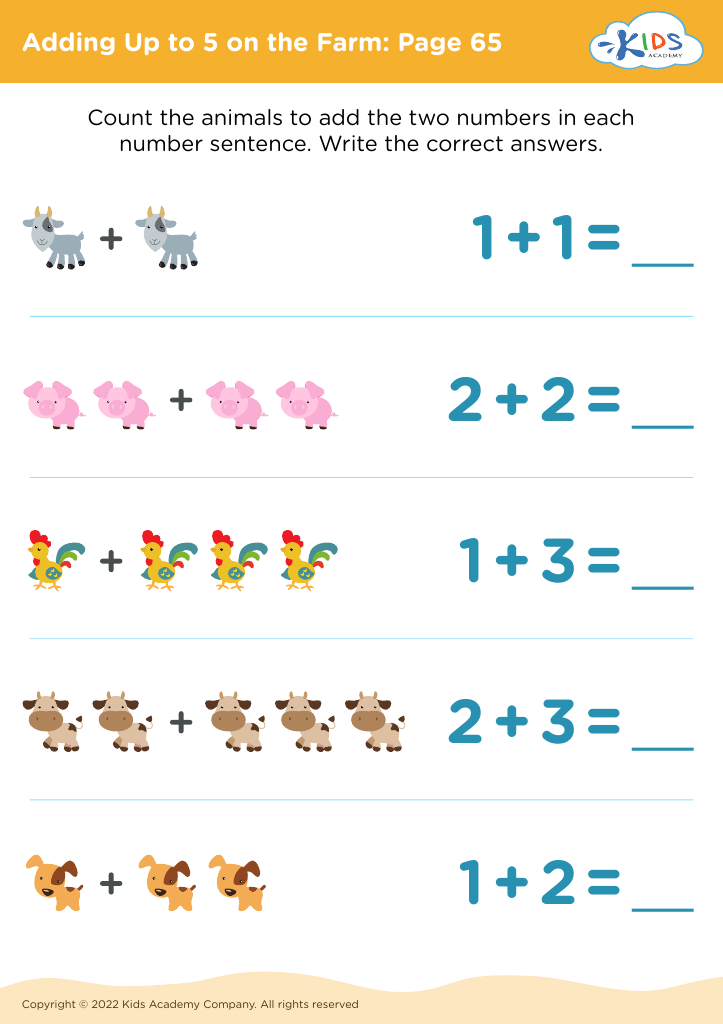
Adding Up to 5 on the Farm: Page 65
Worksheet
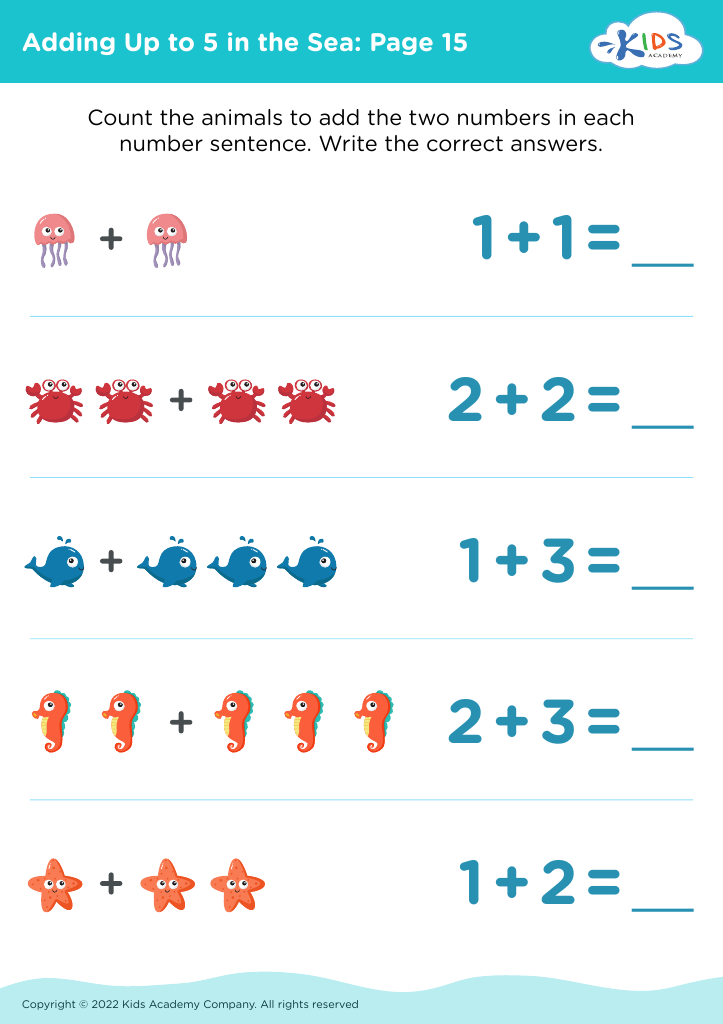
Adding Up to 5 in the Sea: Page 15
Worksheet
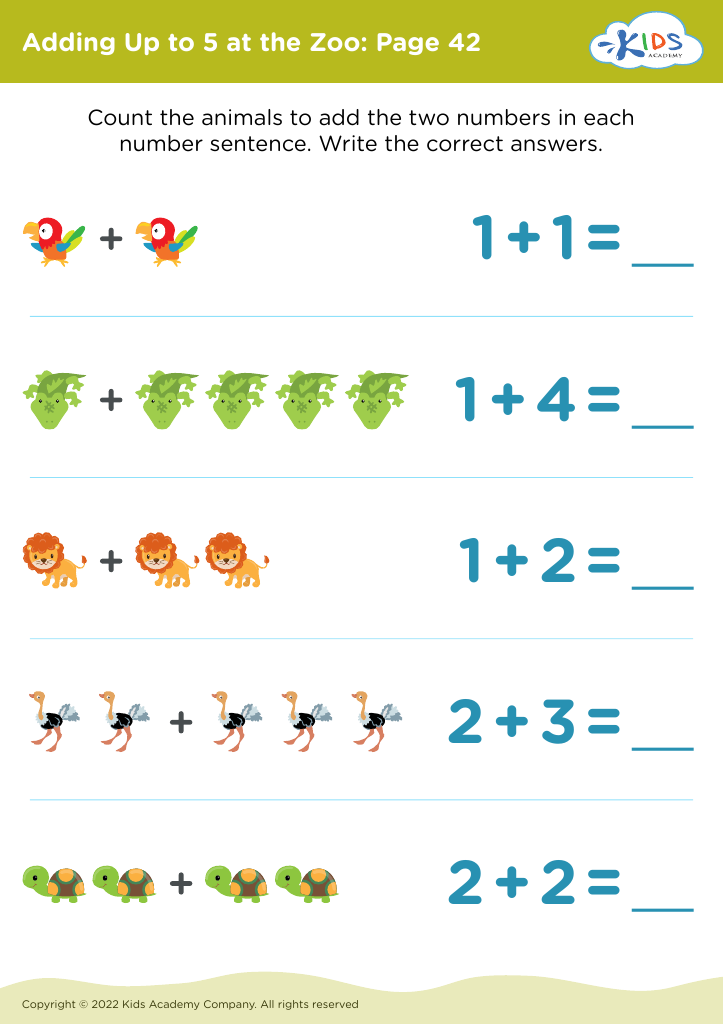
Adding Up to 5 at the Zoo: Page 42
Worksheet
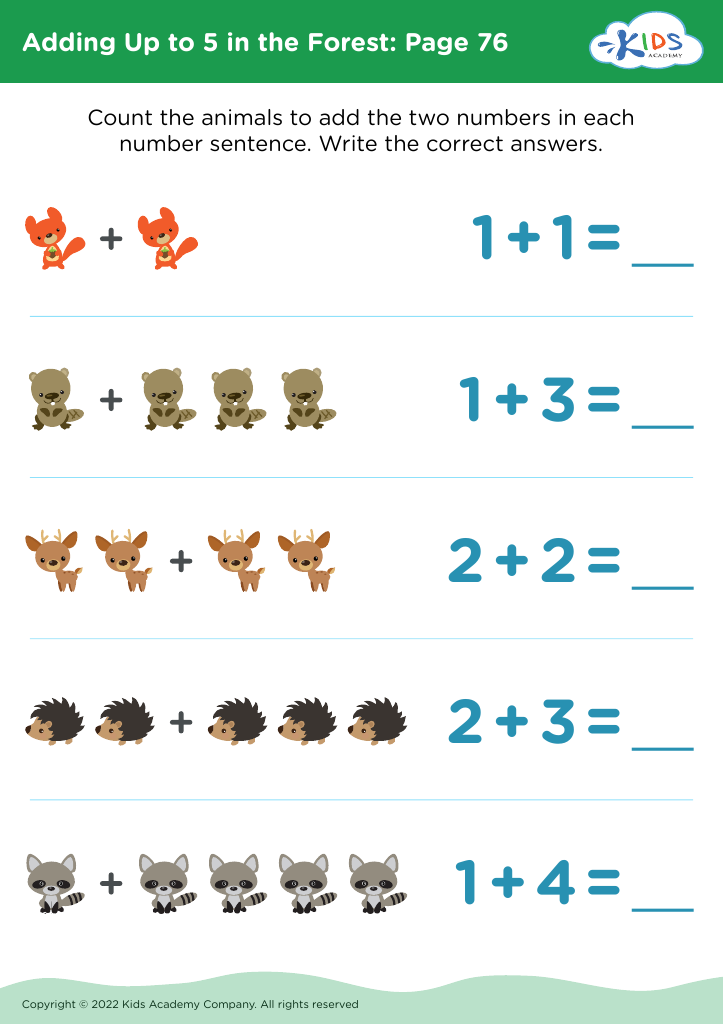
Adding Up to 5 in the Forest: Page 76
Worksheet
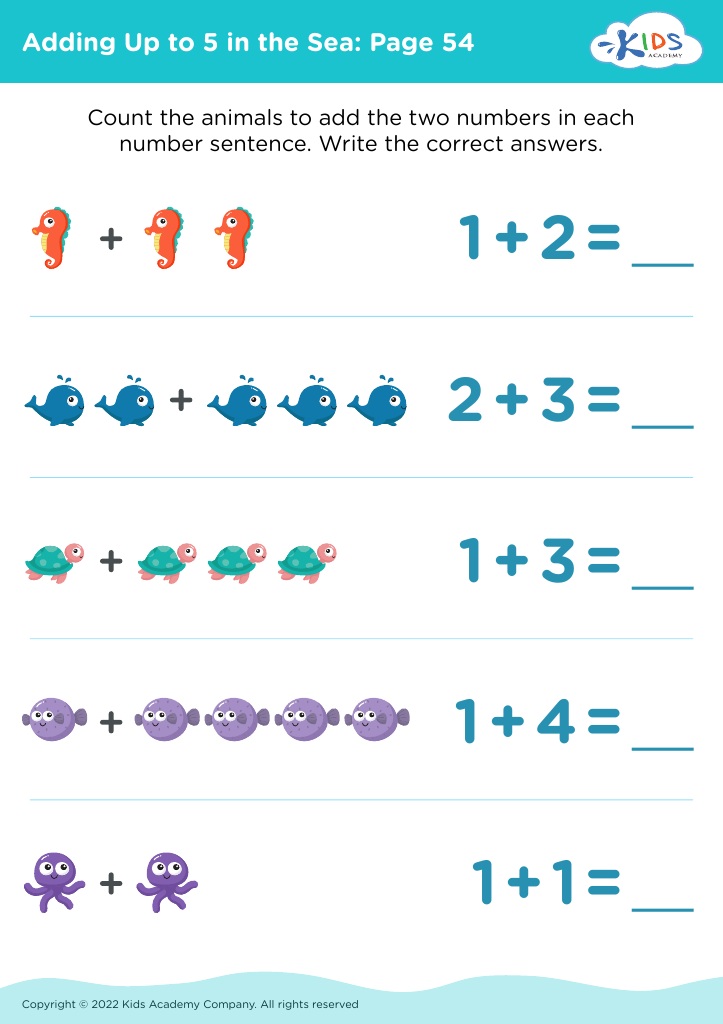
Adding Up to 5 in the Sea: Page 54
Worksheet
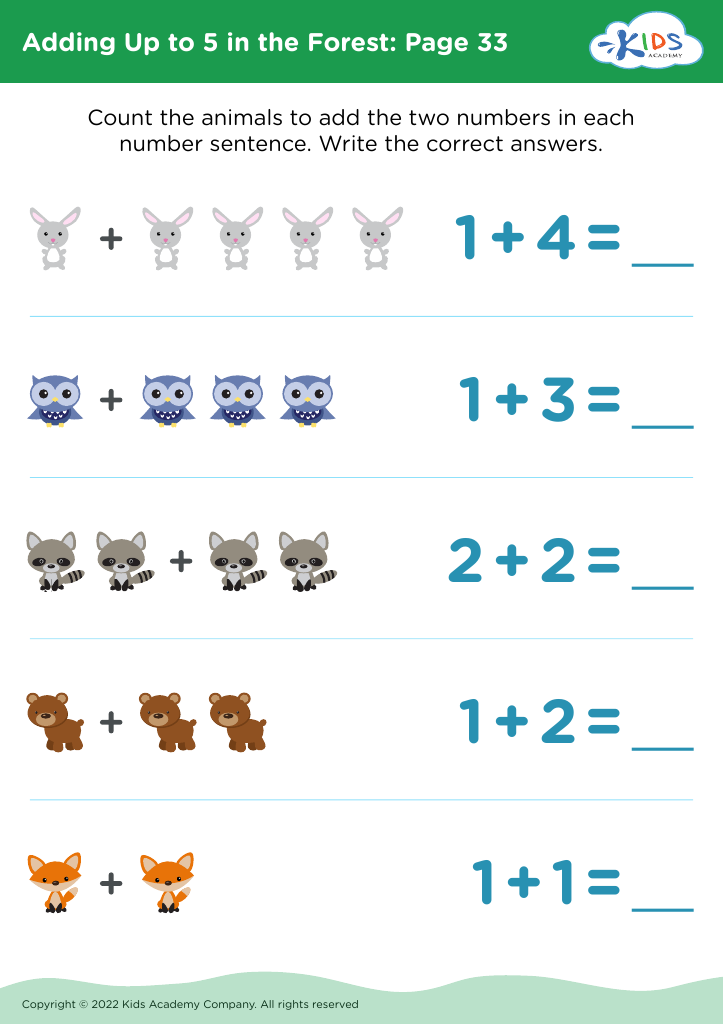
Adding Up to 5 in the Forest: Page 33
Worksheet
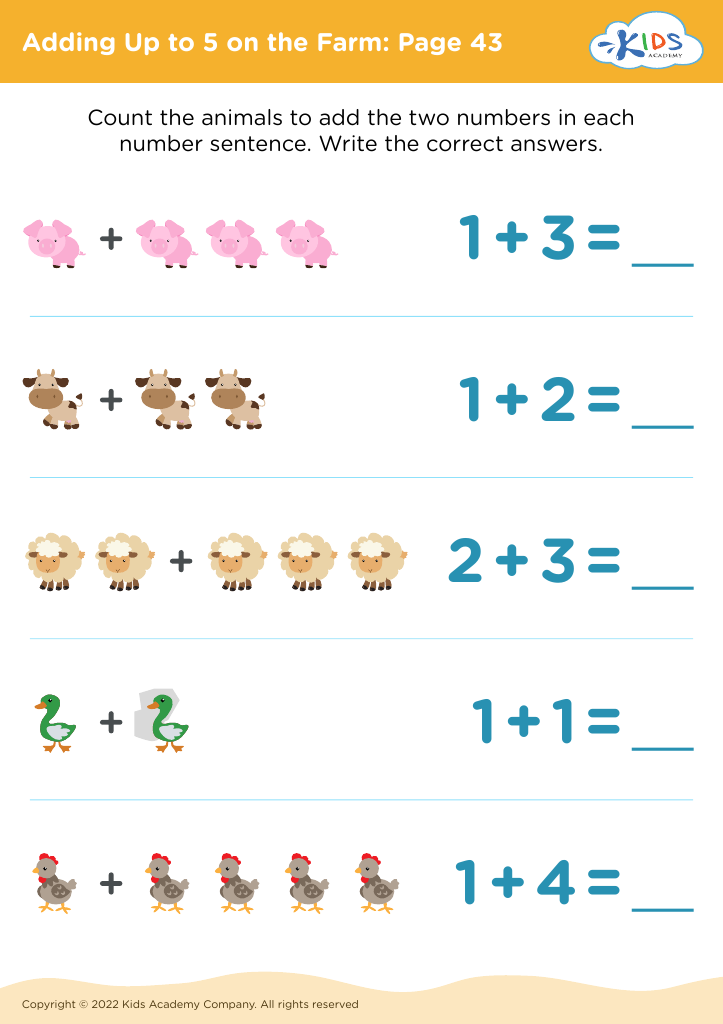
Adding Up to 5 on the Farm: Page 43
Worksheet
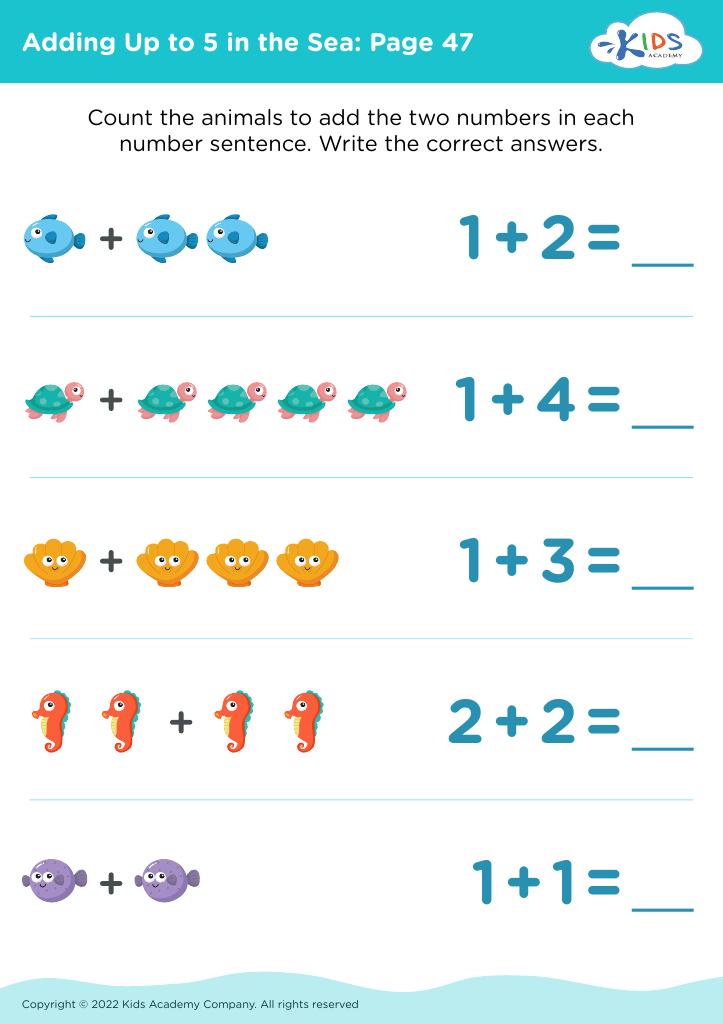
Adding Up to 5 in the Sea: Page 47
Worksheet
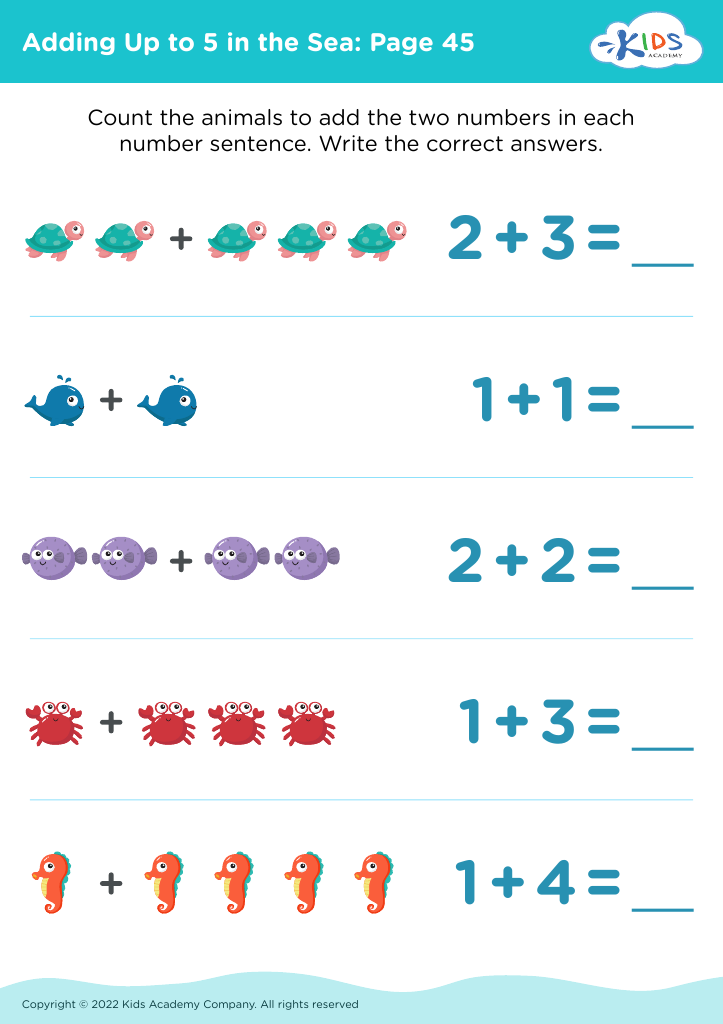
Adding Up to 5 in the Sea: Page 45
Worksheet
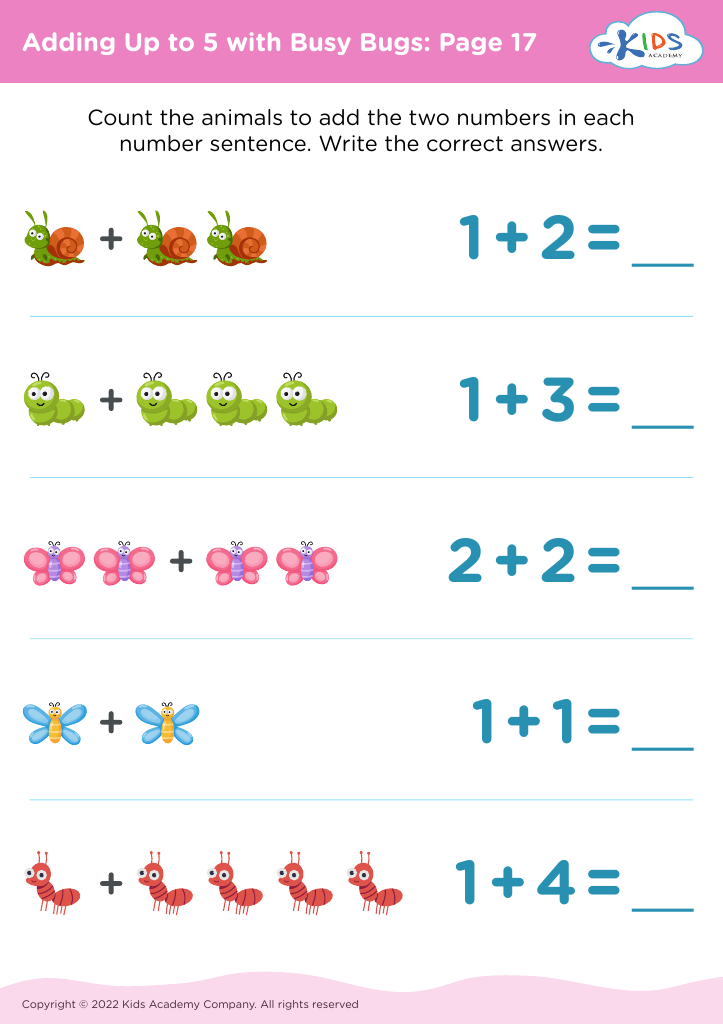
Adding Up to 5 with Busy Bugs: Page 17
Worksheet
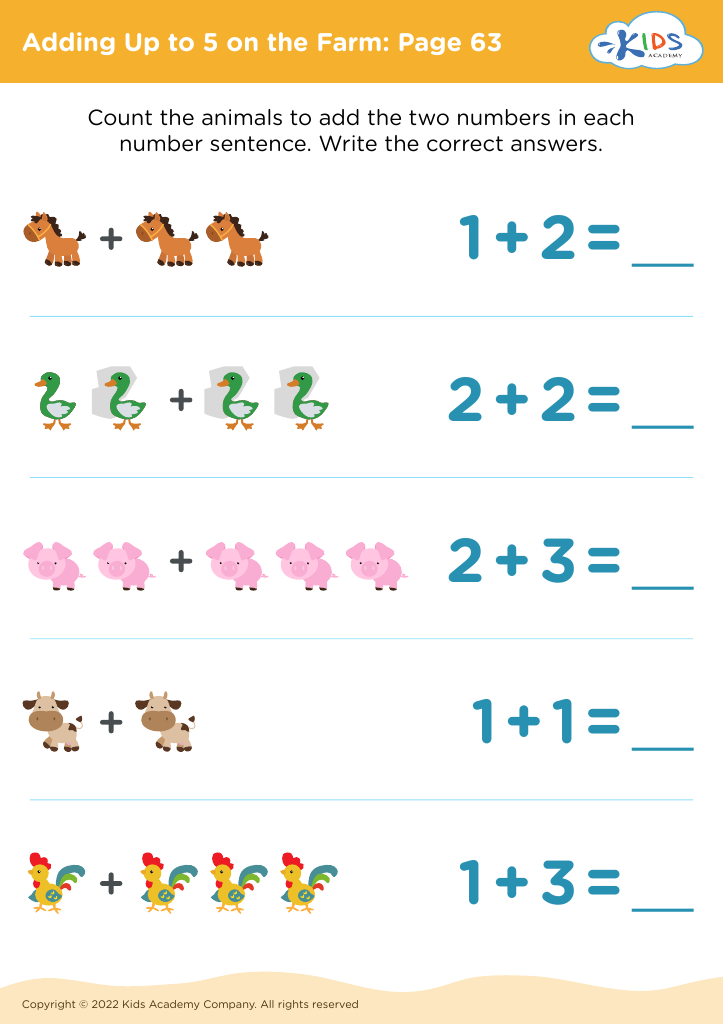
Adding Up to 5 on the Farm: Page 63
Worksheet
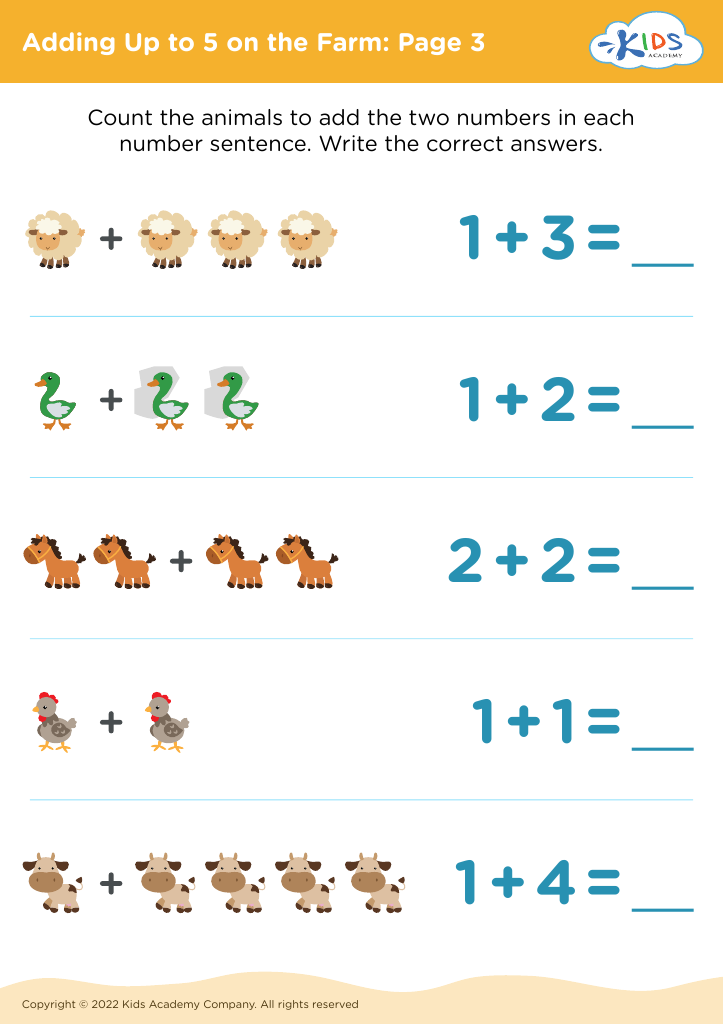
Adding Up to 5 on the Farm: Page 3
Worksheet
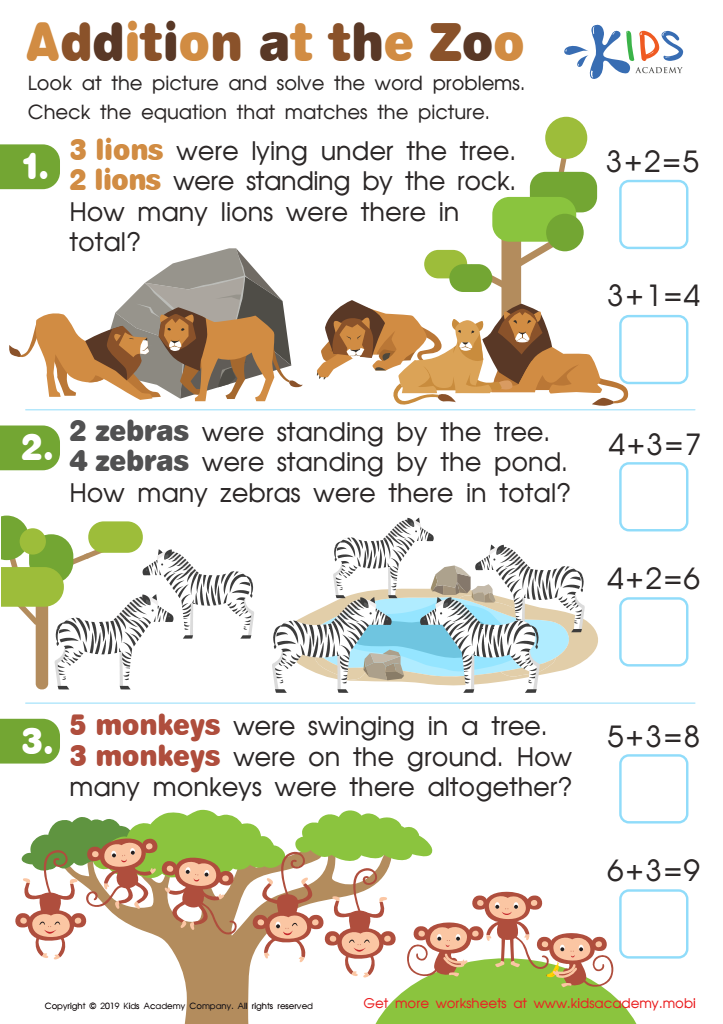
Addition at the Zoo Worksheet

Addition at the Zoo Worksheet

Visit the zoo with your kids and point out all the different animals. Ask them to name their favorites and identify animals on a worksheet. Challenge them to solve word problems related to the pictures. Ask them for the equation that fits the picture and check the answer.
Addition at the Zoo Worksheet
Worksheet
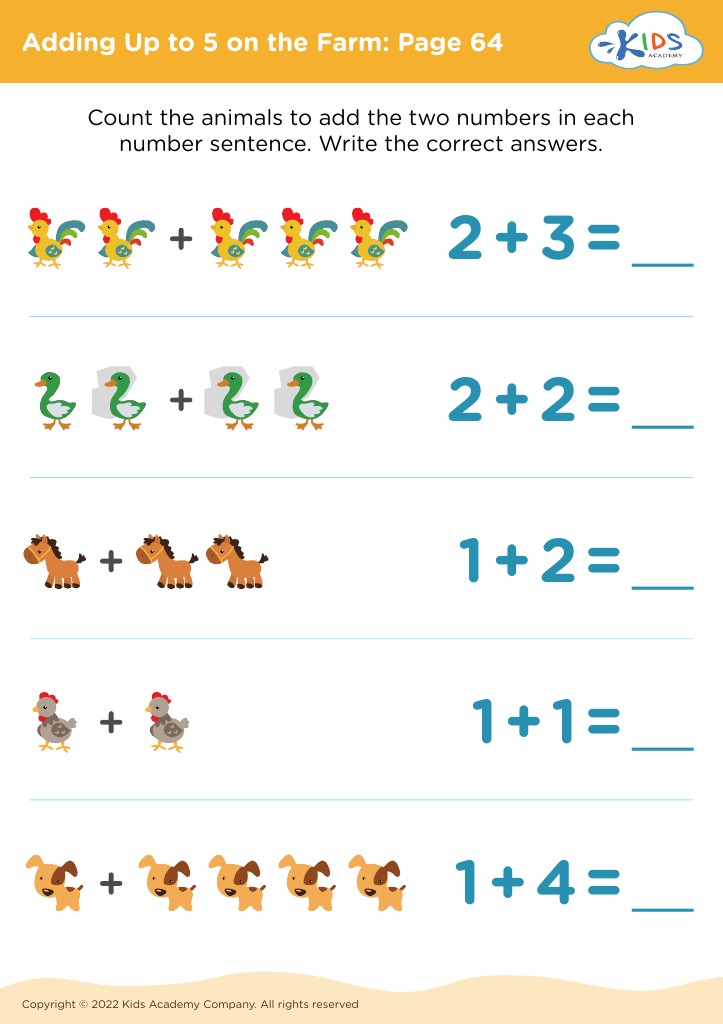
Adding Up to 5 on the Farm: Page 64
Worksheet
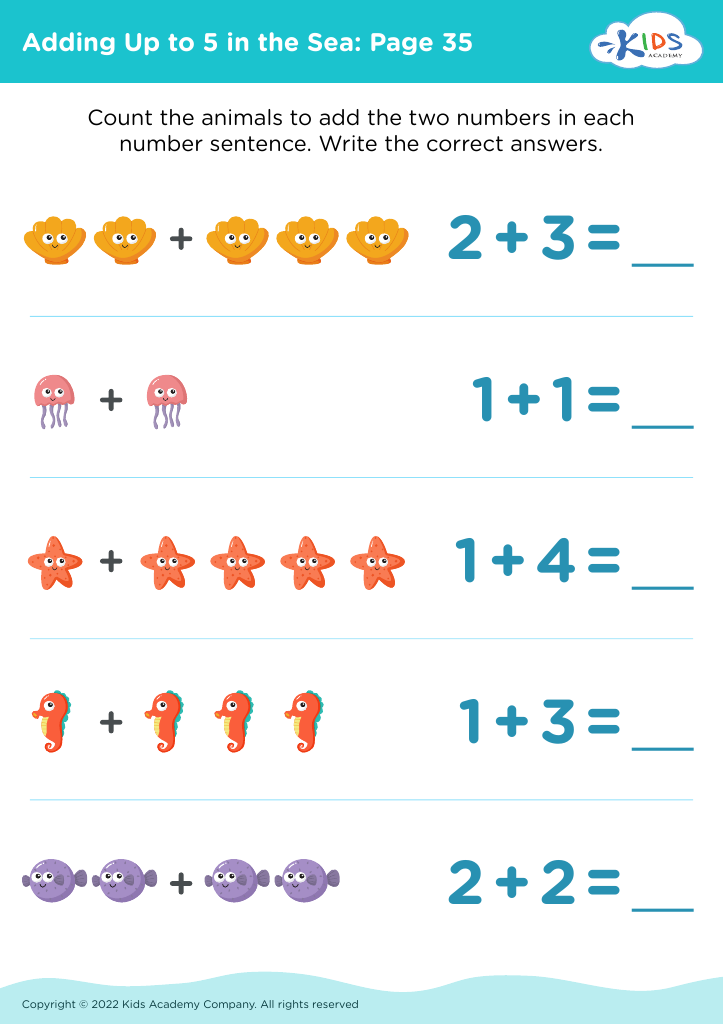
Adding Up to 5 in the Sea: Page 35
Worksheet
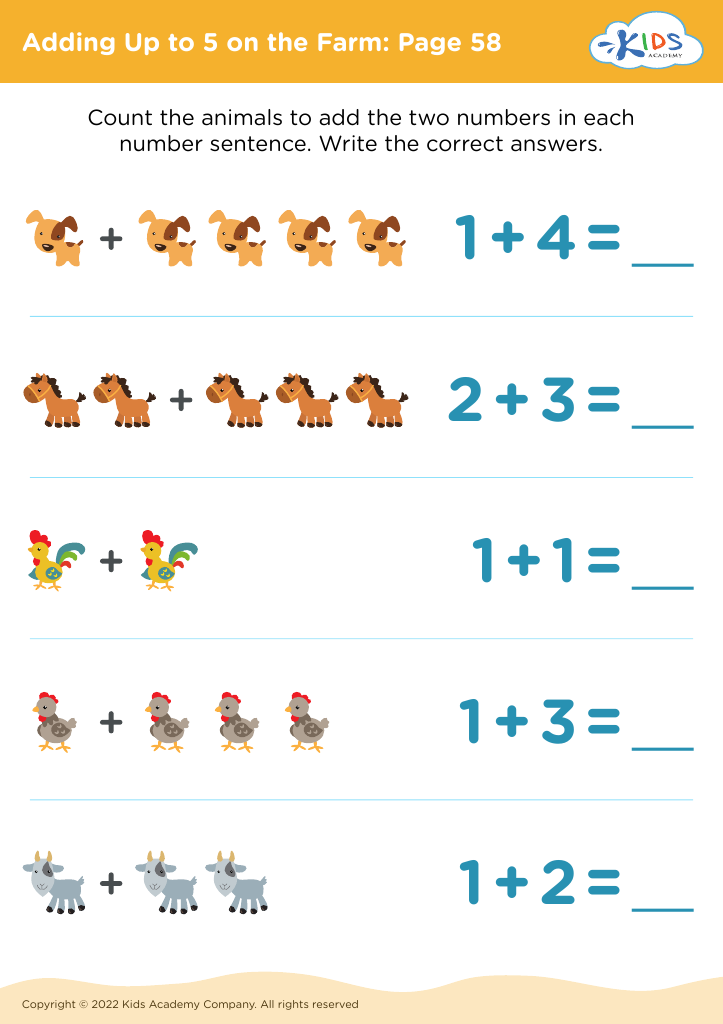
Adding Up to 5 on the Farm: Page 58
Worksheet
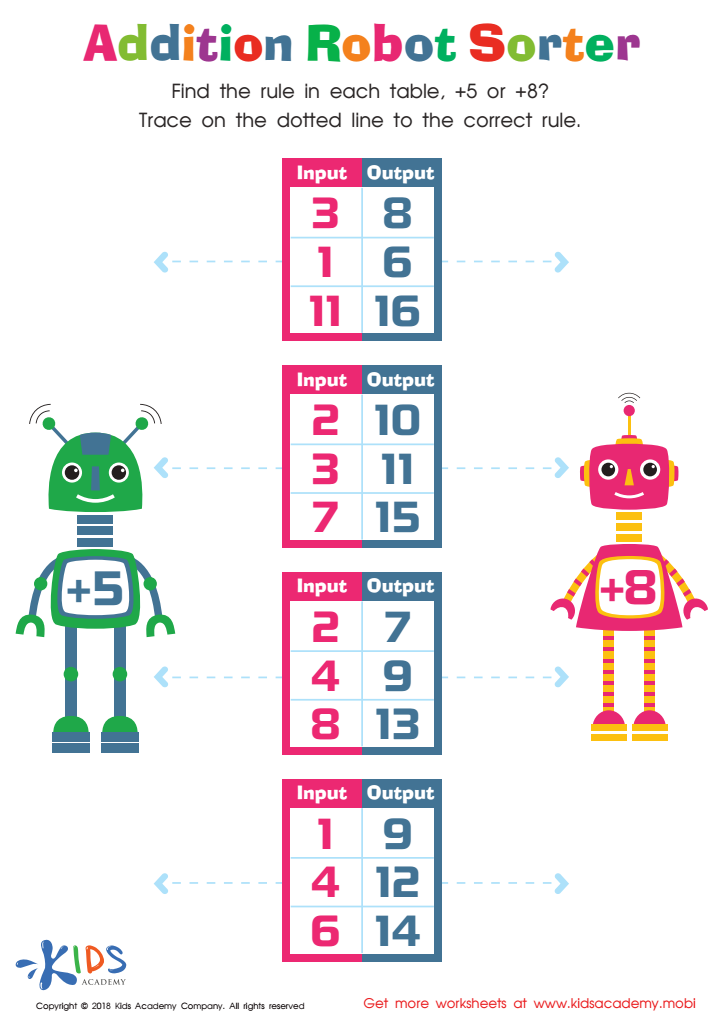
Addition Robot Sorter Worksheet


Addition Robot Sorter Worksheet

This worksheet helps your child understand addition. Have them trace the dotted lines to the correct equations: +8 and +5. It's a great way to aid their mathematical comprehension and get them comfortable with adding equations.
Addition Robot Sorter Worksheet

Worksheet


Basic addition skills are fundamental for children aged 5-6 as they lay the groundwork for future mathematical understanding. First, mastering these skills fosters confidence in young learners, enabling them to approach more complex concepts with a positive attitude. Learning addition also sharpens cognitive abilities, enhances problem-solving skills, and encourages logical thinking.

Moreover, basic addition is not just an academic skill; it is crucial for daily life. From counting objects to understanding quantities in food and toys, these skills help children make sense of the world around them. Early competence in addition can prevent future learning difficulties in math, setting a strong foundation for all subsequent mathematical education.

Collaboration between parents and teachers is vital. When both parties reinforce similar methods at home and in school, children gain a more coherent understanding of addition. Engaging in fun activities like counting games or using everyday items for practice can make learning enjoyable.

Ultimately, when parents and teachers prioritize basic addition skills, they empower children not only in mathematics, but they also instill a lifelong love of learning and a critical mindset necessary to navigate everyday life. Addressing these foundational skills is essential for fostering well-rounded, confident learners.