Basic arithmetic practice Addition Worksheets for Ages 5-6
10 filtered results
-
From - To
Our Basic Arithmetic Practice Addition Worksheets for Ages 5-6 are designed to make learning fun and engaging for young learners! These printable worksheets help children build foundational math skills by offering a variety of addition problems and interactive activities. Perfect for classroom, homeschooling, or extra practice at home, these exercises focus on fundamental addition skills, fostering your child's confidence and competence in math. With colorful illustrations and age-appropriate challenges, these worksheets turn practice time into an enjoyable lesson in early arithmetic. Help your child master basic addition and set the stage for future math success with our expertly crafted resources!
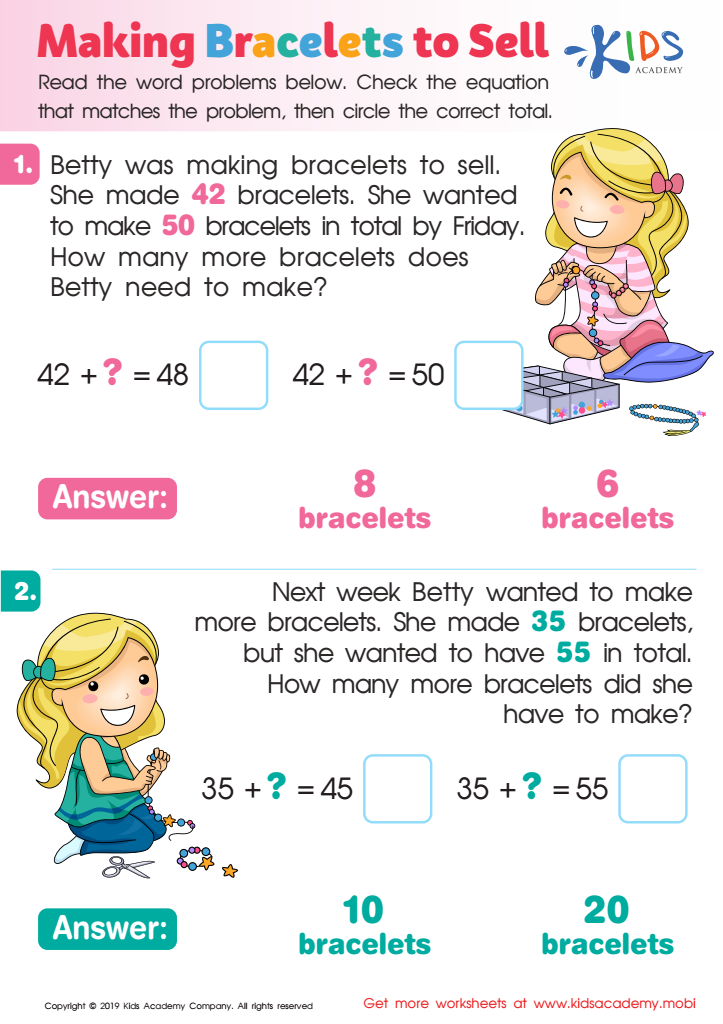
Making Bracelets to Sell Worksheet
 Assign to My Students
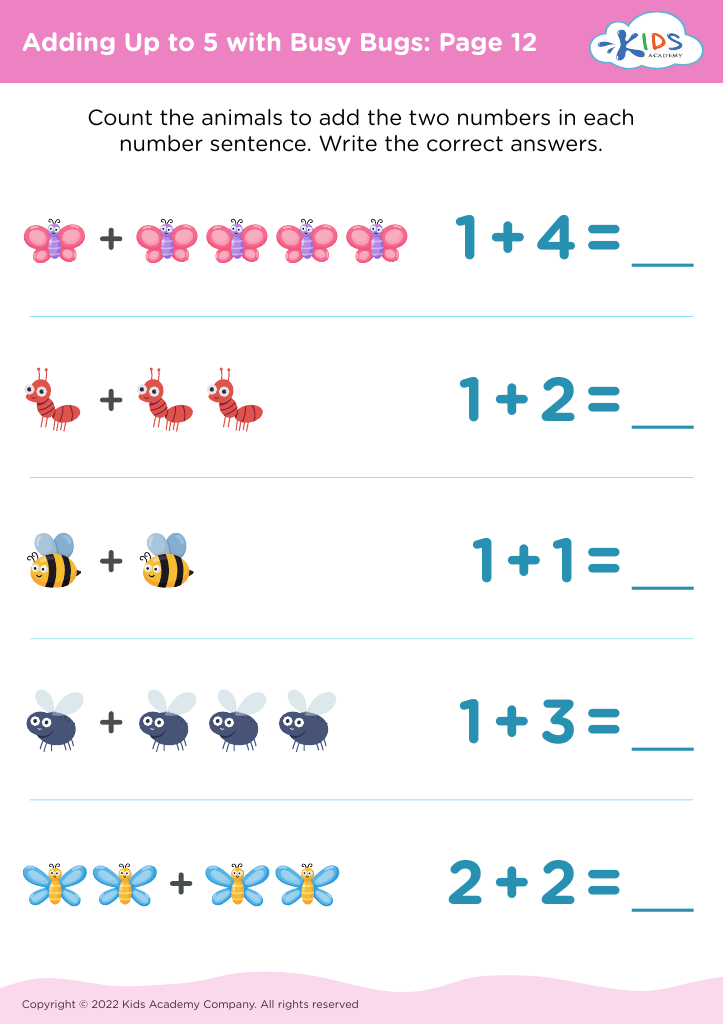
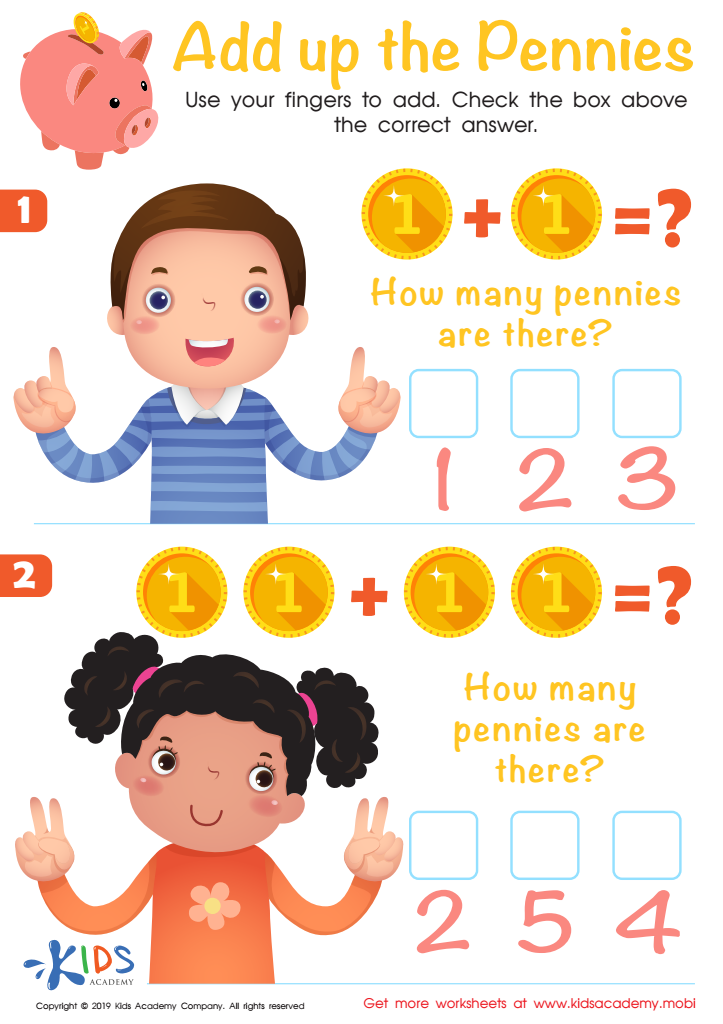
Add up the Pennies Worksheet
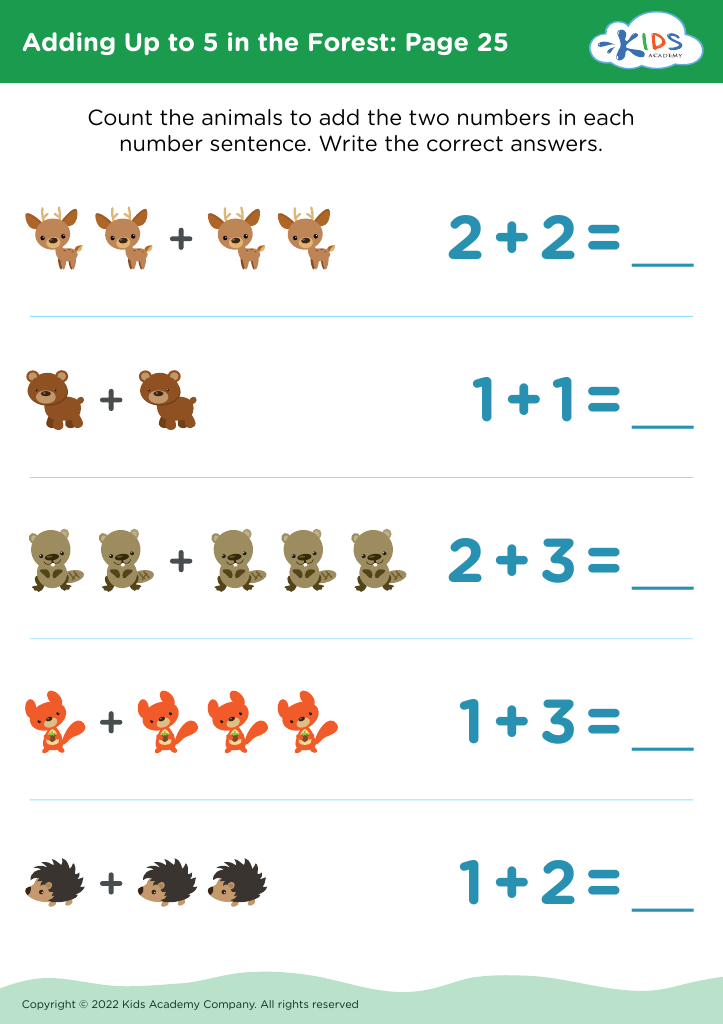
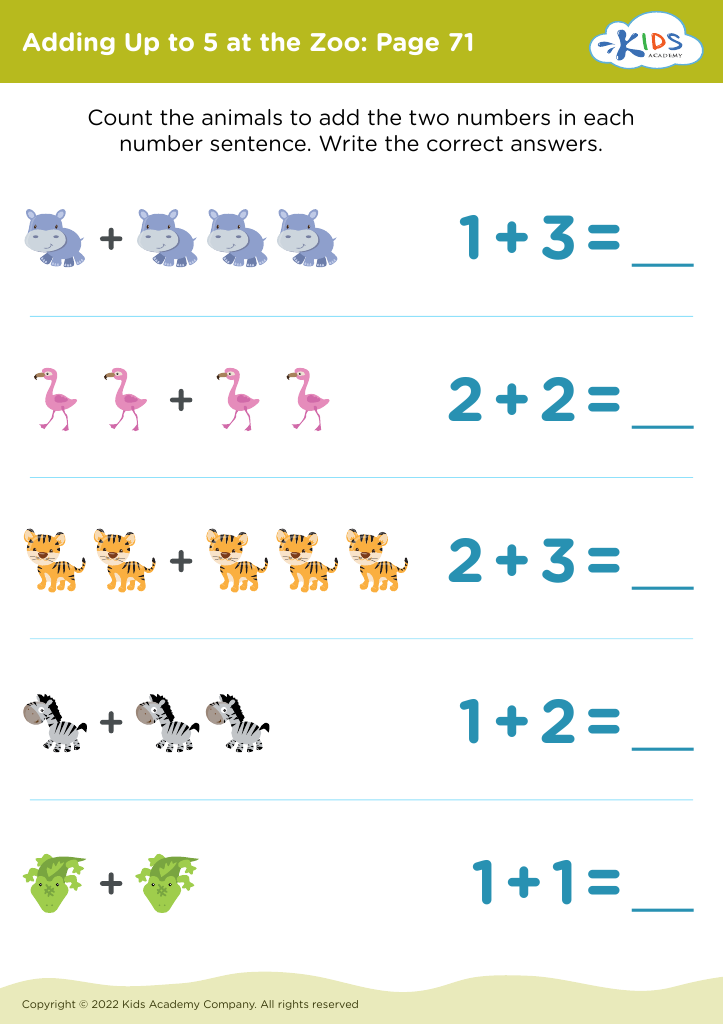
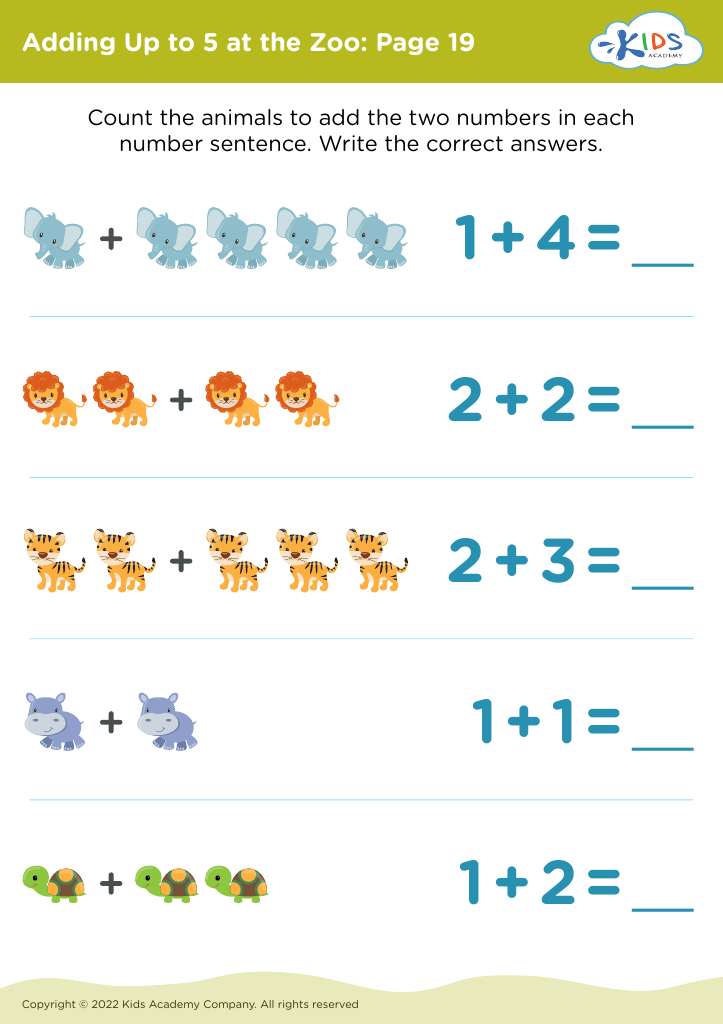
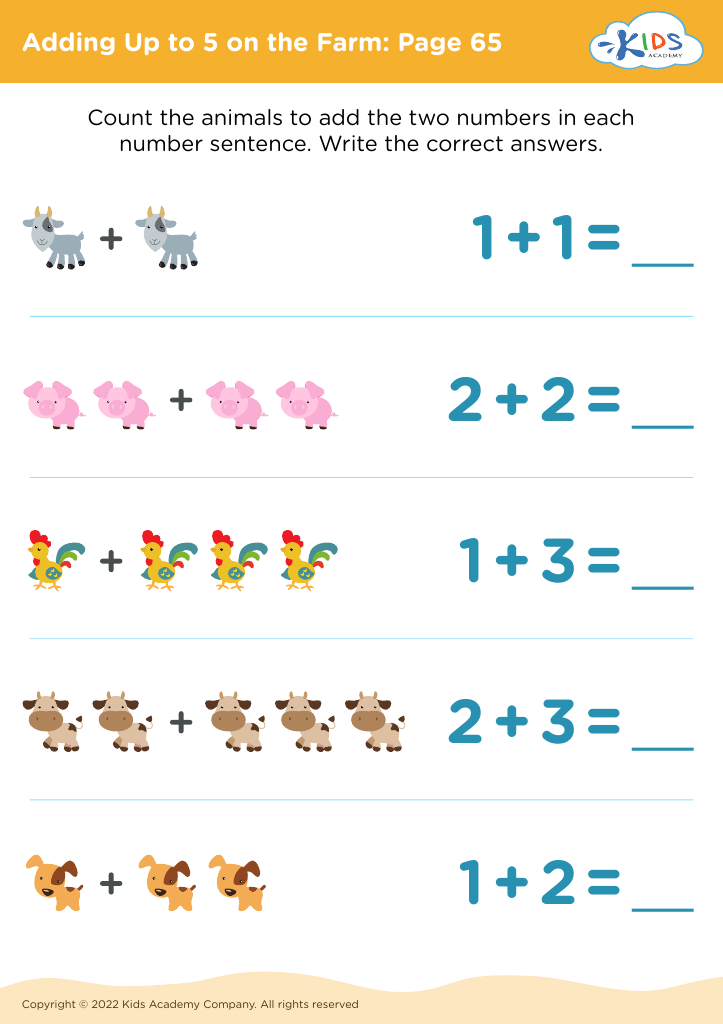
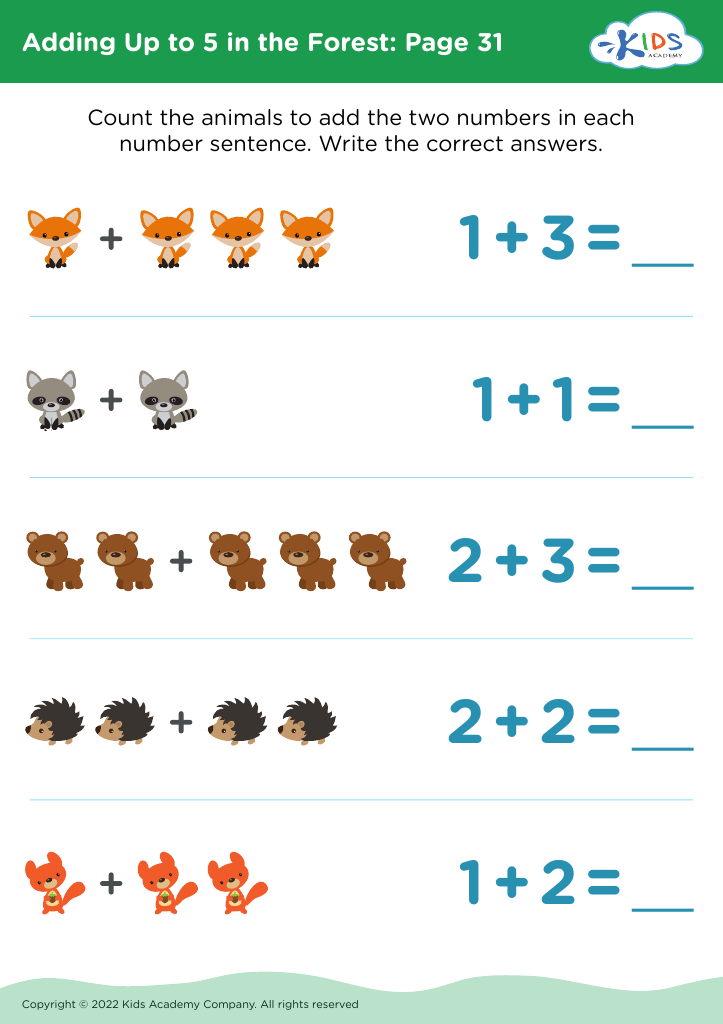
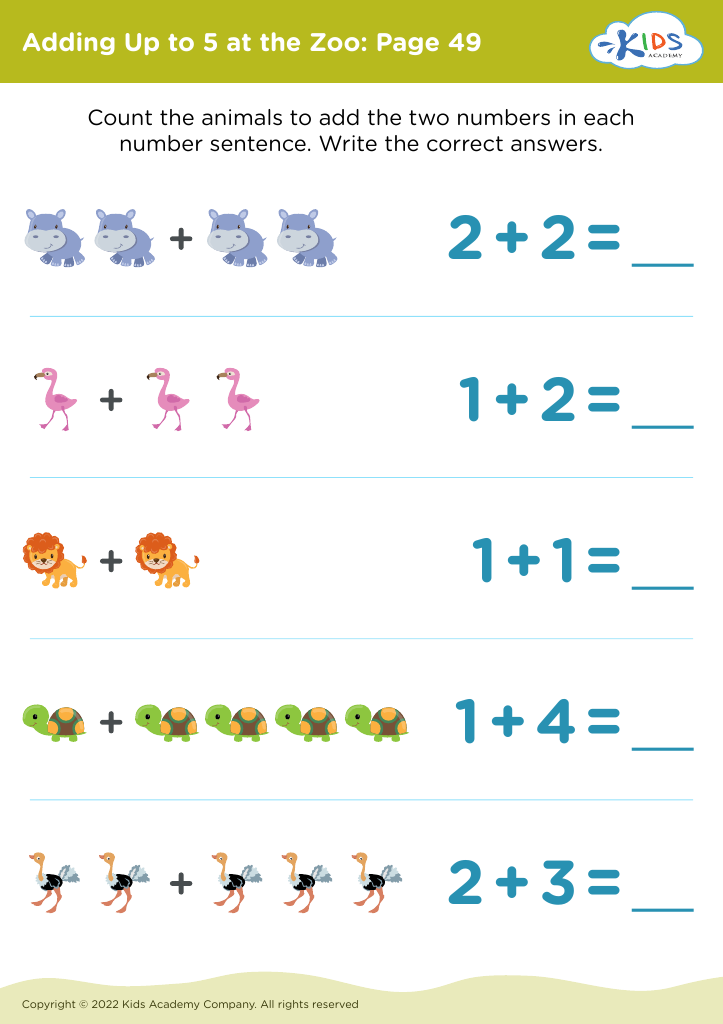
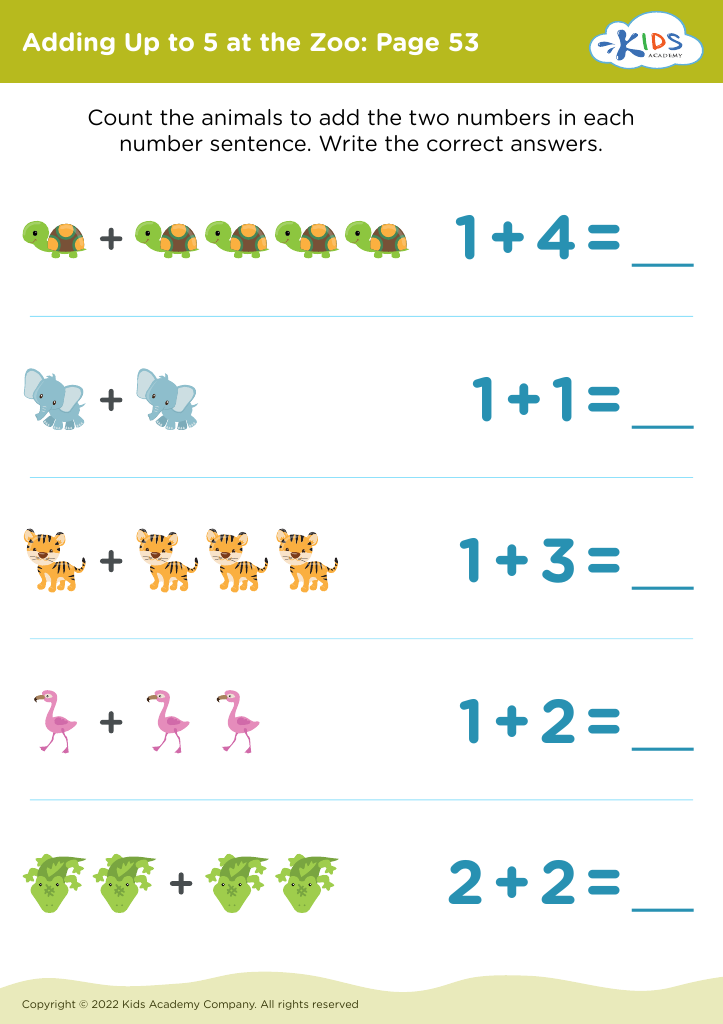








Parents and teachers should prioritize basic arithmetic practice, particularly addition, for children aged 5-6 as it lays the foundation for all future mathematical learning. At this developmental stage, children are naturally curious and their brains are exceptionally receptive to new information. Engaging with addition exercises enhances their number sense, helping them understand and manipulate numbers with confidence.
Introducing children to addition through playful and interactive methods helps reinforce positive attitudes towards math, making it an enjoyable and integral part of their daily life. Mastery of addition also boosts their problem-solving skills and their ability to follow sequential steps in more complex tasks.
Fundamentally, early proficiency in addition is critical for academic success in broader subjects. As mathematics is a cumulative discipline, a strong grasp on basic arithmetic allows children to transition smoothly to more advanced concepts like subtraction, multiplication, and division. This, in turn, supports their learning in sciences, economics, and other subjects that rely heavily on math.
Moreover, practicing addition aids in developing attention to detail and cognitive discipline—skills that are essential beyond the classroom. Parents and teachers act as guides in this formative process, setting the stage for a lifetime of numeracy skills and fostering confidence in every child's learning journey.








