
Counting proficiency Addition Worksheets for Ages 5-6
11 filtered results
Difficulty Level
Grade
Age
-
From - To
Subject
Activity
Standards
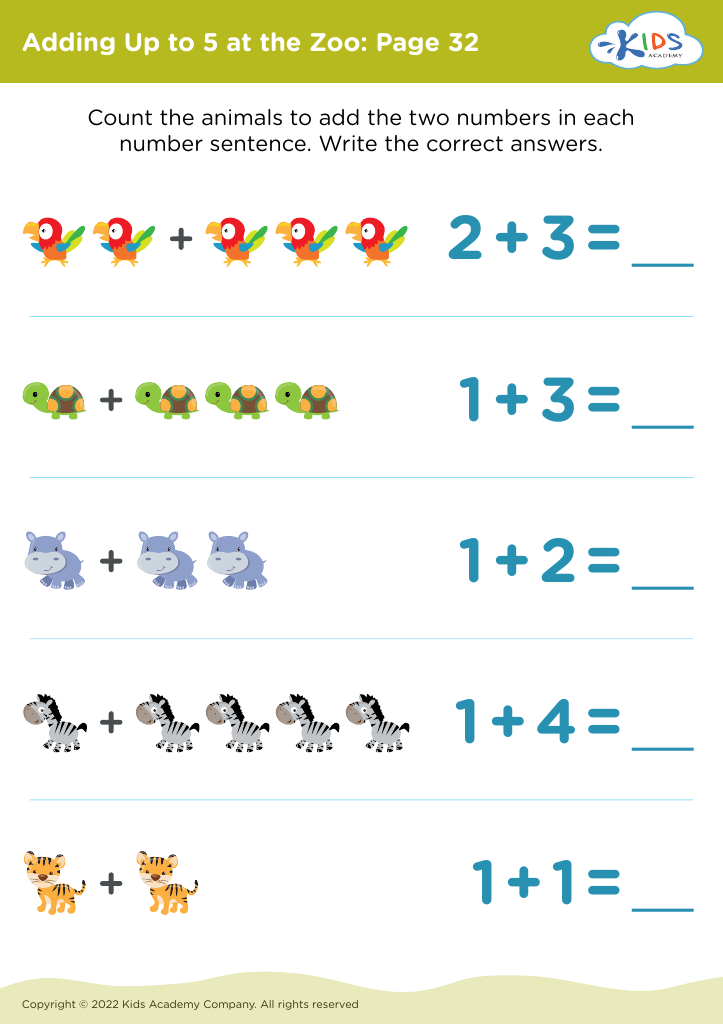
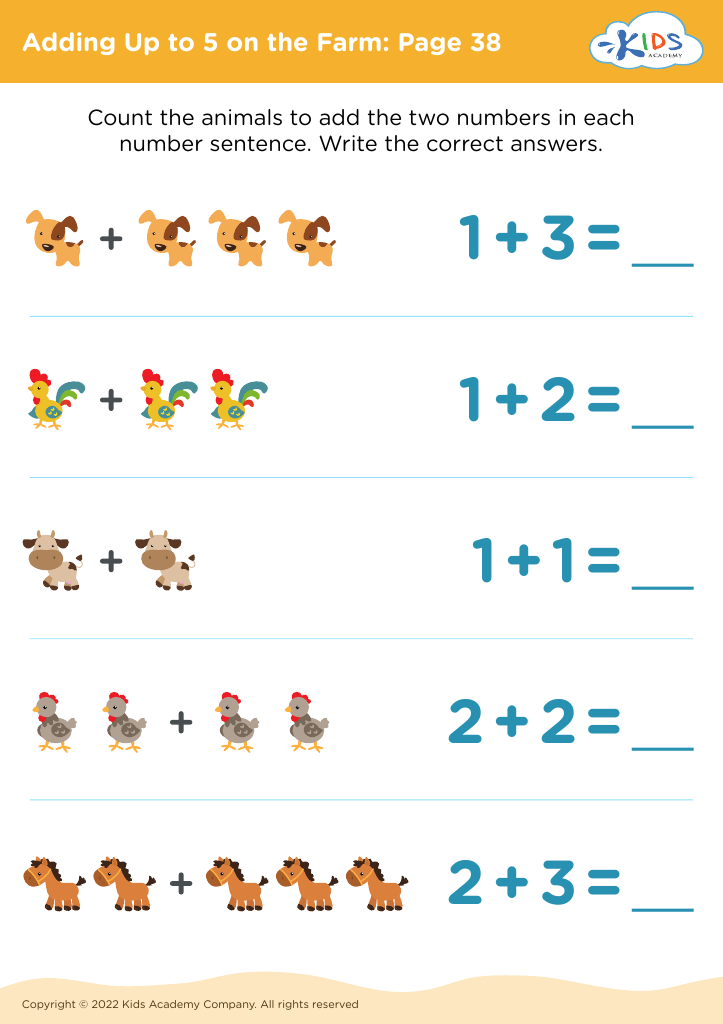
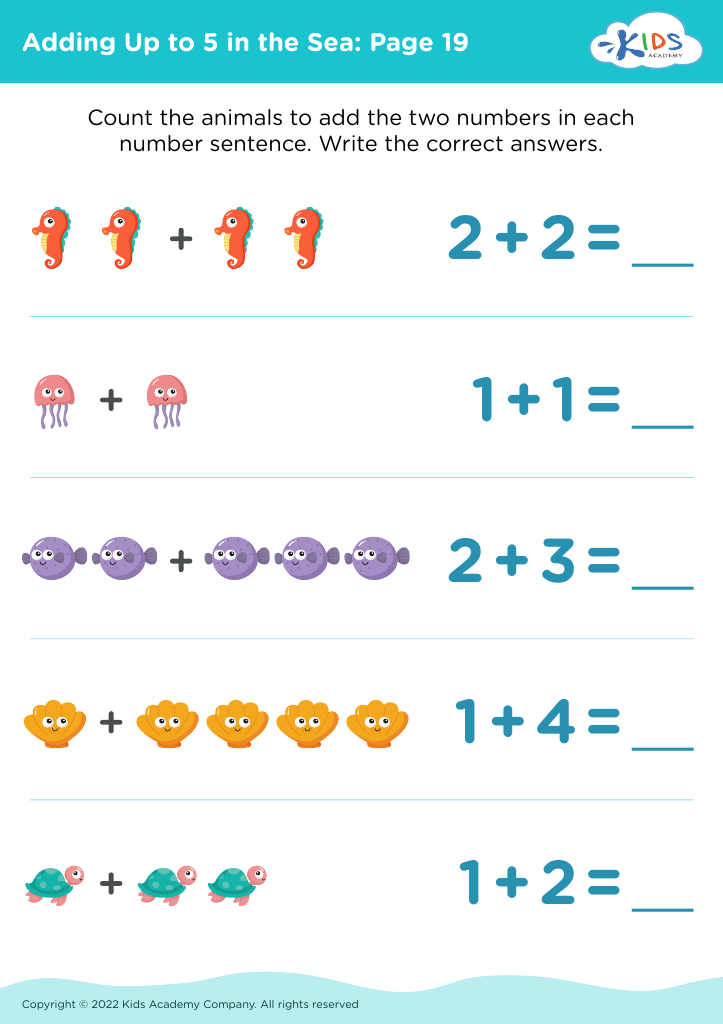
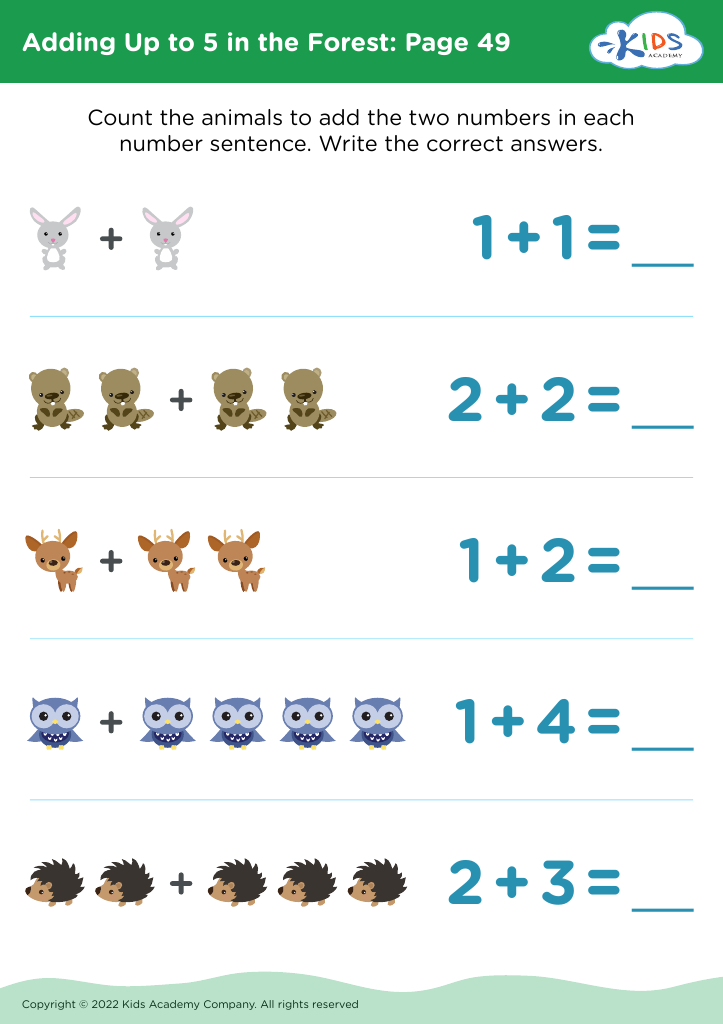
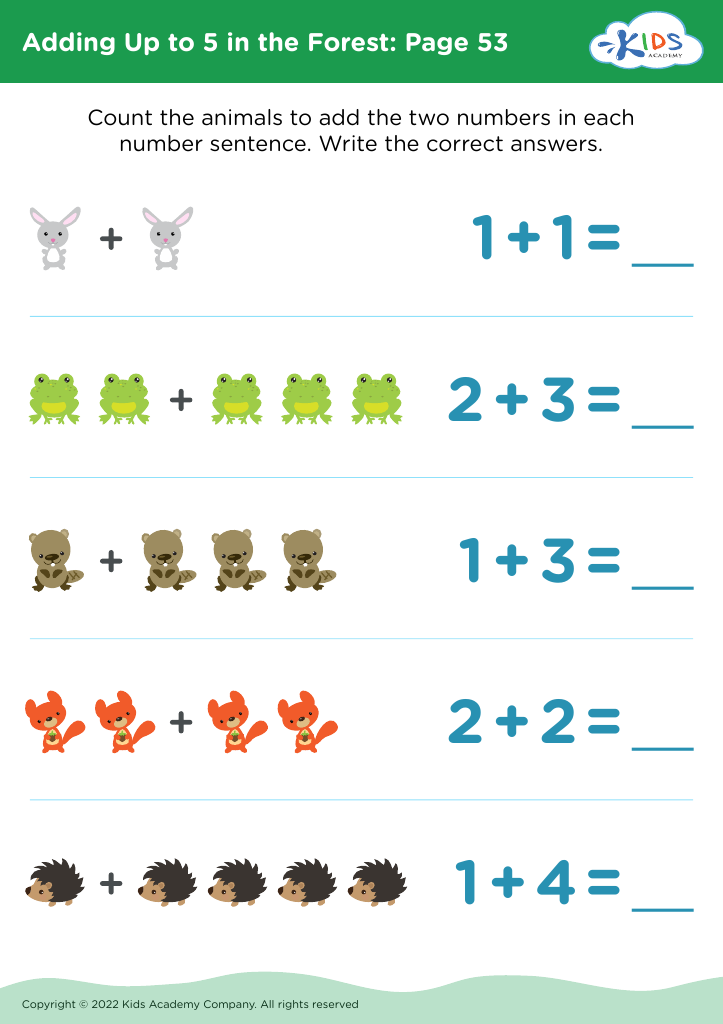
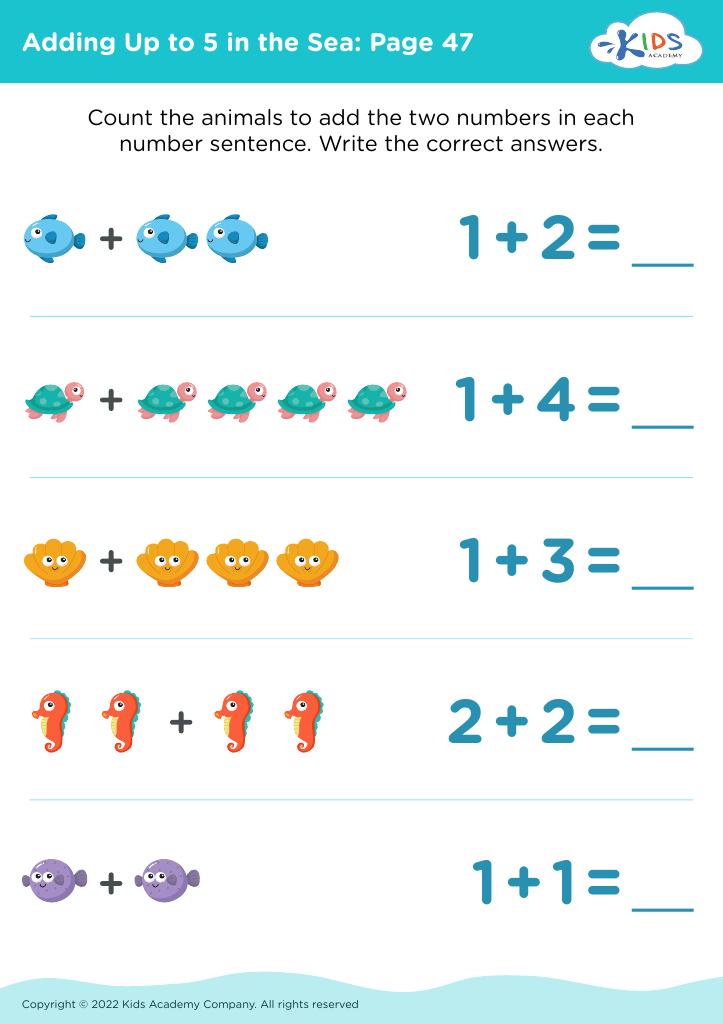
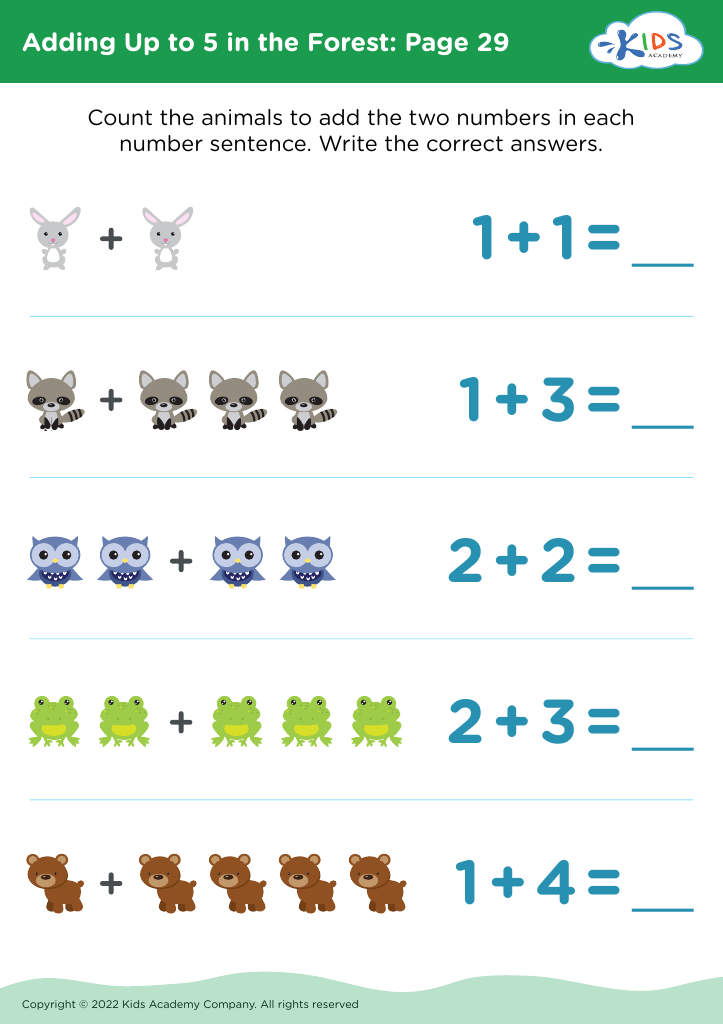
Boost your child's math skills with our Counting Proficiency Addition Worksheets designed specifically for ages 5-6. These engaging worksheets help young learners develop a strong foundation in counting and simple addition by incorporating fun, age-appropriate exercises. Each activity encourages hands-on practice, fostering an understanding of numbers through various interactive formats. Ideal for both classroom and home use, our worksheets promote essential cognitive skills and build confidence in early math learners. With colorful illustrations and clear instructions, your child will enjoy mastering counting and addition in an enjoyable and effective way. Start their math journey today!
Favorites
With answer key
Interactive
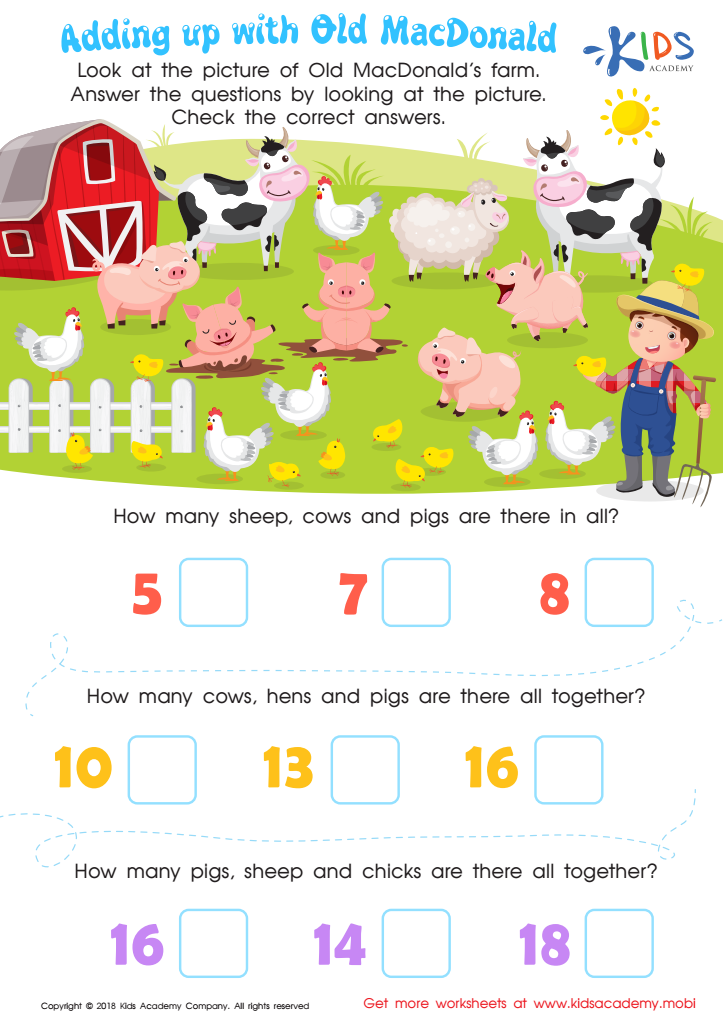
Adding Up with Old MacDonald Worksheet
Old MacDonald needs help counting his animals! Give your little math whiz a fun challenge with a free PDF worksheet. They'll love counting the animals and doing basic addition with two or three addends. Who knew math could be so much fun on the farm?
 Assign to My Students
Adding Up with Old MacDonald Worksheet
Worksheet
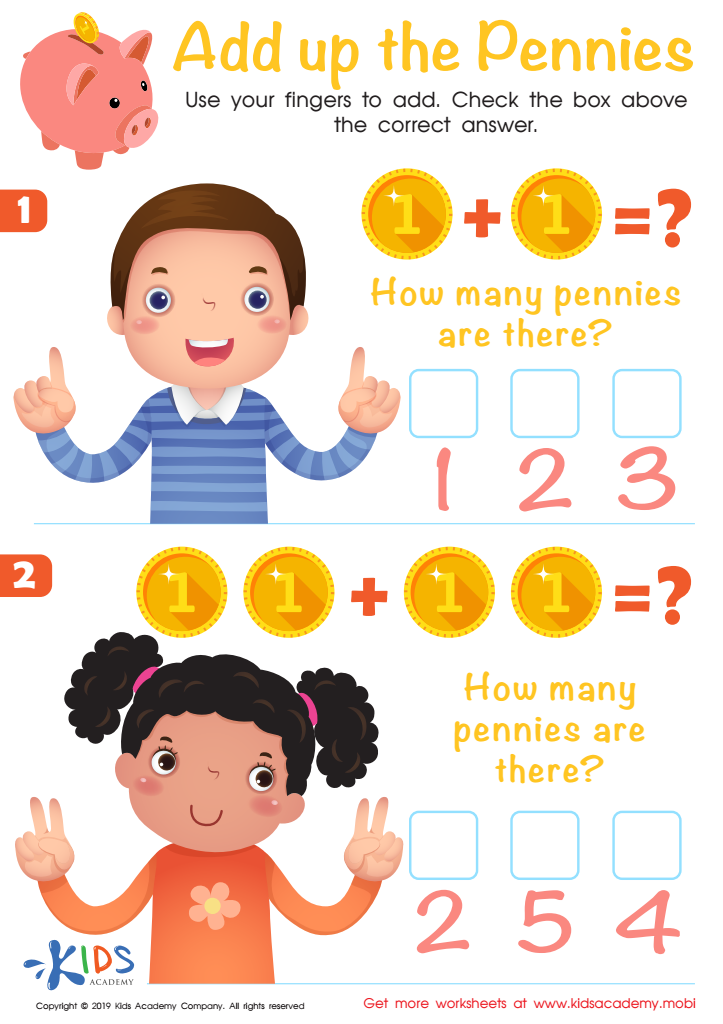
Add up the Pennies Worksheet
Help your kids ace their math skills with this simple worksheet! You can guide them to use their fingers to add numbers and then check the box above the correct answer. With practice and your support, they can become faster and better at adding numbers. No sweating required!
Add up the Pennies Worksheet
Worksheet
Join Kids Academy for Free
Who is primarily going to use this learning content?








Counting proficiency and addition skills are foundational elements of early math learning for children aged 5-6. Parents and teachers should care about these skills for several reasons. First, strong counting abilities lay the groundwork for understanding numbers and quantity, enabling children to engage in more complex mathematical concepts later on. Mastering addition at this age fosters critical thinking and problem-solving skills, essential for both academic success and everyday life.
Additionally, proficiency in counting and addition instills confidence in children as they tackle challenges in math and beyond. Early positive experiences with math promote a growth mindset, encouraging children to view learning as an achievable goal. Furthermore, these skills often enhance children's fine motor skills, as they engage with manipulatives like counters or number cards during learning activities.
Supporting counting and addition proficiency also helps parents and teachers identify any potential learning difficulties early on, allowing for timely intervention. Overall, fostering these skills not only aids in academic development but also equips children with essential life skills, laying a strong foundation for their future learning and success. The early influences in math shape children's attitudes toward the subject, making parental and educator engagement crucial during these formative years.








