Problem Solving Addition Worksheets for Ages 5-6
13 filtered results
-
From - To
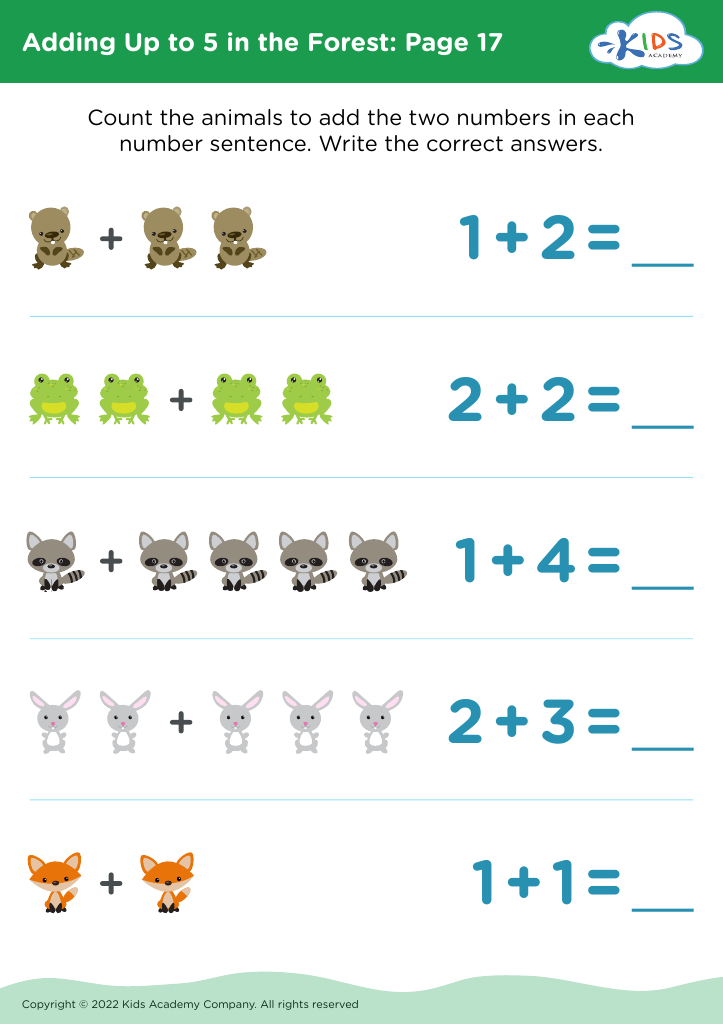
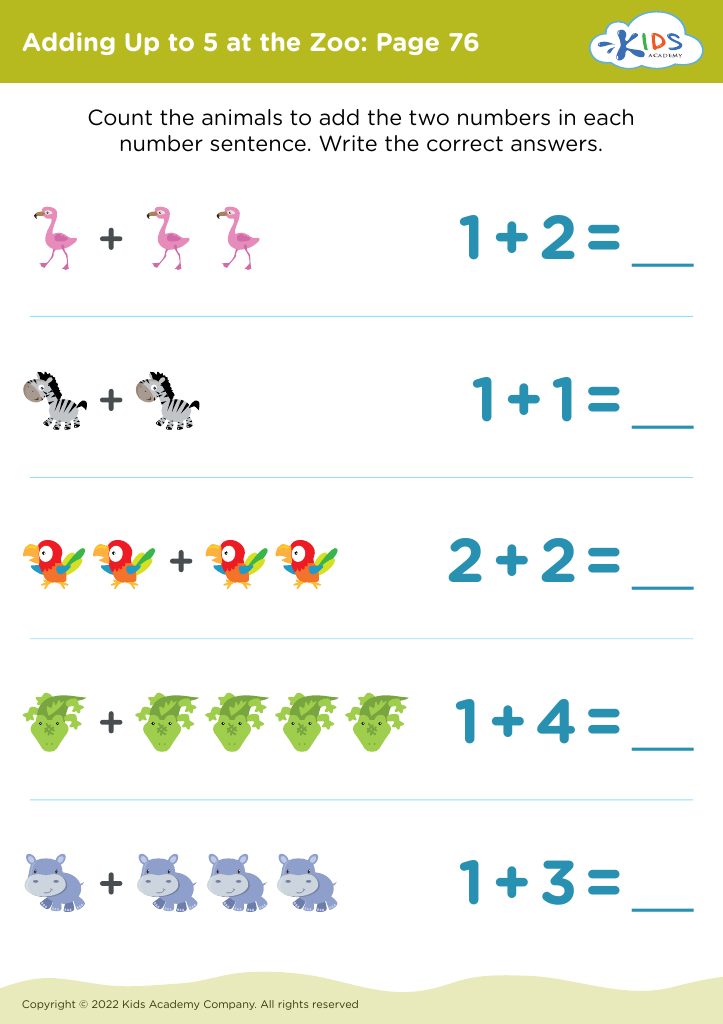
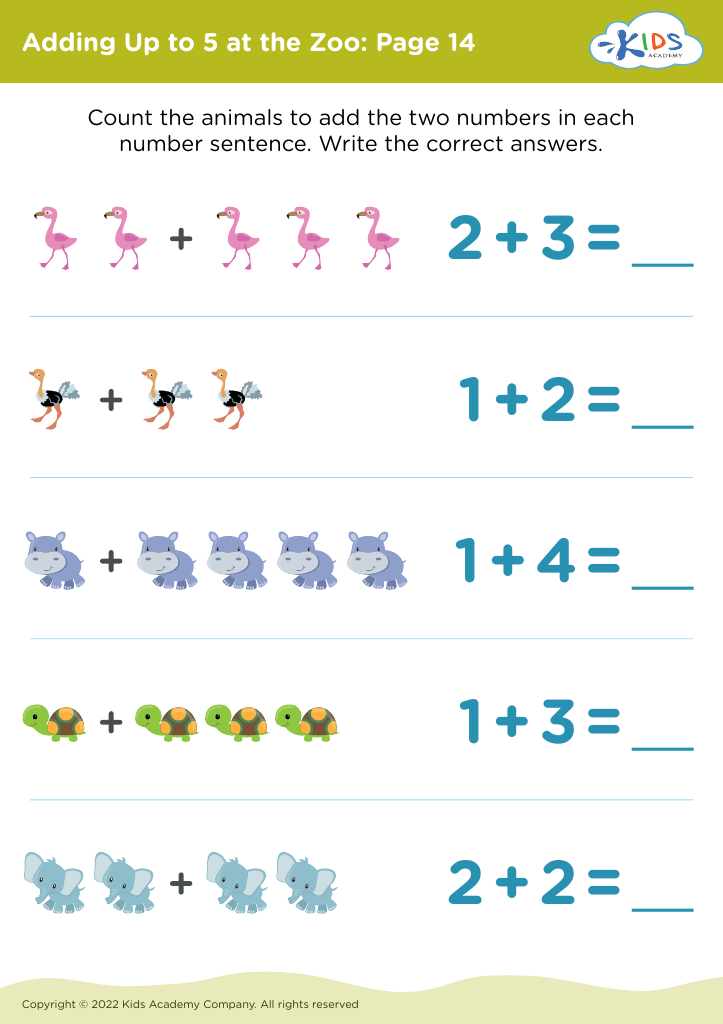
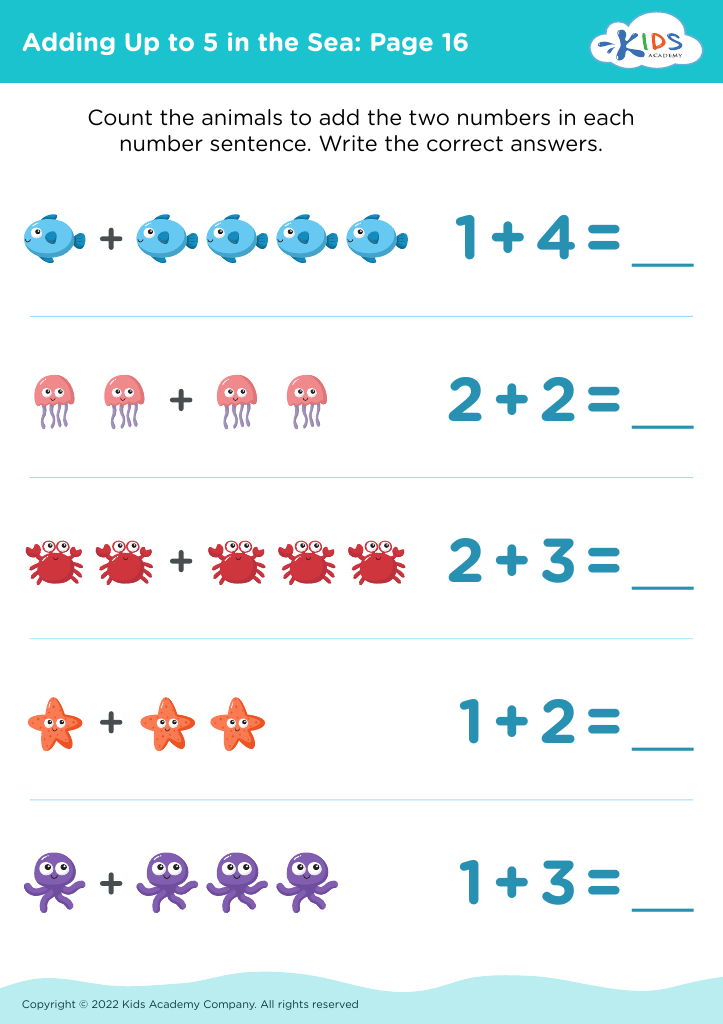
Our Problem Solving Addition Worksheets for Ages 5-6 make learning math exciting and enjoyable! Carefully crafted by experts, these printable worksheets help children enhance their addition skills while developing critical thinking and problem-solving abilities. Each activity is designed to engage young minds through fun, interactive puzzles and real-world scenarios that strengthen their mathematical understanding. Ideal for early learners, these worksheets provide the perfect balance between learning and play, ensuring that every child can build a strong foundation in math. Explore our colorful, kid-friendly addition worksheets to turn math practice into an adventure for your little learner!
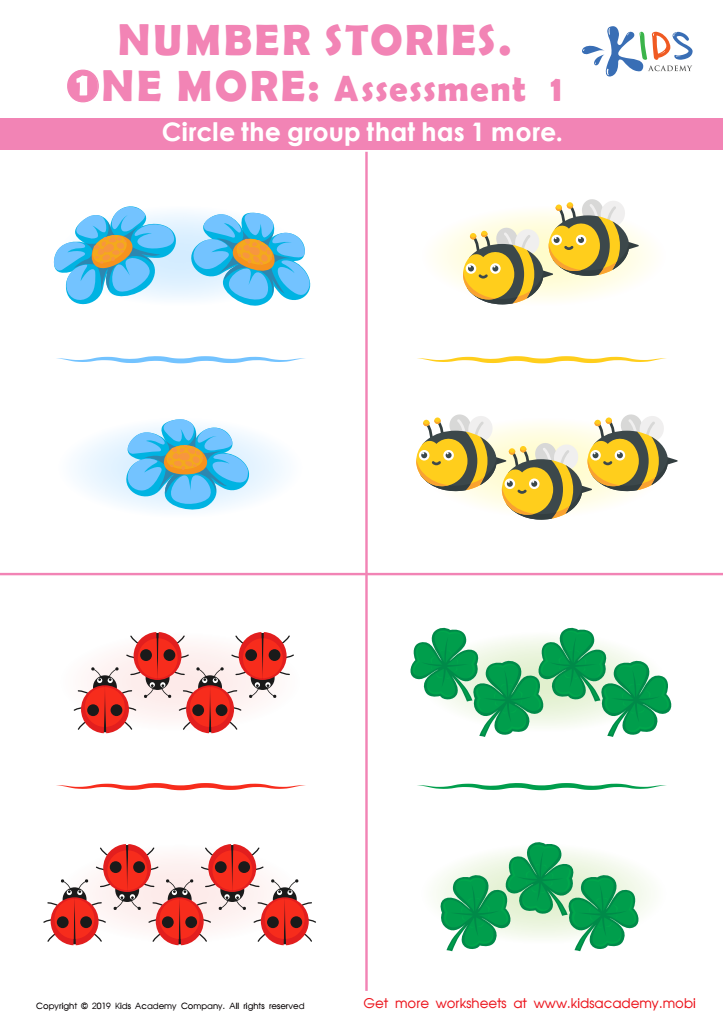
Number Stories One More – Assessment 1 Worksheet
 Assign to My Students
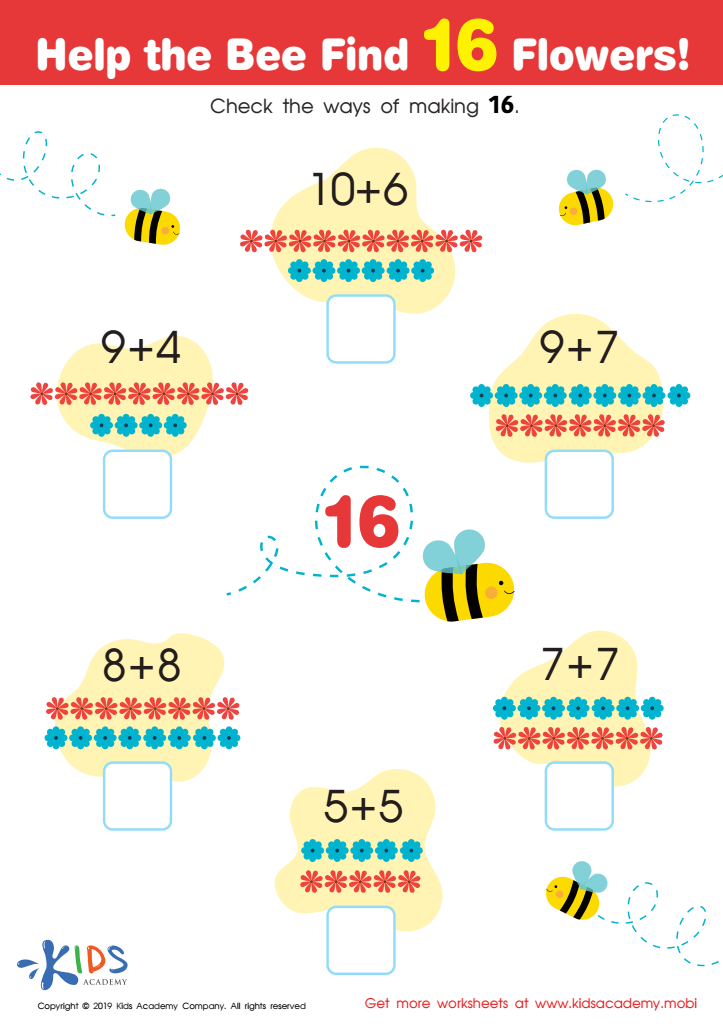
Help the Bee Find 16 Flowers Worksheet
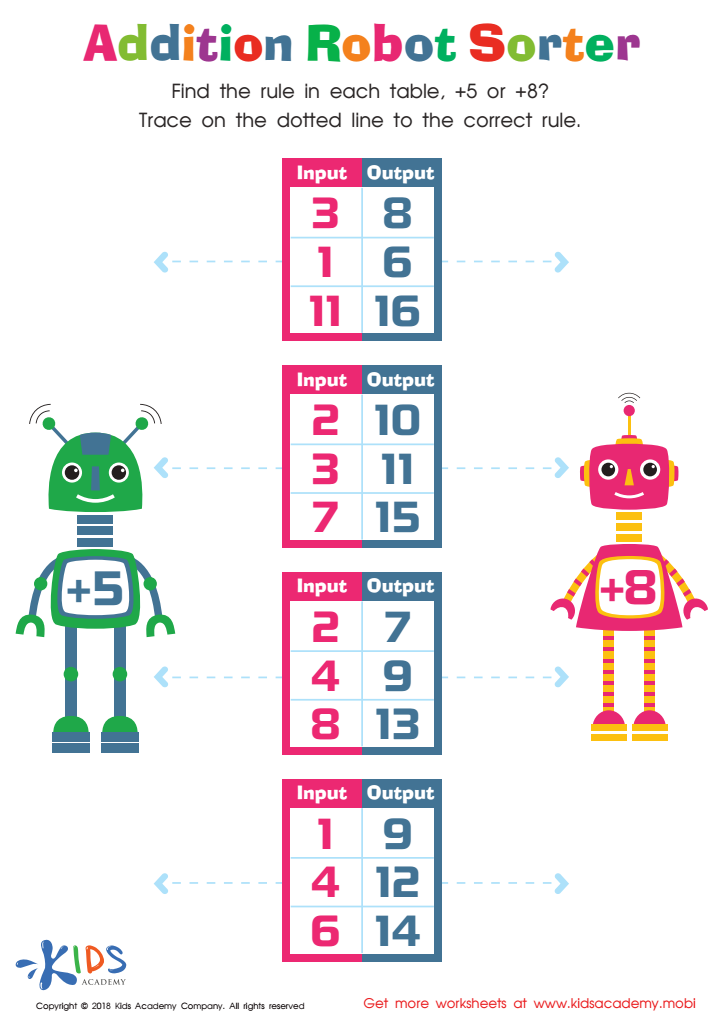
Addition Robot Sorter Worksheet



.jpg)




Problem-solving in addition for ages 5-6 is crucial because it lays the foundational skills necessary for advanced mathematical concepts and everyday life skills. At this age, children are developing their cognitive abilities, and incorporating problem-solving helps to foster critical thinking and reasoning.
When children engage in problem-solving addition, they learn to understand the relationship between numbers, which is essential for arithmetic and more complex operations they will encounter later. This early interaction with numbers in a meaningful context encourages them to recognize patterns, make connections, and develop a deep comprehension of basic mathematical principles. By doing so, problem-solving in addition helps to build a child's confidence in their ability to tackle mathematical challenges, making them more likely to approach new concepts with curiosity and persistence.
Additionally, problem-solving addition can enhance a young child's social skills, especially in a classroom setting where teamwork and cooperative learning are encouraged. By working in groups to solve addition problems, children practice communication, negotiation, and collaboration, which are valuable life skills.
Therefore, parents and teachers should prioritize problem-solving addition activities because they not only improve mathematical understanding but also contribute to overall cognitive development and social abilities. Prioritizing these skills at an early age sets a strong foundation for future academic and life success.








