Understanding Sequences Addition Worksheets for Ages 5-6
3 filtered results
-
From - To
Boost your child's math skills with our "Understanding Sequences Addition Worksheets" for ages 5-6. Perfectly designed for early learners, these engaging worksheets guide youngsters through the basics of addition by exploring number sequences. Each activity encourages logical thinking, pattern recognition, and arithmetic skills, ensuring a solid foundation in math. Fun and educational, our worksheets use attractive visuals and simple exercises to make learning addition enjoyable and effective. Ideal for reinforcing classroom lessons or enhancing homeschool curriculum, these worksheets offer parents and teachers a convenient resource to support young mathematicians. Download now and empower your child's math journey!
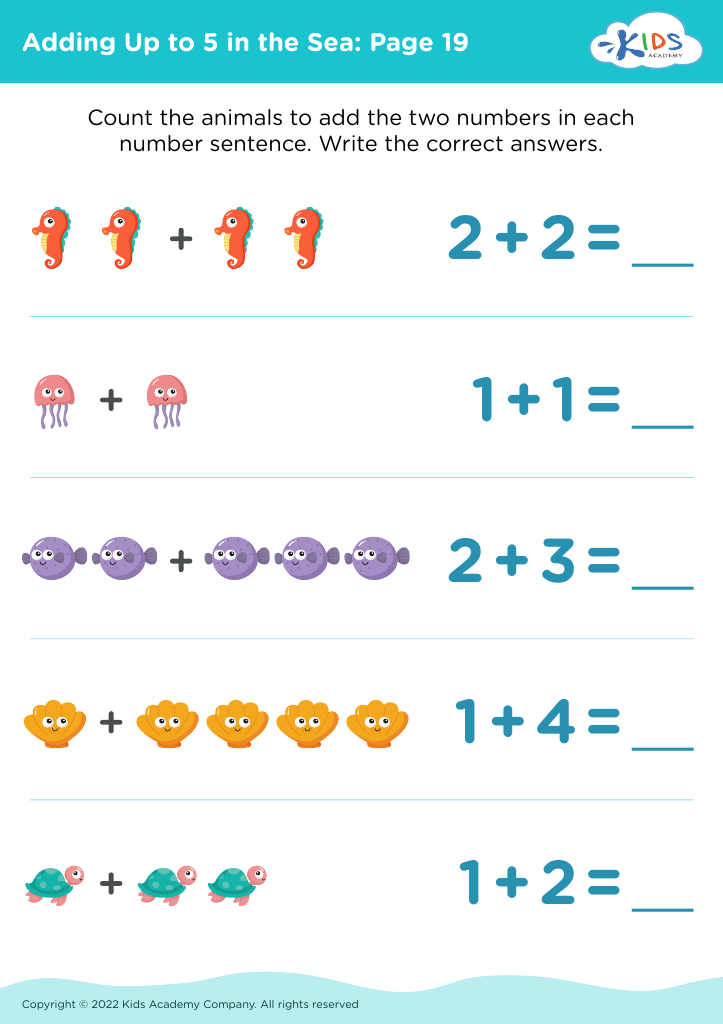
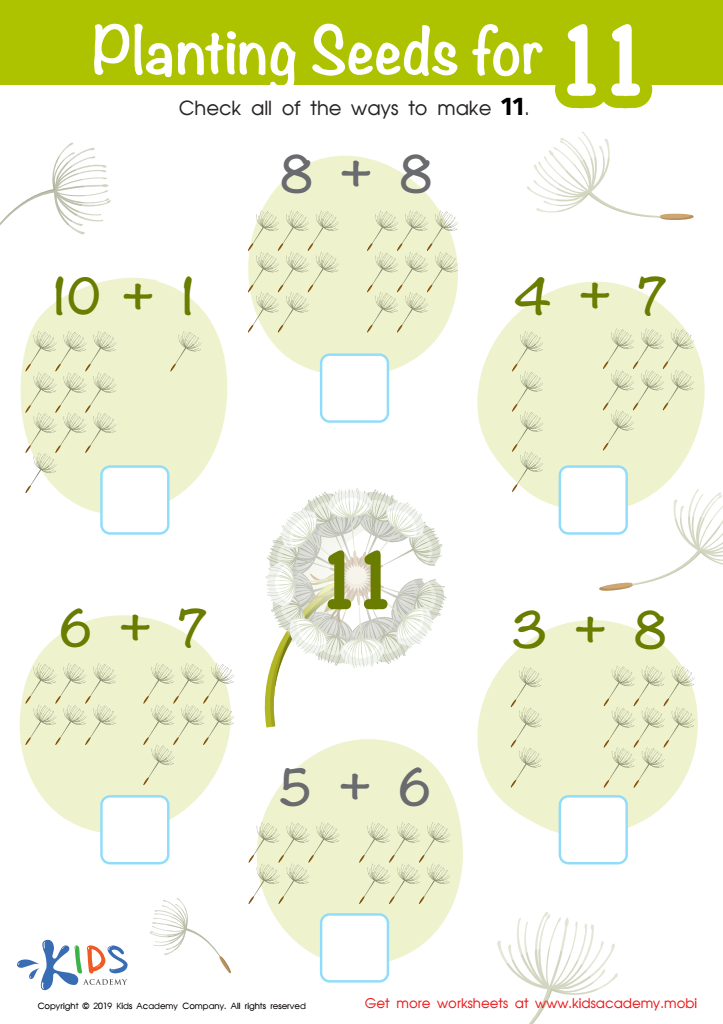
Planting Seeds for 11 Worksheet
 Assign to My Students
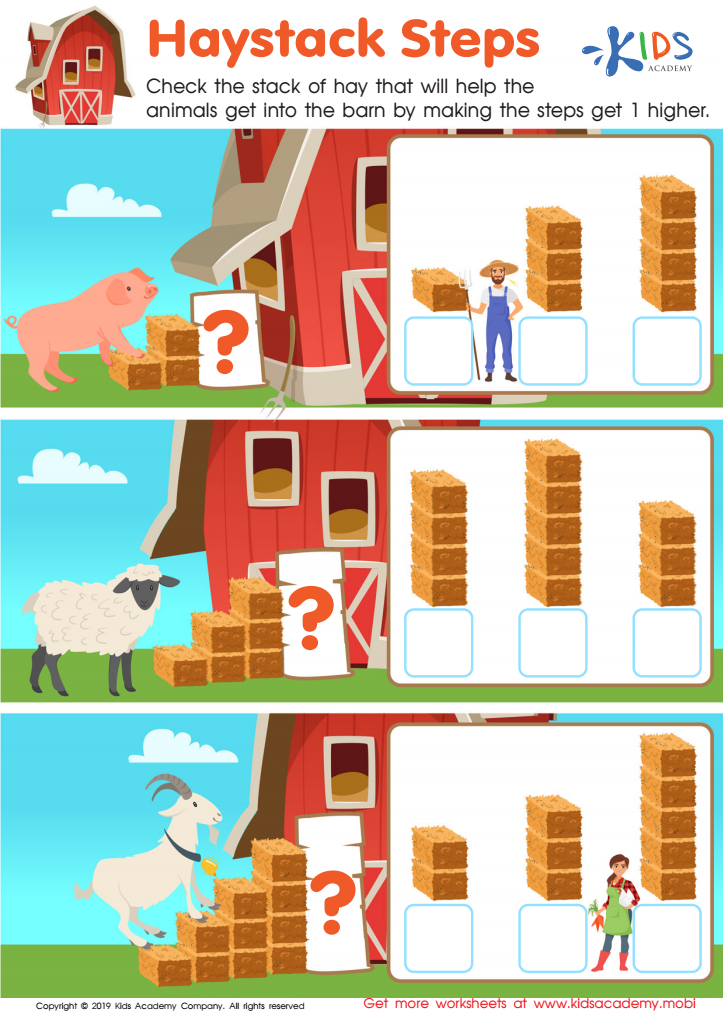
Haystack Steps Worksheet








Understanding sequences and addition for children aged 5-6 is crucial as it lays the foundation for their mathematical development. At this early stage, grasping these concepts fosters essential cognitive skills such as logical thinking, pattern recognition, and problem-solving. Sequencing teaches children to understand order, which is fundamental not only in mathematics but also in daily activities and language development. When a child can count in order, they can better understand timelines, routines, and story elements.
Addition, on the other hand, introduces the basic principles of arithmetic, which are key for more complex mathematical tasks they'll encounter later. Learning to add boosts their number sense, helping them to recognize relationships between numbers and quantities. This foundational understanding enables them to tackle higher-level math with confidence and competence.
Moreover, engaging in activities that promote understanding sequences and addition enhances memory and concentration. It encourages active participation and critical thinking, forming a strong mathematical base and fostering a positive attitude towards learning. Understanding these basics early provides a toolkit for academic achievement, making subjects in later grades seem less intimidating and more approachable, setting the child up for long-term educational success. Parents and teachers, therefore, significantly contribute to children's future academic confidence and capabilities by emphasizing these fundamental skills early on.








