Basic Math Skills Comparison Worksheets for Ages 5-6
3 filtered results
-
From - To
Boost your child's foundational math abilities with our Basic Math Skills Comparison Worksheets designed specifically for ages 5-6. Our carefully curated printable resources help young learners practice essential comparison skills, such as greater than, less than, and equal to. Engaging exercises and colorful illustrations turn learning into a fun adventure, fostering critical thinking and problem-solving. Perfect for preschoolers and early elementary students, these worksheets build math confidence and prepare kids for more advanced concepts. Visit Kids Academy to download and start developing your child's basic math skills today!
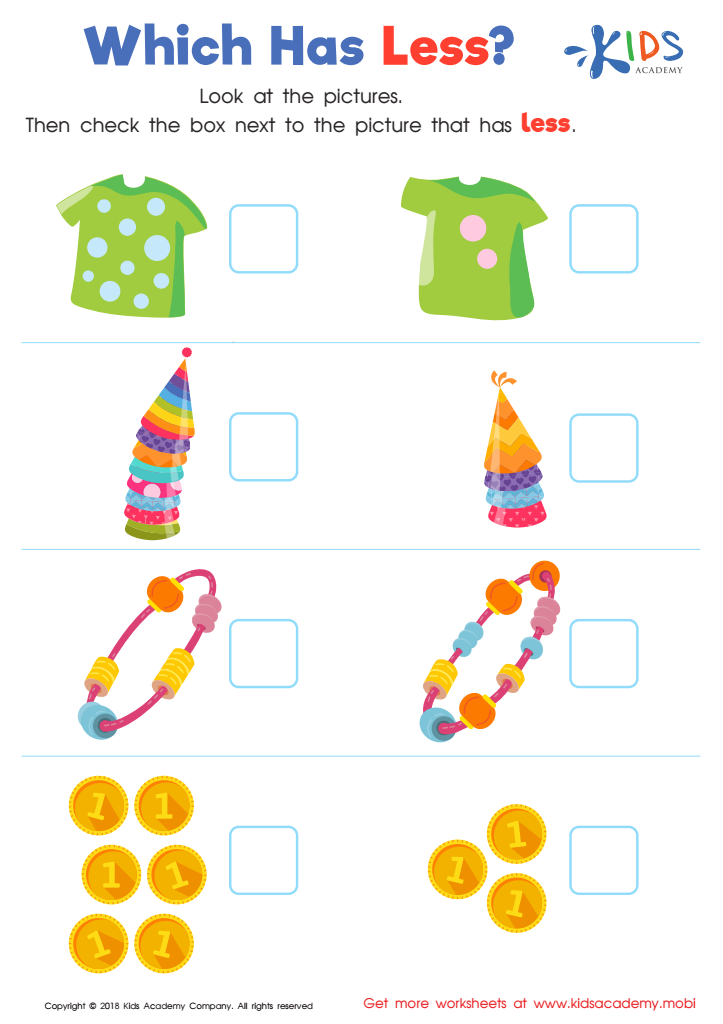
Which Has Less? Worksheet
 Assign to My Students
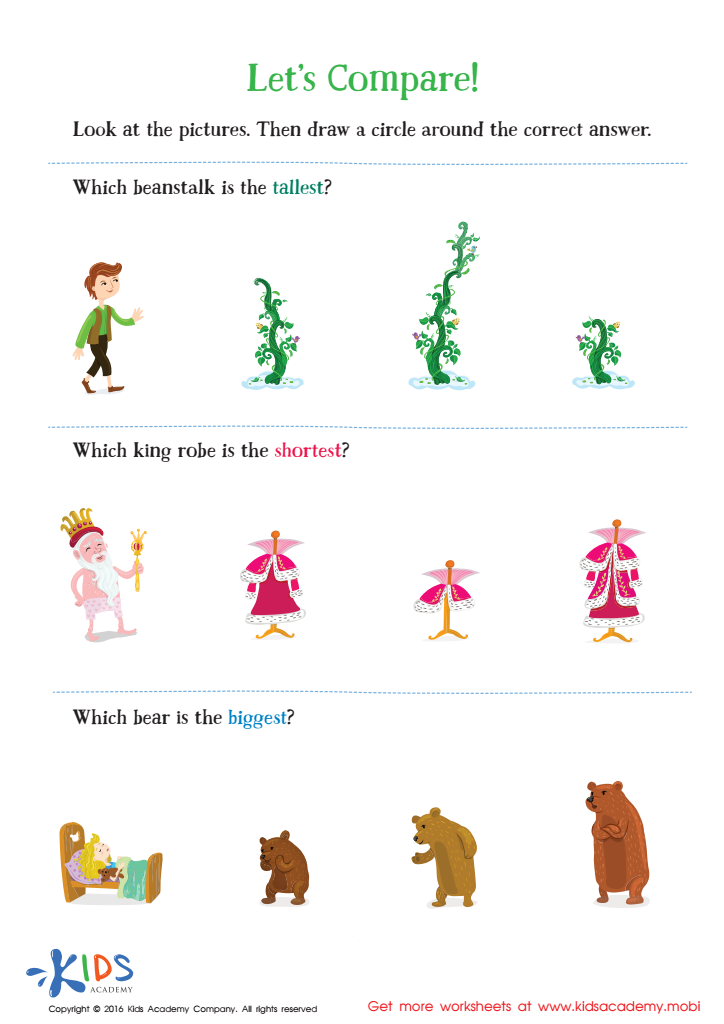
Fairy Tale Worksheet: Let's Compare
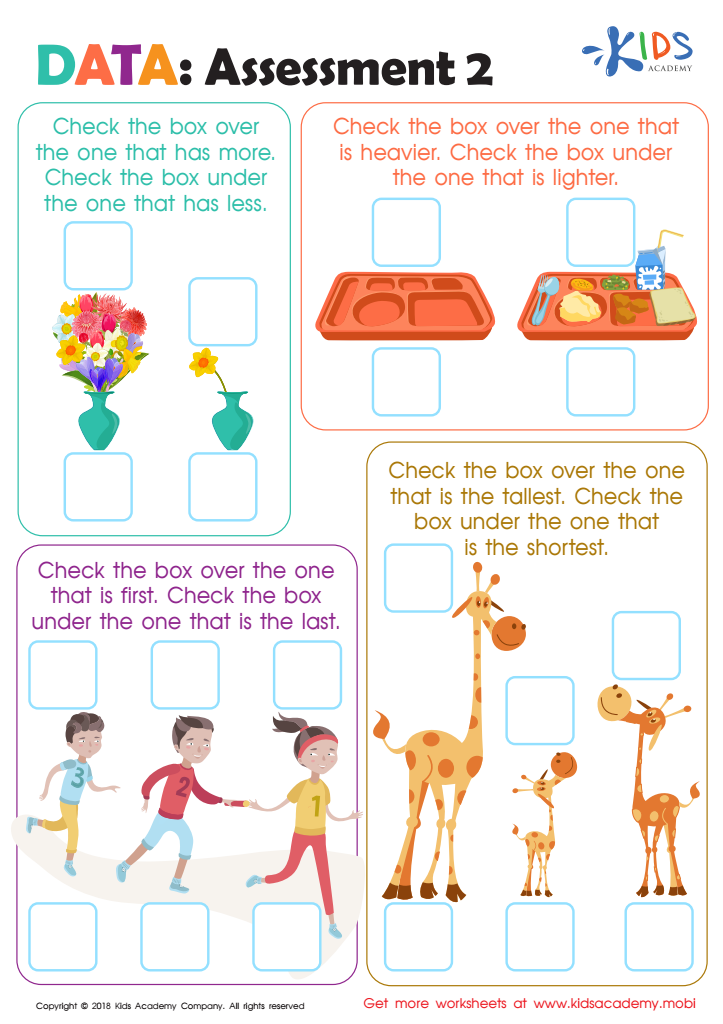
Data: Assessment 2 Worksheet



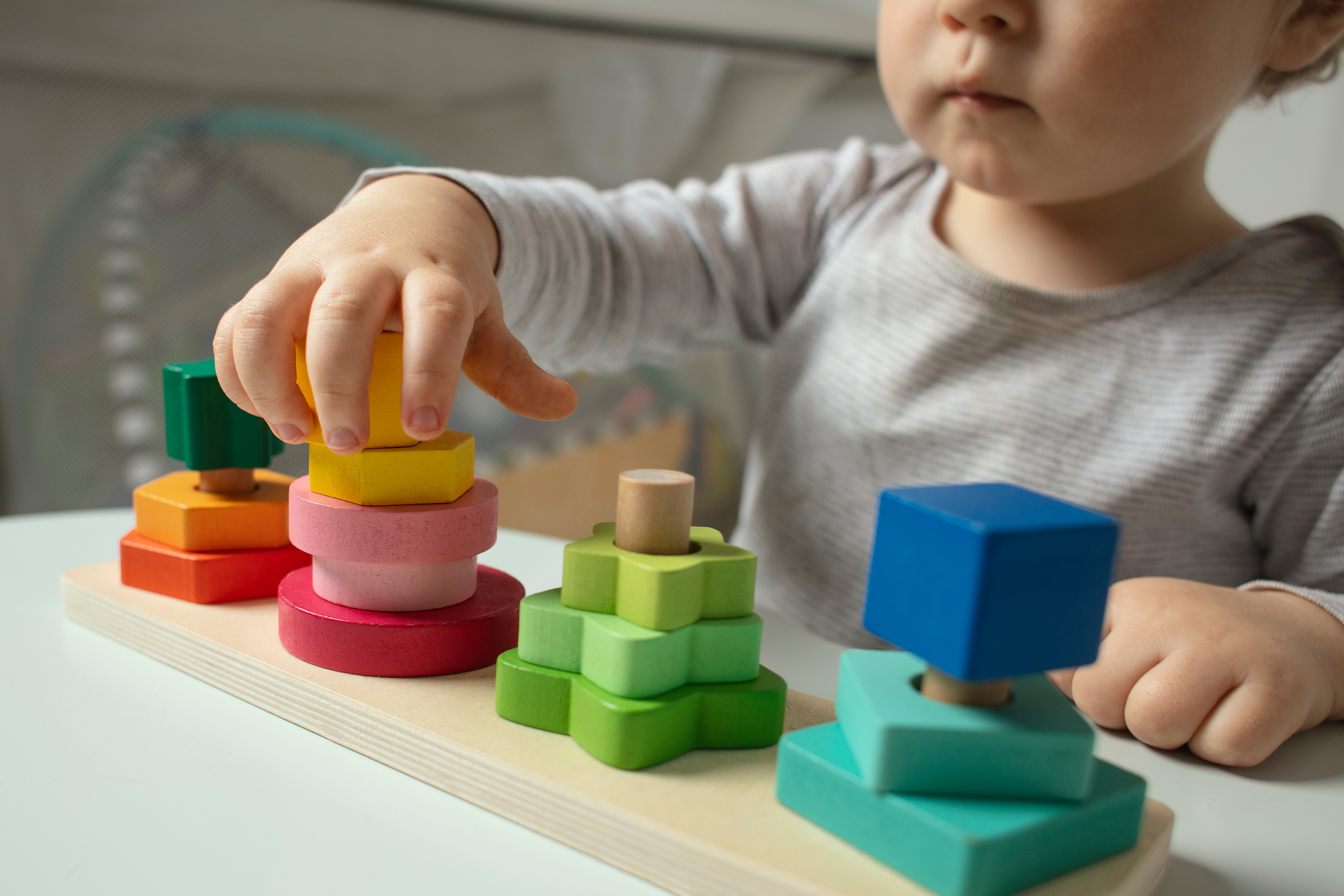


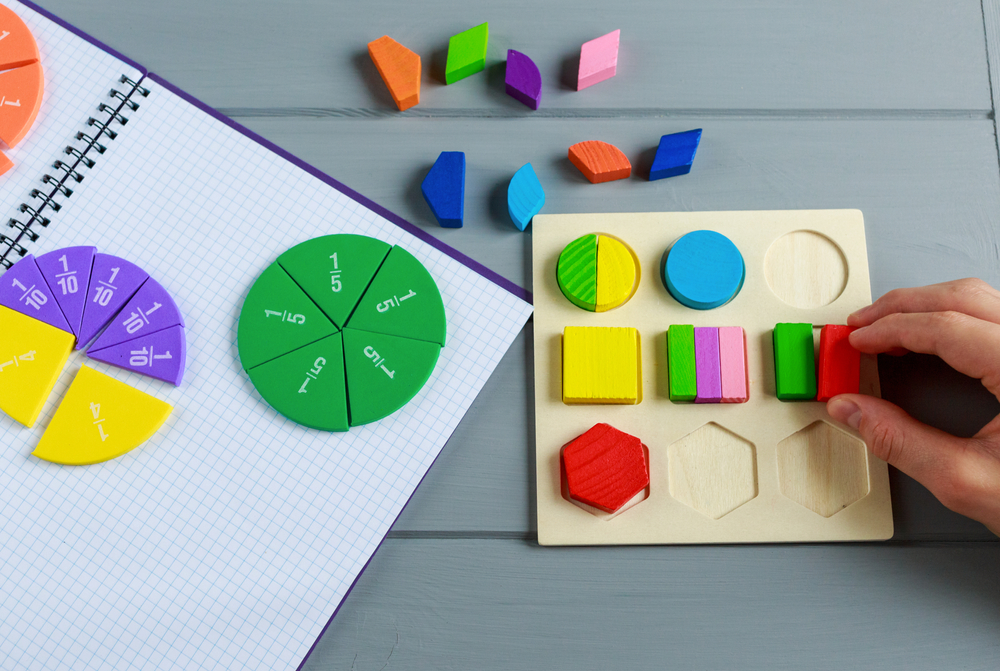
Ensuring that children aged 5-6 acquire strong basic math skills is paramount in laying a solid educational foundation. At this developmental stage, children are highly receptive to new information and are developing critical cognitive skills. Basic math skills, such as counting, recognizing numbers, understanding simple addition and subtraction, and grasping the concept of quantities, are integral to their overall academic success.
For parents and teachers, monitoring and caring about the comparison of basic math skills provide a clear indicator of whether a child is on the right track. It helps identify areas where a child might need extra support early on, thereby preventing future academic struggles. Early proficiency in math not only enhances problem-solving and logical thinking but also builds confidence, making children more likely to enjoy learning and attempting challenging tasks.
Moreover, the ability to compare math skills among peers can highlight broader educational needs, guiding curriculum development and prompting personalized interventions. This knowledge can foster an enriching and balanced learning environment, where each child can thrive. Recognizing the importance of developing these foundational skills aids parents and teachers in their mission to nurture well-rounded individuals prepared for future academic and life challenges.








