Differentiating shapes Geometry Worksheets for Ages 5-6
3 filtered results
-
From - To
Explore our engaging Differentiating Shapes Geometry Worksheets designed specifically for children aged 5-6! These educational resources help young learners identify, compare, and categorize various shapes while developing essential spatial awareness skills. Each worksheet is crafted to enhance visual recognition through fun illustrations and simple instructions, making geometry an enjoyable experience. Tailored for different learning levels, our worksheets offer a blend of activities to suit every child's needs, from basic shape identification to more challenging differentiation tasks. Foster a love for math with lively and interactive materials that encourage critical thinking and problem-solving. Perfect for classroom or home use!
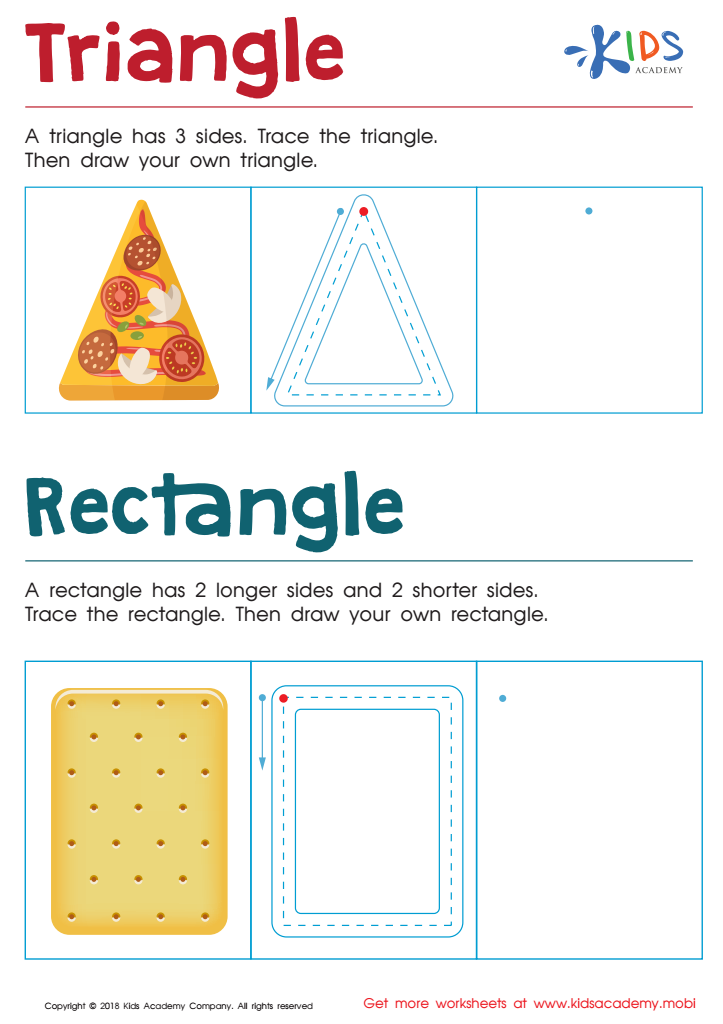
Triangle Rectangle Worksheet
 Assign to My Students











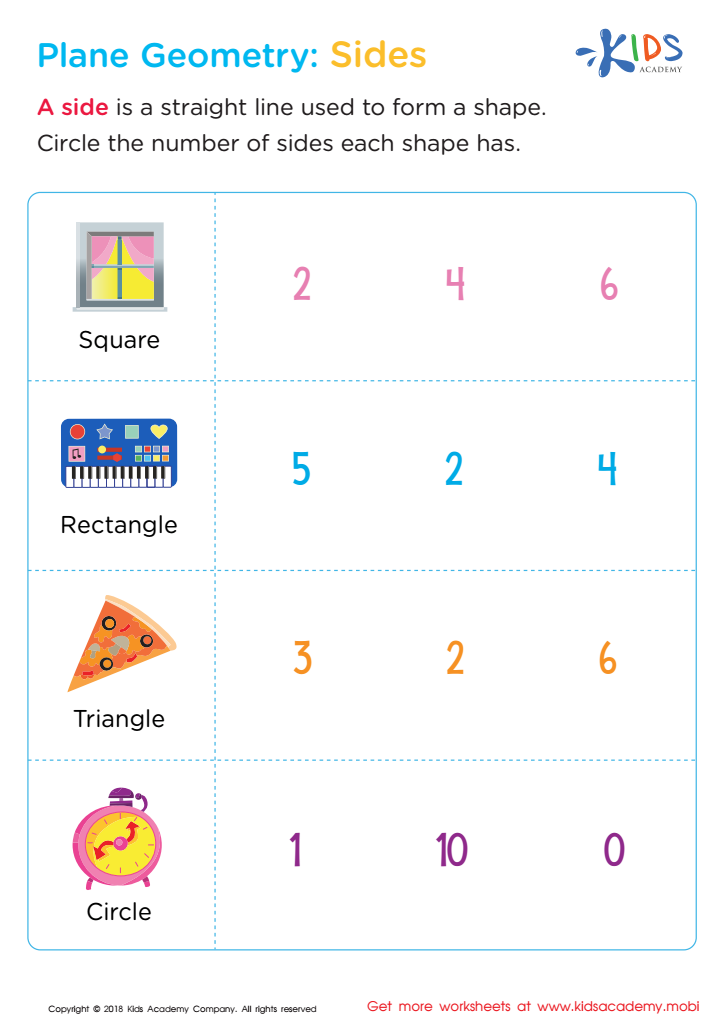
Plane Geometry: Sides Worksheet
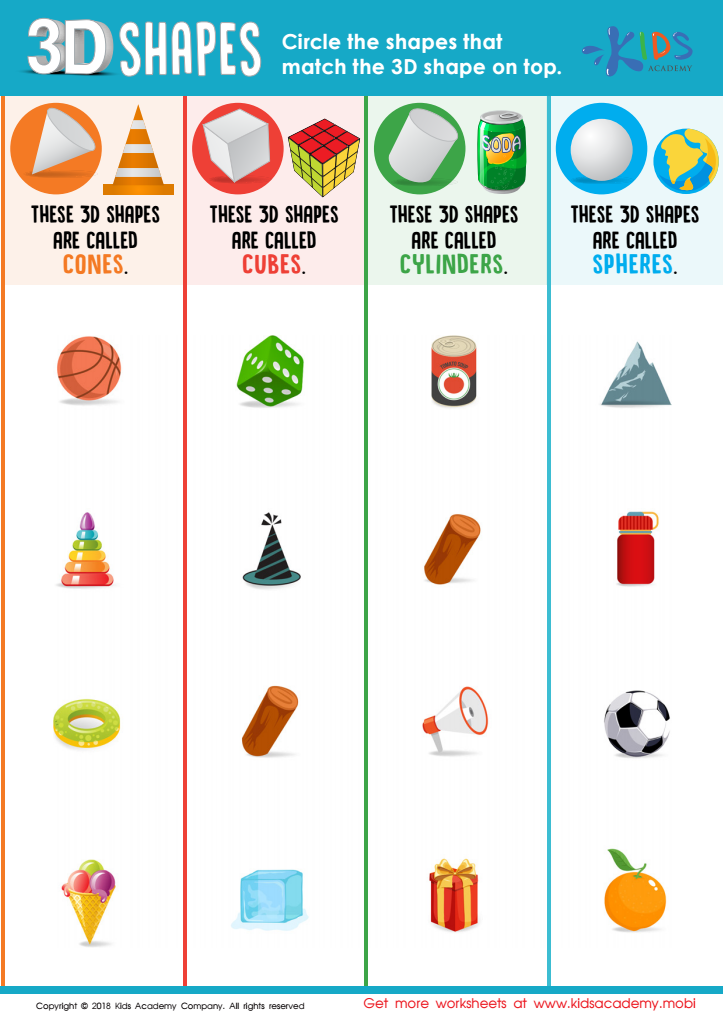
3D Shapes Worksheet








Differentiating shapes in geometry for ages 5-6 is crucial for a child's cognitive and social development. At this early stage, children actively construct their understanding of the world around them, and shapes are fundamental building blocks in this process. By learning to identify and categorize different shapes, children develop critical thinking skills, enhance their spatial awareness, and improve their problem-solving abilities.
Engaging in activities related to shapes helps young learners develop language skills as they learn to describe and compare different geometric figures. It also lays the foundation for more complex mathematical concepts in later grades, as understanding basic shapes is a precursor to grasping more intricate ideas like symmetry, area, and perimeter.
For parents and teachers, fostering shape differentiation can also lead to increased student confidence and enthusiasm for math, making the subject more relatable and less intimidating. Observing connections between shapes and real-life objects aids in developing observational skills and inspires creativity. Through playful activities and interactive learning, educators and parents can instill a love for learning, making it a fun, engaging experience that stimulates both academic and personal growth early on. This foundational understanding sets the stage for their future educational journey.








