Spatial understanding Geometry Worksheets for Ages 5-6
3 filtered results
-
From - To
Discover engaging "Spatial Understanding Geometry Worksheets for Ages 5-6" designed to build essential early math skills. These interactive worksheets from Kids Academy introduce young learners to shapes, positions, and spatial relations through fun and educational activities. Perfectly tailored for preschool and kindergarten children, each worksheet encourages critical thinking and problem-solving, helping kids seamlessly navigate concepts like above, below, next to, and more. Foster a love for geometry while enhancing your child's cognitive and visual-spatial skills. Download now and watch your child confidently embark on their geometric journey!
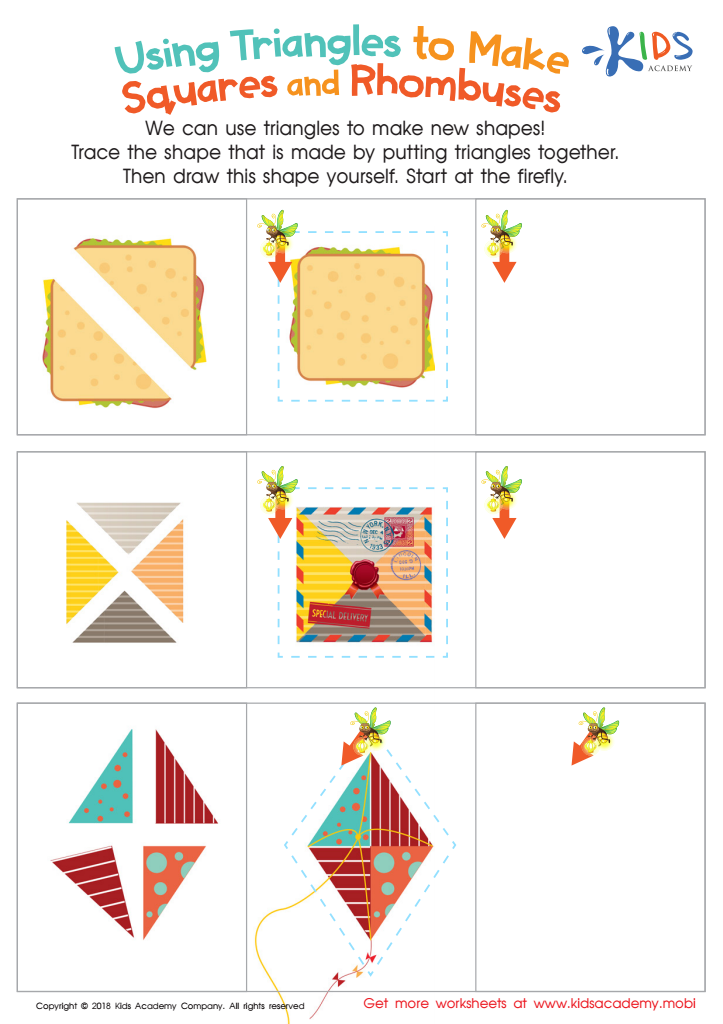
Using Triangles to Make Squares and Rhombuses Worksheet
 Assign to My Students











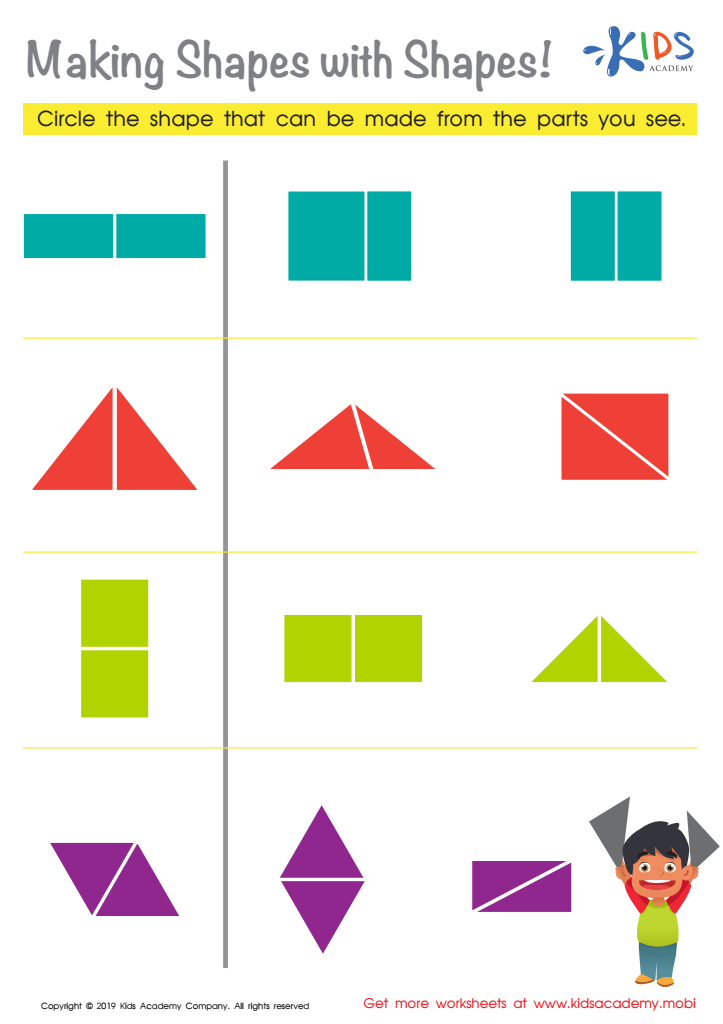
Making Shapes with Shapes Worksheet
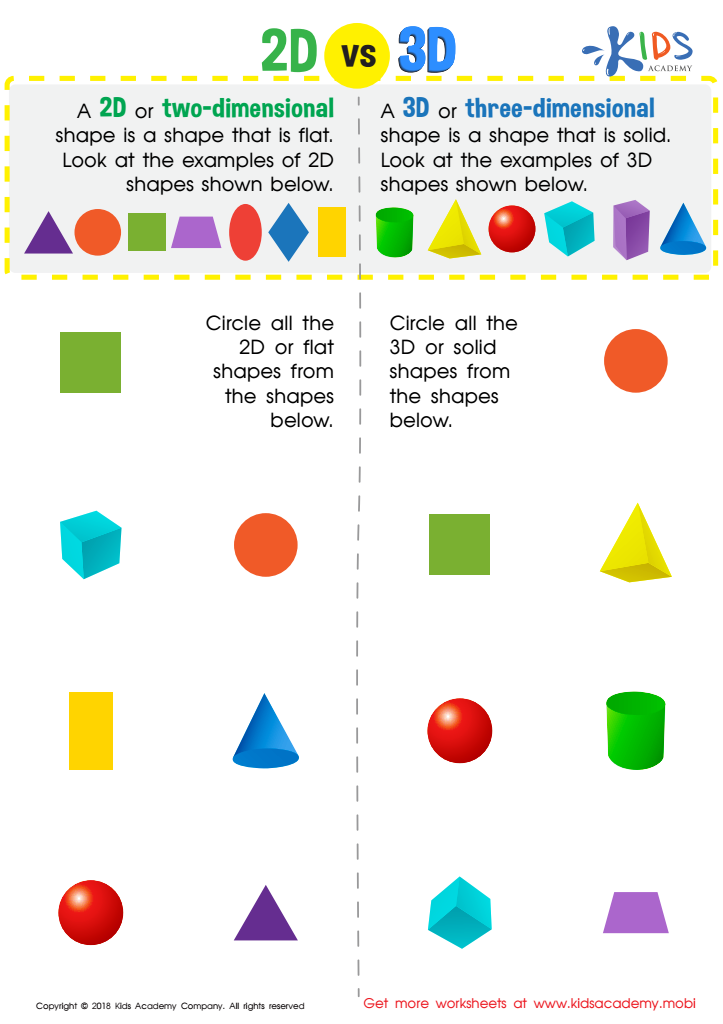
2D vs 3D Shapes Worksheet








Spatial understanding and geometry are foundational skills for young children, ages 5-6, that play a crucial role in their overall cognitive development. Introducing these concepts early helps children build essential problem-solving abilities and logical thinking, which are integral in many aspects of learning and everyday life.
For parents and teachers, fostering spatial understanding allows children to comprehend and interact with the world around them more effectively. It aids in developing strong visualization skills, which are critical for reading maps, understanding graphs, and even solving puzzles. Furthermore, geometry helps children grasp the properties of shapes and spaces, laying the groundwork for more advanced mathematical concepts they will encounter in the future.
Early exposure to spatial skills is also linked to improved performance in STEM (Science, Technology, Engineering, and Mathematics) disciplines. As children manipulate shapes and recognize patterns, they begin to understand relationships and structures, which are vital in scientific thinking and artistic creativity.
In addition, engaging children in spatial activities, such as building blocks or drawing shapes, enhances their fine motor skills and coordination. It promotes active learning, curiosity, and confidence, enabling them to tackle more complex tasks with enthusiasm.
Overall, integrating spatial understanding and geometry into early learning cultivates well-rounded, resilient learners prepared to excel in various fields.








