Enhancing Counting Skills Numbers Worksheets for Ages 5-6
6 filtered results
-
From - To
Enhance your child's counting abilities with our engaging "Counting Skills Numbers Worksheets" tailored for ages 5-6. This resource offers a variety of fun activities designed to reinforce number recognition, sequencing, and counting techniques. Each worksheet is crafted to captivate young learners, ensuring they develop foundational math skills while enjoying the learning process. With colorful visuals and interactive tasks, these worksheets provide an ideal way to enrich your child's educational experience. Explore the joy of counting through simple exercises that promote confidence and comprehension in mathematics. Get started today and watch your child's counting skills flourish!
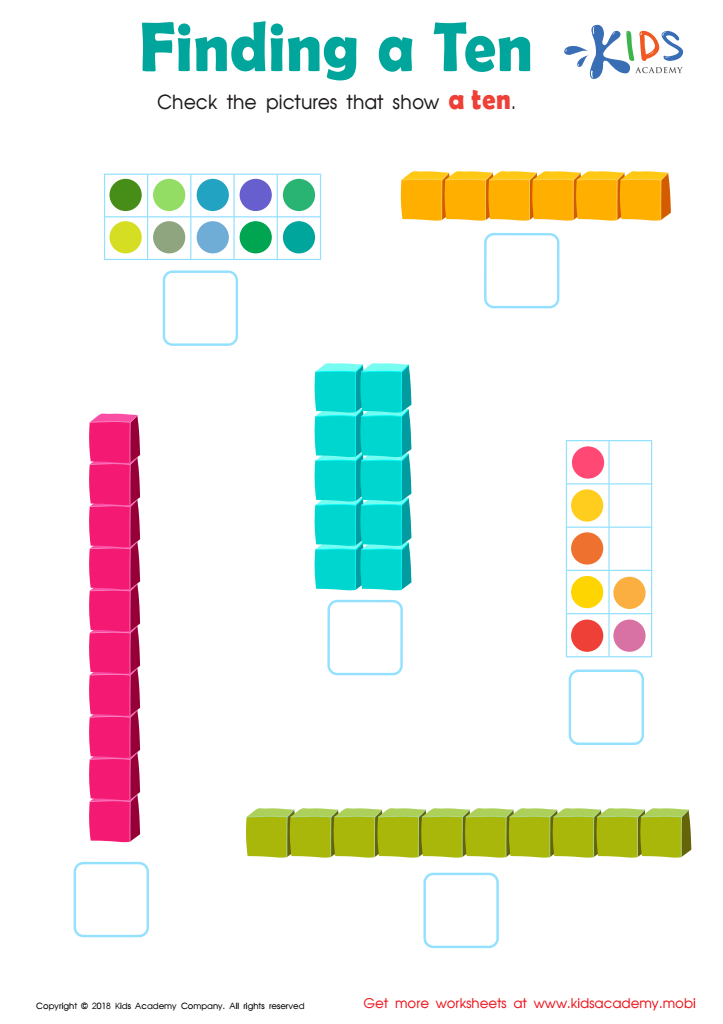
Finding a Ten Worksheet
 Assign to My Students
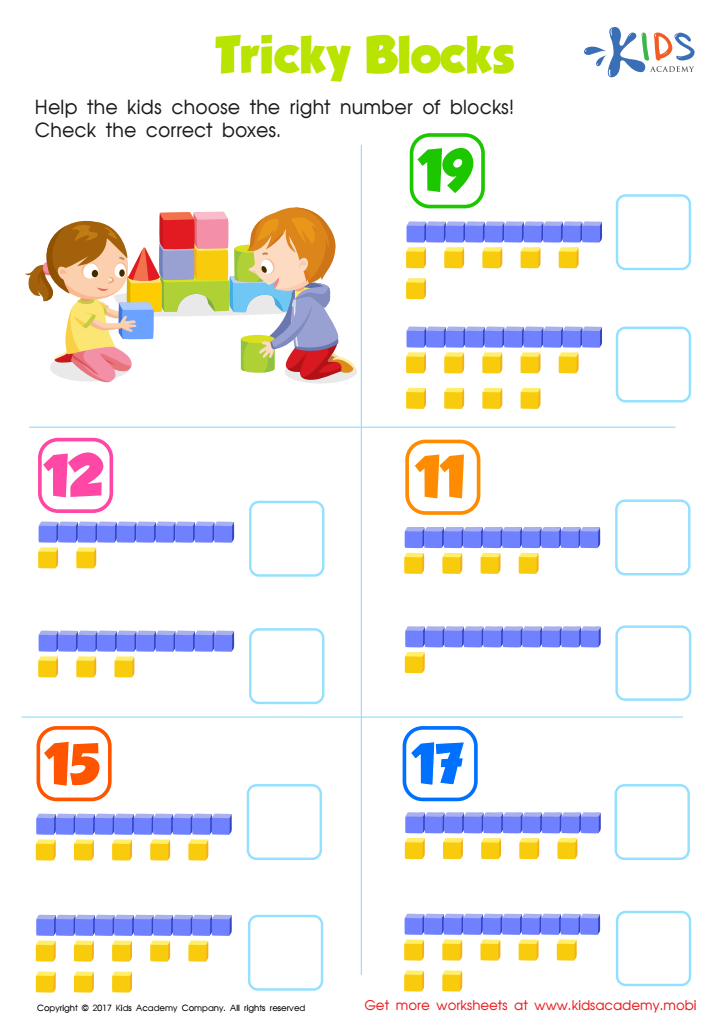
Tricky Blocks Worksheet
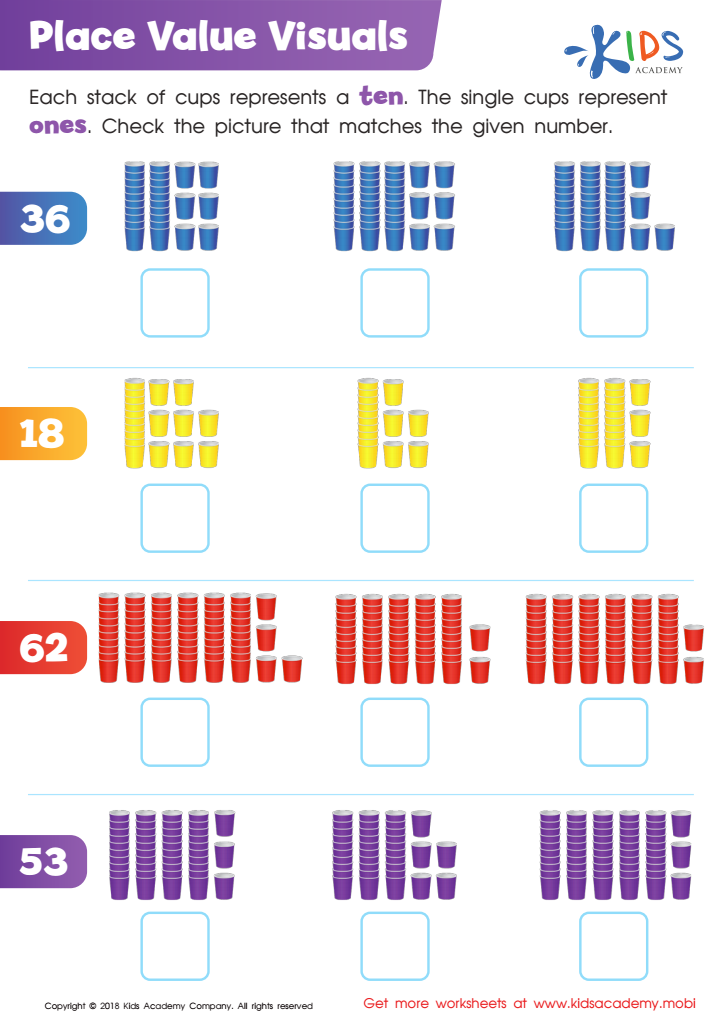
Place Value Visuals Worksheet
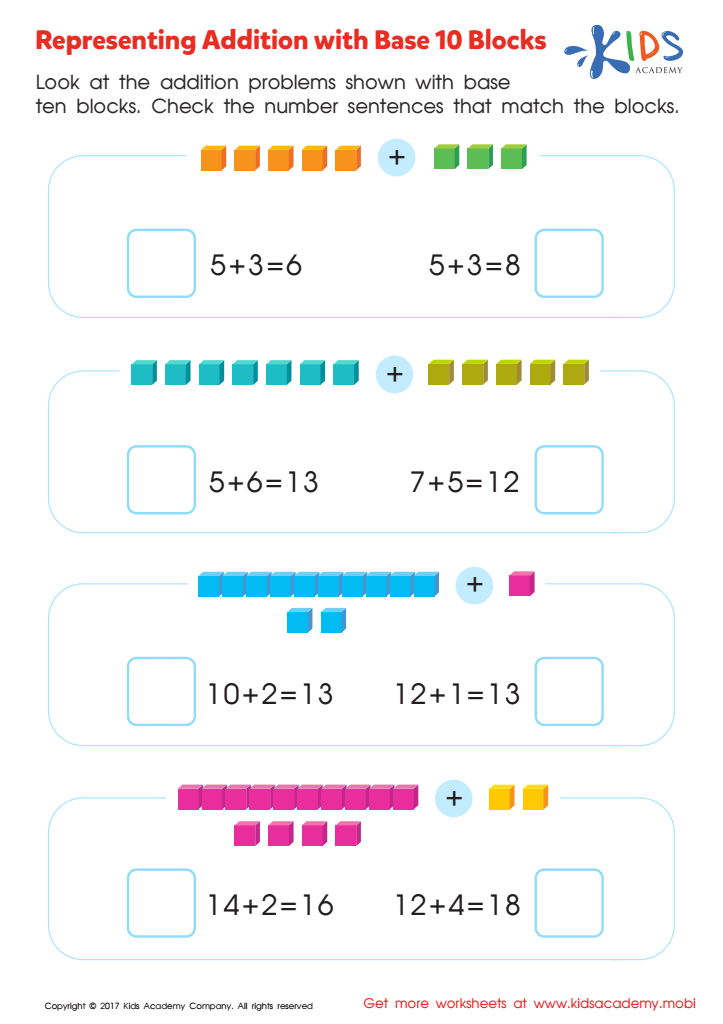
Representing Addition with Base 10 Blocks Worksheet
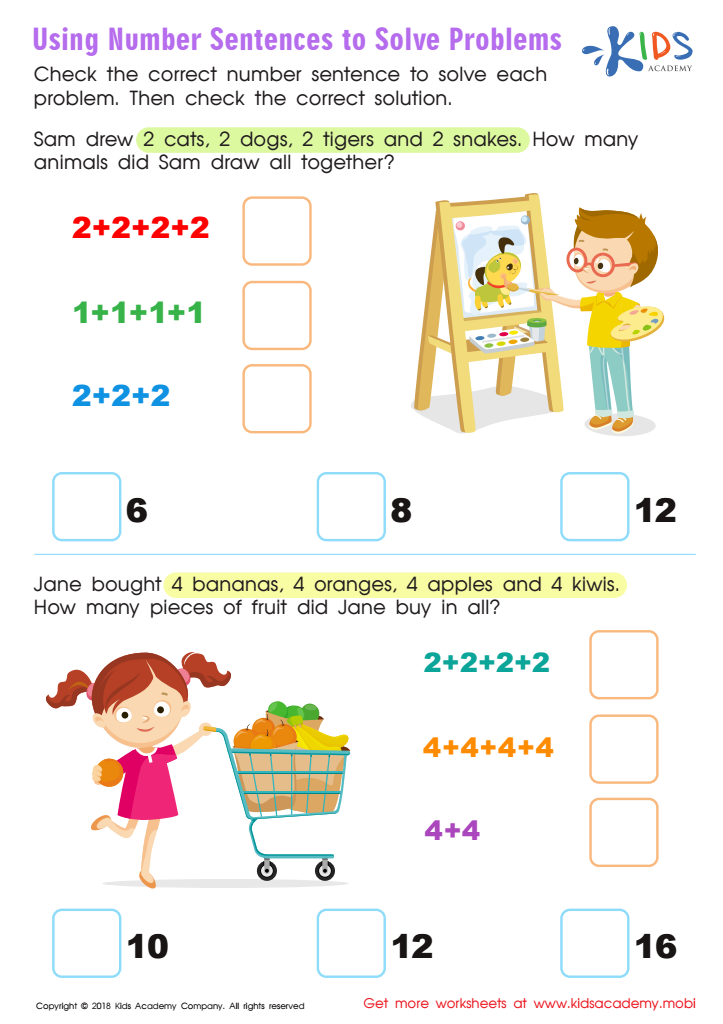
Using Number Sentences to Solve Problems Worksheet
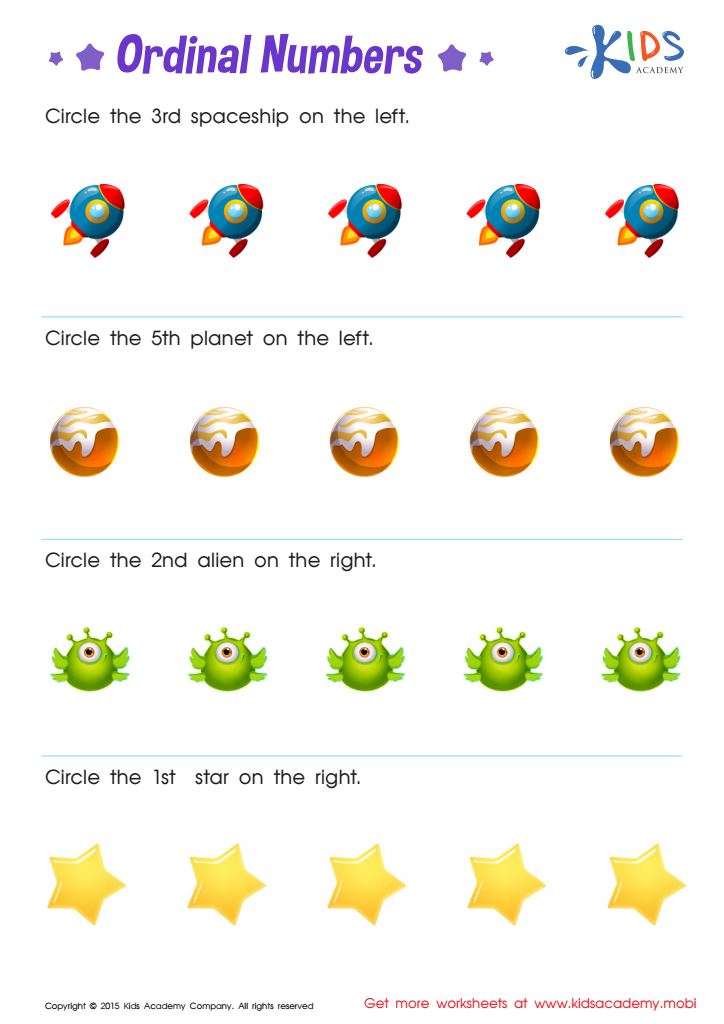
Ordinal Numbers: Space Ordinals Worksheet








Enhancing counting skills in children aged 5-6 is crucial for several reasons. First, counting forms the foundation of early mathematics, providing the building blocks for more complex concepts such as addition, subtraction, and even basic operations in later grades. By developing strong counting skills, children become more confident in their ability to engage with math-related activities, reducing anxiety and fostering a positive attitude towards learning.
Moreover, counting isn't just about numbers; it also promotes cognitive development. As children count, they improve their problem-solving abilities, critical thinking, and fine motor skills through hands-on activities like sorting and grouping. These skills also help enhance their language development, as they learn to articulate quantities, sequences, and comparisons.
Additionally, counting fosters social skills. Many counting activities encourage cooperation, teamwork, and communication among peers, essential skills for future academic and social success. For parents and teachers, focusing on counting skills provides an opportunity to engage children in fun, interactive learning experiences that can be integrated into daily routines, such as while cooking or shopping. By prioritizing these skills, we equip children with essential tools they will rely on throughout their education and daily life.








