Filters

108 filtered results

Clear all filters
Favorites
With answer key
Interactive

108 filtered results

Difficulty Level

Grade


Check out this FREE Trial Lesson on Math for age 5-6!

2 Step Addition Word Problems Using Drawings to Write Equations

Favorites
With answer key
Interactive
  • 5-6
  • Animal recognition
  • Math
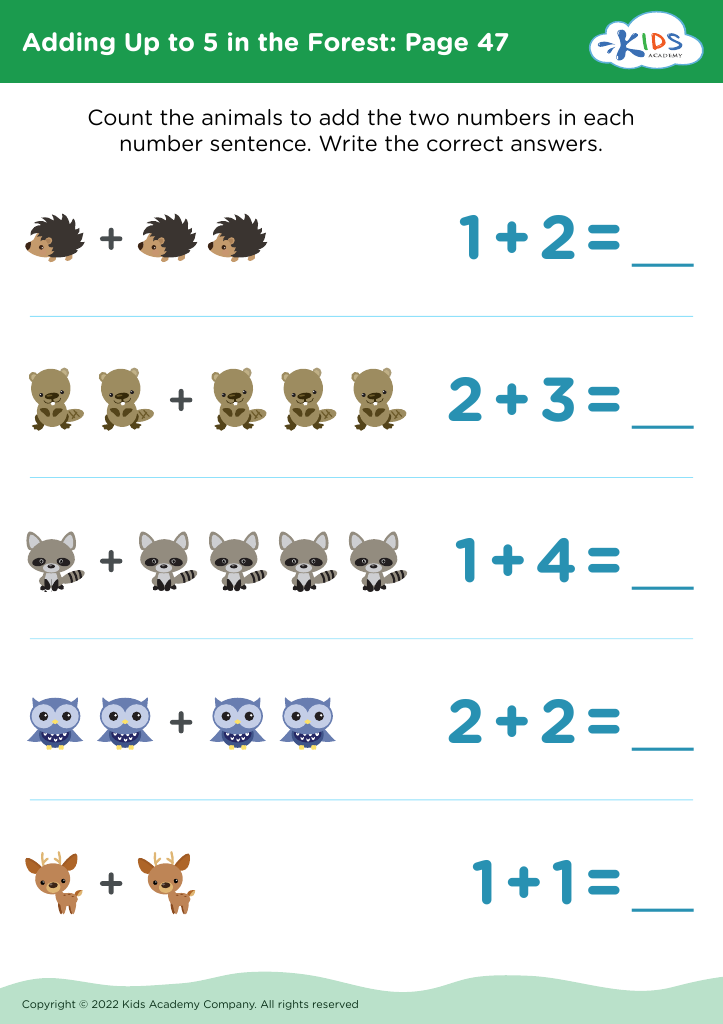
Adding Up to 5 in the Forest: Page 47
Worksheet
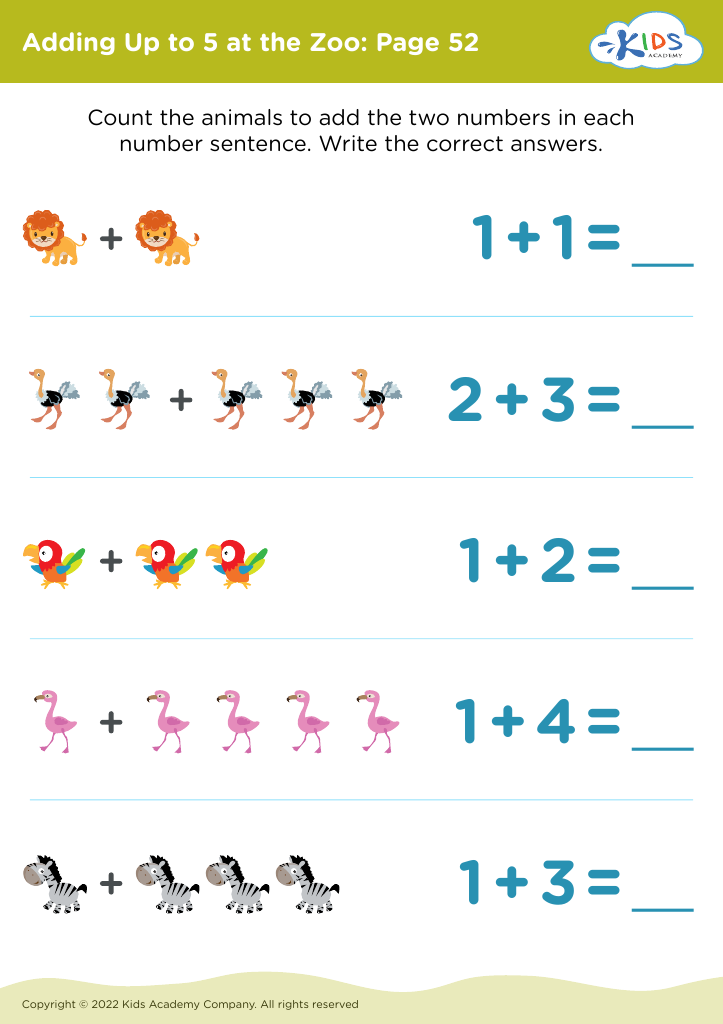
Adding Up to 5 at the Zoo: Page 52
Worksheet
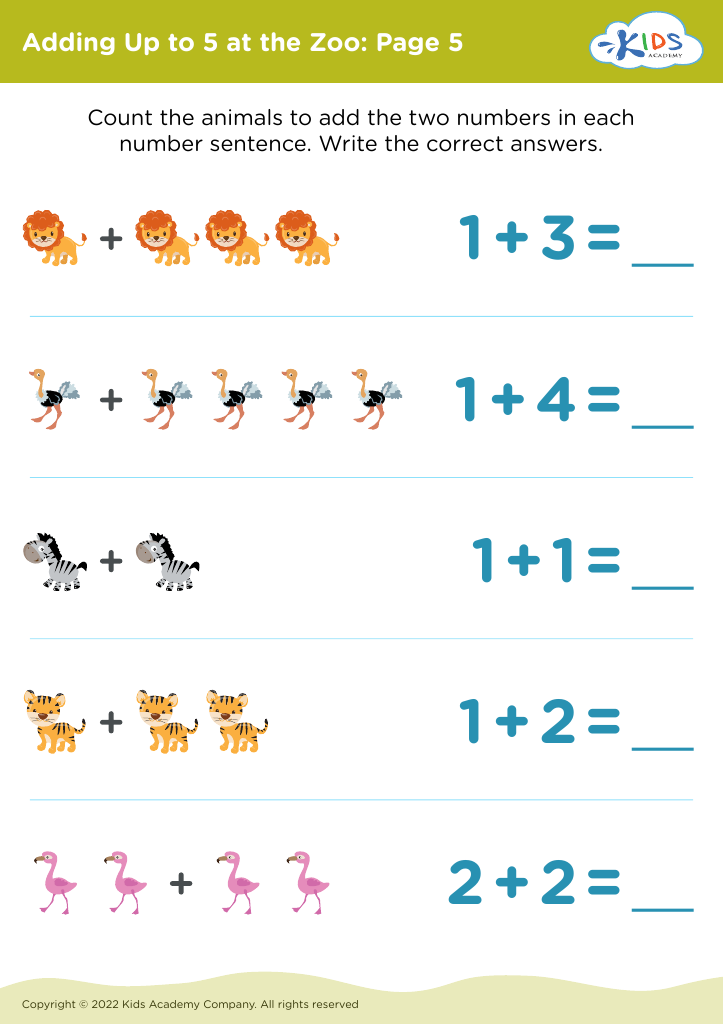
Adding Up to 5 at the Zoo: Page 5

Adding Up to 5 at the Zoo: Page 5

Adding Up to 5 at the Zoo: Page 5
Worksheet
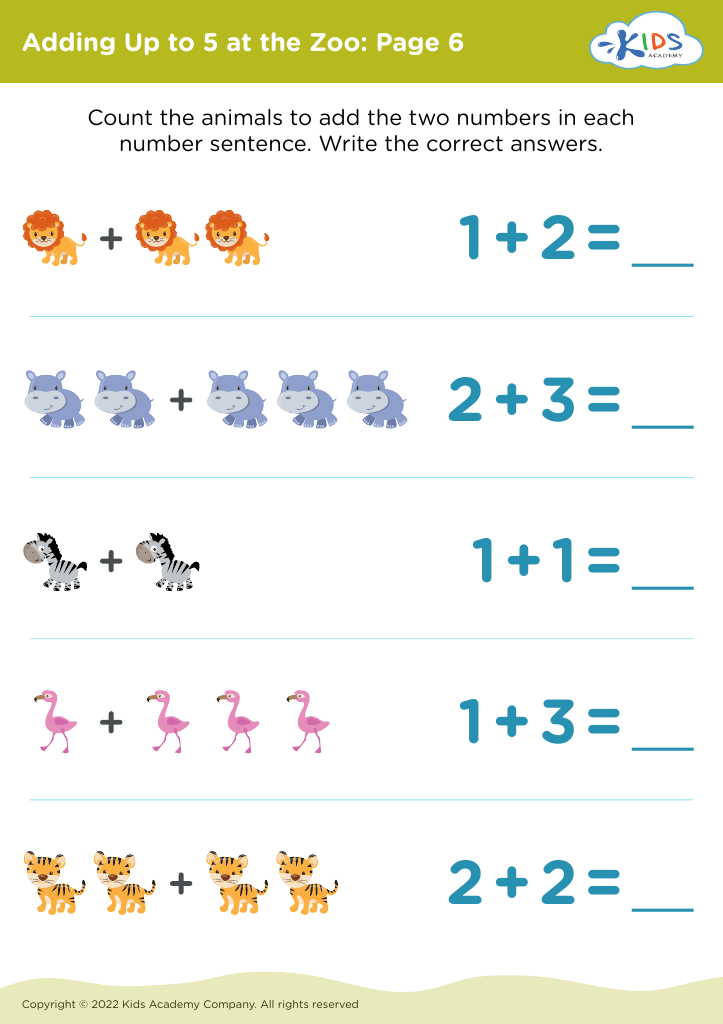
Adding Up to 5 at the Zoo: Page 6

Adding Up to 5 at the Zoo: Page 6

Adding Up to 5 at the Zoo: Page 6
Worksheet
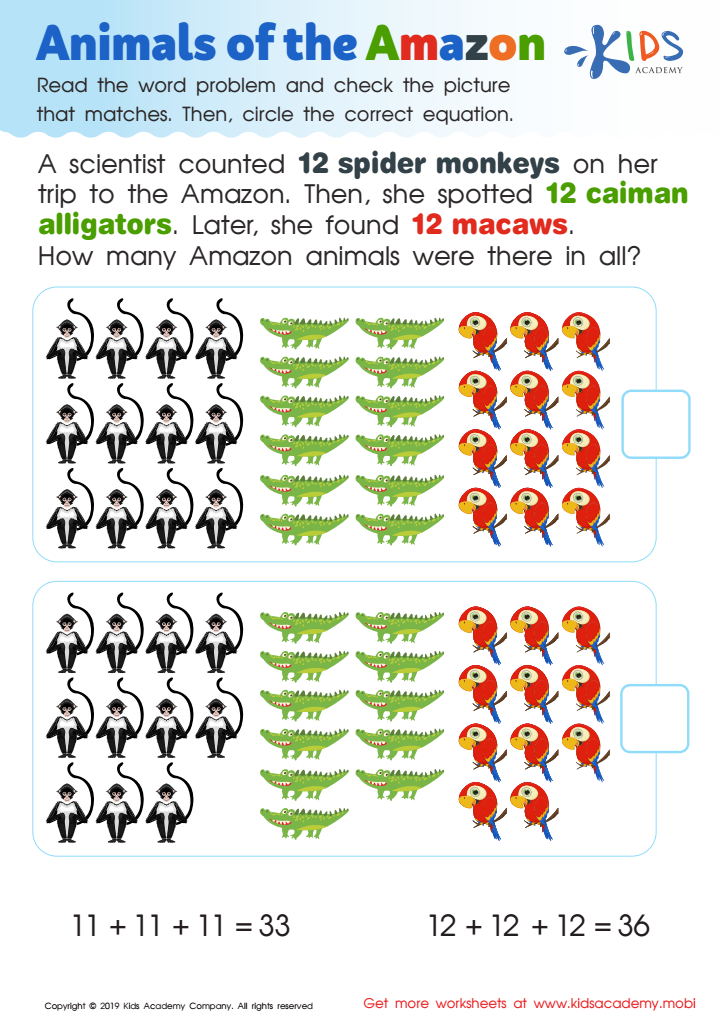
Animals of Amazon Worksheet

Animals of Amazon Worksheet

Kids will love exploring the Amazon while solving addition problems on this colorful PDF worksheet. They need to pay attention to the bolded info in each word problem to figure out the equation picture that matches. It's an exciting way to learn about the Amazon and practice adding multiple numbers!
Animals of Amazon Worksheet
Worksheet
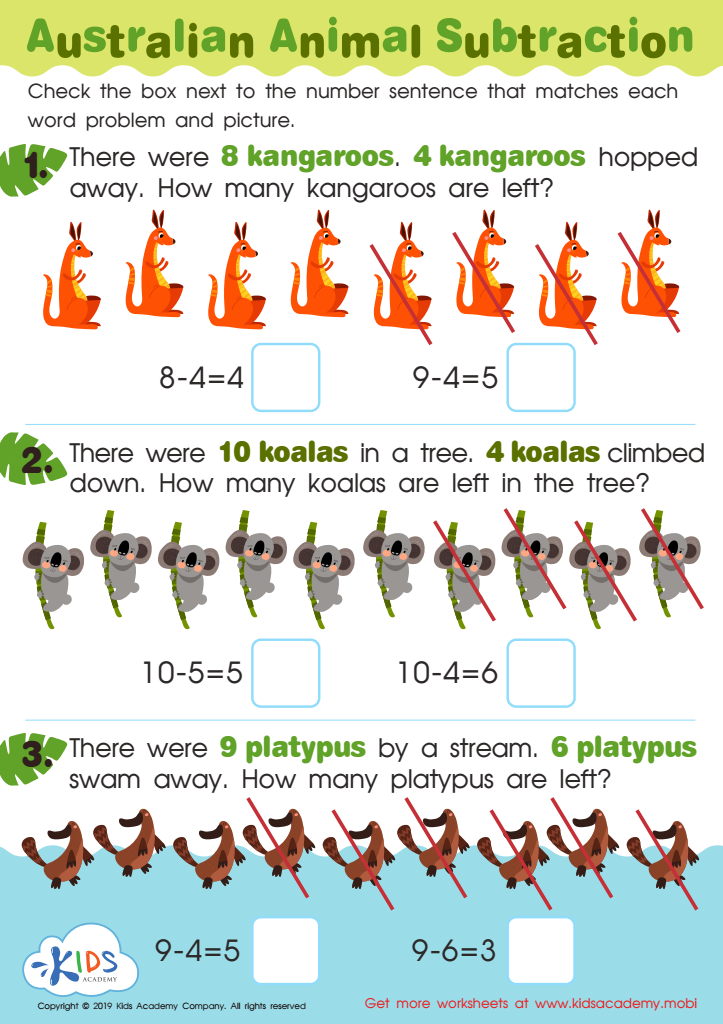
Australian Animal Subtraction Worksheet
Australian Animal Subtraction Worksheet
Test your child's wildlife knowledge. Ask them to name animals indigenous to Australia or other countries. Show them the animals in this worksheet and have them match each word problem and picture with the correct number sentence.
Australian Animal Subtraction Worksheet
Worksheet
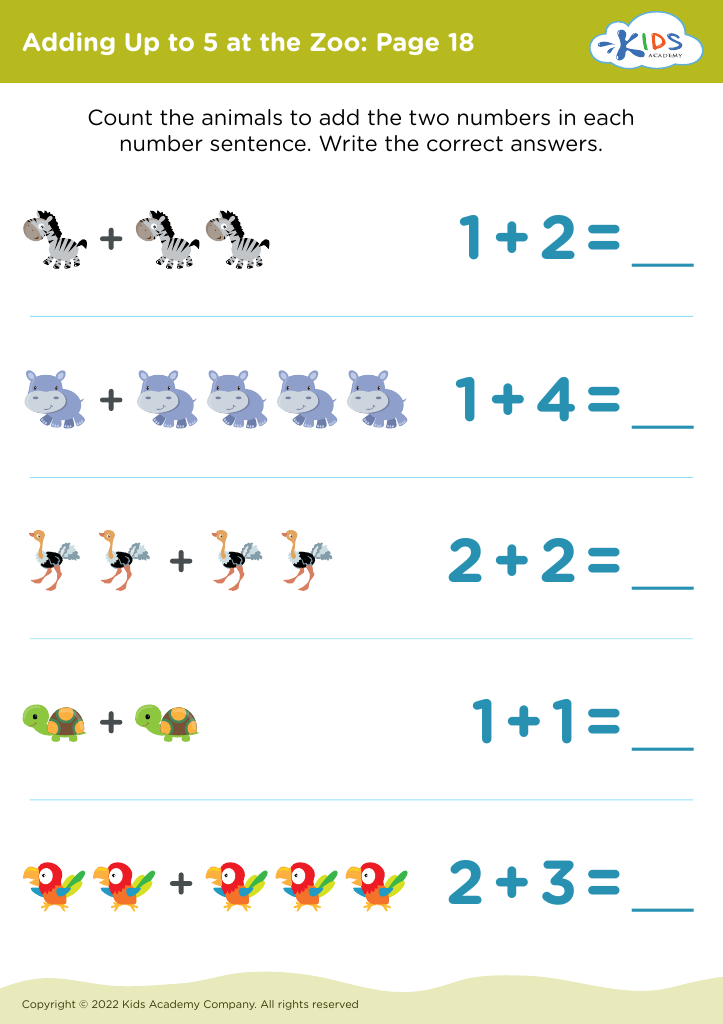
Adding Up to 5 at the Zoo: Page 18
Worksheet
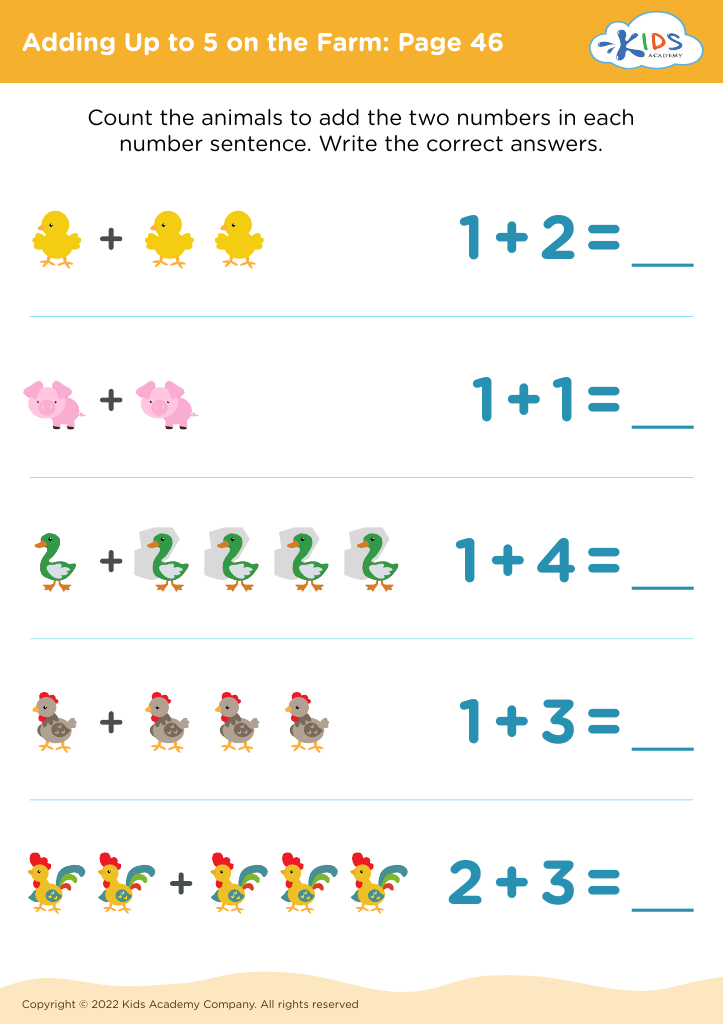
Adding Up to 5 on the Farm: Page 46
Worksheet
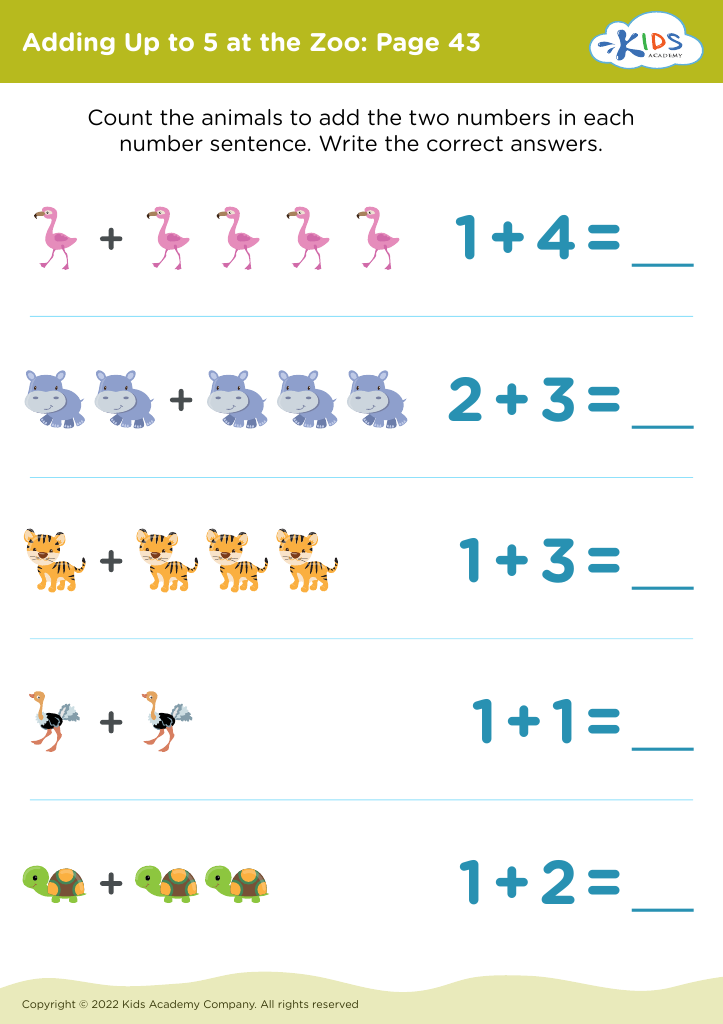
Adding Up to 5 at the Zoo: Page 43
Worksheet
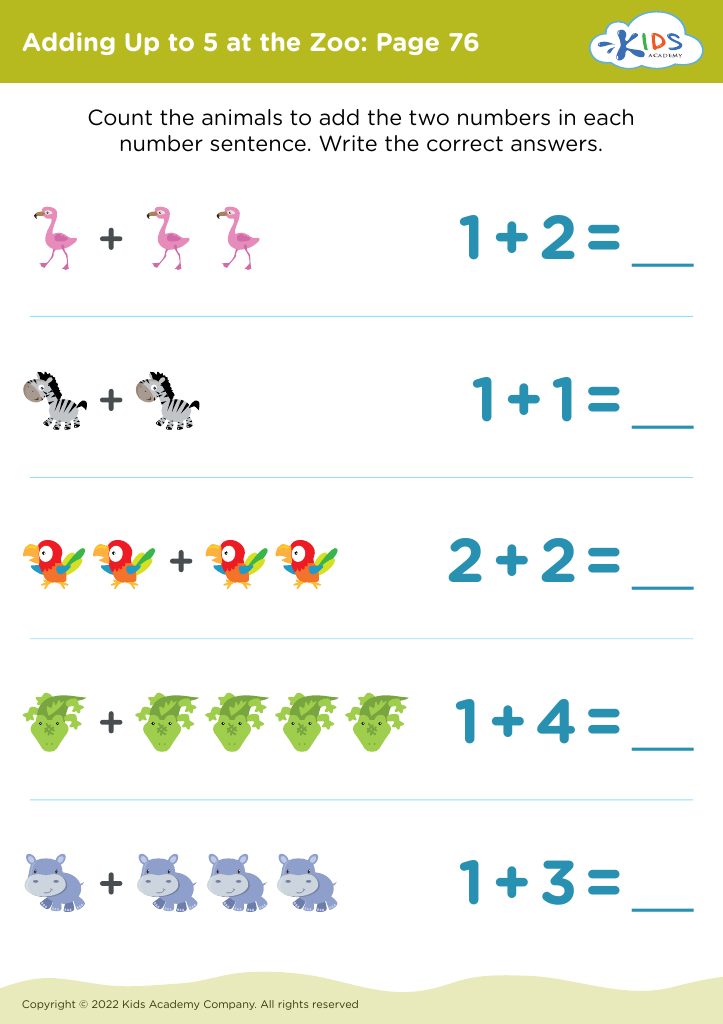
Adding Up to 5 at the Zoo: Page 76
Worksheet
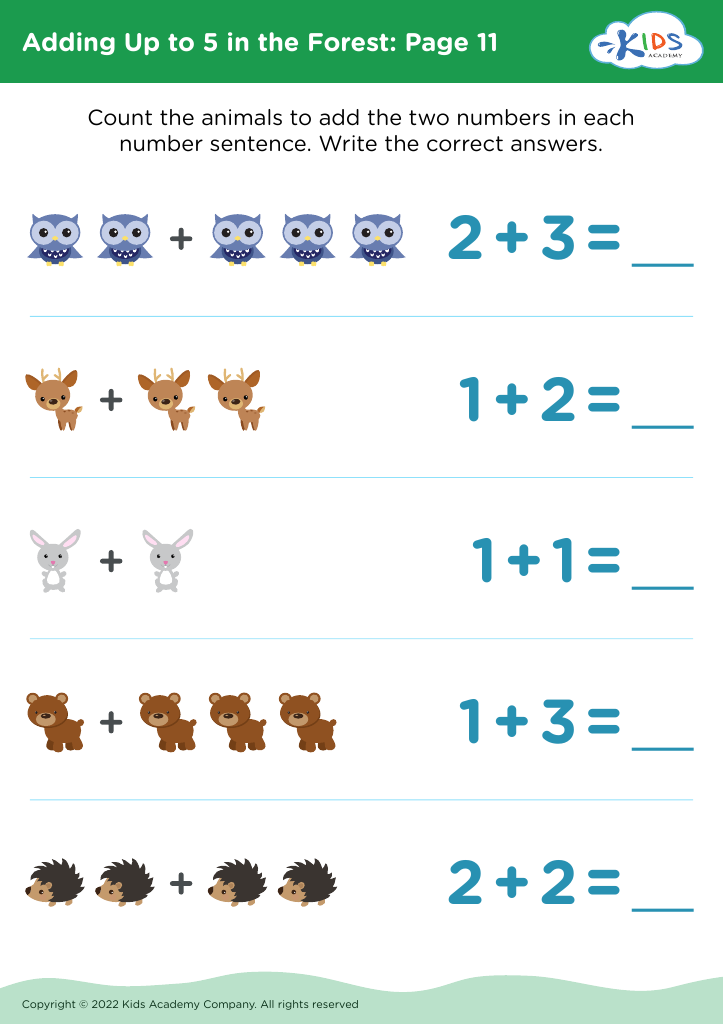
Adding Up to 5 in the Forest: Page 11
Worksheet
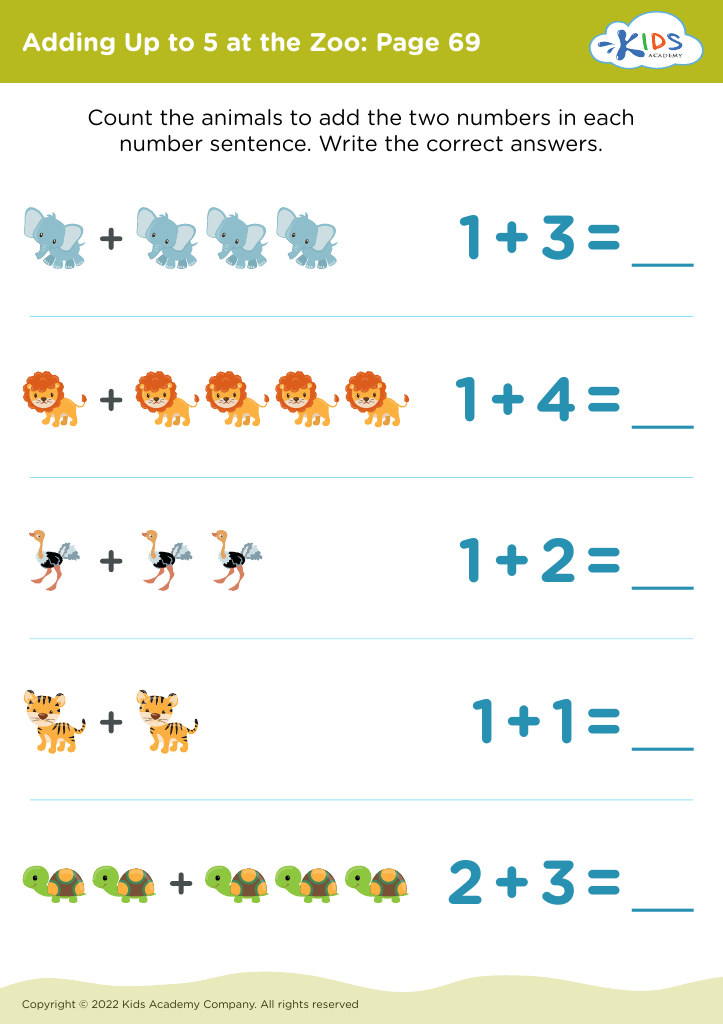
Adding Up to 5 at the Zoo: Page 69
Worksheet
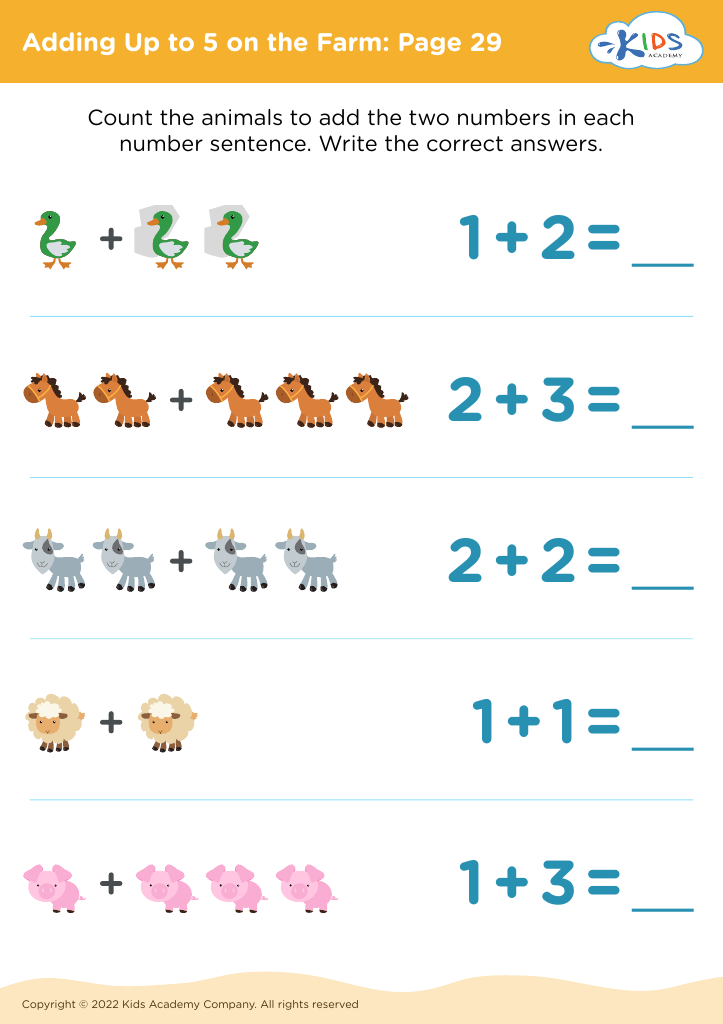
Adding Up to 5 on the Farm: Page 29
Worksheet
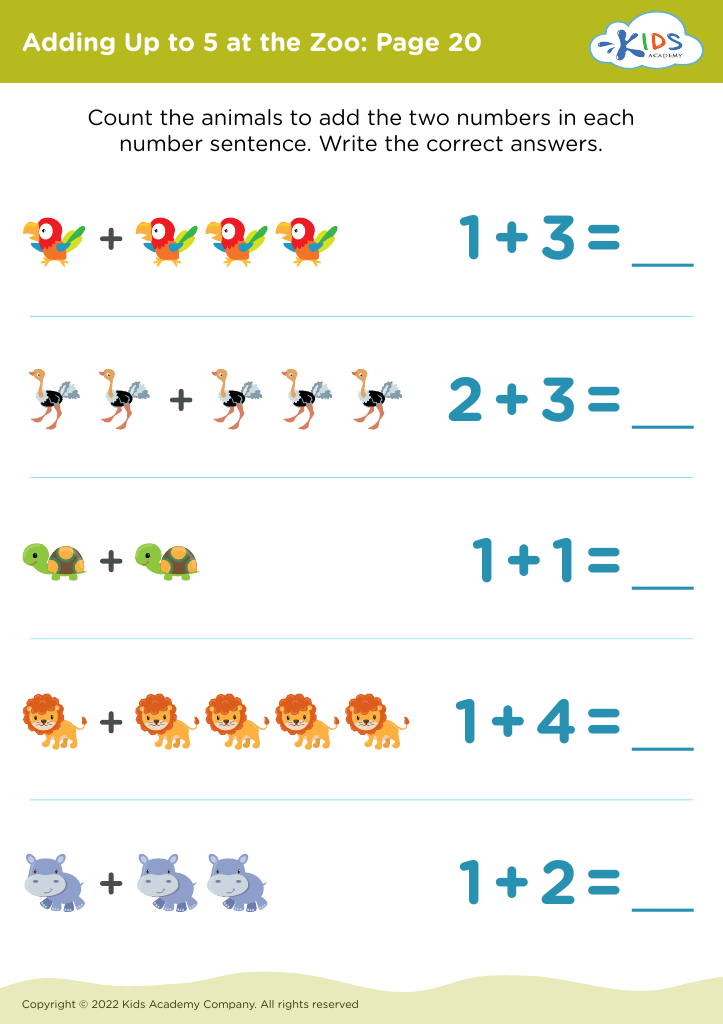
Adding Up to 5 at the Zoo: Page 20
Worksheet
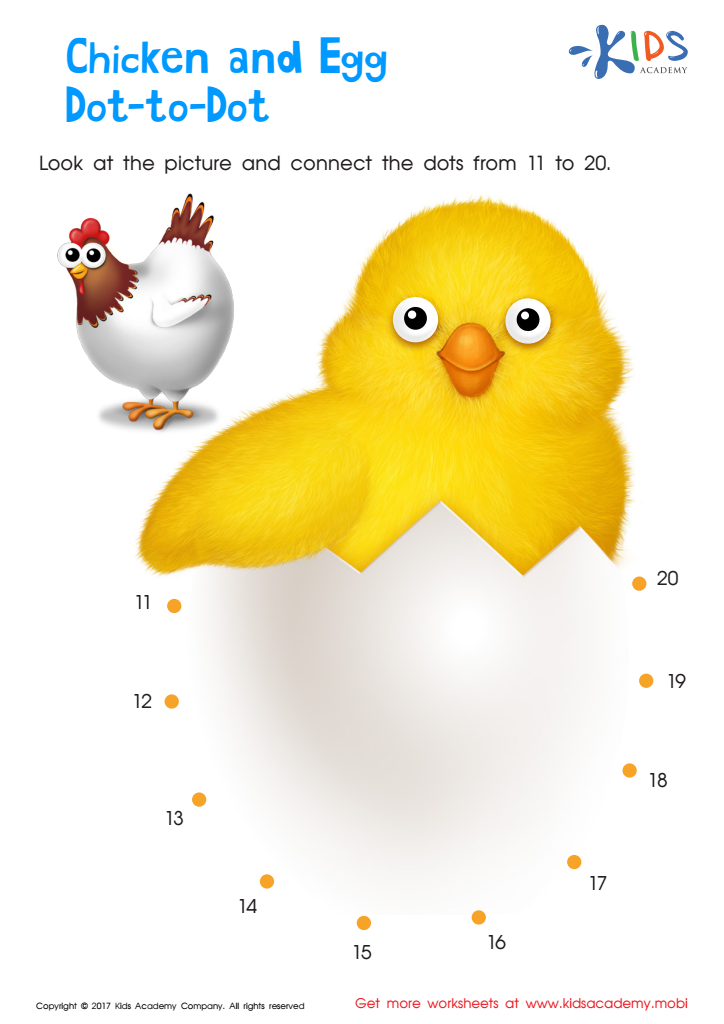
Dot to Dot Numbers 11-20

Ordering 11–20: Chicken & Egg Dot–to–dot Worksheet
Help your child hatch the chick and practice their counting skills with this dot to dot worksheet – the chicken came first! Connect the dots 11-20 to have fun and learn at the same time. Experience meaningful practice and gain confidence while drawing great pictures.
Ordering 11–20: Chicken & Egg Dot–to–dot Worksheet
Worksheet
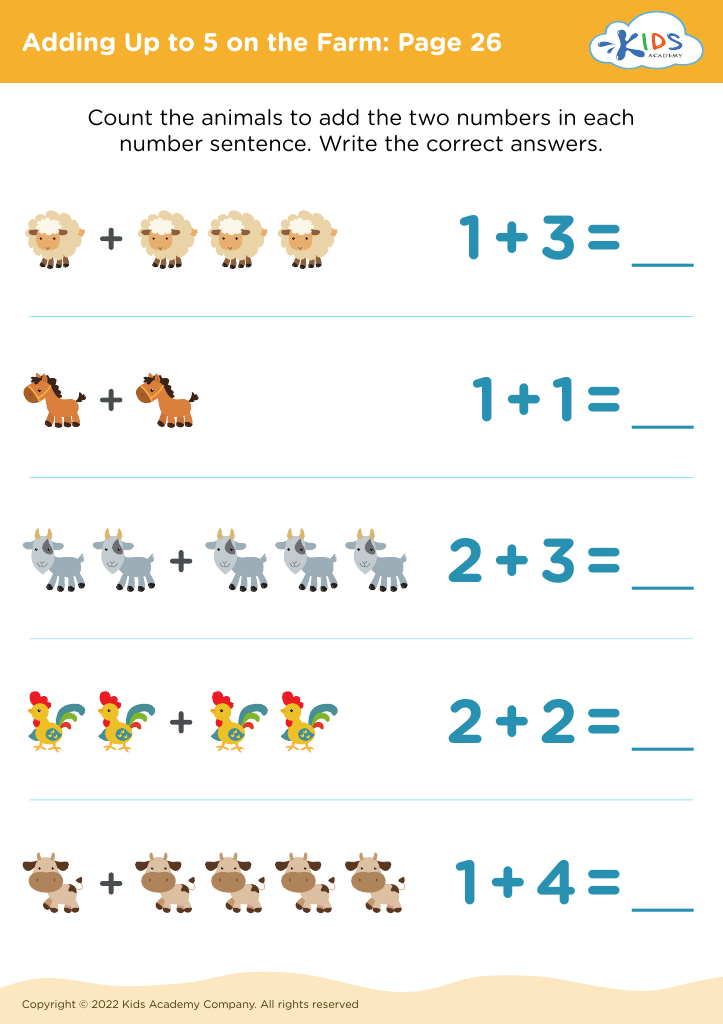
Adding Up to 5 on the Farm: Page 26
Worksheet
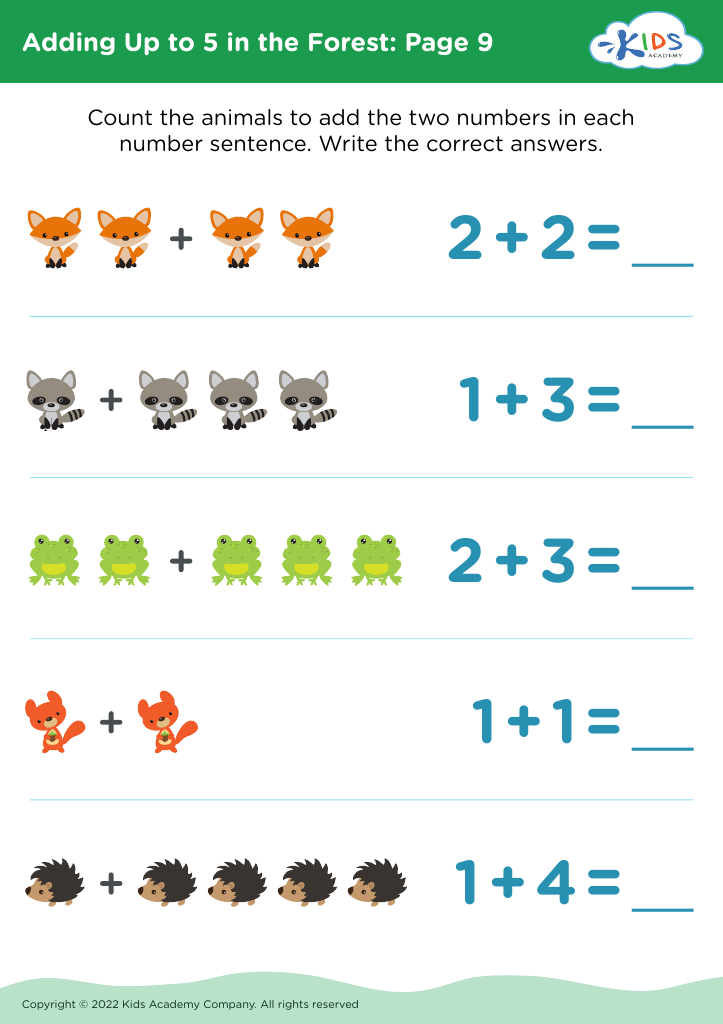
Adding Up to 5 in the Forest: Page 9
Worksheet
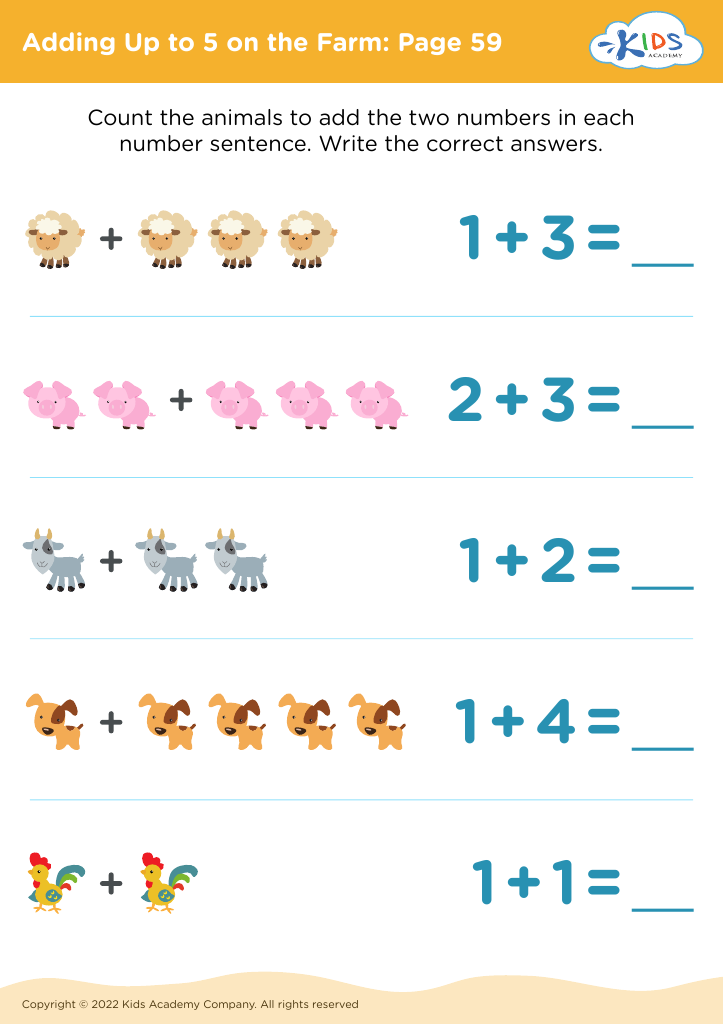
Adding Up to 5 on the Farm: Page 59
Worksheet
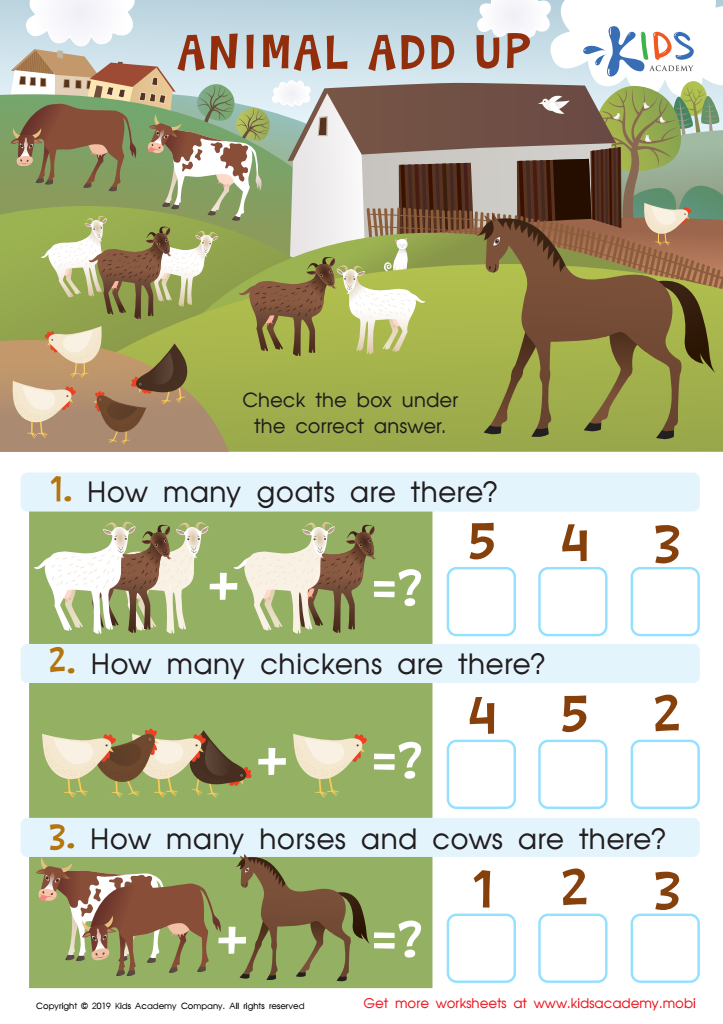
Animal Add Up Worksheet

Animal Add Up Worksheet

Animals are fun to observe and interact with. They can be seen at the zoo, parks, farms and in homes with pets. This worksheet helps kids identify animals, and build addition skills. Look at the picture with them and help name each animal. After that, add the animals up and check the box for the correct answer. 80 words.
Animal Add Up Worksheet
Worksheet
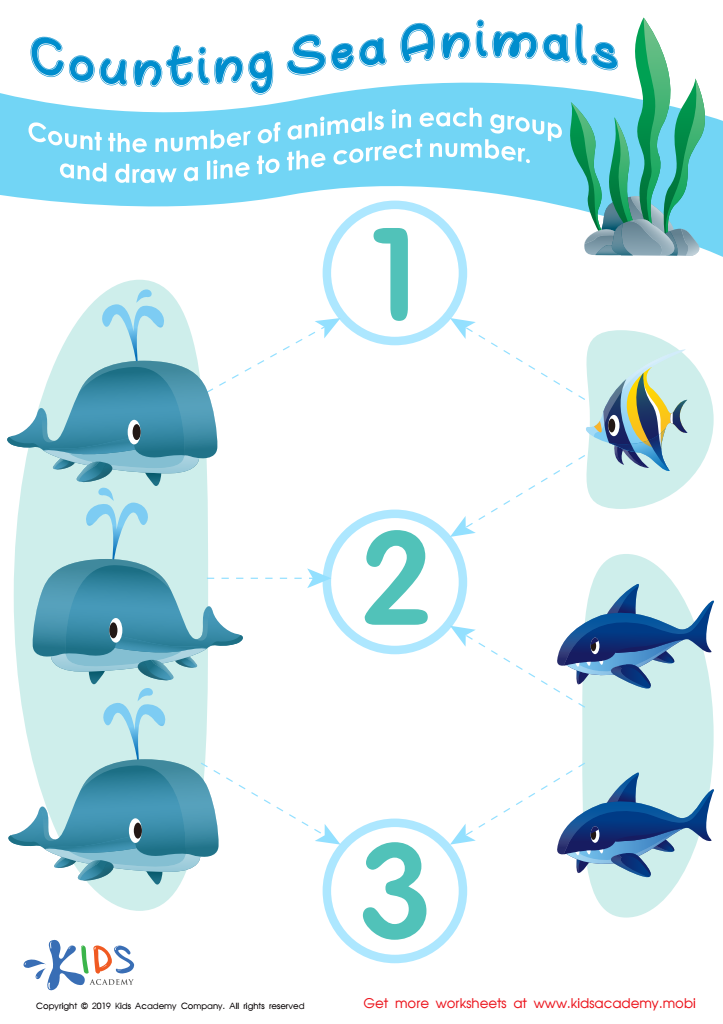
Counting Sea Animals Worksheet
Counting Sea Animals Worksheet
Kids adore sea creatures for their captivating, unknown nature. Let them use this free worksheet to practice counting, where they match numbers to groups of animals. Through traceable lines, they'll easily connect numbers to sea creatures and learn math with vibrant, underwater fun!
Counting Sea Animals Worksheet

Worksheet
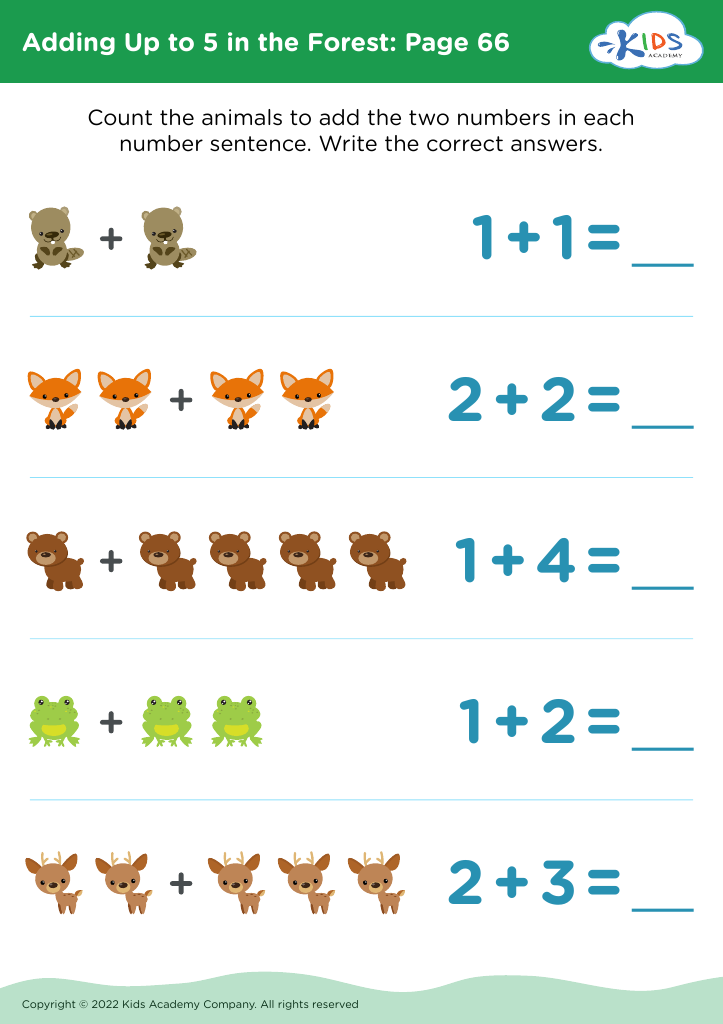
Adding Up to 5 in the Forest: Page 66
Worksheet
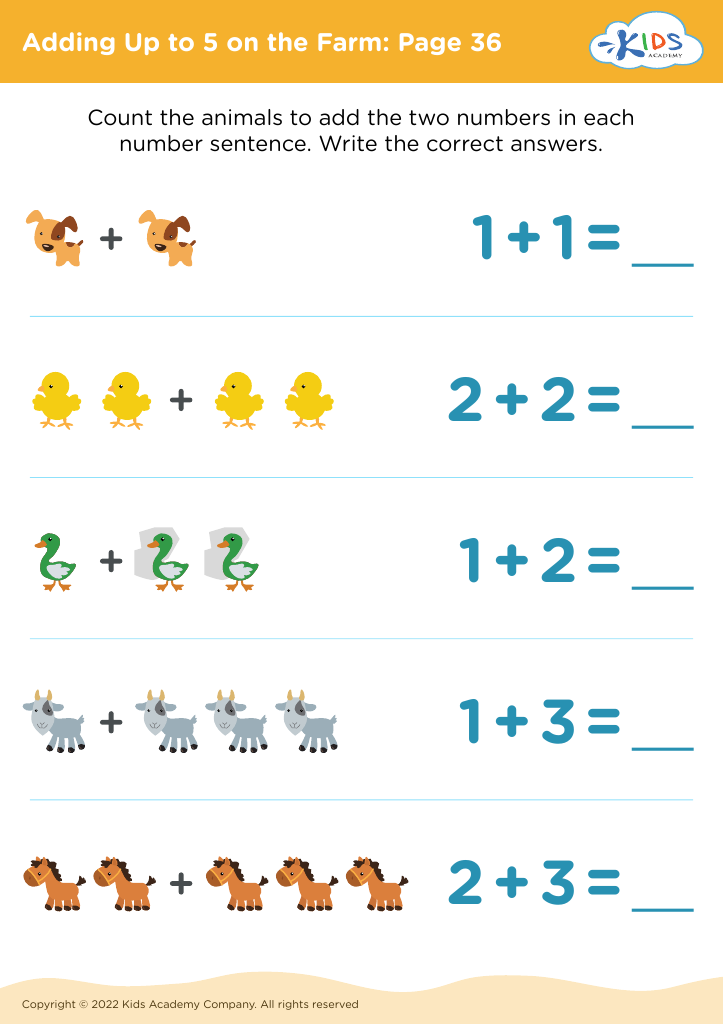
Adding Up to 5 on the Farm: Page 36
Worksheet
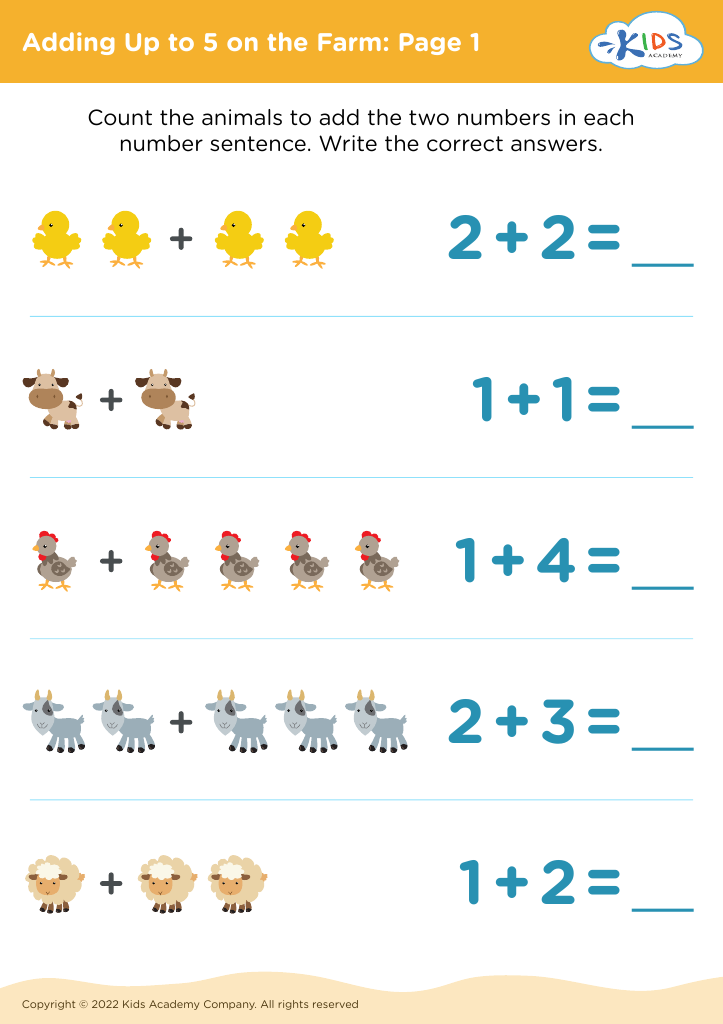
Adding Up to 5 on the Farm: Page 1
Worksheet
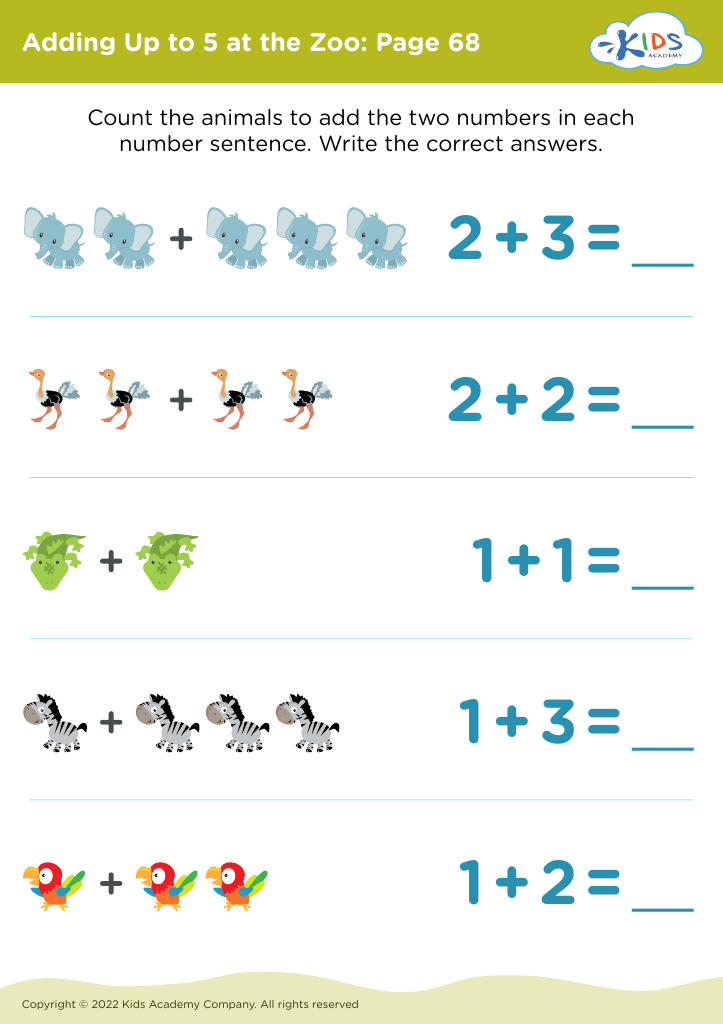
Adding Up to 5 at the Zoo: Page 68
Worksheet


Parents and teachers should care about animal recognition math for ages 5-6 because it combines critical early math skills with an engaging and relatable topic for young children. This type of learning leverages children's natural interest in animals to introduce and reinforce basic math concepts such as counting, addition, subtraction, and pattern recognition. By associating these abstract concepts with something tangible and familiar, children are more likely to stay engaged and retain information.

Moreover, animal recognition math promotes cognitive development and problem-solving skills in a playful context. For instance, asking children to count the number of legs on different animals or creating simple math problems based on groups of animals can make learning more interactive and fun. It also helps in developing fine motor skills through drawing or using manipulatives.

Another critical aspect is the encouragement of cross-disciplinary learning. While focusing on math, children also improve their language skills by learning animal names and characteristics. This holistic approach nurtures curiosity and a love for learning, setting a strong foundation for future academic success.

By caring about animal recognition math, parents and teachers provide a rich, multimodal educational experience that keeps learning dynamic and enjoyable, paving the way for more complex mathematical and scientific concepts later on.